
Craving that irresistibly crispy, golden-brown French fry with a soft, fluffy interior? Discover the definitive secret to making perfect French fries or finger chips right in your own kitchen. This comprehensive guide and recipe is designed to help you achieve restaurant-quality results that are absolutely worth the process!
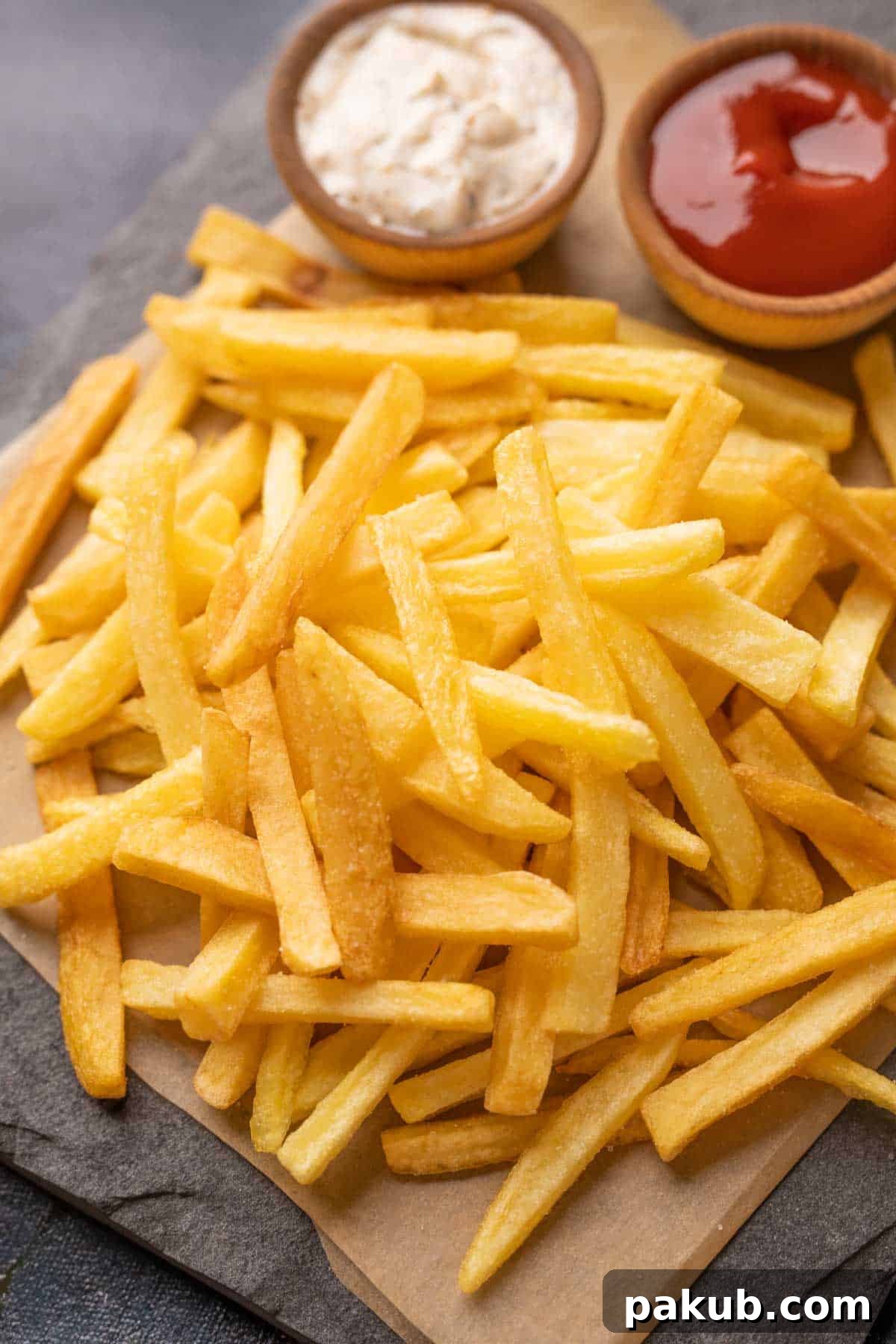
For years, many of us have wondered why our attempts at homemade French fries often fall short, resulting in disappointing, soggy spuds instead of the glorious, crispy delights found at our favorite fast-food establishments. I’ve certainly been on that journey, experimenting with countless methods, and I’m thrilled to share that I’ve finally perfected the art of making truly exceptional French fries at home.
While this recipe involves a few more steps than simply slicing and frying potatoes, I assure you, the sensational texture and flavor you’ll achieve are entirely worth the extra effort. Get ready to transform humble potatoes into a culinary masterpiece that will impress everyone!
Table of Contents
- Why This French Fry Recipe Stands Out
- Essential Ingredients for Perfect French Fries
- Step-by-Step Guide to Homemade French Fries
- Expert Tips for Flawless Fries
- Frequently Asked Questions
- Serving Suggestions and Creative Variations
- Full Recipe Card
- Watch the Recipe Video
Why This French Fry Recipe Stands Out
This isn’t just another French fry recipe; it’s a meticulously developed method designed to deliver consistent, mouth-watering results every time. Here’s why you’ll love it:
- Delivers perfectly crispy fries with a delightful crunch and a wonderfully soft interior every single time.
- Requires just four basic ingredients, proving that simplicity can lead to extraordinary flavor.
- Offers the flexibility to incorporate extra nutrients by leaving the potato skin on for a rustic, wholesome touch.
- While classic salted French fries are timeless, this recipe serves as a fantastic base, allowing you to experiment with various seasonings like peri peri mix, garlic powder, smoked paprika, or BBQ seasoning to customize your flavor experience.
- Provides options for making ahead and freezing, so you can enjoy fresh, hot fries whenever the craving strikes with minimal effort.
Essential Ingredients for Perfect French Fries
Crafting the ultimate French fry begins with understanding the role of each key ingredient. You’ll be surprised at how simple yet crucial these components are.
- Potatoes: The star of our show! Russet potatoes are unequivocally the best variety for making French fries. Their high starch content and low water content are ideal, creating that desired fluffy interior and ensuring a super crispy exterior when fried. While other varieties might work, Russets offer superior texture and taste, making them the top choice for discerning fry connoisseurs.
- Salt: Essential for seasoning. A good quality fine-grain salt will adhere well to the hot fries, enhancing their flavor immediately after frying. You can adjust the amount to your preference.
- Vinegar: A secret weapon! Mixed with water during the blanching stage, the acidity from the vinegar plays a vital role. It helps the potatoes retain their structural integrity, preventing them from breaking apart during boiling. More importantly, it contributes significantly to the final crispiness by preventing excessive starch breakdown, which can lead to soggy fries.
- Oil: The medium for crispiness. Choosing the right oil is crucial. Opt for an oil with a neutral flavor and a high smoke point. This ensures that your fries don’t absorb unwanted flavors, allowing the pure potato taste to shine through, and prevents the oil from breaking down at high temperatures. Excellent choices include sunflower oil, canola oil, or vegetable oil, all of which perform exceptionally well for this finger chips recipe.
The Art of Crafting Perfect French Fries: A Step-by-Step Guide
Achieving those coveted crispy-on-the-outside, fluffy-on-the-inside French fries is a process, but each step is vital to the final perfection. Follow this detailed guide for truly superior results:
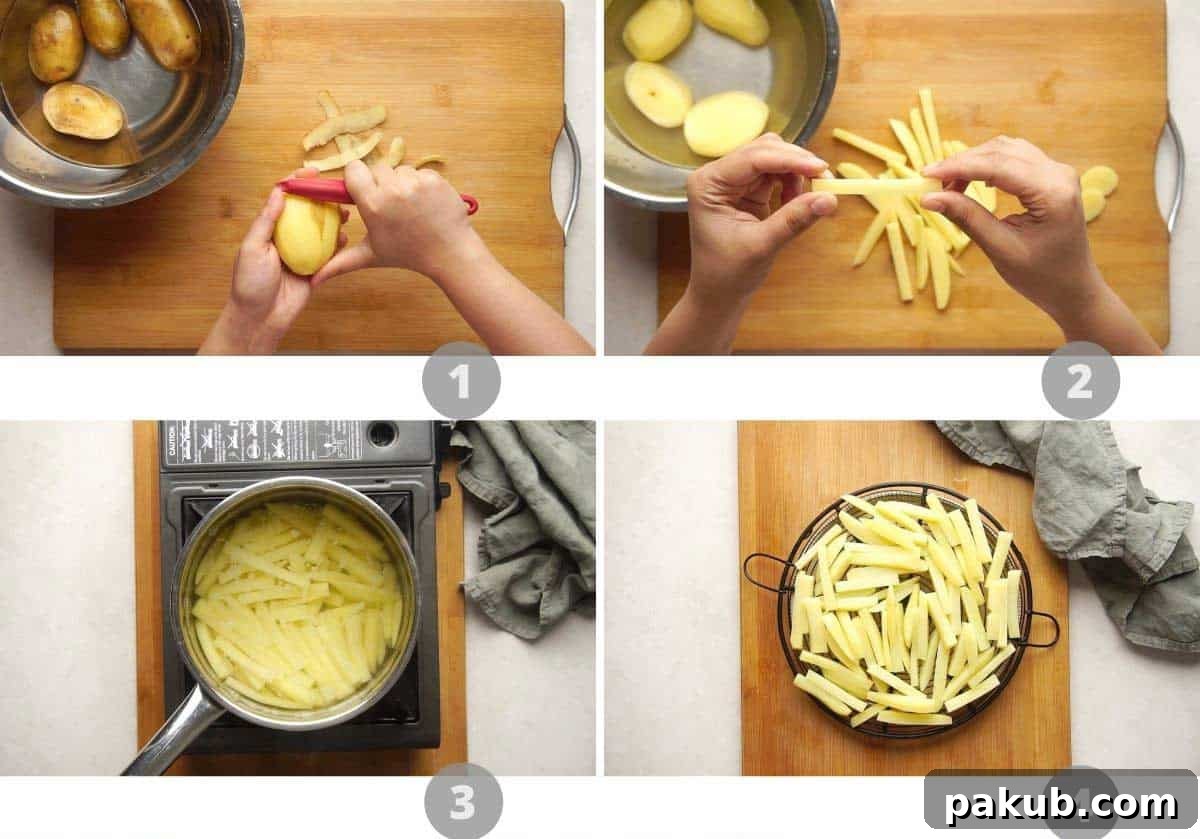
1. Prepare the Potatoes: Begin by thoroughly washing your potatoes to remove any dirt. If you prefer, peel them completely, or for a more rustic and nutrient-rich fry, scrub them well and leave the skin on. Immediately submerge the washed (and peeled, if applicable) potatoes in a bowl of water to prevent them from oxidizing and turning grey.
2. Precision Cutting: For ideal French fry dimensions, trim both ends of each potato. Place a potato vertically on your chopping board and slice it into ¼-inch thick pieces. Once you have a stack of slices, lay them flat and cut them into ¼-inch thick uniform fingers. Consistency in cutting is key for even cooking. As you cut, transfer the fries into a large bowl of ice-cold water. Let them soak for at least 10-15 minutes. This crucial step removes excess starch, which is vital for achieving ultimate crispiness. After soaking, drain the water completely and rinse the fries thoroughly under cold running water.
3. Blanching with Vinegar: In a large pot, bring water to a rolling boil. Add the vinegar and salt to the boiling water and stir to ensure they dissolve. Carefully add the drained potato fries to the pot. Blanch them for precisely 8 minutes. During this time, stir them gently at regular intervals to ensure even cooking. The vinegar helps the fries maintain their shape and prevents them from becoming mushy. Once blanched, remove the fries from the water using a spider strainer and spread them out in a single layer on a wire rack. This allows air to circulate, promoting even cooling.
4. Cool and Dry: Allow the blanched potatoes to cool down and rest on the wire rack for 10-15 minutes, or until they reach room temperature. This drying phase is important; any remaining surface moisture can lead to oil splattering and less crispy fries. Pat them gently with a kitchen towel if needed.
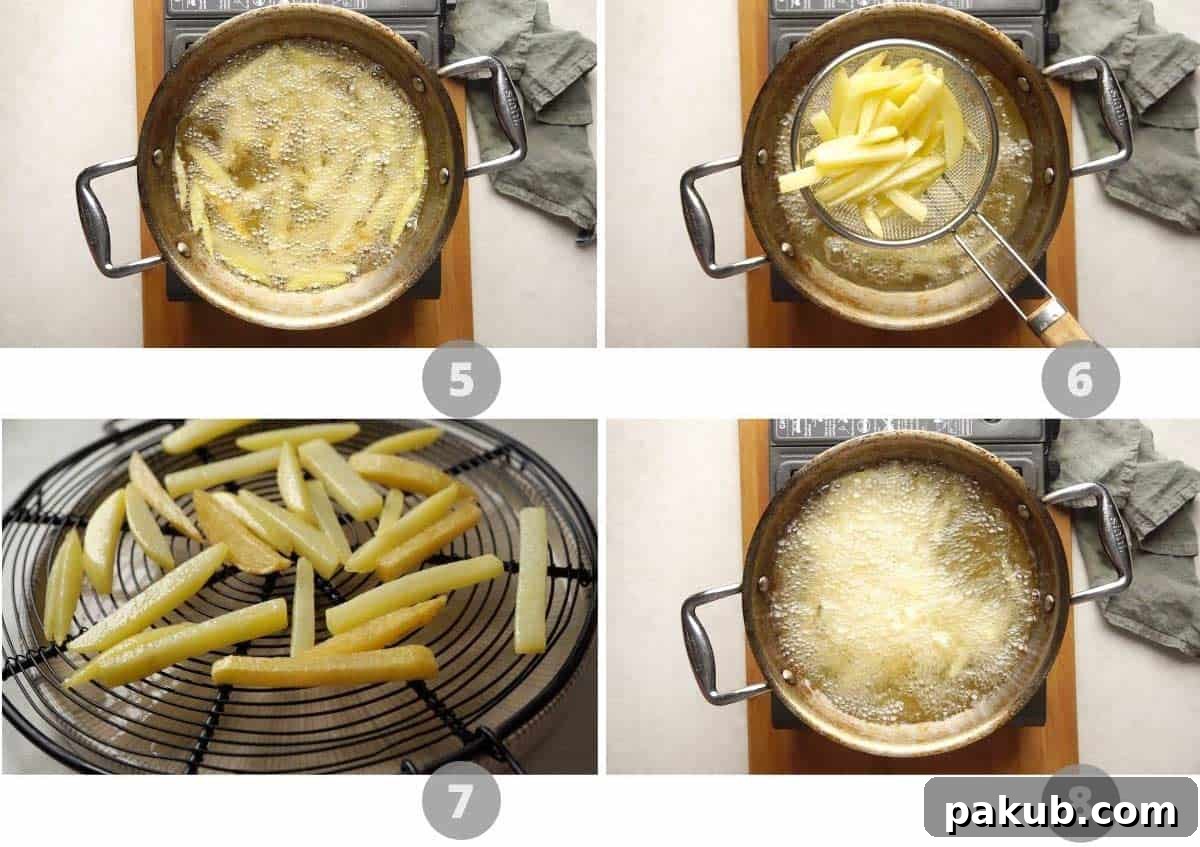
5. The First Fry (Blanching in Oil): Heat your chosen oil in a deep fryer, Dutch oven, or heavy-bottomed pot to 200°C (390°F). This initial temperature is slightly hotter than typical frying. Carefully drop the blanched and cooled potato fries into the hot oil in small batches to avoid overcrowding. Fry for approximately 90 seconds. This step is a ‘blanching’ in oil, cooking the potatoes through and beginning to form a thin, protective coating. You should see a light, almost translucent coating on the fries.
6. Rest Between Fries: Remove the fries from the hot oil using a spider strainer and again, transfer them to a clean wire rack. Allow them to rest for another 15 minutes. This resting period is critical for achieving ultimate crispiness. It allows the internal moisture to redistribute and the surface to dry slightly, preparing them for the final fry. At this stage, the fries can be placed in a freezer-safe ziplock bag and frozen for up to 3 months. These partially fried and frozen fries can be treated like store-bought frozen fries, ready for a quick deep fry or air fry straight from the freezer.
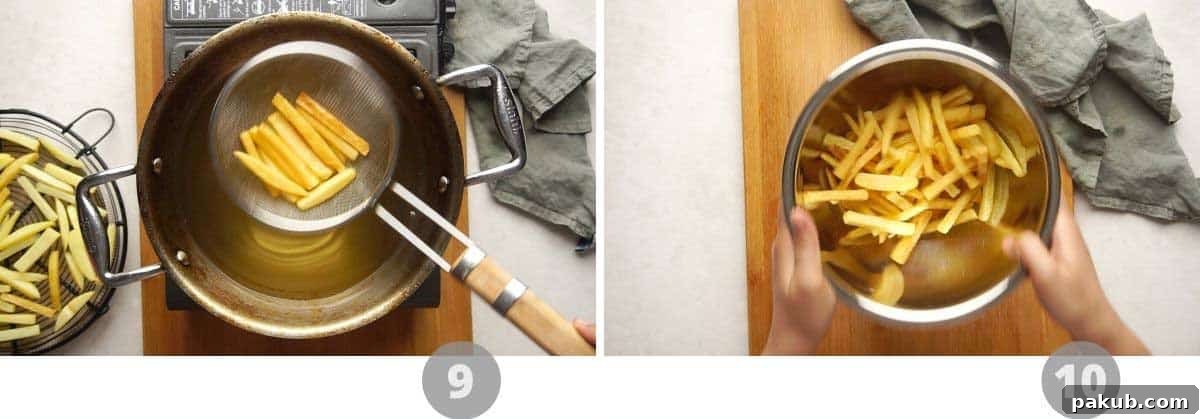
7. The Second Fry (For Golden Perfection): Reheat the oil back to 200°C (390°F). When you add the fries, the temperature will naturally drop to around 170-175°C (338-347°F). Maintain this temperature range as best as you can. Fry the fries for 5-7 minutes, or until they are beautifully golden brown and incredibly crispy. If you don’t have a thermometer, simply fry them over a medium-high flame after the initial two minutes, adjusting as needed until they reach that perfect golden hue and irresistible crunch.
8. Season and Serve: Once perfectly golden and crispy, remove the fries from the oil and immediately transfer them to a plate lined with paper towels to absorb any excess oil. While still hot, generously toss them with salt, freshly ground black pepper, or your seasoning of choice. Serve them piping hot and enjoy the homemade goodness!
Expert Tips for Flawless Fries
Beyond the basic steps, these professional tips will elevate your homemade French fries from good to absolutely extraordinary:
- How to Cut Fries for Uniformity: To achieve that perfect, restaurant-style French fry texture, precise cutting is key. While you can use a mandoline for speed, cutting potatoes by hand to a thickness of approximately one-fourth inch allows for better control and helps maintain uniformity. Evenly sized fries cook evenly, preventing some from burning while others remain undercooked.
- The Best Potato Variety: As mentioned, Russet potatoes are highly recommended due to their high starch and low moisture content, which is crucial for a fluffy interior and crispy exterior. While ‘new potatoes’ have higher water content and can yield a different kind of crispiness, for the classic fry texture, stick to Russet.
- Crucial Cold Water Soak: After cutting your potatoes, it’s imperative to immediately soak them in ice-cold water and ensure they are fully submerged. This step is not merely to prevent discoloration; it actively draws out excess surface starch. Reducing starch is critical for achieving exceptionally crispy fries and preventing them from sticking together. Always dry them thoroughly with a clean kitchen towel before frying to prevent oil splatters and ensure maximum crispiness.
- Proper Resting Between Frying: Never rest your blanched or first-fried potatoes on a plate. The lack of air circulation will trap steam, making the fries soggy and limp. Always use a wire rack set over a baking sheet. This allows air to circulate around the fries, promoting drying and retaining crispiness.
- Avoid Overcrowding the Fryer: This is a golden rule for frying. Adding too many potatoes at once will drastically drop the oil temperature. Lower oil temperatures lead to fries that absorb too much oil and become soggy and greasy instead of crisp. Fry in small, manageable batches to maintain a consistent high temperature.
- Oil Temperature Management: Invest in a good kitchen thermometer. Maintaining the correct oil temperature during both frying stages is paramount for perfect fries. If the oil is too cool, fries will be greasy; if too hot, they will burn on the outside before cooking through on the inside.
- Skin-On Fries: If you choose to leave the skin on for added nutrients and a rustic look, ensure you give the potatoes a rigorous scrub to remove all dirt and impurities before cutting.
Frequently Asked Questions
Boiling, often referred to as blanching or poaching, the potatoes before frying serves multiple critical purposes. First, it ensures that the potatoes cook all the way through, giving them that desirable fluffy interior. Second, adding a little vinegar to the boiling water helps to maintain the structural integrity of the potato cells, preventing them from breaking down or becoming mushy during the intense heat of frying. This step also begins the process of gelatinizing the starches on the surface, which is a precursor to the incredibly crispy crust that forms during the double-fry method, ultimately preventing soggy fries.
Double frying is arguably the most important technique for achieving truly perfect French fries. The first fry (at a slightly lower temperature) primarily cooks the potatoes thoroughly from the inside and begins to create a crispy barrier on the outside. However, if you were to stop here, the residual moisture from the potato’s center would eventually migrate to the surface as they cool, turning them soft and soggy. The second fry, at a higher temperature, then dehydrates the surface even further, cooking off any remaining moisture, sealing in the crispiness, and developing that beautiful golden-brown color and irresistible crunch. This two-stage process locks in the fluffy interior while ensuring an unparalleled crispy exterior that lasts.
This recipe is excellent for making a large batch of fries to freeze for later enjoyment. After the first fry (step 6 in the instructions), allow the fries to cool down completely on a wire rack. Once fully cooled, spread them in a single layer on a baking sheet and freeze until solid (this prevents them from clumping together). Once frozen, transfer the solid fries into a freezer-safe ziplock bag or airtight container. They will stay fresh in the freezer for up to 3 months. When you’re ready to enjoy them, simply deep fry them straight from the freezer in hot oil (200°C/390°F) until golden and crispy, or cook them in an air fryer for a slightly healthier option.
Serving Suggestions and Creative Variations
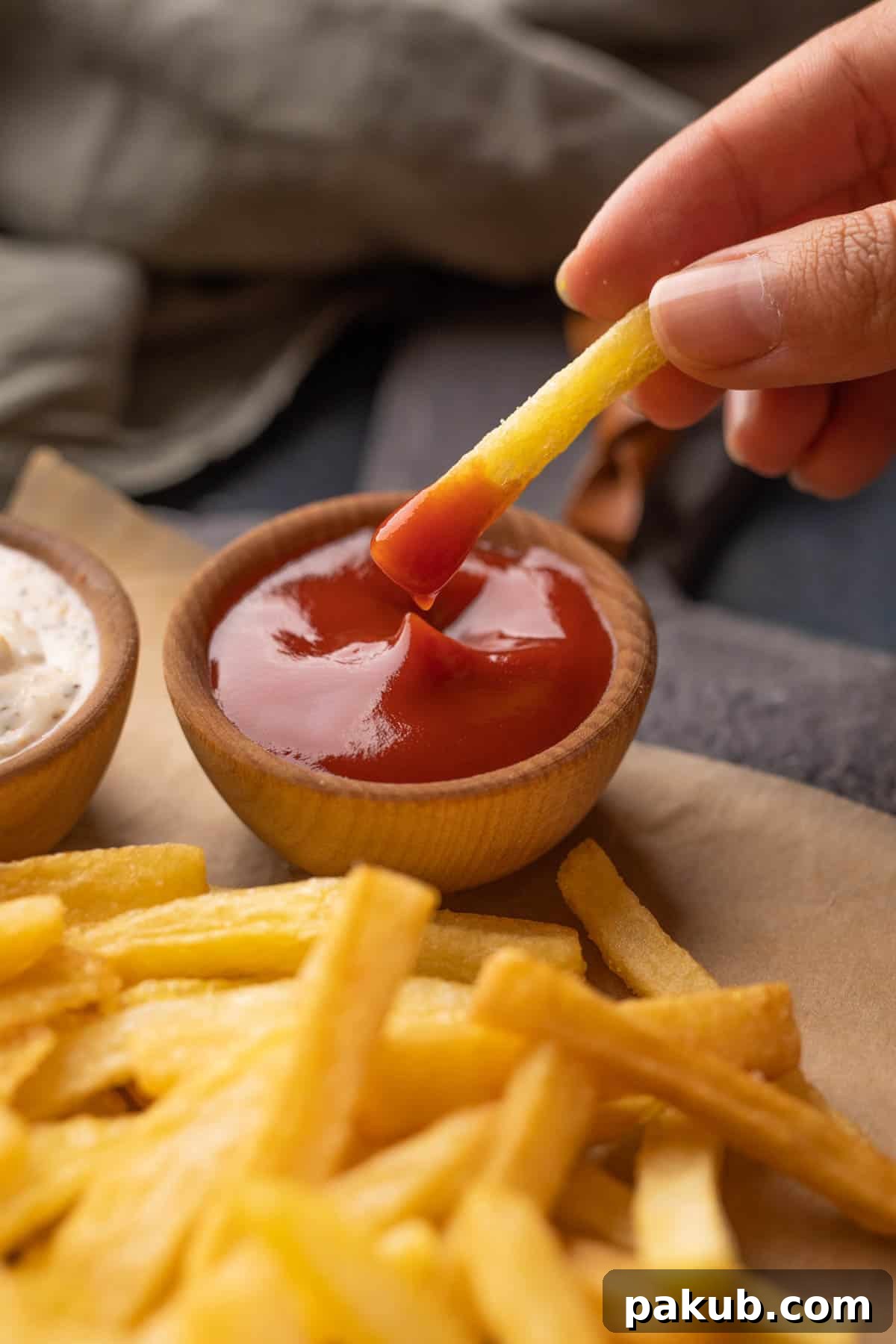
While making the perfect French fries might take a little time and effort, the moment you take that first bite, you’ll know it was absolutely worth it! Serve them hot with a variety of delicious accompaniments:
- Classic ketchup remains a timeless choice.
- Elevate your dipping game with my homemade garlicky yogurt party dip.
- For a spicy kick, my spicy nacho cheese sauce is an incredible pairing.
- Consider other gourmet dips: sriracha mayo, honey mustard, BBQ sauce, or a creamy aioli.
- Seasoning Variations: Experiment beyond salt and pepper. Try a sprinkle of smoked paprika, garlic powder, onion powder, a dash of cayenne pepper for heat, Italian seasoning, or a custom fry seasoning blend.
- Loaded Fries: Transform your crispy fries into a full meal by topping them with cheese sauce, bacon bits, chives, sour cream, pulled pork, or chili.
- Poutine: For a Canadian classic, smother hot fries with cheese curds and rich gravy.
LOVE THIS RECIPE? Subscribe to my newsletter and be the first to receive all new recipes and culinary tips!
Watch the Recipe Video

Best Homemade French Fries
Always wanted to make crispy, fast-food joint style French fries at home? These are even better because you know exactly what goes into them. It takes a few precise steps, but the result is gorgeous golden, crispy fries that can be served immediately or frozen for later, so you always have a stash in your freezer ready to go!
Ingredients
- 4-5 medium Russet Potatoes, washed
- ½ Teaspoon Salt
- 1 Teaspoon White Vinegar
- 4 tbsp Oil, for deep frying (e.g., Sunflower, Canola, or Vegetable oil)
Instructions
- Wash potatoes thoroughly to remove any dirt. Peel the potatoes, or leave the skin on for a rustic touch, then keep them submerged in water to prevent oxidation.
- Cut the potatoes into uniform fries. Trim both ends of a potato, then stand it vertically on your chopping board. Cut it into thick slices, approximately ¼ inch thick. Lay these slices flat and cut them into ¼ inch thick fingers. As you cut, transfer the fries to a bowl of ice-cold water and soak for 10-15 minutes to remove excess starch.
- Drain the cold water completely and rinse the fries thoroughly under running cold water until the water runs clear. Pat them very dry with a kitchen towel.
- Bring water to a boil in a large pot. Add the vinegar and salt to the boiling water and stir to combine. Add the cut potatoes and blanch for 8 minutes, stirring at regular intervals to ensure even cooking. Remove the potatoes from the pot using a spider strainer and place them in a single layer on a wire rack to cool.
- Let the blanched potatoes rest and cool on the wire rack for 10-15 minutes, or until they return to room temperature. This also helps them air dry further.
- Heat oil in a heavy-bottomed pot or deep fryer to 200°C (390°F). This is slightly hotter than normal frying temperature for the first stage. Carefully drop the cooled, blanched potatoes into the hot oil in small batches and fry for approximately 90 seconds.
- Remove the fries from the hot oil and transfer them back onto the wire rack. Allow them to rest for another 15 minutes. This cooling period is crucial for developing ultimate crispiness.
- At this stage, you can freeze the fries. Once completely cool, place them in a single layer on a baking sheet and freeze until solid. Transfer to a ziplock bag and store in the freezer for up to 3 months. These can be deep-fried or air-fried directly from frozen.
- For serving immediately, reheat the oil back to 200°C (390°F). Add the rested fries; the temperature will drop to around 170-175°C (338-347°F). Maintain this temperature while frying them for 5-7 minutes, or until they are golden brown and wonderfully crispy. If you don’t have a thermometer, fry them over a medium-high flame until they achieve the desired golden color and crisp texture.
- Remove the fries from the oil and immediately transfer them to a plate lined with paper towels to absorb any excess oil. Toss with salt, pepper, or your preferred seasoning, and serve hot!
Notes
- The right way to cut the potatoes: For the perfect restaurant-style French fry texture, cutting potatoes by hand to about a one-fourth inch thickness is recommended. While a sharp mandoline can be used, hand-cutting ensures uniformity, which is key for even frying.
- Potato variety: Russet potatoes are ideal due to their high starch and low water content, resulting in the crispiest fries with a fluffy interior.
- After cutting, always soak potatoes in ice-cold water to remove excess starch and prevent discoloration. Remember to dry them thoroughly before any frying to avoid oil splatters and enhance crispiness.
- Resting fries: Always rest blanched or first-fried fries on a wire rack (not a plate) to allow for air circulation, preventing them from becoming soggy and limp.
- Freezing the fries: Partially fried fries freeze exceptionally well. After the first fry and cooling, freeze them in a single layer on a baking sheet, then transfer to a ziplock bag. They can be stored for up to 3 months and cooked from frozen.
- Avoid overcrowding the frying pan. Overfilling will significantly drop the oil temperature, leading to greasy, soggy fries rather than crispy ones. Fry in small batches.
- If leaving the skin of the potatoes on, give them a good scrub under running water to remove all dirt and impurities before cutting.
Nutrition (per serving, estimated)
Carbohydrates: 37g
Protein: 4g
Fat: 14g
Saturated Fat: 1g
Polyunsaturated Fat: 4g
Monounsaturated Fat: 9g
Trans Fat: 1g
Sodium: 303mg
Potassium: 897mg
Fiber: 5g
Sugar: 2g
Vitamin A: 4IU
Vitamin C: 42mg
Calcium: 26mg
Iron: 2mg