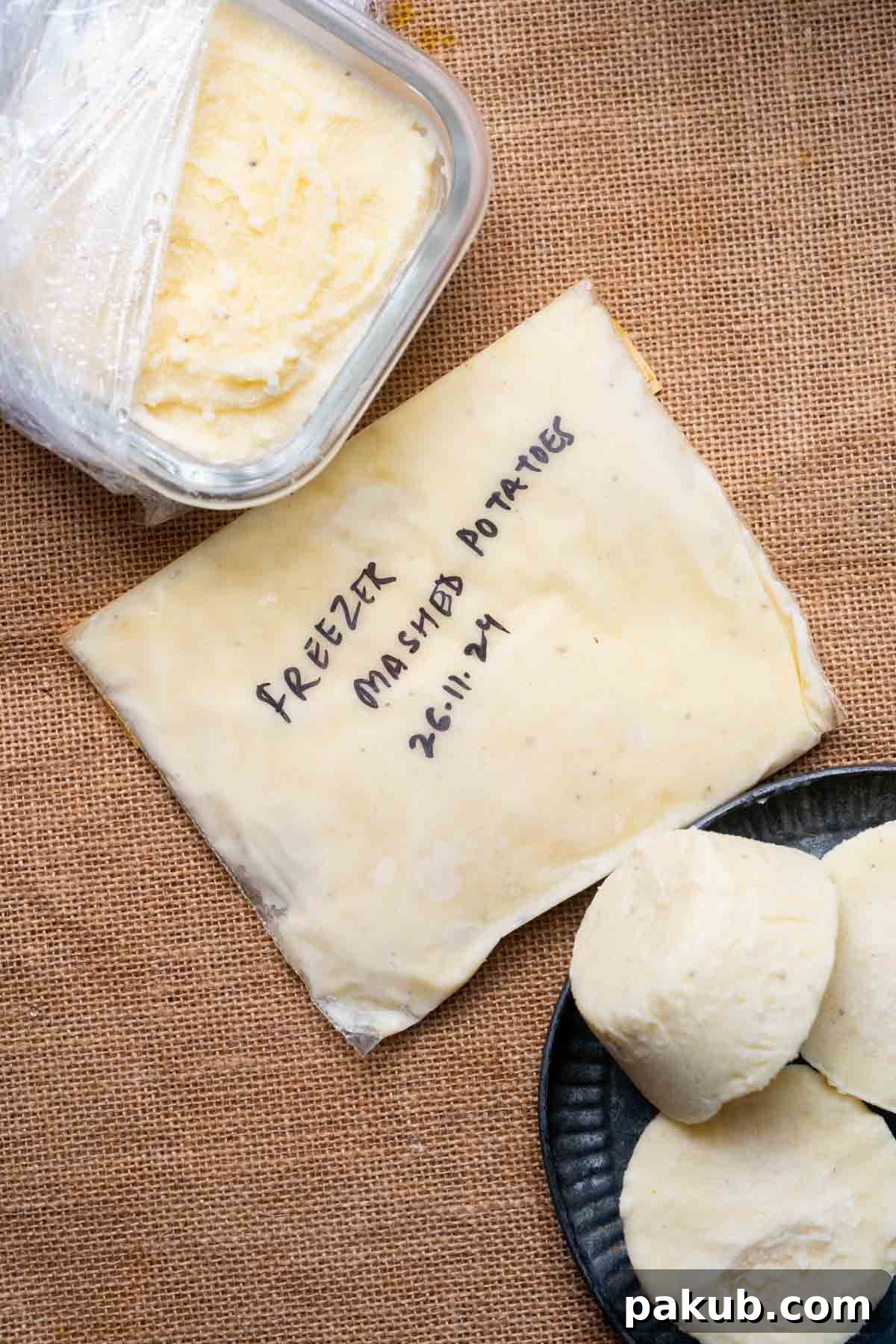
Unlock the secret to perfectly frozen mashed potatoes that stay delicious for months! This guide covers everything from efficient freezing methods to expert reheating tips, ensuring you always have creamy mashed potatoes on hand.
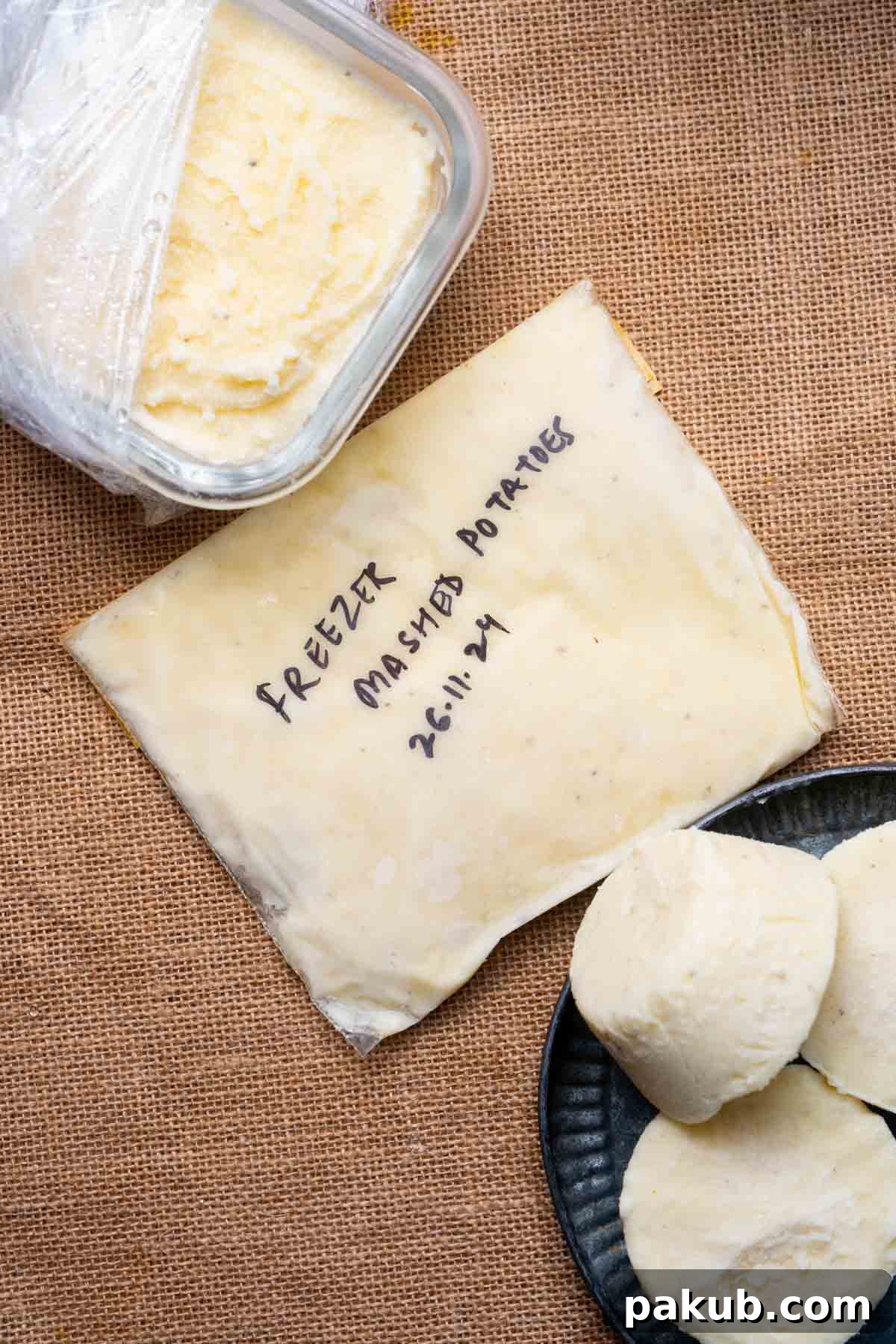
Ever found yourself with an abundance of fluffy, delicious mashed potatoes after a big holiday meal, only to wonder how to preserve their creamy perfection? Or perhaps you’re a savvy home cook looking to get ahead of the game with convenient meal prep? The solution is simpler and more effective than you might think: freezing mashed potatoes!
Yes, you read that right! Mashed potatoes are remarkably freezer-friendly, offering an incredible way to extend their freshness and flavor for up to two months, or even longer when properly stored. Whether you’re dealing with holiday leftovers, preparing for a busy week, or cooking for a crowd, freezing mashed potatoes is a game-changer. It transforms a potential food waste dilemma into a brilliant opportunity for future deliciousness, providing one less thing to worry about when hunger strikes.
In this comprehensive guide, we’ll walk you through three tried-and-tested, foolproof methods for freezing mashed potatoes, tailored for both single servings and large batches. We’ll also share crucial tips on how to prepare your potatoes for freezing, the best ways to reheat them without compromising their beloved texture, and answers to your most frequently asked questions. Get ready to master the art of freezing mashed potatoes and enjoy them whenever the craving hits!
Table of Contents
- Prepping Mashed Potatoes for Freezing
- How To Freeze Mashed Potatoes
- Method 1: Single Serving Portions
- Method 2: Large Batch in Freezer Bags
- Method 3: Large Batch in an Airtight Container
- How to Reheat Frozen Mashed Potatoes
- Frequently Asked Questions
- Expert Tips for Freezing Mashed Potatoes
- Creamy Mashed Potato Recipes
Prepping Mashed Potatoes for Freezing: The Foundation of Success
Before diving into the freezing methods, a few crucial steps ensure your mashed potatoes freeze and thaw beautifully. Proper preparation is key to maintaining their creamy texture and delicious flavor.
- Optimal Consistency is Key: While almost any mashed potato recipe can be frozen, those with higher fat content (like butter, cream cheese, or heavy cream) tend to hold up best. The fats help prevent ice crystal formation and keep the potatoes from becoming watery or grainy upon thawing. If your mashed potatoes are on the thinner side, consider adding an extra tablespoon or two of butter or cream before freezing.
- Cool Completely: This is arguably the most important step. Hot or even warm mashed potatoes will create condensation inside your freezer bags or containers, leading to freezer burn and a less desirable texture. Always allow your mashed potatoes to cool completely to room temperature before packing them for the freezer. You can speed up this process by spreading them out on a baking sheet or dividing them into smaller bowls.
- Avoid Over-Mashing: While not directly related to freezing, over-mashing potatoes can lead to a gummy texture, which will only be amplified after freezing and reheating. Aim for light, fluffy mashed potatoes from the start.
- Season Well: Ensure your mashed potatoes are well-seasoned before freezing. You can always adjust seasonings after reheating, but starting with a flavorful base is best.
How To Freeze Mashed Potatoes Effectively
There are several effective ways to freeze mashed potatoes, each suited for different needs, whether you’re preserving individual servings or a large batch. Here are three reliable methods:
Method 1: Freezing Single Serving Portions
This method is ideal for storing leftovers or preparing convenient grab-and-go portions for future meals. It ensures you only thaw what you need, minimizing waste and maximizing convenience.
- Cool and Scoop: After your mashed potatoes have cooled completely to room temperature, use an ice cream scoop or a large spoon to portion them into individual servings. Place these scoops onto a baking tray lined with parchment paper. Ensure there’s a small space between each scoop to prevent them from freezing together.
- Flash Freeze: Place the entire tray of scooped mashed potatoes into the freezer. Allow them to freeze for at least 4-5 hours, or until they are completely solid. This “flash freezing” step prevents the potatoes from clumping together when transferred to a bag.
- Store in Freezer Bag: Once the individual scoops are rock-hard, transfer them from the baking tray into a heavy-duty freezer-safe ziplock bag. Before sealing, press out as much air as possible from the bag to prevent freezer burn.
- Label and Freeze: Clearly label the bag with the date of freezing and the contents. Return the bag to the freezer. These individually frozen portions are incredibly handy; simply take out as many as you need and put the rest back. They maintain their quality for up to two months.
I frequently use this method for storing leftover mashed potatoes. It offers fantastic portion control, allowing me to easily retrieve just what I need for a quick side dish or to incorporate into another recipe without thawing an entire batch.
Method 2: Freezing a Large Batch in Freezer Bags
This method is perfect for large quantities and offers excellent space efficiency in your freezer. The flat shape allows for quicker thawing too.
- Fill and Seal: Once your mashed potatoes have completely cooled to room temperature, grab a large, heavy-duty freezer-safe ziplock bag. Fill the bag approximately three-quarters full with mashed potatoes. Leave a small opening at the top of the bag to allow air to escape.
- Flatten and Remove Air: Place the filled bag flat on your countertop or a clean surface. Gently spread the mashed potatoes into an even, flat layer using your hands or a rolling pin. This maximizes surface contact for efficient freezing and thawing. As you flatten, ensure you press out any visible air pockets. Once flattened, seal the bag completely, making sure no air remains trapped inside.
- Repeat as Needed: If you have more mashed potatoes, repeat the process with additional freezer bags.
- Initial Freeze: Lay the flattened bags of mashed potatoes on a baking tray or piece of parchment paper to freeze for a few hours. This allows them to harden in their flat shape.
- Space-Saving Storage: Once frozen solid, you can remove the “sheets” of mashed potatoes from the tray and stack them directly in your freezer, or transfer them to a larger glass container or a dedicated freezer bin to save space. Label each bag with the date. This method is highly efficient for organizing your freezer.
While this method works exceptionally well for bulk freezing and saves freezer space, some find the flattening process a bit time-consuming. My next preferred method offers a simpler alternative for large batches.
Method 3: Freezing a Large Batch in an Airtight Container with Lid
This is my personal favorite method for freezing substantial amounts of mashed potatoes, especially when I plan to use the entire batch for a family meal or a party. It’s incredibly quick and hassle-free.
- Transfer to Container: Once your mashed potatoes have reached room temperature, transfer them into an airtight freezer-safe container. Use the back of a spoon or a spatula to flatten the top surface, ensuring an even layer.
- Triple Wrap for Protection: This is a critical step for preventing freezer burn and absorbing freezer odors. Once the mashed potatoes are cool, firmly wrap the entire container, including the lid, with at least three layers of plastic cling film. Then, securely place the lid on top. This creates an extra barrier against air and moisture loss.
- Freeze and Store: Place the thoroughly wrapped container into your freezer. Label it with the date of freezing. You can now conveniently forget about it until you’re ready to enjoy a whole batch of perfectly preserved mashed potatoes.
This method is fantastic for its simplicity and the robust protection it offers. It’s my go-to choice when I need to freeze a large quantity of mashed potatoes without the fuss of individual portioning or flattening bags.
How to Reheat Frozen Mashed Potatoes Flawlessly
Reheating frozen mashed potatoes without sacrificing their creamy texture or rich flavor is surprisingly easy, provided you follow a few key steps. The most important initial step is to allow your frozen mashed potatoes to thaw completely in the refrigerator. Depending on the quantity, this can take anywhere from 1 to 2 days. Thawing slowly in the fridge helps preserve the potato’s cell structure, minimizing wateriness. Once fully thawed, you can reheat them using one of the following methods, adding a splash of milk or cream and a knob of butter to restore their original lusciousness if needed:
- Stovetop (Recommended for Best Results): Transfer the thawed mashed potatoes into a saucepan. Add a tablespoon or two of milk, cream, or chicken broth for every cup of mashed potatoes, along with a pat of butter. Reheat over low to medium-low heat, stirring occasionally to prevent sticking and ensure even heating. Continue stirring until the mashed potatoes are heated through and have regained their smooth, creamy consistency. Adjust seasonings and add more liquid or butter if they seem dry.
- Microwave (Quick and Convenient): Place the thawed mashed potatoes in a microwave-safe bowl. Cover the bowl with a microwave-safe lid or plastic wrap, leaving a small vent. Microwave on medium power for 2-3 minutes, then stir thoroughly. Continue microwaving in 1-2 minute intervals, stirring after each, until heated through. Adding a little milk, cream, or butter before reheating can help achieve a creamier result. Be careful not to overheat, as this can dry them out.
- Oven (Great for Large Batches or Crispy Tops): Transfer the thawed mashed potatoes into an oven-safe dish. Add a drizzle of milk or cream and a few pats of butter over the top. Cover the dish tightly with aluminum foil to trap moisture. Bake in a preheated oven at 350°F (175°C) for about 20-30 minutes, or until heated through. For a slightly crispy top, remove the foil for the last 5-10 minutes of baking.
- Slow Cooker (Ideal for Keeping Warm for a Crowd): This method is perfect for keeping mashed potatoes warm and ready for serving during a gathering. Transfer thawed mashed potatoes to a slow cooker. Add a splash of milk or cream and some butter. Set the slow cooker to a low setting and reheat for 2-4 hours, stirring occasionally. This method gently warms them without drying them out and holds them at a serving temperature for an extended period.
For even more detailed breakdown and specific instructions on perfecting your reheating technique, be sure to check out my dedicated article on 3 Foolproof Ways To Reheat Mashed Potatoes.
Frequently Asked Questions About Freezing Mashed Potatoes
Frozen mashed potatoes generally maintain their quality for up to 2 months. While they can be safe to eat beyond this, for the best flavor and texture, I recommend consuming them within 30-60 days.
Leftover mashed potatoes can be safely stored in the refrigerator for up to 3-4 days when kept in a clean, dry, airtight container.
Absolutely! In fact, the fat content from ingredients like butter, cream, or cream cheese is highly beneficial. It helps to stabilize the potato’s texture, prevent ice crystal formation, and maintain its integrity and creaminess once thawed and reheated.
With proper freezing and reheating techniques, frozen mashed potatoes can taste remarkably close to fresh. The key is to cool them quickly, pack them well to prevent freezer burn, and reheat them gently, adding a little extra moisture and fat to restore their original texture.
Yes, you can, but they might be slightly more prone to a grainy texture or some water separation upon thawing compared to those made with higher fat dairy products like cream or butter. To counteract this, add extra butter or a bit of cream when reheating.
Russet potatoes (floury) and Yukon Golds (all-purpose) are generally the best choices for mashed potatoes intended for freezing. Their starch content handles freezing and thawing well, resulting in a creamier texture. Waxy potatoes like red bliss or new potatoes can become gummy.
Expert Tips for Freezing Mashed Potatoes Like a Pro
- Adjust Dryness with Fats: If your reheated mashed potatoes feel a bit dry or crumbly, don’t fret! Simply stir in a tablespoon or two of warm milk, heavy cream, or melted butter until they reach your desired creamy consistency. This also helps to restore their fresh flavor.
- Prioritize Air Removal: Whether using bags or containers, minimizing air contact is paramount. Air is the enemy of frozen food, leading to freezer burn and off-flavors. Press out as much air as possible from bags and ensure containers are tightly sealed and wrapped.
- Label and Date Religiously: Trust me, future you will thank you! Always label each package with the contents (“Mashed Potatoes”) and the date it was frozen. This helps you rotate your stock and ensures you consume them within their optimal timeframe for quality.
- Cool Completely Before Freezing: This tip cannot be stressed enough. Placing warm or hot food directly into the freezer can raise the freezer’s temperature, potentially affecting other frozen items and leading to larger ice crystals on your mashed potatoes, which can impact texture.
- Consider Aluminum Foil: For extra protection in containers, you can press a layer of aluminum foil directly onto the surface of the mashed potatoes before putting on the lid and wrapping with cling film. This provides an additional barrier against air.
- Don’t Refreeze Thawed Potatoes: For food safety and quality, never refreeze mashed potatoes that have already been thawed. Only thaw the amount you intend to use.
- Use High-Quality Storage: Invest in good quality, freezer-safe ziplock bags or airtight containers specifically designed for freezing. They are more durable and provide better protection against freezer burn compared to regular storage bags.
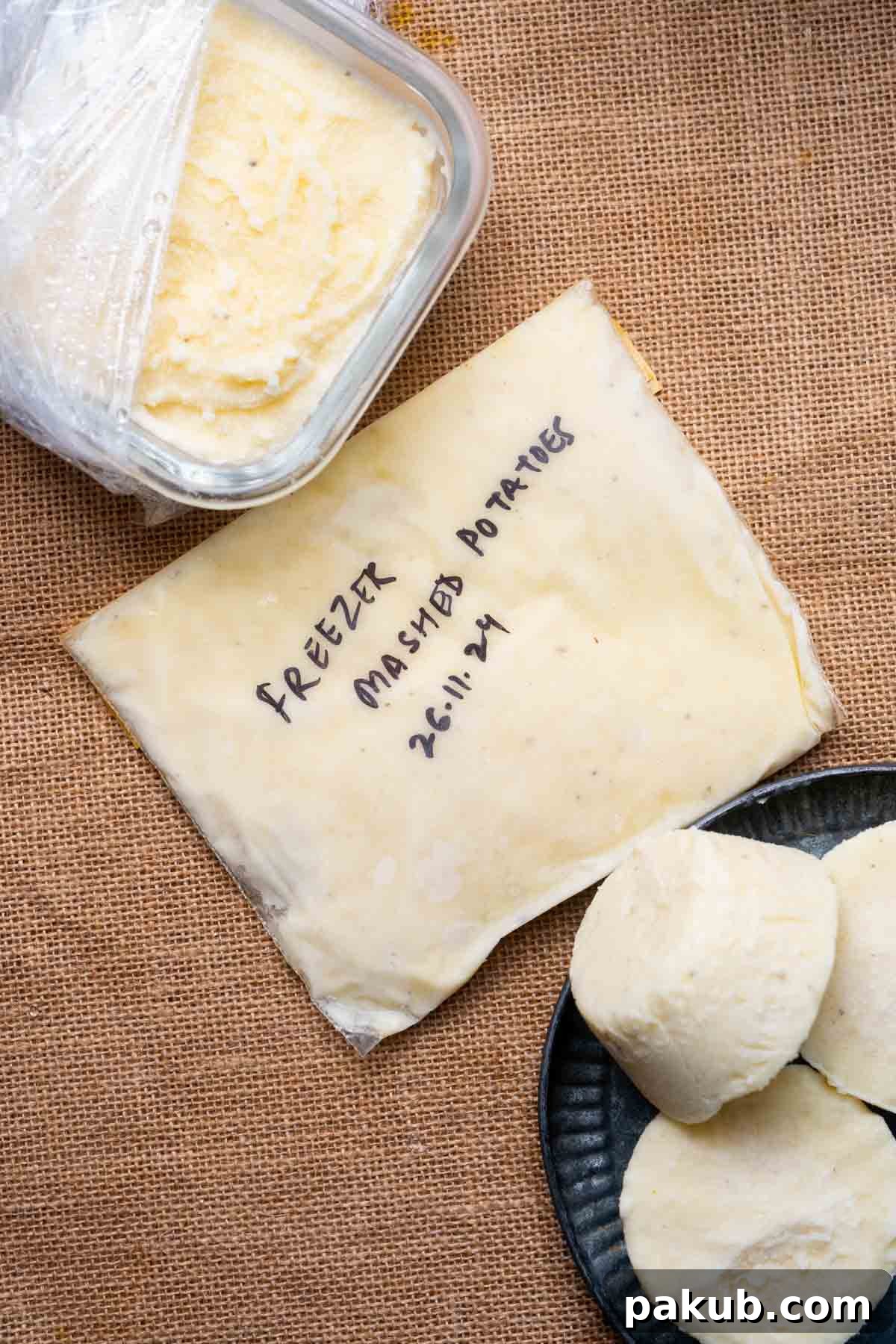
Once you experience the ease and convenience of having perfectly frozen mashed potatoes ready at your fingertips, you’ll wonder how you ever managed without it. I bet you’ll find yourself always keeping a batch in your freezer for those spontaneous mashed potato cravings, or perhaps to effortlessly elevate any weeknight meal. It’s a truly brilliant way to save time, reduce food waste, and enjoy comfort food whenever you desire!
If you try out these methods and tips, don’t hesitate to drop a comment below to let me know how they worked for you. Happy freezing!
How To Freeze Mashed Potato
By: Richa
A comprehensive guide on everything you need to know about freezing mashed potatoes – defrosting and reheating instructions included!
Servings: 4 portions
Equipment
- 1 Freezer
Ingredients
- 3 cups Mashed Potatoes
Instructions
Method 1: Single serving portions
- Allow the mashed potatoes to cool down completely to room temperature and then scoop them into individual servings on a baking tray lined with parchment paper.
- Stick the tray into the freezer for 4-5 hours, or until the scoops are completely solid.
- Once the mashed potato scoops have completely frozen and become hard, transfer them to a heavy-duty ziplock bag and seal it. Make sure to take out as much air as possible from the bag.
- Put this bag of frozen mashed potato scoops back into the freezer, label it clearly with the date, and use up within 2 months for best quality.
Method 2: Large batch in freezer bags
- Once the mashed potatoes are completely cool, grab a heavy-duty freezer-safe ziplock bag and fill it about three-quarters of the way with mashed potatoes. Seal the bag, leaving a small opening to allow air to pass.
- Place the bag on a flat surface or your countertop and gently spread out the mashed potatoes until it’s in a flat, even layer. Ensure the bag has no air pockets, then seal it all the way through.
- Repeat the process for any remaining mashed potatoes.
- Lay the bags of flattened mashed potato on parchment paper or a tray and freeze for a few hours until solid.
- Once frozen, you can remove the “sheets” of mashed potatoes and transfer them to a glass container or a larger ziplock bag to optimize space in the freezer. Label with the date.
Method 3: Large batch in a container with lid
- For this method, transfer the room temperature mashed potatoes to an airtight freezer-safe container and flatten out the top surface using the back of a spoon or spatula.
- Once the mashed potatoes are completely cool, wrap the entire container tightly in three layers of plastic cling film. Then, securely put the lid on. This is an essential step to prevent freezer burns and odors.
- Put the labeled container into the freezer and store until you are ready to eat the whole batch.
Explore More Creamy Mashed Potato Recipes
Looking for new ways to enjoy your mashed potatoes, or perhaps a recipe to make a fresh batch for freezing? Check out these delightful recipes:
- Creamy Garlic Mashed Potatoes: A classic, comforting favorite.
- Best Slow Cooker Mashed Potatoes: Effortless and consistently delicious.
- Instant Pot Garlic Mashed Potatoes: Quick, easy, and full of flavor.
- Leftover Mashed Potato Ham Cakes: A creative way to use up those extra potatoes.