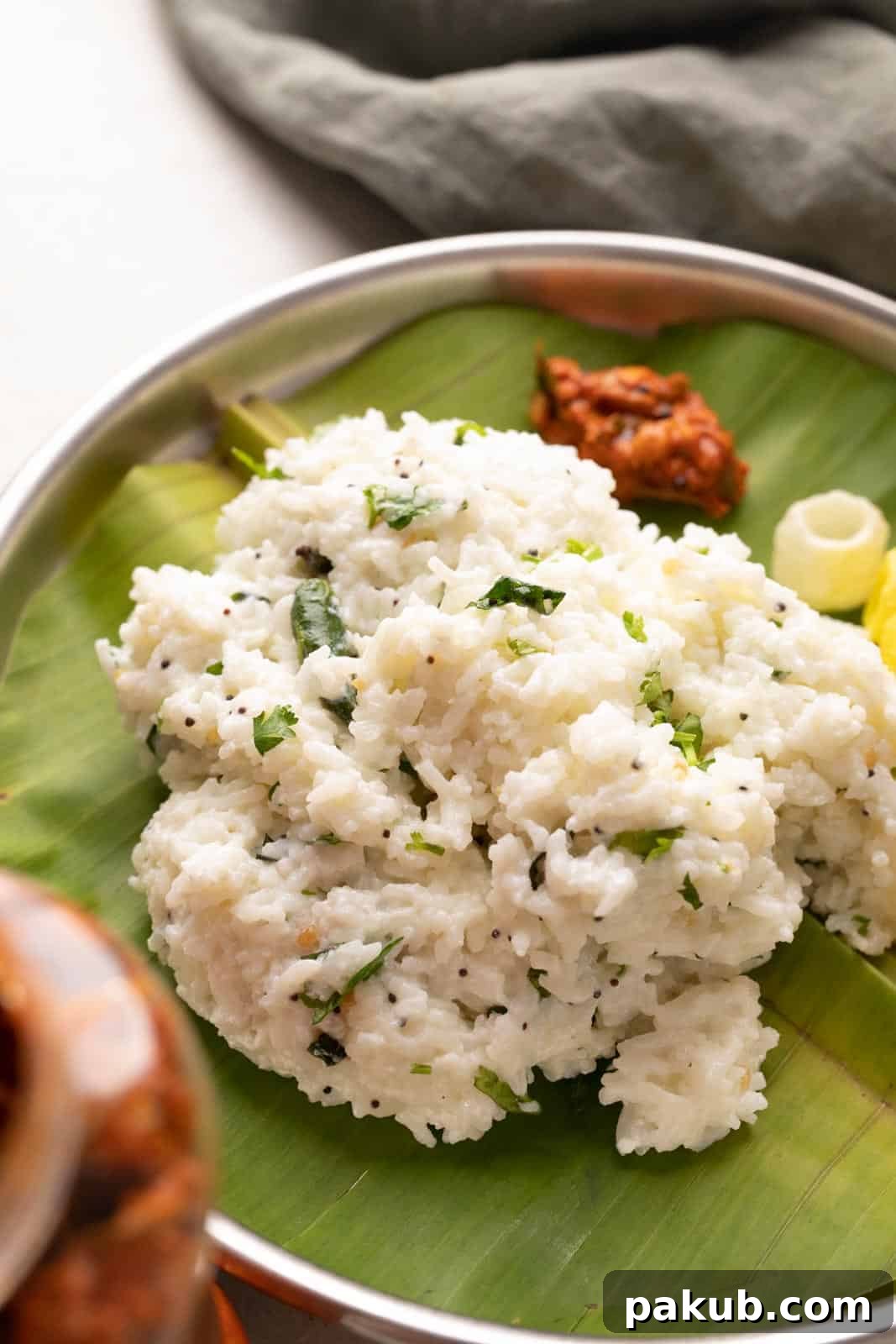
Curd Rice is more than just a simple dish; it’s a quintessential South Indian summer favorite, artfully tempered with aromatic spices to create a cool, refreshing, and deeply satisfying meal. Known by various regional names like Thayir Sadam, Daddojanam, or Bagala Bath, it’s cherished across the subcontinent. This creamy, tangy delight tastes absolutely fantastic when served with a side of spicy pickle, flavourful podi, crispy appalam, or crunchy fryums.
For many years, the allure of Curd Rice remained a mystery to me. It wasn’t until I immersed myself in the vibrant culture of Bangalore that I truly began to understand its profound cult following in the region. At first glance, its simplicity seemed to belie the passionate devotion it inspired. How could such an unassuming preparation command such widespread affection?
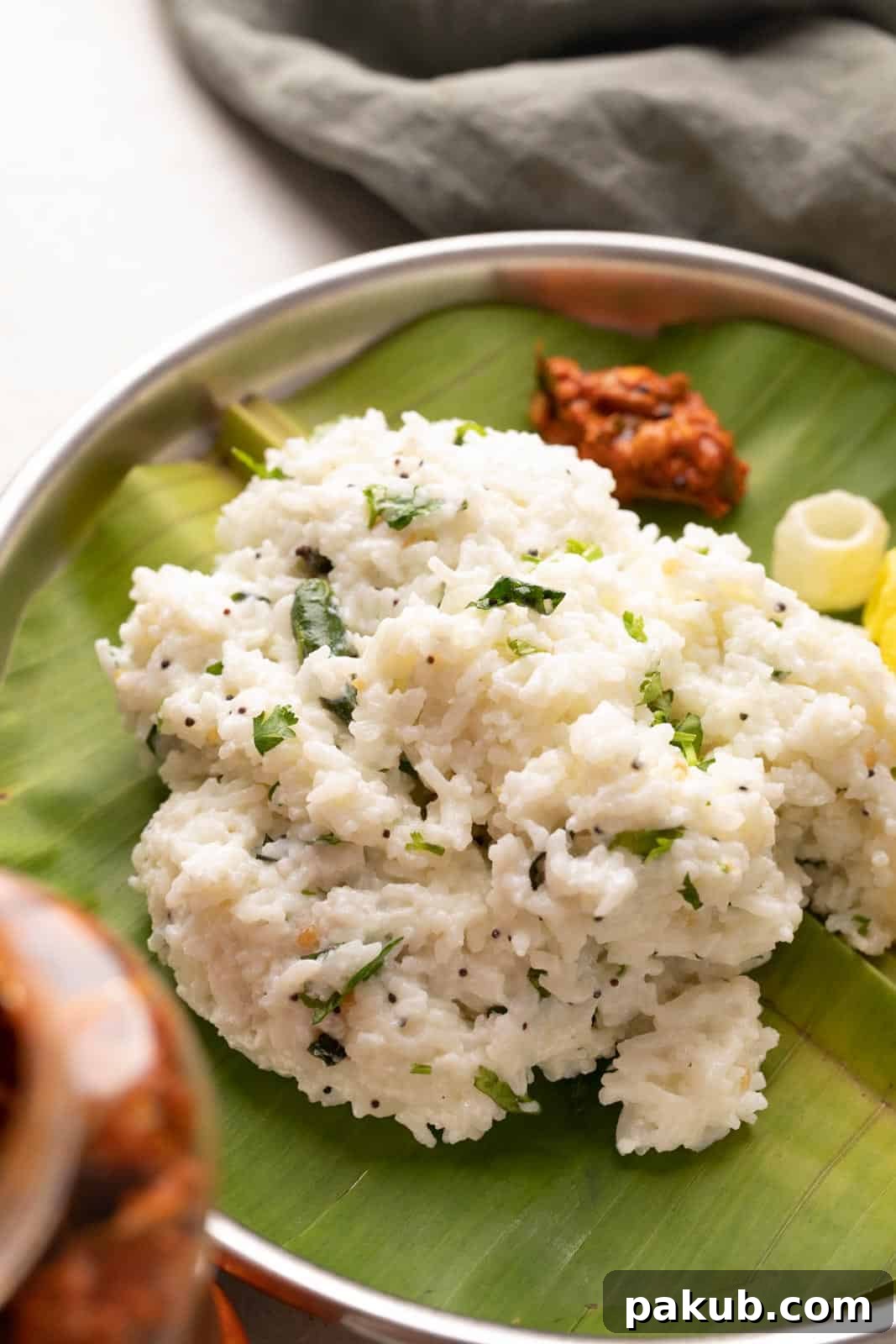
However, after experiencing it firsthand at numerous festive occasions, particularly South Indian weddings, the secret of its universal appeal became abundantly clear. Curd Rice is far from just rice mixed with curd. It’s an intricate balance where warm, soft-cooked rice, creamy milk, and live curd cultures are combined and left to perform their magic over several hours. This process allows the curd to ‘set’ beautifully with the rice, transforming it into an incredibly creamy and subtly tangy concoction.
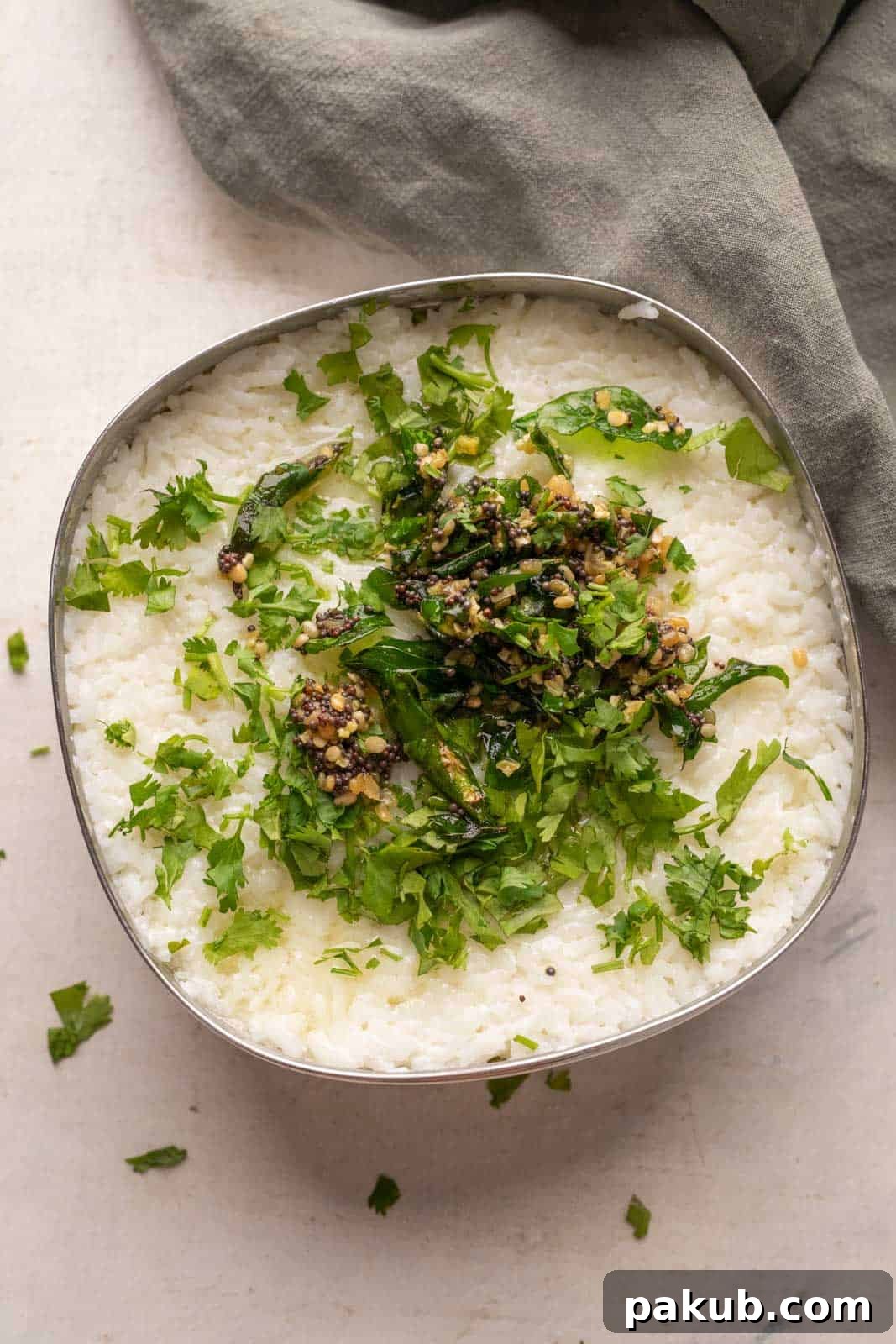
Following this fermentation, a vibrant and flavourful tempering, a hallmark of Indian cuisine, is added. This tempering, infused with spices and aromatics, elevates the dish, giving depth and character to the otherwise mellow rice. A few hours in the refrigerator, and you are presented with the ultimate summer dish – cool, soothing, and utterly refreshing. It’s the kind of meal that gently coaxes you into a peaceful afternoon nap, embodying comfort and culinary tradition in every spoonful.
My journey from a skeptic to an ardent admirer has been complete. I now hold a deep appreciation for Curd Rice and the nuanced ways in which it can be prepared.
The Art of Making Curd Rice: Two Distinct Methods
While the concept of Curd Rice might appear straightforward, there are primarily two beloved methods for its preparation, each offering a slightly different experience and catering to varying schedules.
Method 1: The Traditional Slow-Set Curd Rice
This method, which I learned from a dear Tamil friend, yields the most authentic and deeply flavourful Curd Rice, often revered as the ‘proper’ way. It involves a thoughtful setting process that allows the cultures in the curd to ferment with the rice and milk, creating a richer, more complex texture and taste.
First, short-grain rice is cooked in a pressure cooker until it’s exceptionally soft, almost mushy. This ensures the rice grains can easily absorb the liquids and contribute to the creamy texture. Once cooked, the warm, lightly mashed rice is combined with room-temperature curd and milk. This mixture is then gently stirred, covered, and left in a warm spot for several hours, typically around 6 hours or overnight. During this time, the active cultures in the curd work their magic, thickening the mixture and imparting that characteristic tangy flavour. The result is a homemade curd that has set beautifully with the rice, offering an unparalleled creaminess.
After the setting period, a vibrant tempering is prepared and folded into the rice. For the best experience, I highly recommend refrigerating the Curd Rice for a few hours before serving. The chilling process enhances its refreshing qualities, making it an ideal antidote to the summer heat.
Method 2: The Instant Refreshment – Quick Curd Rice
This second method is perfect for those moments when time is of the essence but you still crave the cooling comfort of Curd Rice. It’s a quick fix that delivers a satisfying version of the dish without the extended setting time.
Begin by cooking rice until soft and mashing it lightly, just as in the traditional method. The crucial difference here is to allow the cooked rice to cool completely before proceeding. Once the rice has reached room temperature, it is mixed with curd and a splash of milk (the milk is optional but helps achieve a smoother consistency and prevents excessive sourness). For an alternative tangy note, some people prefer to use buttermilk instead of curd and milk. After mixing, a flavourful tempering is immediately added, and the dish is ready to be savoured. While it might not have the same depth of flavour as the slow-set version, it’s incredibly convenient and equally refreshing on a hot day.
Despite its seeming simplicity, achieving the perfect Curd Rice requires attention to a few key details. Here are some invaluable tips to ensure your Curd Rice is consistently delicious:
- Freshly Cooked Rice is Key: Always prioritize using freshly cooked rice. Stale or leftover rice tends to be firmer and less pliable, making it difficult to achieve the desired soft, mashable texture. Pressure cooking is, in my opinion, the superior method for preparing rice for Curd Rice, as it yields perfectly tender grains ideal for this dish.
- Embrace Homemade Curd: Whenever possible, opt for homemade curd over store-bought varieties. Homemade curd offers a superior flavour profile, a lighter texture, and an unmatched creaminess that is hard to replicate. However, for convenience or when homemade isn’t an option, store-bought curd works perfectly fine – no judgment here!
- Don’t Skip the Milk: The addition of milk is not merely for consistency; it serves a vital role, especially in warmer climates. Milk helps to prevent the curd from turning excessively sour too quickly, maintaining a balanced tanginess in the dish. It also contributes to the overall creaminess.
- Room Temperature Matters: To prevent any undesirable curdling or the separation of whey, ensure both the curd and milk are at room temperature before mixing them with the rice. This gentle temperature integration helps create a uniformly smooth and creamy Curd Rice.
- The Right Rice Variety: While short-grain rice like Sona Masuri is traditionally preferred for its ability to become soft and mushy, you can experiment with other varieties. The key is to ensure the rice is cooked until very tender.
- Achieving Ideal Consistency: Curd rice should be creamy and moist, not dry. Adjust the amount of milk or curd to achieve your preferred consistency. It will thicken as it chills, so aim for a slightly looser consistency if serving cold.
Is Curd Rice Healthy? Unveiling Its Nutritional Benefits
Beyond its delicious taste and refreshing qualities, Curd Rice stands out as an exceptionally healthy dish, particularly beneficial during the sweltering summer months. It’s a nutritional powerhouse, offering a range of health advantages that make it a smart addition to your diet.
- Rich in Protein and Calcium: The curd and milk provide an excellent source of protein, essential for muscle repair and growth, and a significant amount of calcium, crucial for strong bones and teeth.
- Abundant in Good Fats: The healthy fats derived from curd, milk, and the tempering ingredients contribute to overall well-being and aid in nutrient absorption.
- Probiotic Powerhouse for Digestion: It’s widely known that the probiotics (beneficial live bacteria) in curd play a vital role in promoting gut health. These probiotics aid digestion, balance gut flora, and can help alleviate digestive discomfort. This is precisely why Curd Rice is often served at the culmination of a traditional South Indian meal, acting as a natural digestive aid.
- Cooling and Hydrating: During hot weather, Curd Rice offers a natural cooling effect, helping to regulate body temperature and prevent dehydration. Its high moisture content is incredibly soothing.
- Energy Boosting: The combination of carbohydrates from rice and protein from curd provides sustained energy, making it an ideal lunch option that keeps you feeling full and energetic without feeling heavy.
- Versatile for Added Fiber and Nutrients: The dish is naturally refreshing, and its health benefits can be further enhanced by incorporating various vegetables and fruits. Additions like pomegranate arils, grated carrots, or chopped cucumber introduce valuable fiber, vitamins, and antioxidants, turning it into a truly wholesome meal.
Elevate Your Curd Rice: Delicious Additions and Variations
While many purists enjoy Curd Rice in its unadulterated, simple form, its versatility allows for a myriad of additions that can enhance its flavour, texture, and nutritional profile. Don’t hesitate to experiment with these popular complements to customize your Curd Rice experience:
- Grated Carrots: Add a touch of natural sweetness, vibrant color, and an extra dose of vitamins and fiber.
- Finely Chopped Cucumber: Provides a wonderfully cool and crisp texture, amplifying the refreshing quality of the dish.
- Diced Raw Mango: For a delightful seasonal twist, raw mango introduces a pleasant tartness that complements the tang of the curd beautifully.
- Pomegranate Arils: These jewel-toned seeds offer a burst of sweet-tart flavour and a delightful crunch, making the dish visually appealing and texturally exciting.
- Roasted Cashews or Peanuts: For those who love an added textural element, a sprinkle of lightly roasted cashews or peanuts provides a satisfying crunch and nutty flavour.
- Fresh Ginger: Beyond the tempering, finely grated fresh ginger can be mixed directly into the rice for an invigorating zing.
- Green Chillies: For a subtle kick, a few extra finely chopped green chillies can be incorporated into the rice mixture (beyond what’s used in the tempering).
- Curry Leaves: While always a part of the tempering, a few extra fresh curry leaves, finely chopped, can also be mixed in for an intensified aromatic experience.
Whichever way you choose to prepare and enjoy your Curd Rice, one thing is certain: this dish consistently delivers satisfaction. Its comforting nature and refreshing qualities will likely surprise you with how frequently it becomes a go-to meal for you and your family.
Watch the Video Tutorial
Curd Rice – A Refreshing Summer Special
Richa
5 mins
20 mins
25 mins
4 people
Ingredients
For the Curd Rice:
- ½ Cup short-grained Rice (Sona Masuri is recommended)
- 1 ¼ cup Water, for boiling
- 1 Teaspoon Salt (or to taste)
- 1 Cup Milk, at room temperature
- ¼ Cup Curd (Yogurt), at room temperature
For the Tempering (Tadka):
- 1 Tablespoon Vegetable Oil (or Ghee for richer flavor)
- 1 Teaspoon Mustard Seeds
- 1 Tablespoon Urad Dal (split black lentils)
- ½ Teaspoon Hing (asafoetida)
- 2 Tablespoons finely chopped Ginger
- 1 Green Chilli, slit lengthwise (adjust to spice preference)
- 1 Sprig fresh Curry Leaves
- 2 Tablespoons chopped fresh Coriander Leaves, for garnish
- ¼ Cup finely chopped Onion, for topping (optional)
- ¼ Cup Pomegranate arils, for topping (optional)
Instructions (Method 1: Traditional Slow-Set Curd Rice)
-
1. Prepare the Rice: Wash and rinse the short-grain rice at least three times until the water runs clear. This removes excess starch and ensures fluffy grains.
-
Add the rinsed rice, 1 teaspoon of salt, and 1 ¼ cups of water to a pressure cooker. Pressure cook for 4 whistles, or if using an Instant Pot, pressure cook on high for 8 minutes, then perform a manual pressure release. Once the rice is cooked, open the cooker and gently mash the hot rice with the back of a spatula or a potato masher until it is soft and slightly mushy.
-
2. Set the Curd Rice: Transfer the warm, mashed rice to a clean container with a lid. In a separate bowl, whisk together the milk and curd (both at room temperature) until smooth. Pour this mixture over the warm rice. Mix thoroughly to ensure the milk and curd are evenly combined with the rice. Close the lid and set the container aside in a warm spot. Allow the curd to naturally set with the rice for approximately 6 hours, or overnight, for the best flavour and texture.
-
3. Prepare the Tempering: Once the curd rice has set, prepare the tempering. Heat oil (or ghee) in a small saucepan over medium-high heat. Once the oil is hot, add the mustard seeds and let them splutter. Reduce the heat to medium, then add the urad dal and fry lightly until it turns golden brown on the sides.
-
Now, add the hing (asafoetida), finely chopped ginger, and slit green chilli to the pan. Sauté lightly until the ginger is fragrant. Finally, add the curry leaves and sauté for another 10-15 seconds until they turn crisp. Remove the pan from heat immediately.
-
4. Combine and Serve: Pour the hot tempering mixture over the set curd rice. Add the chopped coriander leaves. If desired, also mix in finely chopped onion and pomegranate arils for extra flavour and crunch. Stir everything together gently, ensuring the tempering is well distributed. Taste and adjust for salt if necessary. Serve immediately, or for an even more refreshing experience, refrigerate the Curd Rice until thoroughly chilled before serving.
Video Guide
Notes for Perfect Curd Rice
- Rice Selection & Cooking: For the best creamy texture, always use freshly cooked, soft, and lightly mashed rice. Short-grain varieties like Sona Masuri work wonderfully, cooked in a pressure cooker for optimal tenderness.
- Curd Quality: Homemade curd is highly recommended for its superior flavour, lightness, and creaminess. While store-bought curd can be used in a pinch, expect a slight difference in the final taste and texture.
- The Role of Milk: Adding milk is crucial, especially in warmer climates, as it helps prevent the curd from turning overly sour. It also contributes significantly to the desired creamy consistency.
- Temperature Control: Ensure both the curd and milk are at room temperature before mixing with the rice. This prevents immediate curdling and the separation of whey, leading to a smoother dish.
- Customizing Additions: Feel free to experiment with a variety of additions to personalize your Curd Rice. Popular choices include grated carrots, finely chopped cucumber, diced raw mango, vibrant pomegranate arils, and crunchy roasted cashews. These additions can enhance flavour, texture, and nutritional value.
- Serving Temperature: While delicious at room temperature, Curd Rice is particularly refreshing when served chilled. Allow it to refrigerate for a few hours after preparation for the ultimate cooling experience.
Nutrition Information (per serving, approximate)
Carbohydrates: 30g,
Protein: 6g,
Fat: 6g,
Saturated Fat: 4g,
Cholesterol: 7mg,
Sodium: 655mg,
Potassium: 179mg,
Fiber: 3g,
Sugar: 6g,
Vitamin A: 124IU,
Vitamin C: 9mg,
Calcium: 97mg,
Iron: 2mg