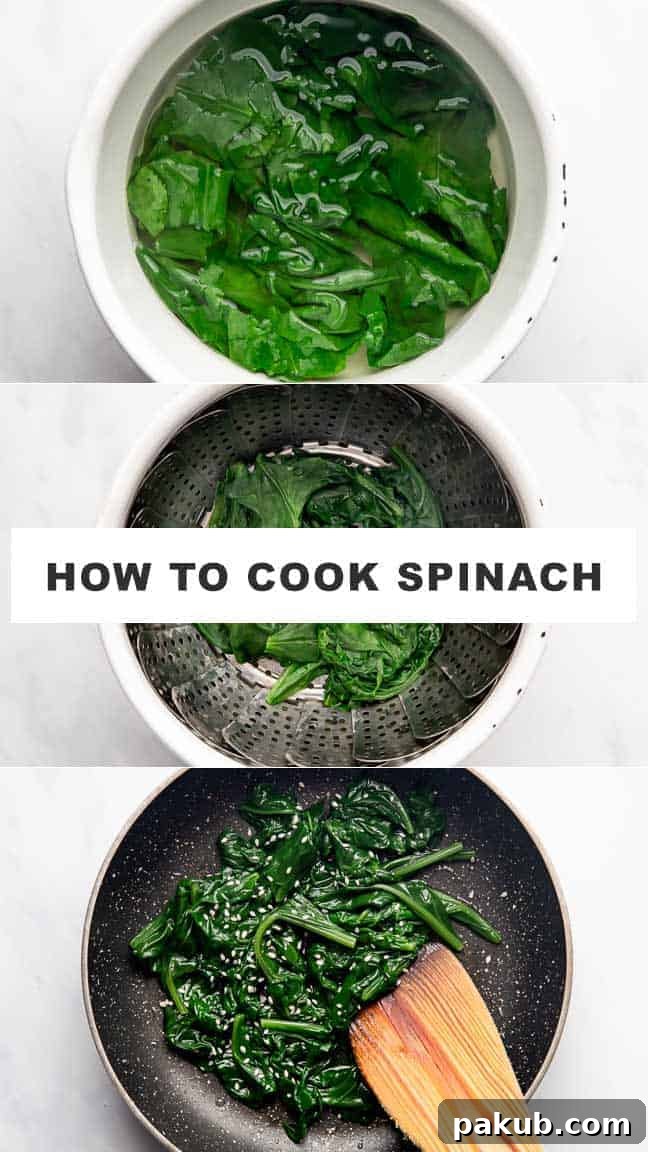
Unlock the full potential of spinach! Learn how to perfectly cook this nutrient-rich superfood using three essential methods: blanching, steaming, and sautéing. Quick, healthy, and delicious results guaranteed.
Spinach is a globally celebrated ingredient, renowned for its incredible versatility and impressive nutritional profile. Often hailed as a “superfood,” this leafy green has charmed its way into kitchens worldwide, thanks in no small part to its ease of preparation and myriad health benefits. While many appreciate it cooked, it’s worth noting that raw spinach is also a fantastic source of vitamins and minerals, making it a great addition to salads and smoothies.
In our kitchen, spinach makes frequent appearances in a variety of dishes. From rich curries and vibrant stir-fries to invigorating smoothies and refreshing salads, its adaptability knows no bounds. We love incorporating it into a hearty frittata (a clever way to sneak in extra greens!), elegantly stuffed in chicken breasts, or our personal favorite: combined with creamy ricotta in a luscious lasagna.
Table of Contents
- Exploring Different Types of Spinach
- The Nutritional Powerhouse: Why Spinach is a Superfood
- Understanding Spinach Portion Sizes: Raw vs. Cooked
- Preserving Nutrients: The Best Ways to Cook Spinach
- Method 1: Blanching Spinach for Optimal Freshness
- Method 2: Steaming Spinach to Maintain Vibrancy
- Method 3: Sautéing Spinach for Quick & Flavorful Dishes
- Essential Tips for Cooking Spinach Successfully
- How to Freeze Spinach for Future Use
- Creative and Delicious Ways to Enjoy Spinach
- Spinach Cooking Methods: Quick Reference Recipe
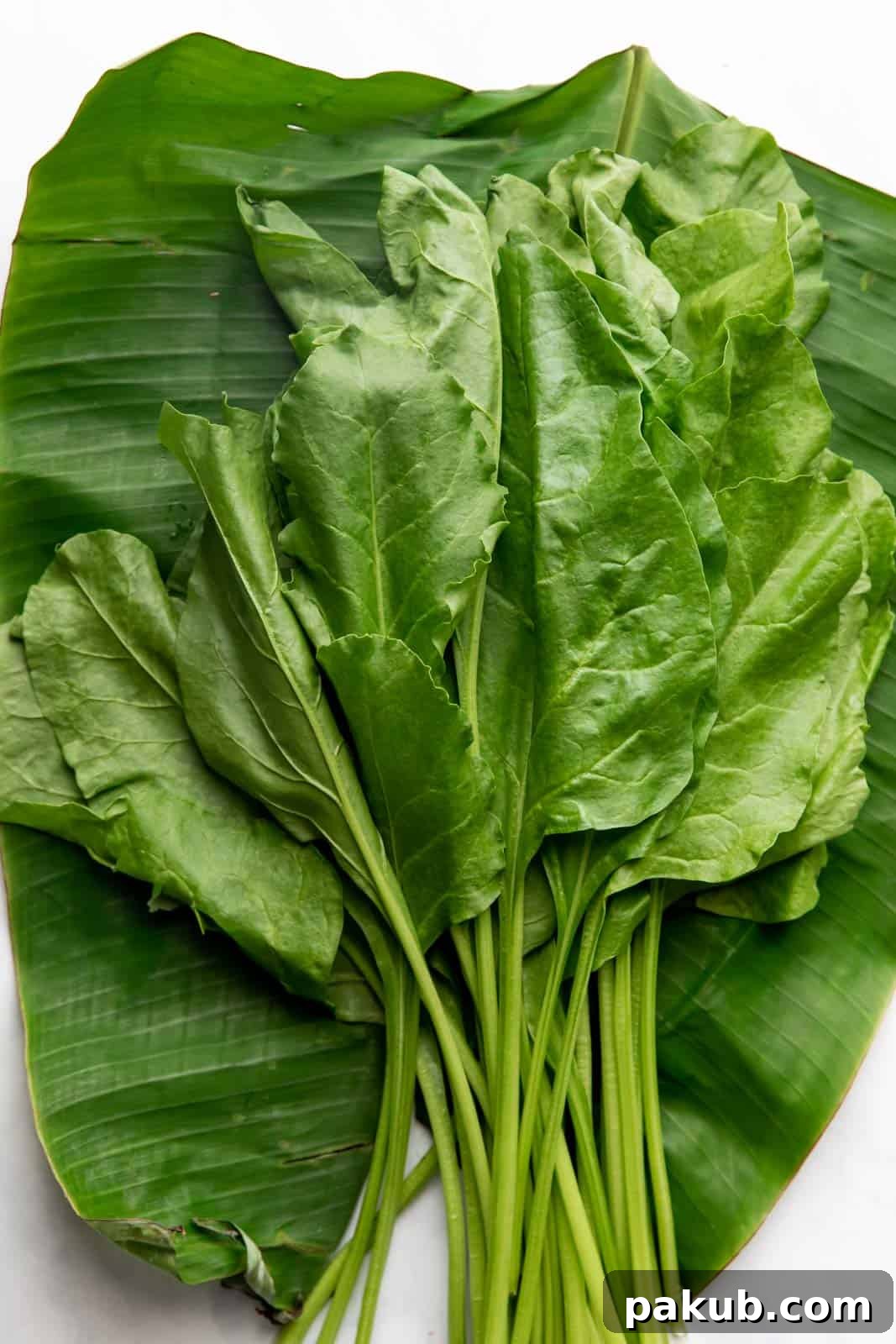
Exploring Different Types of Spinach
While the term “spinach” is often used broadly, there are several distinct varieties, each with its unique characteristics. Understanding these types can help you choose the best spinach for your culinary needs. The three most common types you’ll encounter are:
- Savoy Spinach: This is arguably the most popular type, easily recognizable by its dark green, crinkly, and curly leaves. Savoy spinach has a slightly earthy and robust flavor. Its textured leaves hold up well during cooking and retain their shape, making it excellent for sautéing or incorporating into heartier dishes. It also tends to have a longer shelf life compared to other varieties.
- Semi-Savoy Spinach: A hybrid variety that combines the best features of savoy and smooth-leafed spinach. It has crinkled leaves that are less curly than savoy, making it easier to clean. Semi-savoy offers a good balance of flavor and texture, suitable for a wide range of cooking applications.
- Smooth-Leafed (Flat-Leaf) Spinach: As the name suggests, this variety features broad, smooth, and flat leaves. It has a milder flavor and a more tender texture than savoy spinach. Its smooth surface makes it very easy to clean, and it cooks down quickly. Flat-leaf spinach is often preferred for salads, sandwiches, and for blending into smoothies due to its less fibrous nature. It’s also commonly found pre-washed and bagged in supermarkets.
Regardless of the type, always opt for fresh spinach with vibrant green leaves and no signs of wilting or yellowing for the best taste and nutritional value.
The Nutritional Powerhouse: Why Spinach is a Superfood
Spinach’s reputation as a “superfood” is well-deserved, stemming from its impressive array of vitamins, minerals, and antioxidants packed into every leaf. This leafy green provides a dense nutritional punch with very few calories, making it an excellent addition to any diet focused on health and wellness.
Here’s a closer look at what makes spinach so extraordinary:
- Rich in Vitamins: Spinach is an outstanding source of Vitamin K, crucial for blood clotting and bone health. It also provides significant amounts of Vitamin A (in the form of beta-carotene, an antioxidant that converts to Vitamin A in the body), vital for vision and immune function, and Vitamin C, another powerful antioxidant supporting immune health and skin integrity. Furthermore, it contains B vitamins (like folate) and Vitamin E.
- Abundant in Minerals: Beyond vitamins, spinach is packed with essential minerals. It’s particularly famous for its high iron content, which is key for energy production and preventing anemia. It also supplies potassium (important for blood pressure regulation), magnesium (involved in over 300 bodily functions), and calcium (for strong bones and teeth).
- Powerful Antioxidants: Spinach is loaded with various antioxidants, including lutein, zeaxanthin, and quercetin. These compounds combat oxidative stress and inflammation, protecting your cells from damage and reducing the risk of chronic diseases. Lutein and zeaxanthin are particularly beneficial for eye health, helping to prevent age-related macular degeneration.
- Anti-Inflammatory Properties: The unique blend of phytonutrients and antioxidants in spinach gives it strong anti-inflammatory capabilities, which can help reduce inflammation throughout the body and support overall health.
- Energy Boosting: With its high iron and magnesium content, spinach plays a role in cellular energy production, making it an excellent food for boosting stamina and combating fatigue. This makes it an ideal ingredient for pre-workout meals or a natural pick-me-up.
- Digestive Health: The fiber in spinach aids in healthy digestion, promotes regularity, and can help prevent constipation.
Incorporating spinach into your daily meals is a simple yet effective way to significantly boost your nutrient intake and support a healthy lifestyle.
Understanding Spinach Portion Sizes: Raw vs. Cooked
One common observation when cooking spinach is its dramatic reduction in volume. What looks like a mountain of fresh leaves quickly wilts down to a small, concentrated portion. This characteristic is important to keep in mind when planning your meals and estimating quantities.
As a general rule of thumb: 1 cup of raw spinach will reduce to approximately 1/3 cup after cooking. This means that to achieve a substantial serving of cooked spinach, you’ll need a much larger amount of raw leaves than you might initially think. Don’t be shy about starting with a generous quantity!
Additionally, if you’re using methods like pressure-cooking or even blanching, be mindful of the water content. Spinach itself releases a significant amount of water during cooking. Using excessive external water can dilute its flavor and potentially leach out more water-soluble nutrients. For most cooking methods, minimal additional water is sufficient, or in many cases, none at all if the spinach is cooked quickly.
Preserving Nutrients: The Best Ways to Cook Spinach
While stewing vegetables for extended periods is a time-honored tradition in many cuisines, including Indian households, it’s not always the best approach for retaining the maximum nutritional value of delicate greens like spinach. Traditional methods, such as simmering curries for hours or pressure-cooking dishes like Palak Paneer, often prioritize flavor extraction over nutrient preservation. Although undeniably delicious, these age-old techniques can unfortunately lead to a loss of heat-sensitive vitamins and minerals.
But fear not! You don’t have to sacrifice taste for nutrition. We’re here to guide you through three simple, quick, and highly effective ways to cook spinach that ensure its vital nutrients remain largely intact. These methods are designed to minimize cooking time and exposure to high heat, helping you enjoy spinach at its most beneficial.
Once cooked using these techniques, you have a versatile base for countless dishes. A simple sprinkle of salt and pepper can create a delightful side. For an extra flavor kick, toss it with sesame oil and sesame seeds, or infuse it with aromatic garlic oil if you’re a garlic enthusiast. You can also easily purée the blanched or steamed spinach for use in soups, stews, and your favorite curries, knowing you’ve locked in its goodness. These three cooking methods provide an excellent foundation for any spinach-centric meal!
Method 1: Blanching Spinach for Optimal Freshness
Blanching is a highly recommended method for cooking spinach, particularly when you want to preserve its vibrant green color, tender texture, and nutritional integrity. It’s also an excellent preparatory step for freezing spinach or incorporating it into other dishes.
How to Blanch Spinach:
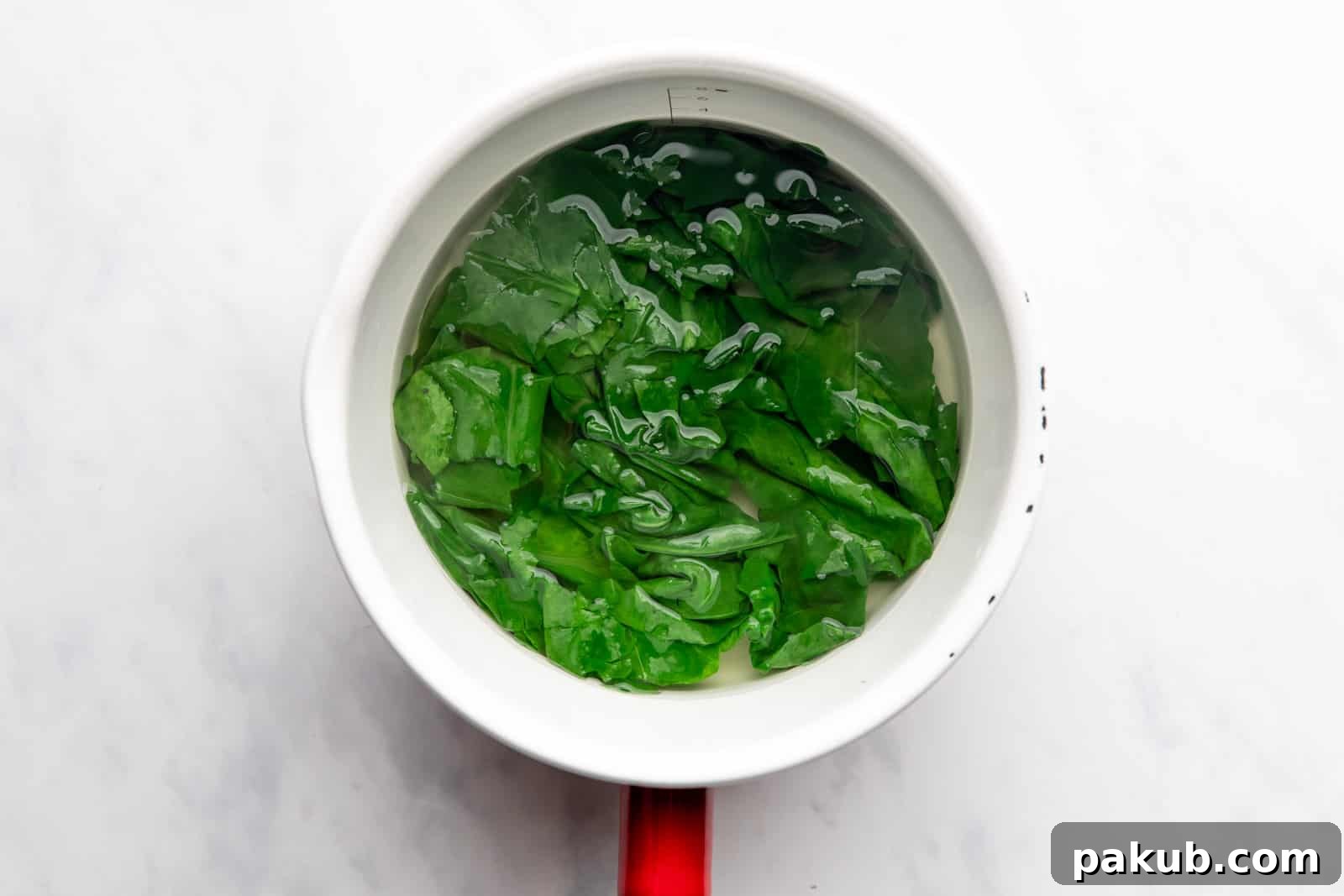
- Prepare Boiling Water: Bring a large pot of water to a rolling boil. For every pound of spinach, you’ll need at least 4 quarts of water. You can add a pinch of salt to the water, which helps in retaining the green color.
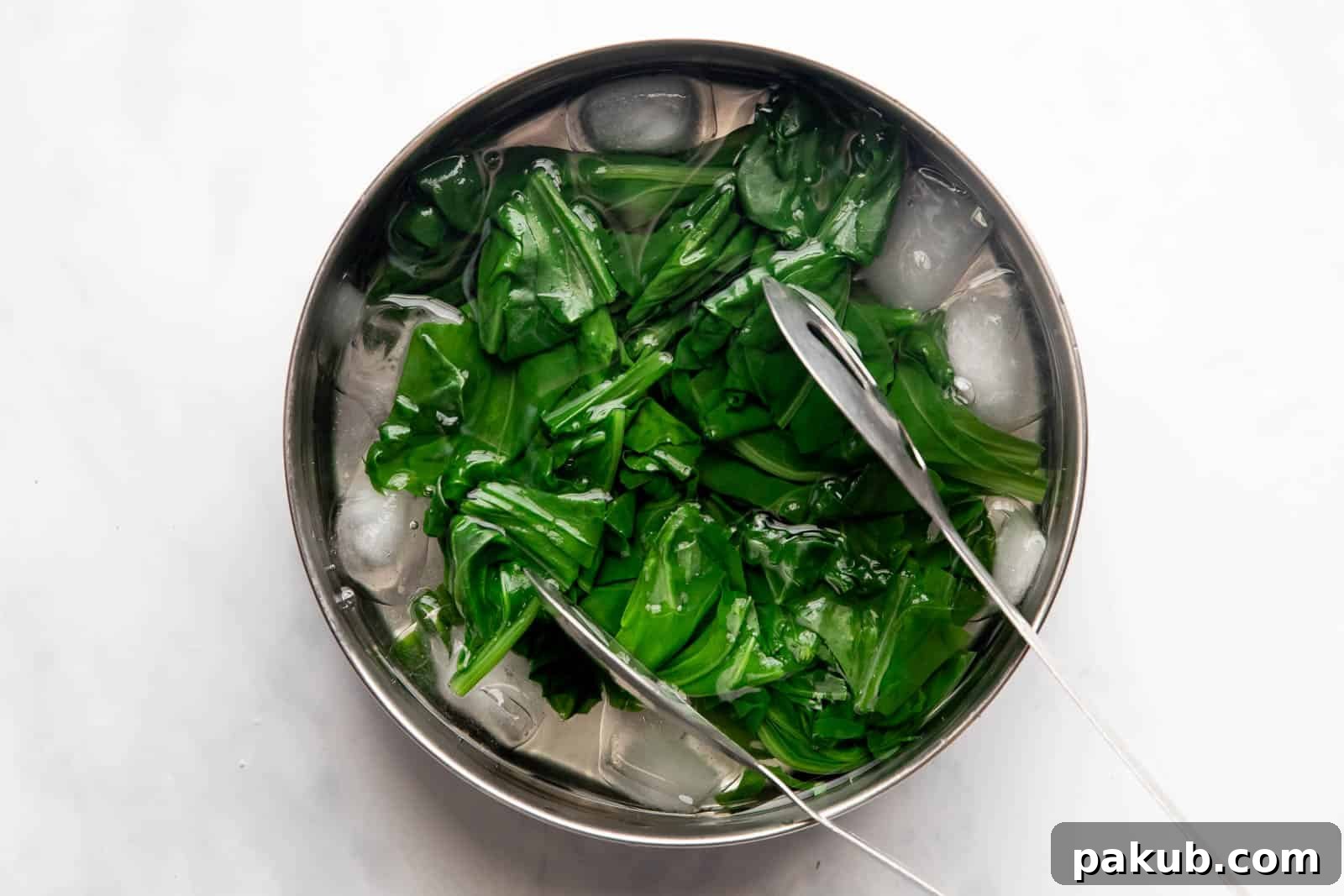
- Prepare Ice Bath: While the water is heating, prepare an ice bath. Fill a large bowl with ice and cold water. This step is crucial for stopping the cooking process immediately after blanching.
- Blanch the Spinach: Once the water is boiling, carefully add the cleaned spinach leaves. If you have a large quantity, work in batches to avoid overcrowding the pot, which can lower the water temperature too much.
- Cook Briefly: Submerge the spinach for only 1 to 2 minutes. You’ll notice the leaves turn a bright, vivid green and begin to wilt. The goal is to cook it just enough to tenderize it and kill harmful bacteria, without overcooking.
- Shock in Ice Bath: Immediately scoop the blanched spinach out of the hot water using a slotted spoon or tongs, and plunge it into the prepared ice bath. This rapid cooling halts the cooking process, preserving the bright color and crisp-tender texture, and preventing nutrient loss.
- Drain and Store: Once the spinach is completely cool (this usually takes a minute or two in the ice bath), remove it and gently squeeze out any excess water. You can do this by hand, in a salad spinner, or by pressing it against a colander. Blanched spinach is now ready to use or store. It can be kept in an airtight container in the refrigerator for up to 7 days, providing you with cooked spinach on hand for quick additions to omelets, soups, salads, and more.
Method 2: Steaming Spinach to Maintain Vibrancy
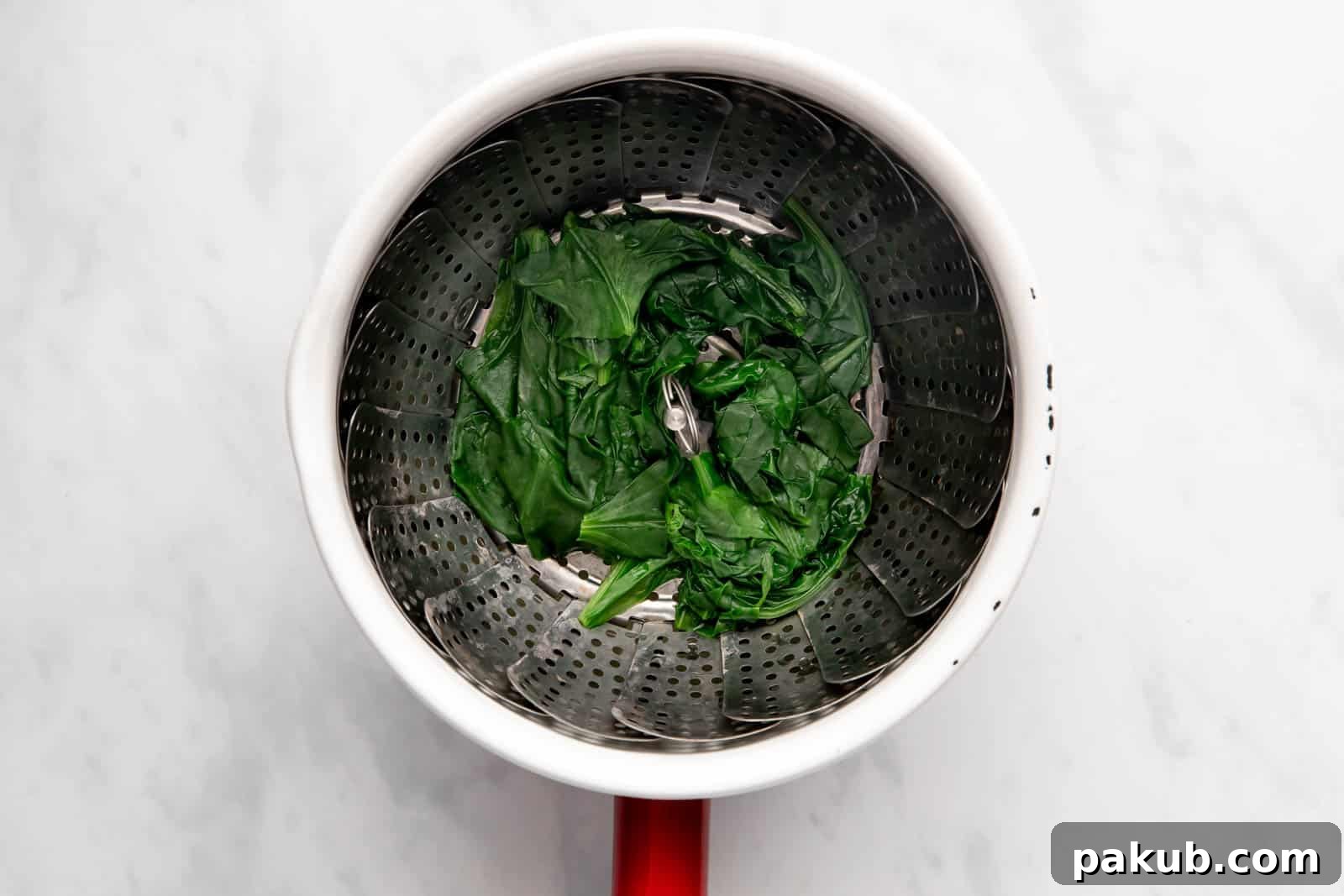
Steaming is another fantastic method for cooking spinach that prioritizes nutrient retention and results in beautifully tender leaves with a vibrant green color. Unlike boiling, steaming minimizes direct contact with water, reducing the leaching of water-soluble vitamins.
How to Steam Spinach:
- Prepare Steamer Setup: Bring about an inch or two of water to a boil in the bottom of a pot. Place a steamer basket or a colander that fits snugly over the pot, ensuring it doesn’t touch the boiling water.
- Add Spinach: Place the cleaned, raw spinach leaves into the steamer basket. Avoid overcrowding; if you have a large quantity, steam in batches to allow the steam to circulate evenly.
- Cover and Steam: Cover the pot with a tight-fitting lid. This traps the steam, allowing it to cook the spinach efficiently.
- Cook Briefly: Steam for approximately 2 to 3 minutes, or until the leaves have thoroughly wilted and turned a brighter shade of green. The exact time will depend on the quantity of spinach and how tender you prefer it.
- Season and Serve: Once cooked, carefully remove the steamed spinach from the pot. At this point, you can add a drizzle of olive oil or sesame oil (optional) and season with salt and freshly ground black pepper. Feel free to get creative with your seasoning; a squeeze of fresh lemon or lime juice, or a dash of balsamic vinegar, can wonderfully cut through any slight bitterness and brighten the flavor profile. Steamed spinach is excellent as a simple side dish or as a healthy addition to various recipes.
Method 3: Sautéing Spinach for Quick & Flavorful Dishes
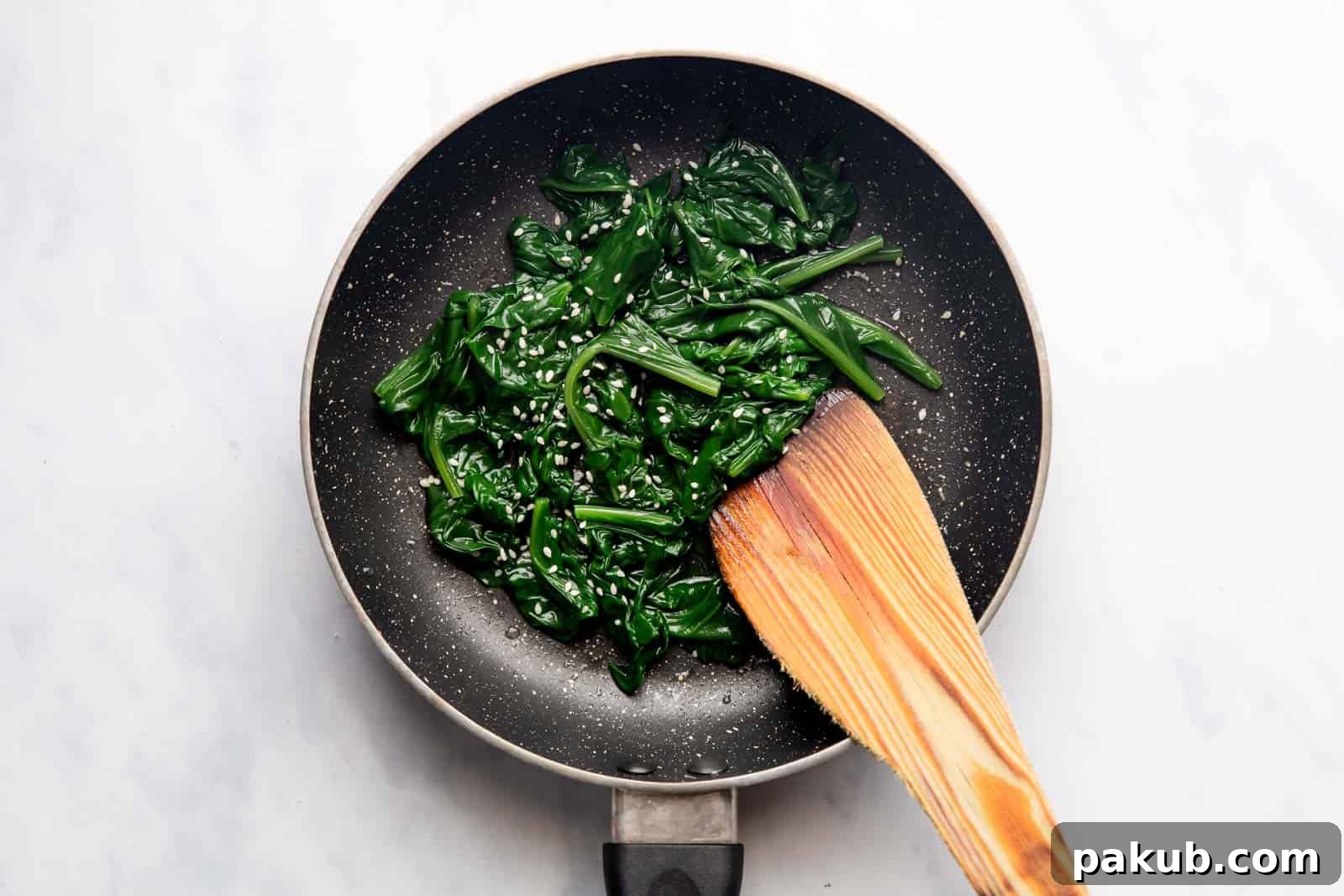
Sautéing spinach is perhaps the quickest and most flavorful way to cook this leafy green, making it a perfect choice for busy weeknights or when you want to infuse it with rich aromatics. This method allows the spinach to wilt down quickly while absorbing the flavors of your chosen seasonings.
How to Sauté Spinach:
- Heat Oil: Heat a small amount of olive oil, avocado oil, or your preferred cooking oil in a large pan or skillet over low-medium heat. A tablespoon or two is usually sufficient for a generous amount of spinach.
- Add Aromatics (Optional): This is where you can build layers of flavor! If desired, add minced garlic, chili flakes, thinly sliced onions, or any other spices of your choice to the hot oil. Sauté these aromatics for 30 seconds to a minute until fragrant, being careful not to burn the garlic.
- Add Spinach in Batches: Add the cleaned, raw spinach to the pan, one handful at a time. It might look like a lot initially, but it will quickly wilt down.
- Wilt and Stir: As each fistful of spinach wilts and reduces in volume, add the next. Stir the spinach gently to coat it with the oil and aromatics.
- Cook Until Tender: Continue to sauté for about 2 to 4 minutes in total, or until all the spinach has wilted and reached your desired tenderness. The spinach will release its own moisture, which helps it cook. Avoid overcooking, as this can make the spinach mushy and dull in color.
- Season and Serve: Once cooked, season with salt and freshly ground black pepper to taste. Sautéed spinach is a wonderful side dish on its own, or it can be easily incorporated into omelets, pastas, grain bowls, or as a bed for roasted meats.
Essential Tips for Cooking Spinach Successfully
Cooking spinach is straightforward, but a few key practices can elevate your results, ensuring optimal flavor, texture, and nutrient retention. Keep these tips in mind for perfect spinach every time:
- Thorough Rinsing is Crucial: Spinach, especially conventional varieties, can often harbor dirt and sand between its leaves and stems. It’s absolutely essential to rinse spinach thoroughly under cold running water at least a few times. You can also fill a large bowl with cold water, add the spinach, swish it around, and let the dirt settle at the bottom before lifting out the clean leaves. Always pat the spinach dry with a clean kitchen towel or use a salad spinner before cooking, especially for sautéing, to prevent excess water from steaming the leaves rather than sautéing them.
- Consider Removing Tough Stems: While tender baby spinach stems are perfectly fine to eat, the thicker, tougher stems of mature spinach can be fibrous and have a more pronounced bitter taste. For a more refined texture and flavor, it’s often best to remove these thicker stems before cooking. This can be a bit tedious but makes a significant difference in the final dish.
- Cook a Generous Quantity: Remember that spinach dramatically reduces in volume once cooked. What seems like an abundance of raw leaves will shrink down considerably. Plan to start with a much larger quantity than you think you’ll need if you’re aiming for a substantial cooked portion. As a guideline, a large bag of raw spinach (about 5-6 cups) might yield only about 1.5-2 cups cooked.
- Be Mindful with Oil Application: Spinach releases a lot of its own water during cooking, especially when sautéed. This means it doesn’t require a large amount of added oil. Excessive oil can make the final dish greasy, particularly if the spinach is destined to be an ingredient in another recipe, such as a quiche filling, a lasagna layer, or a stew. Use just enough oil to coat the pan and perhaps sauté aromatics, then let the spinach’s natural moisture do the rest.
- Season Carefully and Taste as You Go: Spinach has a naturally mild, slightly earthy flavor, and sometimes a hint of saltiness. It’s easy to over-salt it. Begin with a small pinch of salt, cook the spinach, and then taste before adding more. This allows you to adjust the seasoning perfectly without making your dish too salty. Freshly ground black pepper, a squeeze of lemon, or a touch of garlic are often all it needs to shine.
- Squeeze Out Excess Water for Fillings: If you’re using cooked spinach as a filling for dishes like ravioli, quiches, spanakopita, or even dips, it’s highly recommended to squeeze out as much excess moisture as possible once it has cooled. This prevents your final dish from becoming watery or soggy and ensures the filling has the right consistency. Gather the cooked spinach into a ball and firmly press it against a colander or between your hands to expel the liquid.
How to Freeze Spinach for Future Use
Freezing cooked spinach is an excellent way to prevent food waste and ensure you always have this healthy ingredient on hand for quick meals. It’s perfect for adding to smoothies, soups, sauces, or casseroles without the need for fresh preparation.
Steps to Freeze Spinach:
- Cook the Spinach: Start by blanching or steaming your spinach using the methods described above. These methods tenderize the spinach and preserve its color and nutrients effectively for freezing.
- Cool Completely: After cooking, immediately plunge the spinach into an ice bath (if blanched) or spread it out on a plate (if steamed) to cool down as quickly as possible. Ensure it is completely cold before proceeding.
- Squeeze Out All Excess Water: This is a critical step for preventing ice crystals and freezer burn. Gather the cooled spinach into a ball and firmly squeeze out as much water as you can. You can do this by hand, pressing it against a colander, or even wrapping it in a clean kitchen towel and twisting. The drier the spinach, the better its texture will be after thawing.
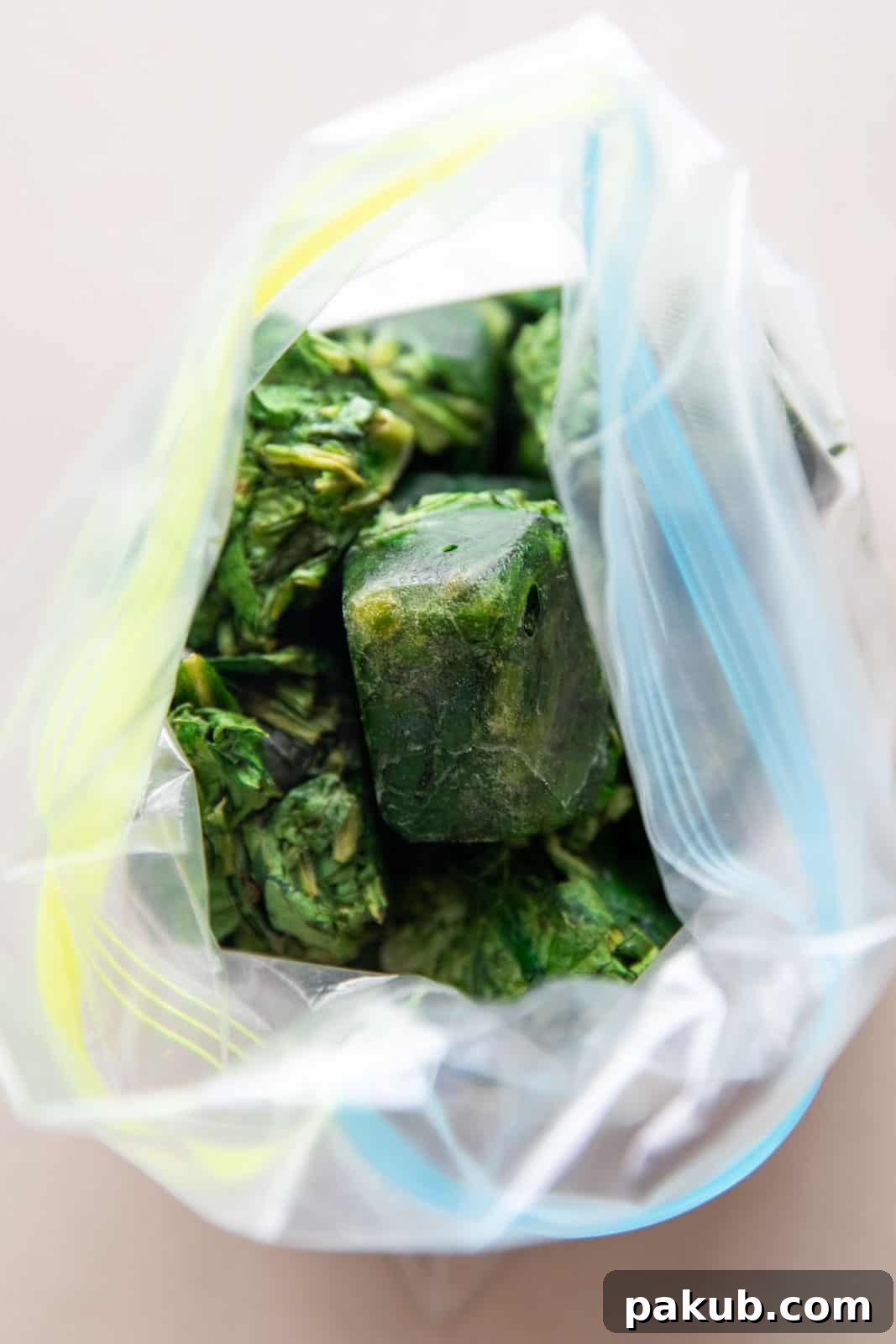
- Portion into Ice Trays: Take the squeezed, cooked spinach and spoon it into the compartments of ice cube trays. Press the spinach down firmly into each cube space to ensure a compact portion. This method creates convenient, pre-portioned servings.
- Freeze Solid: Place the filled ice trays in the freezer for at least 3 hours, or until the spinach cubes are completely frozen solid.
- Transfer for Long-Term Storage: Once frozen, pop the spinach cubes out of the trays. Transfer them to a freezer-safe ziplock bag or an airtight container. Label the bag/container with the date.
Using Frozen Spinach:
Frozen spinach cubes can be added directly to smoothies, soups, or stews. For other recipes like stir-fries or curries, you might want to thaw them slightly in the refrigerator or microwave first, then gently squeeze out any additional moisture that may have formed during thawing before adding to your dish.
Creative and Delicious Ways to Enjoy Spinach
Now that you’ve mastered the art of cooking spinach in nutrient-preserving ways, it’s time to explore the endless culinary possibilities! Cooked spinach serves as an incredibly versatile base that can elevate a wide range of meals, from quick sides to elaborate main courses. Here are some interesting and delicious ideas to make spinach a regular, enjoyable part of your diet:
- Garlic & Olive Oil Side Dish: For a quick and effortless dinner side, sauté a generous amount of minced garlic in good quality olive oil until fragrant. Add your blanched or steamed spinach, season with salt, pepper, and a squeeze of lemon juice. It’s simple, elegant, and pairs wonderfully with almost any main course.
- Refreshing Salads: While raw spinach is a popular salad base, blanched spinach can also add a unique texture and flavor to your greens. Try our delightful Spinach, Tomato, and Tofu Salad recipe for a light yet satisfying meal that’s easy on the stomach.
- Wholesome Breakfasts: Start your day with a boost of greens! Incorporate spinach into your morning routine with our savory Spinach Potato Frittata recipe, or blend it into a vibrant Spinach Smoothie for a quick, nutrient-packed drink.
- Comforting Dinners & Family Meals: If you have a little more time, spinach shines in comforting, hearty dishes. Create a rich vegetarian lasagna with layers of spinach and ricotta, or try making homemade ravioli for a truly special treat. For a weekend indulgence, our Spinach Mushroom Stuffed Chicken recipe is both elegant and satisfying.
- Indian-Inspired Delights: Craving the rich flavors of Indian cuisine? Spinach is a staple! Quickly prepare some easy Palak Paneer, a creamy spinach and cottage cheese curry, or explore the unique textures of Palak Paneer Koftas for a more elaborate dish.
- Soups and Stews: Stir a handful of cooked spinach into your favorite chicken noodle soup, lentil stew, or minestrone for added color, texture, and nutrients. You can also blend blanched spinach into creamy vegetable soups for a vibrant green hue.
- Egg Dishes: Beyond frittatas, spinach is excellent in omelets, scrambled eggs, or even folded into quiches and stratas. Its mild flavor complements eggs perfectly.
- Pasta Dishes: Toss sautéed or blanched spinach with pasta, garlic, olive oil, and parmesan cheese for a simple and quick meal. It’s also a fantastic addition to creamy pasta sauces or baked ziti.
- Green Smoothies & Juices: For a potent health boost, raw or blanched spinach is a cornerstone of many green smoothies. It blends easily and its mild taste is often masked by fruits and other vegetables.
Spinach truly is one of the easiest vegetables to cook, and its delicious potential is unlocked with just a little effort. We sincerely hope this comprehensive guide on how to cook spinach, along with our diverse serving suggestions, proves helpful in making this incredible superfood a regular and cherished part of your culinary repertoire. We’d love to hear your comments and your own unique spinach stories below!
This article has been meticulously researched and compiled by Bhavana Bhat and Rhea Melwani.
How to Cook Spinach 3 Ways
By: Richa
Let’s master the art of cooking spinach with three essential methods: steaming, sautéing, and blanching. This guide ensures your superfood is not only packed with health benefits but also prepared perfectly and quickly.
Prep Time: 5 mins
Cook Time: 3 mins
Total Time: 8 mins
Servings: 1 person
Ingredients
For Blanched Spinach
- 1 cup Spinach or baby Spinach
For Steamed Spinach
- 1 cup Spinach or baby Spinach
For Sautéed Spinach
- 1/2 teaspoon Olive Oil
- 1 cup Spinach or baby Spinach
Instructions
Blanched Spinach
- Add cleaned spinach leaves to a pot of boiling water. Let it sit for approximately 1 to 2 minutes, until the spinach turns a bright green color and the leaves have wilted.
- Scoop out the blanched spinach and immediately plunge it into a pot of ice-cold water to stop the cooking process.
- Drain the spinach, gently squeeze out any excess water, and it’s ready to use or store.
Steamed Spinach
- Bring a pot of water to a boil. Place a colander or steamer basket on top of the pot, ensuring it doesn’t touch the water.
- Place the raw spinach in the colander. Cover the pot with a lid and cook for 2 to 3 minutes, depending on the quantity, until the leaves wilt completely.
Sautéed Spinach
- Heat oil in a large pan or skillet over medium heat.
- Add cleaned and dried spinach leaves, one handful at a time. Cook for about 2 to 3 minutes in total, stirring occasionally, until the leaves wilt and release some moisture.
Notes
- Washing Spinach: It’s essential to wash spinach thoroughly before cooking. There is often dirt and sand stuck between the stems and leaves. Wash it several times under running water until all debris is removed.
- Storing Cooked Spinach: Cooked spinach can be cooled and stored in an airtight container in the refrigerator for up to 7 days.
- Freezing Spinach: To freeze, squeeze out all water from the cooked spinach, cool completely, and then spoon into ice cube trays. Freeze for 3 hours until solid, then transfer the spinach cubes to a ziplock bag or freezer-friendly container for later use. Frozen spinach can be added directly to smoothies or thawed for use in soups, curries, stir-fries, etc.
Nutrition
Per serving (1 person):
- Calories: 25 kcal
- Carbohydrates: 1 g
- Protein: 1 g
- Fat: 2 g
- Saturated Fat: 1 g
- Sodium: 24 mg
- Potassium: 167 mg
- Fiber: 1 g
- Sugar: 1 g
- Vitamin A: 2813 IU
- Vitamin C: 8 mg
- Calcium: 30 mg
- Iron: 1 mg