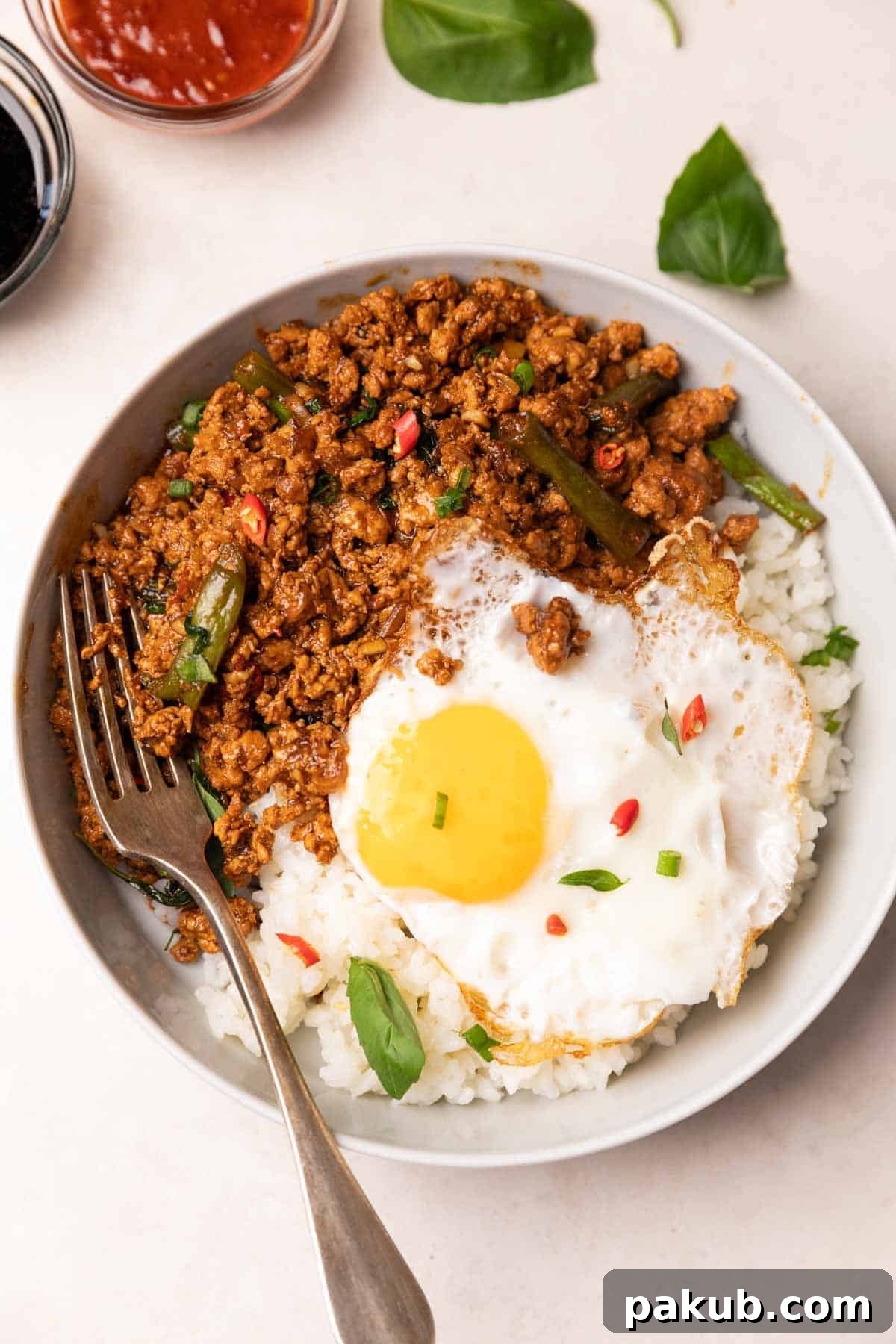
Get ready to transform your weeknights! This authentic Thai Basil Chicken, known as Pad Krapow Gai, delivers all the vibrant flavors of your favorite Thai takeaway, yet it’s incredibly simple and remarkably quick to make right in your own kitchen.
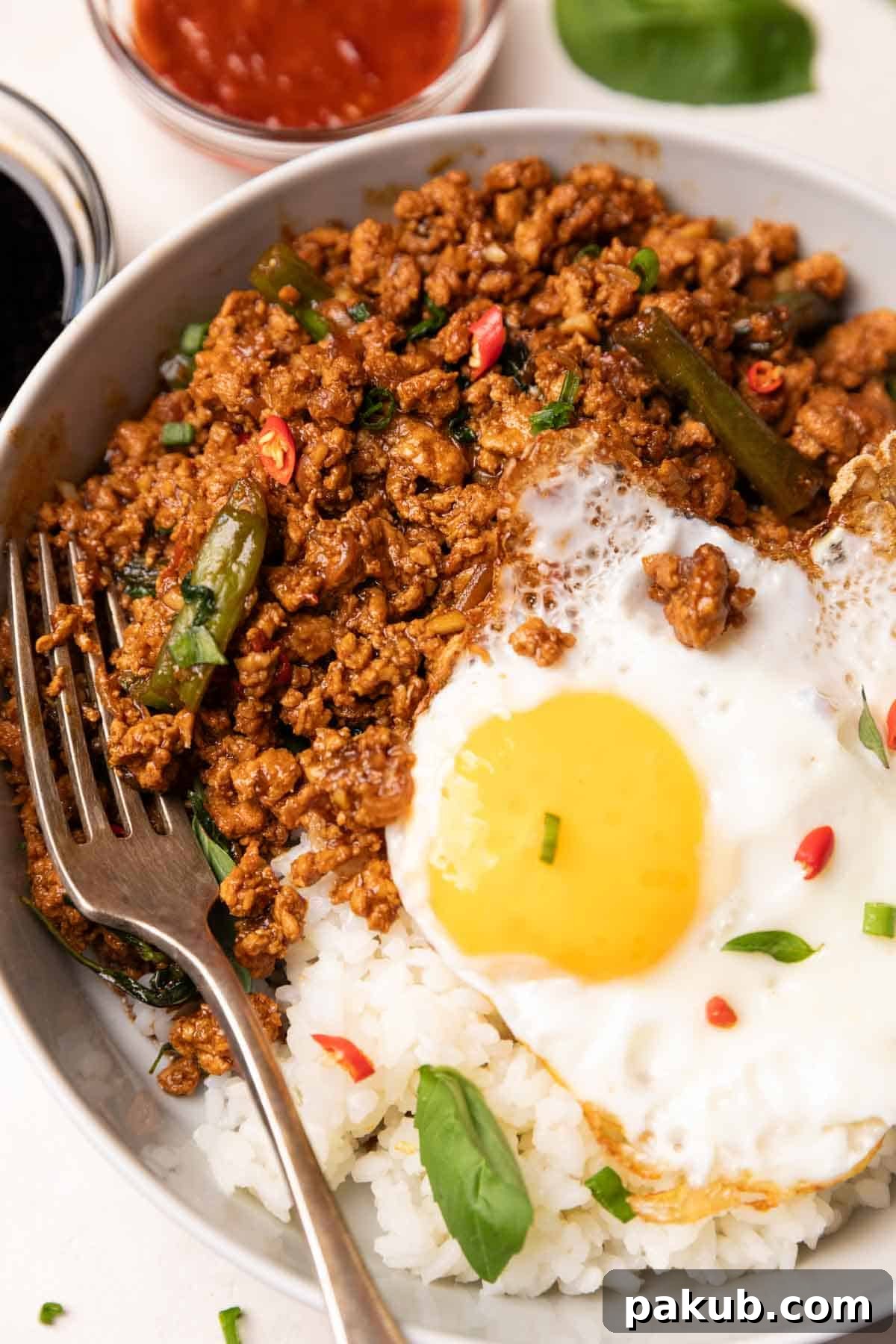
Authentic Thai Basil Chicken (Pad Krapow Gai): Your Ultimate 15-Minute Weeknight Recipe
If you’ve been hesitant to venture into making Thai food at home, this Thai Basil Chicken recipe is your perfect starting point. It’s a dish bursting with bold, savory, and subtly spicy flavors, surprisingly easy to master. Forget complex techniques or hunting down obscure ingredients; we’re talking about pantry staples, a sizzling wok, and a satisfying dinner ready in an astonishingly short amount of time. This recipe is a game-changer for anyone craving authentic Thai taste without the fuss, ideal for those busy weeknights when you need something quick, delicious, and deeply comforting.
I rely on this recipe frequently for those evenings when I desire minimal effort but maximum flavor. Its delightful balance of savory, spicy, and slightly sweet notes hits all the right spots. If you’re a fan of lightning-fast stir-fries that don’t compromise on taste, you’ll also adore my Sticky Thai Meatballs or this cozy Instant Pot Thai Chicken Curry, both fantastic additions to your home cooking repertoire.
Table of Contents: Authentic Thai Basil Chicken
- Understanding Pad Krapow Gai: The Heart of Thai Street Food
- Essential Ingredients for Flavorful Thai Basil Chicken
- Step-by-Step Guide to Perfect Thai Basil Chicken
- Chef’s Pro Tips for Thai Basil Chicken Success
- Frequently Asked Questions About Pad Krapow Gai
- Serving Suggestions & Perfect Pairings
- Storage and Reheating Tips
- Make This Recipe Your Own: Customization Ideas
- Watch How To Make Thai Basil Chicken Video
- Full Recipe Card: Thai Basil Chicken (Pad Krapow)
Understanding Pad Krapow Gai: The Heart of Thai Street Food
Thai Basil Chicken, universally known as Pad Krapow Gai, holds a special place as one of Thailand’s most beloved street food staples. This dish isn’t just popular; it’s an institution, a go-to meal that epitomizes the vibrant, fresh, and fiery flavors of Thai cuisine. The name “Pad Krapow Gai” literally translates to “stir-fried holy basil with chicken,” highlighting its most crucial ingredient: holy basil (krapow).
Traditionally, Pad Krapow Gai is prepared with holy basil, a distinct herb known for its peppery, slightly spicy, and clove-like aroma that gives the dish its characteristic punch and depth. While true holy basil might be harder to find outside of Southeast Asia, Thai basil (which has a milder anise-like flavor) is a fantastic and widely available substitute that still delivers an authentic taste experience. In Thailand, you’ll almost always find this savory stir-fry served with a glistening, crispy-edged fried egg (kai dao) on top. The magic lies in the harmonious blend: spicy chicken, intensely fragrant basil, and the rich, runny yolk creating an unforgettable culinary symphony in every single bite. It’s comfort food at its finest, embodying the true spirit of Thai cooking.
Essential Ingredients for Flavorful Thai Basil Chicken
The beauty of Thai Basil Chicken lies in its simplicity, relying on a handful of powerful ingredients to create its signature bold flavors. Here’s a breakdown of what you’ll need and why each component is crucial:
- For the Protein Base:
- Ground Chicken (or Chopped Chicken Thighs): Ground chicken is excellent for speed, as it cooks quickly and evenly, absorbing flavors beautifully. Diced chicken thighs offer a juicier, richer texture and are a great alternative. Chicken breast can be used but tends to dry out more easily.
- Oil for Stir-Frying: A neutral oil like vegetable, canola, or peanut oil is ideal for high-heat cooking.
- Aromatics for Depth:
- Garlic, Minced: The foundation of flavor, providing a pungent, savory base. Don’t skimp on fresh garlic!
- Thai Red Chillies, Thinly Sliced: These deliver the characteristic heat. Adjust the quantity based on your preferred spice level. For a milder dish, remove the seeds or use fewer chilies. For more heat, leave the seeds in and add an extra chili or two.
- Onion, Finely Chopped: Adds a subtle sweetness and texture, complementing the other bold flavors.
- The Flavorful Sauce Trio:
- Dark Soy Sauce: Contributes a deep, rich, slightly less salty flavor and beautiful dark color to the dish.
- Fish Sauce: An absolute essential in Thai cuisine. It provides an unmistakable umami depth and savory, salty notes that cannot be replicated.
- Oyster Sauce: Adds a savory, slightly sweet, and thick richness, giving the stir-fry a glossy finish and a complex depth of flavor.
- Sugar (Optional): A touch of sugar helps to balance the savory, salty, and spicy notes, creating a more harmonious flavor profile. Use according to your taste.
- The Star Herb:
- Thai Basil or Holy Basil: This is the soul of the dish. Thai basil has a distinct anise-like flavor, while holy basil (krapow) is more peppery and slightly spicier. Both are crucial for that authentic aroma and taste. Add it at the very end to preserve its freshness and potency.
Step-by-Step Guide to Perfect Thai Basil Chicken
Making Pad Krapow Gai at home is incredibly straightforward, especially when you follow these simple steps to ensure maximum flavor and perfect texture:
- Prepare Your Ingredients (Mise en Place): Before you even turn on the heat, have all your ingredients prepped and within reach. This includes minced garlic, sliced chilies, chopped onions, ground chicken, and your sauces mixed in a small bowl. Stir-frying happens fast!
- Heat the Wok: Heat your wok or large skillet over high heat. Once hot, add the vegetable oil. High heat is key for achieving that desirable “wok hei” – a smoky, charred flavor characteristic of good stir-fries.
- Sauté the Aromatics: Add the minced garlic and thinly sliced Thai chilies to the hot oil. Stir-fry for about 30 seconds to a minute until fragrant, being careful not to burn the garlic. Immediately add the chopped onions and continue to sauté for 2-3 minutes until they become translucent and slightly softened.
- Cook the Chicken: Add the ground chicken to the wok. Using your spatula or spoon, break it up into small pieces. Stir-fry the chicken for 6-7 minutes, ensuring it cooks thoroughly and develops a light golden-brown sear. This browning adds depth of flavor.
- Introduce the Sauces: Pour in the dark soy sauce, fish sauce, oyster sauce, and the optional sugar. Toss everything together vigorously, ensuring the chicken is evenly coated. Continue to stir-fry for another two minutes until the sauces are well integrated, the chicken glistens, and the mixture thickens slightly.
- Add the Fresh Basil: Finally, roughly tear the Thai basil or holy basil leaves and add them to the wok. Stir just until the basil wilts, typically about 30 seconds. Overcooking the basil will diminish its vibrant flavor and aroma.
- Serve Immediately: Transfer the fragrant Thai Basil Chicken directly to plates and serve immediately with plain steamed jasmine rice. For an authentic touch, top with a crispy fried egg!
Chef’s Pro Tips for Thai Basil Chicken Success
- Embrace Ground Chicken for Speed: Opting for ground chicken not only ensures faster cooking but also allows it to absorb the bold flavors of the sauce more effectively. It also completely eliminates the need for any chopping, making it perfect for your busiest weeknights.
- The Unmistakable Umami of Fish Sauce: Never skip the fish sauce. It’s the secret ingredient that provides the essential umami and savory depth, giving your dish that authentic restaurant-quality Thai flavor profile.
- Maximize Flavor with High Heat: Always cook this stir-fry over high heat. A quick, intense cook helps to develop a slightly charred, wok-tossed flavor without overcooking or drying out the chicken, ensuring tender, flavorful results.
- Tear, Don’t Chop the Basil: Instead of chopping, roughly tear the basil leaves by hand. This method helps to preserve their aromatic oils, releasing bursts of fresh, potent basil flavor with every bite.
- Basil is Last: Add the basil right at the very end of the cooking process. Cook it just until it wilts—no more than 30 seconds. This ensures the herb retains its vibrant color, peppery punch, and fresh aroma.
- Don’t Overcrowd Your Wok: If cooking a larger batch, consider doing it in two smaller batches. Overcrowding the wok lowers the temperature, steaming the chicken instead of stir-frying it, which can lead to a less flavorful and slightly rubbery texture.
- Taste and Adjust: Always taste your dish before serving. Thai cooking is all about balancing flavors—sweet, salty, spicy, and sour. Adjust the sugar or fish sauce as needed to achieve your perfect balance.
Frequently Asked Questions About Pad Krapow Gai
It’s a symphony of savory, spicy, and umami-rich flavors. The combination of soy, fish, and oyster sauces creates a deep, complex base, while the Thai chilies add a delightful heat. The basil provides a fresh, peppery, and incredibly aromatic finish, making each bite wonderfully satisfying and addictive.
While similar and both members of the basil family, they are not exactly the same. Thai basil typically has a distinct anise or licorice-like flavor with purple stems and flowers. Holy basil (known as krapow in Thai or tulsi in India) has a stronger, more peppery, and slightly spicier taste, often with a hint of clove. Holy basil is traditionally used in Pad Krapow Gai, but Thai basil is an excellent and widely available substitute that still delivers an authentic flavor profile.
Yes, you can use regular Italian basil in a pinch, but be aware that the flavor profile will be different. Italian basil is much milder and sweeter, lacking the distinct anise or peppery notes of Thai or holy basil. While it will still be delicious, it won’t have the same authentic Thai taste. If possible, seek out Thai basil for the best results.
Absolutely! This dish is highly adaptable. Simply swap the ground chicken for crumbled firm tofu, minced mushrooms (like shiitake or cremini), or a plant-based mince. Remember to use a vegetarian oyster sauce (often made from mushrooms) and ensure your dark soy sauce is vegan-friendly (most are, but always check). The bold flavors of the aromatics and sauces will still shine through beautifully.
The spice comes primarily from the Thai red chilies. For a milder dish, use fewer chilies or remove the seeds before slicing. For more heat, add an extra chili or two, and feel free to leave the seeds in. You can also add a pinch of dried chili flakes if you don’t have fresh chilies on hand, but fresh provides a brighter, more vibrant heat.
While a wok is ideal for stir-frying due to its shape and ability to distribute heat evenly, a large, heavy-bottomed skillet or frying pan will work perfectly fine. Just ensure it’s spacious enough to allow your ingredients to stir-fry rather than steam, and maintain high heat throughout the process.
Serving Suggestions & Perfect Pairings
Thai Basil Chicken is a versatile dish that pairs wonderfully with several accompaniments. Here are some classic and creative ways to enjoy your homemade Pad Krapow Gai:
- Plain Steamed Rice: This is the quintessential pairing. The fluffy, absorbent rice is perfect for soaking up all the savory, spicy, and aromatic sauce from the chicken, creating a truly satisfying bite. Jasmine rice is the traditional choice.
- Crispy Fried Egg (Kai Dao): For an authentic Thai experience, top your Pad Krapow Gai with a crispy fried egg. The edges should be beautifully lacy and crisp, while the yolk remains runny, adding a rich, creamy element that beautifully mellows the spice. This is how it’s almost always served in Thailand.
- As Part of a Thai Feast: Elevate your dinner by serving Thai Basil Chicken alongside other delightful Thai dishes. Consider pairing it with fresh Thai Shrimp Cakes and a vibrant Thai Prawn Mango Salad for a well-rounded and impressive spread.
- Meal Prep Essential: This dish holds up remarkably well, making it an excellent addition to your weekly meal prep rotation. It pairs wonderfully with noodles, brown rice, or even quinoa for a healthier, hearty meal throughout the week.
- With a Flavorful Soup: For a light yet incredibly flavor-packed dinner, serve your Thai Basil Chicken with a side of Spicy Thai Carrot Ginger Soup. The warm, aromatic soup complements the stir-fry perfectly.
Storage and Reheating Tips
While best enjoyed fresh, Pad Krapow Gai is also excellent as leftovers. Here’s how to store and reheat it:
- Refrigeration: Store any leftover Thai Basil Chicken in an airtight container in the refrigerator for up to 3 days. The flavors often deepen overnight, making it even more delicious the next day.
- Reheating: To reheat, simply toss the chicken and sauce in a pan over medium heat, stirring occasionally until it’s warmed through. Alternatively, you can microwave it in short bursts, stirring between each, until heated evenly.
- Freezing: This dish is generally not freezer-friendly. The fresh basil tends to lose its vibrant flavor, aroma, and delicate texture after freezing and thawing, becoming somewhat watery and muted. For the best experience, enjoy it within a few days of preparation.
Make This Recipe Your Own: Customization Ideas
One of the best things about Thai Basil Chicken is how easily it can be adapted to suit your preferences or what you have on hand. Feel free to get creative with these customization ideas:
- Swap the Protein: While chicken is classic, experiment with other ground meats. Ground turkey or pork are fantastic alternatives that absorb the flavors wonderfully. For a vegetarian option, crumbled tofu, tempeh, or minced mushrooms (like shiitake or oyster mushrooms) work beautifully, providing a satisfying texture.
- Make it Saucier: If you prefer more “gravy” for your rice, simply add a splash of chicken broth (or vegetable broth for a vegetarian version) or a spoonful of hoisin sauce along with the other sauces. This will create a richer, more abundant sauce.
- Boost the Veggies: Enhance the nutritional value and texture by adding more vegetables. Sliced bell peppers, green beans, snow peas, bamboo shoots, or baby corn are all excellent additions. Add them after the onions and cook until tender-crisp before adding the chicken.
- Control the Heat: Easily adjust the spice level to your liking. Reduce the number of Thai chilies for a milder version, or omit them entirely if you’re sensitive to spice. For those who love a fiery kick, feel free to add more chilies or even a dash of chili oil at the end.
- Experiment with Basil: If you can find holy basil, definitely use it for the most authentic flavor. If only Italian basil is available, it’s still a good substitute, though the flavor will be less pungent. In a pinch, or for a completely different twist, you can even turn this into a “Coriander Chicken” by using roughly chopped fresh cilantro (coriander) instead of basil.
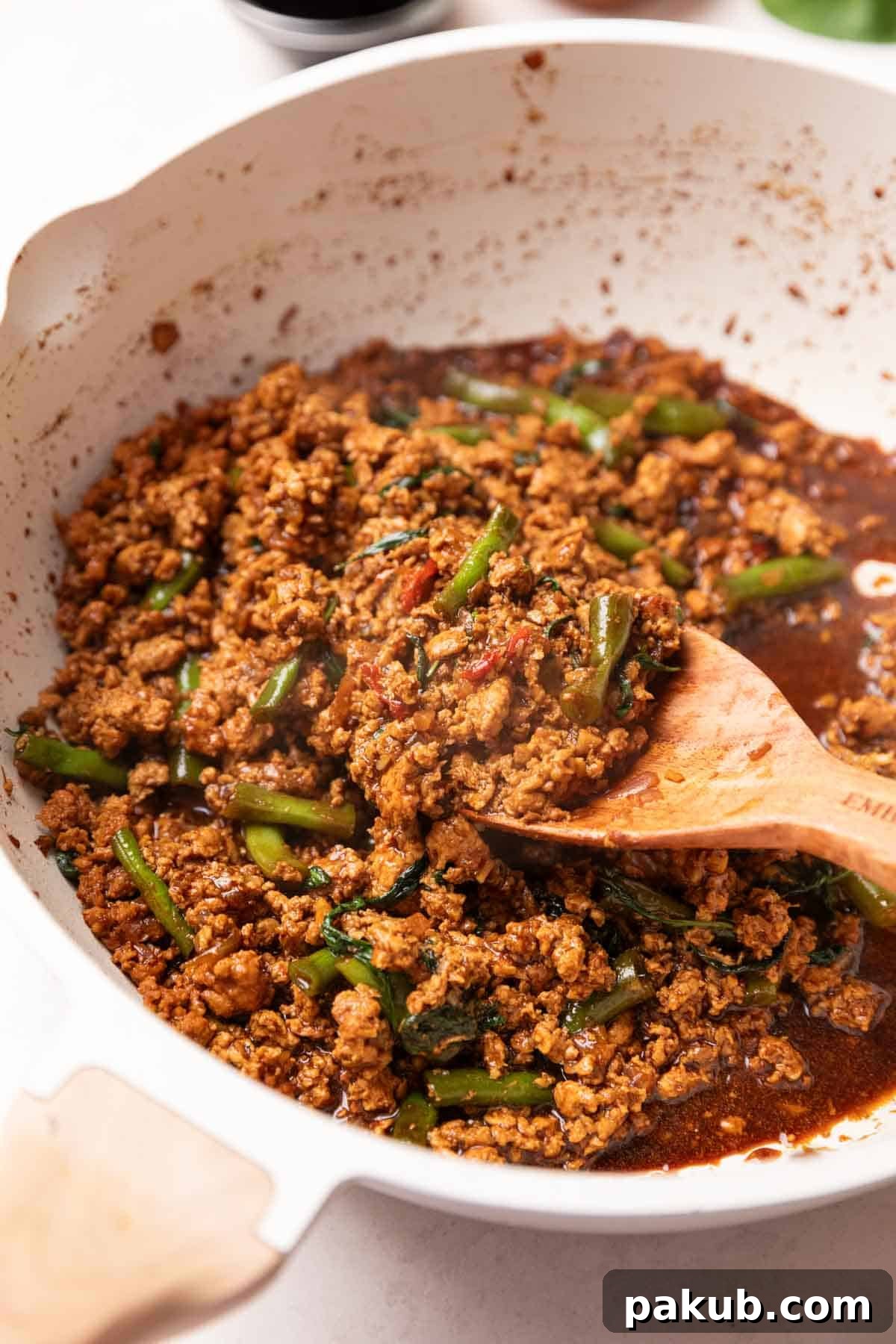
Thai Basil Chicken is truly one of those culinary treasures that tastes like you’ve dedicated hours to its preparation, yet it remarkably comes together in just 15 minutes with a handful of accessible ingredients. It’s the epitome of quick, bold, and comforting cuisine, making it the perfect solution for weeknights when you desire something utterly delicious without any fuss or lengthy kitchen commitments.
Whether you choose to enjoy it classically with a bed of fluffy rice, tossed with noodles for a hearty meal, or even stuffed into fresh lettuce wraps for a lighter option, this Pad Krapow Gai recipe is destined to become a beloved and regular feature in your dinner rotation. We encourage you to give it a try and discover its incredible simplicity and vibrant flavors. If you do, don’t forget to share your creation and tag me on Instagram @my_foodstory — I would absolutely love to see how you adapt and make this fantastic recipe your own!
Watch How To Make Thai Basil Chicken Video
Full Recipe Card: Thai Basil Chicken (Pad Krapow)
Thai Basil Chicken | Pad Krapow
By: Richa
Thai Basil Chicken is a quick 15-minute stir-fry with less than 10 main ingredients, making it a perfect weeknight dinner option. Enjoy big, bold flavors with no marinating and minimal chopping!
Ingredients
- 2 tablespoons Oil (vegetable, canola, or peanut)
- 2 tablespoons Garlic, minced
- 2-3 Thai Red Chillies, thinly sliced (adjust to taste for spice)
- ½ cup Onions, finely chopped
- 500 g Chicken, ground (or chopped chicken thighs)
- 2 tablespoons Dark Soy Sauce
- 1 tablespoon Fish Sauce
- 3 tablespoons Oyster Sauce
- 1 teaspoon Sugar, optional (to balance flavors)
- 1 cup Thai Basil, or Holy Basil (roughly torn)
Instructions
- Heat vegetable oil in a wok or large skillet over high heat. Add minced garlic and Thai chilies. Stir-fry for about 1 minute until fragrant. Add the finely chopped onions and sauté for 2-3 minutes until they become translucent.
- Add the ground chicken to the wok. Use your spoon or spatula to break up the chicken into smaller pieces. Fry the chicken for 6-7 minutes until it is cooked through and lightly golden brown.
- Pour in the dark soy sauce, fish sauce, oyster sauce, and the optional sugar. Toss everything vigorously with the chicken to ensure it’s well coated. Continue to stir-fry for another two minutes until the sauces are mixed well and the chicken looks glossy.
- Roughly tear the basil leaves and add them to the wok. Stir just until the basil is wilted, which should take only about 30 seconds.
- Serve immediately with plain steamed rice or jasmine rice, and consider topping with a crispy fried egg for an authentic touch.
Notes
- Chicken: Ground chicken is recommended for its speed and flavor absorption, but diced chicken thighs are a great alternative for a juicier result. Chicken breasts tend to dry out quickly in this recipe.
- Basil: While Thai basil is widely available and works wonderfully, the traditional recipe uses holy basil (krapow) for its distinct peppery flavor. If neither is available, regular Italian basil can be used, though the flavor will be milder.
- Coriander Variation: In the absence of basil, you can transform this dish into a flavorful Coriander Chicken by using roughly chopped fresh cilantro instead.
Nutrition (per serving)
Calories: 225 kcal
Carbohydrates: 7g
Protein: 13g
Fat: 16g
Saturated Fat: 3g
Cholesterol: 45mg
Sodium: 1269mg
Potassium: 208mg
Fiber: 1g
Sugar: 2g
Vitamin A: 418 IU
Vitamin C: 8mg
Calcium: 33mg
Iron: 1mg
(Nutritional values are approximate and may vary based on ingredients and preparation.)
This article was researched and written by Harita Odedra.