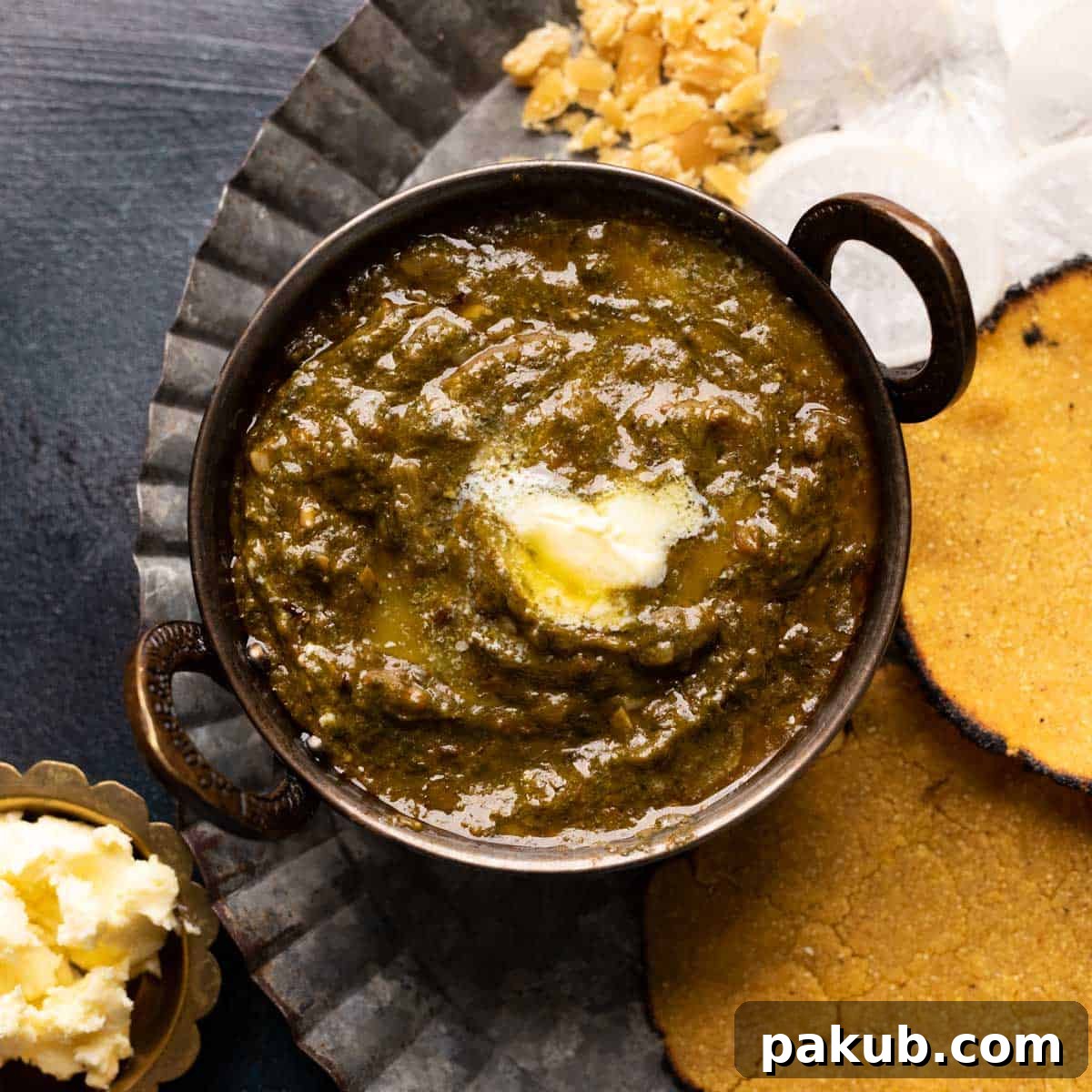
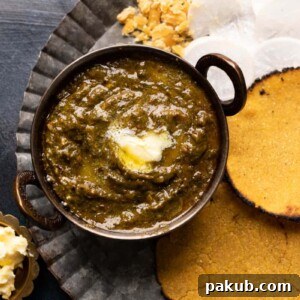
Sarson ka Saag is more than just a North Indian winter dish; it’s a cherished cultural experience, a heartwarming tradition, and an emotion deeply rooted in the culinary heritage of Punjab. Crafted with the freshest winter greens and lovingly tempered with aromatic onions, ripe tomatoes, and a blend of earthy spices, the result is a gloriously creamy, coarsely textured gravy that bursts with warm, rustic flavors. This iconic dish truly embodies the spirit of the colder months. Serve it generously adorned with a dollop of rich, homemade white butter, alongside piping hot, freshly made Makki Roti (cornmeal flatbread), and a piece of jaggery (gur) for an undeniably comforting and wholesome winter meal that nourishes both body and soul.
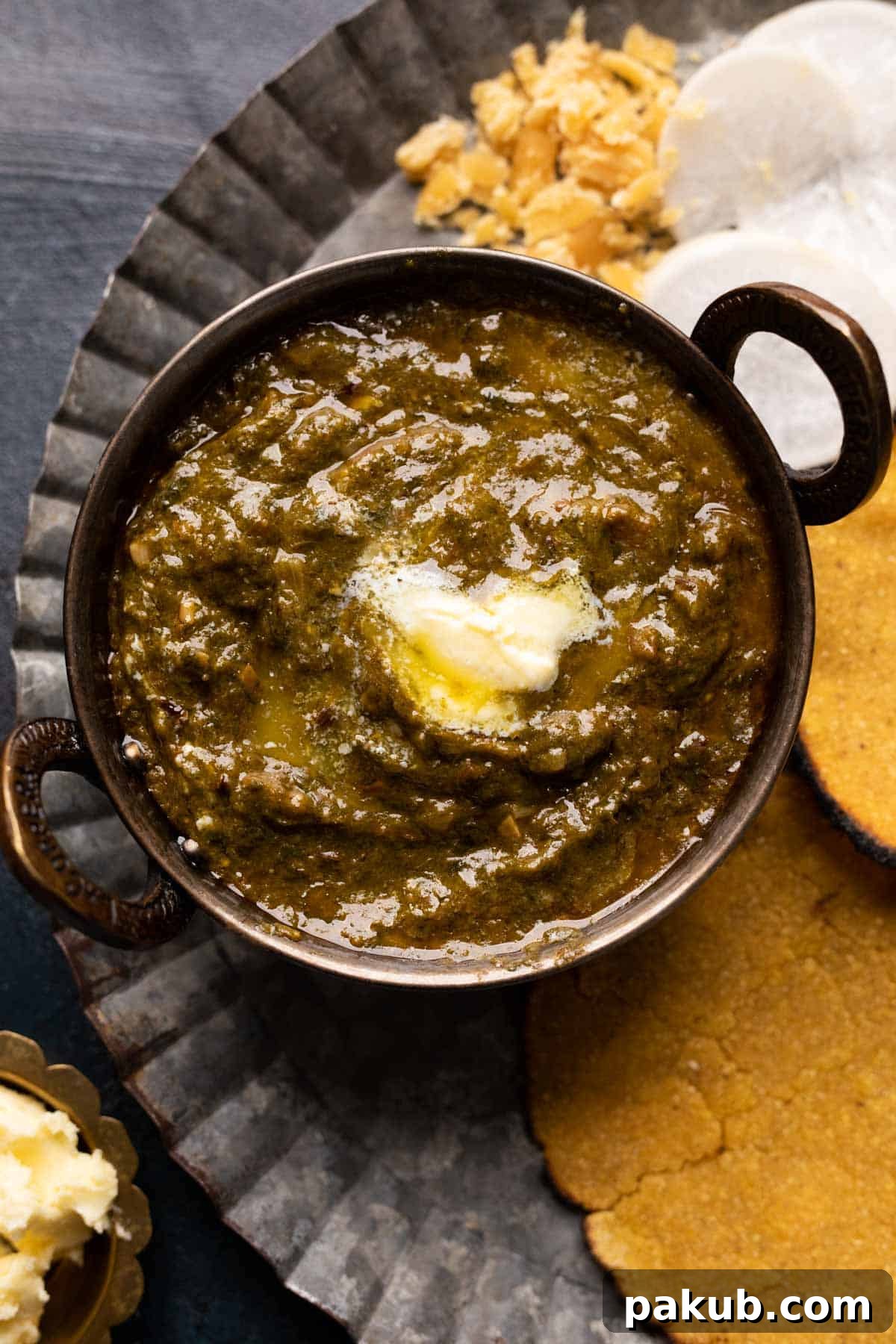
As the crisp winter air descends upon North India, the irresistible aroma of Sarson ka Saag and Makki Roti fills homes and hearts alike. This seasonal pairing is an absolute culinary must-have, symbolizing warmth, tradition, and the bounty of winter produce. Traditionally, preparing Sarson da Saag is a labor of love, a lengthy process that involves slow-cooking a medley of leafy greens for approximately 90 minutes in a large earthen pot until they achieve a wonderfully soft and mushy consistency. Once tender, these greens are then meticulously mashed to a coarse paste using a wooden whisk (ghotna), a technique that imparts a unique texture. The final step involves a rich tempering (tadka) with golden ghee, finely chopped onions, juicy tomatoes, and a careful selection of aromatic spices, bringing all the rustic flavors together.
While the traditional method is deeply rewarding, our Sarson ka Saag recipe offers a simpler, significantly quicker approach without compromising on that authentic taste and texture. We harness the efficiency of a pressure cooker to dramatically reduce the cooking time for the greens, allowing you to enjoy this beloved dish in a fraction of the time. Rest assured, utilizing a pressure cooker does not diminish the rich flavors or the desired coarse, creamy texture that defines a perfect Sarson ka Saag. This modernized technique makes it accessible for everyday cooking, ensuring that you can indulge in this winter delight more frequently.
Quick Walk Through: Sarson ka Saag
- Reasons Why You’ll Love This Sarson Ka Saag Recipe
- Essential Ingredients for Authentic Sarson ka Saag
- Mastering Sarson ka Saag: A Step-by-Step Guide
- Frequently Asked Questions (FAQs) About Sarson ka Saag
- Expert Tips for Perfecting Your Sarson ka Saag
- Watch the Recipe Video
- More Winter Recipes You’ll Love
Why This Sarson Ka Saag Recipe Will Become Your Winter Favorite
Our simplified Sarson ka Saag recipe brings all the traditional flavors to your table with modern convenience. Here are compelling reasons why this recipe is a must-try this winter:
- Significantly Reduced Cooking Time: By leveraging the power of a pressure cooker for the greens, the overall cooking time for Sarson ka Saag is cut by nearly half. This means you can have a delicious, home-cooked, and wholesome meal on the table in less than an hour, making it perfect for busy weekdays or when you crave comfort food without the wait.
- A Wholesome Way to Enjoy Winter Greens: This dish is an ingenious and delicious method to incorporate a variety of fresh, nutrient-rich winter greens into your family’s diet. It’s packed with essential vitamins and minerals, offering a flavorful way to boost your nutritional intake during the colder months.
- Surprisingly Easy to Prepare: Despite its rich flavor profile and the seemingly long list of ingredients, this recipe is remarkably straightforward to follow. The steps are clearly outlined, making it accessible even for novice cooks eager to explore traditional Indian cuisine.
- Excellent for Meal Prepping: Sarson ka Saag freezes beautifully, allowing you to prepare a large batch and store it for future enjoyment. This makes healthy, homemade meals readily available whenever you desire, saving you time and effort on subsequent cooking days.
- Flavor Enhances Over Time: This is one of those rare dishes that actually tastes better the next day. The flavors meld and deepen as it rests, making it an ideal candidate for cooking ahead, especially when entertaining guests or preparing for busy weeknights.
- Rich Nutritional Profile: The harmonious blend of various leafy greens in Sarson ka Saag makes it an exceptional source of dietary fiber, potent antioxidants, and a wide array of vitamins, contributing significantly to your overall health and well-being.
- Naturally Dietary-Friendly: This recipe is inherently gluten-free, catering to those with gluten sensitivities. Furthermore, it can be effortlessly adapted to be completely vegan by simply omitting ghee and yogurt, making it a versatile option for diverse dietary needs.
Essential Ingredients for Authentic Sarson ka Saag
Crafting a truly authentic and flavorful Sarson ka Saag relies on a selection of fresh, high-quality ingredients. Here’s a detailed look at what you’ll need to create this winter masterpiece:
- Sarson (Mustard Leaves): These dark green leaves are the undeniable star of the dish, characterized by their distinct sharp, pungent, and slightly bitter taste. Sarson is a quintessential winter produce, and using fresh leaves is highly recommended for the best flavor. However, for convenience, pre-cut, cleaned, or even frozen mustard leaves can be used as a suitable alternative.
- Complementary Greens (Spinach and Bathua): To balance the assertive flavor of sarson and introduce a layer of earthy depth, this recipe incorporates spinach and bathua leaves. Spinach offers a milder, slightly sweet note, while bathua (lamb’s quarters) brings its unique, slightly mineral, and robust earthy character. If bathua is unavailable, excellent substitutes include fresh methi (fenugreek leaves) for a hint of bitterness and aroma, kale, collard greens, or arugula, each lending its own unique touch.
- Radish and Radish Greens (Mooli aur Mooli ke Patte): Often overlooked, radish (mooli) and its greens are vital additions that significantly enhance the overall flavor profile of the mustard greens. They contribute a subtle peppery bite and additional nutrients, enriching the saag’s complexity.
- Ginger and Garlic: These aromatic powerhouses are fundamental to Indian cuisine. Fresh ginger provides a warm, spicy zing, while garlic offers a pungent depth, both crucial for balancing the richness and complementing the strong flavors of the greens, contributing greatly to the saag’s characteristic aroma.
- Green Garlic: (Optional but Highly Recommended) Adding a dash of fresh green garlic scapes while cooking the greens elevates the dish with an extra layer of garlicky freshness and a milder, sweeter garlic flavor than mature cloves. If fresh green garlic is not accessible, simply increase the quantity of regular chopped garlic in the tempering.
- Makki Atta (Cornmeal Flour): This coarse cornmeal flour is traditionally used as an “atta” or thickener in Sarson ka Saag. It helps to bind the greens, giving the saag its characteristic creamy, slightly grainy texture and preventing separation, while also adding a subtle earthy flavor.
- Ghee (Clarified Butter): Ghee is an indispensable ingredient for the tempering process, used alongside mustard oil. Its nutty, rich aroma and flavor are integral to the authentic taste of Sarson ka Saag, providing a luxurious mouthfeel and deep savory notes.
- White Butter (Makhan): A generous dollop of fresh homemade white butter, stirred in at the end and served on top, is, in my opinion, an absolute must. It provides a creamy richness, cools any lingering heat, and enhances the overall well-rounded flavor, making the dish incredibly indulgent and authentic.
Mastering Sarson ka Saag: A Step-by-Step Guide
Follow these detailed steps to create a truly irresistible Sarson ka Saag:

- Pressure Cook the Greens: Begin by combining the thoroughly washed mustard leaves, bathua, spinach, radish leaves, diced radish, green garlic (if using), chopped ginger, garlic cloves, and green chilies in a pressure cooker. Add approximately one cup of water. Cook for 2-3 whistles on medium-high heat, or for about 10-15 minutes, until all the greens are tender and softened. Allow the pressure to release naturally and completely before opening the cooker lid to ensure safety and even cooking.
- Cool and Coarsely Grind: Once the pressure cooker has cooled and you’ve opened the lid, carefully remove the cooked greens, reserving any remaining cooking liquid in the cooker. Allow the greens to cool slightly before grinding them. The goal is a coarse paste, not a fine purée, to retain the rustic texture.
- Achieving the Perfect Texture: For optimal control over the texture, a stick blender is highly recommended. It allows you to pulse and blend directly in the pot, achieving that desired coarse, finely chopped appearance. If you don’t have a stick blender, transfer the cooled greens to a mixture grinder and pulse in short bursts, checking the consistency every few seconds to prevent over-blending. Remember, the texture should be distinctly coarse, mimicking finely chopped greens.
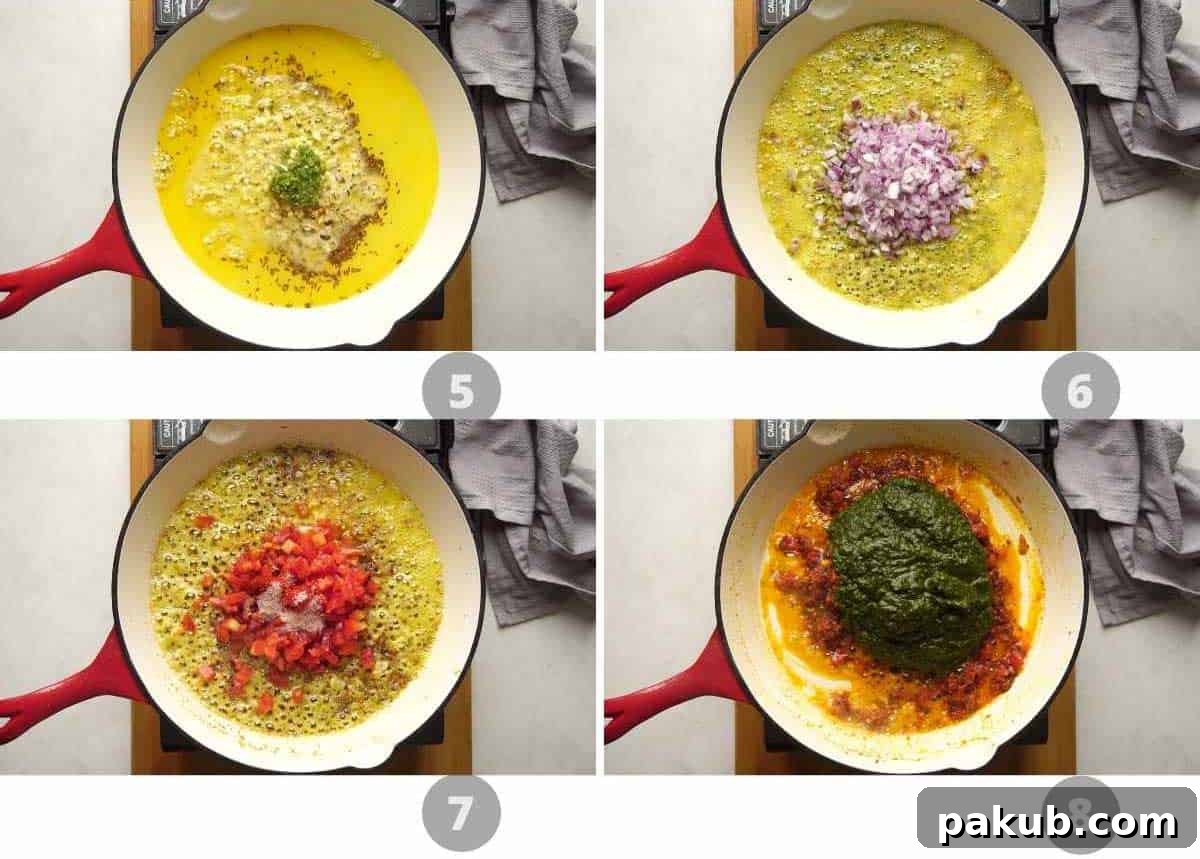
5. Prepare the Tempering (Tadka): In a large, heavy-bottomed pan or kadhai, heat mustard oil and ghee over medium heat. Once hot, add cumin seeds (jeera) and let them splutter. Then, add finely chopped ginger, garlic, and green chili paste. Sauté these aromatics for about a minute until fragrant.
6. Sauté the Onions: Add the chopped onions to the pan and cook them until they turn translucent and lightly golden. Stir frequently to ensure even cooking and prevent burning.
7. Cook the Tomatoes and Spices: Next, add the chopped tomatoes, red chili powder, and salt to the pan. Cook this mixture, stirring occasionally, until the tomatoes break down and become mushy, and the oil starts to separate from the sides of the pan. This indicates that the tomato base is well-cooked and flavorful.
8. Combine Greens and Tempering: Carefully add the coarsely ground greens mixture to the sautéed onion-tomato paste. Stir well to thoroughly combine all the ingredients, ensuring the tempering coats the greens evenly.
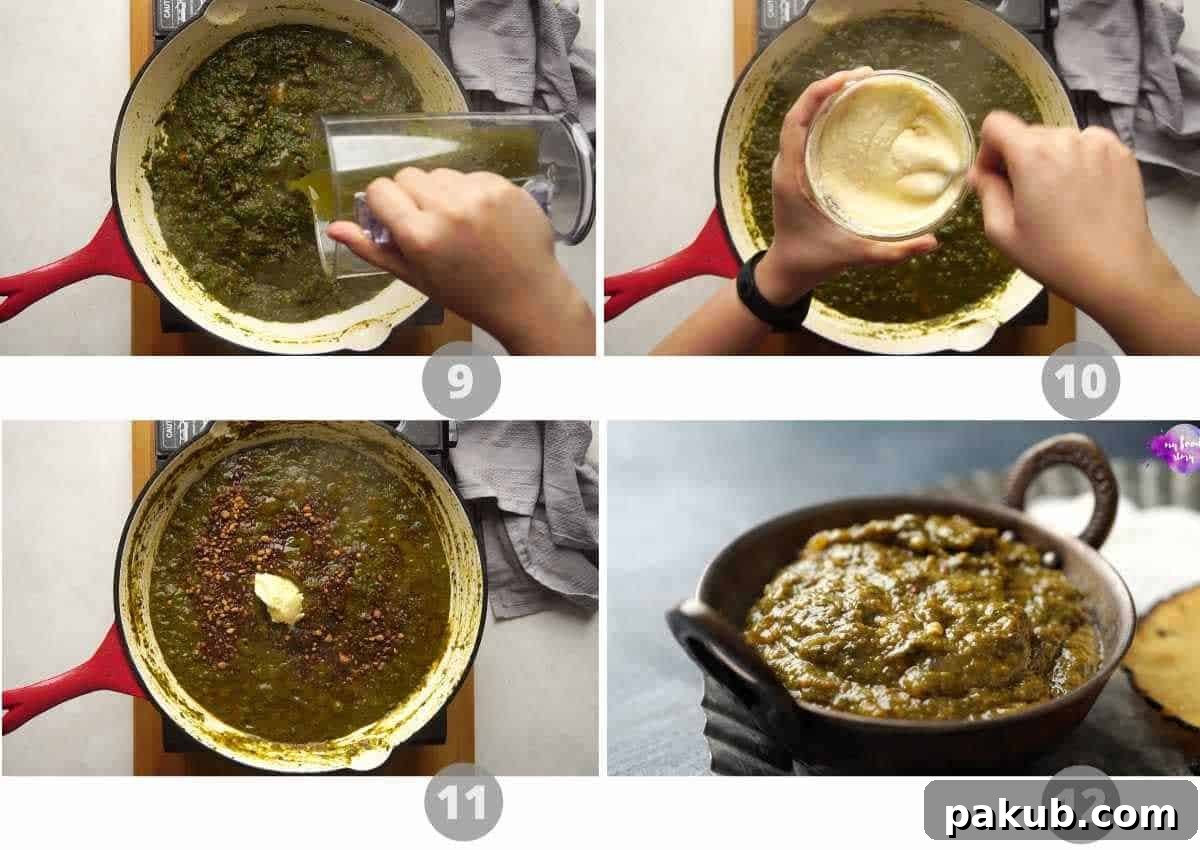
8. Simmer for Flavor Infusion: Pour in the reserved cooking water from the pressure cooker, along with an additional half cup of fresh water (or more, to achieve your desired consistency). Bring the mixture to a gentle simmer and cook for 5-10 minutes, stirring occasionally. You’ll know it’s ready when you start to see tiny specks of oil floating on the surface, indicating the flavors have melded beautifully.
9. Add Makki Atta and Jaggery: In a separate small bowl, whisk together the curd (yogurt) and makki atta until smooth and lump-free. Add this mixture to the simmering saag, along with the grated jaggery. Bring the saag to a quick boil, stirring continuously to prevent any lumps from forming from the cornmeal. The jaggery will add a subtle sweetness that perfectly balances the bitterness of the mustard greens.
10. Final Simmer and Finishing Touch: Once the saag begins to boil after adding the cornmeal mixture, reduce the flame to low. Check the consistency and adjust with more water if a thinner saag is preferred. Cover the pan and let it cook for another 5-10 minutes. This final simmer allows the makki atta to fully cook and thicken the saag, and for the flavors to deepen further. You will again see specks of fat floating on top. Just before serving, stir in a big dollop of fresh white butter (makhan) for an ultimate creamy finish and authentic taste.
11. Serve Hot: Your delicious Sarson ka Saag is now ready! Serve it piping hot, traditionally accompanied by fresh Makki ki Rotis, for a truly unforgettable North Indian winter meal.
Frequently Asked Questions (FAQs) About Sarson ka Saag
Here are answers to some common questions about preparing Sarson ka Saag:
Leafy greens often harbor significant amounts of dirt and mud, so thorough washing is crucial. Begin by separating the leaves from their tougher stems. Place the clean leaves in a large bowl or basin and fill it with cold water. Gently swish the leaves around to dislodge any soil. Carefully remove the leaves, allowing the dirt to settle at the bottom of the bowl. Discard the dirty water, rinse the bowl, and repeat this process multiple times until the water remains completely clear. It’s best to wash the leaves just before you plan to use them to prevent premature spoilage from excess moisture.
Absolutely! Sarson ka Saag is incredibly freezer-friendly, making it an excellent dish for batch cooking and meal prepping. It maintains its quality and flavor for up to a month in the freezer, whether you freeze it with or without the final tempering (tadka). My preferred method is to cook a large quantity of the greens, allow them to cool down completely, and then store them in airtight containers or zip-lock bags in the freezer. When you’re ready to enjoy it, simply thaw it on the kitchen counter, reheat it gently, and then prepare and add the fresh tempering. It tastes wonderfully fresh and delicious every single time.
Sarson, or mustard leaves, inherently possess a slightly bitter and pungent flavor, which is a key characteristic of the dish. However, if your saag tastes excessively bitter, it could be due to an imbalance in the greens. You can easily mitigate this by reducing the quantity of mustard leaves in your next batch and increasing the proportion of milder greens like spinach and/or bathua. The robust tempering process, which includes generous amounts of green garlic, ginger, and the acidity from tomatoes, also plays a crucial role in mellowing out and balancing the bitterness, creating a more harmonious flavor profile.
Expert Tips for Perfecting Your Sarson ka Saag
Achieving the perfect Sarson ka Saag is an art, but these expert tips will guide you to culinary success:
- Thorough Washing of Greens: As leafy greens often carry soil and impurities, it is paramount to wash them meticulously under running water. Swish them in multiple changes of water until no trace of dirt remains, ensuring your saag is clean and free from grit.
- Achieving the Ideal Texture: Sarson ka Saag is known for its distinct coarse, yet creamy texture. While a traditional wooden whisk (ghotna) is used in Punjabi homes, a stick blender (immersion blender) offers excellent control for modern cooks. It allows you to pulse and blend the cooked greens directly in the pot, giving you the ability to achieve that beautiful, rustic coarse consistency without over-processing.
- If Using a Regular Blender: If you don’t have a stick blender, you can use a regular mixture grinder. However, be mindful to pulse the mixture in short bursts, checking the consistency every few seconds. The goal is to avoid turning it into a smooth purée; aim for a texture that looks like finely chopped greens.
- Working with Frozen Greens: This recipe adapts wonderfully to frozen greens if fresh ones are not available. Simply thaw the frozen greens completely and squeeze out any excess liquid before adding them to the pressure cooker. This prevents the saag from becoming watery.
- Batch Cooking and Storage: Sarson ka Saag is an ideal dish for batch cooking. If you’re preparing a larger quantity, refrigerate the untempered saag in an airtight container. This allows the flavors to develop further, and the saag will stay fresh in the refrigerator for up to 4 days. For longer storage, freeze it for up to a month. When ready to eat, simply thaw, reheat, and prepare a fresh tempering.
- Adjusting for Bitterness: If you find your mustard greens too bitter, you can adjust the ratio by adding more spinach or other milder greens. The jaggery in the recipe also helps to balance the pungent notes, while the richness of ghee and butter mellows the overall flavor.
- Enhancing Wholesomeness: For a more substantial and protein-rich meal, consider adding paneer (Indian cheese) or chicken to your saag. These additions absorb the robust flavors beautifully. For inspiration, explore authentic recipes for Saag Paneer and Saag Chicken.
Sarson ka Saag truly is the perfect dish to celebrate the bounty of winter and its fresh produce. Its creamy texture, combined with the bold, rustic, and garlicky flavors, is guaranteed to leave you yearning for more with every spoonful. To complete this authentic culinary experience, lavishly top your hot saag with an abundance of fresh homemade white butter (makhan), and serve it alongside warm, traditional Makki Rotis. A small piece of jaggery (gur) on the side perfectly complements the meal, offering a touch of sweetness that balances the saag’s savory depth. While Sarson ka Saag is traditionally best enjoyed with Makki Roti, its versatility allows it to be equally delicious with regular roti, paratha, or even fragrant steamed Basmati rice for a wholesome, nutritious, and incredibly comforting meal this winter.
Watch the Recipe Video
LOVE THIS RECIPE? Subscribe to my newsletter and be the first to receive all new recipes!
5 from 2 votes
Punjabi Style Sarson ka Saag
Richa
15 minutes
40 minutes
55 minutes
6
people
Pin Recipe
Rate Recipe
Print Recipe
Equipment
-
Pressure Cooker
Ingredients
Pressure Cook
-
2 bunches Mustard Leaves, approx 200g, washed and stems removed -
1 packed cup Bathua leaves, approx 65g, washed and stems removed -
1 packed cup Spinach Leaves, approx 50g, washed and stems removed -
1 packed cup Radish Leaves, leaves for 1-2 radishes -
1 small Radish, diced, approx 70g -
10 g Green Garlic Scapes, if unavailable use 1 tablespoon chopped Garlic instead -
1 tablespoon chopped Ginger -
2 Green Chillies
Other Ingredients
-
1/4 cup Mustard Oil -
2 tablespoons Ghee -
1 teaspoon Cumin Seeds -
2 tablespoons finely chopped Garlic -
1 teaspoon chopped Ginger -
1 teaspoon Green Chilli Paste -
3/4 cup chopped Onions, approx 90g -
1 cup chopped Tomatoes -
1 teaspoon Chilli Powder, or paprika -
1-1.5 tsp Salt -
1/2 cup Curds, or yoghurt -
3 tablespoons Makki Atta -
1/4 cup grated Jaggery -
2-3 tablespoons White Butter for serving
Instructions
-
Pressure cook mustard leaves, bathua, spinach, radish leaves, radish, green garlic, ginger, garlic, green chillies with a cup of water for 2-3 whistles or approx 10-15 minutes. Allow pressure to release naturally.
-
Let the greens cool down slightly, then grind only the greens to a coarse paste, reserving any water in the pressure cooker. A stick blender is ideal for controlling the blending.
-
Heat mustard oil and ghee in a pan. Add jeera, chopped ginger, chopped garlic, green chilli paste, and onions. Cook until onions are translucent. Then add tomatoes, chilli powder, and salt, and cook until the mixture is mushy.
-
Meanwhile, whisk together yoghurt and makki atta until smooth and set aside.
-
Add the ground greens mixture to the onion-tomato paste, along with the reserved water from pressure cooking and an additional half cup of water. Cook for 5-10 minutes until you see oil floating on top.
-
Stir in the whisked curd-makki atta mixture and grated jaggery. Bring to a quick boil, stirring continuously to prevent lumps. Reduce flame, adjust water if needed, and cook covered for 5-10 minutes until fat specks float on top. Serve hot with makki ki rotis and a big dollop of white butter.
Video
Notes
- Leafy greens are usually covered in dirt and mud. Thoroughly wash the leaves under running water to get rid of all the impurities before cooking them.
- Since we are grinding the greens in this recipe, there’s no need to chop them finely beforehand. However, if attempting a traditional method with a wooden whisk, finely chop all greens before cooking.
- Sarson da saag should have a coarse, creamy texture. A stick blender provides excellent control to achieve this consistency, preventing over-blending. If using a regular blender, pulse in short bursts.
- This recipe can be made with frozen greens. Just thaw them completely and squeeze out any excess liquid before cooking to maintain desired consistency.
- For batch cooking, refrigerate the extra saag in an airtight container without the final tempering. It stays fresh for up to 4 days in the refrigerator and can be frozen for up to a month.
Nutrition
Carbohydrates: 21g,
Protein: 4g,
Fat: 21g,
Saturated Fat: 8g,
Polyunsaturated Fat: 2g,
Monounsaturated Fat: 8g,
Trans Fat: 1g,
Cholesterol: 33mg,
Sodium: 609mg,
Potassium: 283mg,
Fiber: 3g,
Sugar: 12g,
Vitamin A: 374IU,
Vitamin C: 22mg,
Calcium: 118mg,
Iron: 1mg
Like this recipe? Rate and comment below!
This article has been researched and written by Urvi Dalal
More Winter Recipes You’ll Love
Looking for more comforting and delicious recipes to enjoy during the winter months? Explore these other fantastic options:
- Saag Chicken: A hearty and flavorful dish combining tender chicken with a rich, spiced greens gravy, perfect for a warming meal.
- Saag Paneer: A classic vegetarian delight featuring soft cubes of Indian cheese (paneer) simmered in a vibrant, creamy spinach and mustard greens sauce.
- Winter Vegetarian Minestrone Soup: A wholesome and robust Italian-inspired soup, packed with seasonal vegetables, pasta, and beans in a rich tomato broth, ideal for a comforting winter warmer.