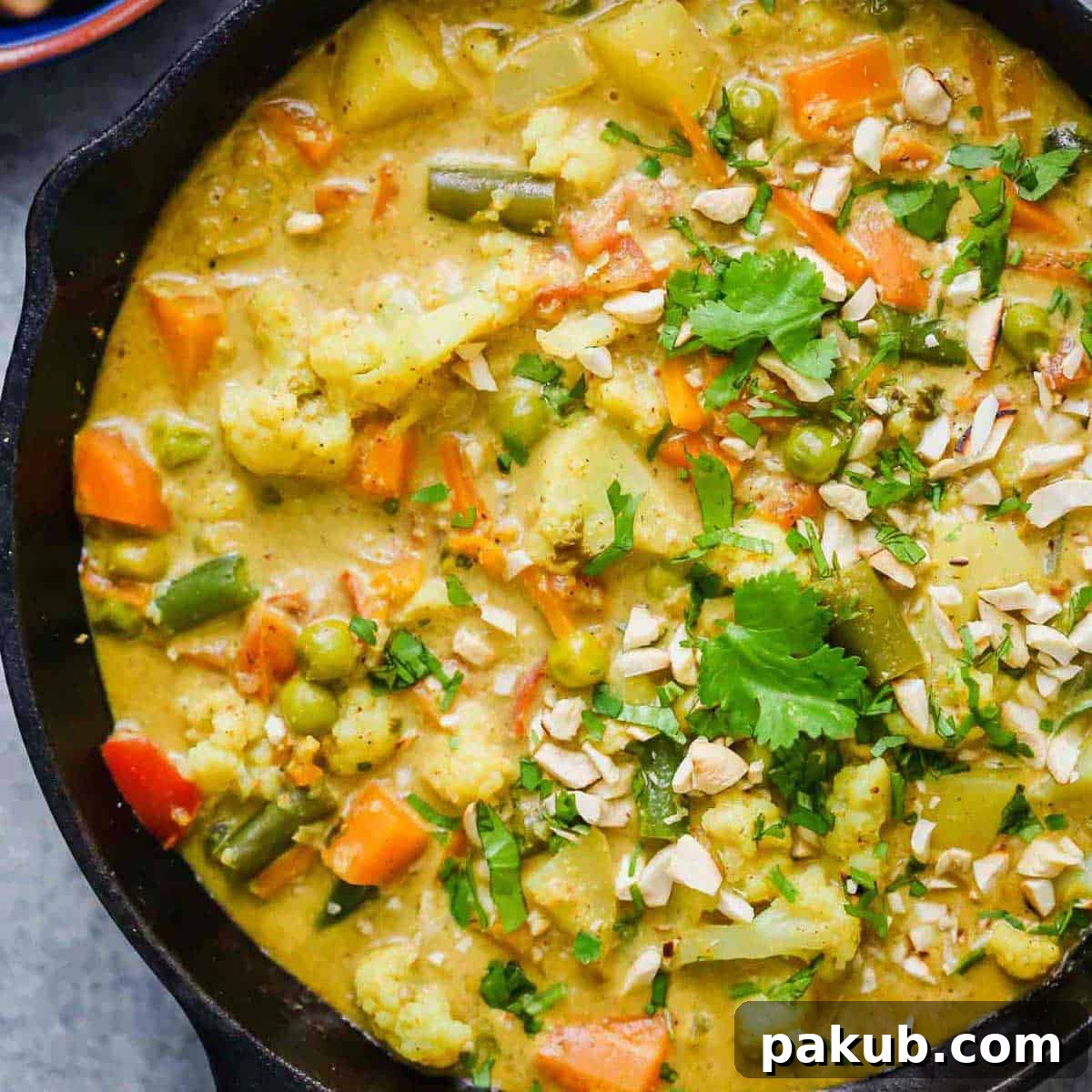
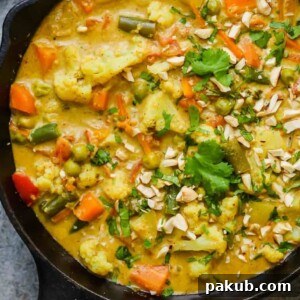
This Vegetable Korma is truly a culinary delight – a silent ninja at the table, surprising everyone with its depth of flavor and comforting embrace. Loaded with wholesome vegetables like tender potatoes, vibrant cauliflower florets, sweet peas, crisp French beans, and earthy carrots, every spoon offers the perfect medley of delightful crunch and nourishing goodness. It’s the quintessential winter dinner, offering warmth, satisfaction, and incredible taste.
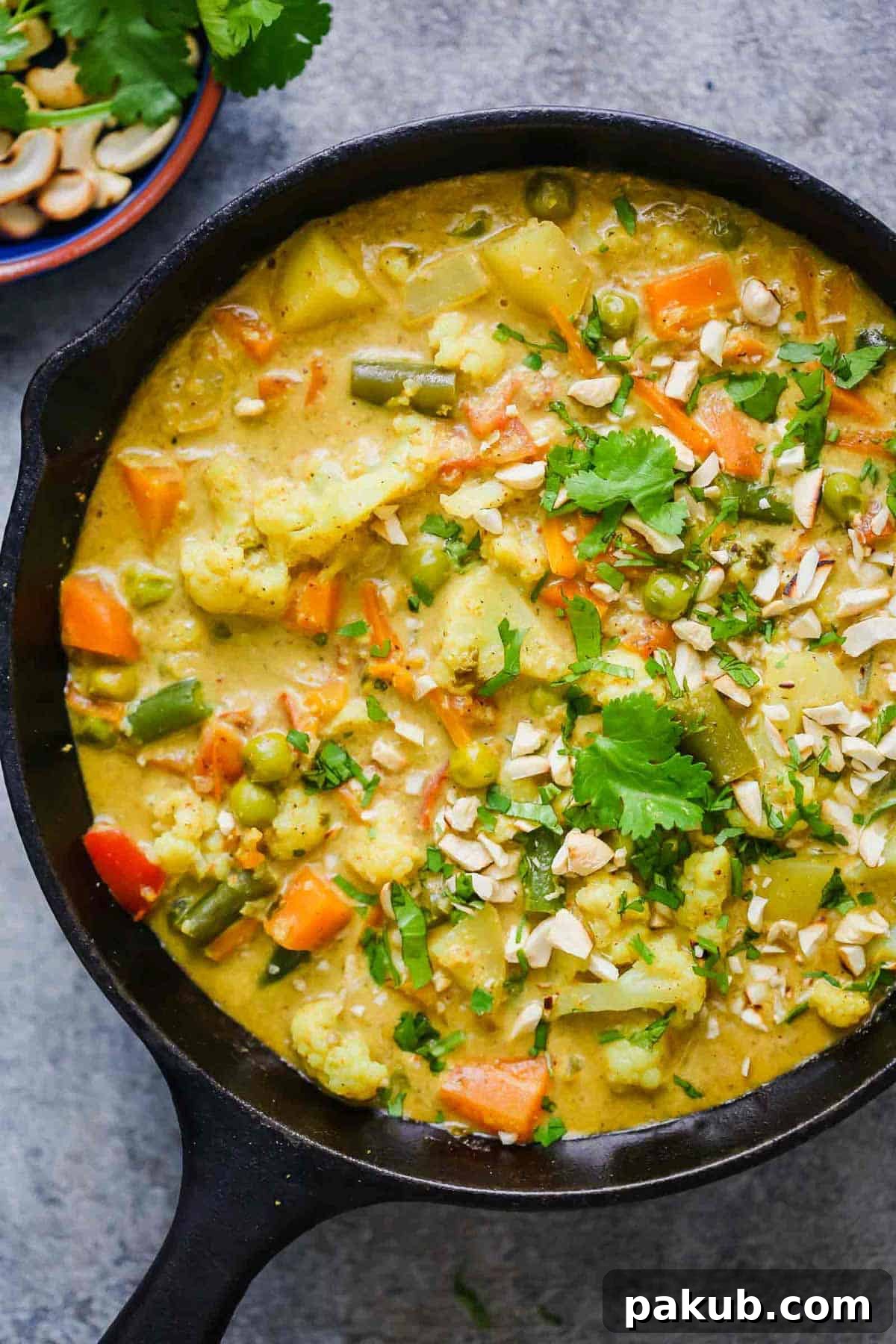
The Ultimate Vegetable Korma Curry: Your Go-To Comfort Food Recipe
Vegetable Korma Curry is one of those invaluable “back-pocket” recipes that consistently shines and delights everyone at the dining table. It’s incredibly hearty, supremely wholesome, and absolutely bursting with flavor! For busy weeknights when you crave something deeply satisfying and filling but prefer to keep the cooking fuss-free, this curry is a lifesaver. And here’s the best part – even the kids adore it! Traditionally, korma can be quite rich, heavy with generous amounts of cream and nuts. However, our version aims for a lighter touch, topped off with just a dash of fresh cream or a swirl of coconut milk and a generous sprinkle of freshly chopped coriander. This approach ensures it remains nutritious and perfectly suited for a comforting, yet lighter, weeknight dinner.
What Exactly is Korma? Unpacking a Classic Indian Dish
Originating from the Indian subcontinent, Korma is a distinctive and highly celebrated curry that stands apart from many other Indian gravies. The word “Korma” itself derives from the Urdu word ‘qorma,’ signifying a braise. At its heart, Korma is characterized by its rich, thick, and creamy gravy, which is usually mildly spiced but incredibly aromatic. Unlike simpler curries often based on tomato and onion, Korma’s luscious texture typically comes from yogurt, fresh cream, or coconut milk, often enhanced by the addition of ground nuts, most commonly cashews or almonds, which contribute to its signature body and sweetness.
The beauty of Korma lies in its versatility. While meat versions (like Chicken Korma or Lamb Korma) are immensely popular, vegetable korma offers a delightful vegetarian alternative, showcasing a medley of seasonal produce bathed in that luxurious, flavorful sauce. Its gentle heat profile makes it a fantastic option for those who enjoy the complex flavors of Indian cuisine without overwhelming spiciness, making it a favorite for families and gatherings.
Why This Vegetable Korma Recipe Will Become Your Favorite
This Vegetable Korma recipe isn’t just another curry; it’s an experience waiting to happen. Here’s why it’s destined to become a staple in your kitchen:
- Wholesome & Nutrient-Rich: Packed with a colorful array of vegetables like potatoes, carrots, peas, cauliflower, and beans, this korma is a fantastic way to boost your daily vegetable intake. It’s nourishing and incredibly satisfying.
- Creamy & Flavorful: The homemade cashew-based sauce is the star, delivering an unparalleled creaminess and a complex flavor profile that is both comforting and exotic, without being overly spicy.
- Family-Friendly: Its mild spice level and delicious taste make it a hit with both adults and children, proving that healthy eating can be incredibly enjoyable for everyone.
- Highly Customizable: Don’t have all the veggies listed? No problem! This recipe is incredibly forgiving and adapts beautifully to whatever produce you have on hand. Feel free to experiment!
- Make-Ahead Marvel: Like many great curries, this korma tastes even better the next day, making it perfect for meal prep or entertaining.
- Dietary Adaptability: Easily convert this recipe to a vegan dish by simple substitutions, ensuring everyone can enjoy this delicious meal.
Essential Tips for Crafting the Tastiest Vegetable Korma Curry
Achieving a truly exceptional Vegetable Korma is simple with these expert tips:
- Embrace the Make-Ahead Advantage: This is a recipe that genuinely improves with time. Preparing it a day in advance allows the flavors to deepen and meld, creating a more harmonious and robust curry. Store it in an airtight container in the fridge for up to 3 days, gently reheating before serving.
- Effortless Vegan Transformation: Making this recipe vegan is incredibly straightforward. Simply swap the ghee for your preferred cooking oil (like coconut oil or vegetable oil) and replace the fresh cream with full-fat coconut milk. This substitution not only caters to dietary needs but also imparts a delightful South Indian “Kurma” flavor, making it an excellent accompaniment to dosas and appams.
- Boost Your Protein: For an even more wholesome and satisfying meal, consider adding paneer (Indian cottage cheese) or tofu. Cut them into cubes, lightly pan-fry until golden, and add them to the curry along with the other vegetables during the final simmering stage.
- Customize Your Vegetables: The beauty of this korma lies in its flexibility. Feel free to use a mix of your favorite vegetables. Bell peppers, green beans, mushrooms, spinach, sweet potatoes, or even butternut squash can be wonderful additions. Adjust cooking times based on the hardness of the vegetables, ensuring they are tender yet retain a slight bite.
- Achieve the Perfect Paste: Blending the paste ingredients thoroughly is key to a smooth, creamy korma. Boiling them beforehand helps soften the onions and cashews, resulting in a silkier texture.
- Bloom Your Spices: Don’t rush the spice cooking step. Allowing the spices to “bloom” in the ghee or oil for a few minutes releases their essential oils and intensifies their flavors, which is crucial for the korma’s aromatic depth.
Frequently Asked Questions About Korma
1. What is Korma sauce made of?
The creamy and aromatic Korma sauce is primarily made from a blend of essential ingredients: onions, green chili for a mild kick, fresh ginger, garlic, and crucially, cashew nuts for richness and body. These five ingredients form the foundational paste that gives Korma its distinctive texture and flavor.
2. Can this recipe be adapted into Chicken Korma?
Absolutely! This recipe can be easily transformed into a delicious Chicken Korma. Simply add diced chicken pieces to the pan about 15 minutes before you introduce the vegetables. This extended cooking time allows the chicken to cook through thoroughly and absorb all the wonderful flavors of the curry base, ensuring tender and flavorful results.
3. Is “Korma” and “Kurma” the same dish?
Yes, “Korma” and “Kurma” essentially refer to the same dish, with regional variations accounting for the slight difference in spelling and preparation. In North India, it’s generally known as Korma and often uses yogurt or fresh cream as its primary base. In contrast, the South Indian version is typically called Kurma and predominantly features coconut milk as its creamy foundation, offering a slightly different but equally delightful flavor profile.
4. What is the fundamental difference between Korma and a regular Indian curry?
While both are Indian gravies, the key distinction lies in their base and richness. A “curry” is a broad term that often denotes a simpler base, typically made from sautéed onions, tomatoes, and a blend of spices. Korma, on the other hand, is a much richer and creamier gravy. Its characteristic richness comes from ingredients like ground cashews, fresh cream, or yogurt, resulting in a smoother, often milder, and more luxurious texture compared to a standard curry.
5. Is Vegetable Korma usually spicy?
Traditionally, Korma is known for its mild, fragrant spice profile rather than intense heat. While it contains spices, they are used to build complex flavors and aroma, not high levels of spiciness. The green chili in this recipe adds a subtle warmth, but you can adjust the amount to your preference or omit it entirely if you prefer no heat.
6. Can I freeze leftover Vegetable Korma?
Yes, Vegetable Korma freezes wonderfully! Once cooled completely, transfer it to airtight freezer-safe containers and store for up to 2-3 months. Thaw overnight in the refrigerator and gently reheat on the stovetop, adding a splash of water or coconut milk if needed to restore its creamy consistency.
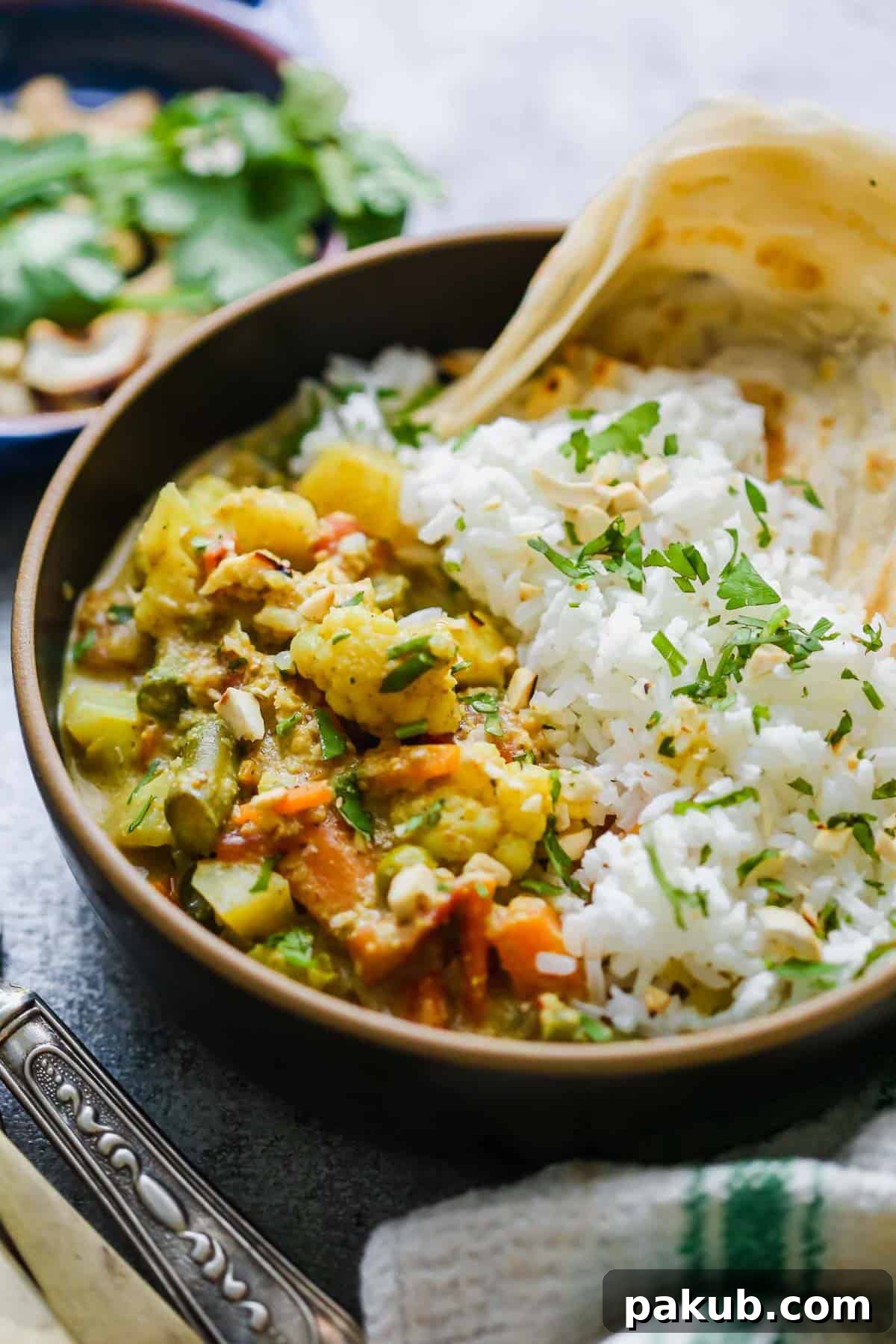
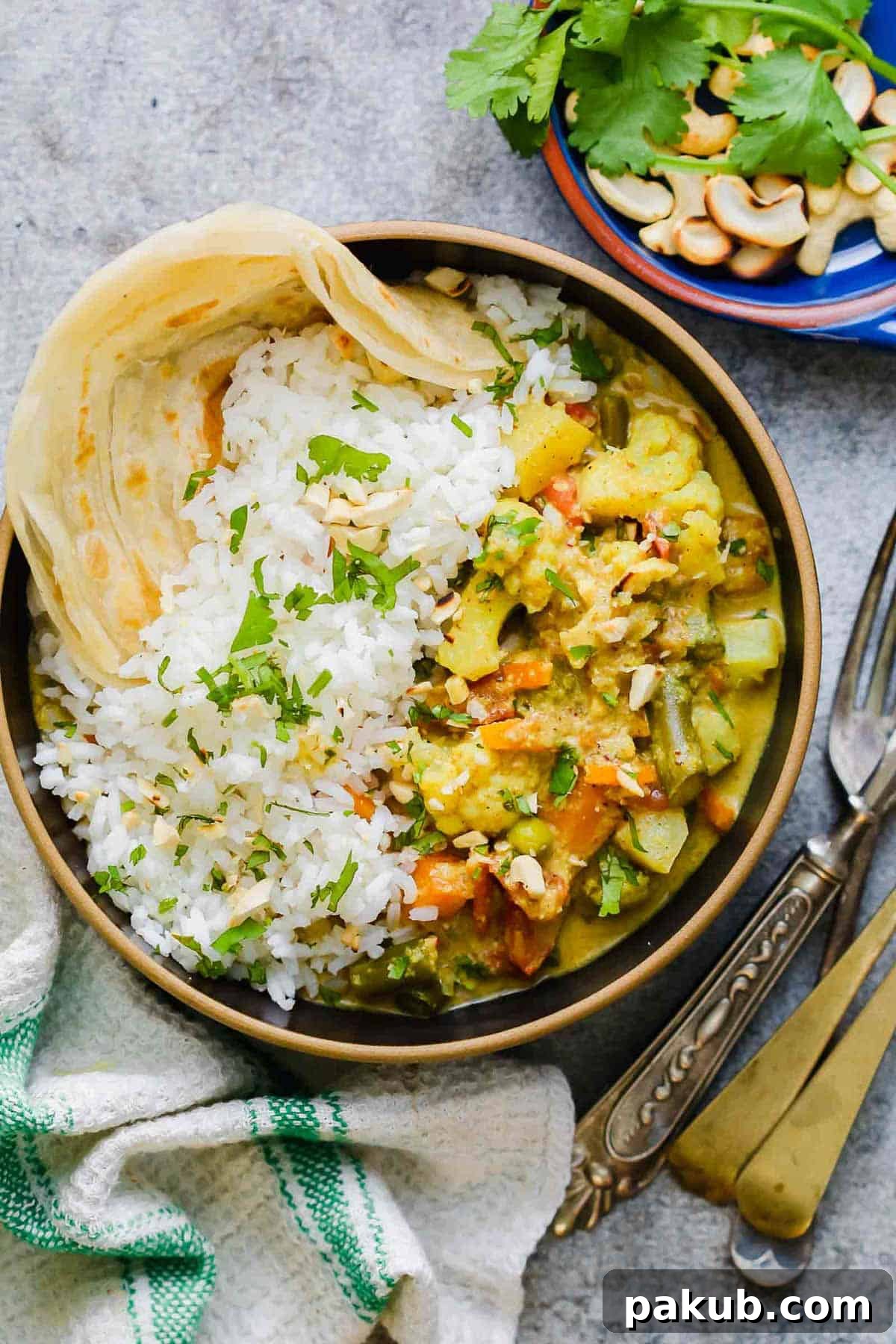
Whether you choose to enjoy this delectable Vegetable Korma Curry with a side of warm, fluffy naan bread or spooned generously over a bed of steaming basmati rice, make sure to savor every large dose! The symphony of crunchy, tender vegetables combined with the luxurious korma sauce brings pure magic to every single bite. It is the epitome of comfort food, especially perfect for chilly winter evenings, fitting beautifully into any weekday meal plan. It pairs exceptionally well with soft rotis, aromatic Jeera Rice, and truly just about anything you fancy!
Watch Our Vegetable Korma Recipe Video
This post has been meticulously updated and republished on June 14th with enhanced content and a brand-new video tutorial, while the core delicious recipe remains unchanged.
Vegetable Korma Curry
By: Richa
This authentic Vegetable Korma Curry features a luscious, creamy cashew sauce as its foundation, generously loaded with wholesome vegetables. You’ll find a delightful mix of tender potatoes, crisp cauliflower florets, sweet peas, crunchy French beans, and vibrant carrots in every spoonful, offering a perfect medley of textures and flavors. It’s the ultimate comfort food, versatile enough to be enjoyed as a hearty soup or as a main dish alongside rice and naan bread.
Ingredients
For the Creamy Korma Paste:
- 1 cup Onions, chopped
- 1 Green Chilli (adjust to taste)
- 1 1/2 inch Ginger
- 3 cloves Garlic
- 1/4 cup Cashew Nuts
- 1/2 cup Water
For the Wholesome Vegetables:
- 1 cup Potato, diced
- 1 cup Carrot, diced
- 1/2 cup Green Peas, fresh or frozen
- 1 cup Cauliflower Florets
- 1/2 cup French Beans, cut into 1 1/2 inch pieces
- 2 1/2 cups Water (for boiling vegetables)
Other Essential Ingredients:
- 2 tablespoon Ghee (or cooking oil for vegan option)
- 2 tablespoon Curry Powder
- 1/2 teaspoon Turmeric Powder
- 1/2 teaspoon Garam Masala (homemade recipe here)
- 2 teaspoon Kashmiri Chili Powder (for color and mild heat)
- 1/2 teaspoon Cinnamon Powder
- 1/4 teaspoon Cardamom Powder
- 1 1/2 teaspoon Salt (or to taste)
- 1 cup Tomatoes, chopped
- 3 tablespoon Fresh Cream (or full-fat coconut milk for vegan)
- Fresh Coriander for garnish
Instructions
- Prepare the Korma Paste: In a small saucepan, combine the chopped onions, green chili, ginger, garlic, and cashew nuts with 1/2 cup of water. Bring this mixture to a boil, then reduce the heat and simmer gently for 5-7 minutes until the onions become tender. Remove from heat, let it cool slightly, then transfer the entire contents to a blender. Blend until you achieve a perfectly smooth and creamy paste. Set this flavorful paste aside.
- Blanch the Vegetables: Bring 2 1/2 cups of water to a rolling boil in a medium-sized pot. First, add the diced potatoes and boil for exactly 3 minutes. Next, add the diced carrots and green peas to the same pot and continue to boil for another 3 minutes. Finally, incorporate the cauliflower florets and French beans, boiling for a final 3 minutes. This staggered boiling ensures all vegetables are cooked to tender perfection without becoming mushy. Drain the blanched vegetables thoroughly and set them aside.
- Sauté the Aromatics and Spices: Heat 2 tablespoons of ghee (or your chosen cooking oil for a vegan dish) in a large skillet or deep pan over medium heat. Once the ghee is shimmering, add the prepared Korma paste. Cook, stirring frequently, for 3-4 minutes until the raw aroma dissipates and the paste begins to thicken slightly. Now, add all the ground spices: curry powder, turmeric powder, garam masala, Kashmiri chili powder, cinnamon powder, and cardamom powder. Continue to cook for an additional 2-3 minutes, stirring constantly to prevent the spices from sticking or burning. If needed, add a tablespoon or two of water to deglaze the pan and prevent sticking.
- Combine and Simmer: Gently fold the blanched vegetables and the chopped tomatoes into the spiced Korma paste. Add 1 cup of water, stir well to ensure everything is evenly coated, and bring the mixture to a gentle simmer. Cover the pan and allow it to cook for another 3-4 minutes. This crucial step allows all the flavors to deeply meld together and the vegetables to absorb the rich, aromatic gravy.
- Finish and Serve: Remove the pan from the heat. Stir in the fresh cream (or coconut milk for a vegan alternative) until it is fully incorporated, lending the Korma its characteristic luxurious and smooth texture. Taste and adjust the salt if necessary. Garnish generously with freshly chopped coriander leaves before serving. Enjoy your homemade Vegetable Korma Curry hot with fluffy steamed rice, warm naan bread, or flaky lachha parathas for an authentic Indian meal experience.
Video Tutorial
Chef’s Notes for the Perfect Korma
- What defines Korma? Korma is a distinct Indian dish where vegetables or meat are cooked in a lightly spiced yet incredibly fragrant and creamy gravy. The delightful creaminess in a Korma can stem from various sources, including rich yogurt, fresh dairy cream, or tropical coconut milk. A common and key ingredient in most Korma gravies is ground cashews, which greatly contribute to both its thickness and creamy texture.
- Tomato Options: If fresh tomatoes are not readily available or for added convenience, you can easily substitute the fresh chopped tomatoes with a 15-ounce can of diced tomatoes. Alternatively, 1/2 cup of high-quality tomato puree or passata can also be used to achieve a similar depth of flavor.
- Garam Masala Insights: We highly recommend using homemade Garam Masala for its superior aroma and flavor profile. However, a good quality store-bought garam masala will also yield excellent results. It’s important to remember that Garam Masala is a unique blend of warming spices and is distinctly different from general curry powder; they are not interchangeable.
Nutrition Information (per serving)
Carbohydrates: 20g,
Protein: 4g,
Fat: 11g,
Saturated Fat: 5g,
Cholesterol: 23mg,
Sodium: 72mg,
Potassium: 505mg,
Fiber: 5g,
Sugar: 5g,
Vitamin A: 4254IU,
Vitamin C: 29mg,
Calcium: 54mg,
Iron: 2mg
Like this delicious recipe? We’d love to hear from you! Please take a moment to rate and leave a comment below with your feedback and experience. Your insights help us improve and inspire others!
More Indian Comfort Food Recipes You’ll Love:
- Dhaba Style Dal Fry
- Creamy Dal Makhani
- Easy Palak Paneer
- Flavorful Dhaba Dal Tadka
- The Best Khichdi Recipe