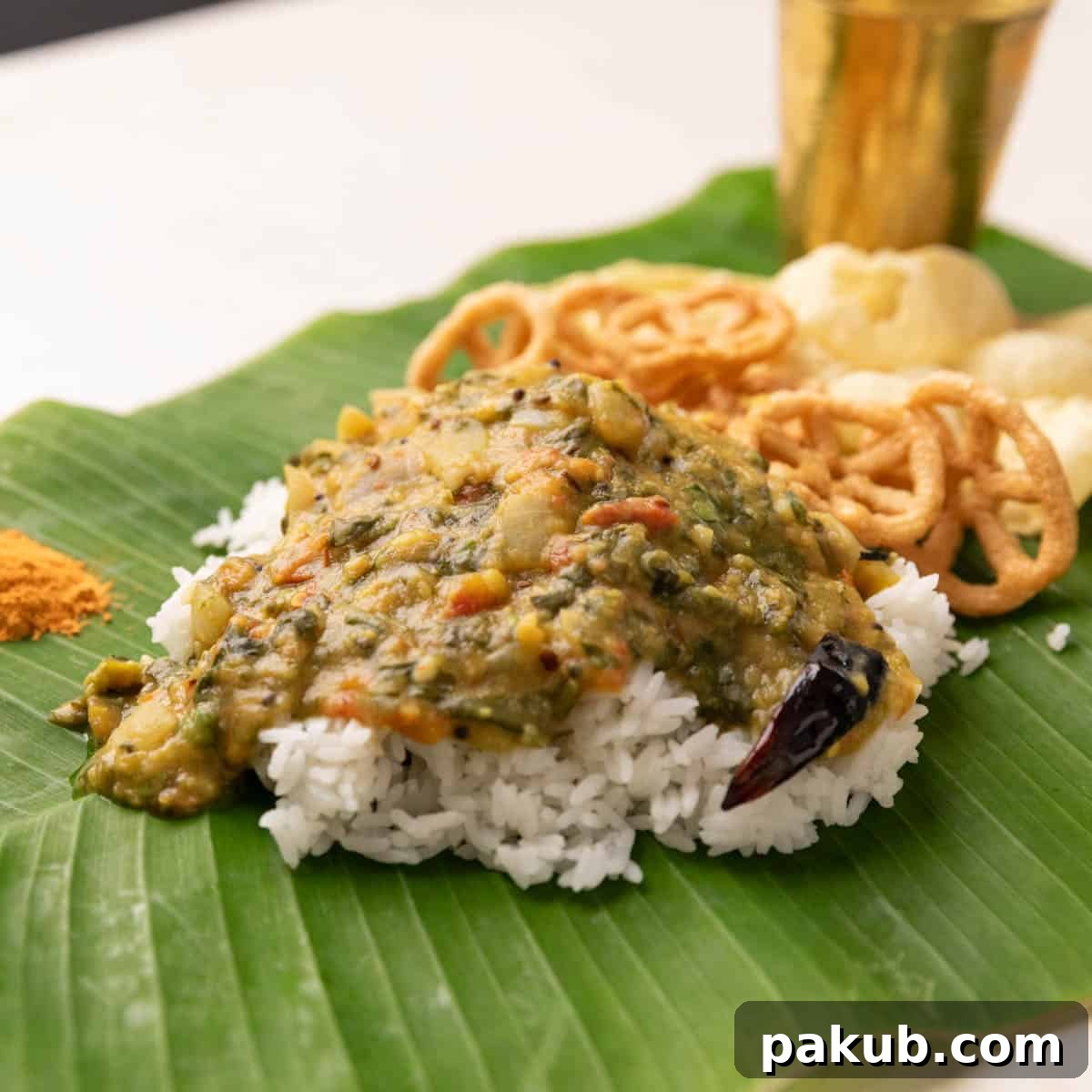
Authentic Andhra Style Palak Pappu: A Delightful Spinach and Toor Dal Recipe
Dive into the heart of South Indian comfort food with this exquisite Andhra Style Palak Pappu. This sour, spicy, and incredibly flavorful dal combines nourishing toor dal with fresh spinach, elevated by a classic tempering featuring aromatic garlic, onions, tomatoes, and green chilies. It’s a truly soul-satisfying meal!
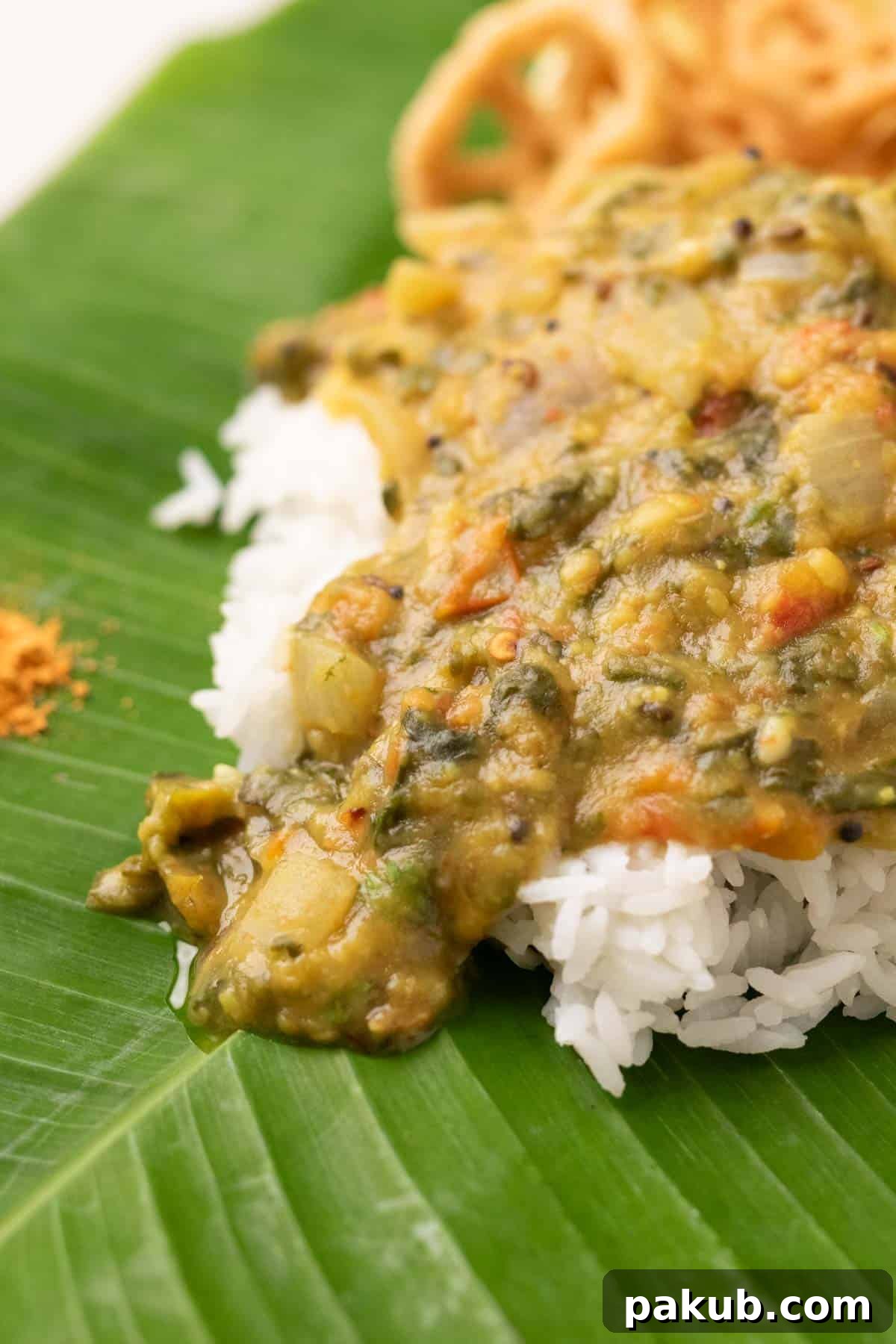
If you’ve ever experienced the culinary wonders of Andhra meals, perhaps at a famous restaurant like Bengaluru’s Nagarjuna, then you understand the unique appeal of this region’s cuisine. Among its many vibrant dishes, Andhra Style Palak Pappu holds a special place. This isn’t just any dal; it’s a celebration of bold flavors, combining the creamy texture of toor dal with the earthy freshness of spinach, all harmoniously blended with the pungent punch of garlic, the sweetness of onions, the tang of tomatoes, and the fiery kick of green chilies.
Dal, or lentils, is an indispensable part of Indian households, a daily staple that offers both nutrition and immense comfort. While countless variations exist across India, the Andhra style of preparing dal is distinctive, known for its characteristic sour and spicy notes. This recipe for Palak Pappu brings those authentic, restaurant-quality flavors right into your home kitchen. What makes it even better? It’s incredibly straightforward to prepare, relying mainly on a simple pressure-cooking method followed by a fragrant tempering (tadka). Forget complicated steps; with this guide, you can recreate that beloved Nagarjuna pappu experience effortlessly.
The Allure of Andhra Cuisine and Palak Pappu
Andhra Pradesh, located on India’s southeastern coast, boasts a cuisine renowned for its robust and fiery character. The liberal use of various chilies, tamarind, and a specific tempering technique sets Andhra dishes apart from their counterparts. Palak Pappu, meaning “spinach dal” in Telugu, perfectly encapsulates these culinary traditions. It’s a testament to how humble ingredients, when combined with expert seasoning, can create a dish that is deeply satisfying and unforgettable.
This particular dal is more than just a side dish; it often takes center stage at the dining table. Its rich flavor profile makes it an excellent accompaniment to plain steamed rice, providing a balanced and wholesome meal. The slight sourness, often from tomatoes or tamarind (though tomatoes are predominantly used here), cuts through the richness of the dal, while the spices add a warming heat that invigorates the palate. It’s truly a dish that comforts the soul and energizes the body.
Why This Spinach Dal Should Be Your Next Meal
If you’re seeking a recipe that delivers on flavor, nutrition, and ease, Andhra Style Palak Pappu is an excellent choice. Here’s why you’ll love it:
- A Symphony of Flavors: Every spoonful offers a delightful interplay of creamy lentils, tender spinach, the sharpness of garlic, the tang of tomatoes, and a pleasant warmth from the chilies.
- Nutrient-Rich Powerhouse: Toor dal is an excellent source of plant-based protein and dietary fiber, while spinach contributes a significant amount of vitamins (A, K, C, folate) and minerals (iron, magnesium). This makes Palak Pappu a truly healthy and wholesome meal.
- Effortless Preparation: Thanks to the efficiency of pressure cooking, this hearty dish comes together surprisingly quickly, making it ideal for busy weeknights. The tempering, while crucial for flavor, is also simple to execute.
- Incredible Versatility: It pairs beautifully with various staples, from steamed white rice and fluffy rotis to crispy dosas. It’s also adaptable to different dietary needs with minor adjustments.
- Authentic Taste: This recipe captures the genuine taste of Andhra, a cuisine celebrated for its vibrant and distinct flavors. The generous use of garlic and green chilies, coupled with a perfectly balanced tempering, ensures an authentic experience.
Essential Ingredients for Your Andhra Palak Pappu
Creating this authentic Andhra Style Palak Pappu begins with a careful selection of fresh and flavorful ingredients. Each component plays a vital role in building the dish’s complex taste profile.
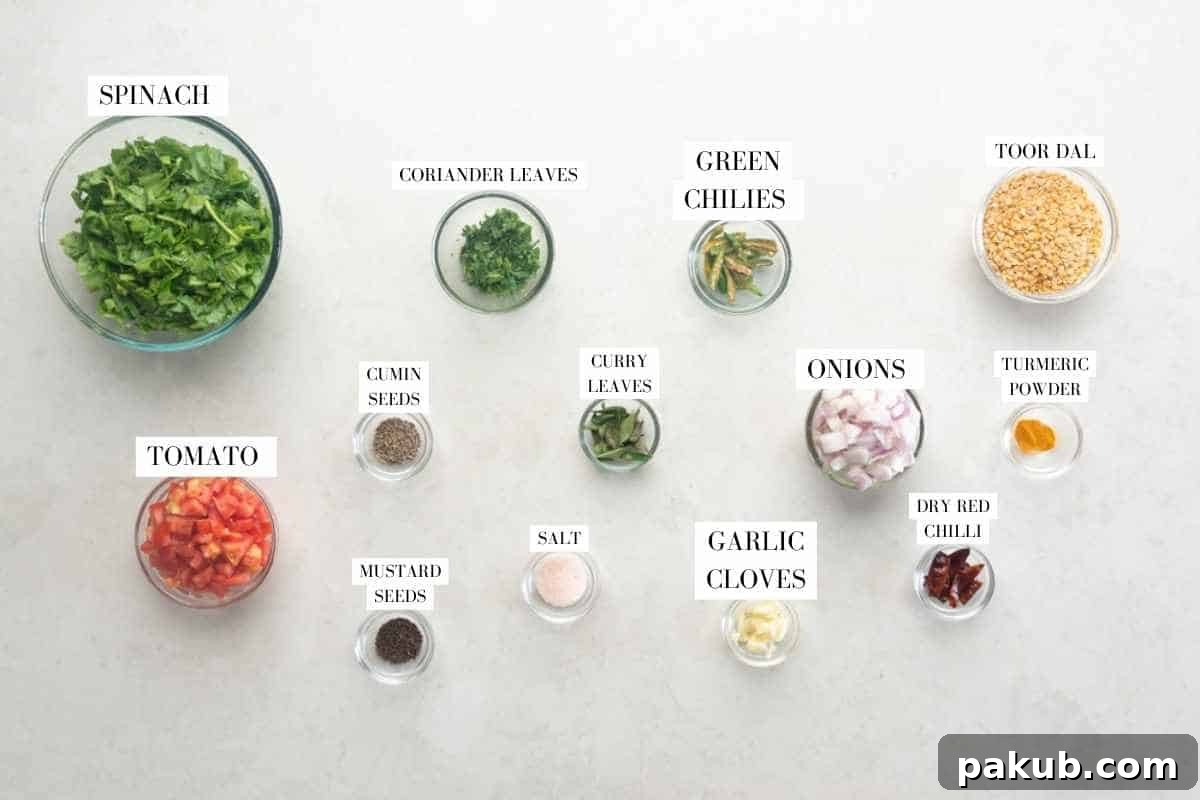
For the Hearty Dal Base:
- Toor Dal (Split Pigeon Peas): The primary lentil used, providing a creamy texture and a subtle, nutty flavor. Always rinse it thoroughly before cooking to remove any starch or debris.
- Garlic: This recipe calls for a generous quantity—around 10 large cloves. Crushing them helps to release their potent aroma and deep flavor, which is a hallmark of Andhra dals.
- Fresh Spinach (Palak): Approximately 100 grams of fresh, well-washed, and chopped spinach adds vibrant color, an earthy taste, and a significant nutritional boost. Ensure it’s free from dirt.
- Onion: One large onion, chopped, forms a sweet and savory foundation for the dal, mellowing as it cooks.
- Tomato: One large, chopped tomato introduces a crucial tanginess and acidity that balances the richness of the dal and complements the other spices.
- Green Chillies: About 5 green chilies, slit lengthwise, are responsible for the authentic Andhra heat. You can easily adjust this quantity to suit your personal spice preference.
- Turmeric Powder: A pinch for its beautiful golden color and mild, earthy notes, also known for its health benefits.
- Salt: Essential for seasoning and bringing out all the wonderful flavors. Adjust to your taste throughout the cooking process.
For the Aromatic Tempering (Tadka):
The tadka is the grand finale of this dish, a crucial step that infuses the dal with an incredible fragrance and a final burst of complex flavors. Don’t skip or rush this part!
- Ghee and Oil: A combination of 2 heaped teaspoons of ghee (clarified butter) and a little cooking oil ensures richness, depth, and a higher smoke point for the tempering spices.
- Mustard Seeds: These tiny seeds pop and splutter when hot, releasing a sharp, pungent, and nutty flavor that is characteristic of South Indian tempering.
- Cumin Seeds: Adds a warm, earthy, and slightly smoky aroma that pairs beautifully with lentils.
- Curry Leaves: A sprig of fresh curry leaves is non-negotiable for an authentic South Indian fragrance. Their distinctive aroma is released when fried in hot oil.
- Hing (Asafoetida): A quarter teaspoon of hing contributes a unique savory, almost onion-like flavor, and is also known to aid digestion, especially with lentils.
- Whole Garlic Cloves: Yes, even more garlic! Six whole cloves, fried until golden brown and slightly crispy, add an irresistible texture and an intensified garlic flavor that truly makes this recipe shine.
- Dry Red Chillies: 2 to 3 dry red chilies, broken in half, provide a subtle smoky heat and a lovely visual element to the tadka.
How to Make Andhra Style Palak Pappu: A Detailed Step-by-Step Guide
Crafting this flavorful dal is a rewarding experience. Follow these clear instructions to achieve a perfect Andhra Style Palak Pappu that will impress everyone at your table.
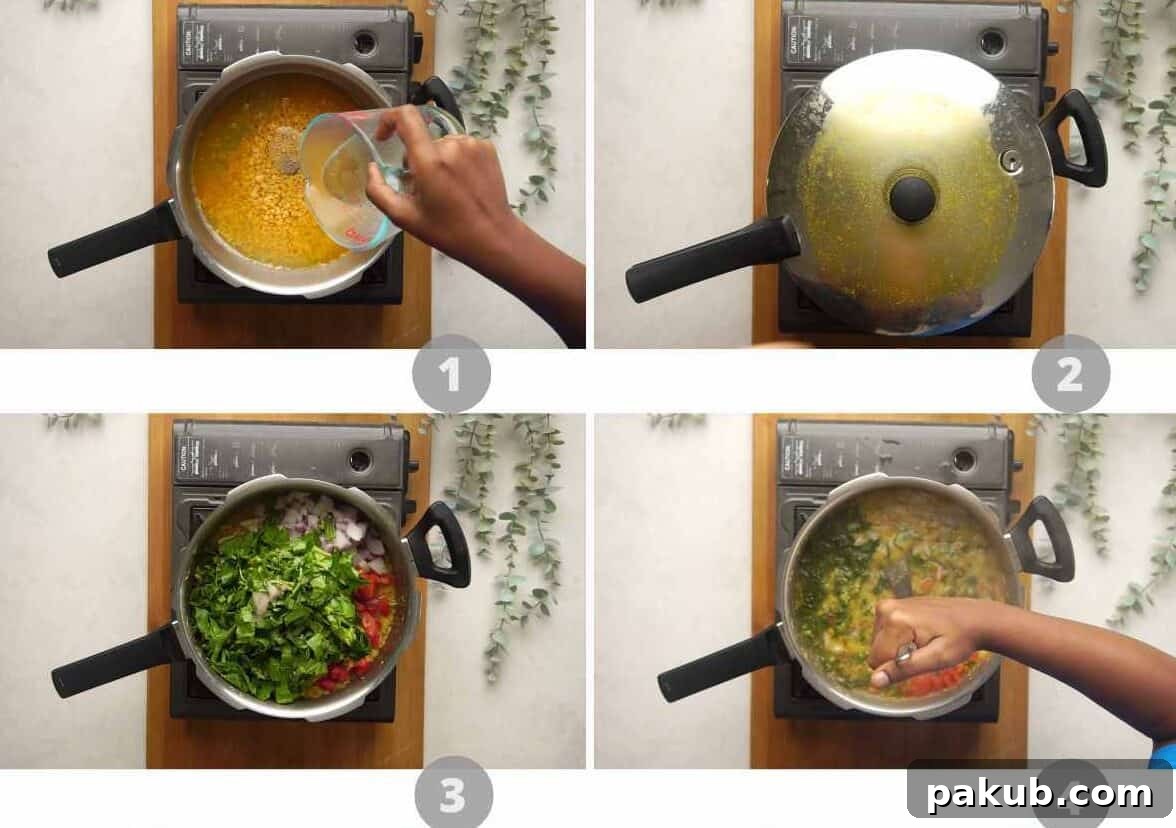
Phase 1: Preparing the Dal Base
- Rinse the Toor Dal: Start by placing the toor dal in a fine-mesh sieve and rinsing it thoroughly under cold running water. Wash it about 2-3 times until the water runs completely clear. This step is crucial for removing any impurities and excess starch, ensuring a clean flavor and texture. Drain the water well after rinsing.
- First Pressure Cook: Transfer the rinsed toor dal to a pressure cooker. Add 1 ¾ cups of fresh water and ¼ teaspoon of turmeric powder. Secure the lid tightly. Pressure cook on a medium flame for approximately 20 minutes, or until the dal is very soft and completely cooked through. This typically translates to about 4 whistles on most standard pressure cookers. Once cooking is complete, turn off the heat and allow the pressure to release naturally from the cooker before attempting to open the lid.
- Incorporate Aromatics and Spinach: After the pressure has fully released, carefully open the cooker. To the soft, cooked dal, add the crushed garlic, chopped fresh spinach, chopped onion, chopped tomato, slit green chilies, and salt. Stir all these ingredients gently to combine them with the dal.
- Second Pressure Cook: Close the pressure cooker lid once more. Cook for just 1 additional whistle, or alternatively, if you prefer not to use the pressure cooker again, you can simply simmer the mixture on a stovetop for about 6 minutes until the vegetables soften slightly. This brief cooking period ensures the vegetables are tender but not mushy, and their flavors are well integrated. Again, allow the pressure to release naturally before opening.
- Mash to Desired Consistency: Open the cooker. Using a sturdy spoon or a traditional dal masher, gently mash the dal and vegetables to your preferred consistency. Some enjoy a smoother, creamier texture, while others prefer a slightly coarser, more rustic feel with visible pieces of spinach and garlic.
Phase 2: Crafting the Flavorful Tempering (Tadka)
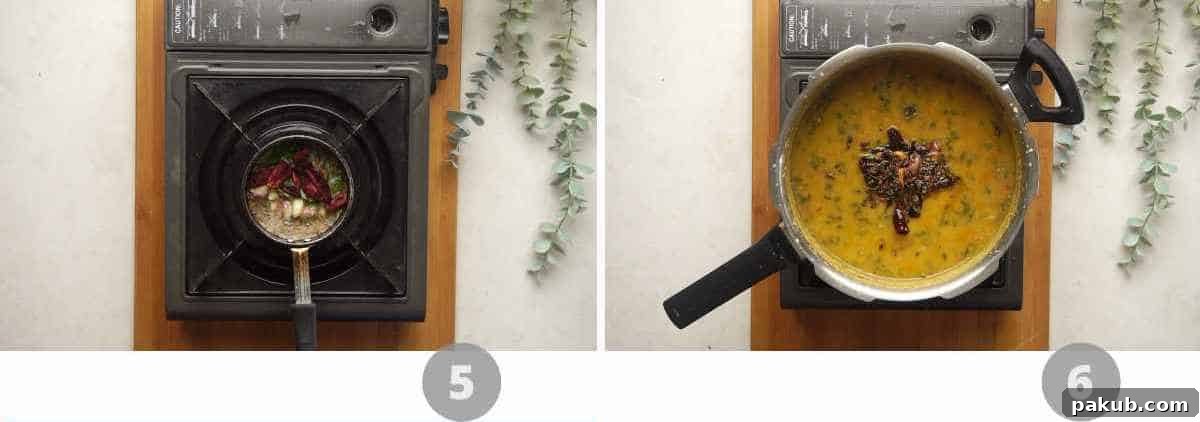
- Prepare the Tempering Pan: In a separate small frying pan or a dedicated tadka pan, heat 1 heaped teaspoon of ghee and 1 teaspoon of oil over medium heat. Wait until the fats are shimmering but not smoking.
- Sizzle the Seeds: Add the mustard seeds and cumin seeds to the hot fat. Allow them to crackle and splutter vigorously. This process, known as “tempering” or “tadka,” releases their essential oils and distinct aromas.
- Fry the Aromatics: Immediately after the seeds have crackled, add the hing (asafoetida), whole garlic cloves, fresh curry leaves, and the broken dry red chilies to the pan. Fry these ingredients, stirring continuously, until the whole garlic cloves turn a beautiful golden brown and the curry leaves become fragrant and slightly crisp. Be careful not to burn the spices, as this can make them bitter.
- Combine and Simmer: Carefully pour this freshly prepared, aromatic tempering directly over the cooked and mashed dal in the pressure cooker. Stir well to ensure the tempering is evenly distributed throughout the dal. Bring the dal to a gentle simmer on the stovetop.
- Final Adjustments and Serving: Check the consistency of the dal. If it seems too thick, you can add a little hot water to thin it down to your desired texture. Taste the dal and adjust the salt or any other seasoning if necessary. Allow the dal to simmer for an additional 3-4 minutes, letting all the incredible flavors meld and deepen. Serve your hot and fragrant Andhra Style Palak Pappu immediately with steamed rice or fresh roti.
Expert Tips for the Best Andhra Palak Pappu
Achieving the perfect Palak Pappu is easy with a few simple tricks:
- Quality Spinach Matters: Always opt for fresh, vibrant green spinach. Wilted or old spinach can impart a bitter taste. Wash it thoroughly to remove any soil or sand.
- Don’t Compromise on Garlic: The generous amount of garlic is a defining feature of this Andhra dal. It’s responsible for much of its robust flavor, so don’t be shy!
- Spice Level Customization: The 5 green chilies provide a medium to hot spice level. For less heat, deseed some chilies or use fewer. For more heat, add an extra chili or a tiny pinch of red chili powder in the tempering.
- Achieving the Right Consistency: Mash the dal until it reaches your preferred texture. Some enjoy it completely smooth, while others prefer a little texture from the lentils and spinach.
- The Power of Ghee: While oil can be used, ghee adds an unparalleled depth of flavor and rich aroma to the tempering that truly elevates the dish.
- Natural Pressure Release: Always allow the pressure cooker to release pressure naturally. This helps the dal cook evenly and prevents it from splattering when opened.
Serving Suggestions and Exciting Variations
Ideal Pairings for Your Palak Pappu:
Andhra Style Palak Pappu is incredibly versatile and forms a fantastic base for a complete meal. It shines brightest when paired with:
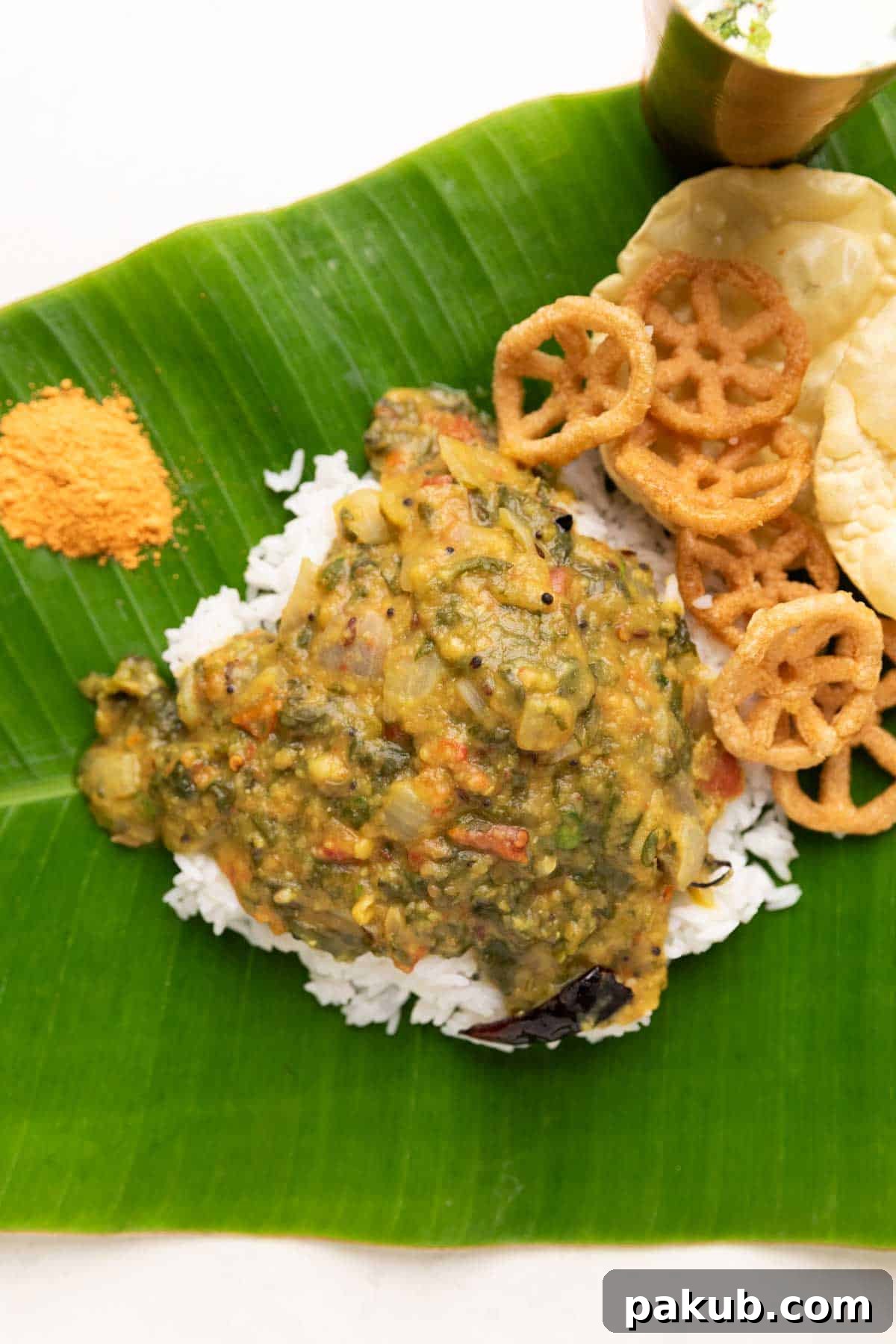
- Steamed Rice: The classic and most beloved pairing. A dollop of warm ghee melted over the rice and dal creates an irresistible combination of flavors and textures. The simplicity of rice allows the complex flavors of the dal to truly stand out.
- Roti or Chapati: For those who prefer Indian breads, hot rotis or chapatis are excellent for scooping up this flavorful dal.
- Traditional Accompaniments: Elevate your meal with traditional South Indian sides! A spoonful of tangy pickle (achaar), a few pieces of crispy papadum (appadam), and a sprinkle of spicy chutney powder (podi) can transform a simple dal into a lavish feast. For the most authentic experience, try eating it with your hands.
Creative Variations to Explore:
While the traditional recipe is perfect, feel free to experiment and customize your Palak Pappu:
- Alternate Greens: Venture beyond spinach! Try using other leafy greens like fenugreek (methi) or sorrel (gongura) for different flavor profiles. Gongura Dal is another famous Andhra delicacy worth exploring.
- Add More Vegetables: For an even heartier and more nutritious meal, add finely chopped carrots, potatoes, bottle gourd, or even small cubes of pumpkin along with the dal during the second pressure cook.
- Smoky Dhungaar: For a rustic, smoky flavor, try the dhungaar method. Heat a small piece of charcoal until red hot, place it in a small steel bowl, put it in the dal, pour a teaspoon of ghee over the charcoal, and quickly cover the dal pot to infuse it with smoky aroma for a few minutes.
- Vegan Adaptation: This recipe is easily made vegan by simply replacing ghee with your preferred plant-based oil (like coconut oil or sesame oil) or a vegan butter substitute in the tempering.
Storage and Reheating Guidelines
One of the best things about dal is that it often tastes even better the next day, as the flavors have more time to meld and deepen. Store any leftover Andhra Style Palak Pappu in an airtight container in the refrigerator for up to 3-4 days. To reheat, gently warm it on the stovetop over low to medium heat or in the microwave. If the dal has thickened considerably, add a splash of hot water to adjust the consistency. For an extra boost of freshness and flavor, you can prepare a small, fresh tempering (tadka) and pour it over the reheated dal just before serving.
Frequently Asked Questions (FAQ) About Palak Pappu
- What is the main difference between Palak Dal and Palak Pappu?
- Both terms refer to a spinach and lentil stew. “Dal” is the Hindi word for lentils, while “Pappu” is the Telugu (Andhra Pradesh) word. So, Palak Pappu specifically denotes the Andhra style preparation, which is distinct for its characteristic tanginess (often from tomatoes or tamarind) and pronounced spice level, typically with generous garlic and green chilies.
- Can I use a different type of lentil instead of toor dal?
- Toor dal (arhar dal) is traditionally used for Andhra Palak Pappu and gives it its signature taste and creamy texture. While you could technically substitute with masoor dal (red lentils) for a quicker cooking time, the flavor and consistency of the final dish would be noticeably different from the authentic Andhra version.
- Is it possible to make this recipe without a pressure cooker?
- Absolutely! If you don’t have a pressure cooker, you can cook the dal in a heavy-bottomed pot. It will take longer – simmer the dal with sufficient water until it is very soft, adding more water as needed. Once the dal is tender, proceed with adding the vegetables and simmering until they are cooked, then follow the steps for tempering.
- How can I adjust the spice level of the Palak Pappu?
- To decrease the spice, use fewer green chilies or remove the seeds from the chilies before adding them. To increase the spice, you can add an extra green chili or a small pinch of red chili powder along with the tempering ingredients.
- Is Andhra Style Palak Pappu a healthy dish?
- Yes, it is very healthy! It’s rich in plant-based protein and dietary fiber from the toor dal, and packed with vitamins, minerals, and antioxidants from the fresh spinach. It’s a wholesome, nutrient-dense, and satisfying meal.
We hope you enjoy making and savoring this authentic Andhra Style Palak Pappu. It’s a dish that truly embodies the warmth and richness of Indian home cooking. If you’re inspired to explore more exciting recipes that capture the essence of South Indian cuisine, or perhaps other comforting dal variations, be sure to explore my Andhra Chilli Chicken recipe for a spicy non-vegetarian delight, or my popular Dhaba-style Dal with Double Tadka for another comforting lentil dish.
LOVE THIS RECIPE? Subscribe to my newsletter and be the first to receive all new recipes and culinary inspiration!
Andhra Style Palak Pappu Recipe Card
Andhra Style Palak Pappu
By: Richa
A savoury dal packed with toor dal and fresh spinach, infused with powerful aromatics like garlic, onion, and green chillies. It’s truly comfort in a bowl, best served hot with steamed rice and a generous spoon of ghee.
10 mins
35 mins
45 mins
4 people
Ingredients
For the Dal:
- ¾ Cup Toor Dal
- 1 ¾ Cup Water
- ¼ Teaspoon Turmeric Powder
- 10 Cloves Garlic, crushed
- 100 Grams Fresh Spinach, chopped
- 1 Large Onion, chopped
- 1 Large Tomato, chopped
- 5 Green Chillies, slit lengthwise (adjust to taste)
- 1 ½ Teaspoon Salt (or to taste)
For the Tempering (Tadka):
- 1 Teaspoon Ghee
- 1 Teaspoon Cooking Oil
- 1 Teaspoon Mustard Seeds
- 1 Teaspoon Cumin Seeds
- ¼ Teaspoon Hing (Asafoetida), optional
- 1 Sprig Fresh Curry Leaves
- 6 Whole Garlic Cloves
- 2-3 Dry Red Chillies, broken in half
Instructions
Preparing the Dal Base:
- Rinse the Dal: Thoroughly rinse the Toor Dal under running water 2-3 times until the water runs clear. Drain well.
- First Pressure Cook: In a pressure cooker, combine the rinsed Toor Dal, 1 ¾ cups Water, and ¼ teaspoon Turmeric Powder. Pressure cook for approximately 20 minutes (or about 4 whistles) until the dal is very soft. Allow the pressure to release naturally.
- Add Aromatics & Spinach: Once the pressure has released, open the cooker. Add the crushed Garlic, chopped Spinach, chopped Onion, chopped Tomato, slit Green Chillies, and 1 ½ teaspoon Salt to the cooked dal. Mix well.
- Second Pressure Cook: Close the cooker and pressure cook for 1 more whistle, or simmer on the stovetop for about 6 minutes. Let the pressure release naturally.
- Mash to Consistency: Open the cooker and mash the dal using a spoon or masher until your desired consistency is achieved.
Crafting the Tempering (Tadka):
- Heat Fats & Spices: In a separate frying pan, heat 1 teaspoon Ghee and 1 teaspoon Oil over medium heat. Add Mustard Seeds and Cumin Seeds; let them crackle.
- Fry Aromatics: Add Hing, Whole Garlic Cloves, Curry Leaves, and Dry Red Chillies to the pan. Fry until the garlic turns golden brown.
- Combine & Simmer: Pour this hot tempering into the cooked dal and mix well. Bring the dal to a simmer. Add water to adjust consistency if needed and adjust seasoning to taste. Cook for an additional 3-4 minutes to allow flavors to meld.
- Serve: Serve your hot Andhra Style Palak Pappu with steamed rice or roti.
Nutrition Information (Approximate per serving)
- Calories: 172 kcal
- Carbohydrates: 30 g
- Protein: 8 g
- Fat: 3 g
- Saturated Fat: 1 g
- Fiber: 8 g
- Sodium: 1113 mg
- Potassium: 320 mg
- Sugar: 5 g
- Vitamin A: 2624 IU
- Vitamin C: 24 mg
- Calcium: 82 mg
- Iron: 2 mg
Enjoy this delightful taste of Andhra cuisine!