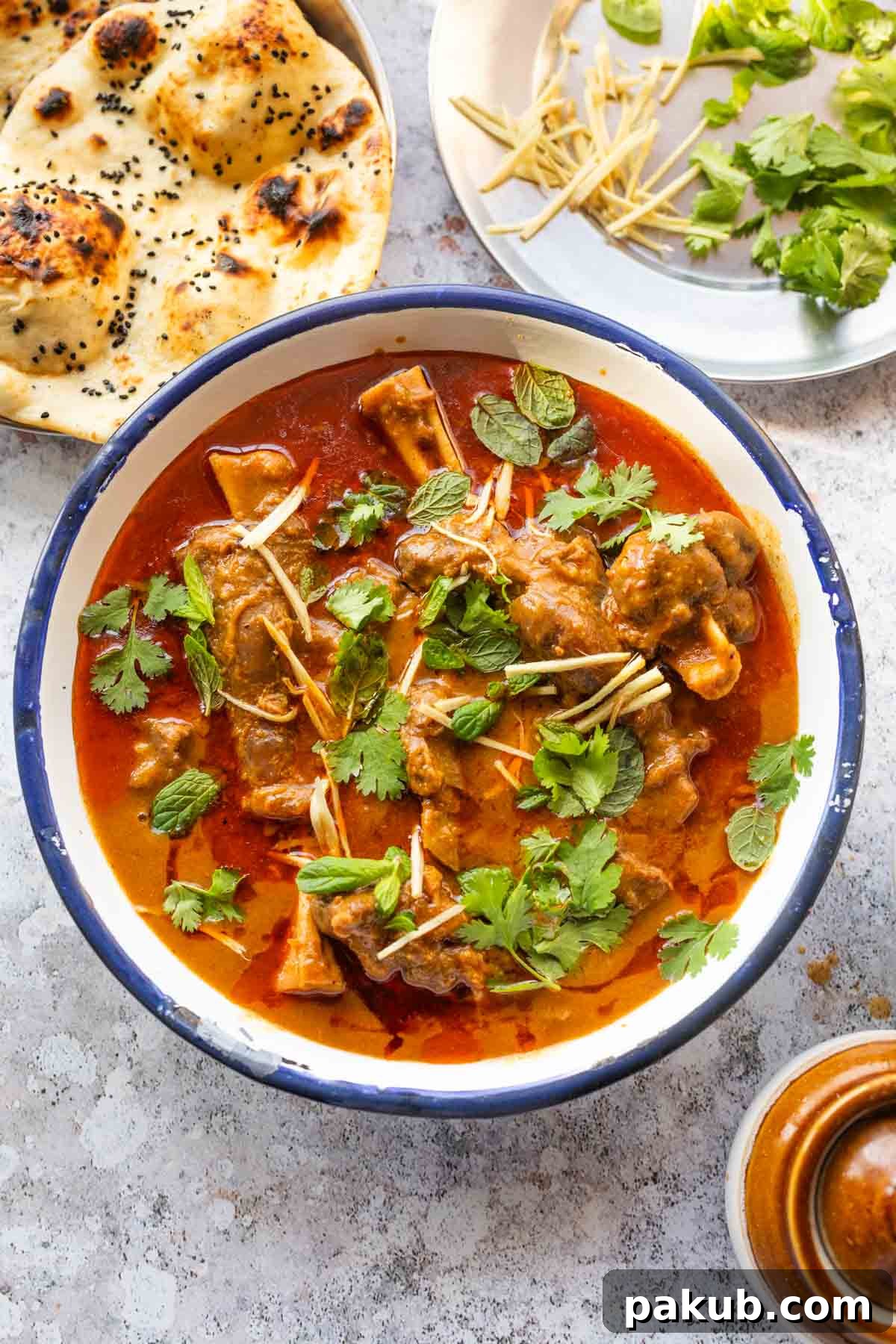
Experience the unparalleled taste of Mutton Nihari, a culinary masterpiece that embodies comfort, richness, and depth of flavor. This classic recipe, renowned for its slow cooking process, transforms simple ingredients into an extraordinary dish, filling your kitchen with an irresistible aroma that promises a memorable meal.
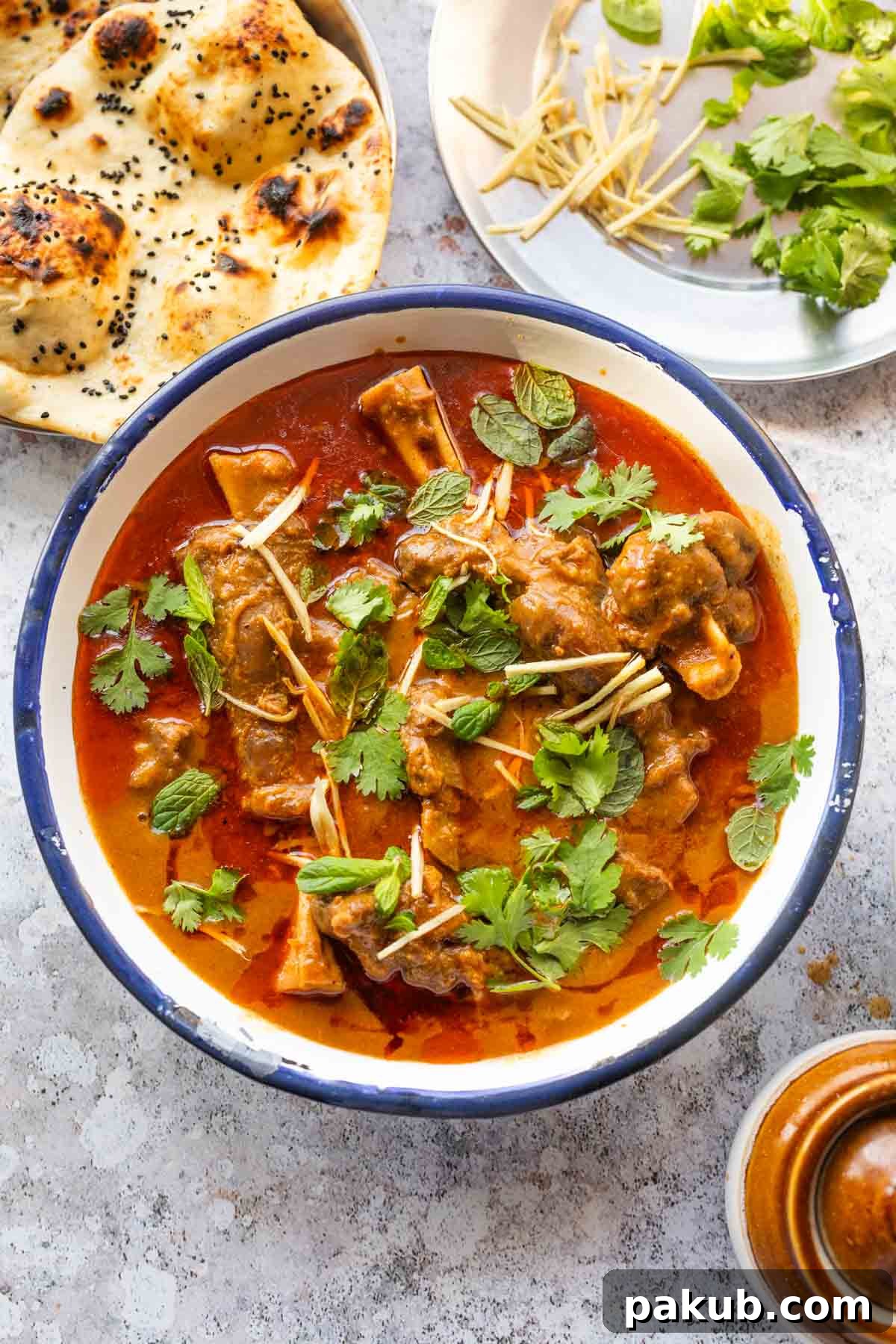
Authentic Mutton Nihari: A Slow-Cooked Culinary Delight
Mutton Nihari is more than just a meal; it’s an experience. Originating from the royal kitchens of the Mughal Empire, this celebrated slow-cooked lamb or beef stew has transcended generations to become a beloved staple in South Asian cuisine, particularly in India and Pakistan. Known for its melt-in-your-mouth tender meat, thick gravy, and intricate spice profile, Nihari is traditionally served for breakfast on special occasions, but it’s equally cherished as a hearty main course for dinner gatherings.
I often turn to this Mutton Nihari recipe when hosting a crowd, and for good reason. Despite its reputation for complexity, it’s surprisingly a one-pot dish once the initial prep work is done. The long cooking time is not demanding hands-on work; rather, it’s a patient process that allows the flavors to meld and deepen beautifully. Don’t let the duration deter you; after marinating the mutton and frying the onions, this dish largely cooks itself, rewarding you with flavors so profound, they’re truly unforgettable!
Why You’ll Love This Mutton Nihari Recipe
One of the many reasons I adore Nalli Nihari is its incredible make-ahead potential. While it’s ideal to let it rest for a couple of hours before serving to allow the flavors to harmonize, making it the day before truly elevates the experience. The spices continue to develop, resulting in an even richer, more cohesive taste. My preferred way to savor this Nihari is with warm, soft, and fluffy garlic cheese kulcha, complemented by fresh lemon wedges and crisp onion rings. However, its versatility means it pairs just as wonderfully with pillowy naan, homemade roti, or even simple steamed rice.
Beyond its incredible taste, this Mutton Nihari offers a truly comforting culinary journey. It’s a dish that warms you from the inside out, perfect for cooler weather or whenever you crave something deeply satisfying. The process of making it, though lengthy, is incredibly rewarding, turning your kitchen into a sanctuary of aromatic bliss. Each spoonful delivers a symphony of spices and tender meat, showcasing the beauty of slow cooking.
Jump to Section: Master Your Mutton Nihari
- Essential Nihari Ingredients
- Cooking Authentic Mutton Nihari: Step-by-Step
- Frequently Asked Questions About Nihari
- Expert Tips for Perfect Nihari
- Best Serving Ideas for Nihari
- Customizing Your Nihari
- Storage and Reheating Tips
- Watch the Nihari Recipe Video
Essential Nihari Ingredients for Unmatched Flavor
Crafting an authentic Mutton Nihari relies on a careful selection of ingredients that build layers of flavor and achieve its signature texture. Here’s a closer look at what you’ll need:
- Mutton – For the richest flavor and body, bone-in pieces from the leg or shoulder of mutton are highly recommended. The bones release collagen and marrow, contributing significantly to the stew’s depth and silkiness. If using boneless pieces, remember to adjust the cooking time as they will tenderize much faster.
- Salt and Turmeric – These basic seasonings are crucial for the initial marinade. Salt enhances the natural taste of the meat, while turmeric adds a beautiful golden hue and boasts natural tenderizing properties.
- Oil – A neutral-flavored cooking oil, such as sunflower oil, works best here. It allows the other aromatic spices to shine without overpowering them. You might also consider using a blend with ghee for a more traditional and richer taste.
- Onions – Thinly sliced onions are fried until golden brown, then ground into a paste. This paste forms the rich, flavorful backbone of the Nihari gravy, adding sweetness and essential body.
- Aromatics – Fresh ginger and garlic are indispensable. They provide a pungent sharpness, aromatic depth, and crucial flavor dimensions that elevate the entire dish.
- Nihari Masala – The heart of Nihari’s unique flavor profile. I’ve used Shan’s Nihari Masala for its authentic blend, which is widely available and reliable. Feel free to use any preferred brand or even make your own homemade spice mix for a truly custom touch.
- Besan (Gram Flour) and Wheat Flour (Atta) – These flours are key to achieving the characteristic thick, velvety consistency of Nihari gravy. They act as natural thickeners, ensuring the stew is hearty and satisfying without being excessively heavy or starchy.
- Garnishes – Fresh julienned ginger and vibrant coriander leaves are essential for serving. They add a burst of freshness, a slight crunch, and a visually appealing finish, cutting through the richness of the stew.
Cooking Authentic Mutton Nihari: Step-by-Step Guide
Making a truly memorable Mutton Nihari involves patience and attention to detail, but the process is straightforward. Follow these steps for a rich and aromatic lamb stew:
-
Prepare the Mutton Marinade
In a large bowl, combine 2 kilograms of bone-in mutton leg or shoulder pieces with 1 teaspoon of salt and 1 teaspoon of turmeric powder. Mix thoroughly to ensure the meat is evenly coated. Set aside to marinate for at least 30 minutes. This step helps tenderize the meat and infuses it with initial flavor.
-
Fry Onions and Create the Aromatic Paste
Heat 1 cup of sunflower or any neutral-flavored cooking oil in a deep kadai or heavy-bottomed pan over medium-low heat. Add one-third of the thinly sliced onions and fry them slowly until they turn a rich golden brown and are crispy. Using a slotted spoon, carefully drain the fried onions and transfer them to a plate lined with paper towels to remove excess oil. Repeat this process for the remaining onions, frying them in batches to ensure even browning. Once all onions are fried, transfer them to a mixer grinder along with 1 ½ inches (65 gms) of roughly chopped ginger, 40 garlic cloves (35 gms), and ½ cup of water. Blend until a smooth, thick paste is formed. This paste will be the backbone of your Nihari gravy.
-
Sear the Marinated Mutton
Return ¾ cup of the oil used for frying the onions to the kadai. Increase the heat to medium. Add the marinated mutton pieces and sauté for 2-3 minutes. The goal is to lightly roast the mutton, sealing in its juices and adding a layer of flavor before slow cooking.
-
Build the Gravy Base
Add the prepared brown onion, ginger, and garlic paste to the mutton in the kadai. Sauté on low heat for 3-4 minutes, stirring constantly. This step is crucial for cooking out the raw flavor of the aromatics and allowing their essence to develop. The paste will darken slightly and become very fragrant.
-
Add Nihari Masala and Begin Slow Cooking
In a separate small bowl, mix 1 ½ packets (90 gms) of Shan Nihari Masala with 1 cup of water to form a smooth slurry. Pour this spice mixture into the kadai with the mutton and onion paste, mixing well. Add 9 cups of water to the mixture. Bring it to a gentle boil, then reduce the heat to low, cover the kadai, and let it simmer for 1 hour 30 minutes. The mutton should become incredibly tender, almost falling off the bone. This slow simmering process is what infuses the meat with all the rich flavors of the masala.
-
Prepare the Thickening Agent
While the mutton is slow cooking, take ½ cup of besan (gram flour) and ½ cup of atta (wheat flour) in a separate dry kadai or pan. Roast these flours on low heat for 3-4 minutes, stirring continuously to prevent them from burning. It’s important that the flours cook through and lose their raw taste but do not turn brown. This will ensure a smooth, nutty flavor in your gravy.
-
Thicken the Nihari Gravy
Once the mutton is cooked and tender, mix the roasted flours with 2 cups of water in a bowl to create a lump-free slurry. Gradually add this slurry to the simmering Nihari in the kadai, stirring continuously to prevent lumps from forming. Continue to stir as it comes back to a boil, then reduce the heat to low and cook for another 7-8 minutes. During this time, the gravy will thicken beautifully, and the “rogan” (a layer of aromatic oil) will float to the top. Carefully scoop out this floating oil/rogan and transfer it to a separate bowl. This oil is traditionally added at the time of serving.
-
Serve Your Masterpiece
To serve, ladle generous portions of the hot Nihari mutton gravy into individual bowls. Top each serving with 2 tablespoons of the reserved hot rogan for an extra layer of flavor and a beautiful sheen. Garnish generously with 2-3 julienned ginger pieces and a sprinkle of roughly chopped coriander leaves. Serve immediately with 2-3 onion rings and fresh lemon wedges on the side, allowing each diner to adjust the taste to their preference.
Frequently Asked Questions About Nihari
While a pressure cooker can significantly reduce the cooking time, allowing you to tenderize the mutton faster, slow cooking is generally recommended for the best flavor development and texture. If time is a constraint, a pressure cooker is an option, but be mindful that the depth of flavor might be slightly less intense.
The combination of both besan and atta is key to achieving Nihari’s signature rich, thick, and velvety consistency without making the gravy pasty or gluey. Besan adds a slightly nutty flavor and a smooth texture, while atta provides the necessary body and binds the sauce perfectly.
Nihari is typically meant to be warming and intensely flavorful, rather than aggressively spicy. The spice blend provides a complex heat that lingers pleasantly. You can adjust the amount of Nihari masala and fresh ginger to suit your personal preference for spiciness.
Absolutely! While Mutton Nihari (lamb) and Beef Nihari (often Nalli Nihari, focusing on bone marrow) are the most traditional, you can adapt the recipe for chicken or other protein. Just be sure to adjust the cooking time significantly, as chicken, for example, will cook much faster than mutton.
Rogan refers to the layer of aromatic, spiced oil that collects on top of the Nihari gravy during slow cooking. It’s often scooped out and reserved to be added back to individual servings. This is done for two main reasons: it makes the dish less greasy overall, and it provides a beautiful, glistening finish and an extra burst of flavor when served, enhancing the visual appeal and dining experience.
Expert Tips for Perfect Mutton Nihari Every Time
- Patience with Onions is Key: Frying onions to a perfect golden brown requires patience. They can go from perfectly caramelized to burnt very quickly. Fry them in smaller batches to ensure even cooking and prevent overcrowding, which can lead to steaming instead of frying. A well-fried onion base is fundamental to Nihari’s flavor.
- Continuous Stirring for Flours: When roasting the besan and atta, stir continuously on low heat. This prevents them from clumping, burning, or browning excessively, ensuring a smooth, raw-flour-free taste and a light color for your gravy.
- Embrace the Slow Cook: Nihari is a dish that truly benefits from slow cooking. Rushing the process, even if the meat is tenderized, will compromise the depth of flavor and the desired luxurious texture of the gravy. Allow the ingredients to simmer gently, letting all the complex flavors meld and mature.
- Quality of Mutton: Opt for good quality, fresh bone-in mutton. The bones are crucial for the richness and body of the gravy, releasing collagen and marrow that contribute significantly to the authentic taste.
- Resting Period: While not mandatory, allowing the Nihari to rest for a few hours or even overnight before serving significantly enhances its flavor profile. The spices continue to infuse, resulting in a more harmonious and intense taste.
Best Serving Ideas for Your Mutton Nihari
- We find Mutton Nihari absolutely heavenly with soft, fluffy kulcha, especially garlic cheese kulcha. However, it’s equally delightful with fresh naan or warm, homemade roti.
- For a lighter accompaniment, pair your rich Nihari with perfectly cooked plain steamed Basmati rice. The rice beautifully absorbs the flavorful gravy.
- Always serve Nihari with an array of fresh garnishes on the side. This includes delicate ginger juliennes, zesty lemon wedges, and crunchy thinly sliced onions or onion rings. These additions allow each diner to customize the freshness, tang, and sharpness to their individual taste, elevating the dining experience.
- Consider a side of a simple green salad or a raita (yogurt dip) to balance the richness of the curry.
Customizing Your Mutton Nihari Experience
- Adjust Gravy Consistency: If you prefer a thinner, more broth-like Nihari, feel free to add a little extra hot water during the final stages of cooking to reach your desired consistency.
- Spice Level: For those who love an extra kick, increase the amount of fresh ginger used as a garnish. A few green chilies can also be finely chopped and added during the sautéing stage or as a garnish for extra heat.
- Richer Flavor: For a more traditional and intensely rich flavor, replace part of the cooking oil with ghee (clarified butter). Ghee adds a distinctive aromatic depth that enhances the overall taste.
- Alternative Proteins: While mutton is classic, you can replace it with chicken, beef, or even a mix of vegetables for a vegetarian version. Remember to significantly adjust the cooking time based on the protein you choose. Chicken will cook much faster, while beef might require a similar or slightly longer cooking time.
- Smoky Flavor: For a unique smoky aroma, you can try the ‘dhungar’ method. Place a small piece of burning charcoal in a small bowl within the Nihari pot, drizzle a little ghee over it, and quickly cover for a few minutes.
Storage and Reheating Tips for Mutton Nihari
- Refrigeration: Once cooled completely, transfer the Nihari to an airtight container. It can be safely stored in the refrigerator for up to 2-3 days.
- Freezing: Nihari freezes exceptionally well, making it an excellent meal prep option. Store cooled portions in freezer-safe containers for up to 1 month. To thaw, simply transfer it to the refrigerator overnight.
- Reheating: Gently reheat Nihari on low heat on the stovetop. If the gravy has thickened too much during storage, add a little water or broth to loosen it to your preferred consistency. Stir occasionally to ensure even heating.
- Flavor Note: Like many slow-cooked stews and curries, Nihari often tastes even more exquisite the next day. The flavors have more time to marry and deepen, making leftovers a highly anticipated treat.
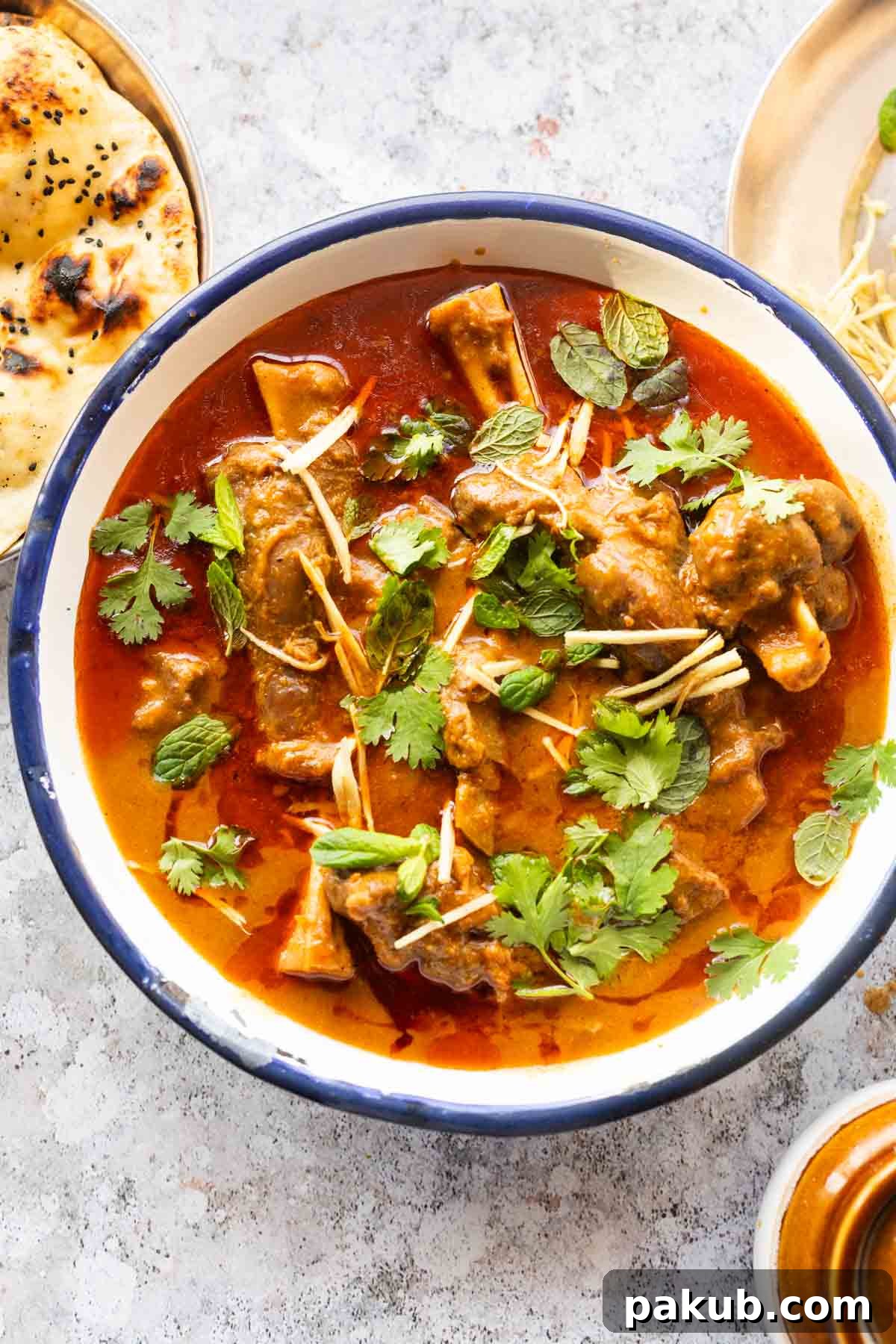
This Mutton Nihari is a testament to the beauty of slow, indulgent cooking. It’s a dish that demands patience but repays it tenfold with deeply satisfying flavors and an incredibly tender texture. Rich without being heavy, comforting without being overwhelming, it’s best enjoyed hot, fresh, and unhurried. Whether you’re making it for a special gathering or a comforting family meal, this recipe guarantees an authentic and unforgettable culinary journey.
Watch the Mutton Nihari Recipe Video
Mutton Nihari (Nalli Nihari)
Richa
30 minutes
2 hours
30 minutes
3 hours
0 minutes
12
servings
Rate Recipe
Print Recipe
Ingredients
-
2
kilograms
bone-in mutton leg / shoulder -
1 ½
teaspoon
salt,
divided -
1
teaspoon
turmeric powder -
1
cup
sunflower or any neutral-flavored cooking oil -
8
onions,
thinly sliced (approx. 500 gms) -
1 ½
inch
ginger,
roughly chopped (approx. 65 gms) -
40
garlic cloves,
(approx. 35 gms) -
12 ½
cups
water,
divided -
1 ½
packets Shan nihari masala,
(approx. 90 gms) -
½
cup
besan,
gram flour -
½
cup
atta,
wheat flour -
For Garnish:
1 ½
inches
ginger,
julienned -
2
tablespoons
roughly chopped coriander leaves -
2-3
onion rings -
2-3
lemon wedges
Instructions
-
Take mutton, 1 teaspoon of salt, and 1 teaspoon of turmeric powder in a bowl. Mix well to ensure the mutton is fully coated. Set aside to marinate for 30 minutes.
-
Heat 1 cup of oil in a deep kadai or pan. Add ⅓ portion of the thinly sliced onions and fry on low heat until they turn golden brown. Using a slotted spoon, drain the oil well and transfer the fried onions to a plate. Repeat this process for the remaining onions in batches. Once cooled slightly, combine all the fried onions, roughly chopped ginger, and garlic cloves in a mixer grinder with ½ cup of water. Grind until you achieve a smooth, thick paste.
-
Take ¾ cup of the oil used for frying onions and heat it in the kadai. Add the marinated mutton pieces and sauté on medium heat for 2-3 minutes until they are lightly roasted and sealed.
-
Add the prepared brown onion paste to the mutton in the kadai. Sauté for 3-4 minutes on low heat, stirring constantly, until the raw aroma dissipates and the paste is well cooked.
-
Mix the 1 ½ packets of Nihari masala in 1 cup of water to create a smooth slurry. Add this mixture to the kadai and stir well. Now, add 9 cups of water. Bring the mixture to a boil, then cover the kadai, reduce the heat to low, and cook for 1 hour 30 minutes, or until the mutton is incredibly tender and almost falls off the bone.
-
While the mutton is cooking, take ½ cup of besan (gram flour) and ½ cup of atta (wheat flour) in a separate dry kadai. Roast the flours on low heat for 3-4 minutes, stirring continuously to prevent burning. The goal is to cook out the raw flavor without browning the flours.
-
Once the mutton is cooked, mix the roasted flours with 2 cups of water in a separate bowl until there are no lumps. Gradually add this flour slurry to the Nihari in the kadai, stirring continuously to incorporate it smoothly. Continue stirring until the gravy starts boiling, then reduce the heat to low and simmer for another 7-8 minutes, or until a beautiful layer of oil (rogan) floats on top. Carefully scoop out this floating rogan and transfer it to a separate bowl; it will be used for serving.
-
For serving, pour 2-3 ladles of the hot Mutton Nihari gravy into a bowl. Add 2 tablespoons of the reserved hot rogan on top. Garnish generously with 2-3 julienned ginger pieces and a sprinkle of roughly chopped coriander leaves. Serve immediately with 2-3 onion rings and a lemon wedge on the side for diners to customize their taste.
Video
Notes
- Frying onions in batches ensures they cook evenly and achieve the perfect crisp, golden-brown texture, which is crucial for the Nihari’s flavor.
- For the best possible flavor, Mutton Nihari tastes significantly better after resting for at least 2-3 hours, allowing all the complex spices to fully develop and integrate.
- The ‘rogan’ (aromatic oil) that rises to the top should be reserved and added just before serving for an authentic presentation and enhanced flavor.
Nutrition (per serving, estimated)
Calories:
721
kcal
,
Carbohydrates:
19
g
,
Protein:
31
g
,
Fat:
58
g
,
Saturated Fat:
19
g
,
Polyunsaturated Fat:
4
g
,
Monounsaturated Fat:
31
g
,
Cholesterol:
122
mg
,
Sodium:
410
mg
,
Potassium:
608
mg
,
Fiber:
3
g
,
Sugar:
5
g
,
Vitamin A:
10
IU
,
Vitamin C:
12
mg
,
Calcium:
80
mg
,
Iron:
3
mg
Enjoyed this recipe? Share your thoughts and rate it below!
This article was researched and written by Urvi Dalal, and adapted by our culinary team.