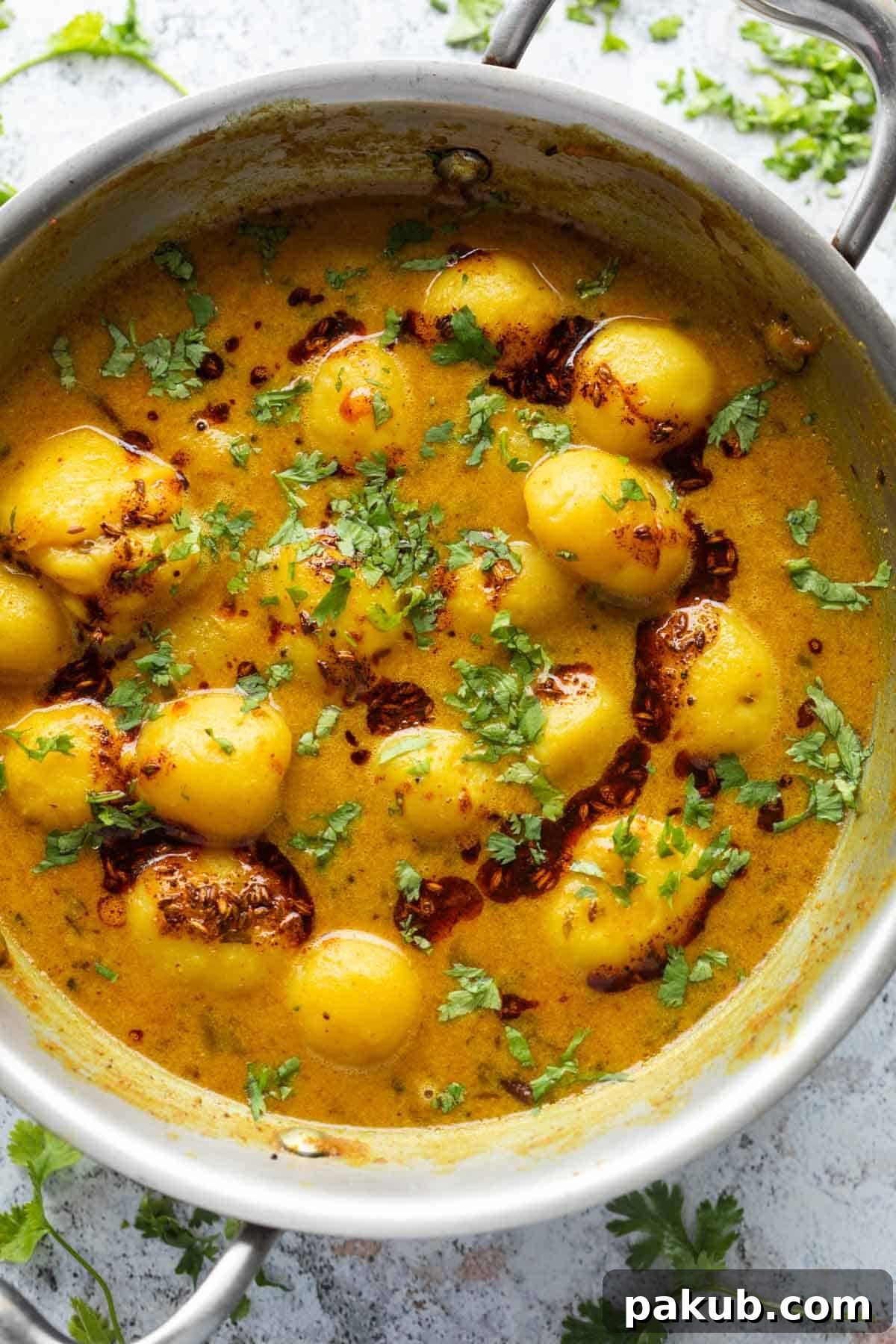
When you seek a dish that is quick, profoundly satisfying, and perfectly suited for fasting observances, look no further than a comforting bowl of Dahi Wale Aloo. This exquisite Indian potato curry, crafted with minimal spices, creamy yogurt, and tender potatoes, is a recipe you’ll find yourself returning to time and again.
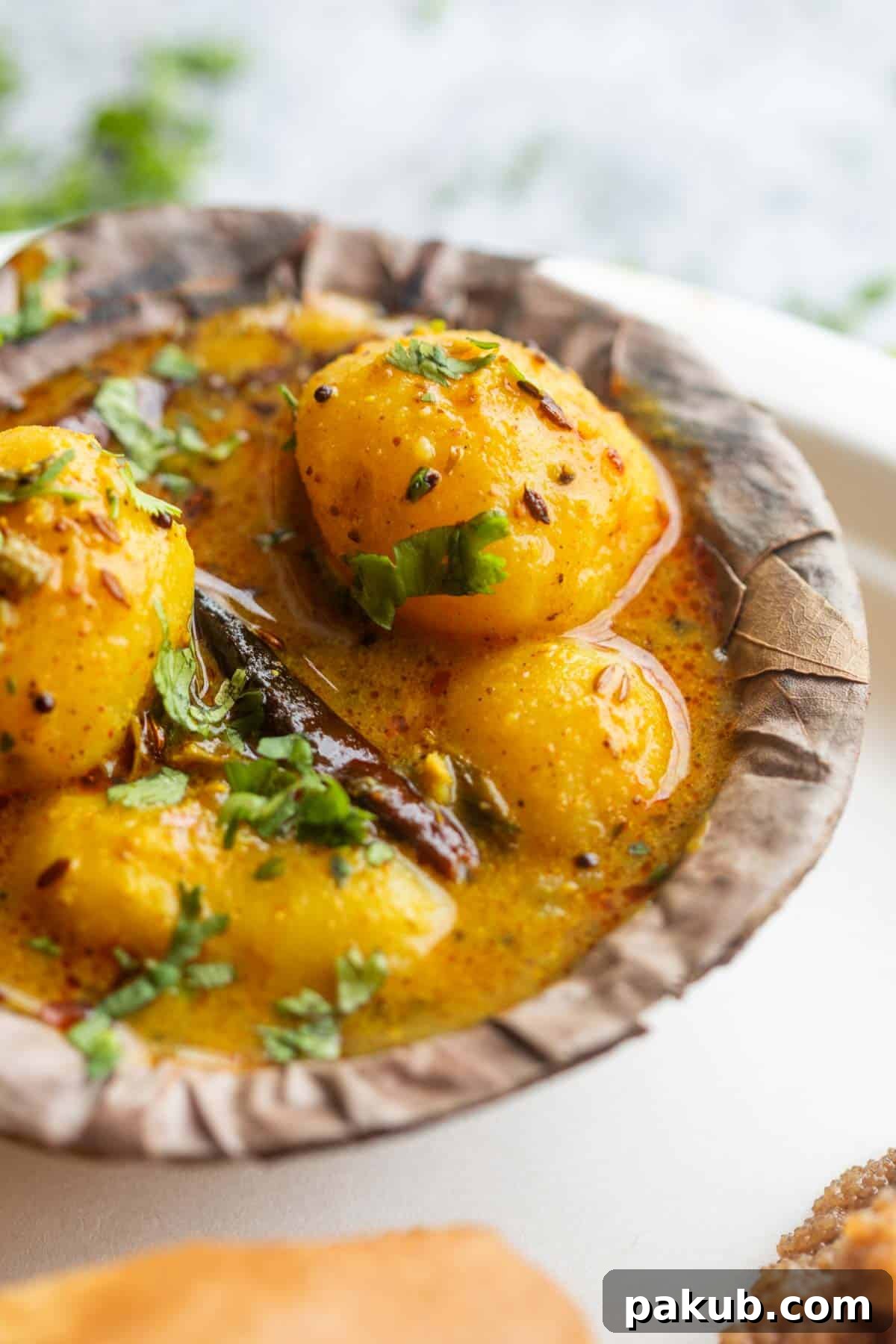
There are some culinary creations that transcend mere sustenance, embodying the very essence of home, comfort, and tradition. For many, and certainly for me, Dahi Wale Aloo stands proudly at the pinnacle of this list, especially during auspicious fasting days. Imagine perfectly soft baby potatoes, gently simmered in a tangy, subtly spiced yogurt gravy – every spoonful delivers a hearty, comforting embrace without ever feeling heavy or overwhelming. It’s a testament to the power of simple ingredients, transformed into something truly special.
This remarkable dish is meticulously prepared without onion or garlic, adhering to the dietary restrictions often observed during fasts (vrat). Yet, despite its simplicity, it bursts with delicate, aromatic flavors that elevate vrat ka khana (fasting food) into something genuinely anticipated and savored. Whether you’re observing Navratri, Ekadashi, or simply yearning for a meal that is both light and deeply soul-soothing, this Dahi Wale Aloo recipe consistently proves to be an absolute triumph. Its ease of preparation combined with its profound taste makes it a cherished addition to any kitchen.
Table of Contents
- About Dahi Wale Aloo: A Fasting Favorite
- Key Ingredients for Vrat Wale Aloo
- Expert Tips for Perfect Dahi Aloo
- Frequently Asked Questions
- Storage & Reheating Tips
- Serving Suggestions
- Customization Ideas
- The Nutritional Power of Rajgira Atta
- Vrat Wale Aloo Recipe Card
- Watch the Recipe Video
About Dahi Wale Aloo: A Fasting Favorite
Dahi Wale Aloo, also known as Vrat Wale Aloo, is a quintessential Indian comfort food, particularly revered during religious fasting periods. The name itself translates to “potatoes in yogurt,” which perfectly describes the core of this delightful curry. Its popularity stems from its incredible balance of tanginess from the yogurt, subtle heat from green chilies, and earthy notes from spices, all complementing the humble potato.
This dish is a shining example of how traditional Indian cuisine can be both restrictive in ingredients (due to fasting rules) and incredibly rich in flavor. The absence of onions and garlic, common in many Indian curries, allows other, more delicate spices to truly shine, creating a unique and palate-pleasing experience. It’s not just food; it’s a culinary hug, a dish that brings a sense of calm and well-being, especially when one is observing spiritual fasts.
The versatility of Dahi Wale Aloo is another reason for its widespread appeal. While traditionally eaten during fasts, its light yet fulfilling nature makes it an excellent choice for any day of the week when you desire a quick, healthy, and vegetarian meal. It pairs beautifully with a variety of accompaniments, from simple rotis to more elaborate fasting breads, making it a flexible addition to your meal plan.
Key Ingredients for Vrat Wale Aloo
Crafting the perfect Dahi Wale Aloo relies on a few simple, yet potent, ingredients. Each component plays a crucial role in building the dish’s distinct flavor and creamy texture.
For the Aromatic Tempering (Tadka):
- Oil: A couple of tablespoons of your preferred cooking oil are essential to initiate the tempering process, allowing the spices to bloom and release their full aroma. You can opt for peanut oil or ghee for an authentic touch, especially during fasting.
- Whole Spices:
- Cumin Seeds (Jeera): These lend a warm, earthy, and slightly pungent flavor that is foundational to Indian cooking.
- Mustard Seeds (Rai): When tempered in hot oil, mustard seeds crackle and release a sharp, nutty aroma, adding depth to the dish.
- Hing (Asafoetida): This powerful spice provides an onion-garlic like flavor, making it indispensable in no-onion, no-garlic recipes. It also aids digestion.
- Fresh Aromatics:
- Ginger: Finely chopped ginger adds a refreshing, pungent warmth that brightens the entire curry.
- Green Chillies: These provide a customizable level of heat and a fresh, vibrant kick. Adjust according to your preference.
For the Rich and Creamy Gravy:
- Rajgira Atta (Amaranth Flour) or Besan (Gram Flour): This is the secret to achieving a beautifully thick and stable yogurt gravy. Rajgira atta is traditionally used during fasting periods due to its gluten-free nature and permissible status. Besan offers a similar thickening effect and nutty flavor for non-fasting days. It helps prevent the yogurt from splitting.
- Ground Spice Powders:
- Red Chilli Powder: For color and a gentle warmth.
- Turmeric Powder (Haldi): Contributes a beautiful golden hue and mild, earthy notes, along with numerous health benefits.
- Coriander Powder (Dhaniya): Imparts a warm, citrusy, and slightly sweet flavor, rounding out the spice profile.
- Salt: Essential for seasoning and balancing all the flavors. Use rock salt (sendha namak) if preparing for fasting.
- Buttermilk (Chaas): The absolute heart of this dish. Buttermilk provides the characteristic tangy flavor and creamy texture. Its slightly thinner consistency compared to plain yogurt helps create a smooth gravy. Ensure it’s fresh for the best results.
- Water: Used sparingly to adjust the gravy’s consistency, ensuring it reaches the perfect pourable texture without being too thin or thick.
The Star of the Dish:
- Baby Potatoes: Boiled and peeled, these small potatoes absorb the flavors beautifully, offering a tender and delightful bite. Their small size makes them visually appealing and easy to eat. You can easily substitute them with regular potatoes, cubed into medium-sized pieces.
For the Finishing Touch and Freshness:
- Dry Mint Leaves (Sukhi Pudina): A sprinkle of dry mint adds a unique, cooling, and aromatic dimension that perfectly complements the tanginess of the yogurt.
- Fresh Coriander Leaves (Dhaniya Patta): Finely chopped, these serve as a vibrant garnish, adding a burst of freshness and a final layer of herbaceous aroma.
Expert Tips for Perfect Dahi Aloo
Achieving a restaurant-quality Dahi Wale Aloo at home is simpler than you think with these crucial tips:
- Boil Potatoes Just Right: The key to tender, yet intact, potatoes is precise boiling. Avoid overcooking them at all costs, as mushy potatoes will disintegrate in the curry, compromising both texture and appearance. They should be fork-tender but still firm enough to hold their shape during simmering.
- Choose Fresh Buttermilk: The quality of your buttermilk directly impacts the curry’s flavor. Fresh buttermilk provides a pleasant, light tang. If your buttermilk is excessively sour, consider diluting it with a little water before adding it to the curry. This prevents an overly sharp taste and helps maintain balance.
- Constant Stirring is Key for Buttermilk: This is perhaps the most critical step to prevent the buttermilk (or yogurt) from splitting. Once you add the buttermilk to the pan, keep the flame low and stir continuously until the mixture comes to a gentle boil. This constant agitation emulsifies the buttermilk, resulting in a perfectly smooth and creamy gravy.
- Simmer Low and Slow: Patience is a virtue when making Dahi Wale Aloo. Once the gravy comes to a boil, reduce the heat to a gentle simmer. This allows all the flavors from the spices, ginger, and chilies to meld harmoniously with the buttermilk and potatoes without curdling the yogurt. A slow simmer also helps the gravy thicken naturally to the desired consistency.
- Add Mint and Coriander at the End: For maximum impact, always stir in the dry mint leaves and fresh coriander just before serving. This preserves their vibrant color, fresh aroma, and distinct flavors, which can diminish if cooked for too long.
Frequently Asked Questions (FAQ)
Absolutely! While potatoes are the traditional star, you can certainly experiment with other fasting-friendly vegetables. Boiled arbi (colocasia), sweet potatoes, or even cubes of fresh paneer (Indian cottage cheese) can be fantastic additions, adding variety in texture and flavor. Just ensure any additions are boiled or prepped before adding them to the simmering curry to cook through.
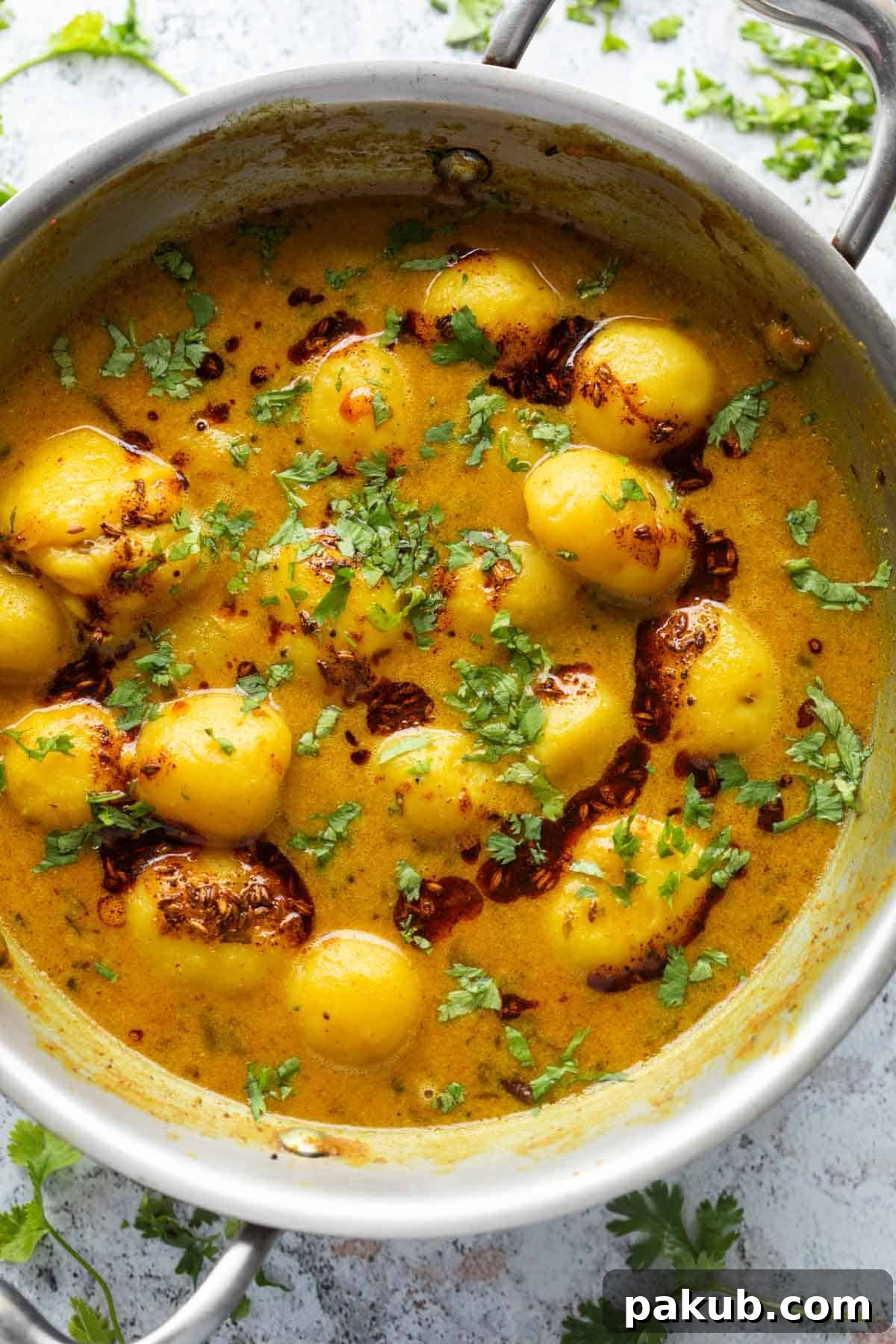
Preventing the curd from splitting is crucial for a smooth curry. The most effective methods are to keep the flame on low heat and stir continuously as you gradually add the buttermilk. Adding a spoonful of flour, such as Rajgira atta or besan, as specified in this recipe, acts as a stabilizer. It helps to bind the components, making the gravy more resilient to high heat and less likely to curdle.
Yes, absolutely! Regular potatoes work just as well. Simply boil, peel, and cube them into medium-sized pieces before adding them to the curry. The flavor profile of the dish remains consistent, and you’ll still achieve that wonderfully comforting taste. Baby potatoes are often preferred for their convenience and aesthetic appeal, but regular potatoes are a perfectly good substitute.
For fasting purposes (vrat), Rajgira atta (amaranth flour) is the ideal choice. It is gluten-free and traditionally permissible during religious fasts in India. It also imparts a subtle, pleasant flavor. However, if you are not observing a fast, besan (gram flour) is an excellent alternative. It adds a lovely nutty flavor and provides similar thickening properties, making it equally effective in stabilizing the yogurt gravy.
This recipe, as written, is vegetarian, but not vegan due to the use of buttermilk. To make it vegan, you would need to use a plant-based yogurt or buttermilk alternative that doesn’t split when heated. For a gluten-free version, ensure you use Rajgira atta (amaranth flour) and confirm that your asafoetida (hing) is gluten-free, as some brands contain wheat flour as a carrier.
Storage & Reheating Tips
Proper storage and reheating ensure your Dahi Wale Aloo remains as delicious as when it was freshly made:
- Fridge: Store any leftover Dahi Wale Aloo in an airtight container in the refrigerator. It will stay fresh and flavorful for approximately 2-3 days. The flavors often deepen beautifully overnight.
- Freezer: Unfortunately, this curry is not ideal for freezing. Yogurt-based dishes, especially those with buttermilk, tend to separate and develop an unappetizing texture upon thawing and reheating. It is highly recommended to enjoy this dish fresh.
- Leftovers: When reheating, you might notice that the gravy has thickened considerably, as the potatoes absorb more liquid over time. To restore its original consistency, simply loosen it with a splash of water or a little extra buttermilk while reheating. Always taste and adjust the spices if needed, as flavors can mellow out.
- Reheating: For best results, reheat Dahi Wale Aloo gently on the stovetop over low heat, stirring frequently. Avoid bringing it to a rapid boil after reheating, as this increases the risk of the yogurt curdling. Warm it just until it’s hot throughout.
Serving Suggestions
This simple, creamy, and wonderfully versatile potato curry pairs beautifully with a wide array of Indian breads and grains, making it suitable for various occasions and dietary preferences, especially during fasts. Here are some delicious ways to enjoy it:
- With Pooris: A classic and immensely satisfying combination! The soft, fluffy Pooris (deep-fried unleavened bread) are perfect for scooping up the tangy, creamy Dahi Wale Aloo, creating a rich and hearty meal that never disappoints. This pairing is particularly popular during festive fasting.
- With Jeera Rice: For non-fasting days, the aromatic and subtly spiced Jeera Rice (cumin rice) provides a wonderfully comforting base for the Dahi Wale Aloo. The simplicity of this combo makes it a homely and deeply satisfying weeknight dinner.
- With Samak Rice (Barnyard Millet): This is an excellent choice if you’re observing a fast but still desire a rice-like accompaniment. Samak rice, a permissible grain during fasting, is light and absorbs the curry’s flavors beautifully, offering a wholesome and traditional meal.
- With Sabudana Khichdi: A delightful interplay of textures! The soft, chewy Sabudana Khichdi (tapioca pearl pilaf) is wonderfully complemented by the creamy, tangy Dahi Wale Aloo, adding a new dimension of flavor and moisture to the dry khichdi.
- With Suji Halwa: Embrace the traditional sweet and savory experience. While commonly paired with Chana Puri, substituting the puri with Dahi Wale Aloo alongside Suji Halwa (semolina pudding) offers a unique and festive touch, balancing the sweetness of the halwa with the savory tang of the curry.
- With Parathas: If not observing a fast, serve this curry with flaky, layered Parathas. The rich, soft curry is a perfect match for the crispy texture of the parathas, transforming a simple weekday dinner into something truly special and indulgent.
- With Plain Chapati or Roti: For an everyday, wholesome meal, Dahi Wale Aloo goes wonderfully with freshly made Chapatis or Rotis. The simple bread provides a perfect vehicle for soaking up the flavorful gravy.
Customization Ideas for Your Dahi Wale Aloo
While the traditional Dahi Wale Aloo is perfect as is, it’s also a wonderfully flexible dish that invites creative culinary exploration. Here are some ideas to customize your curry:
- Experiment with Flours: Beyond Rajgira atta and besan, you can use other fasting-friendly flours like singhare ka atta (water chestnut flour) or kuttu ka atta (buckwheat flour). Each will impart a slightly different texture and subtle flavor to the gravy, offering unique variations.
- Introduce a Delightful Crunch: For an interesting textural contrast, consider adding roasted makhana (fox nuts) along with the potatoes. These light, crispy puffed seeds will absorb some of the curry’s flavor while adding a pleasant bite.
- Balance the Tang with Sweetness: If you prefer a slightly sweeter note or wish to balance the tanginess of the yogurt, stir in a small pinch of sugar or grated jaggery (gur) at the end. This can enhance the overall flavor profile beautifully.
- Play with Spice Aromatics: A sprinkle of freshly roasted and ground cumin powder (bhuna jeera powder) at the very end, just before serving, can add a warm, earthy, and intensely aromatic finish that is truly captivating. You could also introduce a tiny amount of dry ginger powder (saunth) for an extra layer of warmth.
- Vary the Potatoes: If baby potatoes are not readily available, feel free to use regular potatoes, peeled and cubed into medium-sized pieces. Sweet potatoes can also be a delightful alternative, offering a slightly sweeter and denser texture, while still being permissible for most fasts.
- Add a Touch of Creaminess: For an even richer curry, stir in a tablespoon of fresh cream (or cashew cream for a vegan option) at the very end, just before serving. This adds a luxurious silkiness to the gravy.
- Incorporate Fresh Herbs: While mint and coriander are standard, a few finely chopped curry leaves can be added to the tempering for an additional layer of traditional South Indian aroma, if you’re not strictly observing fasting rules that might prohibit them.
The Nutritional Power of Rajgira Atta (Amaranth Flour)
The choice of Rajgira atta (amaranth flour) as a thickener in Dahi Wale Aloo isn’t merely for its role as a permissible ingredient during fasts; it’s also a powerhouse of nutrition. Often considered an ancient grain, amaranth is botanically a pseudo-cereal, meaning it shares many characteristics with grains but is not botanically a grass. This makes it naturally gluten-free and an excellent alternative for those with gluten sensitivities or those observing fasts where traditional grains like wheat are avoided.
Historically, amaranth holds immense cultural and nutritional significance. It was a staple food for the Aztecs, who considered it sacred and incorporated it into their spiritual rituals and daily diet. In India, amaranth has been cherished for centuries, particularly for its role in traditional fasting foods, a testament to its sustaining qualities. Its inclusion in dishes like Dahi Wale Aloo not only thickens the gravy but also significantly boosts the meal’s nutritional value.
Rajgira atta is remarkably rich in several essential nutrients. It’s one of the most protein-rich gluten-free flours available, making this humble curry surprisingly filling and beneficial for muscle health. Beyond protein, it’s packed with dietary fiber, which aids digestion and promotes a feeling of fullness. Furthermore, it’s an excellent source of vital minerals such as calcium, crucial for bone health, and iron, essential for blood production and energy levels. Thus, Dahi Wale Aloo is not just a comforting, vrat-friendly meal but also a surprisingly nutritious one, offering a holistic boost to your well-being.
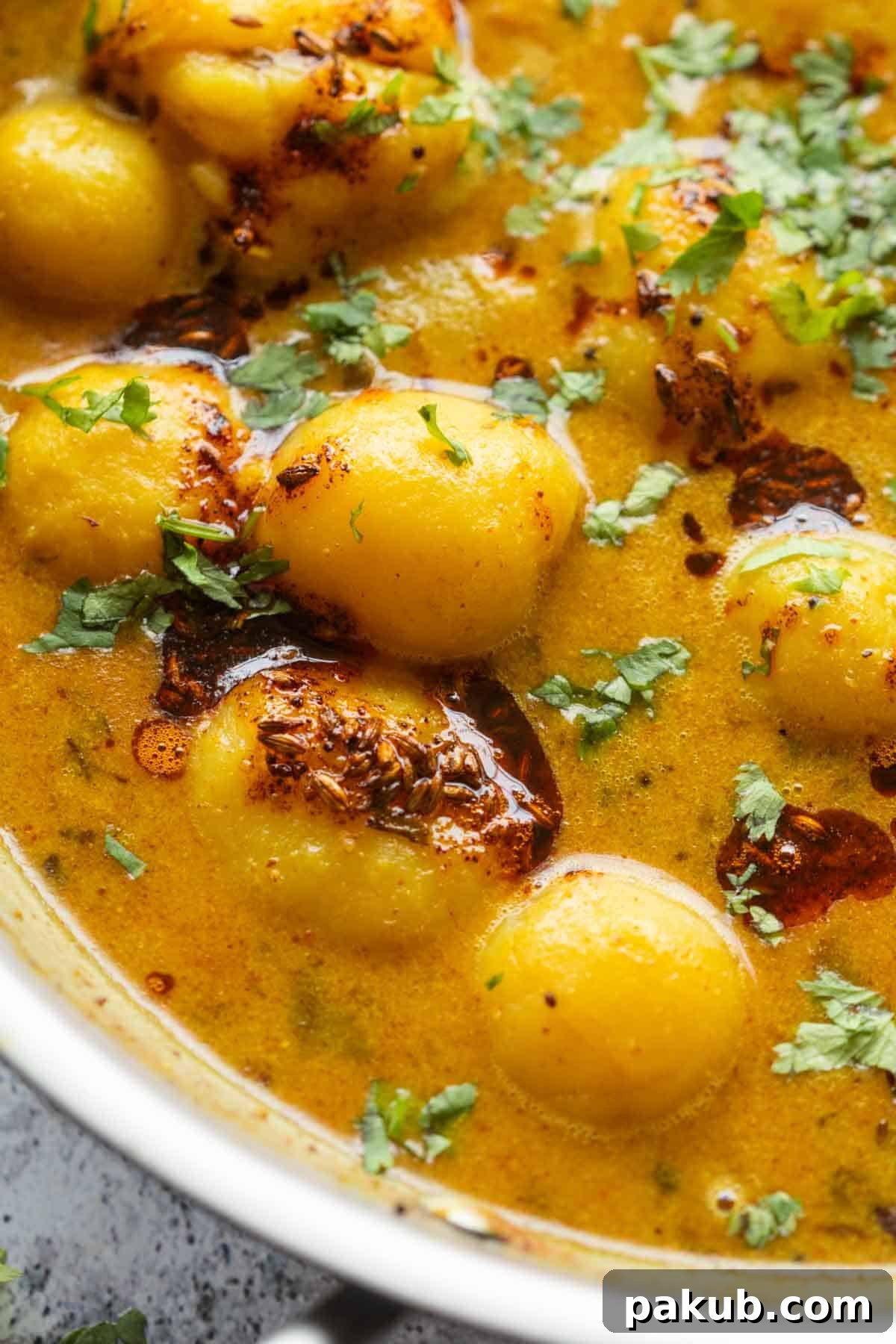
Vrat Wale Aloo truly exemplify how simple fasting food can be brimming with complex flavors and profound comfort. The harmonious blend of creamy yogurt gravy, perfectly soft potatoes, and subtle spices transforms this dish into something you’ll crave again and again, whether you’re observing a fast or simply seeking a wholesome meal. Pair it thoughtfully with crisp pooris, wholesome rotis, or nutritious samak rice, and you’ll create a meal that feels both deeply hearty and wonderfully soothing to the soul. Its understated elegance and satisfying profile make it a perennial favorite in Indian households.
If you embark on the journey of trying this recipe, I would be absolutely delighted to see your culinary creations! Don’t forget to tag me on Instagram @my_foodstory. I love seeing how you bring these traditional flavors to life in your own home!
Watch the Vrat Wale Aloo Recipe Video
Vrat Wale Aloo (No Onion, No Garlic) | Dahi Wale Aloo Recipe
By: Richa
When you seek a dish that is quick, profoundly satisfying, and perfectly suited for fasting observances, look no further than a comforting bowl of Dahi Wale Aloo. This exquisite Indian potato curry, crafted with minimal spices, creamy yogurt, and tender potatoes, is a recipe you’ll find yourself returning to time and again.
Prep time: 5 mins | Cook time: 20 mins | Total time: 25 mins
Servings: 4 people
Ingredients
- 2 tablespoons oil
- 1 teaspoon cumin seeds
- ½ teaspoon mustard seeds
- ¼ teaspoon hing (asafoetida)
- 1 tablespoon finely chopped ginger
- 2 green chillies, finely chopped
- 2 tablespoons rajgira atta (amaranth flour) or besan (gram flour)
- 1 teaspoon red chilli powder
- ½ teaspoon turmeric powder
- 2 teaspoons coriander powder
- ¾ teaspoon salt (use rock salt for fasting)
- 500 grams baby potatoes, boiled & peeled
- 1 ½ cups buttermilk
- ¼ – ½ cup water (as needed for consistency)
- 1 teaspoon dry mint leaves
- 2 tablespoons finely chopped fresh coriander leaves
Instructions
- Prepare Tempering: Heat the oil in a kadai or deep pan over medium heat. Add cumin seeds and mustard seeds. Once they begin to splutter and crackle (this indicates they are releasing their aroma), add the hing, finely chopped ginger, and green chillies. Sauté for a few seconds until the ginger is fragrant.
- Sauté Flour: Add the rajgira atta (or besan) to the pan. Sauté for approximately 2 minutes, stirring continuously, until the raw smell of the flour disappears and it turns slightly aromatic. Be careful not to burn it.
- Add Dry Spices: Reduce the heat to low. Add the spice powders – red chilli powder, turmeric powder, coriander powder, and salt. Sauté for just a few seconds, stirring constantly to prevent the spices from burning. This brief sautéing helps to bloom their flavors.
- Incorporate Buttermilk and Potatoes: Gradually add the buttermilk to the pan while stirring continuously on low heat. Keep mixing until the curry comes to a gentle boil and begins to thicken. Continue to simmer for 5-7 minutes, allowing the buttermilk to blend well with the spices and the gravy to achieve a creamy consistency. Then, gently add the boiled baby potatoes to the simmering gravy. Cook on low heat for another 8-10 minutes, allowing the potatoes to absorb the rich flavors of the curry. If the gravy becomes too thick for your liking, you may add ¼ – ½ cup of water to adjust it to a pouring consistency.
- Garnish and Serve: Finally, sprinkle the dry mint leaves and finely chopped fresh coriander leaves over the curry. Stir gently to combine. Serve hot and enjoy!
Notes
- You can easily substitute baby potatoes with boiled and cubed regular potatoes. Ensure they are medium-sized.
- For boiling baby potatoes, a pressure cooker usually takes about 15 minutes. In a pot, it will take approximately 20-22 minutes until they are tender but still hold their shape.
- Rajgira atta (amaranth flour) is a naturally gluten-free flour derived from the seeds of the amaranth plant. It is widely used in India for both daily cooking and during religious fasting periods when grains like wheat are traditionally avoided.
- If not fasting, besan (gram flour) can be used instead of rajgira atta. It provides a similar thickening effect and a pleasant nutty flavor.
Nutrition (per serving, estimated)
- Calories:
- 244 kcal
- Carbohydrates:
- 32 g
- Protein:
- 6 g
- Fat:
- 11 g
- Saturated Fat:
- 2 g
- Polyunsaturated Fat:
- 2 g
- Monounsaturated Fat:
- 5 g
- Trans Fat:
- 0.03 g
- Cholesterol:
- 10 mg
- Sodium:
- 624 mg
- Potassium:
- 698 mg
- Fiber:
- 5 g
- Sugar:
- 6 g
- Vitamin A:
- 321 IU
- Vitamin C:
- 28 mg
- Calcium:
- 140 mg
- Iron:
- 2 mg
This article was researched and written by Harita Odedra.