
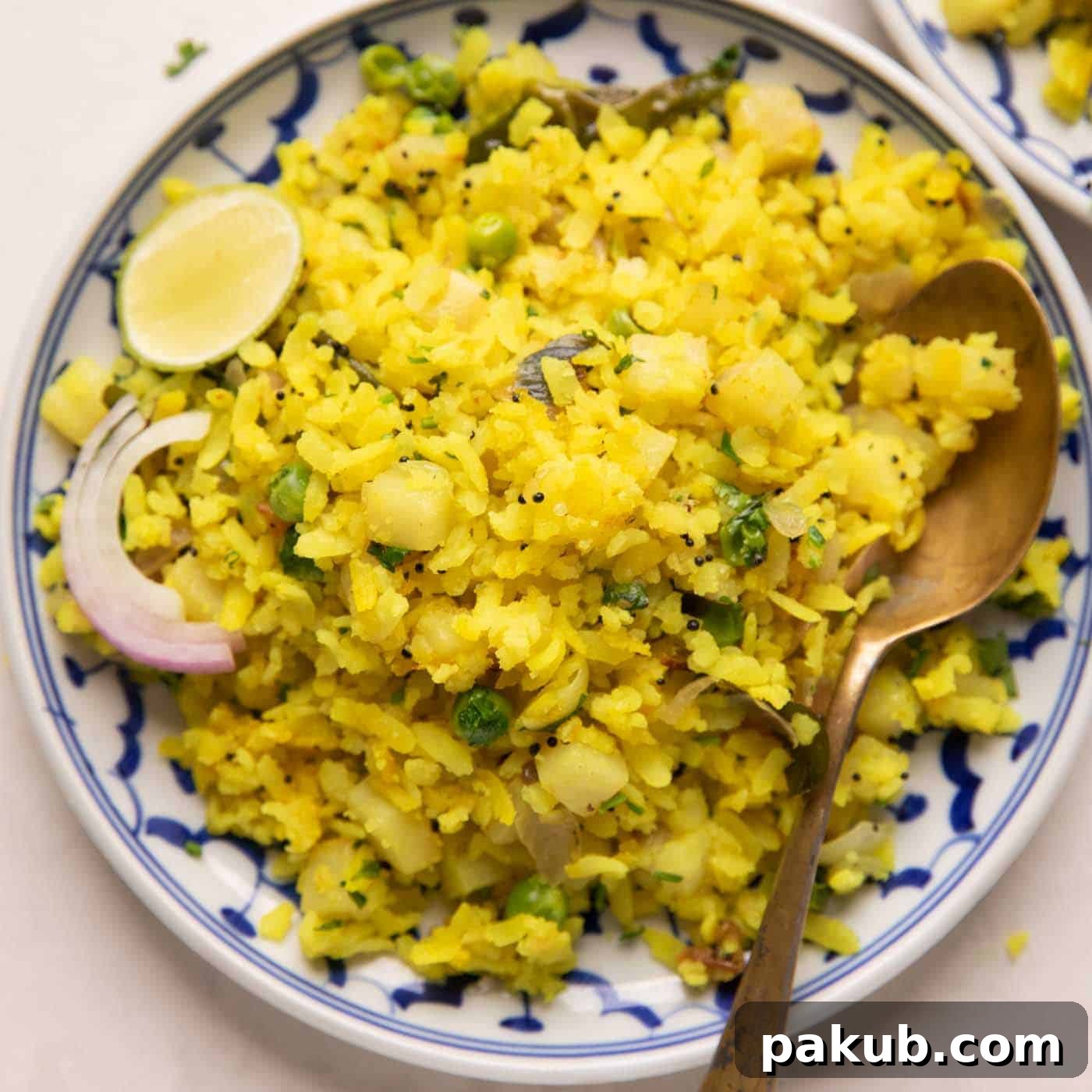
Kanda Batata Poha: A delightful, healthy, and quick Indian breakfast ready in just 20 minutes! This popular dish, featuring perfectly tempered flattened rice with vibrant spices, onions, and potatoes, promises a satisfying meal that keeps you full for hours. Discover the ultimate recipe for this beloved Indian staple.
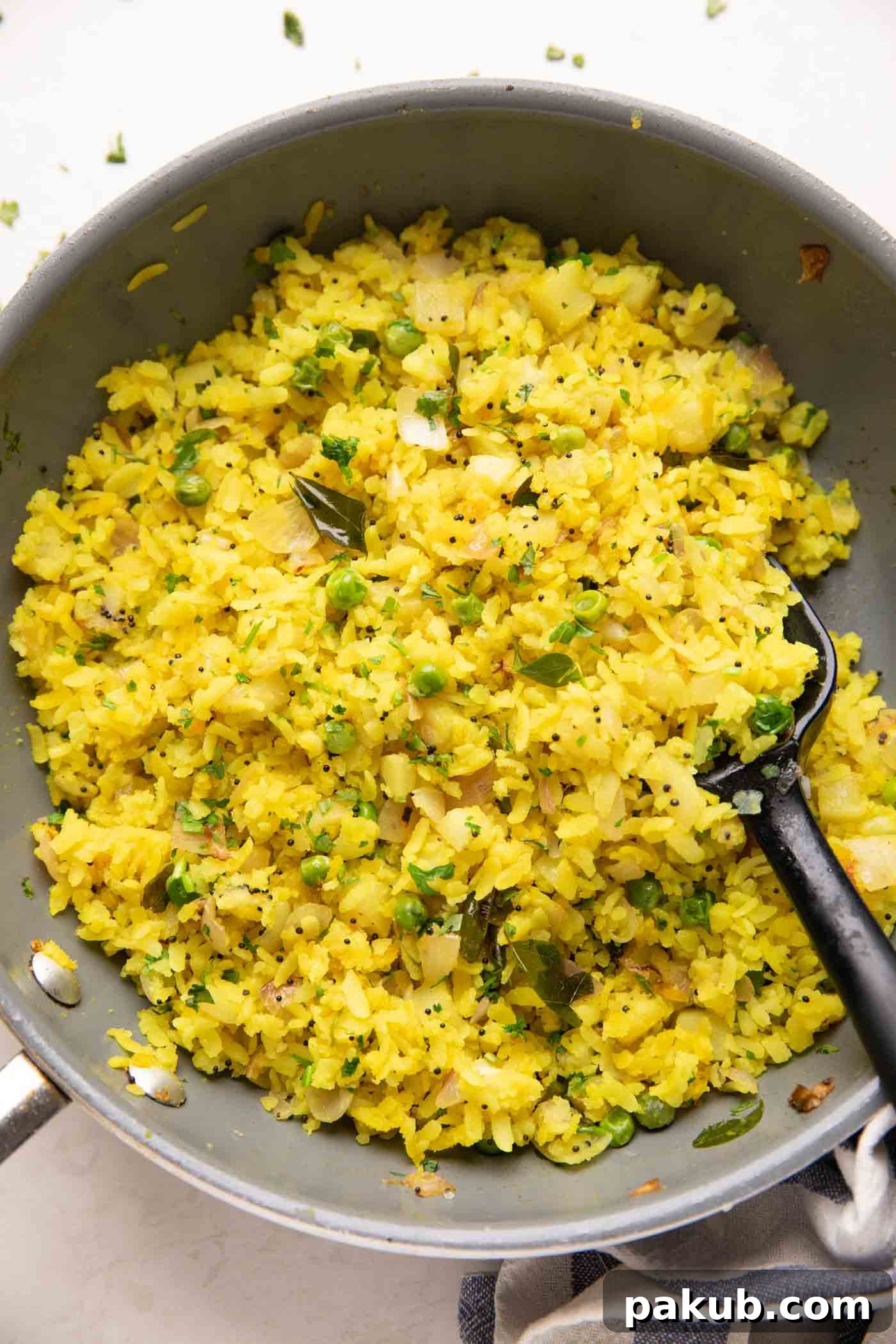
Embrace the Flavors of India with Poha: Your Go-To Healthy Breakfast
Few breakfast dishes command the universal appeal and affection across India quite like Poha. From the bustling streets of Mumbai, where you’ll find Maharashtrian Kanda Poha, to the zesty Indori Poha, and the lighter Avalakki variants enjoyed in the south, this simple yet incredibly nutritious dish holds a cherished spot in nearly every Indian household. It’s more than just a meal; it’s a culinary tradition steeped in comfort and flavor.
Poha, also known as flattened rice, is a breakfast staple renowned for its versatility and health benefits. It’s a culinary marvel that transforms humble rice flakes into a quick, easy, and incredibly fulfilling meal. Requiring just a handful of readily available ingredients and minimal cooking time, Poha is the perfect solution for busy mornings when you crave something wholesome and delicious. Beyond its convenience, Poha is celebrated for being light on the stomach, packed with essential nutrients, and naturally gluten-free and vegan, making it suitable for a wide range of dietary preferences. Imagine starting your day with a steaming bowl of fluffy Poha, its vibrant flavors awakening your senses, perfectly paired with a piping hot cup of chai. It’s truly a fantastic way to energize your body and mind.
Why Poha Deserves a Spot on Your Breakfast Table
If you’re looking for a breakfast that ticks all the boxes – healthy, quick, delicious, and adaptable – Poha is your answer. Here’s why this Indian gem stands out:
- Effortlessly Simple & Quick: This recipe is designed for speed. The entire dish, from prep to plate, can be whipped up in approximately 20 minutes, making it an ideal choice for those hectic weekday mornings.
- Nutritionally Dense & Wholesome: Poha is an excellent source of carbohydrates for sustained energy, dietary fiber for digestive health, and essential minerals like iron. It’s a nourishing meal that keeps you feeling full and satisfied without weighing you down.
- Naturally Vegan & Gluten-Free: Made primarily from flattened rice and fresh vegetables, Poha naturally caters to vegan and gluten-free diets, offering an inclusive breakfast option for many.
- Kid-Friendly & Mildly Spiced: With adjustable spice levels, Poha can be tailored to suit even the most discerning young palates. Its mild, comforting flavors make it a hit with children.
- Incredibly Customizable: One of Poha’s greatest strengths is its flexibility. While our Kanda Batata Poha recipe includes onions and potatoes, you can easily adapt it by adding other vegetables like carrots, peas, or bell peppers, or even skipping veggies entirely for a simpler version. You can also vary the spices to create different flavor profiles.
Exploring More Breakfast Ideas? Don’t miss out on my popular Street Style Egg Bhurji (Anda Bhurji), learn How to Cook Hard Boiled Eggs Perfectly, or master the Perfect Idli and Dosa Batter recipe!
The Wholesome Goodness of Poha: A Nutritional Powerhouse
Beyond its incredible taste and ease of preparation, Poha boasts an impressive nutritional profile, solidifying its reputation as a healthy breakfast choice. It’s considered one of the most nutrition-dense foods, offering a fantastic start to your day.
Poha is primarily made from rice grains that have been par-boiled, dried, roasted, and then flattened. This unique processing method makes it light and easily digestible. A single serving of Poha provides a significant amount of complex carbohydrates, which are vital for sustained energy throughout the morning. It’s also an excellent source of dietary fiber, promoting healthy digestion and contributing to a feeling of fullness, which helps in weight management. Furthermore, Poha is enriched with iron, a crucial mineral for blood production and energy levels, and contains various antioxidants and other essential vitamins and nutrients. Its naturally gluten-free nature makes it a fantastic alternative for those with gluten sensitivities or celiac disease. The low glycemic index of Poha also means it helps in maintaining stable blood sugar levels, preventing sudden energy spikes and crashes. No wonder it’s a go-to breakfast for millions across India!
Essential Ingredients for Kanda Batata Poha
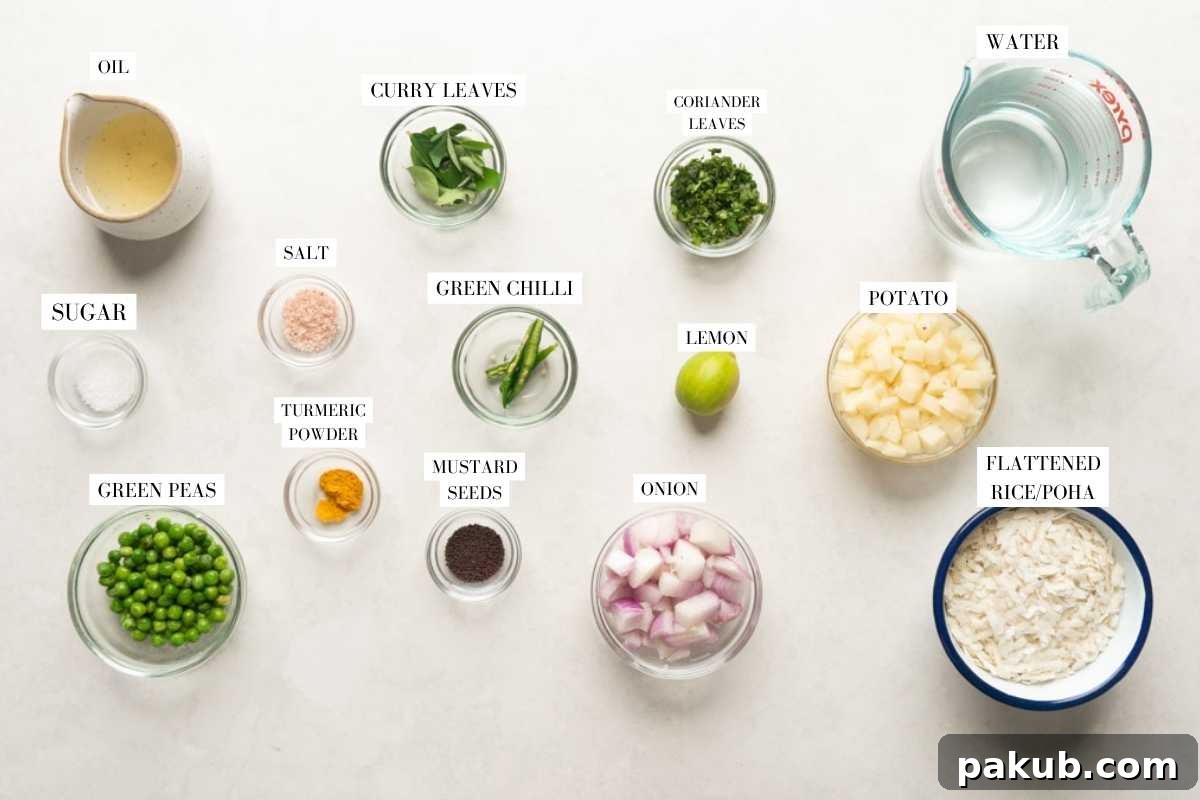
Creating the perfect Kanda Batata Poha begins with selecting fresh, quality ingredients. Here’s a breakdown of what you’ll need and some helpful tips:
- Poha (Flattened Rice): The star of our dish! I highly recommend using medium or thick varieties of poha. Thin poha tends to become mushy and clumpy when cooked, spoiling the texture. For this recipe, we’ll soak them for about 10-15 minutes, which is just enough to soften them without making them soggy.
- Oil: A neutral-flavored oil such as peanut, canola, or sunflower oil works best here. Its mild taste won’t overpower the delicate flavors of the Poha.
- Aromatic Spices: These are crucial for building the flavor base.
- Mustard Seeds: Essential for tempering, they release a pungent, nutty aroma when spluttered in hot oil.
- Finely Chopped Green Chillies: Adjust the quantity based on your preferred spice level. They provide a fresh, zesty heat.
- Curry Leaves: A signature ingredient in South Indian and Maharashtrian cuisine, curry leaves infuse the oil with a distinct, aromatic fragrance.
- Turmeric Powder: Adds a beautiful golden hue to the Poha and contributes a mild, earthy flavor.
- Fresh Vegetables: These add texture, flavor, and additional nutrients.
- Onions (Kanda): Diced onions become sweet and translucent, forming a flavorful base.
- Potatoes (Batata): Small, evenly diced potatoes add a soft, starchy texture and heartiness to the dish.
- Green Peas: Fresh or frozen (thawed), green peas provide a pop of color and a touch of sweetness. Remember, these vegetables are entirely customizable; feel free to add, remove, or substitute based on your personal preference and what you have on hand.
- Sugar (Optional but Recommended): A small pinch of sugar helps to balance the savory and tangy flavors, enhancing the overall taste without making the dish overtly sweet.
- Lime Juice: A dash of freshly squeezed lime juice at the end brightens the flavors with its zesty, refreshing tang. Don’t skip this for an authentic taste!
- Fresh Coriander: Finely chopped coriander leaves are used as a garnish, adding a burst of freshness and a beautiful green contrast.
Crafting Perfect Kanda Batata Poha: A Step-by-Step Guide
Making Kanda Batata Poha is simpler than you might think. Follow these clear, detailed steps to achieve a perfectly fluffy and flavorful dish every time. The key is in the preparation and gentle handling of the flattened rice.
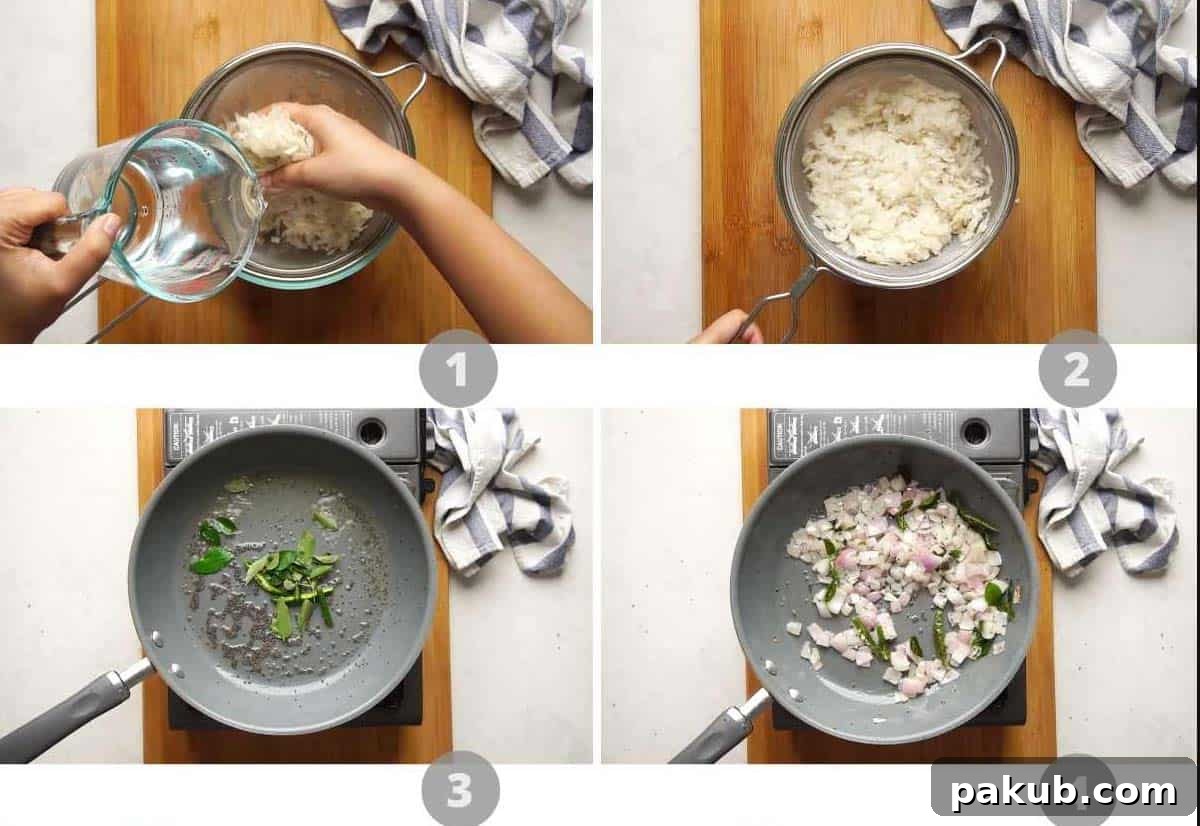
- Prepare the Poha: Place the poha (flattened rice) in a colander. Rinse it thoroughly under cold running tap water a few times. The goal is to wash off any impurities and moisten the flakes without submerging them. Let the poha sit in the colander for approximately 10-15 minutes while you prepare the other ingredients. This allows them to absorb residual water and soften, becoming light and fluffy, rather than mushy, when cooked.
- Begin the Tempering: Heat 2 tablespoons of neutral-flavored oil in a wide kadhai (wok) or a large non-stick pan over medium heat. Once the oil is hot, add 1 teaspoon of mustard seeds. Allow them to splutter vigorously. This indicates they are properly tempered and will release their full flavor.
- Sauté Aromatics: As soon as the mustard seeds begin to splutter, add the diced onions, green chillies (slit lengthwise), and curry leaves. Sauté for just 1-2 minutes until the onions become translucent. Avoid browning them too much.
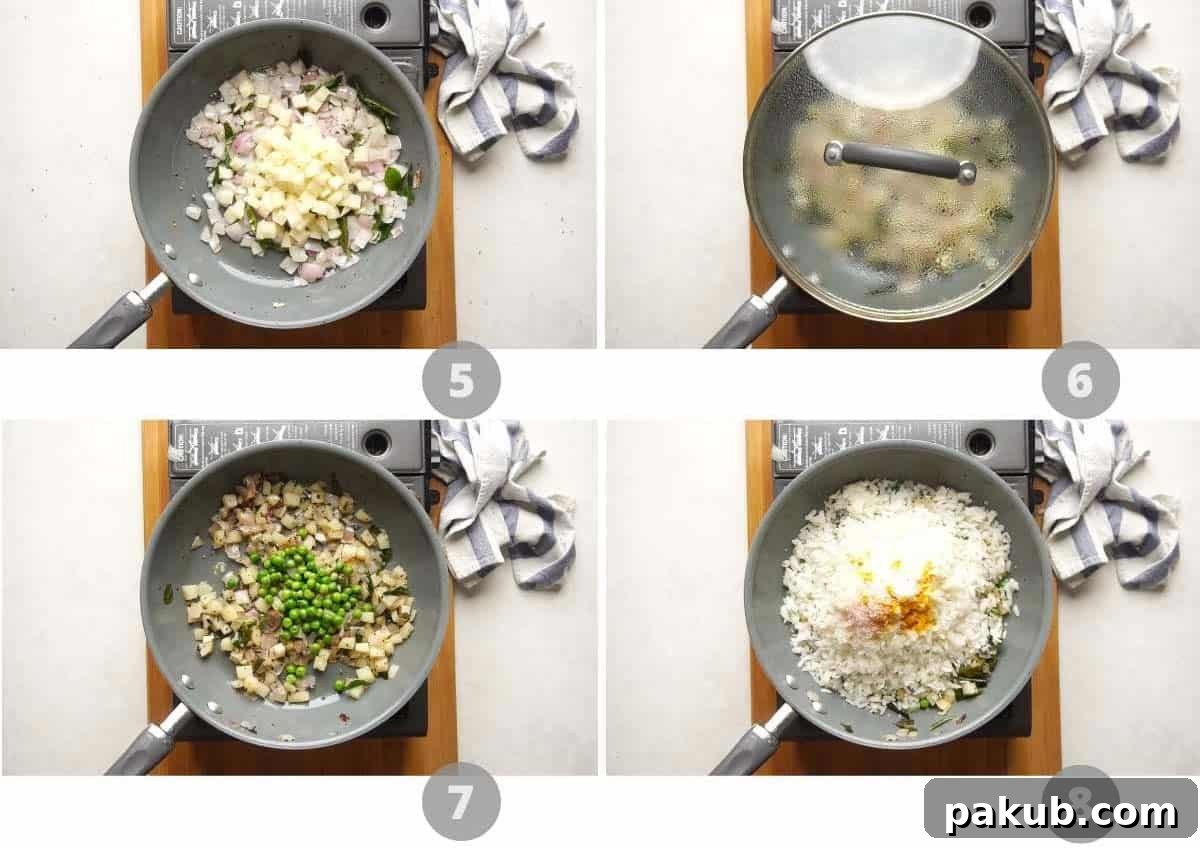
- Cook the Potatoes: Add the 1 medium potato, cut into small ½-inch cubes, to the pan. Sauté for another minute, stirring to coat with the tempered spices. Sprinkle ½ teaspoon of salt over the potatoes, then cover the pan with a lid and cook for 5-6 minutes, or until the potatoes are tender and easily pierced with a knife. Stir occasionally to prevent sticking.
- Introduce Green Peas: Stir in ⅓ cup of green peas (if using frozen, ensure they are thawed). Mix well and sauté for another minute.
- Combine with Poha: Gently add the soaked poha, ¼ teaspoon turmeric powder, the remaining 1 teaspoon salt, and 1½ teaspoon sugar (if using) to the pan. Using a light hand, mix all the ingredients thoroughly but gently. Over-mixing can break the delicate poha flakes and make the dish mushy.
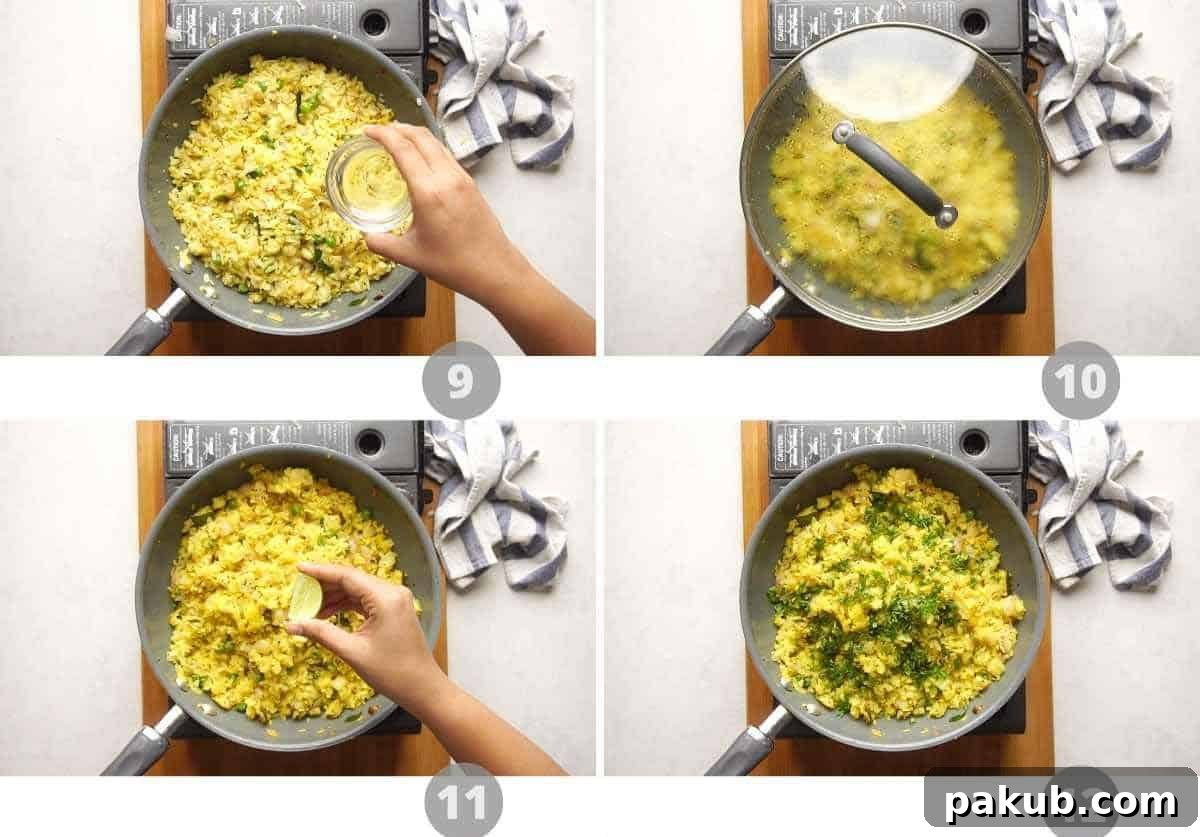
- Steam for Fluffiness: Sprinkle 1 tablespoon of water evenly over the poha mixture. Cover the pan again with a lid and cook on low heat for 4-5 minutes. This steaming process allows the poha to fully absorb the flavors and become perfectly soft and fluffy.
- Finish and Serve: Remove the lid. Squeeze the juice of 1 lime over the cooked poha and give it a final gentle stir. Garnish generously with 2 tablespoons of freshly chopped coriander leaves. Serve hot and enjoy your homemade Kanda Batata Poha!
Richa’s Expert Tips for Unforgettable Poha
While Kanda Batata Poha is a straightforward dish, a few key techniques can elevate it from good to absolutely outstanding. Pay attention to these tips for consistently perfect results:
- Master the Poha Soaking Technique: This is arguably the most critical step. Always use medium or thick poha, never thin. To soak, place the poha in a colander and rinse under running tap water for about 1-2 minutes until all flakes are moistened. Do NOT submerge them in a bowl of water. Allow the wet poha to sit in the colander for 10-15 minutes. To check if it’s perfectly soaked, gently press a flake between your fingers. If it breaks easily and feels soft but not mushy, it’s ready. If it’s still hard, sprinkle a tablespoon or two of water over it, mix gently, and let it sit for a few more minutes.
- Chop Vegetables Uniformly: Ensure your potatoes and onions are chopped into small, even ½-inch cubes. This uniformity guarantees that they cook quickly and evenly, preventing some pieces from being undercooked or overcooked.
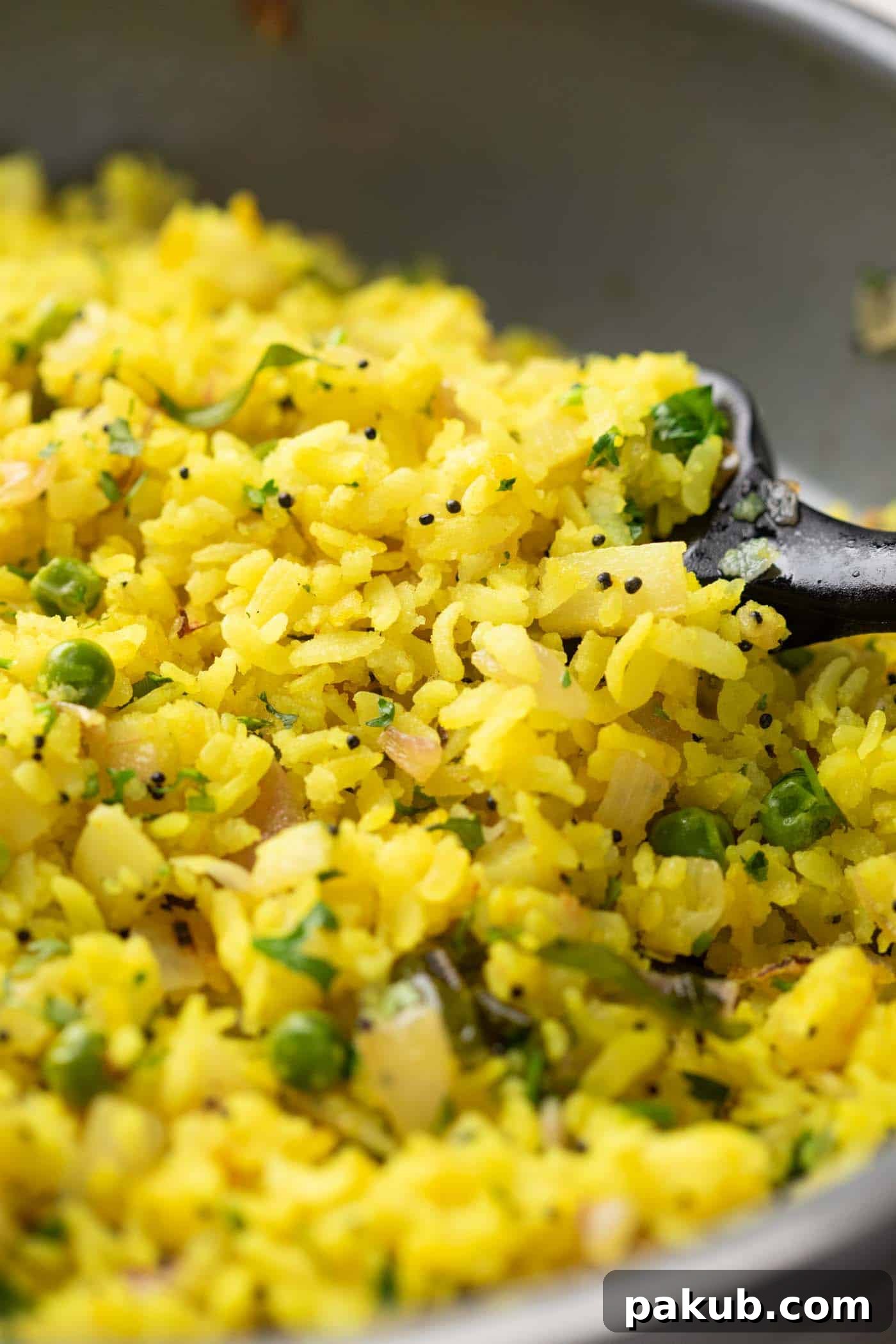
- Gentle Mixing is Key: Poha flakes are delicate once softened. When adding them to the pan and mixing with the spices and vegetables, do so very gently. Use a light hand and a broad spoon to fold the ingredients together rather than stirring vigorously. This prevents the poha from breaking down and turning into a sticky, mushy mess.
- Don’t Overcook: Poha cooks very quickly. Once you add the soaked poha to the pan and cover it to steam, keep the heat low and cook only for the recommended 4-5 minutes. Overcooking will dry out the poha or make it clumpy.
- Fresh Lime Juice is a Must: The squeeze of fresh lime juice at the end is non-negotiable! It adds a crucial tang and brightness that cuts through the richness and balances the flavors beautifully.
Frequently Asked Questions About Poha
Here are answers to some common questions about this beloved Indian breakfast:
Is Poha a healthy breakfast option?
Absolutely! Poha is widely regarded as one of the healthiest and most nutrition-dense Indian breakfast foods. It’s a fantastic source of complex carbohydrates for sustained energy, rich in dietary fiber which aids digestion and promotes satiety, and fortified with iron, which is essential for combating anemia and boosting energy levels. Furthermore, it contains vital antioxidants and other essential vitamins and nutrients. Being naturally gluten-free and very light on the stomach, Poha is incredibly easy to digest, making it an excellent choice for a wholesome start to your day.
What exactly is Poha made of?
Poha is essentially processed rice. The journey begins with rice grains being soaked or par-boiled in hot water until they become tender. These softened rice grains are then dried, often in the sun, and subsequently roasted. The final step involves pressing this roasted rice under heavy rollers, which flattens them into the characteristic thin, medium, or thick flakes we know as Poha, hence the name “flattened rice.”
Are Poha and rice flakes the same thing?
Yes, Poha and rice flakes are indeed the same product. “Poha” is the widely used Hindi term for “flattened rice” or “rice flakes.” The terms are interchangeable and refer to the same ingredient that has undergone the process of steaming, drying, roasting, and flattening.
Can I prepare Poha in advance?
While Poha is best enjoyed fresh, you can prepare some components in advance. Chopping your onions, potatoes, and other vegetables the night before will significantly cut down on morning prep time. The cooked Poha can be stored in an airtight container in the refrigerator for up to 1-2 days, but it tends to dry out. Reheat gently with a sprinkle of water in a microwave or on the stovetop for the best results.
What are some popular Poha variations?
Poha has many regional variations. The Maharashtrian Kanda Poha (with onions) and Kanda Batata Poha (with onions and potatoes) are perhaps the most famous. Indori Poha from Madhya Pradesh is typically sweeter, garnished with sev and fennel seeds. Dadpe Pohe is another Maharashtrian specialty where the flattened rice is mixed directly with fresh ingredients and steamed using residual moisture. Each variation offers a unique flavor profile.
If you’ve never had the pleasure of tasting Poha, I wholeheartedly encourage you to make it a priority! It’s an experience in flavor and comfort that you won’t regret. To elevate your Kanda Batata Poha even further, consider topping it off with a generous sprinkle of crunchy sev, some grated fresh coconut for a touch of sweetness, or a handful of fried peanuts for that delightful extra crunch. Each addition offers a different textural and flavor dimension, transforming an already wholesome dish into an indulgent treat.
Visual Guide: Watch the Recipe Video
ENJOYED THIS RECIPE? Stay connected for more delicious creations! Subscribe to my newsletter and be the first to receive all new recipes straight to your inbox!
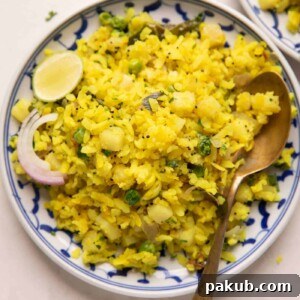
Kanda Batata Poha
Rate Recipe
Print Recipe
Want to save this recipe for later? Get it sent to your inbox, along with new recipes from us every week!
Ingredients
- 1.5 Cups Poha or Flattened Rice, soaked (medium or thick variety)
- 2 Tablespoon Oil (neutral-flavored)
- 1 Teaspoon Mustard Seeds
- 2-3 Green Chillies, slit lengthwise (adjust to taste)
- 2 Sprigs Curry Leaves
- 1 medium Onion, cut into ½-inch cubes
- 1 medium Potato, cut into ½-inch cubes
- 1/3 Cup Green Peas, fresh or frozen (thaw if using frozen)
- 1/4 Teaspoon Turmeric Powder
- 1 Tablespoon Water
- 1 ½ Teaspoon Salt, divided (½ tsp for potatoes, 1 tsp for poha)
- 1 ½ Teaspoon Sugar (optional, for balance)
- Juice Of 1 Lime (freshly squeezed)
- 2 Tablespoons Chopped Coriander (for garnish)
Instructions
-
Prepare Poha: Place poha in a colander and rinse thoroughly under running cold tap water for about 1-2 minutes until moistened. Do not soak in a bowl. Let the wet poha sit in the colander for 10-15 minutes while you prepare other ingredients. This allows it to soften without becoming mushy.
-
Temper Spices: Heat 2 tablespoons of oil in a kadhai or large pan over medium heat. Add 1 teaspoon of mustard seeds and allow them to splutter. Once spluttering, add the diced onions, slit green chillies, and curry leaves. Sauté for 1-2 minutes until onions are translucent.
-
Cook Potatoes: Add 1 medium potato (½-inch cubes) to the pan and sauté for another minute. Sprinkle ½ teaspoon of salt. Cover and cook for 5-6 minutes, or until the potatoes are tender. Stir occasionally.
-
Add Peas & Poha: Stir in ⅓ cup green peas (thawed if frozen) and sauté for another minute. Gently add the soaked poha, ¼ teaspoon turmeric powder, the remaining 1 teaspoon salt, and 1½ teaspoon sugar. Mix well with a light hand to avoid breaking the poha flakes.
-
Steam & Finish: Sprinkle 1 tablespoon of water over the mixture. Cover the lid and cook on low heat for 4-5 minutes, allowing the poha to steam and become fluffy. Remove the lid, squeeze in the juice of 1 lime, and garnish with 2 tablespoons of chopped coriander leaves. Serve hot.
Video
Notes
- Always use medium or thick poha and soak it properly by rinsing in a colander, not submerging. Test for softness by pressing between fingers.
- Chop potatoes and onions into small, even pieces for quick and even cooking.
- Mix the poha gently to prevent it from becoming mushy.
- Don’t skip the fresh lime juice at the end for an authentic, bright flavor.
Nutrition Information (per serving)
Did you enjoy this recipe? We’d love to hear your thoughts! Rate and leave a comment below!