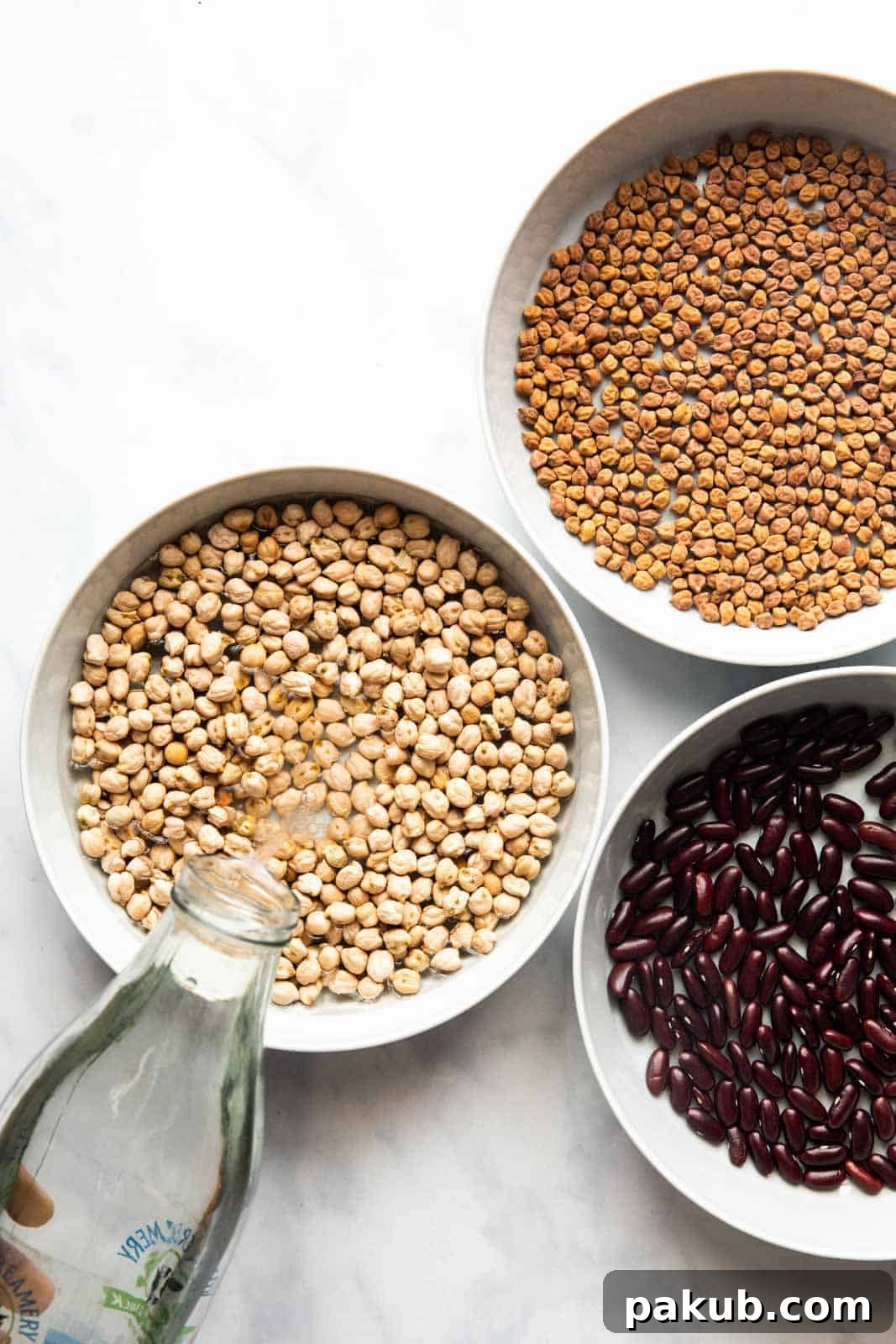
Unlock the secrets to perfectly cooked beans every time! Discover how to soak beans for optimal texture, reduced cooking time, and improved digestion. Learn essential bean-soaking methods, including a quick soak technique for when you’re short on time.
For many home cooks, myself included, the simple act of soaking beans can sometimes feel like an overlooked but crucial step. I recall my childhood days when my mother would assign me the overnight task of soaking beans for our next meal. More often than not, I’d inevitably forget, much to her exasperation. Now, as I effortlessly whip up a batch of creamy homemade hummus, I fully appreciate the wisdom behind her insistence on proper preparation, particularly when it came to those humble legumes.
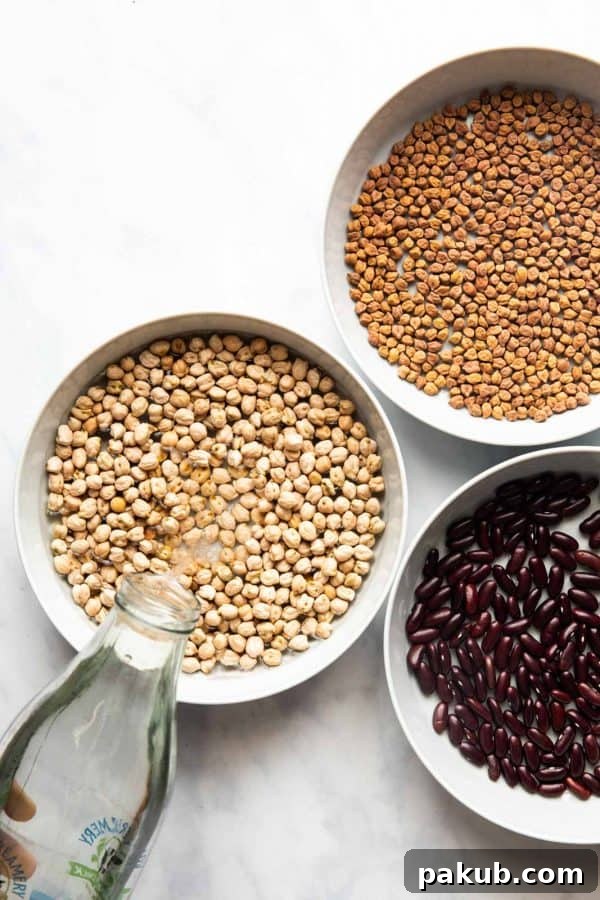
While we’ll dive into the ingenious ‘quick soak’ solution for those moments of forgetfulness shortly, let’s first explore the fundamental question that underlies this age-old culinary practice.
WHY SOAK BEANS? Unlocking the Benefits
Soaking beans isn’t merely a tradition; it’s a transformative step that significantly impacts cooking time, texture, flavor, and most importantly, digestibility. Understanding these benefits will make you a steadfast advocate for this simple yet powerful kitchen habit.
Dramatic Reduction in Cooking Time
One of the most immediate and tangible benefits of soaking beans is the significant reduction in cooking time. Imagine turning a two-hour cooking marathon into a quick 35-40 minute simmer. Unsoaked beans, such as kidney beans (rajma) or black beans, are dense and dehydrated, requiring prolonged heat and moisture to rehydrate and soften. This can easily add an extra hour or two to your cooking process. Soaking, especially overnight, pre-hydrates the beans, allowing them to cook much faster and more evenly. This saves not only time but also energy, making your meal preparation more efficient.
Superior Texture and Flavor
Ever wonder why your homemade bean dishes don’t always achieve that restaurant-quality creaminess or firmness? The answer often lies in soaking. Soaked beans maintain their structural integrity better during cooking. Fewer beans will burst, split open, or turn into an unappetizing mush, resulting in a dish with a more appealing appearance and a consistently satisfying bite. The even hydration also allows the beans to absorb flavors more readily, leading to a richer, more profound taste in your finished dish, whether it’s a hearty chili, a vibrant salad, or a smooth dip like hummus.
Enhanced Digestibility and Reduced Gas
Perhaps the most compelling reason to soak beans, particularly larger varieties like kidney beans, chickpeas, and black beans, is to improve their digestibility. Beans naturally contain complex sugars called oligosaccharides. Our bodies lack the necessary enzymes to fully break down these sugars, which can lead to fermentation in the gut, resulting in uncomfortable gas, bloating, and indigestion. Soaking beans overnight helps to dissolve and leach out a significant portion of these oligosaccharides into the soaking water. By draining and rinsing the beans thoroughly after soaking, you effectively remove many of these troublesome compounds, making beans much easier on your digestive system. This allows you to enjoy the incredible nutritional benefits of beans without the common unpleasant side effects.
Improved Nutrient Absorption
Beyond reducing gas, soaking can also help improve the nutritional profile of beans. Beans contain phytic acid (phytate), an antinutrient that can bind to essential minerals like iron, zinc, and calcium, making them less available for absorption by the body. While not completely eliminated, soaking helps to reduce phytic acid levels, thereby enhancing the bioavailability of these vital nutrients. This means you’re not just eating beans; you’re getting more out of every bite.
Considering these profound benefits, setting a simple reminder to soak your beans is a small effort with immense rewards for your cooking and your well-being. So, soak, soak, soak!
HOW TO SOAK BEANS: The Traditional Overnight Method
The classic approach to soaking beans is remarkably straightforward and yields the best results for digestibility and texture. Here’s a detailed guide to mastering the traditional overnight soak:
Step 1: Inspect and Rinse Your Beans
Before you begin, pour your dry beans onto a clean, light-colored surface, like a baking sheet or a large plate. Carefully inspect them for any small stones, debris, or shriveled, discolored beans. Discard any imperfections. Once clean, place the beans in a colander and rinse them thoroughly under cold running water to remove any dust or surface impurities.
Step 2: Determine the Right Amount of Water
Beans expand significantly during soaking, often doubling or even tripling in size. As a general rule of thumb, for every 1 cup of dry beans, you will need at least 3 cups of cold water. This ensures that the beans remain fully submerged throughout the entire soaking period. It’s crucial to have at least 2 inches of water covering the beans to accommodate their expansion without leaving any exposed to the air, which can lead to uneven hydration.
Step 3: Choose the Right Container and Location
Place the rinsed beans into a large bowl or pot. Add the appropriate amount of cold water. Cover the bowl loosely with a lid or plastic wrap. For an overnight soak (typically 8-12 hours), it’s generally safe to leave the beans at room temperature, especially in a cool kitchen. However, if your kitchen is particularly warm, or if you plan to soak the beans for longer than 12 hours, it’s advisable to place the covered bowl in the refrigerator to prevent any unwanted fermentation or bacterial growth.
Step 4: The Soaking Duration
The recommended soaking time is approximately 8 to 12 hours. This duration allows the beans to fully rehydrate, breaking down those complex sugars and phytic acid effectively. If you’re short on time, even a 4-6 hour soak is better than no soak at all, but aiming for overnight will provide the most significant benefits.
Step 5: Drain and Rinse (Crucial Step!)
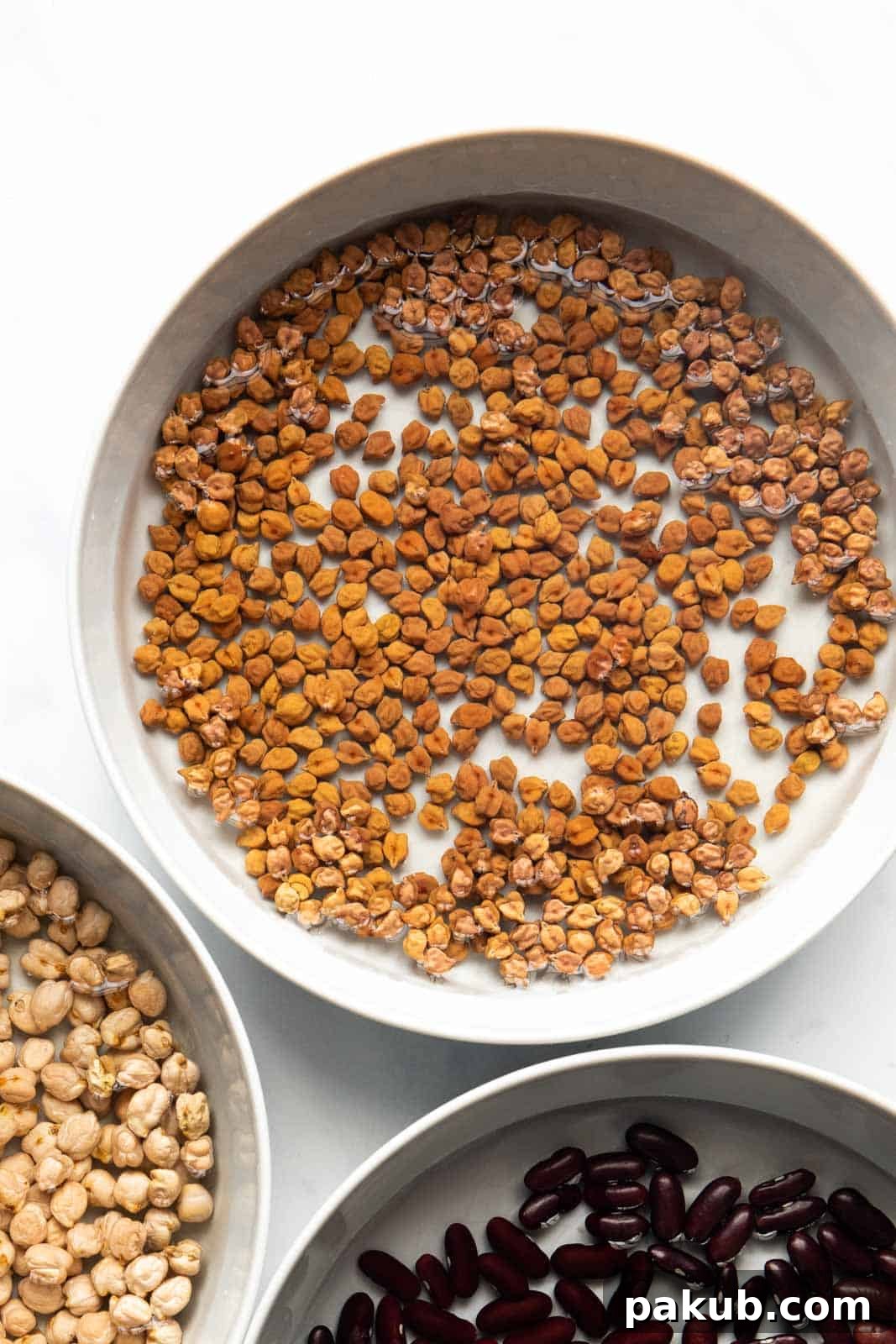
Once the soaking period is complete, you’ll notice the beans have plumped up considerably. It is absolutely essential to drain the soaking water. Do not use this water for cooking! This water now contains the dissolved oligosaccharides and other compounds that cause gas. Transfer the soaked beans back to a colander and rinse them thoroughly under cold running water for a minute or two. This final rinse helps to wash away any remaining surface compounds, further enhancing digestibility.
PRO TIP: Maximize Flavor with Cooking Liquid
While you should always discard the soaking water, don’t confuse it with the cooking liquid! After you’ve cooked your soaked beans (either by boiling, steaming, or in a pressure cooker), the remaining liquid is a treasure trove of flavor and nutrients. This cooking liquid has absorbed much of the beans’ natural essence and starches, creating a rich broth. Using this flavorful liquid as the base for your sauces, soups, or even in the final preparation of your bean dish will significantly boost the overall taste and add a beautiful depth of flavor. It’s a simple trick to elevate your culinary creations without adding extra ingredients.
THE QUICK SOAK METHOD: Your Solution for Forgotten Beans
We’ve all been there: you’re ready to cook, ingredients are prepped, and suddenly, you realize the beans are still dry as a bone. Don’t despair! You’re certainly not alone in this common culinary mishap. Thankfully, there’s an excellent solution that allows you to rapidly hydrate your beans and save your meal plan. Embrace these effective ‘Quick Soak’ methods for when impatience (or hunger!) strikes.
Method 1: The Boil and Rest Technique
This is a highly reliable method for achieving adequately hydrated beans in a fraction of the time, perfect for a wide range of legumes, including kidney beans, chickpeas, and navy beans:
- Rinse Thoroughly: Begin by rinsing your dry beans under cold running water in a colander. This step helps to remove any dust, debris, or impurities, just as you would with the traditional soak.
- Submerge in Water: Transfer the rinsed beans to a large pot. Add cold water, ensuring the beans are submerged by at least 2 inches. Remember, beans will expand rapidly, so ample water is key.
- Bring to a Rapid Boil: Place the pot on the stove over high heat and bring the water to a vigorous boil without covering it.
- Boil Briefly: Allow the beans to boil uncovered for precisely 5-6 minutes. This initial burst of heat begins the rehydration process quickly.
- Rest and Hydrate: After 5-6 minutes, turn off the heat completely. Cover the pot tightly with a lid and let the beans rest undisturbed for at least one hour. During this resting period, the residual heat will continue to soften and rehydrate the beans effectively.
- Drain and Rinse: Once the hour is up, carefully drain the hot water from the beans using a colander. Rinse the beans thoroughly under cold running water. They will now be plump and ready for cooking, much like traditionally soaked beans.
This method significantly reduces the soaking time from overnight to just over an hour, making it an invaluable trick for busy days.
Method 2: The Boiling Water and Salt Technique (for maximum speed)
For an even quicker approach, especially if you have a well-insulated container, this method is fantastic:
- Prepare Beans: Rinse your dry beans as in Method 1.
- Boiling Water Prep: Bring a kettle or pot of water to a rolling boil separately.
- Combine in Container: Place the rinsed beans in a heat-proof container with a tight-fitting lid, such as a sturdy casserole dish, an insulated pot, or a heavy-bottomed Dutch oven.
- Add Salt: Stir in a teaspoon of salt per cup of beans (optional, but highly recommended). Salt helps to condition the water, firm up the bean skins, and aids in the absorption of liquid, leading to more evenly textured beans.
- Pour Boiling Water: Carefully pour the boiling water over the beans until they are covered by at least 2-3 inches.
- Cover and Wait: Immediately cover the container tightly with its lid. The goal is to trap as much heat as possible. Leave the beans to soak for approximately one hour.
- Drain and Rinse: After one hour, the beans should be considerably plumped. Drain the hot water and rinse the beans thoroughly under cold water before proceeding with your recipe.
Both quick-soak methods work exceptionally well for a wide variety of beans, including sturdy kidney beans, delicate navy beans, and popular chickpeas. While the overnight soak generally offers the most profound benefits for digestion, these quick methods are perfectly acceptable and provide a significant advantage over cooking unsoaked beans.
ESSENTIAL TIPS FOR SOAKING SUCCESS
Beyond the core methods, a few extra considerations can help ensure your beans turn out perfectly every time:
Consider the Freshness of Your Beans
Older beans can be more challenging to rehydrate and may take longer to soften, even with soaking. If you have beans that have been sitting in your pantry for a very long time, they might require a longer soaking period or simply not soften as much as fresher beans. Aim to use beans within a year of purchase for optimal results.
Water Quality Matters
The quality of your soaking water can have a subtle impact. If your tap water is heavily chlorinated or has a very high mineral content (hard water), it might slightly affect the texture or soaking time of your beans. While not strictly necessary for most, some cooks prefer to use filtered water for soaking, believing it contributes to a more consistent and tender bean texture.
Adding Salt During Soaking (A Debate Worth Noting)
The traditional advice often suggests *not* adding salt during the long soak, as it was thought to toughen the beans. However, modern culinary research indicates that adding a small amount of salt (about 1 teaspoon per quart of water) to the soaking liquid can actually help beans cook more evenly and prevent their skins from bursting. It works by firming up the bean’s cell walls. If you’re using the quick soak method, adding salt is particularly beneficial as it helps to speed up water absorption and contributes to a better texture. For long soaks, if you choose to add salt, ensure you rinse the beans thoroughly afterward and adjust salt levels during cooking accordingly.
Avoid Baking Soda for Soaking (Unless Specific)
Some older recipes recommend adding baking soda to the soaking water to help soften beans faster. While baking soda does create an alkaline environment that can break down pectin in bean skins, making them very tender, it can also lead to a mushy texture and can potentially impart a slightly soapy flavor if used excessively. For most applications, especially if you desire firm, intact beans, it’s best to avoid baking soda during the initial soak. Stick to proper soaking times and methods for natural softening.
Refrigerate for Extended Soaks
If your kitchen is warm or if you plan to soak beans for more than 12 hours, always place the covered bowl of soaking beans in the refrigerator. This prevents fermentation, which can lead to off-flavors and odors. Refrigerating ensures your beans stay fresh and safe until you’re ready to cook them.
COOKING SOAKED BEANS: The Final Step
Once your beans are perfectly soaked, the cooking process becomes much more straightforward and predictable. Here’s what to keep in mind:
A Final Rinse is Always Recommended
Even after soaking and draining, give your beans one final rinse under cold water. This ensures any remaining compounds from the soaking water are washed away, maximizing digestibility and ensuring a clean flavor profile.
Choose Your Cooking Method
Soaked beans are versatile and can be cooked using various methods:
- Stovetop: Place rinsed beans in a large pot, cover with fresh water (about 2-3 inches above the beans), bring to a boil, then reduce heat and simmer until tender. This usually takes 35-60 minutes for soaked beans, depending on the variety and freshness.
- Pressure Cooker: This is often the fastest method. Soaked beans will cook in a pressure cooker in typically 10-20 minutes (plus pressure build-up and release time), saving significant time and energy.
- Slow Cooker: For a hands-off approach, soaked beans can be cooked in a slow cooker for 3-6 hours on high or 6-8 hours on low. Ensure they are fully submerged in water.
When to Add Salt and Other Seasonings
A common mistake is adding salt too early during the bean cooking process. While some prefer to add a little salt to the soaking water (as discussed in the tips), adding significant amounts of salt to the cooking water, especially for unsoaked beans, can toughen the skins and prevent the beans from fully softening. For best results, add salt and other acidic ingredients (like tomatoes, vinegar, or citrus juice) towards the end of the cooking time, once the beans are already tender. This allows the beans to soften properly and absorb flavors effectively without hindrance.
CONCLUSION: Embrace the Power of Soaking
Soaking beans might seem like an extra step in an already busy cooking routine, but as we’ve explored, the benefits far outweigh the minimal effort. From drastically cutting down cooking times and ensuring a superior texture to significantly improving digestibility and nutrient absorption, soaking is a fundamental technique that transforms humble legumes into culinary stars. Whether you plan ahead with an overnight soak or employ a quick-soak method in a pinch, incorporating this simple practice into your kitchen repertoire will undoubtedly elevate your bean dishes, making them more enjoyable, healthier, and easier to prepare. Say goodbye to tough, gassy beans and hello to perfectly cooked, delicious, and digestible delights!
Delicious Recipes Featuring Soaked Beans
Now that you’re a soaking expert, put your perfectly prepped beans to good use with these inspiring and delicious recipes. Each of these dishes truly shines when made with properly soaked and cooked beans.
- Pressure Cooker Chana Masala uses Chickpeas
- Chana Aloo (Spicy Chickpea & Potato Masala) uses Chickpeas
- Chana Pulao (Chickpea Pilaf) uses Chickpeas
- Mediterranean Chickpea Salad uses Chickpeas
- Instant Pot Chipotle Chili uses Kidney Beans or Black Beans
- Crunchy Roasted Indian Masala Chickpeas uses Chickpeas
- Vegetarian Minestrone Soup uses Kidney Beans
- Creamy Hummus with Chickpeas
- Southwestern Chicken Quinoa Bean Salad uses Black Beans
- Dal Makhani uses Lentils and Kidney Beans
- Chicken Burrito Bowls with Kidney Beans or Black Beans
This article has been meticulously researched and compiled by Bhavana Bhat