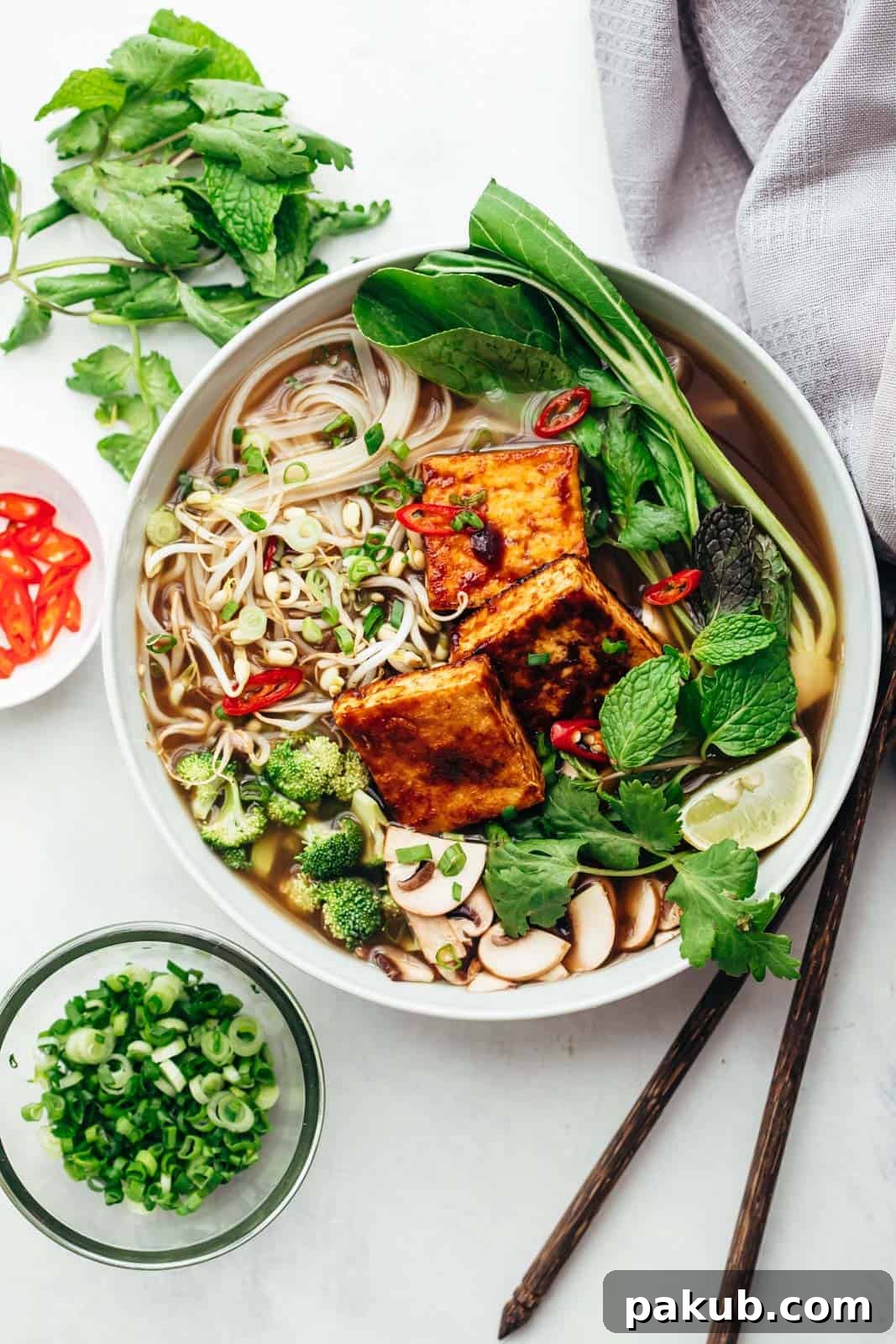
Experience the soul-warming comfort of Vietnamese pho with this exceptional vegetarian version. While traditional pho is often meat-based, this plant-powered recipe masterfully captures the depth of flavor, rich body, and aromatic spice notes that define this beloved soup, making it an irresistible choice for any palate.
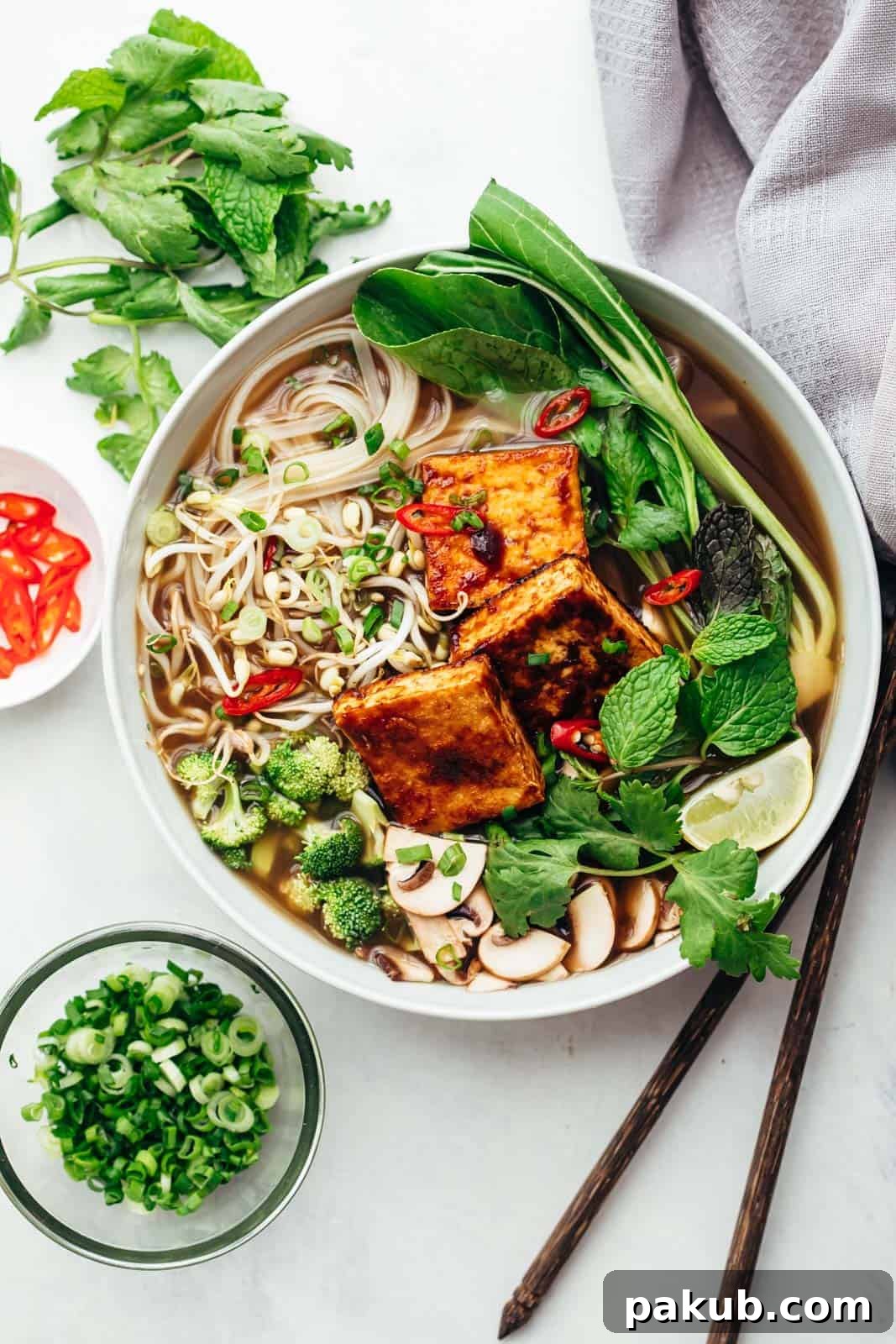
Authentic & Flavorful Vegetarian Pho Soup: A Plant-Based Vietnamese Noodle Bowl
Embark on a culinary journey with this incredible vegetarian pho recipe, meticulously crafted to deliver an authentic taste experience without any meat. While traditional Vietnamese pho soup is renowned for its deeply savory beef or pork broth, we’ve risen to the challenge of creating a plant-based alternative that stands proudly alongside its classic counterpart. This recipe isn’t just a substitute; it’s a celebration of vibrant vegetables, fragrant spices, and a rich broth that will captivate your senses. If you’re seeking a genuinely flavorful vegetarian pho, prepare to be amazed by the complexity and comfort this dish offers.
The foundation of any exceptional pho lies in its broth, and in this recipe, we’ve dedicated ourselves to infusing every drop with unparalleled flavor. Our vegetarian broth is deep, rich, and brimming with strong, spicy notes derived from carefully selected aromatics and whole spices. It’s a symphony of tastes that promises a truly satisfying and memorable dining experience – a dish so delicious, it’s hard not to fall in love with it on the first spoonful.
Quick Walk Through: Vegetarian Pho Soup
- Richa’s Expert Vegetarian Pho Making Tips
- Frequently Asked Questions About Pho
- Watch Our Vegetarian Pho Recipe Video
- More Delightful Asian Noodle Soup Recipes
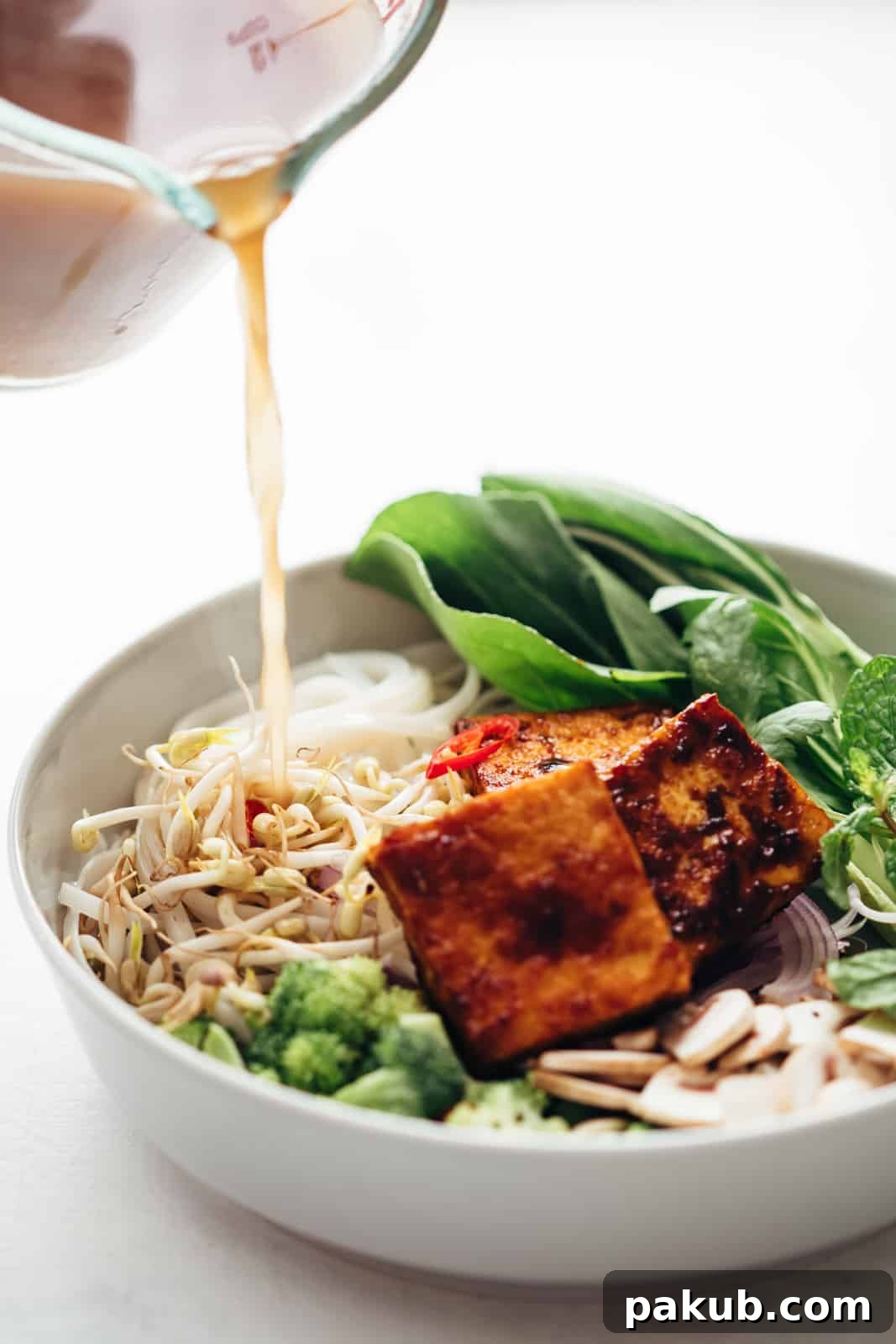
Richa’s Expert Vegetarian Pho Making Tips: Elevating Your Homemade Pho
Crafting a vegetarian pho that rivals its meat-based counterpart requires a few clever techniques to build incredible depth and complexity. Here are Richa’s top tips to ensure your homemade vegetarian pho is nothing short of spectacular:
1. The Secret to Depth: Smoky Charred Aromatics: The rich, savory undertones of traditional pho broth often come from roasted bones. To replicate this profound depth in a vegetarian recipe, we introduce a crucial step: charring the onion and ginger. Before adding them to your broth, lightly blacken these aromatics in a dry pan or under a broiler. This charring process caramelizes their natural sugars, releases a wonderful smoky aroma, and intensifies their inherent flavors, particularly the pungent warmth of ginger. This simple technique is a game-changer for building a complex and satisfying base.
2. Spice is Everything: The Aromatic Foundation: Spices are truly your best friends when it comes to pho. This recipe calls for a powerful quartet of whole spices: cinnamon, star anise, cloves, and coriander seeds. These aren’t just background notes; they are the heart and soul of pho’s distinctive aroma and flavor profile. Added whole, they slowly release their fragrant oils into the broth, creating an intoxicating scent and a profound taste that you’ll notice with the very first bite. It is absolutely paramount to use high-quality, fresh whole spices for the most impactful results. Avoid pre-ground spices, as they lose their potency quickly.
3. Broth Wisdom: Timing is Key for Vegetable Stock: Unlike meat-based stocks, which can simmer for hours, developing deeper flavors over time, vegetable stock requires a different approach. Overcooking vegetable broth can cause the delicate flavors of the vegetables to diminish or even turn bitter. For this vegetarian pho, a simmering time of about 30 minutes is ideal. This allows the aromatics and spices to fully infuse the broth without compromising the freshness and vibrancy of the vegetable base. This principle is consistent with our recipe for homemade vegetable stock, emphasizing quality over extended cooking.
4. Topping Triumph: The Grand Finale for Flavor and Texture: While the broth is the soul, the toppings are the body and vibrant personality of your pho. Do not, under any circumstances, skip the toppings! Fresh ingredients like coriander (cilantro), mint, thinly sliced spring onions, and a squeeze of fresh lime juice introduce a burst of freshness and acidity that perfectly balances the rich, spicy broth. Beyond these classic garnishes, feel free to get creative. We love adding extra vegetables such as thinly sliced mushrooms, crisp broccoli florets, and perfectly sautéed tofu. These additions not only enhance the texture, providing a delightful crunch and chewiness, but also transform your pho into a hearty, complete, and utterly satisfying meal.
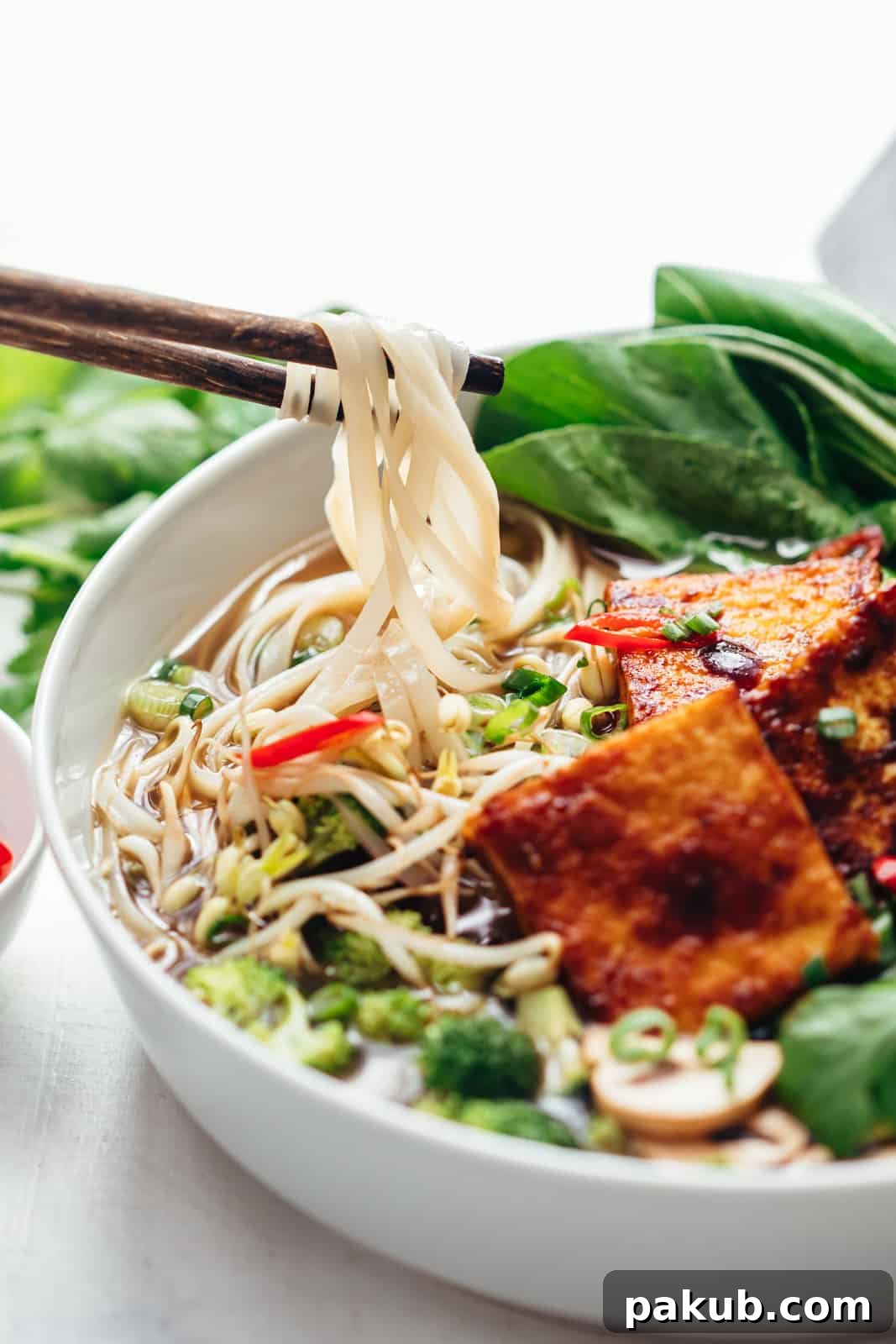
Frequently Asked Questions About Vegetarian Pho
It’s a common misconception, but “pho” is actually pronounced as ‘fuh’ (like “fun” without the ‘n’ sound), not ‘foe’.
The best way to enjoy pho is with both chopsticks (or a fork) and a spoon. Start by using your chopsticks to gently mix all the ingredients together – noodles, vegetables, and any protein. Then, use your chopsticks to pick up noodles and toppings, savoring each bite. In between, use your spoon to scoop up the flavorful broth, relishing its warmth and aroma. It’s perfectly acceptable, and even encouraged, to slurp your broth!
Absolutely! This vegetarian pho recipe is naturally vegan, as all the ingredients listed are plant-based. Ensure your vegetable stock does not contain any animal products, and you’re good to go. Enjoy a delicious, dairy-free, and meat-free meal!
Traditional pho uses flat rice noodles, and they are definitely recommended for this vegetarian version too. Look for dried flat rice noodles of medium width, as they absorb the broth beautifully and provide that quintessential pho texture. You can typically find these in the Asian aisle of most supermarkets or at specialty Asian grocery stores.
Yes, pho is an excellent meal for meal prepping! You can prepare the broth entirely ahead of time and store it in the refrigerator for up to 4 days or freeze it for longer. Chop your vegetables and prepare your tofu. When you’re ready to serve, simply reheat the broth, cook the noodles fresh, and assemble with your prepared toppings. This significantly cuts down on active cooking time for a quick weeknight dinner.
Seriously, Vietnamese Pho is one of our all-time favorite soups, perfect for any time of year. Its rich, aromatic warmth provides ultimate comfort on a cold day, yet its vibrant, fresh toppings make it equally refreshing and delightful when the weather is warmer!
Watch How to Make Vegetarian Pho Recipe Video
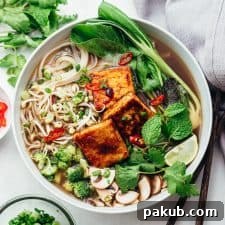
Vegetarian Pho Soup
By: Richa
This vegetarian pho soup recipe is a great spin on the traditional meat based pho. We are adding lots of depth and flavor and spicy notes. Don’t skip the toppings!
Prep: 15 minutes | Cook: 40 minutes | Total: 55 minutes
Servings: 2 portions
Ingredients
For the Broth
- 1 teaspoon Oil
- 1 large Onion, peeled and halved
- 2 inch Ginger, peeled and halved lengthwise
- 3 inch Cinnamon, piece
- 1 Star anise
- 2 Cloves
- 1 teaspoon Coriander seeds
- 4 cups Unsalted vegetable stock
- 2 teaspoon Soy sauce
- 4 Carrots, peeled and coarsely chopped
For the Noodles
- 100 grams Flat rice noodles, dried
- Water, for boiling
More Veggies
- 50 grams Tofu
- 1 teaspoon Hoisin sauce
- 1 teaspoon Sriracha
- 4-5 Button mushrooms, diced into four
- 1 cup Bok choy / Chinese cabbage / Broccoli, 1/3 cup each or any two of the three as desired
For the Garnishes
- 2 Scallions or green onions, thinly sliced
- 1 Thai red chillies, thinly sliced
- 1 Lime, cut into wedges
- 1/2 cup Bean sprouts
- Cilantro / thai basil / mint, a large handful of herbs
- To Serve: Hoisin sauce
- To Serve: Sriracha, optional
Instructions
- Heat oil in a pan and char the onion halves and the ginger until slightly blackened, about 2-3 minutes on both sides. You may even put them under a broiler for 5 minutes.
- In a large pot, dry roast the cinnamon, star anise, cloves and coriander seeds over a medium low flame until aromatic. Add the vegetable stock, soy sauce, carrots and the charred onions and ginger. Bring the broth to a rolling boil, reduce the heat and let it simmer covered for about 30 minutes. Strain and keep hot on the side till ready to serve.
- While the broth is boiling, prepare the noodles. Place the noodles in a large bowl and cover with hot water till submerged. Let stand for 20-25 minutes or until tender but still chewy (if soaking the noodles as above does not soften them enough, blanch them in a pot of boiling water for a few seconds).
- Prepare the toppings as desired. You may tear or slice the cabbage and bok choy and steam the broccoli florets.
- Press the tofu in a couple of layers of paper towels for 10 minutes to drain the excess water. Slice and cook the tofu with the hoisin and sriracha for 2-3 minutes in a frying pan until lightly browned.
- Divide the noodles between both bowls, arrange the toppings over the noodles and ladle the hot broth over. Serve immediately with the garnishes and additional hoisin or sriracha on the side.
Notes
- Pho is best enjoyed while it’s still hot to savor all its aromatic flavors.
- Leftover broth can be stored in the refrigerator for up to 4 days in an airtight container.
- To make this vegetarian pho spicier, consider adding 1/4 teaspoon of chili flakes to the broth while it simmers, in addition to the Thai red chilies.
- Pho is generally enjoyed with hoisin sauce or soy sauce served on the side for diners to customize their flavor. In this recipe, we’ve incorporated that flavor by cooking the tofu with hoisin, but extra on the side is always a good idea!
- If you’re curious about traditional meat-based pho recipes, our friend Maggie has a fantastic recipe here.
Nutrition Information (per serving)
Calories: 438kcal, Carbohydrates: 94g, Protein: 13g, Fat: 3g, Saturated Fat: 1g, Cholesterol: 1mg, Sodium: 2509mg, Potassium: 821mg, Fiber: 10g, Sugar: 18g, Vitamin A: 23066IU, Vitamin C: 53mg, Calcium: 185mg, Iron: 4mg
Explore More Asian Noodle Soup Recipes
If you loved this comforting bowl of vegetarian pho, you’re in for a treat! The world of Asian noodle soups is vast and wonderfully diverse, offering a myriad of flavors and textures to explore. Here are a couple more of our favorite noodle soup recipes that promise to bring warmth and excitement to your kitchen:
- Spicy Thai Curry Pumpkin Noodle Soup: Dive into a creamy, spicy, and utterly satisfying bowl that combines the richness of pumpkin with the vibrant flavors of Thai curry. It’s a hearty option perfect for cooler evenings.
- Chinese Hot and Sour Soup with Ramen: Experience the classic tangy and spicy kick of hot and sour soup, enhanced with chewy ramen noodles for a complete and exhilarating meal.