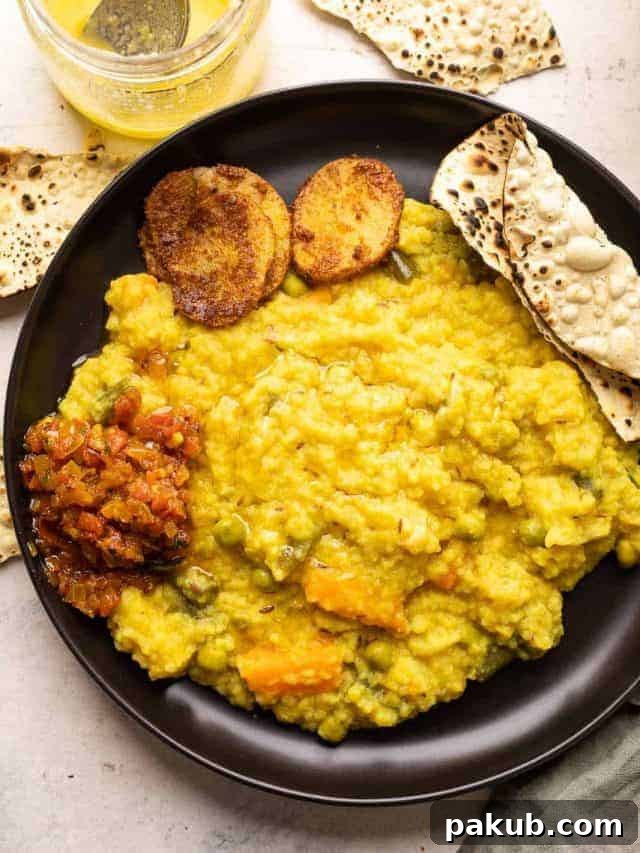
Khichdi, also known as khichri or khichuri, is the quintessential Indian comfort food. It’s a dish that evokes warmth, nostalgia, and a sense of well-being. While some may be unfamiliar or even hesitant, this comprehensive guide is designed to transform skeptics into lovers. This versatile recipe can be perfectly prepared in both a traditional pressure cooker and the popular Instant Pot, making it accessible for every kitchen.
Embracing the Soul-Soothing Power of Khichdi
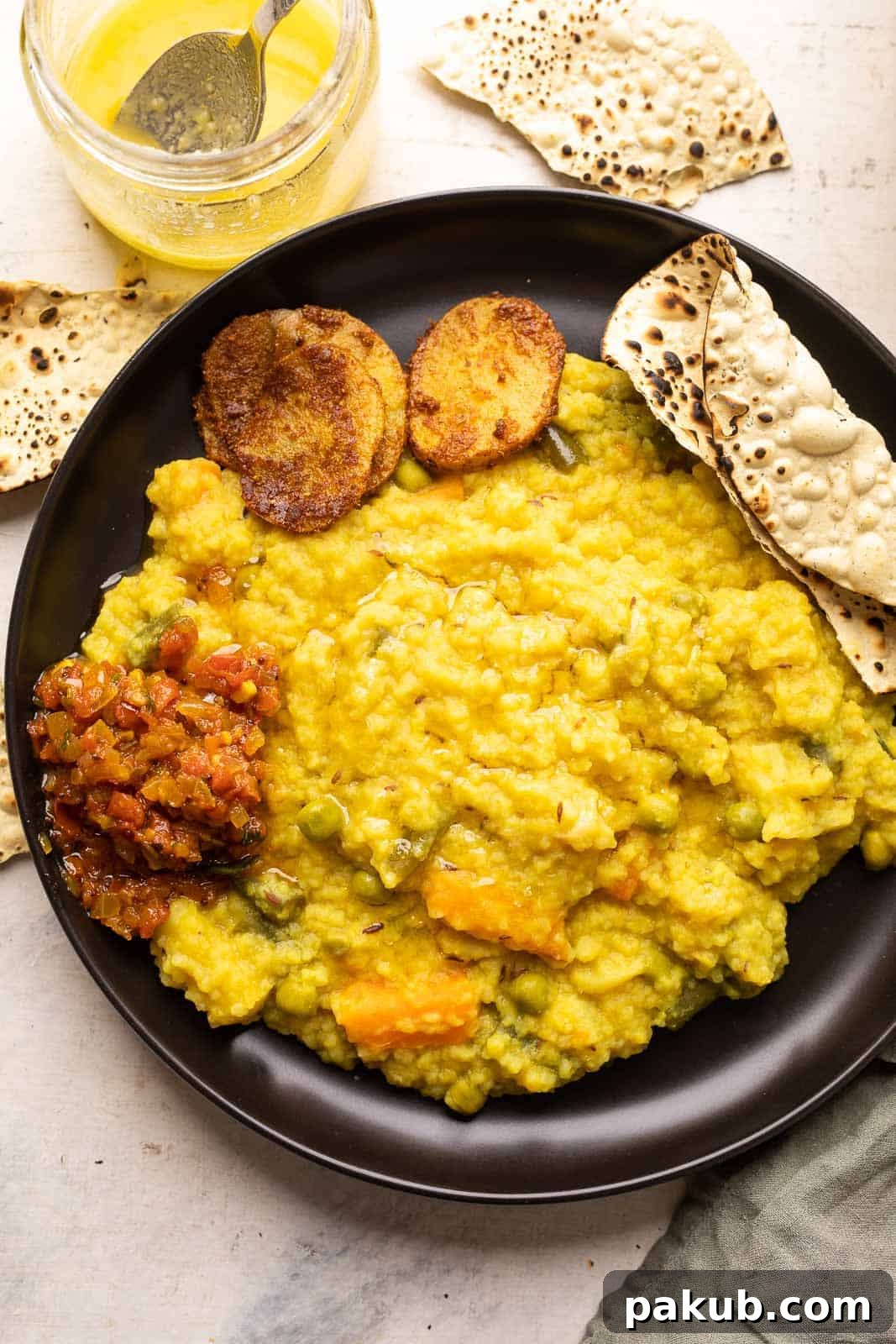
There’s truly nothing quite as comforting as a steaming hot bowl of khichdi, generously topped with a dollop of rich, aromatic ghee. This humble yet incredibly satisfying dish holds a special place in Indian cuisine, often hailed as the ultimate healing food. Feeling under the weather? A bowl of khichdi offers gentle nourishment. Seeking solace on a rainy day? Khichdi provides the perfect cozy embrace. No matter the mood or occasion, khichdi consistently proves to be the ideal answer, offering both sustenance and comfort.
This particular khichdi recipe draws its inspiration from cherished family traditions, specifically my grandma’s kitchen. What makes it truly exceptional is the thoughtful inclusion of whole spices and hearty chunks of potato and other vegetables, which beautifully melt into the dish, creating layers of flavor and texture. The secret to unlocking its profound depth and incredible nutty aroma lies in a crucial step: dry roasting the rice and various dals (lentils) in ghee along with the whole spices before the pressure cooking process. This technique elevates the dish from simple to sublime.
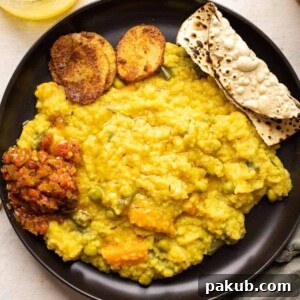
Serving khichdi is an art in itself, and it pairs wonderfully with a variety of accompaniments. Enjoy it with cooling yogurt, crispy fried potatoes, or a tangy tomato chutney. The combination creates a symphony of flavors and textures, delivering a bowl of goodness that is genuinely nourishing for both body and soul. For me, this khichdi stands proudly on my list of go-to comforting recipes, alongside beloved dishes like my Dal Fry, Rice Bath, and Millet Bisi Bele Bath.
Jump to Section: The Ultimate Khichdi Recipe Guide
- The Essence of Khichdi: Key Ingredients
- Khichdi: Frequently Asked Questions
- Expert Tips for Perfect Khichdi
- Delightful Serving Suggestions
- Khichdi: Storage and Reheating
- Watch the Khichdi Recipe Video
- Printable Recipe Card
The Essence of Khichdi: Key Ingredients
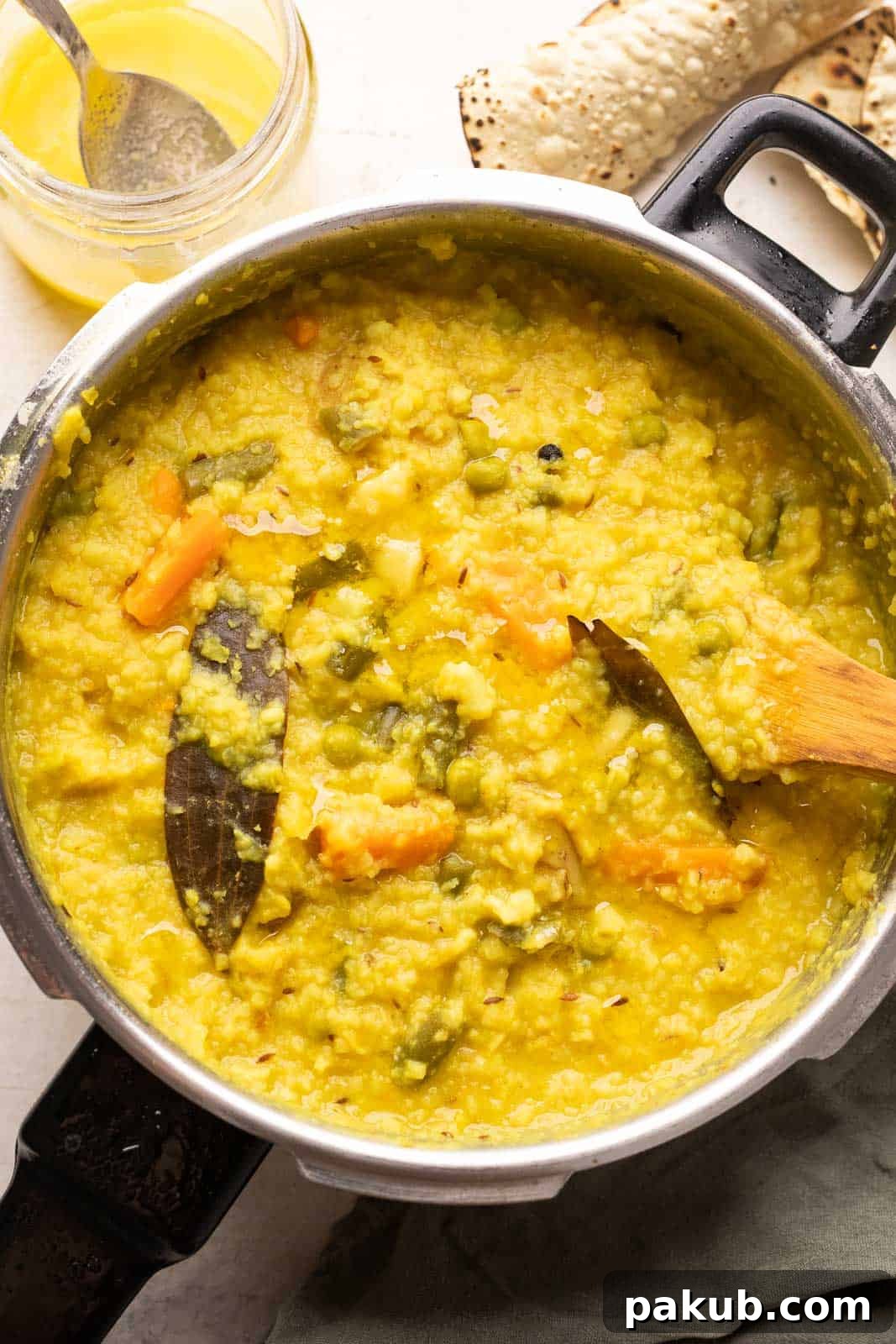
Crafting a truly flavorful khichdi begins with selecting the right ingredients. Each component plays a vital role in achieving that perfect balance of taste, texture, and aroma. Here’s a detailed look at what you’ll need:
- Rice: For the creamiest, most comforting texture, small-grain rice varieties are ideal. They break down beautifully during cooking, blending seamlessly with the lentils.
- Dal (Lentils): This recipe utilizes a harmonious blend of toor dal (split pigeon peas) and moong dal (split yellow lentils). Toor dal provides a hearty base and rich flavor, while moong dal adds a lighter, easier-to-digest quality, contributing to the dish’s signature creaminess.
- Ghee: Clarified butter, or ghee, is non-negotiable for authentic khichdi. It’s used for roasting the rice and dal, infusing the dish with its distinctive nutty aroma and luxurious richness. Don’t compromise on this ingredient for the best flavor!
- Whole Spices: A medley of whole spices is essential for building a robust flavor profile. This includes cumin seeds for earthiness, black peppercorns for a gentle kick, bay leaves for a subtle fragrance, cloves for warmth, and green cardamom pods for their sweet, aromatic notes.
- Aromatics: Fresh ginger and green chili are key to brightening the khichdi. Ginger adds a pungent warmth, while green chili provides a touch of heat, which can be adjusted to your preference.
- Vegetables: To boost both nutrition and texture, a colorful assortment of vegetables like diced potato, carrot, green beans, cauliflower florets, and green peas are incorporated. These vegetables soften and meld into the dish, adding natural sweetness and depth.
- Ground Spices: Simple yet potent, turmeric powder lends its golden hue and earthy notes, while red chili powder (or paprika for a milder option) adds warmth and color. Salt, of course, is crucial for seasoning.
- Water: The right amount of water is vital for achieving the desired creamy, porridge-like consistency of khichdi.
Khichdi: Frequently Asked Questions
What exactly is Khichdi made of?
Khichdi is a traditional Indian dish made primarily from rice and various lentils (dal), cooked together with a selection of aromatic spices and often vegetables. It’s cherished for its simplicity and comforting nature, making it a go-to meal when you need a little extra love and gentle nourishment. Its ingredients are wholesome and readily available, creating a complete and satisfying meal in one pot.
Why is Khichdi considered so healthy?
Khichdi is celebrated for its health benefits, making it a wholesome choice for any meal. It’s a naturally balanced one-pot meal that offers numerous advantages:
- High in Protein: The lentils are an excellent source of plant-based protein, crucial for muscle repair and overall body function.
- Easy to Digest: Its soft, mushy consistency and gentle spices make it incredibly easy on the digestive system, often recommended during illness or for young children and the elderly.
- Rich in Fiber and Vitamins: With the addition of various vegetables, khichdi becomes a powerhouse of dietary fiber, promoting gut health, and essential vitamins and minerals.
- Naturally Gluten-Free and Nourishing: Made with rice and lentils, it’s naturally gluten-free and provides sustained energy, making it a nourishing choice for diverse dietary needs.
What type of dal (lentil) is best for Khichdi?
The choice of dal significantly impacts the texture and flavor of khichdi. While many can be used, here are the most popular options:
- Moong Dal (Yellow Split Lentils): This light and easily digestible lentil is often favored for simple khichdi, especially for kids or during recovery from illness, due to its gentle nature.
- Toor Dal (Split Pigeon Peas): Known for adding body, a slightly nutty flavor, and a satisfying thickness to the dish.
- Mixed Dals (like in this recipe): Using a combination of dals, such as moong and toor dal, offers the best balance of taste, texture, and nutritional value. This blend provides creaminess, heartiness, and a well-rounded flavor profile. Other dals like Masoor dal (red lentils) can also be added for variety.
Can I prepare Khichdi without any vegetables?
Absolutely! While vegetables add nutrients and texture, a simple khichdi made solely with rice, dal, and spices is equally delicious and immensely comforting. Many traditional versions skip vegetables, especially when prepared for digestive rest or as a quick meal. Feel free to adjust the recipe to your preferences, keeping it simple or loading it with your favorite seasonal greens.
How can I make my Khichdi even creamier?
Achieving that lusciously creamy texture is a hallmark of great khichdi. If your khichdi seems too thick or you prefer an extra smooth consistency, you can:
- Add More Water: Stir in a splash of warm water gradually after cooking, then gently simmer for a few extra minutes until it reaches your desired consistency.
- Increase Ghee: Swirl in an additional spoonful of ghee at the very end. The fat from the ghee not only adds flavor but also contributes to a richer, creamier mouthfeel.
- Stir in Butter: A small knob of butter stirred in at the end can also achieve a similar creamy, decadent effect.
- Overcook Slightly: Allowing the rice and dals to cook down a bit more than usual will naturally lead to a creamier, more broken-down texture.
Expert Tips for Perfect Khichdi
Achieving the perfect khichdi is simple with a few insider tips. These pointers, inspired by generations of cooking wisdom, will ensure your dish is flavorful, well-textured, and truly memorable:
- Embrace the Vegetables: Beyond the essential rice and dals, I highly recommend incorporating a variety of diced vegetables such as carrots, green beans, potatoes, cauliflower, and green peas. These additions not only boost the nutritional profile but also introduce delightful textures and natural sweetness that beautifully meld into the dish as it cooks. Feel free to experiment with seasonal vegetables.
- Don’t Skimp on the Ghee: Unless you follow a strict vegan diet, resist the urge to reduce the amount of ghee. Ghee is the magic ingredient that imparts a rich, nutty flavor and a beautiful sheen to the khichdi. It melts over every grain, making each bite incredibly delicious and enhancing the overall aroma. For a vegan alternative, a good quality plant-based butter or a neutral oil can be used, though the flavor profile will differ.
- Master the Water Ratio: The consistency of khichdi is a matter of personal preference, and the water ratio is key to achieving it. For a thick, porridge-like consistency, which is my personal favorite, I use 5 cups of water for every 1 cup of combined rice and lentils. If you prefer a looser, soupier texture, you can increase the water by half to one cup. Conversely, for a drier, more distinct grain texture, reduce the water slightly. Don’t be afraid to adjust based on your desired outcome.
- Adjusting Consistency After Cooking: It’s common for khichdi to thicken as it cools. If you find your cooked khichdi is too thick, simply add a splash of warm water or vegetable broth. Stir it in thoroughly and allow the khichdi to simmer for a few additional minutes on low heat, mixing until it reaches your preferred consistency. This simple trick revives its creamy texture perfectly.
- Sourcing Quality Dals: If you reside outside of India, high-quality arhar dal (toor dal) and dhuli moong dal (skinless petite yellow lentils) are typically available at most Indian grocery stores. Larger international supermarkets or specialty food stores may also carry them. Always check for freshness to ensure the best flavor and cooking results.
Delightful Serving Suggestions
Khichdi is wonderfully versatile, and its enjoyment is often enhanced by the accompaniments it’s served with. These suggestions elevate the experience, adding layers of flavor and texture to your meal:
- A Generous Drizzle of Ghee: This is almost mandatory! A final dollop of melted ghee stirred into your hot khichdi not only boosts its rich flavor but also adds a luxurious, glossy finish.
- Cooling Yogurt or Raita: The cool, tangy contrast of plain yogurt or a refreshing raita (yogurt dip, often with grated cucumber or onion) provides a perfect counterpoint to the warm, spiced khichdi.
- Crispy Fried Potatoes (Aloo Fry): For an irresistible textural contrast, serve your khichdi with a side of crispy fried potatoes. Their crunchiness and savory flavor complement the soft khichdi beautifully.
- Papad and Pickle: Elevate your meal with the addition of crispy papad (thin, roasted lentil wafers) and a tangy, spicy Indian pickle. These add a delightful crunch, a burst of flavor, and an appetizing tang.
- Homemade Tomato Chutney: A sweet and savory tomato chutney makes an excellent pairing, adding a vibrant fruity and spicy element that harmonizes with the khichdi’s earthy notes.
- Fresh Curd or Unsweetened Yogurt: Similar to raita, a simple serving of fresh curd or plain unsweetened yogurt provides a soothing, creamy component that balances the spices and adds a probiotic boost.
Khichdi: Storage and Reheating Tips
Khichdi is a fantastic meal prep option as it stores well and can be easily reheated. Here’s how to keep your leftovers fresh and delicious:
- Refrigeration: Store any leftover khichdi in an airtight container in the refrigerator. It will maintain its freshness and quality for up to 2 days.
- Reheating Consistency: Khichdi tends to thicken considerably as it cools. When reheating, it’s crucial to add a splash of water (or a little milk for extra creaminess) to restore its original consistency.
- Reheating Method: You can reheat khichdi either on the stovetop in a pan over low heat, stirring occasionally, or in the microwave. Ensure it’s steaming hot all the way through before serving.
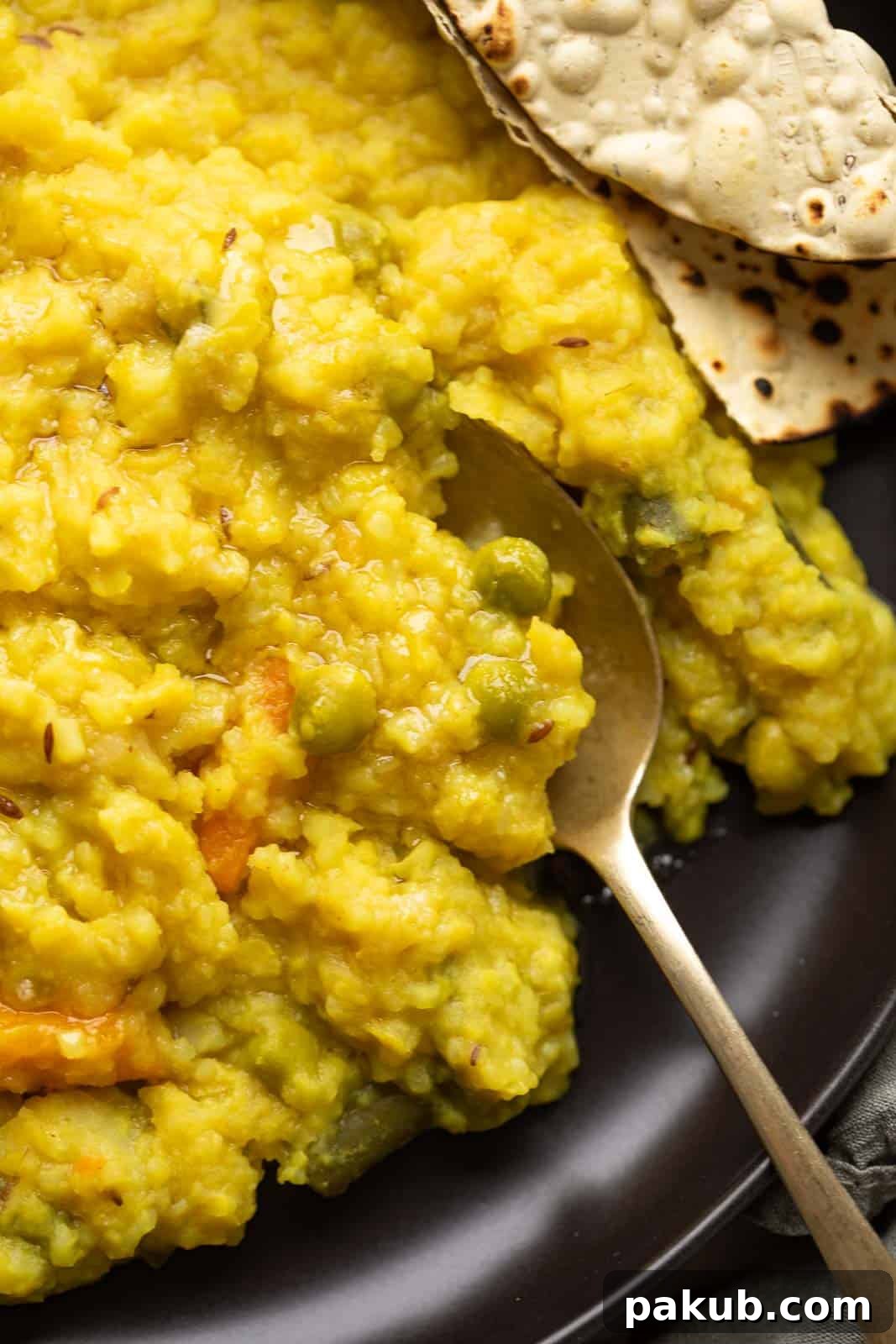
This isn’t just khichdi—it’s truly a hug in a bowl, a nourishing embrace for your senses. With its foundation of nutty, ghee-roasted rice and lentils, infused with fragrant whole spices, and enriched with hearty vegetables, this recipe elevates a simple comfort dish into something truly extraordinary. Whether you’re feeling a bit under the weather, craving a cozy and satisfying meal, or simply seeking a quick yet wholesome option, this khichdi will unfailingly deliver. Give it a try and share your delightful recreations with me over on my Instagram @my_foodstory!
Watch the Khichdi Recipe Video
The Khichdi Recipe That’s Actually Tasty and Hugs Your Soul!
Richa
10 minutes
45 minutes
55 minutes
4
Portions
Pin Recipe
Rate Recipe
Print Recipe
Ingredients
- 1/2 cup Small grain Rice
- 1/4 cup Arhar Dal, Toor dal/ Split Pigeon Peas
- 1/4 cup Dhuli Moong Dal, skinless Petite Yellow Lentils
- 2 tablespoons Ghee
- 1 teaspoon Cumin Seeds
- 6-8 Whole Peppercorns
- 2 Bayleaves
- 4-5 Cloves
- 2 Cardamoms, whole
- 1 teaspoon Ginger, grated
- 1 Green Chilli / Serrano Chilli, split lengthwise
- 6-8 Cauliflower Florets
- 1 Potato, quartered
- 1 Carrot, peeled and cut into 1 inch pieces (large )
- 8-10 French Beans, cut into 1 inch pieces
- 1/2 cup Green Peas, frozen or fresh
- 1 teaspoon Turmeric
- 1/2 teaspoon Red Chilli Powder / Paprika Powder
- 1.5 teaspoons Salt
- 5 cups Water
Instructions
Traditional Pressure Cooker Method:
-
Begin by thoroughly washing both the rice and the lentils (arhar dal and dhuli moong dal). Once cleaned, soak them in enough water to completely cover them for a minimum of 30 minutes, or up to two hours. This soaking step is crucial as it helps the grains soften and cook more quickly and evenly, ensuring a creamy texture.1/2 cup Small grain Rice,
1/4 cup Arhar Dal,
1/4 cup Dhuli Moong Dal -
In your pressure cooker, heat the ghee over a medium flame. Once the ghee is shimmering, add the whole spices: cumin seeds, whole peppercorns, bay leaves, cloves, and whole cardamoms. Allow these to sizzle for about two minutes, until they become fragrant and the cumin seeds begin to pop. Next, add the grated ginger and split green chili, sautéing for another minute until their raw aroma dissipates.2 tablespoons Ghee,
1 teaspoon Cumin Seeds,
6-8 Whole Peppercorns,
2 Bayleaves,
4-5 Cloves,
2 Cardamoms,
1 teaspoon Ginger,
1 Green Chilli / Serrano Chilli -
Drain all the soaking water from the rice and lentils thoroughly. Add the drained rice and lentils to the pressure cooker with the sautéed spices. Dry roast them gently for 4-5 minutes, stirring frequently. You’ll know it’s ready when you can smell a distinct, nutty aroma emerging from the grains. It’s fine if a few grains stick to the bottom of the pan, as this adds to the flavor, but be careful not to burn them. This roasting step is key to developing the deep, rich flavor of the khichdi.
-
Now, add all the chopped vegetables (cauliflower, potato, carrot, French beans, green peas), ground spices (turmeric, red chili powder), salt, and the measured water to the cooker. Stir everything well to combine. Secure the lid of the pressure cooker and cook for 6-7 whistles on medium-high heat. Once cooked, turn off the heat and allow the pressure to release naturally. After all the pressure has released, carefully open the cooker and give the khichdi a good mix. The rice and dal should have broken down, creating a slightly creamy, homogenous texture. Taste and adjust for salt if necessary. Serve piping hot, garnished with extra ghee, and accompanied by fried potatoes, tomato chutney, or fresh yogurt for a complete meal.6-8 Cauliflower Florets,
1 Potato,
1 Carrot,
8-10 French Beans,
1/2 cup Green Peas,
1 teaspoon Turmeric,
1/2 teaspoon Red Chilli Powder / Paprika Powder,
1.5 teaspoons Salt,
5 cups Water
Instant Pot Version:
-
Just like with the traditional method, start by thoroughly washing the rice and both varieties of dals. Submerge them in water and allow them to soak for 30 minutes to two hours. This step significantly reduces cooking time and contributes to the desired creamy consistency.
-
Activate the “Sauté” function on your Instant Pot. Once hot, add the ghee. When the ghee is melted and shimmering, add the whole spices: cumin seeds, peppercorns, bay leaves, cloves, and cardamoms. Sauté for about two minutes, stirring constantly, until the spices are fragrant and the cumin seeds begin to crackle. Next, add the grated ginger and green chili, continuing to sauté for another minute.
-
Drain the soaked rice and lentils completely. Add them to the Instant Pot and continue to “Sauté” for 5-6 minutes, stirring frequently. This dry roasting process allows the rice and lentils to develop a beautiful nutty aroma, deepening the flavor of the khichdi. Monitor closely to prevent burning, though a slight sticking to the bottom is acceptable.
-
Add all the prepared vegetables, turmeric powder, red chili powder, salt, and water to the Instant Pot. Stir well to combine all ingredients. Secure the lid, ensure the venting knob is sealed, and select the “Manual” or “Pressure Cook” function. Set the cooking time to 30 minutes on high pressure. Once the cooking cycle is complete, allow the pressure to release naturally for at least 10 minutes before manually releasing any remaining pressure. Carefully open the lid and stir the khichdi thoroughly. The rice and dal should be perfectly cooked and have a creamy, slightly broken-down texture. Taste and adjust the seasoning as needed. Serve immediately with a dollop of ghee and your favorite accompaniments like fried potatoes, tomato chutney, or plain yogurt.
Video Guide
Additional Notes for Your Khichdi
- For those new to Indian cooking, understanding the different varieties of lentils can be helpful. Here’s a useful article about Indian dals (lentils), complete with images to assist you in easy identification.
- The consistency of khichdi is very much a personal preference. My family enjoys ours on the mushier side, which is achieved with the recommended water quantity. However, if you prefer a less mushy consistency, I suggest reducing the water by one cup. Conversely, if you desire an even mushier, more soupy texture, feel free to add a bit more water and cook it for a few extra minutes until it reaches your liking.
- To reheat leftover khichdi, simply add a small amount of water or broth to loosen it up (as it thickens upon cooling), then gently heat it over a low flame, stirring occasionally until warmed through.
- Aloo Fry (Fried Potatoes) is an absolutely incredible accompaniment to khichdi, adding a wonderful crisp texture and savory depth. I often prepare a slightly different version using thinly sliced, skin-on potatoes. Here’s what you’ll need for this delicious side:
- 2 Medium Potatoes (skin on, thinly sliced)
- 1 tsp Red Chilli Powder
- 1 tsp Cumin Powder (Jeera Powder)
- 1.5 tsp Coriander Powder
- 1/2 tsp Turmeric Powder
- 1/2 tsp Salt (or to taste)
- 2 tbsp Mustard Oil (or any cooking oil)
You can follow the general frying instructions in the video to prepare these flavorful potatoes.
- Khichdi also pairs beautifully with raita (Indian yogurt dip). You can find my detailed raita recipe here to complement your meal perfectly.
Nutrition Information (Per Serving)
Calories:
313
kcal
,
Carbohydrates:
49
g
,
Protein:
11
g
,
Fat:
8
g
,
Saturated Fat:
5
g
,
Cholesterol:
19
mg
,
Sodium:
920
mg
,
Potassium:
458
mg
,
Fiber:
8
g
,
Sugar:
3
g
,
Vitamin A:
2875
IU
,
Vitamin C:
31
mg
,
Calcium:
61
mg
,
Iron:
3
mg
Enjoyed this recipe? Please rate it and leave a comment below!
Your feedback helps others discover delicious meals.
This article was researched and written by Navya Khetarpal.