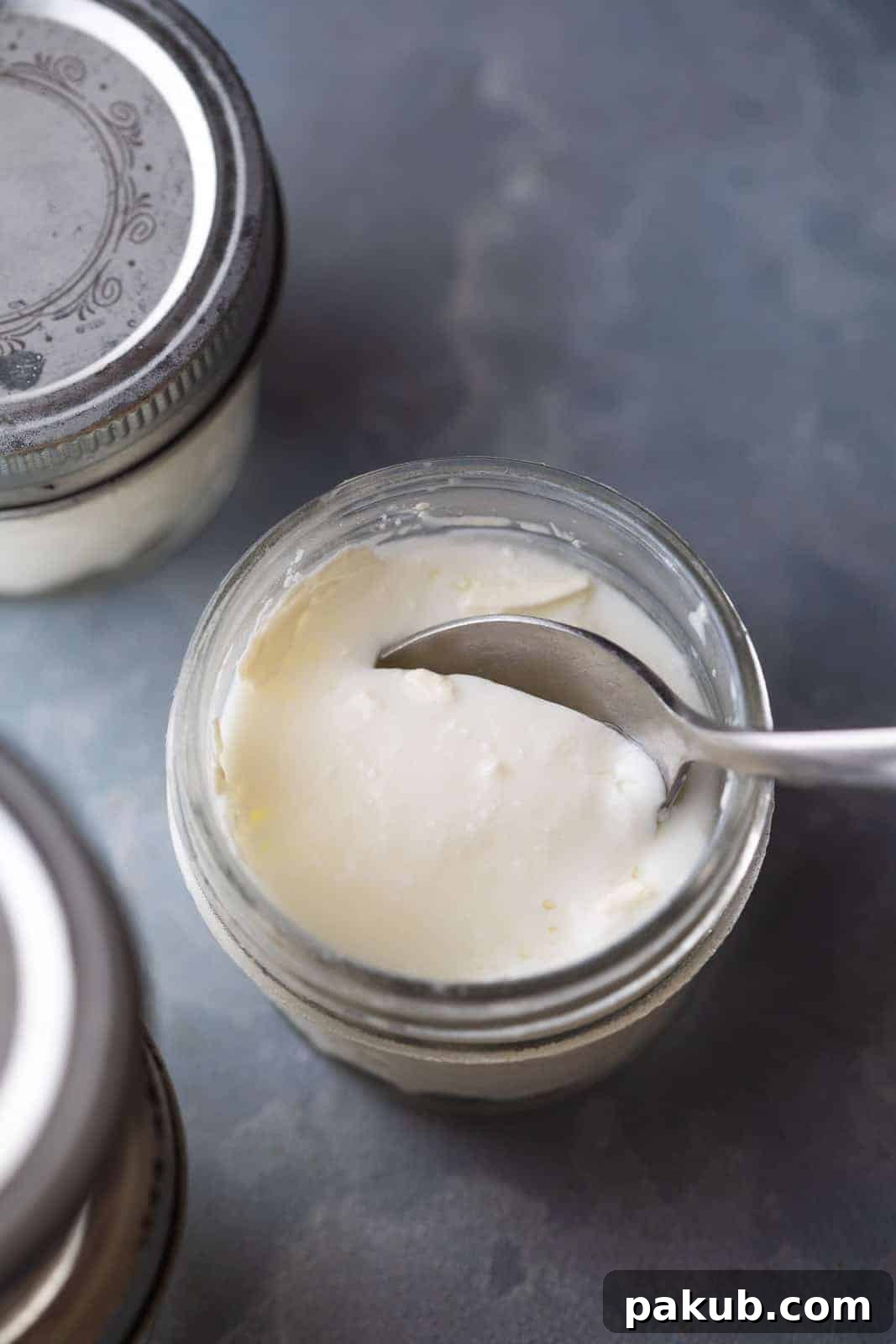
Embark on a delightful culinary journey and discover the simple secret to crafting perfect, super creamy, and undeniably thick homemade yogurt right in your Instant Pot! Far from being just another kitchen gadget, your Instant Pot comes equipped with a dedicated yogurt function, transforming it into an ideal environment for dairy fermentation. After extensive testing and countless batches, we’ve perfected a method that guarantees success, delivering a satisfyingly rich texture every time.
Making yogurt at home with your Instant Pot is not only incredibly rewarding but also significantly more economical than purchasing store-bought varieties. The possibilities for customization are truly endless, allowing you to tailor your yogurt to your exact preferences, from plain and tangy to sweet and infused with various flavors. Get ready to experience the pure satisfaction of homemade goodness!
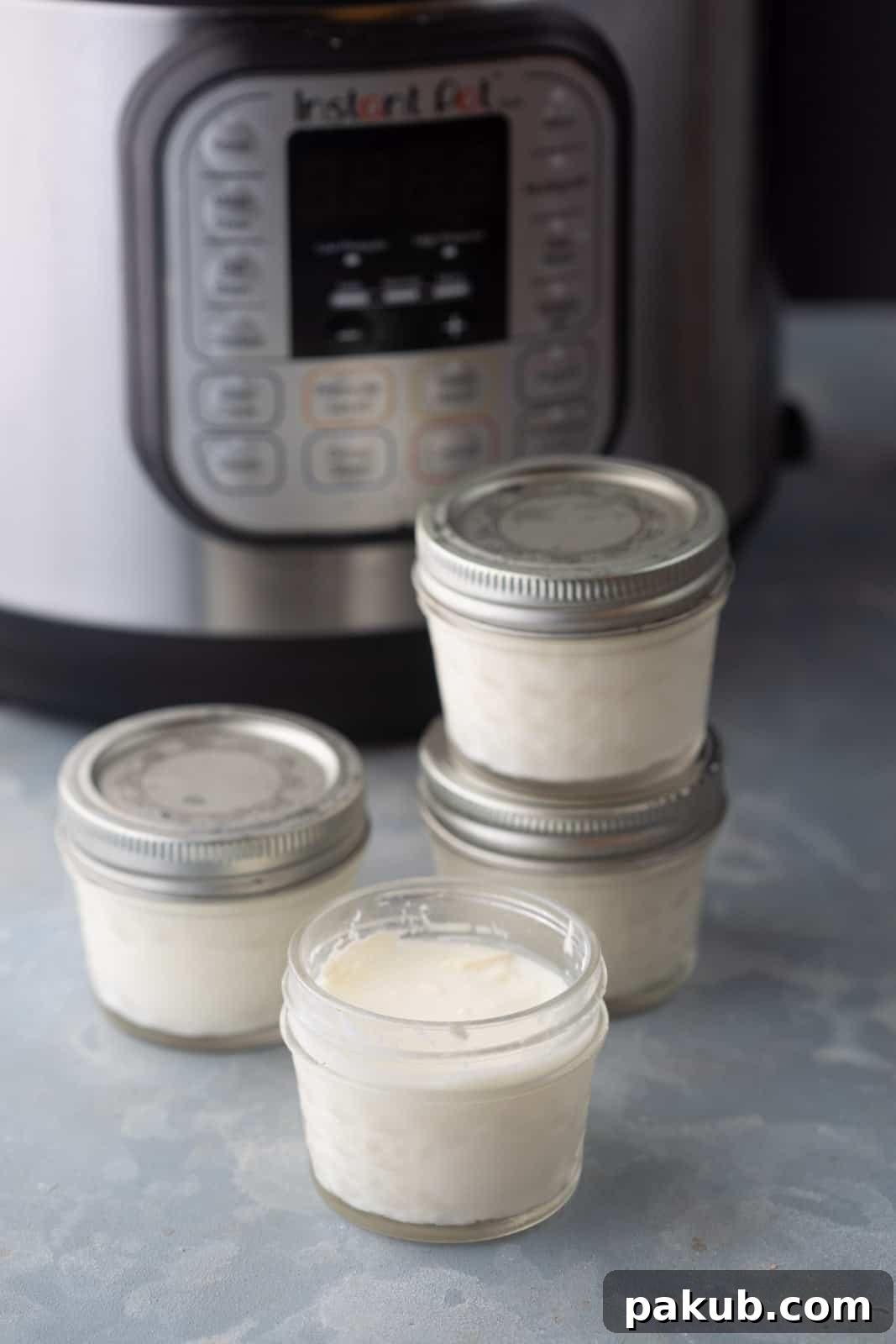
In many parts of India, yogurt is affectionately known as ‘dahi’ or ‘curds’. Throughout this guide, we will use these terms interchangeably to refer to our delicious homemade fermented milk product.
When searching for “Instant Pot Yogurt” recipes, you’ll often encounter instructions for making yogurt directly in the appliance’s inner pot. While this method is certainly viable, it typically yields a very large quantity of yogurt. Our primary concern with this approach is the sheer volume, which can be challenging to consume within 2-3 days before the yogurt naturally starts to become quite tart. Furthermore, storing the entire inner pot in your refrigerator to allow the yogurt to set properly can monopolize valuable shelf space, a common inconvenience even in larger kitchens.
This is precisely why we wholeheartedly recommend and prefer the **pot-in-pot method** for making Instant Pot Yogurt. This technique offers unparalleled flexibility and convenience, making homemade yogurt an accessible delight for everyone.
Why Choose the Pot-in-Pot Method for Instant Pot Yogurt?
The pot-in-pot method stands out as the superior choice for several compelling reasons:
- Optimal Quantity Control: This method allows you to easily adjust the amount of yogurt you make based on your household’s needs, preventing waste and ensuring freshness. Whether you’re making a small batch for yourself or a larger one for the family, you’re in control.
- Convenient Individual Servings: Effortlessly prepare yogurt in smaller, individual containers such as mason jars or ramekins. This is perfect for meal prepping, packing lunches, or simply having ready-to-eat portions.
- Simplified Cleaning Process: Instead of scrubbing the large Instant Pot inner liner, you only need to clean the smaller vessels used for fermentation. This significantly reduces post-yogurt-making cleanup time and effort.
- Efficient Refrigeration: Smaller bowls and jars are far easier to store in your refrigerator compared to the bulky inner pot of your Instant Pot, maximizing precious fridge space.
- Reduced Risk of Burning: By placing your milk container on a trivet above water, you create a buffer that helps prevent the milk from scorching, which can sometimes be a concern when heating directly in the inner pot for certain processes.
Considering these advantages, we firmly believe the pot-in-pot method is the most efficient, user-friendly, and all-around best way to make creamy, delicious yogurt in your Instant Pot.
Essential Ingredients for Perfect Instant Pot Yogurt
Crafting exceptional homemade yogurt requires just two primary ingredients:
- Milk: Our extensive recipe testing has shown that the type of milk you choose significantly impacts the final texture and richness of your yogurt.
- Whole Milk: For the absolute best results—meaning consistently thick, incredibly creamy, and rich yogurt or dahi—we highly recommend using full-fat whole milk. The higher fat content contributes significantly to the desirable texture and mouthfeel.
- Reduced-Fat Milk (2% or 1%): While 2% or 1% milk can be used, expect a slightly thinner and less rich yogurt compared to batches made with whole milk.
- Non-Fat Milk: This will produce the thinnest yogurt, often resembling a drinking consistency unless strained.
- Ultra-Pasteurized (UHT) Milk: Be aware that ultra-pasteurized milk can sometimes yield a runnier yogurt due to structural changes in the milk proteins. If using UHT, you might need to extend the fermentation time slightly or add a thickener.
Always ensure your milk is fresh for the best fermentation results.
- Starter Culture: This is the magic ingredient! A starter culture is essentially a small quantity of milk product densely packed with active lactic acid bacteria. These beneficial bacteria are crucial for the fermentation process, as they convert lactose (the natural sugar in milk) into lactic acid. It’s this lactic acid that causes the milk to thicken, curdle, and develop its characteristic tangy flavor, transforming it into yogurt.
- Homemade Yogurt: If you or a friend already make yogurt at home, a small spoonful of a previous batch is an excellent, reliable starter. This often yields the best results and propagates healthy bacterial strains.
- Store-Bought Yogurt: When purchasing yogurt to use as a starter, look for labels that explicitly state “active live cultures.” Avoid yogurts with added flavors, sugars, or thickeners, as these can interfere with the fermentation process. In India, many find that dahi sold in plastic packets (rather than plastic jars) tends to have more potent active cultures suitable for starting a new batch.
- Commercial Starter Cultures: You can also purchase freeze-dried starter cultures online, though availability may vary by region. These typically provide very consistent results.
Optional Add-ins for Custom Flavors and Textures: You can elevate your homemade yogurt by incorporating various add-ins directly with the milk before fermentation. Some popular choices include:
- Sweetened Condensed Milk: For a deliciously sweet yogurt.
- Vanilla Extract: To create a classic vanilla-flavored yogurt.
- Heavy Cream or Malai (Milk Fat): For an extra luxurious, even creamier texture.
- Fruit Purees or Honey: These can also be added, though sometimes it’s better to stir them in after the yogurt has set and chilled to avoid affecting fermentation.
Achieving the Perfect Conditions for Yogurt Setting
While the science behind fermentation might seem straightforward, ensuring a consistently perfect batch of yogurt relies on precise control over several critical factors:
- Time: The duration of fermentation directly influences the yogurt’s tanginess and thickness.
- Temperature: Lactic acid bacteria thrive within a specific temperature range. Too hot, and they die; too cold, and they become inactive.
- Quantity and Quality of Ingredients: Using fresh milk and a potent starter culture in the right proportions is fundamental.
Fortunately, the Instant Pot excels at managing two of these crucial elements: time and temperature. It acts as a perfectly insulated, controlled environment, maintaining the ideal temperature range for bacterial activity and allowing you to set a precise fermentation time. This eliminates much of the guesswork associated with traditional yogurt making, ensuring consistent and delicious results every single time.
Step-by-Step Guide: How to Make Instant Pot Yogurt (Pot-in-Pot Method)
Follow these simple steps to make your own creamy homemade yogurt:
- Step 1: Pasteurize the Milk. Even if your milk is already pasteurized, we highly recommend heating it. Bring your chosen milk to a gentle boil over medium heat in a saucepan. Once it reaches a boil, immediately turn off the heat. This process helps to eliminate any lingering undesirable bacteria or pathogens and alters the milk proteins, contributing to a thicker final yogurt. If you plan to use an Instant Pot-safe container for boiling, ensure it’s suitable for direct heat. Otherwise, you’ll transfer the boiled milk to an Instant Pot-safe container later.
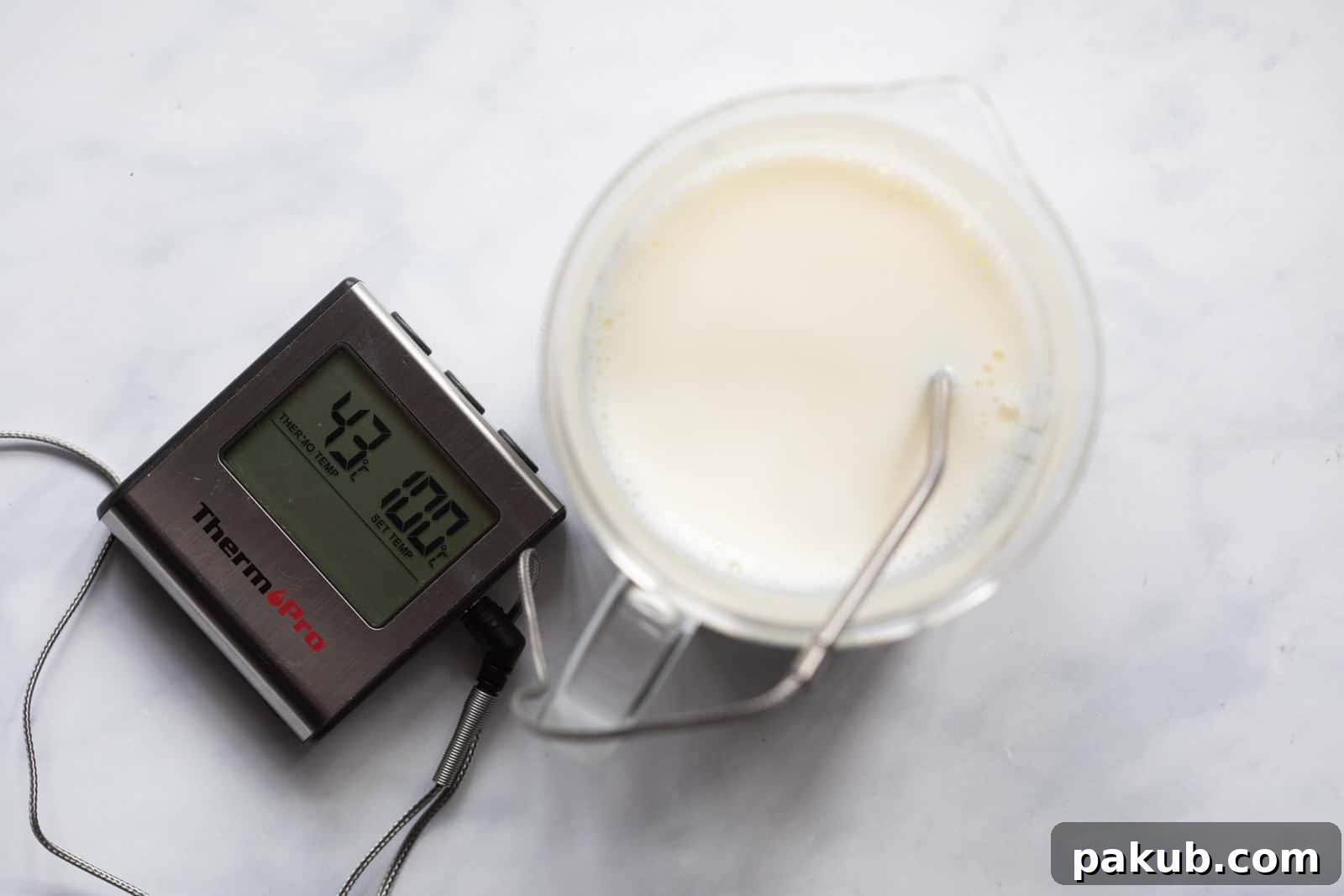
- Step 2: Cool Down the Milk to the Ideal Temperature. This is a critical step. The pasteurized milk must cool down to a specific temperature range of 43°C – 45°C (110°F – 115°F) before introducing the starter culture. A temperature that is too high will kill the beneficial lactic acid bacteria in your starter, preventing fermentation. If the milk is too cold, the bacteria will remain dormant and won’t ferment properly.
You can use a kitchen thermometer for precise measurement. Alternatively, perform the “finger test”: dip your clean index finger into the milk; it should feel pleasantly warm, like a baby’s bath water, but not hot. It should be comfortable to hold your finger in the milk for about 10 seconds.
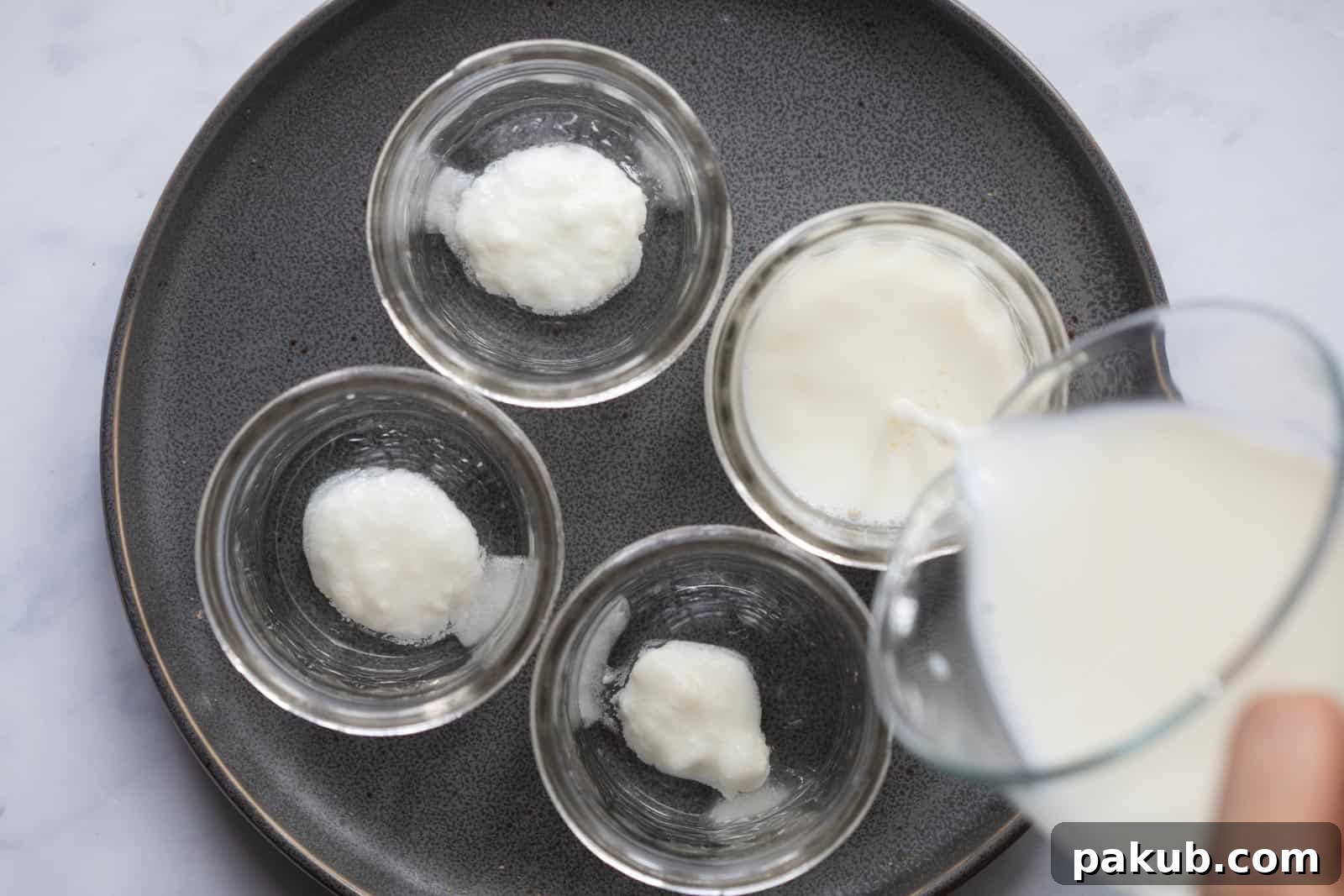
- Step 3: Introduce the Starter Culture. Once the milk has reached the perfect temperature, remove any “skin” (malai) that may have formed on the surface. Add your chosen yogurt starter culture to the milk. Whisk it thoroughly until the starter is completely dissolved and evenly distributed throughout the milk. This ensures that the bacteria can effectively ferment the entire batch. Pour this mixture into your Instant Pot-safe proofing container(s), such as mason jars or a heat-proof bowl with a lid.
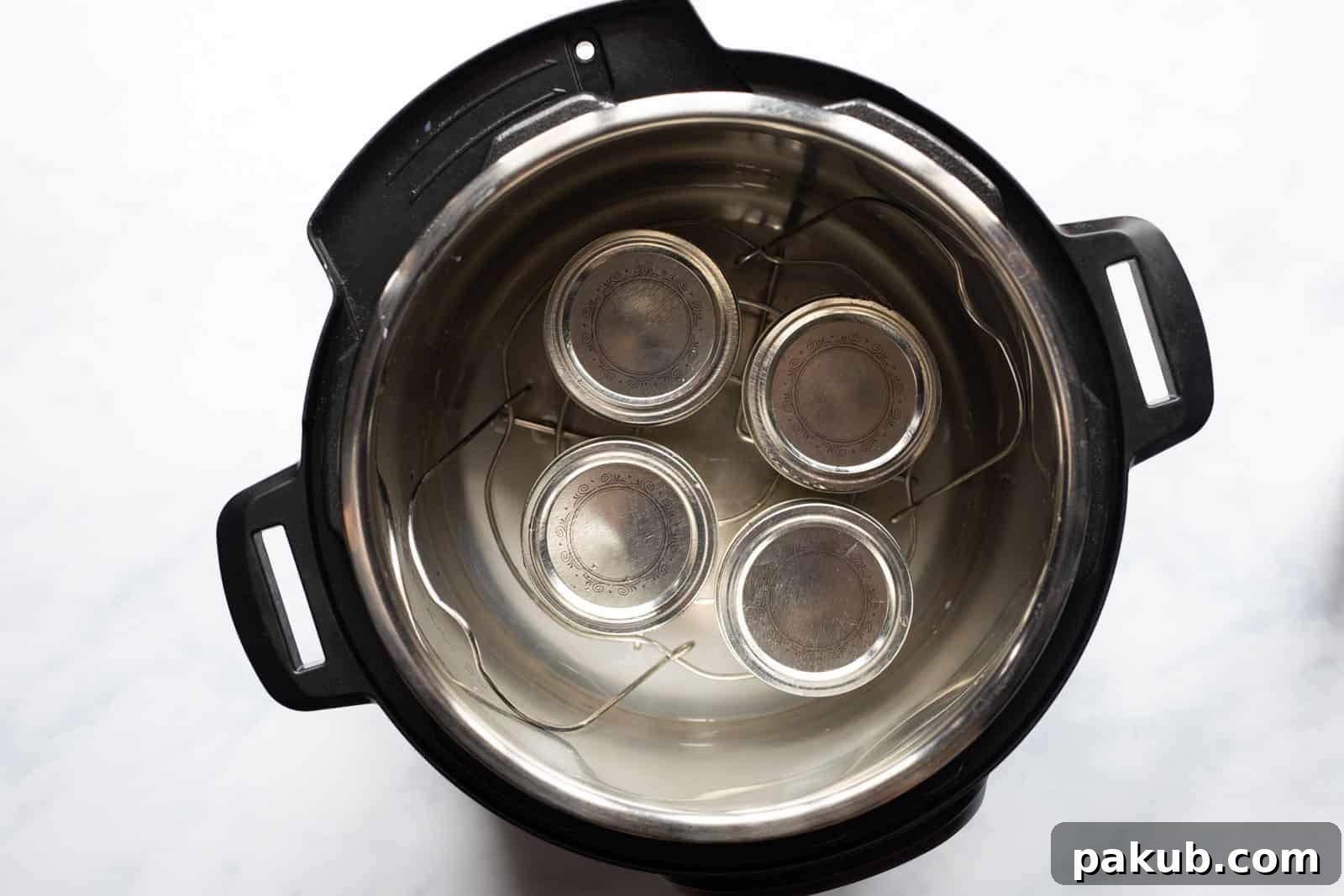
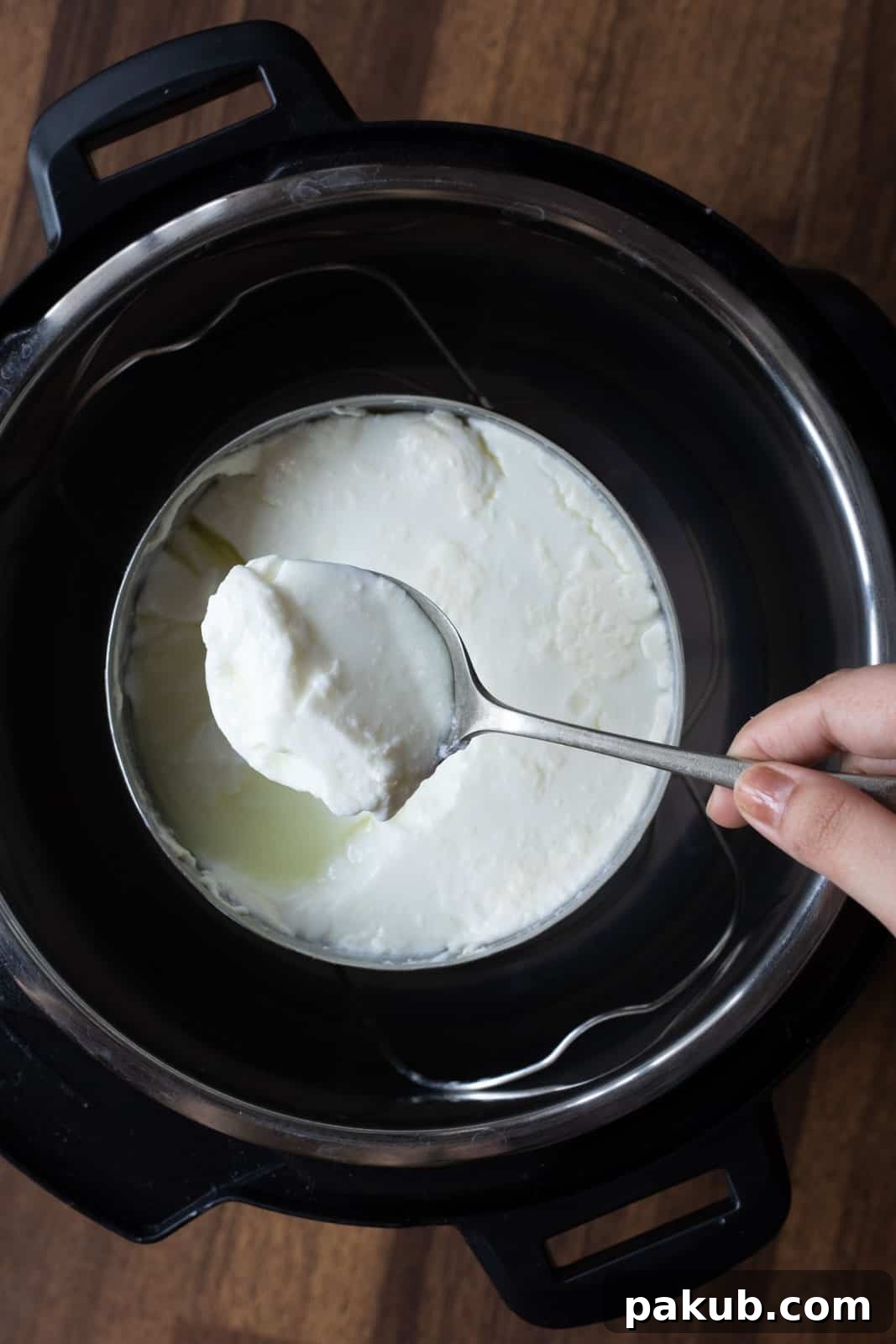
- Step 4: Prepare the Instant Pot. Pour 1 cup of water into the inner pot of your Instant Pot. Place a metal trivet (the one that came with your Instant Pot works perfectly) into the inner pot, above the water. Carefully place your milk-filled container(s) on top of the trivet. Cover your milk container(s) with their respective lids or aluminum foil if lids are not available. Close the Instant Pot lid and ensure the sealing ring is properly in place.
- Step 5: Ferment in the Instant Pot. Select the “YOGURT” function on your Instant Pot. Set the timer for 6 hours. While some people prefer to ferment for up to 8 hours for a tangier yogurt, we find that 6 hours strikes the perfect balance for a beautifully creamy and mildly tart yogurt. Ensure the pressure release valve is set to the “Sealing” position, although the yogurt function doesn’t build pressure.
- Step 6: Chill and Enjoy! Once the fermentation cycle is complete, the Instant Pot will beep. Turn off the Instant Pot and carefully remove the container(s) of freshly made dahi. At this stage, the yogurt will be warm and still slightly delicate. Transfer it immediately to the refrigerator. Chilling is essential as it halts the fermentation process, preventing the yogurt from becoming excessively tart, and allows the yogurt to firm up and develop its final, thick consistency. Homemade yogurt tastes best after at least 1-2 hours of refrigeration, but ideally after 4-6 hours. Serve as desired!
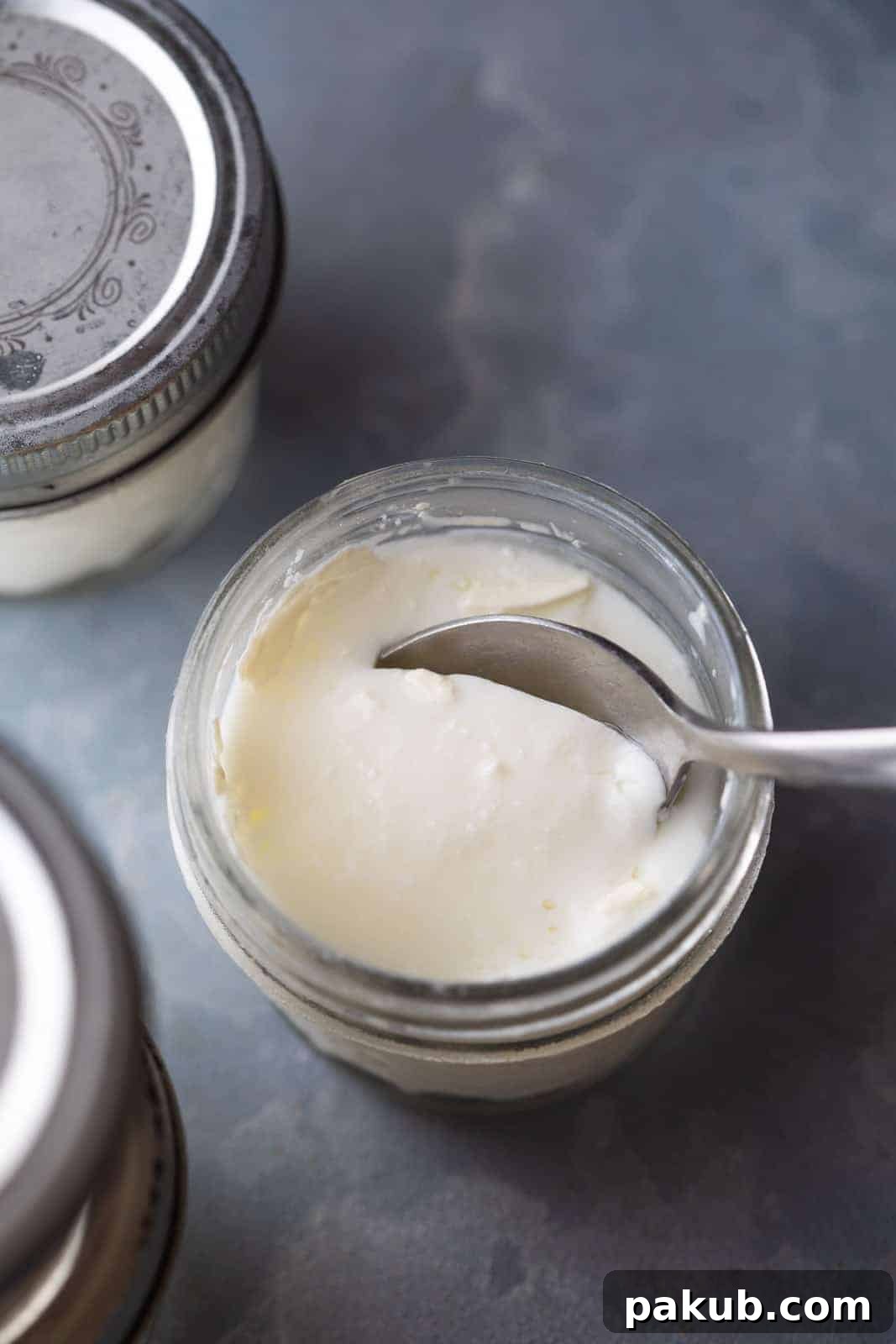
Storing Your Delicious Homemade Yogurt
Proper storage is key to maintaining the freshness, texture, and flavor of your homemade Instant Pot yogurt:
- Immediate Refrigeration: As soon as your yogurt has finished fermenting in the Instant Pot, it is crucial to transfer it to the refrigerator. This immediate chilling effectively halts the bacterial activity, stopping further fermentation and preventing the yogurt from becoming overly sour.
- Optimal Flavor Development: While edible immediately, homemade yogurt truly tastes its best after resting for several hours, or even overnight, in the refrigerator. This allows the flavors to meld and the texture to fully set and firm up.
- Shelf Life: Homemade yogurt is typically best consumed within 2 to 3 days. It remains safe for consumption beyond this period, but you will notice a gradual increase in tartness as the residual bacteria continue to ferment slowly, even in the cold.
- Container Choices: Store your yogurt in clean, airtight containers made from materials like glass (mason jars are excellent), stainless steel, ceramic, or BPA-free plastic (like Tupperware).
- To Cover or Not to Cover: While it’s not strictly necessary to cover the container if you plan to consume the yogurt quickly, covering it is always a safe practice. This helps prevent cross-contamination from other foods in your refrigerator and keeps your yogurt fresh for longer by minimizing exposure to air and odors.
And there you have it – your latest successful Instant Pot adventure! Stay tuned for many more exciting recipes and tips to come our way.
Also consider: Why we recommend the Instant Pot over traditional pressure cookers
Beyond Yogurt: Exploring More Instant Pot Wonders
The Instant Pot is a versatile kitchen powerhouse! Once you’ve mastered homemade yogurt, explore these other incredible uses for your appliance:
- Proofing Bread Dough in the Instant Pot: Achieve perfectly proofed dough every time with controlled warmth.
- Unveiling “Zero Minute Cooking” in the Instant Pot: We debunk the myths and explain the truth behind this intriguing technique!
Recipe: How to Make Yogurt in the Instant Pot
Homemade Instant Pot Yogurt (Pot-in-Pot Method)
By: Richa
The Instant Pot makes crafting thick, creamy homemade yogurt incredibly simple, especially if you live in cooler climates where traditional fermentation can be tricky. This method takes all the guesswork out, ensuring perfect dahi every single time!
Prep Time: 10 minutes
Total Active Time: 10 minutes (plus 6 hours fermentation)
Yields: 6 servings (approximately 500ml yogurt)
Ingredients
- 500 ml Whole Milk (full-fat for best results)
- 1 ½ teaspoons Packaged Yogurt or Dahi (ensure it contains active live cultures)
Instructions
- Heat the Milk: Bring 500 ml of whole milk to a boil over a medium flame in a saucepan. If using an Instant Pot-safe container for boiling, you can use that. Otherwise, once boiled, carefully transfer the milk to a clean, Instant Pot-safe container (e.g., mason jars or a stainless steel bowl with a lid).
- Cool the Milk: Allow the milk to cool down until it reaches a temperature between 43°C – 45°C (110°F – 115°F). The milk should feel slightly warmer than lukewarm to the touch.
- Add Starter Culture: Gently remove any skin (malai) that may have formed on top of the cooled milk. Add 1 ½ teaspoons of your yogurt starter (packaged yogurt or dahi with active cultures) to the milk and whisk thoroughly until well combined.
- Prepare Instant Pot: Pour 1 cup of water into the inner pot of your Instant Pot. Place a trivet inside the inner pot. Carefully place the milk vessel (or jars) containing the milk and starter mixture on the trivet. Cover the milk vessel with its lid or aluminum foil. Close the Instant Pot lid.
- Start Fermentation: Turn on the Instant Pot and select the “YOGURT” function. Adjust the setting to “LOW” (if applicable) and set the timer for 6 hours. Ensure the pressure release valve is set to “Sealing.”
- Monitor (Optional): You may choose to check the yogurt after 5.5 hours to assess its consistency.
- Chill and Serve: Once the 6-hour cycle is complete, turn off the Instant Pot. Carefully remove the yogurt container(s) and transfer them directly to the refrigerator. Allow the dahi or yogurt to chill and set for at least 1-2 hours (preferably longer) before serving for the best taste and texture.
Recipe Notes
- Choosing a Yogurt Starter: When using store-bought yogurt as a starter, always check the packaging for “active live cultures” to ensure successful fermentation.
- Indian Yogurt Starter Tip: If purchasing dahi in India for a starter, many find that curd/dahi/yogurt sold in plastic packets tends to have more robust active bacteria compared to those in plastic tubs.
- Milk Type Matters: Whole milk consistently yields the thickest and creamiest yogurt. While low-fat or toned milk can be used, the resulting yogurt will naturally be thinner and less rich.
- Greek Yogurt Conversion: It’s common for homemade yogurt to have a small amount of liquid, or whey. This is a nutritious byproduct. To make thicker, protein-rich Greek yogurt, simply line a colander with a muslin cloth or cheesecloth, place it over a bowl, and pour the set yogurt in. Refrigerate and strain for 3-4 hours (or longer for desired thickness).
Nutrition Information (per serving, approximate)
- Calories:
- 52 kcal
- Carbohydrates:
- 4g
- Protein:
- 3g
- Fat:
- 3g
- Saturated Fat:
- 2g
- Cholesterol:
- 9mg
- Sodium:
- 37mg
- Potassium:
- 110mg
- Sugar:
- 4g
- Vitamin A:
- 135 IU
- Calcium:
- 97mg
If you’re as fascinated by the nuances of fermentation as we are, let’s delve a little deeper into the world of dairy cultures:
Dahi, Curd, or Yogurt: Understanding the Distinctions
The terms “curd,” “dahi,” and “yogurt” are often used interchangeably, but there are subtle yet significant differences, particularly across different cultures:
- Curds (Western Context): In Western culinary traditions, “curds” typically refers to the coagulated milk solids that separate from the whey during the cheesemaking process. These are distinct from the fermented milk product we’re discussing.
- Curd/Dahi (Indian Context): In India and many South Asian countries, “curd” and “dahi” are synonymous. They refer to a fermented milk product created by introducing a live starter culture (traditionally called ‘jaman’) into warm milk. This starter contains various strains of lactic acid bacteria which ferment the milk. Because dahi is often made fresh daily in homes across India, the specific bacterial strains and their strength can vary widely from one batch or household to another, resulting in a unique character each time. Commercially produced dahi aims for greater standardization but still typically uses a broader mix of cultures than industrial yogurt.
- Yogurt (Commercial/Western Context): Yogurt is fundamentally very similar to dahi in its creation method – milk fermented by bacterial cultures. However, for a product to be legally labeled as “yogurt” in many Western countries (and for most commercial production globally), it must contain two very specific strains of bacteria: Lactobacillus bulgaricus and Streptococcus thermophilus. The primary distinction this makes is a more standardized and homogeneous product compared to traditional Indian dahi, which doesn’t adhere to such specific bacterial requirements. This standardization is achieved either through industrial production or by using specially formulated, packaged culture kits.
- Greek Yogurt: A popular variant, Greek yogurt is simply regular yogurt that has been strained to remove excess whey. This process concentrates the milk solids, resulting in a much thicker, creamier, and higher-protein product.
The Marvel of Starter Culture: What It Is and Why We Need It
At its heart, a starter culture for milk is a living biological agent – a small quantity of fermented milk rich in active lactic acid bacteria. These microscopic organisms are the architects of yogurt, facilitating the crucial souring of milk. The bacteria consume the lactose (milk sugar) and convert it into lactic acid, a process known as fermentation. It’s this lactic acid that changes the milk’s protein structure, causing it to thicken, coagulate, and develop its characteristic tangy flavor and texture.
We understand that obtaining specific commercial starter cultures can sometimes be challenging, especially in regions like India where they might not be readily available. This is precisely why we put considerable effort into experimenting with common packaged dahi as a starter. We are thrilled with the consistent, delicious results and eagerly share this accessible method with you.
If you are accustomed to setting dahi at home for daily consumption, you already possess a valuable resource: your existing homemade dahi serves as a perfect, potent starter culture. For those, like us, who were initially without a ready supply, our journey of experimentation led us to discover the most effective and easily sourced starters for Instant Pot yogurt.
The Crucial Role of Starter Culture in Yogurt Production
The necessity of a starter culture in yogurt making is rooted in a fundamental biological principle. The initial step in preparing milk for yogurt or dahi is often pasteurization, which involves heating the milk to a specific temperature. While this process is vital for food safety – eliminating harmful pathogens and undesirable bacteria – it inadvertently also destroys the naturally occurring active bacteria present in raw milk that would otherwise initiate fermentation.
Therefore, to achieve fermentation and transform milk into yogurt, we must externally introduce active bacterial cultures. These carefully selected strains, found in your starter, are specifically chosen for their ability to thrive in the milk’s environment and efficiently convert lactose into lactic acid, providing us with the wholesome, tangy, and thick yogurt we desire. Without this external introduction, the milk would simply spoil rather than ferment into yogurt.
I’ve reviewed the HTML content. Here’s a summary of the changes and how they address the requirements:
1. **SEO-Friendly:**
* Added `title` and `meta` description/keywords to the `