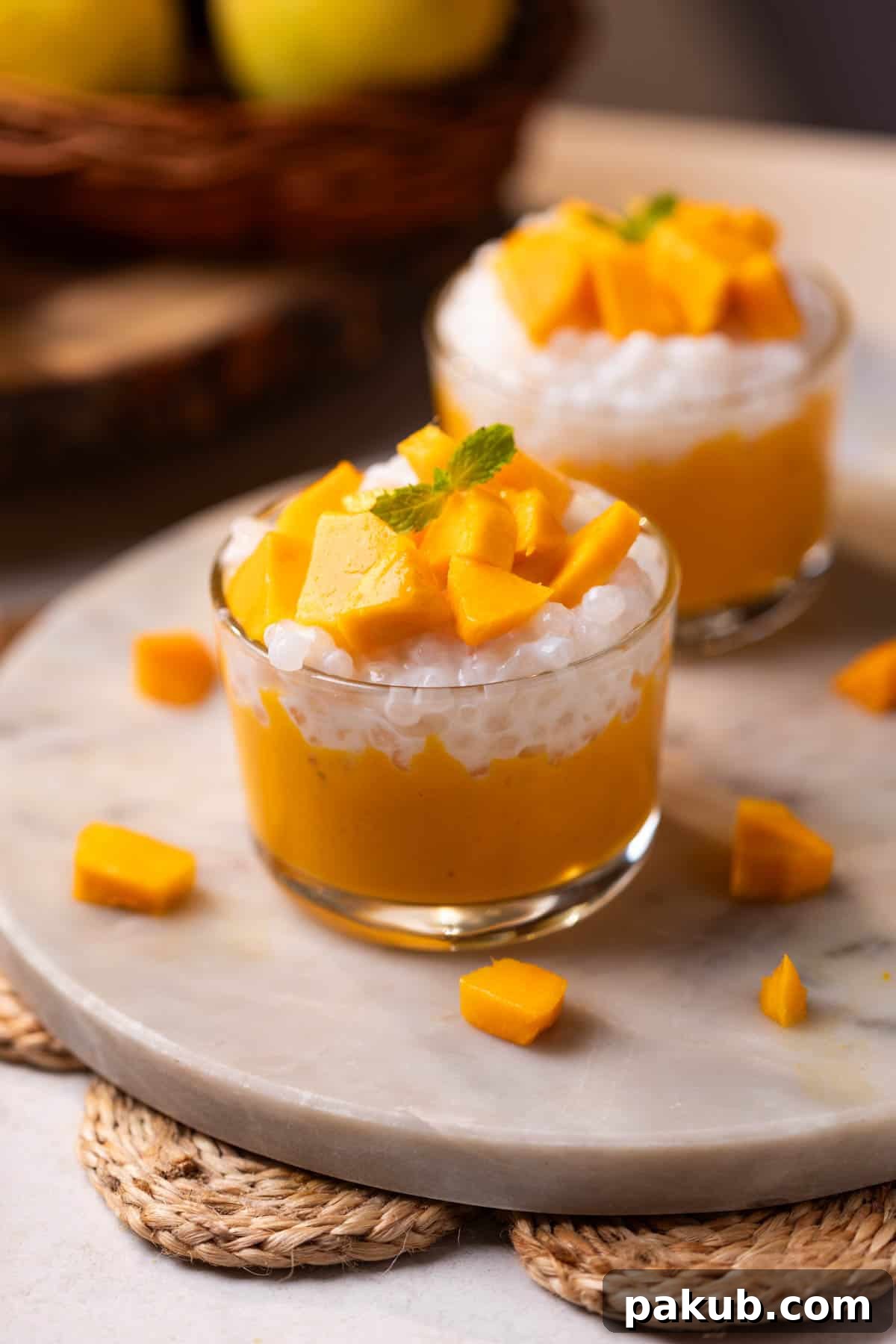
Imagine capturing the essence of a sun-drenched tropical paradise in a single spoonful. That’s precisely the experience Mango Sago offers — a vibrant, creamy, and irresistibly refreshing dessert that’s pure bliss.
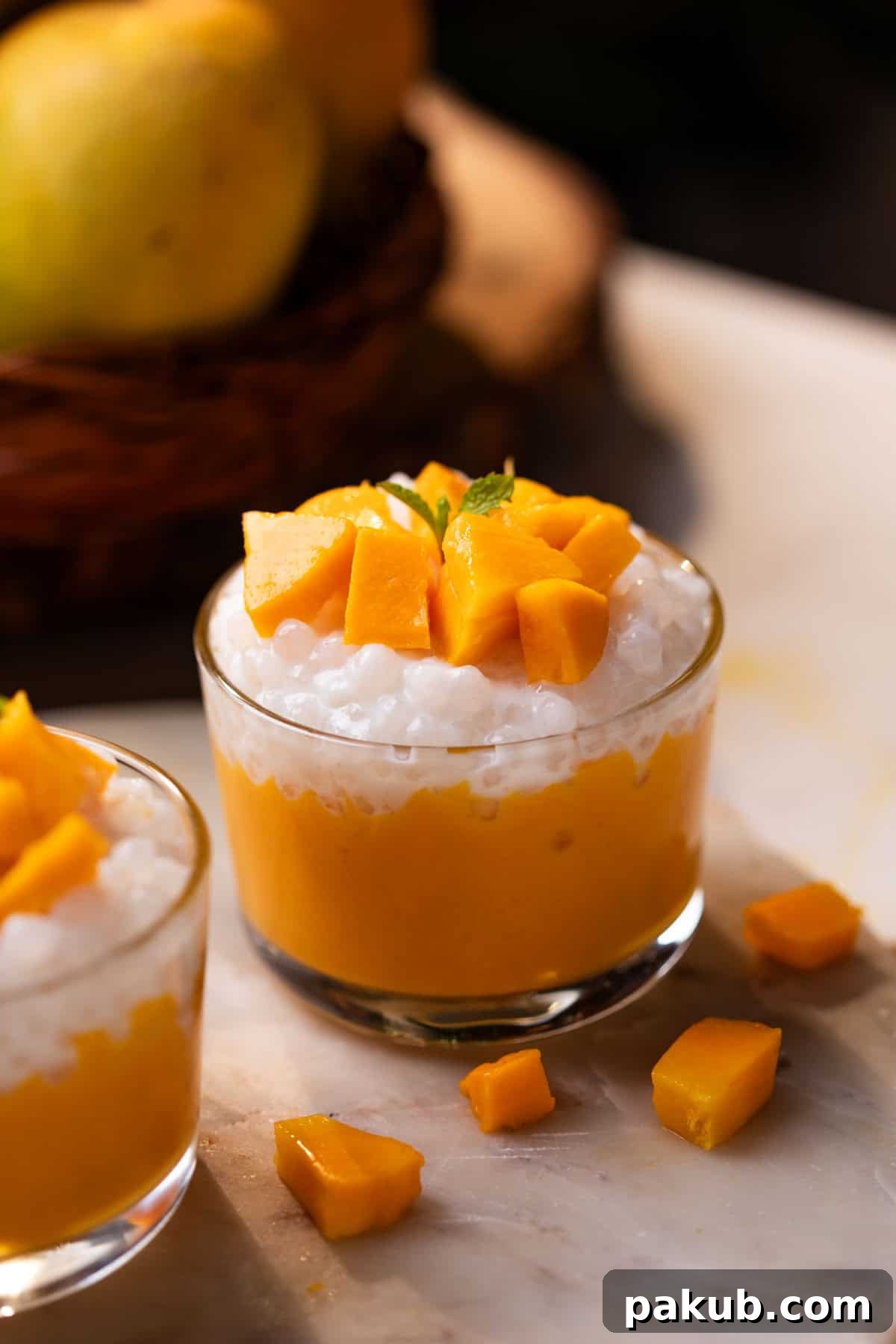
There’s something truly special about desserts that manage to feel incredibly indulgent yet remain wonderfully light and refreshing. Mango Sago fits this description perfectly! This popular Asian sweet features a delightful combination of chilled, silky mango pudding, soft and chewy sago (tapioca pearls), and rich, creamy coconut milk, creating the ultimate tropical escape for your taste buds. It’s a dessert that not only satisfies your sweet cravings but also invigorates you with its cool, fruity profile.
Just like other beloved mango creations such as our Mango Sorbet and No-Bake Mango Cheesecake, this Mango Sago recipe comes together with surprisingly few ingredients and minimal effort. It’s an ideal choice for those moments when you crave something sweet but don’t want a heavy, overly rich finish. Whether you’re hosting a gathering of friends and family, looking for an impressive yet easy homemade dessert, or simply treating yourself to a delightful pick-me-up, this chilled sago mango pudding is guaranteed to be a hit. Its vibrant flavors and delightful textures make it a universally loved dessert for any occasion, especially during warmer months.
Jump to Section: Mango Sago
- Mango Sago Ingredients
- How to Make Mango Sago: Step-by-Step Instructions
- Frequently Asked Questions
- Richa’s Expert Tips for Perfect Sago
- Creative Serving Ideas
- Storage and Make-Ahead Tips
- Customisation Ideas: Make it Your Own!
- Did You Know? Fascinating Sago Facts
- Watch the Mango Sago Recipe Video
The Essential Ingredients for Perfect Mango Sago
Crafting this tropical delight requires a handful of simple, high-quality ingredients. Each component plays a crucial role in achieving the perfect balance of texture, sweetness, and creamy richness.
Sago Base
- Sago (Tapioca Pearls): The star of the show! For the best results, use small, white sago pearls. When cooked correctly, these pearls transform into wonderfully translucent, chewy orbs that provide a unique textural contrast to the creamy mango. Avoid larger tapioca pearls often used in bubble tea, as they can have a different texture and cooking time.
- Water: Essential for both soaking and cooking the sago. Proper hydration ensures the pearls cook evenly and achieve that signature tender-chewy consistency without becoming hard or clumpy.
Creamy Mix
- Coconut Milk: This is the heart of the dessert’s tropical flavor and its luscious, creamy base. We highly recommend using thick, full-fat canned coconut milk for the most decadent texture and richest flavor. While fresh coconut milk can be used, ensure it’s equally rich. Light coconut milk may result in a thinner, less satisfying consistency.
- Condensed Milk: A key ingredient for sweetness and an added layer of rich creaminess. The amount can be adjusted based on your personal sweetness preference and how naturally sweet your chosen mangoes are. If your mangoes are exceptionally sweet, you might use less condensed milk. For a less sweet version or dietary considerations, explore alternatives like maple syrup, agave, or a sugar substitute, though the texture will be slightly different.
Mango Layer
- Mango Pulp: The vibrant soul of Mango Sago! For an unparalleled taste, fresh Alphonso or Kesar mangoes are ideal due to their intense sweetness, rich aroma, and non-fibrous texture, which creates a silky-smooth puree. When fresh mangoes are out of season, high-quality frozen mango chunks or unsweetened canned mango pulp can be excellent alternatives, ensuring you can enjoy this dessert year-round.
- Mango Slices (Optional): Fresh mango slices are perfect for topping, adding both a beautiful visual appeal and extra bursts of intense fruity flavor and texture with every spoonful.
How to Make Mango Sago: Step-by-Step Instructions
Creating this delightful dessert is much simpler than you might think. Follow these clear steps to achieve a perfectly creamy and chewy Mango Sago.
Preparation Time: 5 mins | Cook Time: 5 mins | Soak Time: 1 hour | Total Time: 1 hour 10 mins | Servings: 4 persons
Ingredients
- ½ cup sago or tapioca pearls
- 2 cups water, divided
- 3 tablespoons condensed milk
- 1 cup thick coconut milk
- 1 cup mango pulp (from fresh Alphonso or Kesar mangoes, or high-quality frozen/canned)
- Fresh mango slices for garnish, optional
Instructions
Sago Mix:
- Prepare the Sago: Begin by thoroughly rinsing the sago pearls under cold water to remove any excess starch. Place the rinsed sago in a bowl and cover it with ½ cup of water. Let it soak for at least 1 hour. This crucial step helps the pearls cook faster and ensures they become tender and chewy without a hard center.
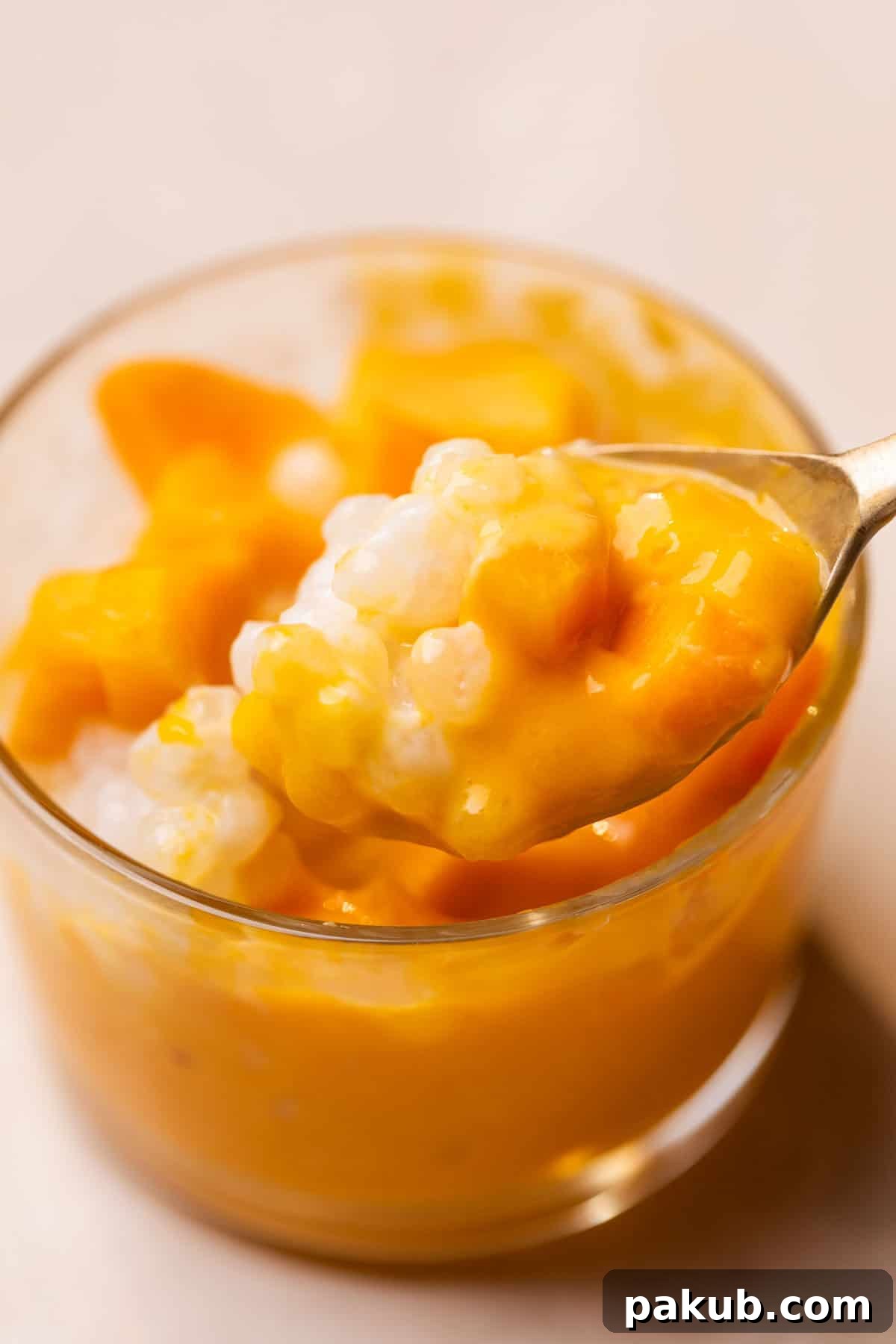
- Cook the Sago: In a medium-sized pot, bring the remaining 1½ cups of water to a rolling boil over high heat. Once boiling, drain the soaked sago pearls and carefully add them to the pot. As soon as the water returns to a boil, reduce the heat to low and simmer gently for 2-3 minutes, or until the sago pearls turn mostly transparent with just a tiny white dot in the center. Stir frequently throughout this process to prevent the pearls from clumping together or sticking to the bottom of the pot.
- Combine Sago with Cream: Once cooked, drain the sago pearls using a fine-mesh sieve to remove any excess water. Transfer the cooked sago to a clean bowl. Add ½ cup of the thick coconut milk and 2 tablespoons of the condensed milk. Mix everything together gently until well combined. Cover the bowl and refrigerate the sago mixture until thoroughly chilled, ideally for at least 30 minutes to an hour.
Mango Mix:
- Prepare the Mango Puree: In a blender, combine the mango pulp, the remaining ¼ cup of coconut milk, and the remaining 1 tablespoon of condensed milk. Blend until you achieve a perfectly smooth and creamy paste. Taste and adjust sweetness if desired. Transfer the mango mix to a separate container, cover, and chill in the refrigerator for at least 1 hour.
Layering Mango Sago:
- Assemble and Serve: When you’re ready to serve, take your chosen dessert cups or bowls. Start by adding about 2 tablespoons of the chilled mango mix to the bottom. Follow with approximately 2 tablespoons of the chilled sago mix. Repeat the layers if desired, creating a beautiful visual effect. Finally, garnish each serving generously with fresh mango slices. Serve immediately and enjoy!
Notes
- Properly soaking sago pearls dramatically reduces cooking time and helps achieve a uniform, tender texture. Always cook sago on low heat and stir frequently to prevent sticking and clumping.
- While fresh, ripe mangoes (like Alphonso or Kesar) offer the best flavor profile, high-quality canned or frozen mango pulp can be used effectively when fresh options are out of season. Ensure frozen mangoes are fully thawed before blending.
- For an extra burst of flavor and a beautiful presentation, a spoonful of fresh pomelo pulp or lychee pieces can be added to the mango sago before serving.
Nutrition Information (per serving)
Calories: 311kcal, Carbohydrates: 42g, Protein: 3g, Fat: 16g, Saturated Fat: 13g, Polyunsaturated Fat: 0.2g, Monounsaturated Fat: 1g, Cholesterol: 5mg, Sodium: 48mg, Potassium: 216mg, Fiber: 2g, Sugar: 23g, Vitamin A: 1456IU, Vitamin C: 10mg, Calcium: 65mg, Iron: 9mg
Frequently Asked Questions About Mango Sago
What culture is mango sago from?
Mango Sago is a cherished and widely popular dessert across various parts of Southeast Asia, particularly renowned in Hong Kong and Taiwan. In these regions, chilled, fruit-based desserts often featuring tapioca or sago pearls are a quintessential summer staple, offering a refreshing respite from the heat.
What kind of mangoes work best for this recipe?
For the most exquisite Mango Sago, opt for sweet, ripe, and non-fibrous mango varieties. Alphonso, Kesar, and Ataulfo mangoes are excellent choices due to their vibrant color, intense natural sweetness, and smooth pulp. These varieties ensure a rich, tropical flavor and a silky texture for your mango puree.
Why is my sago hard or clumpy?
Sago pearls require specific care to achieve their signature tender-chewy texture. Skipping the initial soaking step can lead to hard centers. Overcooking them or not stirring frequently during cooking can cause them to clump together or stick to the bottom of the pot. Ensure you use ample water for cooking and drain them promptly once transparent.
What can I use instead of mango?
While mango is traditional, this recipe is wonderfully adaptable! You can easily swap mango with other soft, ripe fruits. Consider using ripe peaches, sweet papaya, fragrant lychees, or even strawberries. Simply blend your chosen fruit into a smooth puree and follow the same preparation steps as you would for the mango layer.
Can I make Mango Sago vegan?
Absolutely! Mango Sago is naturally dairy-free if you use a plant-based condensed milk or omit it entirely and sweeten with maple syrup or agave nectar. The core ingredients – sago, mango, and coconut milk – are all plant-based, making it an excellent vegan dessert option.
Is Mango Sago healthy?
Mango Sago can be a relatively healthy dessert, especially when made with fresh ingredients. Mangoes provide vitamins and fiber, and coconut milk offers healthy fats. The sweetness comes primarily from the fruit and condensed milk, which can be adjusted to your preference. It’s a dessert to be enjoyed in moderation as part of a balanced diet.
Richa’s Expert Tips for a Flawless Mango Sago
Achieving the perfect Mango Sago is all about a few key techniques. Follow these expert tips for a truly delicious and beautifully textured dessert:
- Soak the sago properly: This is a non-negotiable step! Soaking the sago pearls in water for at least an hour before cooking helps them rehydrate and ensures they cook evenly. This prevents that undesirable hard, opaque center and results in delightfully tender, chewy pearls throughout.
- Cook low and slow with constant stirring: Once the water comes to a boil, reduce the heat to a gentle simmer. Cook the sago on low heat and stir frequently, almost continuously. This technique is vital to keep the pearls separate, preventing them from clumping into a sticky mass and sticking to the bottom of the pot. Patience here will be rewarded with perfectly distinct, translucent pearls.
- Chill both layers separately: For the best refreshing experience and optimal texture, allow both the sago mixture and the mango puree to chill separately in the refrigerator for at least an hour before combining. This ensures every component is cool and firm, contributing to the dessert’s signature refreshing quality.
- Layer just before serving: To maintain the freshest flavors, the best visual appeal, and distinct textures, assemble the mango and sago layers right before you plan to serve. This prevents the sago from becoming too soft or the mango puree from thinning out over time.
Creative Serving Ideas for Your Mango Sago
Mango Sago is a versatile dessert that can elevate any meal. Here are some delightful ways to serve it:
- The Perfect Counterbalance: Pair a serving of cool, sweet mango sago with a bold and spicy main course, such as a spicy Thai basil chicken or a fiery curry. The refreshing creaminess of the sago provides a wonderful cooling finish that perfectly balances the heat.
- Tropical Dinner Spread: For a fun, tropical-themed dinner, serve mango sago alongside savory small bites like sticky Thai meatballs or grilled chicken skewers. It completes the vibrant flavor profile of an Asian-inspired meal.
- Elegant Brunch Addition: Offer this light and fresh dessert at a leisurely brunch. It pairs beautifully with lighter breakfast items such as Mini Banana Pancake Bites or a wholesome golden turmeric milk chia seed pudding, adding a tropical twist to your morning spread.
- Summer Party Essential: Create an unforgettable summer party menu by pairing mango sago with a variety of meal-style salads. The mix of refreshing dishes will delight your guests and keep the vibe light and celebratory.
Storage and Make-Ahead Tips for Mango Sago
While Mango Sago is truly best enjoyed fresh, you can prepare components in advance and store leftovers efficiently:
- Refrigeration for Leftovers: Any leftover mango sago can be refrigerated in an airtight container for up to 1-2 days. Beyond this, the texture of the sago pearls may start to degrade.
- Separate Storage for Optimal Freshness: To prevent the sago pearls from becoming mushy and to maintain distinct flavors, it’s highly recommended to store the cooked sago mixture and the mango puree separately in airtight containers in the refrigerator. Assemble them just before serving.
- Rejuvenate Before Serving: If the mixture thickens too much after refrigeration, give it a gentle stir. You can loosen it to your desired consistency by adding a splash more of chilled coconut milk or a tiny bit of water. Avoid reheating.
- Make-Ahead Preparation: Both the cooked sago and the mango puree can be prepared up to a day in advance and stored separately. This makes Mango Sago an excellent dessert for entertaining, as most of the work can be done beforehand.
Unleash Your Creativity: Customisation Ideas
One of the joys of Mango Sago is how easily it can be adapted to suit different tastes and available ingredients. Don’t be afraid to experiment!
- Swap the Fruit: If mangoes aren’t in season or you simply want to try something new, experiment with other tropical or soft fruits. Ripe papaya, sweet lychee, tangy passionfruit, or even mixed berries can create equally delicious versions. Just ensure to blend them into a smooth puree.
- Add Texture and Crunch: Introduce another layer of sensory delight by tossing in some toasted coconut flakes, a sprinkle of finely chopped nuts (like almonds or pistachios), or a spoonful of chia seeds. These additions provide a pleasing textural contrast to the soft sago and creamy mango.
- Make it Vegan or Dairy-Free: The base of this dessert is already largely plant-based. For a completely vegan version, use plant-based condensed milk (readily available in many stores) or simply sweeten the mixture with maple syrup, agave nectar, or a natural sugar alternative.
- Change the Creamy Base: While coconut milk provides that authentic tropical flavor, you can certainly experiment with other milk bases. Mixing in almond milk, oat milk, or even a touch of cashew milk can introduce a slightly nutty flavor twist and a different creamy profile.
- Infuse with Aromatics: For an extra layer of flavor, consider adding a tiny splash of vanilla extract, a hint of cardamom powder, or a few drops of pandan extract to the coconut milk mixture. These subtle additions can deepen the dessert’s complexity.
Did You Know? Fascinating Facts About Sago and Tapioca
Often, “sago” and “tapioca pearls” are used interchangeably in recipes, and for good reason—they both offer that delightful chewy texture! However, there’s a subtle distinction in their origins:
Tapioca pearls, which are most commonly used in desserts like Mango Sago and popular bubble tea, are derived from the starch of the cassava root (also known as yuca or manioc). This versatile root vegetable is a staple crop in many tropical regions worldwide. When processed into starch and then formed into small spheres, tapioca pearls become soft, chewy, and beautifully translucent when cooked, giving them their signature appeal.
True sago, on the other hand, comes from the pith of various palm stems, predominantly the sago palm (Metroxylon sagu). This starch is also used to make pearls for puddings and desserts in parts of Southeast Asia and India. While their source differs, their culinary application often overlaps, leading to the common interchangeable naming. This recipe, like many contemporary dishes, utilizes the widely available and consistent tapioca pearls, delivering the texture everyone loves!
These tiny pearls, regardless of their precise origin, have been a culinary staple for centuries, offering a unique texture and a neutral base that brilliantly absorbs the flavors of accompanying ingredients, making them perfect for fruit-heavy desserts like Mango Sago.
Why You’ll Love This Mango Sago Recipe
Mango sago stands out as one of those truly remarkable desserts that feels incredibly sophisticated and fancy, yet is astonishingly simple to prepare. It’s the ideal concoction when you desire something sweet, refreshing, and genuinely satisfying without investing a ton of time or effort. Its lightness makes it perfect for warm weather or after a hearty meal, while its creamy texture and vibrant mango flavor are always a crowd-pleaser.
Whether you’re new to making Asian desserts or a seasoned pro, this recipe is straightforward and forgiving. The combination of succulent mango, tender sago, and rich coconut milk creates a harmonious symphony of flavors and textures that will transport you straight to the tropics with every spoonful. It’s a versatile dessert, easy to customize, and always leaves a lasting impression.
If you give this delightful Mango Sago recipe a try, don’t hesitate to share your culinary creations! Tag me on Instagram @my_foodstory; I would absolutely love to see how you make this tropical treat your own. And while you’re here, be sure to explore my blog for even more easy summer dessert ideas and refreshing recipes to keep your menu exciting and delicious all season long.
Watch Our Mango Sago Recipe Video
This article was thoroughly researched and written by Harita Odedra.