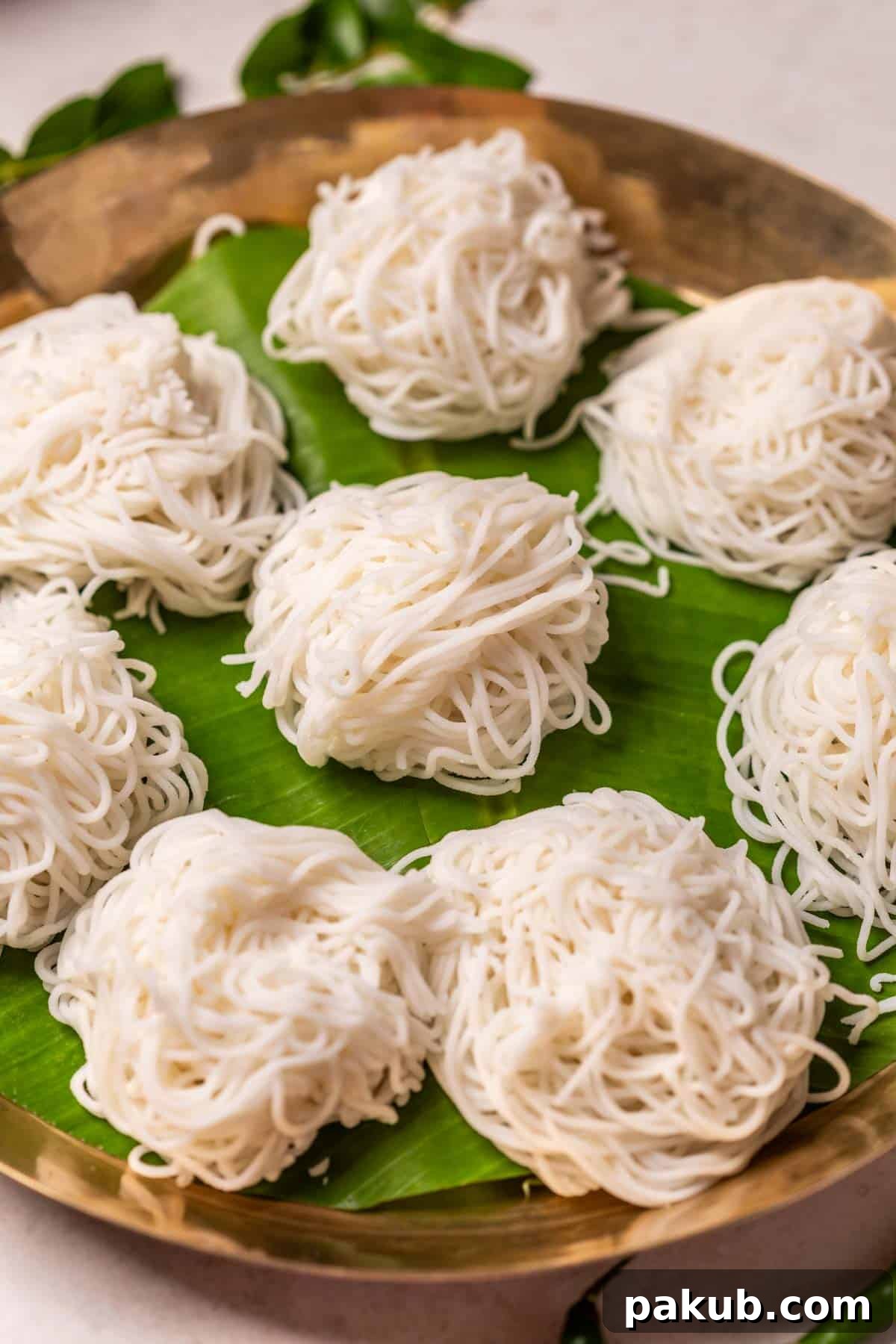
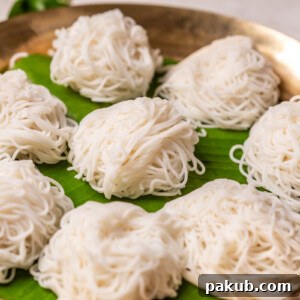
Indulge in the light, delicate, and utterly addictive world of Rice Idiyappams. These beautifully steamed string hoppers are the quintessential accompaniment to a myriad of curries, stews, and chutneys, promising a culinary journey to South India with every bite.
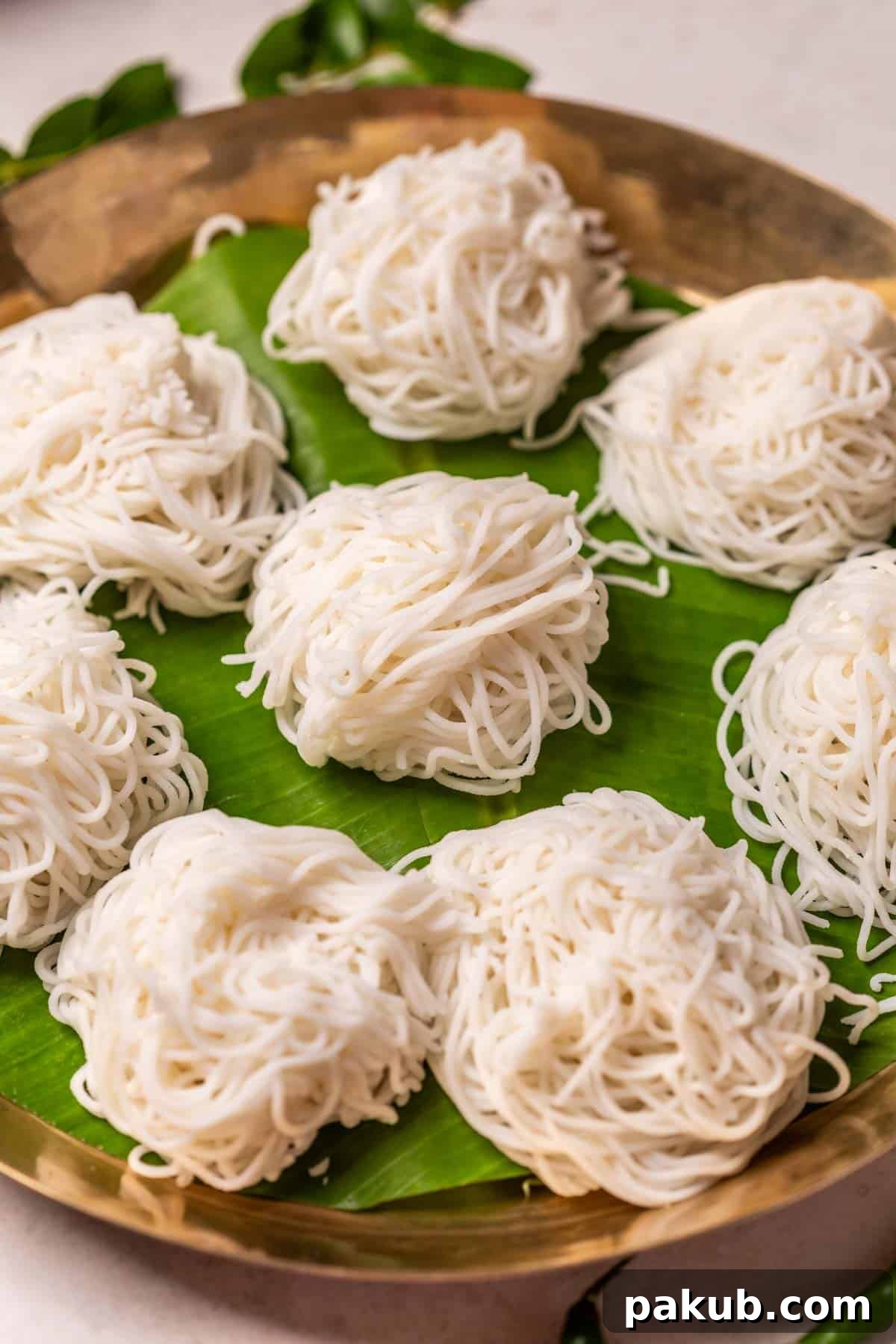
Often referred to as String Hoppers, Rice Idiyappams may appear intricate at first glance, but I assure you, mastering them is a wonderfully rewarding experience that only takes a few tries. With the right technique and a few simple tools, you’ll be crafting these delicate rice noodles like a seasoned pro in no time.
The magic happens with a specialized idiyappam press, which transforms a simple rice flour dough into those signature perfect, delicate strings. These strings are then gently steamed, traditionally in an idli steamer lined with fragrant banana leaves, infusing them with a subtle aroma. There’s truly no better way to kickstart a leisurely weekend morning than with a plate of these, accompanied by a rich vegetable stew, a comforting egg curry, or an assortment of zesty chutneys. It’s a wholesome, satisfying, and authentically South Indian meal that offers both comfort and nutrition.
Exploring Rice Idiyappam: Your Essential Guide
This guide is designed to walk you through every step of making perfect rice idiyappams. From understanding the core ingredients to mastering the steaming process, and even offering creative serving ideas, we’ve got you covered. Use the quick links below to navigate through the sections:
- What are Rice Idiyappams?
- The Simple Ingredients for Rice Idiyappam
- Essential Equipment for Idiyappam
- Step-by-Step Guide to Making Rice Idiyappam
- Expert Tips and Troubleshooting for Perfect Idiyappams
- How to Serve Rice Idiyappam
- Storage and Reheating Tips
- Customisation and Variations
- Watch the Rice Idiyappam Recipe Video
What are Rice Idiyappams (String Hoppers)?
Rice Idiyappam, also known as Noolappam in Malayalam or String Hoppers, is a traditional South Indian and Sri Lankan breakfast delicacy. These delicate, lacy noodles are made from a simple dough of rice flour, water, and salt, which is then pressed into thin strands and steamed until fluffy and soft. Unlike some other South Indian staples like dosa or idli, which involve fermentation, idiyappams are quick to prepare once the dough is ready, making them a popular choice for a light yet fulfilling meal.
The beauty of idiyappam lies in its incredibly light and airy texture, which readily absorbs the flavors of accompanying dishes. They are naturally gluten-free and cooked by steaming, making them a very healthy option. Their neutral taste makes them incredibly versatile, pairing equally well with spicy savory curries and sweet coconut milk preparations.
The Simple Ingredients for Rice Idiyappam
One of the most appealing aspects of this traditional recipe is its minimalist ingredient list. You only need five basic items, most of which are likely already in your pantry! For the idiyappam dough, you’ll need high-quality rice flour, water, salt, and cooking oil. To enhance the steaming process and add a subtle, earthy fragrance, we traditionally line the steamer with banana leaves. However, if banana leaves are not readily available, fret not! You can easily substitute them with baking paper or parchment paper, and your idiyappams will still turn out perfectly delicious.
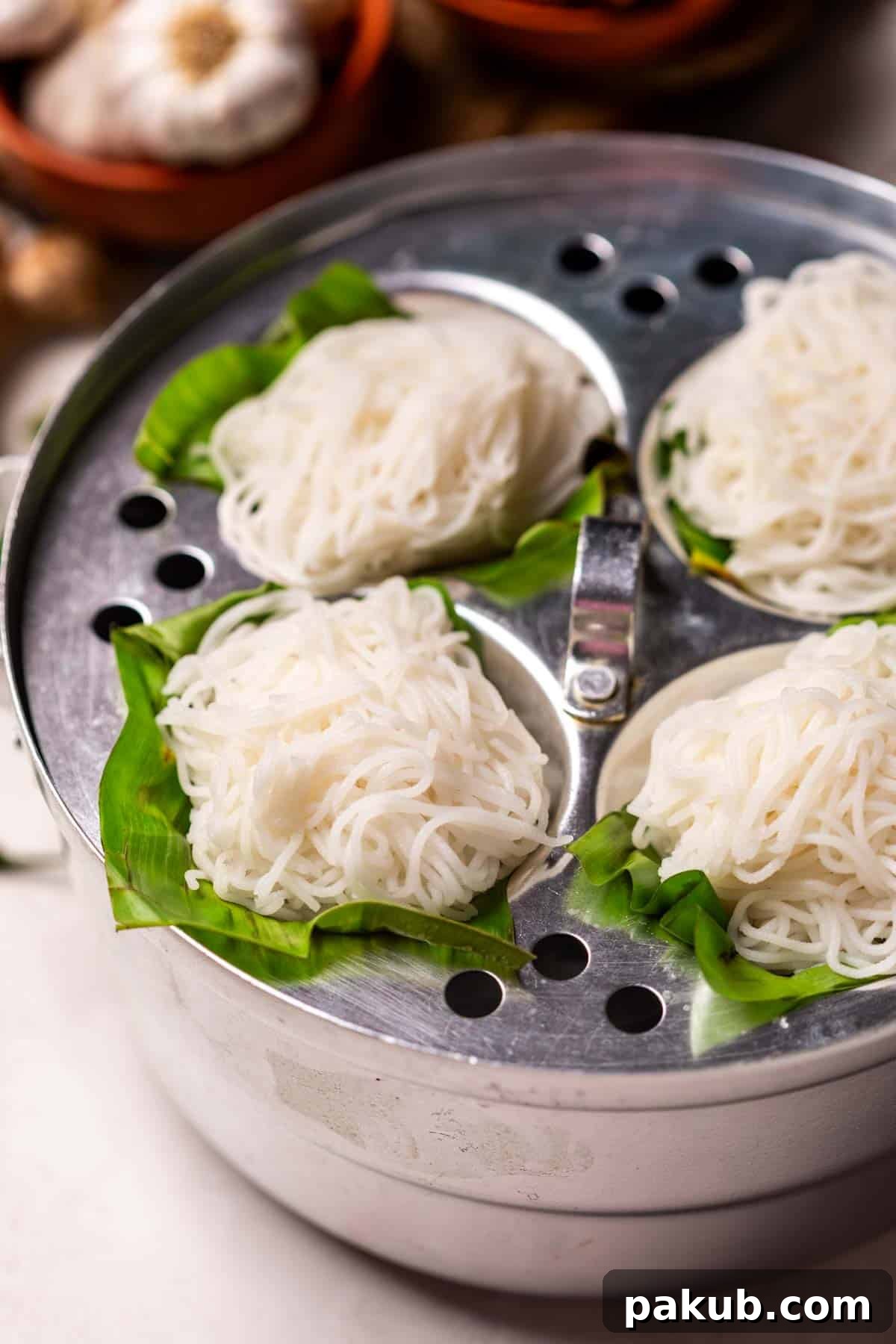
Choosing the right rice flour is crucial for achieving the desired soft texture. Opt for finely milled, roasted rice flour, often labeled as “Idiyappam flour” or “Appam flour” for the best results. The water temperature also plays a significant role; hot water helps to gelatinize the starch in the rice flour, making the dough pliable and easy to press. A touch of oil keeps the dough smooth and prevents sticking, while salt balances the flavors. Using banana leaves not only imparts a unique aroma but also prevents the idiyappams from sticking and makes them easy to remove after steaming.
Essential Equipment for Idiyappam
To prepare these traditional string hoppers, having the right tools can make all the difference, simplifying the process and ensuring perfect results every time. Here’s what you’ll need:
- Idiyappam Press / Sev Maker: This is the most crucial tool. An idiyappam press, sometimes called a sev maker or a string hopper machine, is a hand-operated device designed to extrude the rice dough into fine, noodle-like strands. It typically comes with various discs, and you’ll want to use the one with the smallest holes for the classic idiyappam texture.
- Idli Steamer / Regular Steamer: An idli steamer is ideal as its tiered plates are perfectly sized for individual portions. If you don’t have an idli steamer, any large pot with a steaming rack and a tight-fitting lid will work. Just ensure there’s enough space for the steam to circulate and for the idiyappams to cook evenly.
- Banana Leaves or Baking/Parchment Paper: For lining the steamer plates. Banana leaves add a subtle aroma and non-stick surface. Baking paper or parchment paper, cut into small squares or circles to fit your steamer, serves as an excellent alternative, preventing sticking and making cleanup a breeze. Remember to poke a few small holes in the paper if using it to allow steam circulation.
- Large Kadai or Heavy-Bottomed Pan: For cooking the rice flour with hot water to form the dough.
- Mixing Bowl: A wide, sturdy bowl for kneading the dough while it’s still warm.
Investing in a good idiyappam press will simplify the process considerably and is highly recommended for anyone planning to make this dish regularly. However, the rest of the equipment can often be found or improvised with common kitchen items.
Step-by-Step Guide to Making Rice Idiyappam
Follow these detailed instructions to create light and fluffy Idiyappams that will impress everyone at your table.
Prep Time: 5 minutes | Cook Time: 30 minutes | Total Time: 35 minutes
Servings: 24 Idiyappams
Ingredients:
- 2 cups rice flour (preferably roasted idiyappam flour)
- 3 + ¼ cups water, divided (plus extra for the steamer)
- 1 ½ teaspoons salt
- 2 tablespoons + 2 teaspoons cooking oil (plus extra for greasing)
- 2-3 Banana leaves or 2-3 sheets baking paper, cut into 2 ½ inch squares (for lining steamer)
Equipment:
- 1 Idiyappam mould press
- 1 Idli Steamer
Instructions:
-
Prepare the Dough Base: In a large kadai or heavy-bottomed pan, bring 3 cups of water to a rolling boil. Add 1 ½ teaspoons of salt and 2 teaspoons of cooking oil to the water. Once the water is boiling vigorously, add the 2 cups of rice flour all at once. Immediately reduce the heat to low and stir vigorously with a wooden spoon or spatula to combine the flour and water. Continue to sauté for 2-3 minutes, stirring constantly, until the mixture forms a sticky, cohesive dough that pulls away from the sides of the pan. This process is crucial for gelatinizing the rice flour and ensuring a smooth final product.
(Ingredients used: 3 + ¼ cups water, 1 ½ teaspoons salt, 2 cups rice flour) - Rest the Dough: Turn off the heat. Cover the pan with a lid and let the dough rest for about 2 minutes. This brief resting period allows the steam to further cook the flour, making the dough softer and more pliable.
-
Prepare for Pressing: While the dough rests, grease your idiyappam press thoroughly with cooking oil. This prevents the dough from sticking inside the press and ensures smooth extrusion. Also, prepare your steamer plates: if using banana leaves, wash and lightly grease them; if using baking paper, cut it into 2 ½ inch squares and lightly oil them, poking a few small holes for steam.
(Ingredients used: 2 tablespoons + 2 teaspoons cooking oil, Banana leaves or baking paper) - Knead and Fill the Press: Transfer the warm dough to a wide mixing bowl. Lightly grease your hands with oil. Take out a portion of the dough, roughly the size of a cricket ball, and knead it well until it is soft and smooth. The dough should still be warm – working with warm dough is key to achieving a non-breaking idiyappam. If the dough feels too dry, you can lightly wet your hands with water while kneading. Shape the kneaded dough into a cylinder and carefully load it into the greased idiyappam mould press.
- Press the Idiyappams: Holding the idiyappam press over your prepared steamer plates (lined with banana leaf or baking paper), rotate the handle to extrude the dough into circular patterns. Aim to create a single layer of delicate strings on each plate. It’s important not to pile idiyappams on top of each other, as they will stick together during steaming.
- Keep Dough Covered: As you work in batches, immediately cover any shaped idiyappams with a damp, wet cloth. Rice flour dough dries out very quickly when exposed to air, which can make subsequent pressings difficult and result in brittle idiyappams.
- Prepare the Steamer: Pour water into the bottom of your idli steamer and bring it to a rolling boil over medium-high heat. Ensure there’s enough water to generate steam for the entire cooking process without running dry.
- Steam the Idiyappams: Gently place the steamer plates, each holding a layer of pressed idiyappams, into the hot idli steamer. Ensure there is some gap between the idiyappams and the plates are not overcrowded. Steam for 2-3 minutes. Idiyappams cook very quickly due to their delicate structure. Over-steaming can make them sticky.
- Rest and Serve: Once steamed, turn off the heat but leave the idiyappams in the closed steamer for another 5 minutes. This resting period allows them to firm up slightly and become easier to handle.
- Final Transfer and Keep Warm: Carefully remove the steamed idiyappams from the moulds or steamer plates. You can place them on a plate lined with a wet kitchen towel and cover them with another wet towel to keep them warm and moist while you steam the remaining batches. Repeat the steaming process for all the remaining dough. Serve immediately for the best texture and flavor.
Expert Tips and Troubleshooting for Perfect Idiyappams
Achieving perfect, fluffy Idiyappams every time is easier with these valuable insights and solutions to common issues:
The most important tip is to always work with the dough while it’s still warm. This makes it incredibly pliable and easy to knead into a smooth consistency, which is crucial for preventing the idiyappams from breaking when pressed. Use a wooden spoon initially to mix the hot flour and water, then, once it’s cool enough to handle, use oiled hands to knead.
Generously greasing the inside of your idiyappam press and lightly oiling your hands before handling the dough will make shaping and pressing much easier. This simple step prevents the dough from sticking and ensures a smooth, continuous flow of strands.
This commonly occurs if the dough hasn’t been kneaded sufficiently or if it’s too dry. Ensure you knead the warm dough thoroughly until it’s soft, smooth, and elastic. If the dough starts to dry out during the kneading process, lightly wet your hands with water to add a touch of moisture. Always cover the kneaded dough and any pressed idiyappams with a wet cloth to prevent them from drying out before steaming.
A tough dough can result if it has cooled too much or if there wasn’t enough water added initially. Remember to work with the dough while it’s still warm and soft. If it cools down and becomes difficult to press, you can try adding a tablespoon of hot water at a time and kneading it back in, or gently re-warming the dough slightly over a very low heat (though this needs caution not to overcook it).
Stickiness is usually a sign of over-steaming or overcrowding in the steamer. Idiyappams cook very quickly, typically in just 2-3 minutes. Ensure you don’t over-steam them. Also, leave enough space between idiyappams on the steamer plates to allow for proper steam circulation. After steaming, allow them to rest in the steamer for 2-3 minutes before removing; this helps them firm up and reduces stickiness.
If you don’t have banana leaves or baking paper, you can line your steamer plates with lightly oiled parchment paper (remember to poke small holes for steam) or even use lightly oiled steel plates directly. The key is to create a non-stick surface.
Always ensure there is ample space between the idiyappams on the steamer plates. Overcrowding inhibits proper steam circulation and can lead to uneven cooking and sticky results. Steam in batches if necessary.
How to Serve Rice Idiyappam: Versatile Pairings
The neutral flavor and soft texture of Idiyappams make them incredibly versatile, perfect for both savory and sweet dishes. Here are some delightful ways to serve your homemade string hoppers:
- Classic Savory Pairings: The most popular way to enjoy idiyappam is with rich and flavorful South Indian curries.
- Pair with a comforting vegetable stew, such as a creamy Kerala-style stew, for a harmonious blend of flavors.
- Serve alongside a spicy chicken curry, fish curry, or egg curry for a hearty and satisfying meal.
- A simple coconut chutney or a variety of other South Indian chutneys (like tomato, mint, or peanut chutney) makes for an excellent light accompaniment.
- Sweet Delights: Don’t limit idiyappams to savory dishes! They can be transformed into a delectable dessert or sweet breakfast.
- Drizzle with sweetened coconut milk and jaggery (or brown sugar) for a truly comforting and traditional sweet treat. The warmth of the idiyappam melts the jaggery, creating a delightful syrup.
- Serve with fresh grated coconut and a sprinkle of sugar for a simple yet satisfying sweet option.
- Breakfast or Dinner: Idiyappams are light enough for a wholesome breakfast but substantial enough to form the base of a delicious dinner. They are a fantastic alternative to rice or bread.
- Kids’ Favorite: For children, a simple serving with a dollop of ghee and sugar or a mild lentil stew can be a hit.
Experiment with your favorite gravies and side dishes; the possibilities are endless!
Storage and Reheating Tips
While idiyappams are best enjoyed fresh, you can certainly prepare them in advance and store them for later. Proper storage and reheating will help maintain their delicate texture:
- Refrigeration: Store leftover steamed idiyappams in an airtight container in the fridge. They will stay good for 2-3 days. Ensure they are completely cooled before storing to prevent condensation, which can lead to sogginess.
- Reheating: To refresh refrigerated idiyappams, the best method is re-steaming. Place them back in an idli steamer or a regular steamer for 2-3 minutes, sprinkling a little water over them before steaming to restore moisture. Alternatively, you can microwave them with a sprinkle of water for 30-60 seconds until heated through and soft. Avoid dry reheating methods that can make them tough.
- Freezing: Unfortunately, idiyappams are not freezer-friendly. Their delicate texture tends to change significantly upon freezing and thawing, becoming crumbly and losing their characteristic lightness. It’s best to enjoy them fresh or within a few days of refrigeration.
By following these tips, you can enjoy the convenience of preparing idiyappams ahead of time without compromising too much on their delightful quality.
Customisation and Variations
The classic Rice Idiyappam is wonderful on its own, but its simple nature also makes it a fantastic base for various customisations and nutritious spins. Don’t hesitate to get creative in your kitchen!
- Ragi Idiyappam: For a healthier, nutrient-rich alternative, try making Ragi Idiyappams. Finger millet (ragi) flour offers a higher fiber content and a distinct nutty flavor. The process is similar, but the resulting idiyappams have a lovely brownish hue and a denser, yet still soft, texture.
- Other Flours: While rice flour is traditional, you can experiment with a blend of rice flour and other gluten-free flours like millet flour or sorghum flour for different nutritional profiles and tastes.
- Savory Additions (Tempering): After steaming, you can gently toss the idiyappams with a light tempering. Heat a small amount of oil, add mustard seeds, curry leaves, urad dal, and finely chopped onions or green chilies. Once tempered, gently mix with the idiyappams for a flavorful twist, similar to a vermicelli upma.
- Coconut Idiyappam: For a richer flavor, you can add a small amount of grated fresh coconut directly into the dough mixture before pressing, or sprinkle it over the steamed idiyappams.
- Sweet Idiyappam: Beyond the jaggery and coconut milk mentioned in serving suggestions, you can also infuse the dough with a hint of cardamom powder for a fragrant sweet version.
These variations allow you to tailor the idiyappam to your taste preferences or dietary needs, proving that this humble dish is far more versatile than it appears.
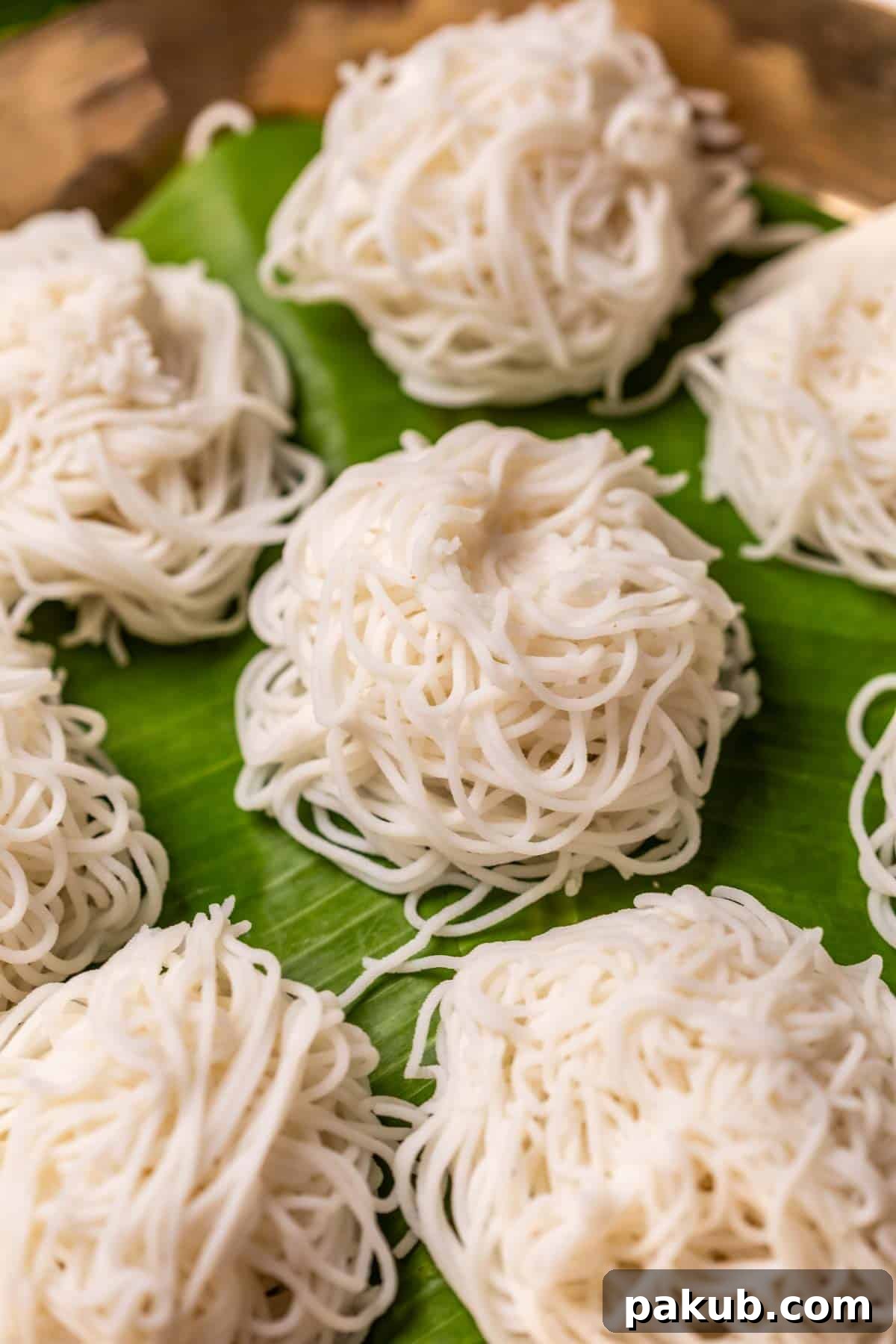
Soft, incredibly light, and the perfect canvas for almost any curry or stew, these Rice Idiyappams are more than just a dish; they’re a true South Indian classic that deserves a cherished spot in your culinary repertoire. Mastering them opens up a world of flavorful possibilities for breakfast, lunch, or dinner.
We absolutely love seeing your culinary creations! If you’ve tried this recipe and fallen in love with these delicate string hoppers, don’t forget to share your experience. Tag us @my_foodstory on Instagram and send us your beautiful recreations. Happy cooking!
Watch the Rice Idiyappam Recipe Video
Visual learners, rejoice! Sometimes, seeing is believing, especially when it comes to mastering techniques for traditional dishes. Watch our comprehensive video guide to see each step of the Rice Idiyappam making process in action. This video will help you visualize the dough consistency, the pressing technique, and the steaming process, ensuring your string hoppers turn out soft and fluffy every single time.
Rice Idiyappam
Richa
5 mins
30 mins
35 mins
24 idiyappams
Rate Recipe
Print Recipe
Equipment
-
1 Idiyappam mould press
-
1 Idli Steamer
Ingredients
- 2 cups rice flour
- 3 + ¼ cups water, divided + extra for steamer
- 1 ½ teaspoons salt
- 2 tablespoons + 2 teaspoons cooking oil
- 2-3 Banana leaves or 2-3 sheets baking paper, cut into 2 ½ inch squares
Instructions
-
Take 3 cups of water in a kadai or pan. Add salt & 2 teaspoons of oil and when it boils, add rice powder and combine immediately. Saute for 2-3 minutes to form a sticky dough.
-
Switch off the heat & keep covered for 2 minutes.
-
Grease idiyappam press with oil and line a plate or tray with banana leaf or baking paper.
-
Transfer the dough to a wide bowl. Grease your hand with oil, take out a cricket ball sized dough, knead each ball till they are soft & smooth. You may wet your hands with water while kneading if the dough is dry. Shape into a cylinder and fill into the idiyappam mould press. Rotate the handle to make idiyappams onto the plate lined with banana leaf.
-
Repeat this in batches for all the dough. Do not pile idiyappams on top of each other as they stick together. Cover the idiyappams immediately with a wet cloth as they dry out if exposed.
-
Heat an idli steamer and bring the water to a boil.
-
Line the idli moulds with cut banana leaf or baking paper. Gently place the idiyappams on each mould.
OR (Alternative Steaming Method)
-
Line a steamer plate with banana leaf, place the idiyappams with some gap in between and do not overcrowd the plate.
-
Place the idli mould or steamer plate inside the steamer and steam for 2-3 minutes, switch off the heat and rest for 5 minutes.
-
Place a wet kitchen towel on a plate, transfer the steamed idiyappams on it and cover with the wet kitchen towel. Repeat the same for steaming all the idiyappams.
Video
Notes
- Knead the dough well before filling them into the idiyappm press so the idiyappams do not break.
- Idiyappams dry out too quickly and hence keep them covered with a wet cloth at all times.
- Steamed idiyappams stay good for 2-3 days when refrigerated in an air tight container.
Nutrition
Calories: 59 kcal,
Carbohydrates: 11 g,
Protein: 1 g,
Fat: 1 g,
Saturated Fat: 0.1 g,
Polyunsaturated Fat: 0.4 g,
Monounsaturated Fat: 1 g,
Trans Fat: 0.005 g,
Sodium: 145 mg,
Potassium: 10 mg,
Fiber: 0.3 g,
Sugar: 0.02 g,
Calcium: 1 mg,
Iron: 0.05 mg
Like this recipe? Rate and comment below!
This article was researched and written by Navya Khetarpal.