Master the Art of Vegetarian Tom Kha Soup: Your Guide to a Flavorful Thai Culinary Journey
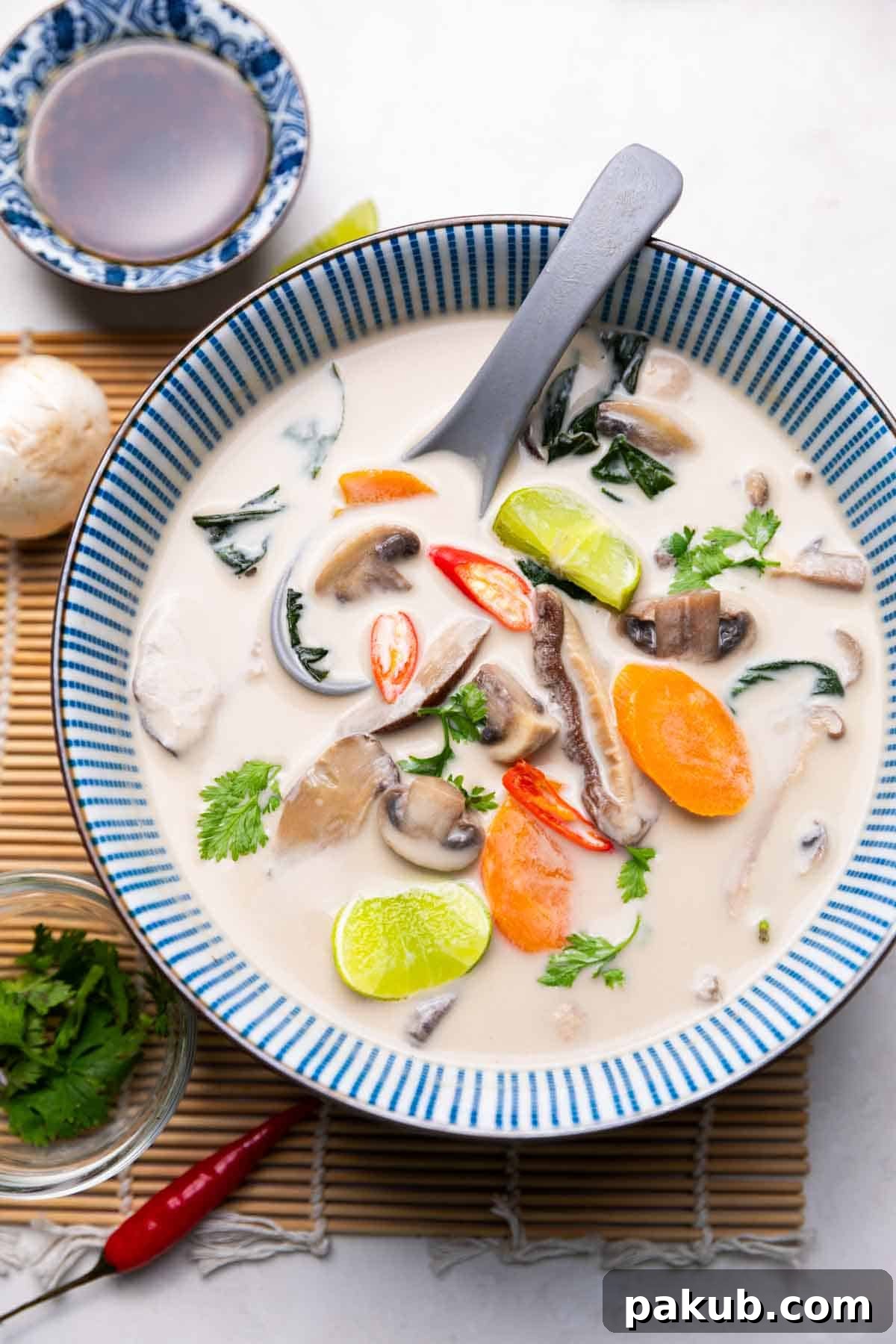
Spicy, zesty, fresh, and profoundly aromatic – this Vegetarian Tom Kha Soup is truly a flavor explosion! ❤️🔥 It’s lovingly crafted with a medley of mushrooms, tender carrots, exotic aromatics, and rich coconut milk, all contributing to an exquisite balance of taste and texture.
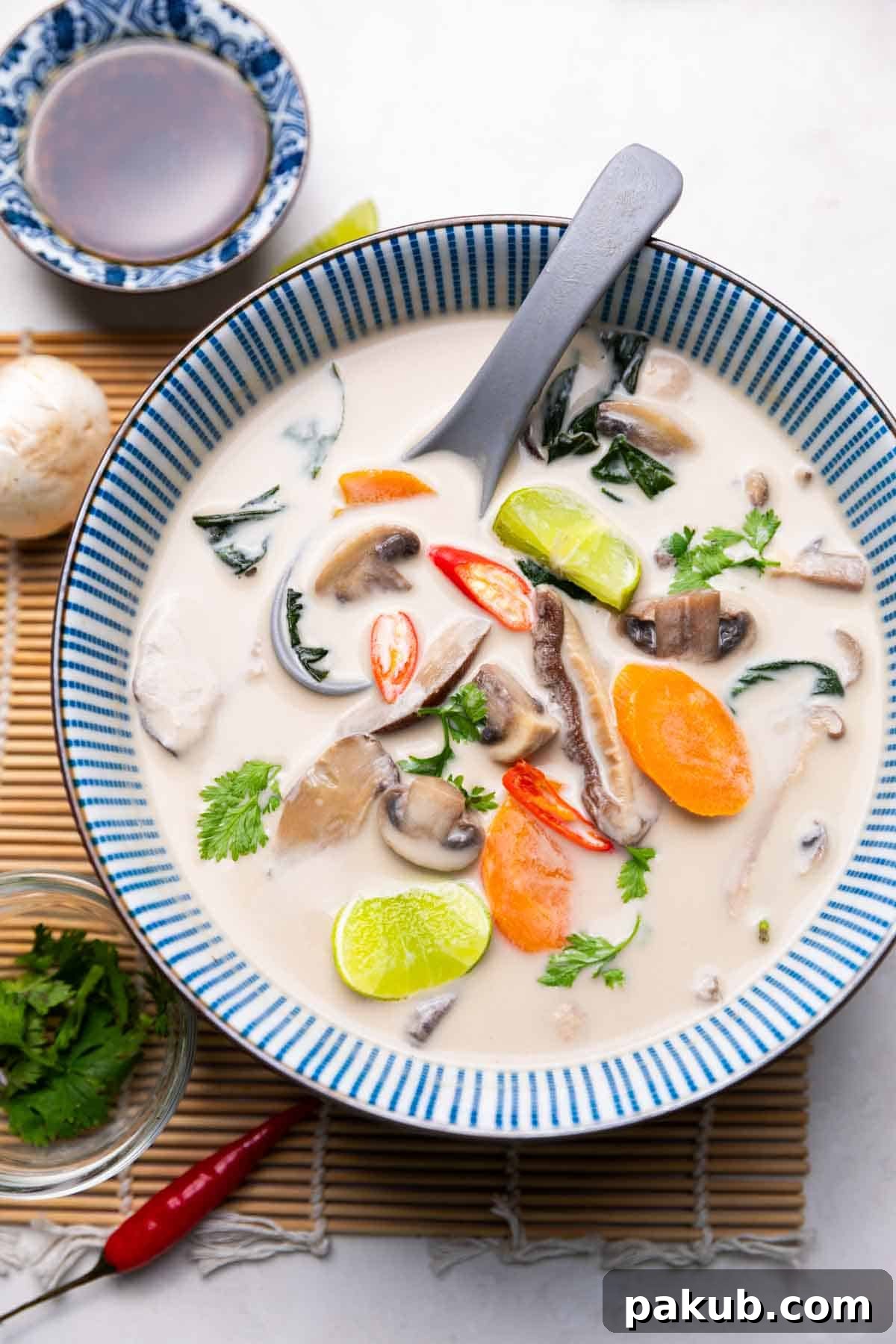
Prepare to fall in love with this Vegetarian Thai Coconut Soup, because once you try it, you’ll want to incorporate it into your meal rotation constantly. It’s more than just a soup; it’s an experience that delivers everything you crave from a cozy, warming dish – from its invigorating flavors and silky-smooth broth to its captivating aroma that envelops your kitchen with a sense of comfort and invigoration.
While traditional Tom Kha Soup, often known as Tom Kha Gai, typically features chicken, this vegetarian rendition proves that you don’t need meat to achieve profound depth and authentic Thai flavors. Our plant-based version is just as delicious, if not more, offering a rich, creamy, and aromatic experience brimming with vibrant ingredients and satisfying textures. It’s a staple in my home, particularly during the colder months or when a dose of soothing, yet exhilarating, flavors is needed for a pick-me-up.
Jump to Section: Vegetarian Tom Kha Soup
- The Essence of Vegetarian Tom Kha Soup: Key Ingredients
- Mastering Your Vegetarian Tom Kha Soup: Expert Tips
- Frequently Asked Questions About Tom Kha
- Watch the Tom Kha Recipe Video
- Printable Vegetarian Tom Kha Soup Recipe
The Essence of Vegetarian Tom Kha Soup: Key Ingredients
Creating an authentic Vegetarian Tom Kha Soup relies on a thoughtful blend of common pantry items and a few specialized Thai ingredients. Most of these can be found online, in Asian supermarkets, or the international section of well-stocked gourmet food stores. Each component plays a crucial role in building the soup’s distinctive flavor profile.
The Creamy Foundation: Coconut Milk
Coconut milk is undeniably the heart of Tom Kha Soup, lending its signature creamy texture and subtle sweetness. For the best results, use thick, full-fat coconut milk, whether fresh or canned. The richness of thick coconut milk is essential for achieving that luxurious, velvety smooth consistency that distinguishes a truly great Tom Kha.
Aromatic Powerhouses: Galangal, Lemongrass, and Kaffir Lime
- Galangal: Often mistaken for ginger, galangal offers a sharper, more citrusy, and piney flavor that is indispensable for authentic Thai cuisine. Thinly sliced galangal infuses the broth with its unique, warming notes.
- Lemongrass: The bottom stalks of lemongrass, when bruised, release a bright, lemony, and slightly minty aroma. This aromatic grass adds an invigorating freshness that cuts through the richness of the coconut milk.
- Kaffir Lime Leaves: These fragrant leaves impart a distinct citrusy and floral aroma. They are a cornerstone of Thai cooking and contribute significantly to the soup’s fresh, zesty character.
Mushroom Magic: Shiitake and Button Varieties
Mushrooms are a fantastic addition to vegetarian Tom Kha, providing both umami depth and a delightful textural contrast. I often use a combination of shiitake mushrooms for their rich, earthy flavor and meaty texture, alongside button mushrooms for their mild taste and satisfying bite. If shiitake are unavailable, feel free to use solely button mushrooms or any other firm, flavorful fungi you prefer, such as oyster or cremini mushrooms.
The Spice Factor: Thai Red Chillies
For that characteristic spicy kick, Thai red chillies are ideal. They are significantly hotter than regular green chillies, so a small amount goes a long way. Adjust the quantity to your personal heat preference, or substitute with regular green chillies if you prefer a milder spice or cannot find Thai chillies.
Vegetable Enhancements: Carrots and Beyond
Carrots add a touch of sweetness, vibrant color, and pleasant texture to the soup. Feel free to explore other vegetable additions to enhance the nutritional value and complexity of your Tom Kha. Green beans, broccoli florets, or even corn kernels can be wonderful additions, offering diverse textures and flavors that complement the creamy broth.
Balancing Flavors: Salt, Sugar, Fish Sauce, and Soy Sauce
Achieving the perfect balance in Thai cooking involves harmonizing sweet, sour, salty, and spicy elements.
- Salt: Essential for seasoning and enhancing overall flavor.
- Sugar: A small amount of sugar helps to balance the sour and spicy notes, rounding out the flavor profile.
- Fish Sauce: This fermented anchovy sauce provides a profound umami depth and saltiness that is crucial to authentic Thai flavors.
- Light Soy Sauce: I opt for light soy sauce for its milder flavor and lighter color, which keeps the soup’s vibrant appearance. Dark soy sauce can also be used if preferred, but it will result in a slightly darker broth and a more robust flavor.
Mastering Your Vegetarian Tom Kha Soup: Expert Tips
To ensure your Vegetarian Tom Kha Soup turns out perfectly every time, keep these crucial tips in mind:
- Ingredient Substitutions: If galangal or kaffir lime leaves are difficult to source, you may use fresh ginger and lemon zest as substitutes. While these alternatives will slightly alter the authentic flavor profile, your soup will still be incredibly delicious and aromatic.
- Adjusting Spice Levels: Tom Kha is traditionally spicy. However, you have full control over the heat! Feel free to adjust the amount of Thai red chillies (or green chillies) to match your personal tolerance and preference. Start with less and add more if desired.
- The Right Soy Sauce: As mentioned, I prefer light soy sauce for its delicate flavor and to maintain the soup’s bright color. However, if you enjoy a more intense umami and a darker hue, dark soy sauce is a perfectly acceptable alternative.
- Making it Vegan and Gluten-Free: This recipe is easily adaptable for diverse dietary needs. To make your Vegetarian Tom Kha Soup entirely vegan and gluten-free, simply omit the fish sauce. For a gluten-free option, ensure you swap regular soy sauce for tamari, which is a gluten-free alternative.
- Preventing Coconut Milk from Splitting: Coconut milk can sometimes separate or “split” if heated too rapidly or at too high a temperature. To maintain that desirable silky texture, always cook the soup on low heat once the coconut milk has been added, stirring gently.
- Serving Suggestions: Tom Kha Soup is wonderful on its own, but it pairs beautifully with steamed jasmine rice, a side of fresh herbs like cilantro, or a squeeze of fresh lime juice just before serving to brighten the flavors even further.
Frequently Asked Questions About Tom Kha
Both Tom Kha and Tom Yum are celebrated Thai soups, but they differ significantly in their base and flavor profile. Tom Kha features a rich, creamy coconut milk base, which gives it a milder, sweeter, and more mellow taste. Tom Yum, on the other hand, is characterized by its clear (or sometimes milky, but not coconut-milk-based) broth and a distinctly sour and spicy profile, typically using a tomato base or tamarind for tanginess.
Certainly! While this recipe focuses on a vegetarian version, Tom Kha is traditionally made with chicken (Tom Kha Gai). You can easily adapt this soup by adding sliced chicken breast, shrimp, or even firm tofu for a protein-rich and more substantial meal. Remember to adjust cooking times to ensure your protein is cooked through.
Absolutely! This Veg Thai Coconut Soup is incredibly versatile when it comes to vegetables. Beyond mushrooms and carrots, feel free to incorporate green beans, broccoli florets, bell peppers, baby corn, bamboo shoots, or even spinach. These additions can enhance the soup’s texture, nutrients, and visual appeal. Just be mindful of cooking times to ensure vegetables remain tender-crisp.
Leftover Vegetarian Tom Kha Soup stores wonderfully. Simply transfer any cooled leftovers to an airtight container and refrigerate for up to 3-4 days. When you’re ready to enjoy it again, reheat gently on the stovetop over low heat or in the microwave, stirring occasionally to ensure even heating and prevent the coconut milk from splitting.
Yes, this Vegetarian Tom Kha Soup recipe is remarkably freezer-friendly! Once the soup has completely cooled, transfer it to a freezer-safe container or a heavy-duty freezer bag. It can be frozen for up to 3 months. To serve, thaw the soup overnight in the refrigerator, then reheat gently on the stovetop until warmed through. The texture of the coconut milk might slightly change upon thawing, but a good stir will usually bring it back together, and the flavors will remain vibrant.
These essential Thai aromatics are often found in the produce section of well-stocked Asian grocery stores. Many larger supermarkets also carry them in their international or specialty produce sections. If fresh ingredients are unavailable, you might find frozen versions or dried kaffir lime leaves, and sometimes even galangal paste, which can be good substitutes in a pinch.
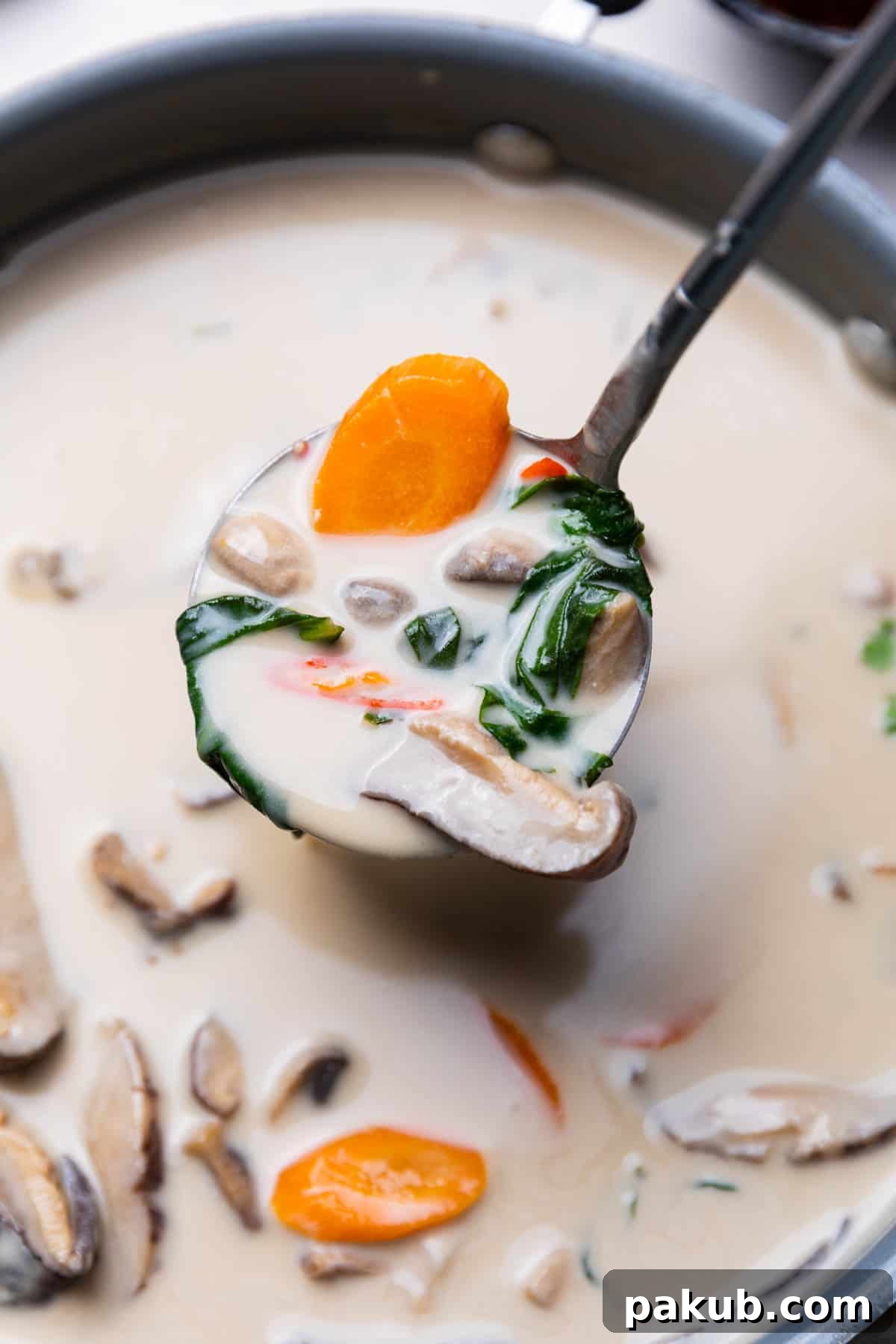
My first unforgettable encounter with Tom Kha Soup was many years ago during a trip to Bangkok, and it has since become an indispensable staple on our winter dinner menu. Its inherent coziness and burst of fresh flavors make it a true culinary delight, perfect for chilly evenings or simply when you crave something truly special.
If you’re a fellow soup enthusiast searching for more delightful recipes, be sure to explore my full soup series here for a wide array of comforting bowls.
Should you cherish this recipe as much as I do, I encourage you to leave a comment below and share your thoughts. And don’t hesitate to send pictures of your culinary creations over to my Instagram @myfoodstory! I love seeing your delicious interpretations.
Watch the Tom Kha Recipe in Action
Printable Vegetarian Tom Kha Soup Recipe
Vegetarian Tom Kha Soup | Veg Thai Coconut Soup
Richa
10 minutes
20 minutes
30 minutes
4 portions
Rate Recipe
Print Recipe
Ingredients
- 4 shiitake mushrooms
- 1 cup button mushrooms, halved
- 3 cups water, divided
- 1 cup thick coconut milk
- ½ teaspoon salt
- 4 bottom stalks of lemongrass, crushed
- 2 inches of galangal or ginger, sliced thin
- 20 kaffir lime leaves or ½ teaspoon lemon zest
- 1 teaspoon sugar
- Juice of 1 lemon
- 2 teaspoons fish sauce (omit for vegan/gluten-free)
- 2 teaspoons light soy sauce (use tamari for gluten-free)
Instructions
- Soak shiitake mushrooms in 1 cup of hot water for 30 minutes.
- Drain the water and chop the rehydrated shiitake mushrooms very fine.
- Add the finely chopped shiitake mushrooms along with the remaining 2 cups of water and all other ingredients (except lemon juice, fish sauce, and soy sauce) to a pot and bring to a gentle boil.
- Reduce heat to low and simmer for 12-15 minutes, allowing the flavors to meld beautifully. Ensure the heat remains low to prevent the coconut milk from splitting.
- Just before serving, stir in the fresh lemon juice, fish sauce (if using), and soy sauce. Give it a good mix and serve immediately, garnished with fresh cilantro if desired.
Notes
- You may use canned or fresh coconut milk; both will yield excellent results.
- Shiitake mushrooms contribute significantly to the soup’s robust flavor and texture, but you can omit them or use only button mushrooms if preferred.
- For a richer, creamier soup, consider adding a splash of extra thick coconut milk or coconut cream at the very end.
- Always taste and adjust seasonings at the end. You might want a little more salt, sugar, or lemon juice to balance the flavors to your liking.
Nutrition
Carbohydrates: 8g,
Protein: 3g,
Fat: 14g,
Saturated Fat: 13g,
Polyunsaturated Fat: 0.2g,
Monounsaturated Fat: 1g,
Sodium: 714mg,
Potassium: 328mg,
Fiber: 2g,
Sugar: 4g,
Vitamin A: 1IU,
Vitamin C: 2mg,
Calcium: 21mg,
Iron: 2mg
Like this recipe? Rate and comment below!
Your feedback helps others discover delicious meals.