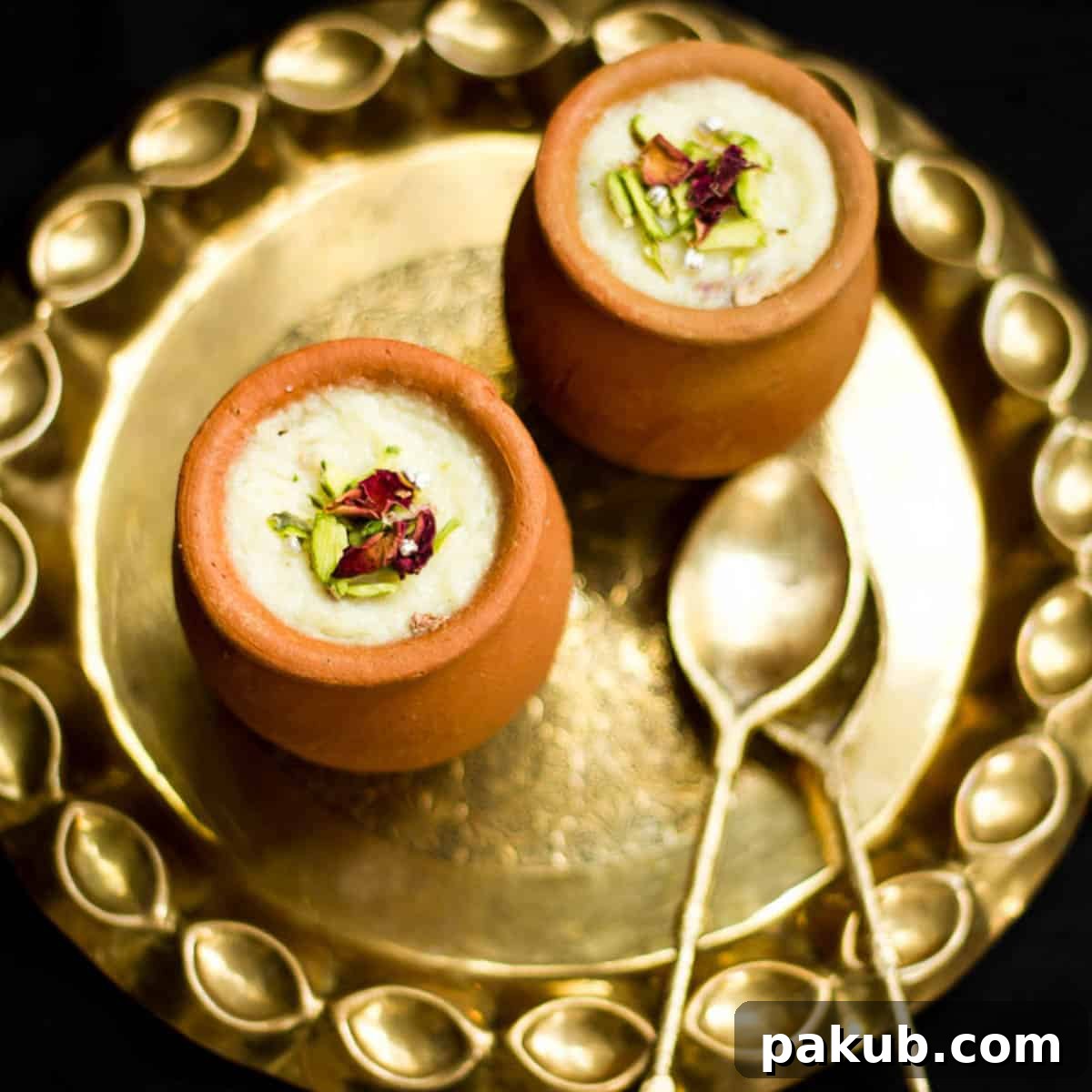
Gulab Phirni, a decadent rice pudding delicately flavored with aromatic rose petals, is more than just a dessert; it’s a culinary masterpiece born from love and tradition. Each spoonful offers a harmonious blend of creamy richness and a subtle, delightful crinkle from the perfectly broken rice grains. For many, including myself, it stands as the quintessential Indian dessert, a true indulgence that leaves a lasting impression.
Today, I am absolutely thrilled to share a cherished family recipe from my mum’s kitchen – a recipe that has captivated hearts and taste buds for generations. Choosing just one favorite from her extensive repertoire of culinary delights was an incredibly difficult task; her cooking consistently leaves us all in awe. However, this particular Gulab Phirni holds a special place, not only for its irresistible flavor but also for its heartwarming connection to family gatherings and cherished memories.
This Gulab Phirni isn’t just a dessert; it’s a genuine crowd-pleaser! What truly sets it apart is its surprising simplicity; it requires minimal effort for such an elegant outcome. The subtle yet distinct hint of rose petals ensures that every bite is an enchanting experience, leaving you longing for more. While it’s an exceptional dessert for festive occasions like Diwali or Eid, its comforting, creamy texture also makes it the perfect post-dinner treat on a quiet evening, wrapping you in a warm, sweet embrace.
Jump to Section: Gulab Phirni
- The Essence of Gulab Phirni: Ingredients
- Mastering the Art of Phirni Making
- Richa’s Expert Tips for Perfect Phirni
- Frequently Asked Questions About Phirni
- More Indian Sweets You Must Try
The Essence of Gulab Phirni: Key Ingredients
One of the most appealing aspects of this Gulab Phirni recipe is its reliance on just six incredibly simple, pantry-staple ingredients. The magic truly begins with these fundamental components, each playing a vital role in creating the dessert’s signature taste and texture. Understanding their importance will elevate your phirni from good to truly exceptional.
Rice and milk are, without a doubt, the undisputed stars of this dish. We begin by soaking the rice, a crucial step that softens the grains and prepares them for processing. Following this, the softened rice is gently blended to form a coarse paste – not a fine powder, but a distinctively grainy consistency that is the hallmark of traditional phirni. This texture is what provides that delightful “crinkle” in every bite, differentiating it significantly from other rice puddings.
Next, we embark on the slow and careful process of boiling full-fat milk. This is where patience is key. As the milk heats, we introduce the coarsely ground rice paste along with delicate strands of saffron (kesar). The saffron not only imparts a beautiful, subtle golden hue but also a fragrant, earthy aroma that perfectly complements the rose. The mixture is then simmered gently, allowing the rice to cook thoroughly and the milk to gradually thicken, transforming into a rich, creamy base.
Once the rice is perfectly cooked and the pudding has achieved a luxurious consistency, we add sugar. It’s important to add sugar at this stage, *after* the rice has softened, to prevent it from hardening the grains. Whisk vigorously until the sugar is completely dissolved, ensuring an evenly sweetened phirni. We then allow this luscious mixture to cool completely. Once chilled, a quick, precise blitz in a mixer-grinder for exactly 5 seconds works wonders. This brief pulse refines the texture further, ensuring a silky-smooth, lump-free creaminess that is simply divine.
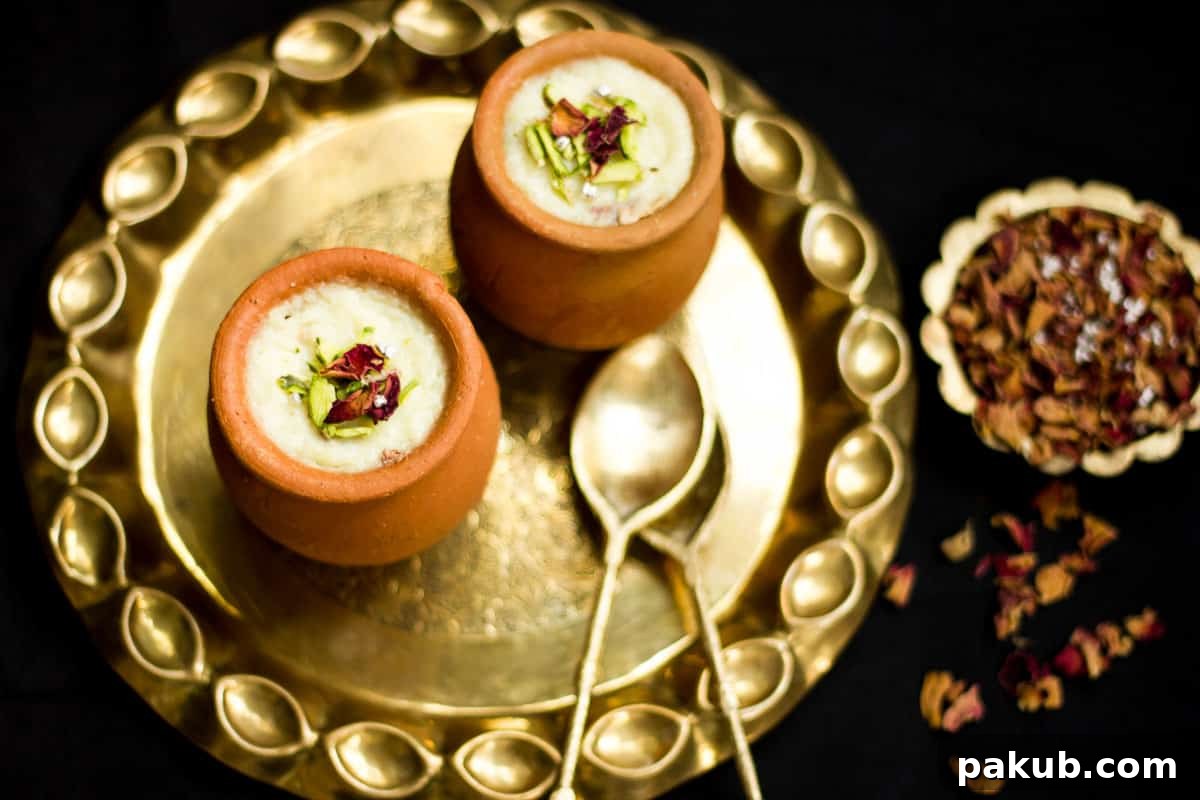
Finally, the signature element: we gently fold in the fragrant dried rose petals. Their delicate aroma and subtle flavor permeate the pudding, creating the “gulab” (rose) essence. The phirni is then carefully transferred to individual serving bowls – traditional earthenware bowls are ideal for enhancing its cooling properties and aesthetic appeal. To complete this masterpiece, it’s generously garnished with a sprinkle of additional dried rose petals, crunchy chopped pistachios, and slivers of almonds. Your creamy, cozy, and aromatic Gulab Phirni is now ready to be chilled and served, offering a truly unforgettable dessert experience!
Mastering the Art of Phirni Making
Making Gulab Phirni is a delightful culinary journey that combines simple ingredients with precise techniques to achieve a spectacular result. Let’s delve deeper into the process, ensuring every step contributes to that perfect, creamy, and aromatic dessert.
Preparation: The Foundation of Flavor
The journey begins with the rice. Soaking the rice for at least 30 minutes is paramount. This softens the grains, making them easier to grind and ensuring they cook evenly in the milk. After soaking, drain the water thoroughly. The next crucial step is blending: pulse the rice in a grinder until you achieve a grainy, coarse consistency. Imagine grains slightly larger than semolina, with a distinct grittiness between your fingers. This specific texture is what gives phirni its unique body and mouthfeel, distinguishing it from the smoother, often whole-grain kheer.
The Simmering Process: Patience is a Virtue
In a heavy-bottomed pan, bring the full-fat milk to a gentle simmer. The use of full-fat milk is non-negotiable for achieving the rich, thick, and creamy texture that defines this dessert. As the milk simmers, gradually add the ground rice and saffron strands. Crucially, whisk continuously as you add them. This prevents the rice from clumping together and ensures it disperses evenly throughout the milk, laying the groundwork for a smooth pudding.
Continue whisking as the mixture comes to a boil. Once boiling, reduce the flame to a low simmer. This slow cooking process is vital for allowing the rice to absorb the milk and cook thoroughly, while the milk itself reduces and thickens, intensifying its flavor. Remember to stir the mixture every couple of minutes to prevent it from sticking to the bottom of the pan and burning. This constant attention is a small act of love that pays off immensely in the final product.
Thickening and Finishing Touches
After approximately 20 minutes of simmering, you’ll notice the mixture beginning to thicken. Continue simmering for another 20-25 minutes, or until it has thickened considerably and the rice grains are completely cooked through and tender. The consistency should be rich but still pourable, as it will thicken further upon cooling.
Once the rice is perfectly cooked, it’s time to incorporate the sugar. Add the measured sugar and whisk until it is entirely dissolved. This late addition ensures the rice cooks without hindrance, preventing a hard or uneven texture. Now, switch off the flame and let the phirni cool completely at room temperature. This cooling period is essential for the flavors to meld and for the pudding to set properly.
For that extra touch of creaminess and to eliminate any minute lumps that might have formed, transfer the completely cooled mixture to a mixer-grinder and pulse for *exactly* 5 seconds. This brief blitz refines the texture to a velvety smoothness without making it pasty.
Flavoring, Garnishing, and Chilling
Finally, stir in the dried rose petals, allowing their delicate fragrance to infuse the entire pudding. Ladle the phirni into individual serving bowls. For an authentic presentation and enhanced cooling, traditional clay or earthenware bowls (matkas) are perfect. Garnish generously with additional chopped pistachios, almonds, and a few more dried rose petals for visual appeal and an extra burst of aroma. The final, and arguably most important, step is chilling. Refrigerate the Gulab Phirni for at least 2-3 hours, or ideally, overnight. Serving it cold not only enhances its refreshing quality but also allows the flavors to deepen and the texture to firm up to perfection. Enjoy this delightful dessert, a true taste of Indian heritage and warmth.
Richa’s Expert Tips for Perfect Phirni
Crafting the perfect Gulab Phirni involves a few key techniques and considerations that can elevate your dessert from good to truly extraordinary. Here are my top tips to ensure your phirni is as creamy, fragrant, and delightful as possible:
- Embrace Full-Fat Milk: I cannot stress this enough – always use full-fat milk for this recipe. The higher fat content is crucial for achieving that characteristic thick, rich, and creamy consistency that Gulab Phirni is celebrated for. Skim or low-fat milk simply won’t yield the same luxurious texture and depth of flavor; it will result in a thinner, less satisfying pudding.
- Timing is Key for Sugar: Make sure to add the sugar after the rice is completely cooked and tender. Adding sugar too early can actually prevent the rice grains from softening properly, leading to a gritty, uneven texture. Sugar can sometimes toughen the rice, making it harder for it to absorb moisture and cook through. Wait until your rice is perfectly soft before sweetening.
- A Touch of Color (Optional): My traditional rose phirni doesn’t call for artificial coloring, allowing the natural hues of saffron and milk to shine. However, if you desire a beautiful blush-pink or rose-colored phirni to match its flavor, feel free to add a tiny amount of red or pink food coloring. Start with just a drop or two and gradually add more until you achieve your desired shade.
- Consistent Stirring Prevents Sticking: Phirni, like many milk-based puddings, requires consistent stirring, especially when simmering. Use a heavy-bottomed pot to minimize sticking, but even then, stir every few minutes to prevent the rice and milk from scorching at the bottom. This ensures a smooth texture and prevents any burnt taste.
- Perfect Rice Grind: The consistency of your ground rice is vital. It should be coarse and gritty, not a fine powder. Over-grinding will result in a gummy, pasty texture, while under-grinding will leave you with a more kheer-like whole-grain consistency. Aim for something resembling fine semolina.
- The Magic of Chilling: While it might be tempting to taste it warm, Gulab Phirni is truly at its best when served thoroughly chilled. The refrigeration process allows the flavors to meld beautifully and the pudding to set into its ideal creamy texture. Chilling it in earthenware bowls is a traditional method that further enhances its coolness and distinct earthy notes.
- Quality Rose Petals: For the best flavor and aroma, use high-quality dried rose petals. If dried petals are hard to find, a good quality rose water can be used as an alternative or an addition, but be sparing as rose water can be overpowering. A few drops are usually sufficient.
Frequently Asked Questions About Phirni
Is phirni and kheer the same?
While both phirni and kheer are delicious Indian rice puddings made from similar core ingredients like rice and milk, they are distinctly different, primarily in their texture and the way the rice is prepared. Kheer typically uses whole rice grains, which are cooked until soft and tender, resulting in a slightly chunky consistency. Phirni, on the other hand, is made with coarsely ground or broken rice grains, which gives it a much smoother, creamier, and almost velvety texture, often described as having a “crinkle” due to the finely textured rice. This fundamental difference in rice preparation creates two unique and equally beloved desserts.
In which state is Phirni famous?
Phirni is particularly famous and cherished in the northern Indian state of Punjab, where it is a staple sweet served during festivals, celebrations, and special meals. However, its origins are believed to be much older and trace back to Persia, from where it traveled to India and became integrated into Mughal cuisine before spreading across various regions. Today, it enjoys popularity throughout India, with regional variations, but its association with Punjabi cuisine remains very strong.
Which is the best rice for this recipe?
While technically any variety of rice you have at home can be adapted for phirni, for the absolute best results in terms of aroma and texture, I highly recommend using aromatic varieties such as Basmati rice. Its long grains break down beautifully when pulsed, and its natural fragrance adds an extra layer of complexity to the phirni. Short-grain rice can also work well, providing a good starchy base for thickening. The key is not the specific type of rice as much as preparing it correctly – soaking and then grinding it to that ideal coarse, gritty consistency.
Can I make Gulab Phirni vegan?
Yes, with a few adjustments, Gulab Phirni can be made vegan. Replace traditional full-fat milk with a rich, creamy plant-based milk like full-fat cashew milk, almond milk, or oat milk. You might need to add a thickener like a small amount of cornstarch slurry or more finely ground rice to achieve the desired creamy consistency, as plant-based milks tend to be thinner. Ensure your sugar is vegan-certified, as some white sugars are processed with bone char. The rose petals, saffron, and nuts are naturally vegan.
How long does Gulab Phirni last, and how should I store it?
Gulab Phirni is best enjoyed within 2-3 days when stored properly in the refrigerator. Transfer the cooled phirni into an airtight container or individual serving bowls covered with plastic wrap to prevent a skin from forming and to keep it fresh. Always serve it chilled for optimal flavor and texture. It is not recommended for freezing, as the texture of the rice and milk can change upon thawing.
This Gulab Phirni is truly a warm, decadent, and exquisitely fragrant Indian sweet that feels just like a comforting hug in a bowl. While I often find myself preparing it during the bustling festive season for my Diwali parties, it’s equally beloved by my family and me on those chilly winter nights, serving as the perfect dessert to unwind and relax. Its versatility and universal appeal make it a recipe worth cherishing and sharing.
If you decide to make this beautiful dessert, please don’t forget to share your experience by leaving a comment below. I’d love to hear from you! And if you capture your delightful recreations, send them over to me on my Instagram @my_foodstory!
Gulab Phirni Recipe / Rose flavored Rice Pudding
By: Richa
Rich rice pudding or phirni flavored with rose petals for that perfect make-ahead dessert to wow your guests with.
Prep Time: 10 mins
Cook Time: 1 hr 15 mins
Total Time: 1 hr 25 mins
Servings: 6 Portions
Ingredients
- ¼ cup Rice, + 1 tbsps (preferably Basmati or any aromatic variety)
- 1 litre Full-fat Milk (Skim milk just doesn’t cut it for the desired creaminess)
- Saffron, or Kesar (a generous pinch for color and aroma)
- ¼ Cup Sugar, + 1 tbsps (adjust to your sweetness preference)
- 2 tbsps Dried Rose Petals (for authentic rose flavor and garnish)
- Pistachios, Chopped and Almonds for garnishing
Instructions
- Soak the rice in water for half an hour. Drain the water completely and pulse the rice in a grinder until you get a coarse, grainy consistency. The grains should feel gritty between your fingers and be slightly bigger than semolina. Avoid making a fine paste.
- Bring the full-fat milk to a gentle simmer in a heavy-bottomed pot. Add the ground rice and saffron strands while continuously whisking to prevent lumps from forming.
- Bring this mixture to a boil while continuing to whisk. Once it reaches a boil, lower the flame to a gentle simmer. Keep stirring the mixture every couple of minutes to prevent it from sticking to the bottom of the pot.
- After about 20 minutes, the mixture will start to thicken. Continue to simmer for another 20-25 minutes, or until it thickens considerably and the rice is completely cooked and tender.
- Add the sugar and mix thoroughly until it is completely dissolved. Switch off the flame and let the mixture cool completely at room temperature. Once cooled, transfer it to a mixer-grinder and pulse for exactly 5 seconds. This step helps achieve a super creamy texture and removes any minor lumps.
- Gently mix in the dried rose petals. Transfer the phirni into individual serving bowls (traditional earthenware bowls are ideal). Sprinkle with chopped pistachios, almonds, and additional dried rose petals for garnish.
- Cool the Gulab Phirni in the refrigerator for at least 2-3 hours, or ideally overnight, to allow the flavors to meld and the pudding to set perfectly. Serve chilled.
Nutrition
Calories: 62kcal, Carbohydrates: 15g, Protein: 1g, Fat: 1g, Saturated Fat: 1g, Cholesterol: 1mg, Sodium: 1mg, Potassium: 9mg, Fiber: 1g, Sugar: 9g, Vitamin A: 15IU, Vitamin C: 1mg, Calcium: 2mg, Iron: 1mg
If you loved creating and tasting this exquisite Gulab Phirni, we would be incredibly grateful if you could rate the recipe and leave a comment below! Your feedback helps us grow and inspires others to try these wonderful dishes.
More Indian Sweets You Must Try
If you enjoyed this delightful Gulab Phirni, you’re in for a treat! Indian cuisine boasts an incredible array of sweets, each with its unique flavor and charm. Here are some more beloved Indian desserts that you absolutely must try:
- Classic Rice Kheer (Indian Rice Pudding) – The cousin of Phirni, made with whole rice grains.
- Festive Chocolate Rice Kheer (Pudding) – A modern twist on a traditional favorite.
- Aromatic Kesar Pedas – Saffron-infused milk fudge, rich and melt-in-your-mouth.
- Homemade Jalebi: Thin and Crispy – Golden, syrupy spirals, a street food favorite.
- Soft and Spongy Rasgulla – Cheese dumplings soaked in fragrant sugar syrup (example link, please replace if actual recipe exists).
- Melt-in-Your-Mouth Gulab Jamun – Fried milk solids soaked in a sweet syrup (example link, please replace if actual recipe exists).