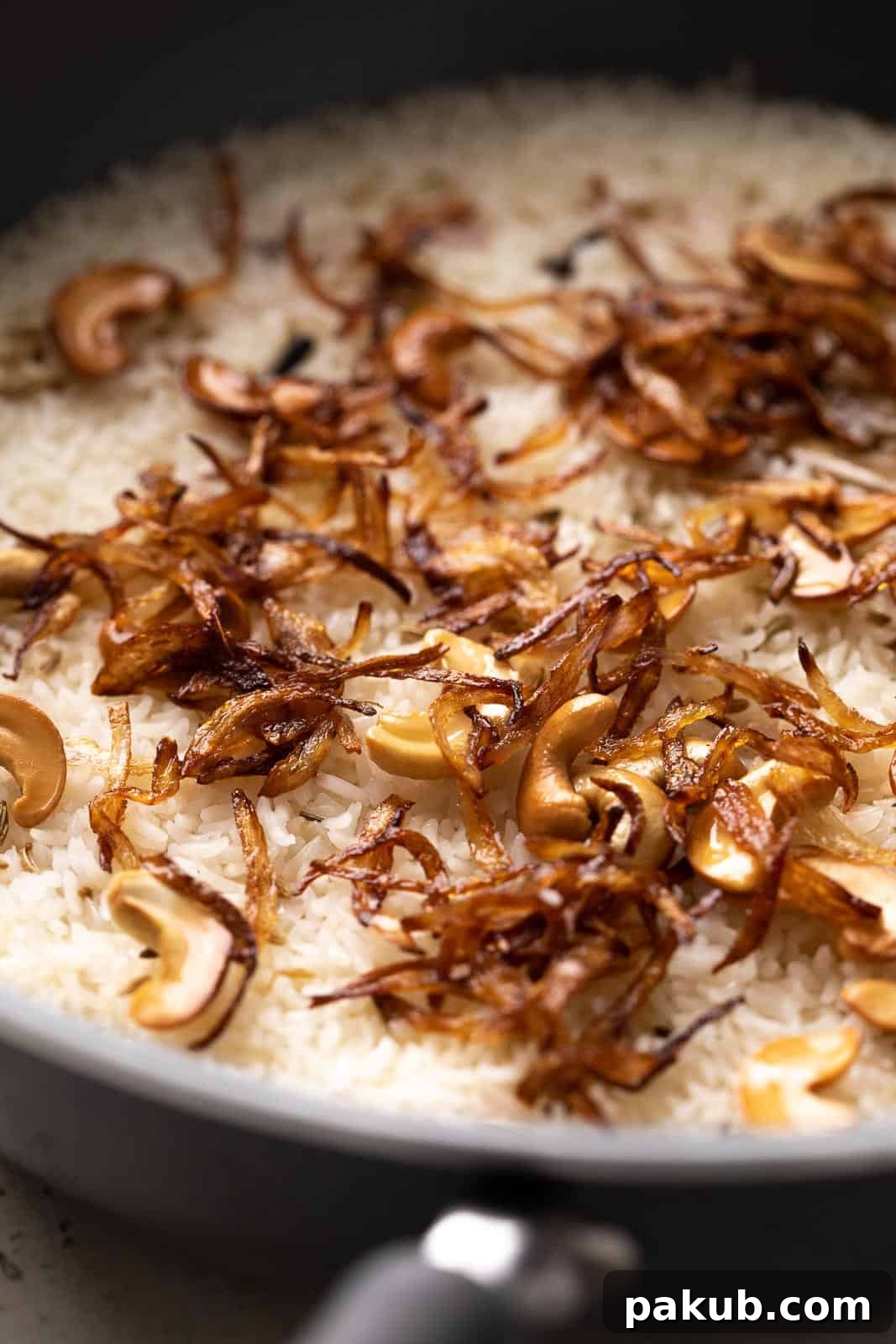
Ghee Rice is not just a dish; it’s an experience, a celebration of simple yet profound flavors. This aromatic, golden rice, also known as Neychoru or Nei Choru in the vibrant culinary landscape of Kerala, India, holds a special place in South Indian cuisine. Mastering the art of making perfect Ghee Rice is a culinary secret weapon, ready to impress guests or elevate any family meal from ordinary to extraordinary. Its rich fragrance and delicate taste make it an indispensable addition to your recipe repertoire.
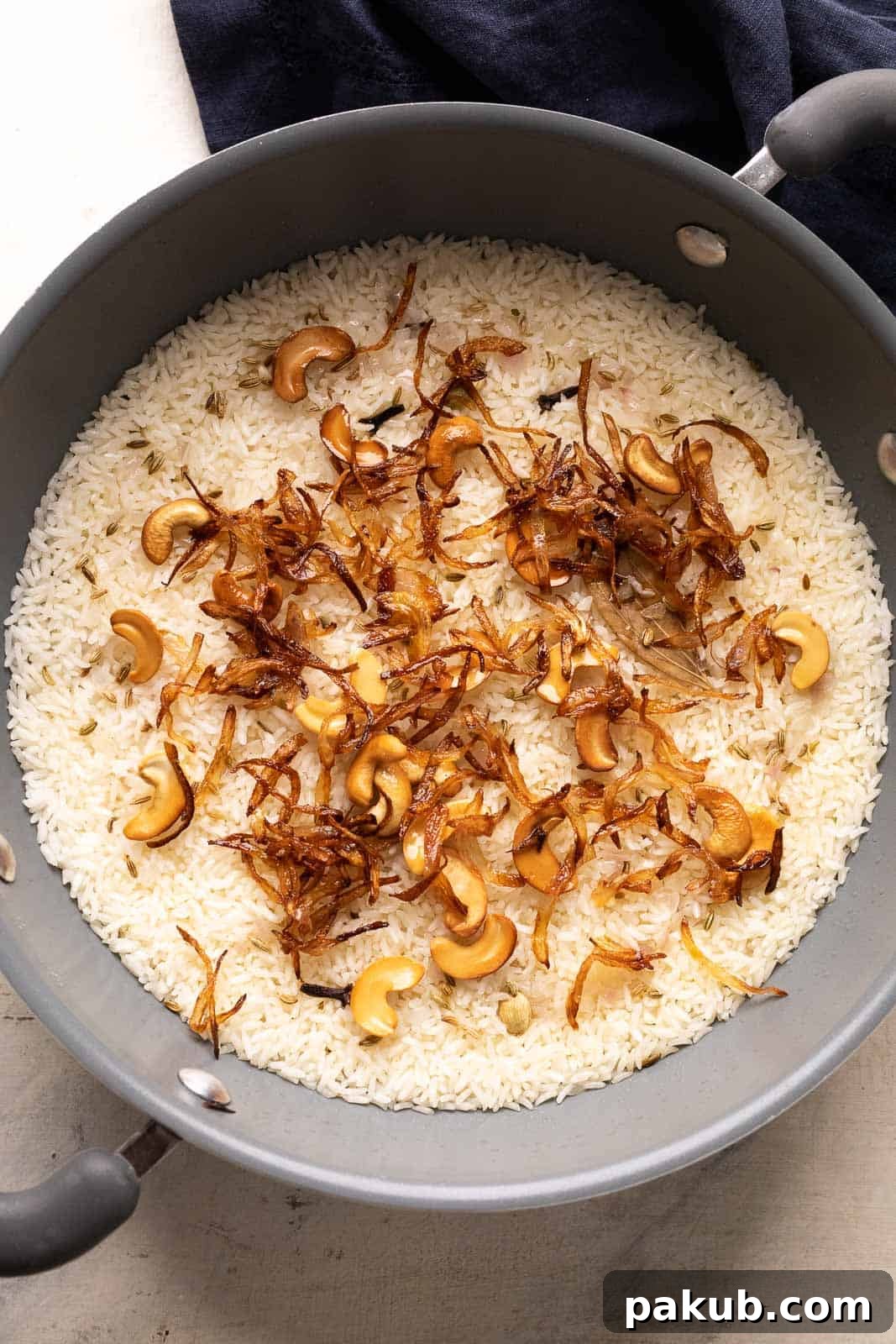
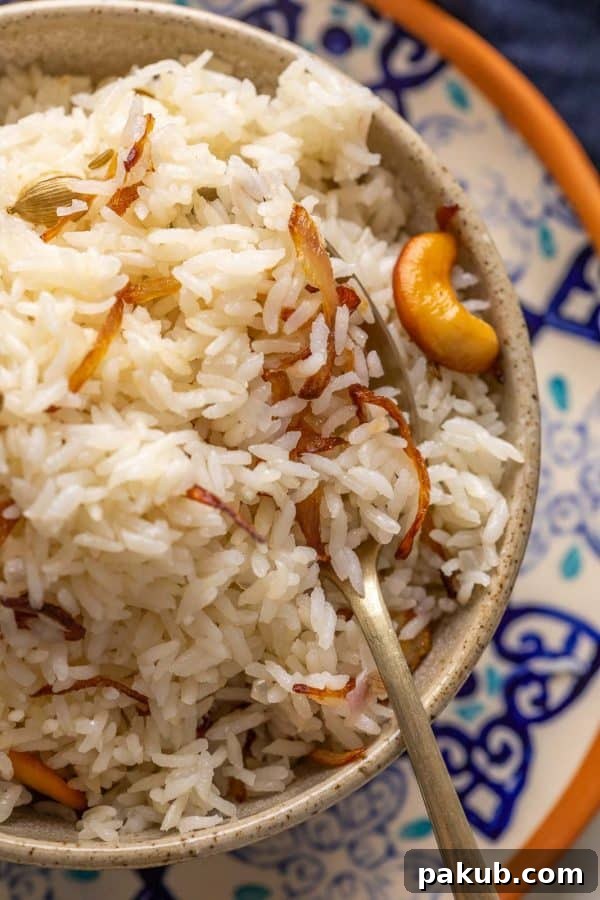
There’s a unique satisfaction that comes from a perfectly cooked plate of Ghee Rice. Each grain, distinct and fluffy, glistens with the rich, nutty aroma of clarified butter, delivering an unparalleled taste with every bite. Despite its gourmet appeal, this South Indian Ghee Rice recipe is surprisingly simple to prepare, requiring minimal ingredients and a short cooking time. Much like our beloved Jeera Rice, it proves that culinary magic doesn’t always demand complexity. Its captivating simplicity yields stunning results, making it a go-to for both weeknight dinners and special occasions. Fond memories of late-night meals in Bangalore, savoring plates of Ghee Rice alongside succulent kebabs, attest to its widespread popularity and irresistible charm.
Table of Contents: Perfect Ghee Rice
- The Essence of Ghee Rice: A South Indian Gem
- Mastering the Ingredients for Authentic Neychoru
- Pro Tips for Fluffy, Non-Mushy Ghee Rice Every Time
- Frequently Asked Questions About Ghee Rice
- Serving Suggestions and Perfect Pairings
- Watch the Ghee Rice Recipe Video
- More Simple and Aromatic Rice Recipes
The Essence of Ghee Rice: A South Indian Gem
Originating from the verdant landscapes of Kerala, Ghee Rice, or Neychoru, embodies the rich culinary heritage of South India. This fragrant rice dish is characterized by its simplicity and the profound flavor imparted by pure, aromatic ghee. Unlike more complex biryanis, Ghee Rice shines through its minimalist approach, where each ingredient plays a crucial role in creating a harmonious and comforting experience. It’s often prepared for festive occasions, family gatherings, or simply when one desires a luxurious yet uncomplicated meal. The distinct aroma of whole spices gently toasted in golden ghee, combined with perfectly cooked rice, transforms humble ingredients into a dish that is both elegant and deeply satisfying. This classic preparation highlights the beauty of traditional cooking, where quality ingredients are allowed to speak for themselves, creating a memorable side dish that complements a wide variety of curries.
Mastering the Ingredients for Authentic Neychoru
The beauty of Ghee Rice lies in its few, high-quality ingredients. To truly capture the authentic taste of this South Indian delight, meticulous attention to each component is key. Let’s delve into the stars of this simple yet exquisite dish:
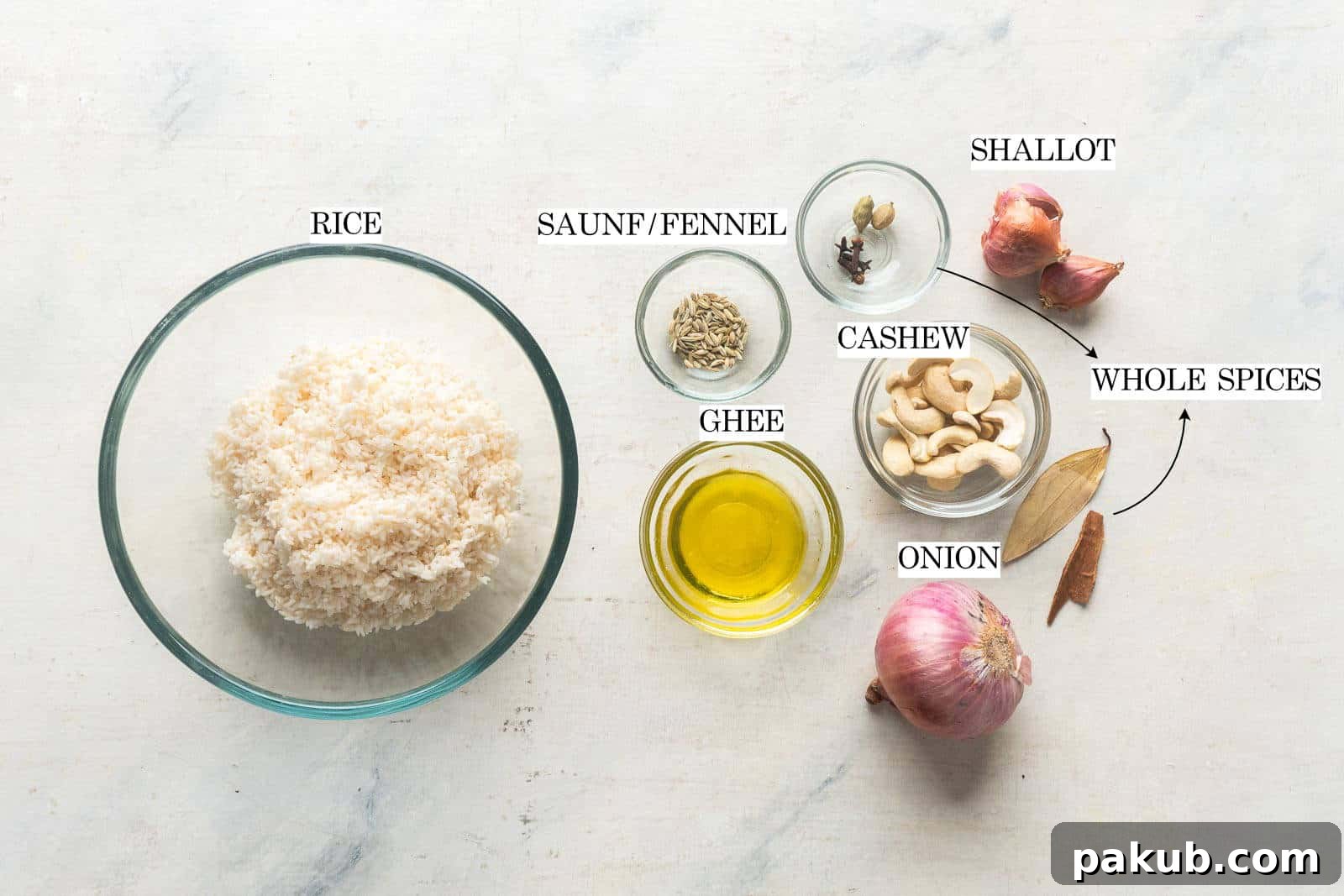
- The Rice: Traditionally, Jeera Samba Rice, a short-grained, highly aromatic variety, is preferred for its unique flavor and delicate texture. Its small, slender grains absorb flavors wonderfully and cook up light and fluffy. However, for broader accessibility, excellent results can also be achieved with high-quality Basmati or Sona Masoori rice. The secret is in choosing a rice that holds its shape well and absorbs flavors beautifully without becoming mushy, ensuring each grain stands out.
- The Ghee: This is arguably the most critical ingredient. Don’t compromise on quality here. Opt for organic, preferably A2 ghee, known for its superior aroma and rich, buttery taste. A quick whiff should tell you if it possesses that characteristic fragrant richness. High-quality ghee imparts a depth of flavor that defines this dish. Better yet, consider making your own homemade ghee. Our easy ghee recipe offers a simple guide to crafting this golden elixir at home, ensuring the freshest and most aromatic results for your Ghee Rice.
- Aromatic Whole Spices: A judicious selection of whole spices forms the fragrant base. Fennel seeds, cloves, green cardamom, cinnamon sticks, and a bay leaf are typically used. These spices are gently bloomed in the hot ghee, releasing their essential oils and infusing the entire dish with their warm, inviting aromas, creating an unforgettable sensory experience.
- Garnishes: Crispy fried onions and toasted cashew nuts are classic toppings that add texture, sweetness, and a delightful crunch to the finished dish. These garnishes are not just for aesthetics; they contribute significantly to the overall flavor and mouthfeel of the Ghee Rice. Some traditional variations also include golden raisins, offering a sweet counterpoint to the savory rice, though they can be skipped based on preference.
Pro Tips for Fluffy, Non-Mushy Ghee Rice Every Time
Achieving distinct, fluffy grains is the hallmark of perfect Ghee Rice. Here are invaluable tips to ensure your Neychoru is never mushy and always delightful, making you a master of this aromatic rice dish:
- Proper Rice Washing and Soaking: Begin by washing your chosen rice (whether it’s Jeera Samba, Basmati, or Sona Masoori) thoroughly, 3-4 times, until the water runs almost clear. This crucial step removes excess starch from the surface of the grains, which is the primary culprit behind sticky, clumpy rice. Follow this by soaking the rice in enough water to cover it by an extra inch, for 30 minutes to 1 hour. Soaking allows the grains to hydrate evenly, leading to quicker, more uniform cooking and reducing the chances of breakage during the process.
- The Golden Rule of Toasting Rice: This is perhaps the single most important tip for non-mushy Ghee Rice that retains its individual grains. After thoroughly draining the soaked rice, add it to the pot with the bloomed spices and toast it gently over medium heat for 3-4 minutes. As you stir, you’ll notice the rice grains starting to smell nutty and looking slightly translucent, with most of their surface moisture evaporated. This toasting step creates a protective barrier around each grain, preventing it from breaking down and absorbing too much water too quickly during cooking, thus ensuring perfectly separate and fluffy rice.
- The Ideal Water to Rice Ratio: For perfectly cooked, fluffy Ghee Rice, a precise 2:1 water to rice ratio is generally ideal. For every cup of raw rice, use exactly two cups of water. This accurate measurement is key, whether you’re using Jeera Samba, Basmati, or Sona Masoori, and contributes significantly to the final texture of your aromatic rice dish.
- The Power of Residual Steam: After the initial cooking, patience is a virtue. Do not rush to open the lid. Allow the rice to rest, covered tightly, for at least 10 minutes (or even up to 15 minutes) after turning off the flame. During this resting period, the residual steam trapped inside the pot continues to cook the rice gently and evenly. This process helps the grains plump up, become tender, and ensures they are perfectly done without being overcooked or mushy. This step is essential for achieving that restaurant-quality fluffy texture in your Ghee Rice.
- High-Quality Ghee is Non-Negotiable: As emphasized earlier, the quality of your ghee directly impacts the flavor profile and aroma of your Ghee Rice. A fragrant, organic, preferably A2 ghee will lend a depth and richness that simply cannot be replicated with lower-quality alternatives. It’s the star ingredient that gives Ghee Rice its distinctive character.
Frequently Asked Questions About Ghee Rice
While traditionally Jeera Samba rice (a very short-grained, aromatic, and flavorful variety) is preferred for authentic South Indian Ghee Rice, you can achieve excellent results with other popular long-grain varieties like premium Basmati or Sona Masoori rice. We have thoroughly tested this recipe with all three types, and the cooking method, including cooking time and water ratio, remains consistent across the board, ensuring perfect, fluffy results every time you prepare this aromatic rice dish.
For achieving separate, plump, and perfectly cooked rice grains, we recommend a consistent 2:1 ratio of water to rice. For instance, if you use 1 cup of rice, you’ll need 2 cups of water. The key to its perfection also lies in the final resting period: after 6 minutes of simmering, the rice absorbs most of the water. Allowing it to rest, covered, for an additional 10-15 minutes allows the residual steam to finish the cooking process, resulting in exceptionally fluffy rice that is neither mushy nor undercooked.
Absolutely! While this particular recipe omits raisins to cater to specific taste preferences, many individuals enjoy the sweet bursts they offer in savory Ghee Rice. If you wish to include them, simply sauté the raisins lightly in ghee alongside the cashews until they puff up and turn slightly golden. Once ready, remove them and use them as a beautiful and flavorful garnish for your finished dish. They provide a wonderful sweet contrast to the aromatic spices.
The most effective technique to ensure distinct, non-sticky grains in your Ghee Rice is to toast the thoroughly drained rice grains in ghee with the whole spices for 3-4 minutes before adding water. This process creates a slightly firm exterior on each grain, helping them maintain their individual shape and preventing clumping during the cooking process. Additionally, using the correct water-to-rice ratio and allowing sufficient resting time after cooking are crucial for achieving that desired separate, fluffy texture.
Serving Suggestions and Perfect Pairings
Ghee Rice, with its inviting aroma and delicate flavor, is a versatile companion to a wide array of Indian curries and gravies. Its subtle richness complements both vegetarian and non-vegetarian dishes beautifully, making it an ideal choice for any meal. This elegant rice dish is the fastest and simplest way to elevate any lunch or dinner, transforming it into a truly memorable culinary experience. Consider pairing your freshly made Ghee Rice with:
- Creamy Vegetable Korma, where the mild spices and rich, cashew-based sauce create a harmonious and comforting balance.
- Succulent Chicken Korma, offering a luxurious and satisfying combination, allowing the ghee rice to soak up its flavorful gravy.
- A robust and spicy Kingfish Curry with Coconut and Tamarind, a classic pairing that highlights the coastal flavors often associated with Neychoru, particularly from Kerala.
- A simple lentil dal, such as a comforting Toor Dal or Masoor Dal, for a nutritious and hearty everyday meal.
- Any rich gravy-based dish, from paneer butter masala to a flavorful mutton stew, that benefits from a fragrant, neutral base to perfectly soak up its complex flavors.
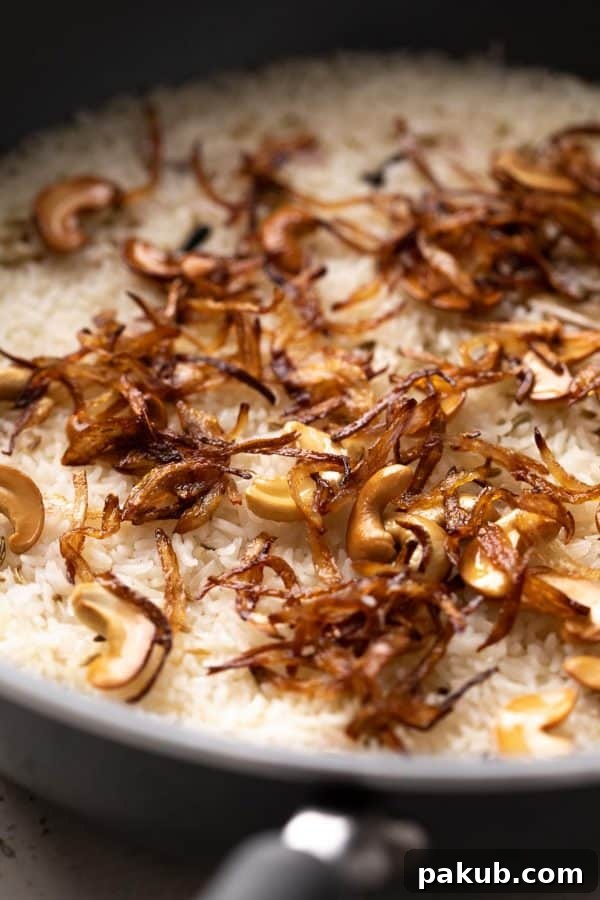
The visual appeal of Ghee Rice, especially when generously garnished with golden-fried cashews and crispy onions, makes it a true centerpiece on any dining table, promising both a feast for the eyes and the palate. Its simplicity ensures it enhances, rather than overwhelms, the accompanying main course.
Watch the Ghee Rice Recipe Video
For a visual guide to mastering this delightful dish, watch our step-by-step video on how to make perfect Ghee Rice. You’ll see exactly how to prepare the ingredients, achieve that crucial rice-toasting step, and ensure your Neychoru turns out fluffy and aromatic every single time!
How to Make Perfect Ghee Rice (Neychoru)
Pin Recipe
Rate Recipe
Print Recipe
Ingredients
- 1 cup Jeera Samba Rice, or any short-grained aromatic rice/basmati rice
- 3 tbsp Ghee
- 2 tbsp Cashew Nuts
- 1 medium Onion, thinly sliced
- 1 tsp Fennel Seeds
- 4-5 Cloves
- 2 Green Cardamoms
- 1 inch piece Cinnamon Stick
- 1 Bay Leaf
- 2 Shallots, finely chopped (optional, for extra flavor)
- ½ tsp Salt, or to taste
- 2 cups Water
Instructions
- Prepare the Rice: Wash the rice 3-4 times under running water until the water runs almost clear. This removes excess starch, ensuring fluffy grains. Soak the washed rice in enough water to cover it by an extra inch, for 30 minutes to 1 hour. Drain thoroughly before use.
- Fry Cashews and Onions: Heat the ghee in a heavy-bottomed pot or a Dutch oven over medium heat. Add the cashew nuts and fry for 2-3 minutes until they turn a beautiful golden brown. Remove the cashews from the pan and set them aside. In the same ghee, add the thinly sliced onions and fry them on medium heat, stirring occasionally, until they become crisp and golden brown. This usually takes about 5-7 minutes. Remove the fried onions and set them aside with the cashews.
- Temper the Spices: In the remaining fragrant ghee, add the whole spices: fennel seeds, cloves, green cardamom, cinnamon stick, and bay leaf. Sauté for about 1 minute until they become fragrant and begin to release their aroma. Be careful not to burn them.
- Toast the Rice: Add the thoroughly drained rice to the pot with the tempered spices. Toast the rice on a medium flame for 3-4 minutes, stirring gently. You’ll notice the grains becoming slightly translucent and developing a nutty aroma. This crucial step helps prevent the rice from becoming mushy. If using, add the finely chopped shallots around the 2-minute mark and toast them along with the rice.
- Cook the Rice: Pour in the measured water and add salt to taste. Bring the mixture to a rapid boil. Once the water is boiling vigorously, immediately reduce the flame to its lowest setting, cover the pot tightly with a lid, and cook for exactly 6 minutes.
- Rest and Serve: After 6 minutes, turn off the flame completely. Do NOT lift the lid. Let the pot rest, covered, for at least 10 minutes. This allows the residual steam to finish cooking the rice, ensuring perfectly plump and separate grains. After resting, remove the lid, gently fluff the Ghee Rice with a fork, and garnish generously with the fried cashews and crispy fried onions. Serve hot and enjoy this aromatic delight!
Video Guide: How to Make Ghee Rice
Recipe Notes & Expert Tips
- Rice Selection: For the most authentic flavor, use Jeera Samba rice. However, high-quality Basmati or Sona Masoori rice also yields excellent results. The cooking method remains consistent regardless of your choice.
- Ghee Quality: Invest in organic, A2 ghee for superior aroma and flavor. Homemade ghee is an even better option for unparalleled freshness and purity.
- Toasting Rice for Separation: The key to distinct, non-mushy grains is toasting the drained rice in ghee for 3-4 minutes until it smells nutty and looks slightly dry. This creates a protective coating around each grain, preventing it from clumping.
- Water Ratio and Resting Time: Maintain a 2:1 water to rice ratio. Crucially, after 6 minutes of cooking on low heat, turn off the flame and let the rice rest, covered, for at least 10 minutes. This residual steam cooking ensures fluffy, perfectly cooked rice grains.
- Optional Additions: If you enjoy a touch of sweetness, sauté some golden raisins with the cashews until they puff up, then use them as a garnish. You can also add a few curry leaves or a slit green chili for extra flavor during the tempering stage.
Nutrition Facts (Per Serving)
Enjoyed this recipe? Share your thoughts below!
More Simple and Aromatic Rice Recipes
If you’ve enjoyed the simplicity and rich flavors of our Ghee Rice, you’ll love exploring other easy-to-make yet incredibly satisfying rice dishes from our kitchen. These recipes are perfect for adding variety to your meals and can be paired with a multitude of curries and gravies, offering delicious alternatives to plain steamed rice:
- Rainbow Rice: A vibrant and colorful dish that’s as delightful to look at as it is to eat, perfect for making mealtime fun and visually appealing.
- Perfect Jeera Rice: The classic aromatic cumin-infused rice that’s a staple in Indian households, known for its fragrant simplicity and versatility, making it a perfect accompaniment to almost any Indian meal.
- Easy Lemon Rice: A zesty and refreshing South Indian favorite, brightened with the tang of lemon and the crunch of nuts and lentils, offering a burst of fresh flavor.
- Chilli Garlic Fried Rice: For those who crave a bit of spice and a quick fix, this flavorful fried rice offers a delightful kick with its robust garlic and chili notes.
- Coconut Rice: A subtly sweet and creamy rice dish, often made with fresh grated coconut and tempered spices, that pairs beautifully with spicy South Indian curries.
- Tomato Rice: A tangy and savory rice preparation infused with the rich flavors of fresh tomatoes and aromatic spices, making for a hearty and satisfying one-pot meal.