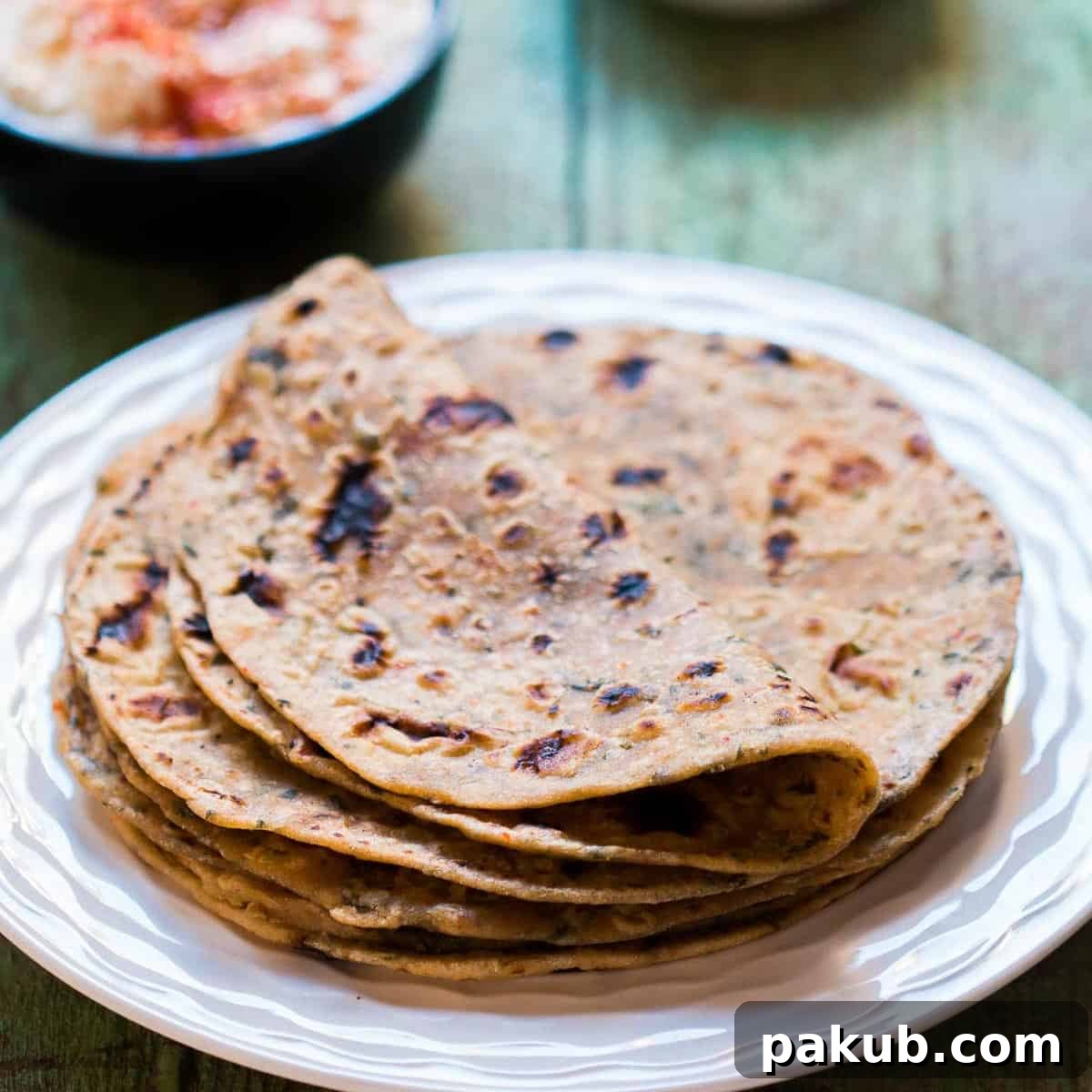
Indulge in the aromatic flavors of these homemade Kasuri Methi Parathas, a true taste of Indian comfort food. Perfectly simple to prepare, these healthy and hearty fenugreek flatbreads are an ideal choice for a wonderful breakfast or any meal of the day. Delicious, easy, and ready in just 20 minutes, they offer a nutritious and flavorful addition to your family’s meal rotation.
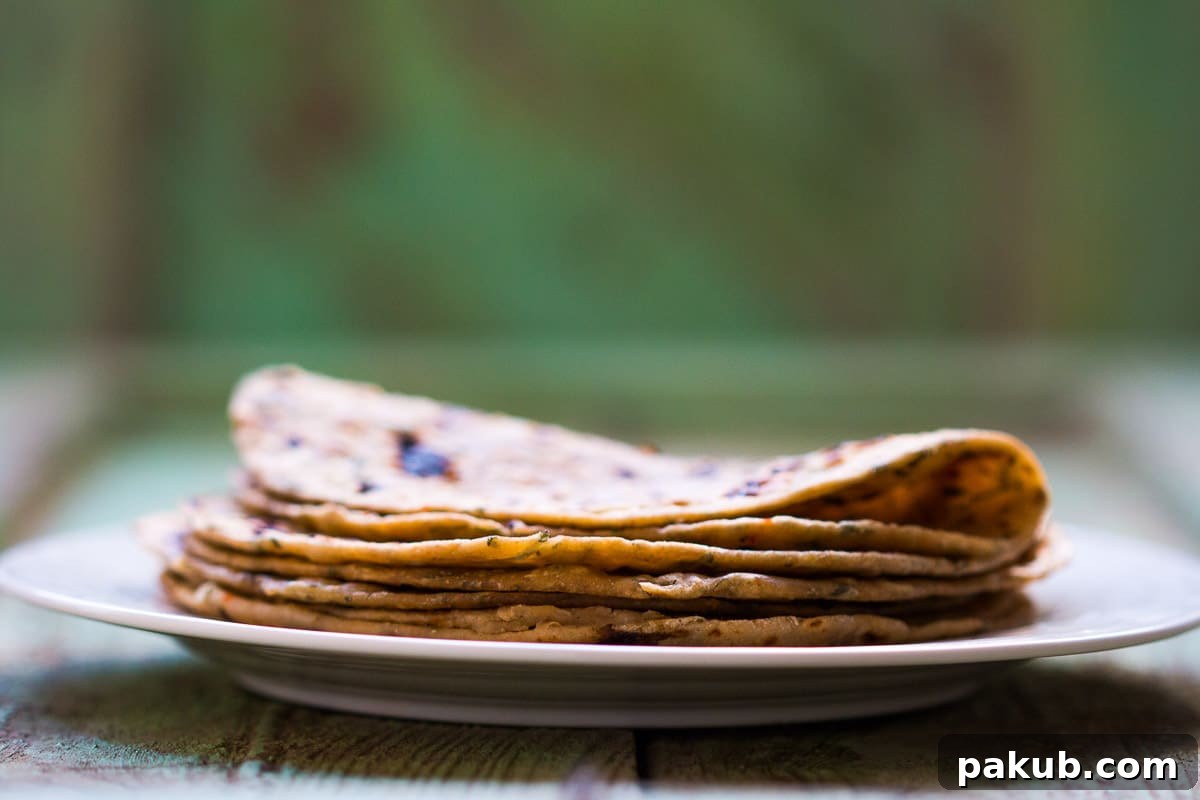
In our fast-paced lives, it’s easy to overlook the simple joys and culinary masterpieces that stem from basic, wholesome ingredients. The Kasuri Methi Paratha is a shining example of this – a humble yet profoundly flavorful Indian flatbread that embodies simplicity, health, and sheer deliciousness. This recipe transports you back to the comforting aromas of a traditional Indian kitchen, where food is prepared with love and shared with warmth.
These parathas boast a unique, earthy flavor profile derived from kasuri methi, or dried fenugreek leaves. While traditionally, many might reach for fresh methi leaves, this recipe highlights the incredible versatility and convenience of kasuri methi. Using dried fenugreek not only makes this dish accessible year-round but also imparts a distinct, concentrated aroma and taste that is surprisingly close to its fresh counterpart. Even for those trying kasuri methi for the first time in parathas, the minimal difference in taste is often a pleasant revelation, proving that healthy, homemade food doesn’t have to compromise on flavor or convenience.
Table of Contents: Authentic Kasuri Methi Parathas
- The Irresistible Appeal of Kasuri Methi Paratha
- Kasuri Methi Unveiled: The Star Ingredient
- Frequently Asked Questions About Fenugreek Flatbreads
- Mastering the Art: Top Tips to Make the Best Kasuri Methi Parathas
- More Indian Breads to Explore
The Irresistible Appeal of Kasuri Methi Paratha
Kasuri Methi Parathas are more than just a meal; they are an experience, offering numerous benefits that make them a favorite in Indian households and beyond. Here’s why these delicious flatbreads deserve a permanent spot in your culinary repertoire:
- Nutritionally Rich & Wholesome: Crafted primarily from whole wheat flour (atta) and kasuri methi, these parathas are inherently healthy. Whole wheat flour provides essential fiber, aiding digestion and promoting satiety, while fenugreek leaves are renowned for their medicinal properties, including supporting digestive health and blood sugar regulation. This makes them a perfect nutritious breakfast or a light, wholesome meal.
- Simple Ingredients, Incredible Flavor: You won’t need any exotic ingredients to whip up a batch of these parathas. All components are readily available pantry staples, making this recipe incredibly accessible. The unique, slightly bitter, and intensely aromatic flavor of kasuri methi elevates simple whole wheat flour into something truly special.
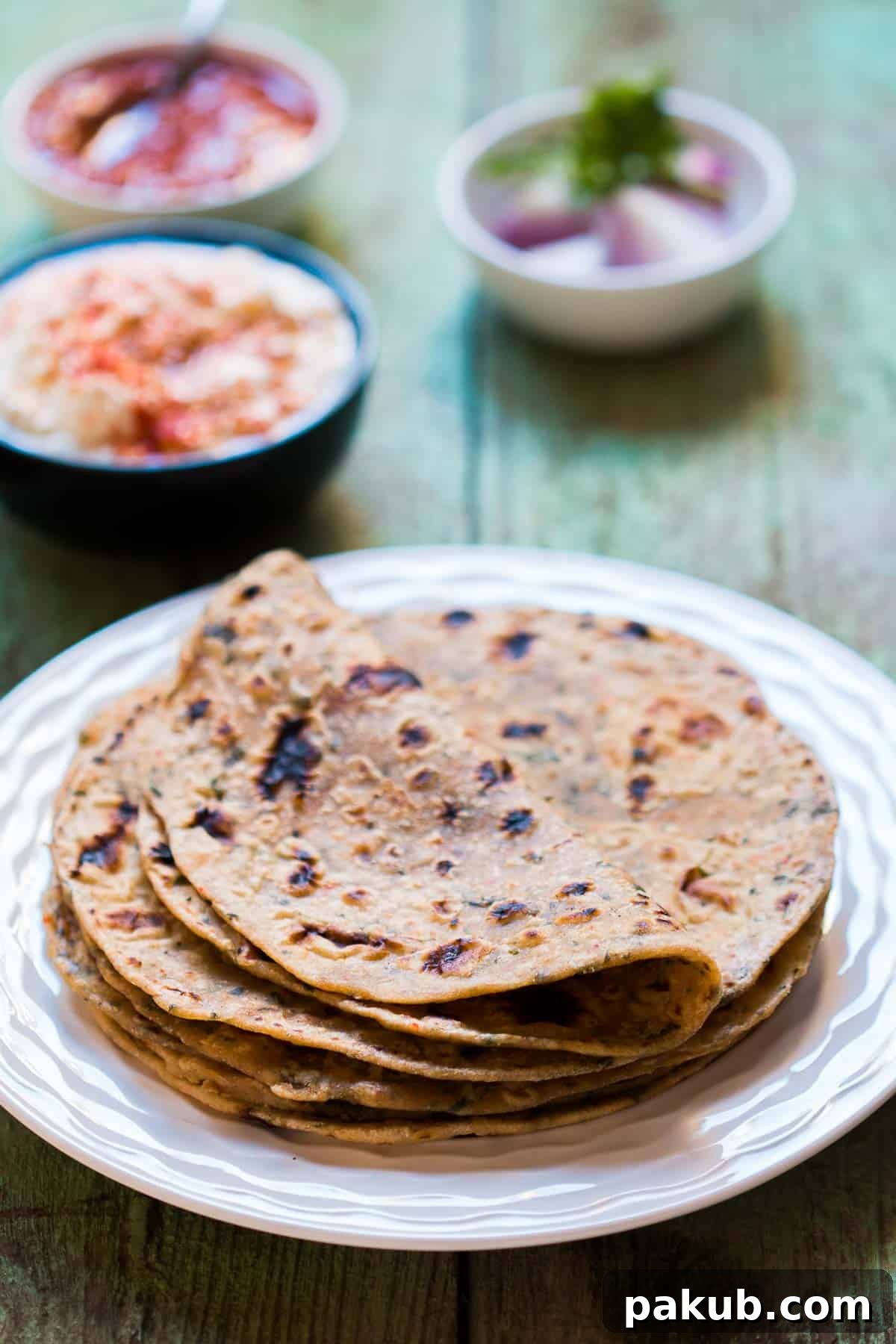
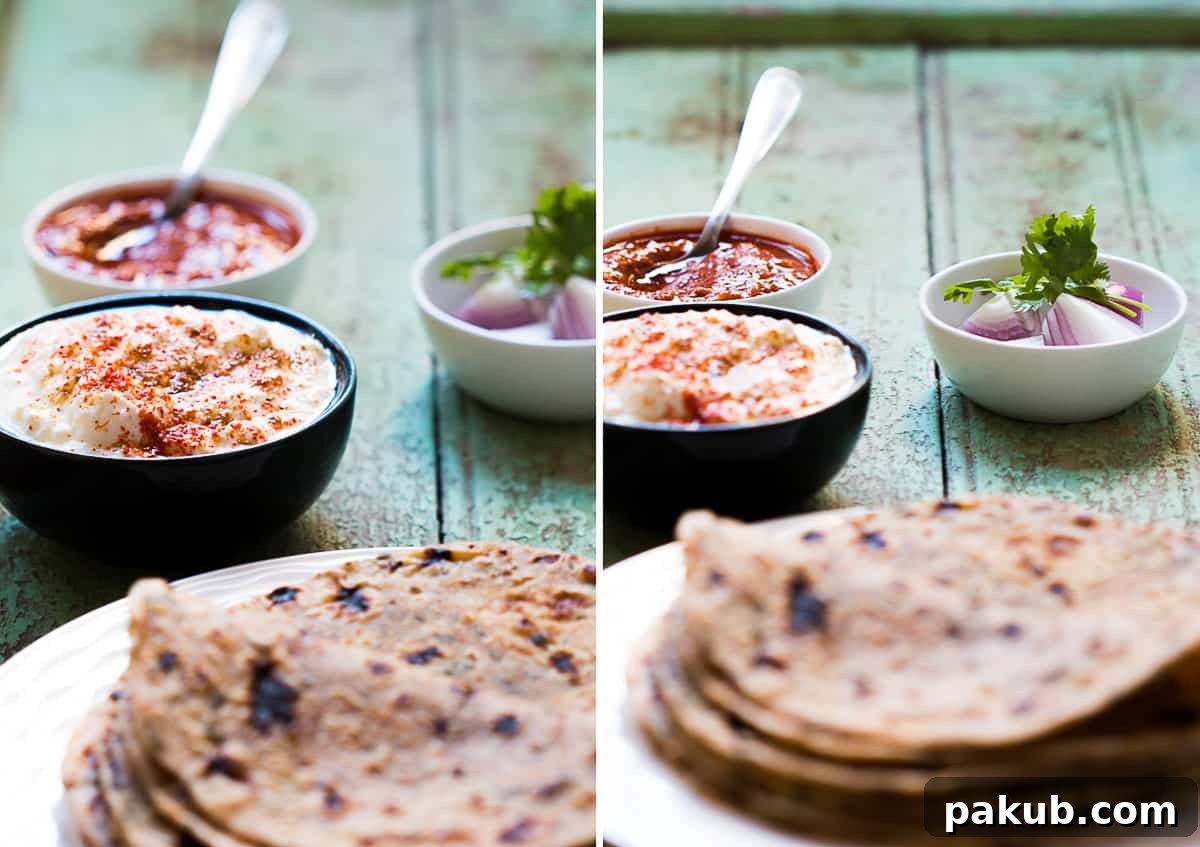
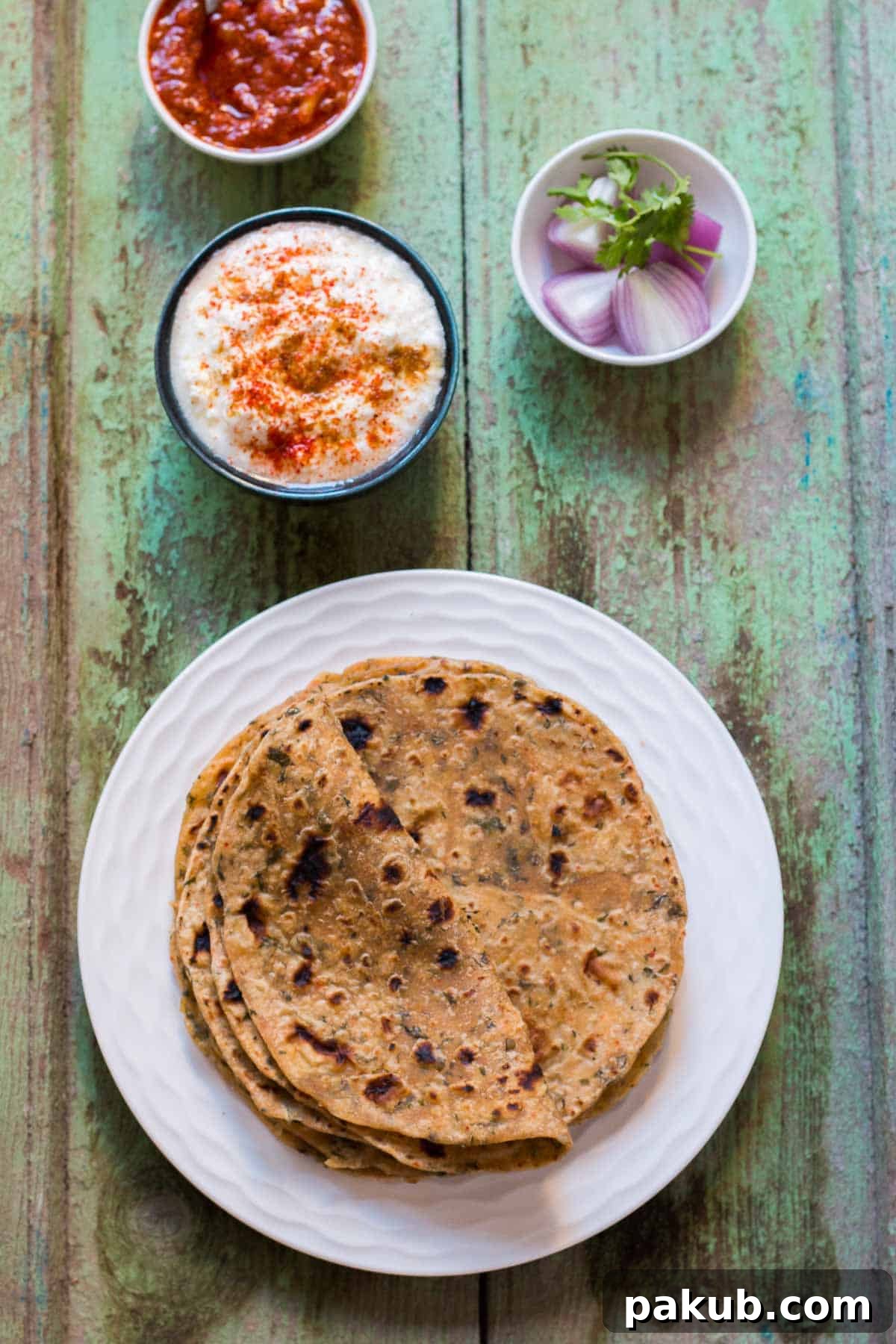
- Unmatched Versatility in Serving: Kasuri Methi Parathas are incredibly adaptable. They can be enjoyed simply with a hot cup of chai for a comforting breakfast, paired with tangy achar (pickle) or fresh dahi (yogurt) for a quick and satisfying snack, or served alongside a rich sabji (vegetable curry) or a creamy raita for a complete and wholesome meal. Their robust flavor holds its own, yet complements a wide array of accompaniments.
- Ideal for Meal Prepping: Life gets busy, and having healthy, ready-to-eat options on hand is a game-changer. These parathas can be prepared in advance, with the dough staying fresh in the refrigerator for several days. This allows for quick cooking throughout the week, making healthy eating convenient and stress-free, perfect for busy mornings or packed lunches.
- A Taste of Nostalgia: For many, the aroma and taste of methi paratha evoke childhood memories and the warmth of home-cooked meals. It’s a dish that connects generations, offering comfort and a sense of tradition with every bite.
These Kasuri Methi Parathas are truly perfect for any moment of the day. I often prepare a generous batch, and the leftovers are never wasted! In fact, they transform beautifully into other exciting dishes. One memorable morning, my leftover parathas became the star of a delicious Kuthu Paratha – a shredded flatbread stir-fry that’s bursting with flavor. It’s a brilliant way to repurpose and reinvent, and I’ll be sure to share that recipe with you soon!
Kasuri Methi Unveiled: The Star Ingredient
Kasuri Methi, or dried fenugreek leaves, is a cornerstone ingredient in Indian cooking, especially in North Indian cuisine. It’s harvested from the fenugreek plant (Trigonella foenum-graecum), and its leaves are dried to concentrate their unique flavor and aroma. This drying process intensifies its slightly bitter, yet aromatic and earthy notes, making it a powerful flavor enhancer. It’s commonly used in curries, lentil dishes, and of course, flatbreads like parathas and theplas.
The beauty of kasuri methi lies in its convenience and shelf-stability. Unlike fresh fenugreek leaves, which are seasonal and require thorough cleaning, kasuri methi is ready to use and can be stored for long periods. Its distinct flavor adds a depth that is hard to replicate, making it an indispensable spice for anyone looking to master authentic Indian flavors.
Frequently Asked Questions About Fenugreek Flatbreads
While the dough for these Kasuri Methi Parathas remains wonderfully fresh in the refrigerator for up to 3 days when stored in a clean, dry, airtight container, it’s generally best to consume the parathas fresh off the griddle. Cooked parathas tend to lose their soft texture and can become hard and crusty upon storage. If you must store them, allow them to cool completely, stack them with parchment paper in between, and store in an airtight container for up to 1-2 days. Reheat gently on a tawa or microwave to regain some softness, but for the optimal experience, hot and fresh is always recommended. Always remember to coat your dough ball with a thin layer of oil before refrigerating to maintain its softness and prevent any discoloration or crust formation.
Although often confused and sometimes used interchangeably, thepla and methi paratha are distinct Indian flatbreads with their own unique characteristics. Methi Paratha is typically made with whole wheat flour (atta), fresh or kasuri fenugreek leaves, and a blend of spices. The dough is usually kneaded with water and often enriched with a little oil or ghee. Thepla, on the other hand, is a specialty from Gujarati cuisine. It’s commonly prepared with a mix of wheat flour and besan (chickpea flour), curd (yogurt), and a more extensive array of spices, often including ginger, garlic, and green chilies. The addition of curd gives thepla a softer texture and a slightly tangy flavor, and they are generally thinner than parathas. Both are delicious, but their ingredient composition and regional origins set them apart.
Absolutely! To make these parathas vegan, simply substitute the ghee (clarified butter) used for cooking with a plant-based oil of your choice, such as sunflower oil, canola oil, or any neutral-flavored vegetable oil. The oil used in the dough is already plant-based. The flavor will remain delicious, and the texture will still be wonderfully soft and flaky.
Yes, you can freeze both the dough and cooked parathas, though with slight differences in outcome. For the dough: Portion it into individual balls, lightly coat with oil, wrap tightly in plastic wrap, and then place in a freezer-safe bag. It will last for up to 1-2 months. Thaw overnight in the refrigerator before rolling and cooking. For cooked parathas: Allow them to cool completely, stack with parchment paper in between, and freeze in an airtight container or freezer bag for up to 1 month. Reheat directly from frozen on a hot tawa with a little oil/ghee, or in a microwave until warmed through. The texture might be slightly less fresh than newly made, but still good.
Mastering the Art: Top Tips to Make the Best Kasuri Methi Parathas
- Ensure Freshness of Kasuri Methi: The quality of your kasuri methi significantly impacts the flavor of your parathas. Always use a fresh pack of dried fenugreek leaves. Older kasuri methi tends to lose its potent aroma and characteristic slightly bitter, earthy taste, resulting in less flavorful parathas. You can gently crush the kasuri methi between your palms before adding it to the dough to release its full fragrance.
- Achieve the Perfect Dough Consistency: When kneading the dough, add water slowly and gradually. The ideal dough should be firmer than what you would use for a soft roti but still pliable and smooth. A dough that’s too soft will be sticky and difficult to roll, while one that’s too stiff will yield hard and chewy parathas. Aim for a texture that bounces back slightly when pressed.
- Resting the Dough is Crucial: Don’t skip the resting period! Covering the dough and letting it rest for at least 10-15 minutes (or even up to 30 minutes) allows the gluten to relax. This makes the dough much easier to roll out thinly and evenly, and it contributes significantly to the final softness and texture of the parathas. A well-rested dough yields beautifully soft and fluffy parathas.
- Enhance with Additional Veggies: For an even more wholesome and flavorful twist, consider incorporating finely chopped onions or grated carrots into your paratha dough. These additions not only boost the nutritional content and add a delightful texture but also introduce subtle sweetness and moisture, taking your Kasuri Methi Parathas to a new level of deliciousness. Other options include finely chopped spinach or grated zucchini.
- Master the Rolling Technique: To get perfectly round parathas, apply even pressure while rolling. Start from the center and move outwards, rotating the dough frequently. Use a light dusting of dry flour to prevent sticking, but avoid excessive flour, which can make the parathas tough.
- Cook on Medium-High Heat: Cook your parathas on a preheated tawa (griddle) over medium-high heat. If the tawa isn’t hot enough, the parathas will dry out and become stiff. If it’s too hot, they might burn on the outside before cooking through. The ideal temperature ensures a golden-brown exterior and a thoroughly cooked, soft interior.
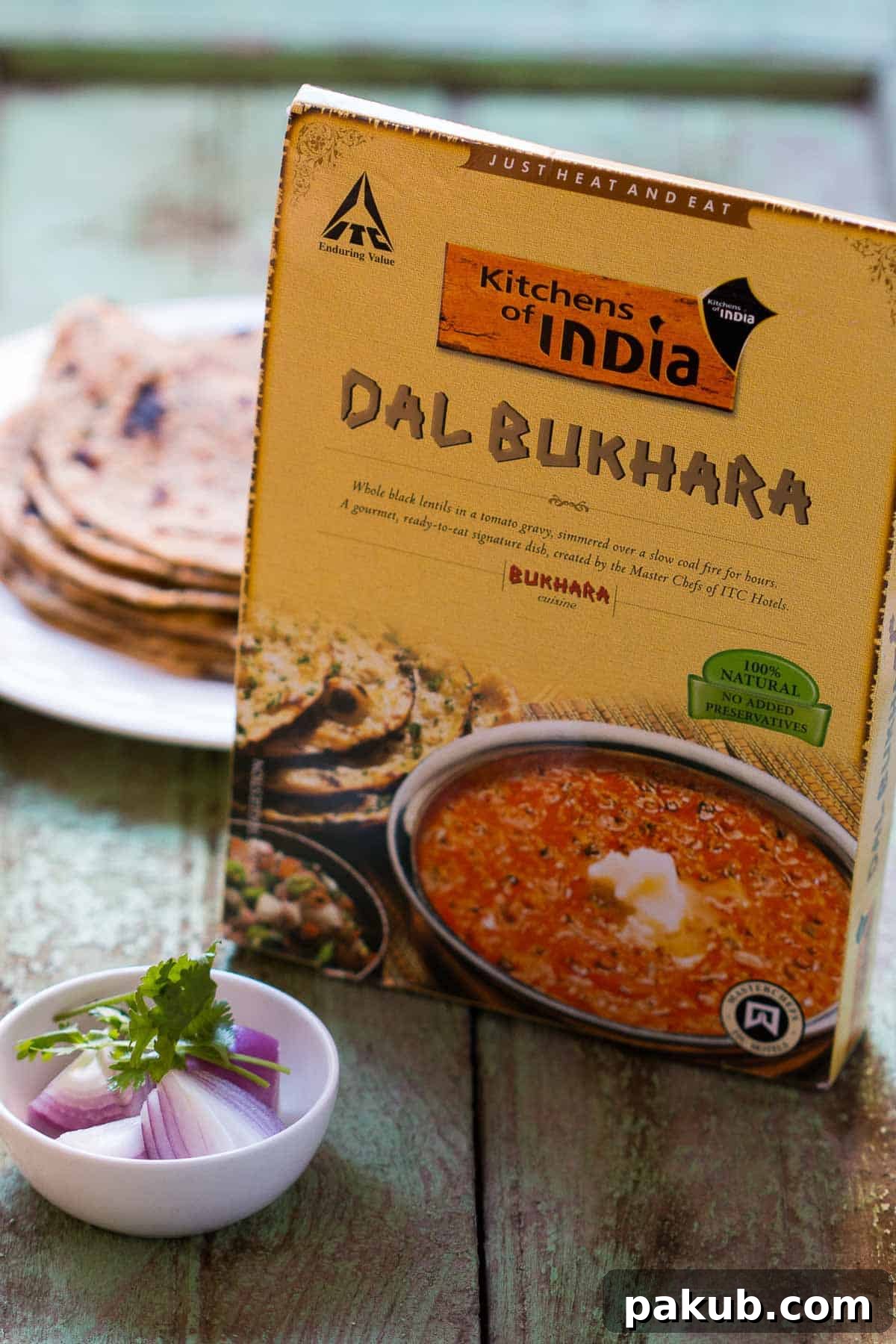
I find immense comfort and a true sense of home in the taste of these methi parathas. They are, without a doubt, an excellent choice to kickstart my day with a healthy and satisfying breakfast. However, their versatility means I’ve enjoyed them at all times of the day, for various meals, and each time, they’ve tasted absolutely delicious! Just the other day, I paired these warm parathas with a rich and creamy Dal Makhani, and the combination was simply divine. I couldn’t believe how perfectly they complemented each other. I wholeheartedly recommend you try this pairing – I promise you’ll love it too!
This post was sponsored by ITC, a brand committed to bringing quality ingredients to your kitchen.
Kasuri Methi Parathas | Fenugreek Flatbread
Richa
5 minutes
15 minutes
20 minutes
6 Portions
Pin Recipe
Rate Recipe
Print Recipe
Ingredients
- 2 1/2 cups Whole Wheat Flour, or Atta
- 3 1/2 tablespoons Kasuri Methi
- 1/2 teaspoon Green Chili Paste
- 1 teaspoon Coriander Powder
- 1/2 teaspoon Red Chili Powder
- 2 tablespoons Oil (for dough)
- 2 – 3 tablespoons Ghee, or Butter/Oil for cooking
- Salt to taste
- Approximately 1 cup Warm Water (for kneading dough)
Instructions
-
Prepare Kasuri Methi: Soak the kasuri methi in half a cup of boiling hot water for about 10 minutes. This rehydrates the leaves and helps to release their maximum flavor.
-
Combine Dry Ingredients: In a large mixing bowl, combine the whole wheat flour, green chili paste, coriander powder, red chili powder, 2 tablespoons of oil, and salt to taste. Gently squeeze the excess water from the rehydrated kasuri methi and add the leaves to the flour mixture (reserve the soaking water; it can be used for kneading if needed).
-
Knead the Dough: Gradually add warm water (you can use the reserved soaking water) to the flour mixture, kneading continuously. The goal is to form a smooth, firm, and pliable dough. It should neither be overly tough nor too soft and sticky. Knead well for about 5-7 minutes until the dough is elastic and smooth. Cover the dough with a damp cloth and let it rest for 10-15 minutes. This resting period is crucial for soft parathas.
-
Roll and Cook Parathas: Heat a tawa or griddle over medium-high heat. Divide the rested dough into equal, golf-ball sized portions. Take one portion and roll it out into a smooth, even circle (approximately 6-7 inches in diameter) using a little dry flour to prevent sticking. Place the rolled paratha onto the hot griddle. As soon as you begin to see small bubbles or spots appear on the surface (usually within 30-60 seconds), flip it. Spread a small amount of ghee (or butter/oil) evenly over the top surface. Flip again and spread ghee on the other side. Continue to cook, flipping every 30 seconds or so, until both sides are golden brown and cooked through. The paratha should puff up slightly, indicating it’s cooking well. You only need enough ghee to lightly coat and crisp the surface, not deep fry.
-
Repeat and Serve: Follow the same rolling and cooking instructions for the remaining dough portions. Alternatively, if you’ve made a large batch of dough, you can store the unused dough in an airtight container in the refrigerator for up to 3 days (coated with a little oil to prevent drying).
-
Enjoy Hot: Serve your Kasuri Methi Parathas immediately while hot with your favorite accompaniments such as dal, fresh curds, tangy chutney, or a spicy pickle.
Notes
- Feel free to add some finely chopped onion or even grated carrot or other vegetables to the dough to enhance the flavor and nutritional value of this recipe.
- You can store the prepared dough in the refrigerator for up to 3 days. Ensure it’s in an airtight container and lightly covered with a teaspoon of oil to prevent it from forming an outer crust and drying out.
- For an unforgettable meal, serve these parathas with a side of creamy Cucumber Mint Raita and your favorite achaar (pickle)!
Nutrition (Per Serving)
Carbohydrates: 36g,
Protein: 7g,
Fat: 18g,
Saturated Fat: 8g,
Trans Fat: 1g,
Cholesterol: 32mg,
Sodium: 198mg,
Potassium: 186mg,
Fiber: 5g,
Sugar: 1g,
Vitamin A: 56IU,
Vitamin C: 1mg,
Calcium: 18mg,
Iron: 2mg
Enjoyed this recipe? Share your thoughts below!
More Indian Breads to Explore
If you loved making these Kasuri Methi Parathas, you’re in for a treat! The world of Indian breads is vast and incredibly diverse, offering a perfect accompaniment for every meal and occasion. From light and airy everyday rotis to rich and flaky special occasion parathas, there’s always something new and delicious to discover. Expand your culinary journey with these other fantastic Indian bread recipes:
- Soft Rotis: The staple of Indian meals, perfect for daily consumption.
- No Yeast Naan: Enjoy restaurant-style naan at home without the fuss of yeast, ready in under 30 minutes.
- Thecha Naan: A spicy and flavorful naan infused with traditional Maharashtrian chili garlic paste.
- Cheese Garlic Naan: A cheesy, garlicky delight that’s a favorite with curries or on its own.
- Lachha Paratha: A flaky, multi-layered paratha that’s a joy to pull apart and savor.