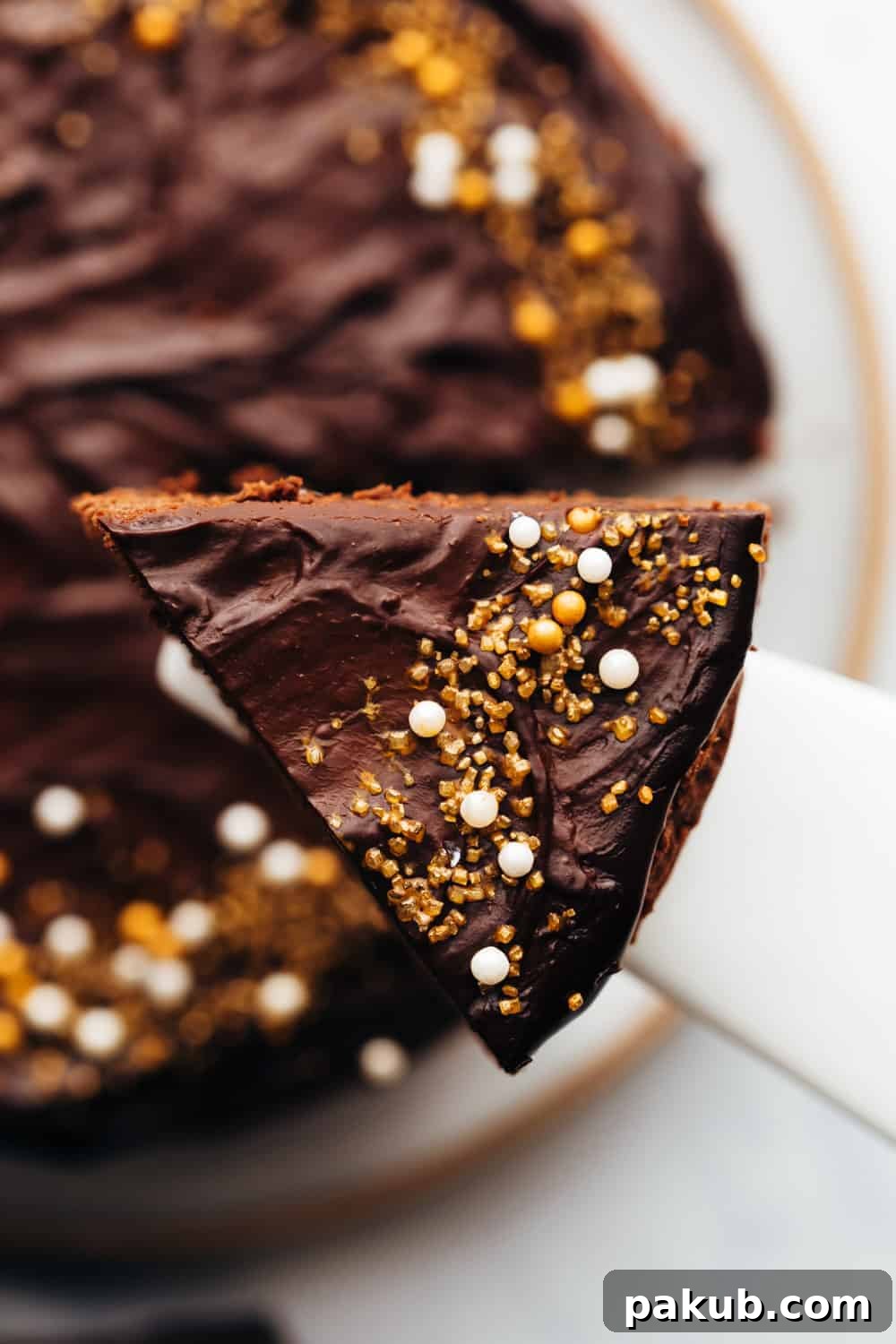
Say goodbye to dense, dry eggless cakes forever! This incredible recipe delivers a cake that’s exceptionally soft, wonderfully moist, and deeply chocolatey. You won’t believe it’s egg-free, and you don’t need any special ingredients either!
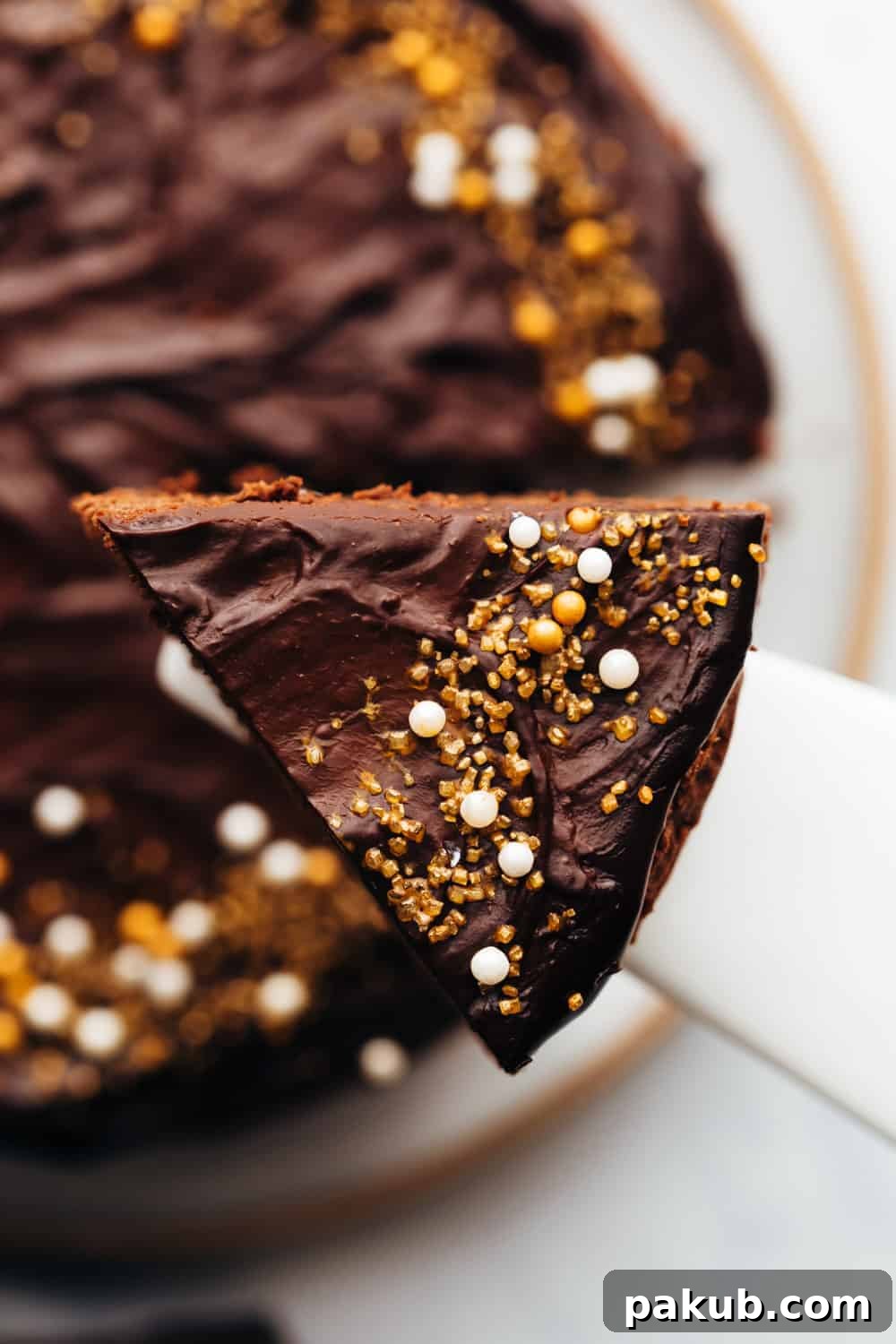
The Ultimate Moist and Fluffy Eggless Chocolate Cake: A Recipe That Will Surprise You!
For too long, eggless chocolate cakes have been unfairly stereotyped as being inferior – often dense, crumbly, or lacking the rich, luxurious texture of their egg-containing counterparts. We’re here to challenge that notion and introduce you to an eggless chocolate cake recipe that will utterly transform your perception. Imagine a cake that’s so profoundly moist, incredibly soft, and bursting with an intense chocolate flavor that even the most discerning palates won’t detect the absence of eggs. This isn’t just a good “eggless” cake; it’s simply a fantastic chocolate cake.
This recipe holds a special place in our hearts and has been a beloved fixture in our family for years. Developed through countless iterations by my mom and me, it has been consistently perfected to delight friends and family alike. We were so confident in its deliciousness that sharing it here required no further testing. It’s a testament to how simple yet impactful a well-crafted recipe can be. If you’re searching for a reliable, easy-to-follow chocolate cake recipe that caters to egg-free diets or preferences, your search ends here. Even those who regularly enjoy eggs will find themselves reaching for another slice of this delightful creation, often without realizing it’s entirely egg-free!
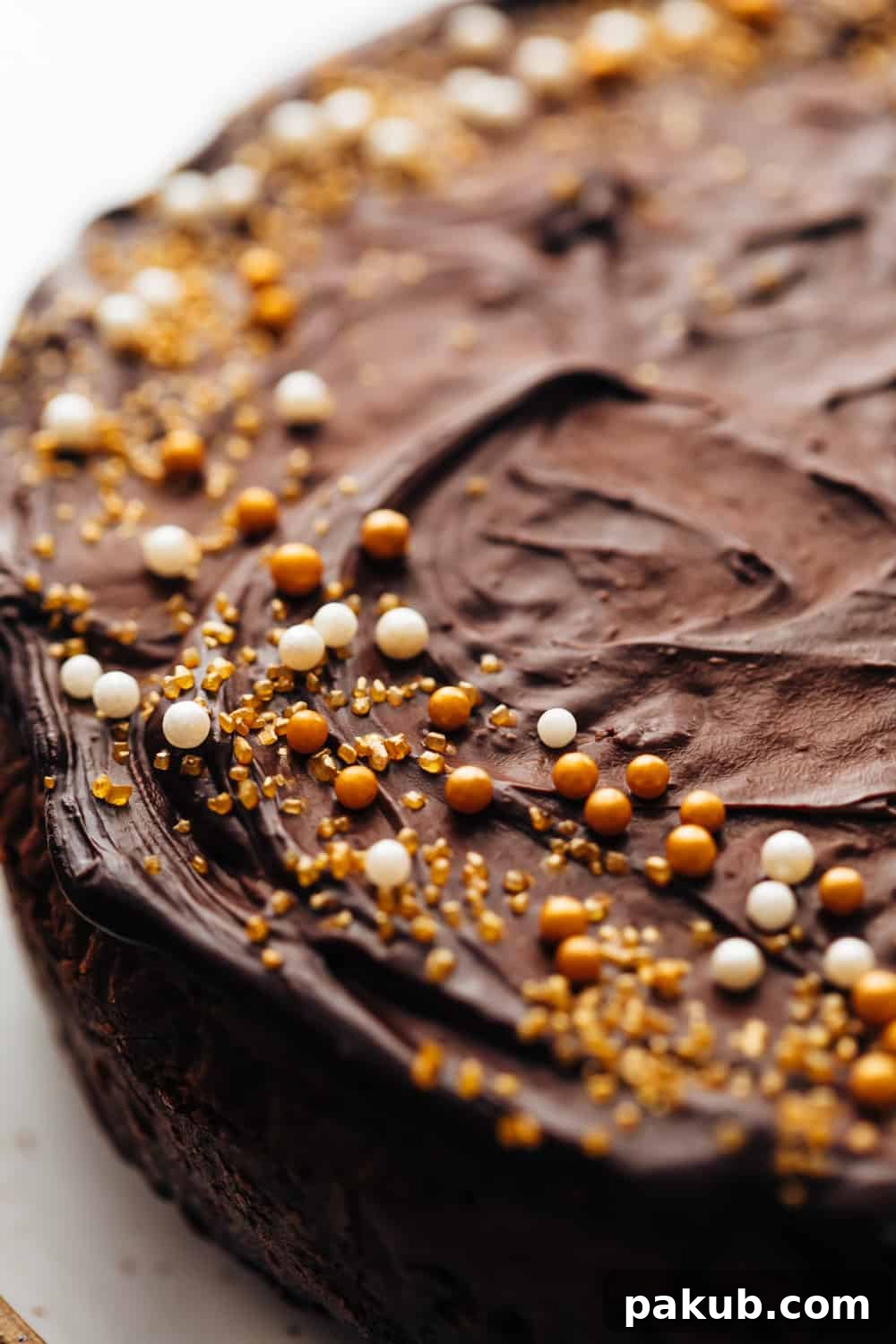
The Secret to an Unbelievably Moist Eggless Chocolate Cake
The quest for a truly moist and fluffy eggless cake often leads to frustration. Many recipes fall short, resulting in cakes that are either too dry, too heavy, or lack the characteristic bounce associated with a perfectly baked cake. Our recipe stands apart by harnessing the power of key ingredients and specific techniques to achieve an unparalleled texture and flavor. The synergy between the leavening agents (baking powder and baking soda) and acidic components (vinegar and Greek yogurt) creates a powerful reaction that generates abundant air bubbles, ensuring a beautiful rise and an ethereal, tender crumb. Coupled with the richness of melted butter and the creamy consistency of yogurt, this cake achieves a depth of moisture and flavor that truly rivals any traditional recipe.
We understand that baking can sometimes feel like a delicate science, and questions often arise. To make your baking journey as smooth as possible, we’ve tried to anticipate and answer all common queries within this guide. Should you find anything we’ve missed, please don’t hesitate to leave a comment; we’ll gladly add the information to benefit everyone in our baking community. Let’s dive into the core components that make this eggless chocolate cake an absolute showstopper.
Essential Ingredients for Your Perfect Eggless Chocolate Cake
One of the most appealing aspects of this recipe is its reliance on simple, staple ingredients you likely already have in your pantry. No need for exotic substitutes or special trips to gourmet stores; everything you need is easily accessible. Understanding the role of each ingredient is key to achieving consistent success.
All-Purpose Flour (Maida)
All-purpose flour forms the foundational structure of our cake. Its moderate protein content provides enough gluten to give the cake stability without making it overly chewy. For best results, measure flour accurately, ideally by weight (grams), as scooping directly from a bag can lead to compaction and an excess of flour, resulting in a denser cake. Remember, gentle mixing once the flour is added is crucial to prevent over-developing the gluten.
Unsweetened Cocoa Powder
The heart of any chocolate cake is, of course, the cocoa powder. For a rich, profound chocolate flavor and a beautiful deep brown hue, opt for a good quality unsweetened cocoa powder. Dutch-processed cocoa powder, which has been treated to reduce its acidity, often yields a darker color and a smoother, milder chocolate taste. Natural cocoa powder is more acidic. This recipe, with its combination of vinegar and Greek yogurt, is versatile enough to work wonderfully with either type, but Dutch-processed can contribute to a slightly richer color.
Baking Powder and Baking Soda: The Dynamic Duo for Lift
These two chemical leavening agents are indispensable for giving our eggless cake its characteristic light and airy texture. Baking soda is an alkaline compound that reacts vigorously with acids (like the vinegar and Greek yogurt in this recipe) to produce carbon dioxide gas, which creates bubbles and helps the cake rise. Baking powder, on the other hand, is a complete leavening agent containing both an acid and a base, offering a secondary boost of lift. Using them in combination ensures optimal rise and a tender crumb. Always check the freshness of your baking powder and soda; they lose potency over time.
Greek Yogurt or Hung Curds: The Star Egg Substitute
Here’s where the magic happens for our eggless marvel! Greek yogurt (or hung curds) is the brilliant substitute for eggs in this recipe. Its thick, creamy consistency and inherent acidity are perfect for mimicking many of the functions of eggs in baking. It acts as a binder, adds significant moisture, and contributes to the overall richness of the cake. Additionally, its acidity plays a vital role in activating the baking soda, contributing to the cake’s rise.
If you’re using regular plain yogurt instead of Greek yogurt, you’ll need to transform it into “hung curds.” This simply means straining out the excess whey to achieve a much thicker consistency. To do this, line a sieve with a cheesecloth or a clean kitchen towel, pour in the yogurt, and let it drain over a bowl in the refrigerator for at least 2-4 hours, or even overnight. Discard the liquid whey and use the thickened, creamy hung curd for your cake.
Powdered Sugar (Confectioners’ Sugar)
Unlike granulated sugar, powdered sugar has an incredibly fine texture, which is crucial for this recipe. It dissolves seamlessly into the batter, ensuring a smooth, uniform consistency and contributing to a fine-crumbed cake that melts in your mouth. Granulated sugar might not fully dissolve, potentially leading to a slightly gritty texture or uneven baking in an eggless batter.
Melted Butter: Richness and Moisture
Melted butter imparts a wonderful richness and depth of flavor, while also contributing significantly to the cake’s moist texture. Using melted butter ensures easy and even distribution throughout the batter. It’s important to let your melted butter cool slightly before incorporating it into the other wet ingredients to avoid inadvertently “cooking” them. For those seeking a dairy-free option, a neutral-flavored vegetable oil, such as canola or sunflower oil, can be substituted in equal quantities. While the flavor profile will differ slightly, the cake will remain incredibly moist.
Milk and Vinegar: The Homemade Buttermilk Catalyst
When milk and vinegar are combined and allowed to sit for a few minutes, they create a homemade buttermilk substitute. This acidic “buttermilk” is indispensable because it activates the baking soda, generating the carbon dioxide gas needed for the cake to rise beautifully. Furthermore, the acidity of the mixture helps to tenderize the gluten in the flour, resulting in a wonderfully soft and delicate cake crumb. You can use any type of dairy milk (whole, skim) or non-dairy milk (almond, soy) along with white vinegar or apple cider vinegar.
Vanilla Extract: The Flavor Enhancer
A touch of good quality vanilla extract is essential for balancing and enhancing the rich chocolate flavor. It adds a warm, aromatic note that rounds out the sweetness and complexity of the cake, making every bite even more satisfying. Always use pure vanilla extract for the best results.
Step-by-Step Guide: Baking Your Ultimate Eggless Chocolate Cake
Baking this cake is a joy, even for beginners. Follow these detailed instructions carefully, and you’ll be rewarded with a truly sensational dessert.
1. Prepare Your Oven and Pan
- Preheat your oven to 200 degrees C (390 degrees F). This initial higher temperature helps the cake achieve a good initial rise before the internal structure sets.
- Prepare a nine-inch round cake tin by lining the bottom with parchment paper and lightly greasing the sides. This crucial step ensures that your beautifully baked cake will release effortlessly from the pan after cooling.
2. Sieve the Dry Ingredients
- In a large mixing bowl, combine the all-purpose flour, unsweetened cocoa powder, baking powder, baking soda, and salt. Sieve these dry ingredients together thoroughly. Sieving is not just about removing lumps; it also aerates the flour and ensures that all the leavening agents and flavorings are evenly distributed, leading to a consistent crumb. Set this perfectly combined mixture aside.
3. Create Your Homemade Buttermilk
- In a separate small bowl or measuring cup, gently combine the milk and vinegar. Give it a quick stir and then set it aside for about 5-10 minutes. During this time, you’ll observe the milk beginning to curdle slightly, forming a quick homemade buttermilk. This acidic mixture is vital for reacting with the baking soda to create lift and tenderness in your cake.
4. Cream the Wet Ingredients
- In a large mixing bowl, cream together the melted butter and powdered sugar until the mixture is light, fluffy, and well combined. This can be done with a hand whisk or a hand blender.
- Next, add the Greek yogurt (or prepared hung curds) and vanilla extract to the butter and sugar mixture. Whisk everything together again until it’s smoothly incorporated and has a consistent, creamy texture. The yogurt is your key to an incredibly moist and tender eggless cake.
5. Gently Combine Wet and Dry Batters
- Now, it’s time to bring everything together. Add approximately half of the sieved dry flour mixture to your wet ingredients. Mix very gently with a spatula or a whisk until the dry ingredients are just incorporated. Avoid over-mixing.
- Pour in the milk and vinegar mixture (your homemade buttermilk) and stir lightly until it’s almost fully incorporated.
- Finally, add the remaining half of the dry flour mixture. Continue to fold gently until no streaks of dry flour are visible. The golden rule here is to mix *just enough*. Over-mixing will develop the gluten in the flour, resulting in a dense, tough cake. A few small lumps are perfectly acceptable and often indicate that you haven’t overmixed.
6. Bake to Perfection
- Pour the smooth cake batter evenly into your prepared nine-inch cake tin. Gently tap the tin on the counter a few times to release any large air pockets.
- Carefully place the tin into your preheated oven and bake at 200 degrees C (390 degrees F) for the initial 10 minutes. This high heat promotes a quick rise.
- After 10 minutes, reduce the oven temperature to 180 degrees C (350 degrees F) without opening the oven door, and continue baking for another 45-50 minutes.
- To test for doneness, insert a wooden toothpick into the center of the cake. If it comes out clean or with a few moist crumbs attached, your cake is perfectly baked. If it comes out with wet batter, continue baking for an additional 5-7 minutes and re-test.
7. Cool for the Perfect Finish
- Once baked, remove the cake from the oven and allow it to cool in the tin for 10 minutes. This crucial resting period allows the cake to firm up slightly, making it less prone to breaking when unmolded.
- After 10 minutes, carefully invert the cake onto a wire rack. Gently remove the parchment paper from the bottom and let the cake cool completely on the wire rack for at least 15-20 minutes. Cooling on a rack ensures air circulation, preventing condensation and a soggy bottom.
Decadent Chocolate Ganache: The Perfect Companion
While this eggless chocolate cake is absolutely delightful on its own, a luscious chocolate ganache takes it to an entirely new level of indulgence. This simple yet elegant frosting adds a layer of richness and a beautiful sheen, making your cake truly irresistible.
Making the Chocolate Ganache
- Start by chopping your dark chocolate into small, uniform pieces. This ensures that the chocolate melts quickly and evenly.
- In a microwave-safe bowl, combine the chopped dark chocolate and fresh cream.
- Microwave the mixture in short bursts of 30 seconds, stirring thoroughly after each interval. Continue this process for about 1-2 minutes, or until the chocolate begins to melt. Be cautious, as chocolate can burn easily. It’s better to stop when there are still a few small unmelted pieces and then stir vigorously, allowing the residual heat to melt them completely into a smooth, glossy ganache. Alternatively, you can achieve the same result by melting the chocolate and cream together over a double boiler on the stovetop.
Decorating Your Cake with Panache
- Once your beautiful cake has cooled completely – and we mean completely, as frosting a warm cake will cause the ganache to melt and slide off – it’s time to decorate!
- Pour the warm ganache evenly over the top of the cooled cake. Use an offset spatula or the back of a spoon to gently spread the ganache across the top surface. You can either let it naturally cascade down the sides for a charming, rustic drip effect, or meticulously spread it for a cleaner, more polished finish.
- For a touch of sparkle and celebration, adorn your cake with your favorite gold and white sprinkles, or any other decorative toppings that inspire you. This simple addition can transform your humble cake into a festive centerpiece, perfect for birthdays, holidays, or any special occasion that calls for a delicious, eggless treat!
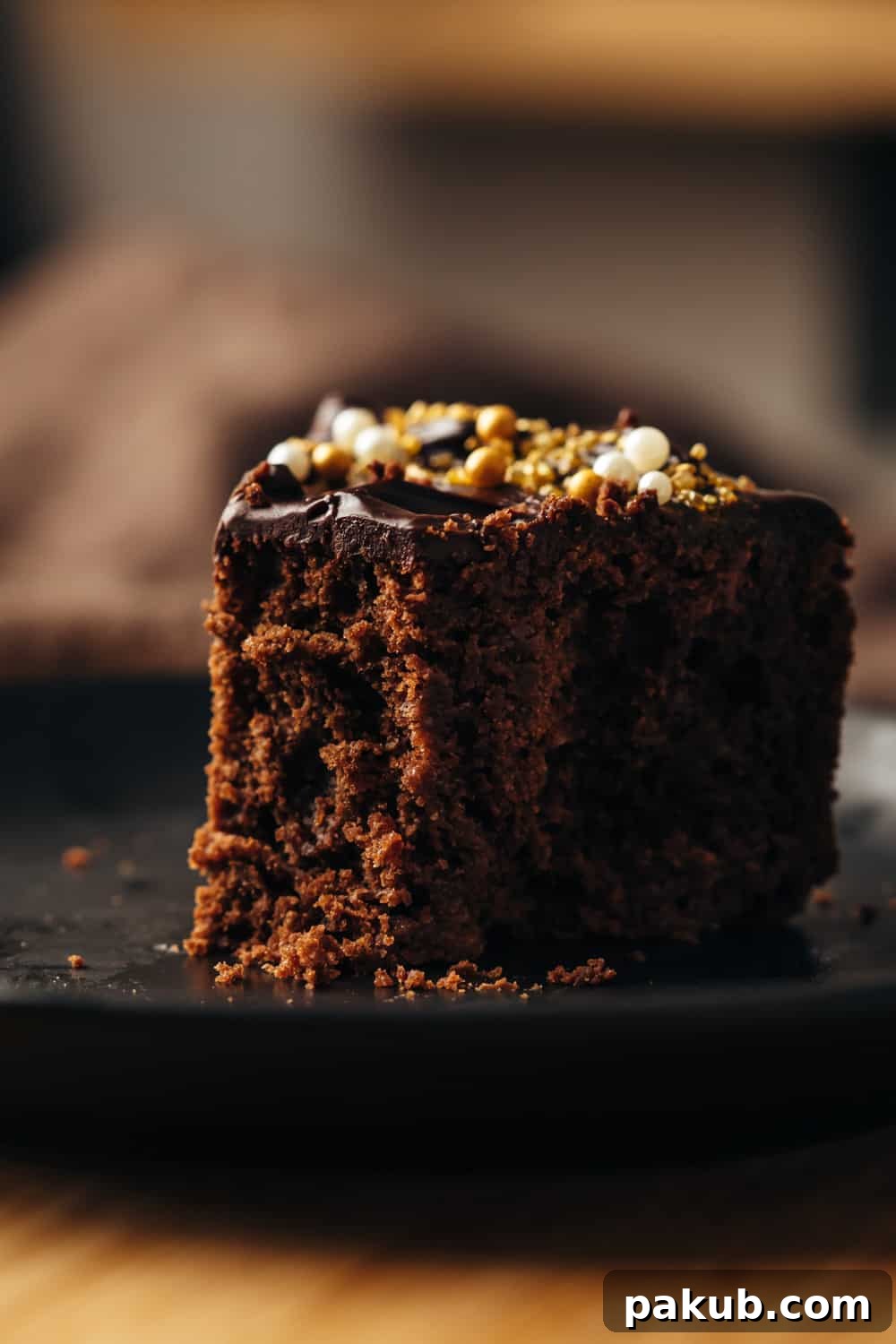
Expert Tips for Baking Your Best Eggless Chocolate Cake
Achieving a perfect eggless chocolate cake is easier than you think, especially with these insider tips:
- Do Not Overmix the Batter: This is arguably the most critical tip for any cake, but especially for eggless ones. Over-mixing develops the gluten in the flour excessively, leading to a tough, dense, and chewy cake. Mix only until the ingredients are just combined and no dry streaks of flour remain.
- Ensure Room Temperature Ingredients: Make sure your milk, Greek yogurt, and melted butter are all at room temperature before you start. Ingredients at similar temperatures combine more smoothly and emulsify better, creating a more uniform and stable batter, which in turn leads to a finer crumb.
- Accuracy in Measurements is Key: Baking is often referred to as a science, and for good reason. Precise measurements are crucial, particularly for flour and leavening agents. We highly recommend using a digital kitchen scale to measure your dry ingredients by weight (grams) for the most accurate and consistent results. Cup measurements can vary widely.
- Check the Freshness of Leavening Agents: Baking powder and baking soda lose their potency over time. Old leavening agents will result in a flat, dense cake. Always check the expiration dates and, if in doubt, perform a quick freshness test (baking soda fizzes in vinegar; baking powder fizzes in hot water).
- Patience During Baking: Resist the urge to open the oven door frequently, especially during the first 25-30 minutes of baking. Sudden drops in oven temperature can cause the cake to deflate and sink in the center. Trust the process and your oven.
- Cool Completely Before Frosting: This cannot be stressed enough! Attempting to frost a warm cake will inevitably lead to your ganache or frosting melting and sliding off, creating a messy situation. Allow your cake to cool entirely on a wire rack before applying any frosting.
- Enhanced Flavor Overnight: Believe it or not, this eggless chocolate cake often tastes even better the day after it’s baked. The flavors have more time to meld and deepen, resulting in a more complex and satisfying taste experience. If you can resist, make it a day ahead!
Frequently Asked Questions About Eggless Chocolate Cake
- Can I make this eggless chocolate cake vegan?
- Yes, absolutely! To adapt this recipe for a vegan diet, you’ll need to make a few simple substitutions: use a plant-based milk (such as almond, soy, or oat milk) instead of dairy milk, opt for a thick, plain, unsweetened plant-based yogurt (like soy or coconut yogurt) instead of Greek yogurt, and replace the dairy butter with a high-quality vegan butter or a neutral-flavored vegetable oil (like canola or sunflower oil). For the ganache, ensure you use vegan dark chocolate and a plant-based cream.
- What other egg substitutes can I use if I don’t have Greek yogurt?
- While Greek yogurt or hung curds are highly recommended for their specific texture and binding properties in this recipe, other common egg substitutes can work in different recipes. These include unsweetened applesauce, mashed ripe banana, or flax eggs (1 tablespoon of ground flaxseed meal mixed with 3 tablespoons of water, allowed to sit for 5-10 minutes until it forms a gel). However, keep in mind that these alternatives might introduce slight flavor changes or require minor adjustments to the overall liquid content and baking time. For this specific recipe, Greek yogurt or hung curd remains our top recommendation for optimal results.
- My cake turned out dense. What could have gone wrong?
- A dense cake is one of the most common issues in baking, particularly with eggless recipes. The primary culprits are typically over-mixing the batter, which develops too much gluten and makes the cake tough. Other factors can include old or inactive baking powder or baking soda, incorrect oven temperature (too low), or not properly sieving your dry ingredients. Always ensure your leavening agents are fresh and avoid over-working the batter once the flour is added.
- How should I store my eggless chocolate cake to keep it fresh?
- This cake stores wonderfully! To maintain its freshness and moistness, store the eggless chocolate cake in an airtight container at room temperature for up to 2 days. For longer preservation, you can refrigerate it in an airtight container for up to 4 days. If you wish to freeze the cake, wrap individual slices or the entire unfrosted cake tightly in plastic wrap, followed by a layer of aluminum foil. It can be frozen for up to 2-3 months. Thaw frozen cake in the refrigerator overnight before serving.
- Can I bake this eggless chocolate cake in a microwave convection oven?
- Yes, you can absolutely bake this delicious eggless chocolate cake in a microwave convection oven! When using a convection mode, we recommend baking it at 180 degrees C (350 degrees F) for approximately 25-30 minutes. Baking times can vary slightly between different ovens, so always keep a close eye on your cake and perform the toothpick test to ensure it is fully cooked through.
More Delicious Eggless Dessert Recipes to Explore
If you’ve fallen in love with the moist and rich taste of this eggless chocolate cake, you’ll be delighted to discover more of our fantastic egg-free dessert recipes. Expand your baking repertoire with these reader favorites:
- Eggless Chocolate Brownies – A consistently fudgy and rich treat that’s a true crowd-pleaser and a perennial reader favorite!
- Eggless Chocolate Mousse – Experience a light, airy, and intensely chocolatey dessert without the need for eggs.
- Eggless Pineapple Mousse – A refreshing and tropical dessert that’s perfect for warm weather or a light finish to any meal.
- Mini Mango Cheesecakes (Eggless and No Bake) – These delightful individual cheesecakes are egg-free, require no baking, and are bursting with fresh mango flavor!
- Eggless Banana Chocolate Peanut Butter Mug Cake – A super quick, single-serving indulgence, especially popular among college students and bachelors for its ease and deliciousness!
- Eggless Blueberry Mug Cake – Packed with juicy blueberries, this mug cake has garnered countless glowing reviews for its simplicity and taste!
- Eggless Garam Masala Apple Cake – An unexpectedly flavorful and comforting cake, offering the best way to enjoy the warmth of apples with a hint of spice.
- Eggless Tiramisu – Yes, you read that right! Enjoy an elegant and creamy Tiramisu, completely egg-free and utterly divine!
Watch Our Eggless Chocolate Cake Recipe Video Tutorial
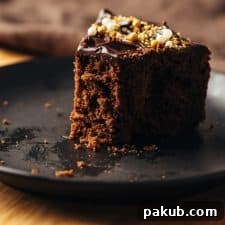
Eggless Chocolate Cake – Incredibly Soft and Moist!
By: Richa
This eggless chocolate cake recipe yields a moist, airy, light, and intensely chocolatey cake. It’s wonderfully easy to make and guaranteed to be a delightful success every time!
Prep Time: 10 mins
Cook Time: 45 mins
Total Time: 55 mins
Servings: 6 Slices
Equipment
- Oven
- Hand Blender
Ingredients
For the Cake:
- 210 grams All-Purpose Flour / Maida (1 ¾ cups)
- 25 grams Unsweetened Cocoa Powder (¼ cup)
- 1 teaspoon Baking Powder
- ½ teaspoon Baking Soda
- ¼ teaspoon Salt
- ½ cup Milk
- 1 teaspoon Vinegar
- ½ cup Melted Butter
- 120 grams Powdered Sugar (1 cup)
- 1 cup Greek Yogurt / Hung Curds
- 1 teaspoon Vanilla Extract
For the Chocolate Ganache:
- 75 g Dark Chocolate
- 75 g Fresh Cream
Instructions
For the Cake:
- Preheat oven to 200 degrees C (390 degrees F). Line a nine-inch tin with parchment paper and set aside.
- Sieve flour, cocoa, baking soda, baking powder, and salt together in a bowl and set aside.
- In a separate bowl, mix together milk and vinegar and let it sit for a few minutes to curdle.
- In a large mixing bowl, cream together the melted butter and powdered sugar. Add the Greek yogurt and vanilla extract and whisk until well combined.
- Add half of the sieved dry flour mixture to the wet ingredients and mix gently. Then, add the milk and vinegar mixture and stir lightly. Finally, add the remaining flour mixture and fold gently until just combined, being careful not to over-mix.
- Pour the batter into the prepared tin and bake in the preheated oven for 10 minutes at 200 degrees C (390 degrees F). Reduce the temperature to 180 degrees C (350 degrees F) and bake for another 45-50 minutes, or until a toothpick inserted in the center comes out clean.
- Cool the cake in the tin for 10 minutes, then carefully unmold it and transfer to a wire rack to cool completely for at least 15 minutes.
For the Chocolate Ganache:
- Combine chopped dark chocolate and fresh cream in a microwave-safe bowl. Warm in 30-second intervals for 1-2 minutes, stirring well after each interval, until the chocolate is melted and the mixture is smooth and glossy. Be careful not to burn the chocolate.
- Once the cake has cooled completely, pour the warm ganache over the cake and spread evenly over the top, allowing some to drip down the sides. Sprinkle with your favorite sprinkles and serve!
Recipe Video
Notes
- Milk and Vinegar: You can substitute milk and vinegar with an equal quantity of store-bought buttermilk if you have it on hand.
- Melted Butter: Melted butter can be substituted with a neutral-flavored vegetable oil (like canola or sunflower oil) in equal quantity for a dairy-free option.
- Powdered Sugar: Using powdered sugar or castor sugar is recommended over granulated sugar for a smoother cake texture, as it dissolves more easily during baking.
- Greek Yogurt: Greek yogurt offers the ideal consistency. If using regular plain yogurt, make sure to make “hung curds” by straining out the whey through a cheesecloth or fine-mesh sieve.
- Baking Eggless Chocolate Cake in Microwave Convection: For a microwave convection oven, bake at 180°C (350°F) for approximately 25-30 minutes. Always check for doneness with a toothpick.
- Storing Chocolate Cake: This cake can be stored in an airtight container at room temperature for up to 2 days. For extended freshness, refrigerate it for up to 4 days.
Nutrition Facts (per serving)
Calories: 503 kcal
Carbohydrates: 58g
Protein: 10g
Fat: 27g
Saturated Fat: 16g
Polyunsaturated Fat: 1g
Monounsaturated Fat: 7g
Trans Fat: 1g
Cholesterol: 59mg
Sodium: 408mg
Potassium: 286mg
Fiber: 4g
Sugar: 25g
Vitamin A: 696 IU
Vitamin C: 0.1mg
Calcium: 134mg
Iron: 4mg
We are confident you’ll adore this exceptional eggless chocolate cake recipe! We encourage you to try it out and then share your baking experience with us by leaving a rating and comment below. Happy baking!