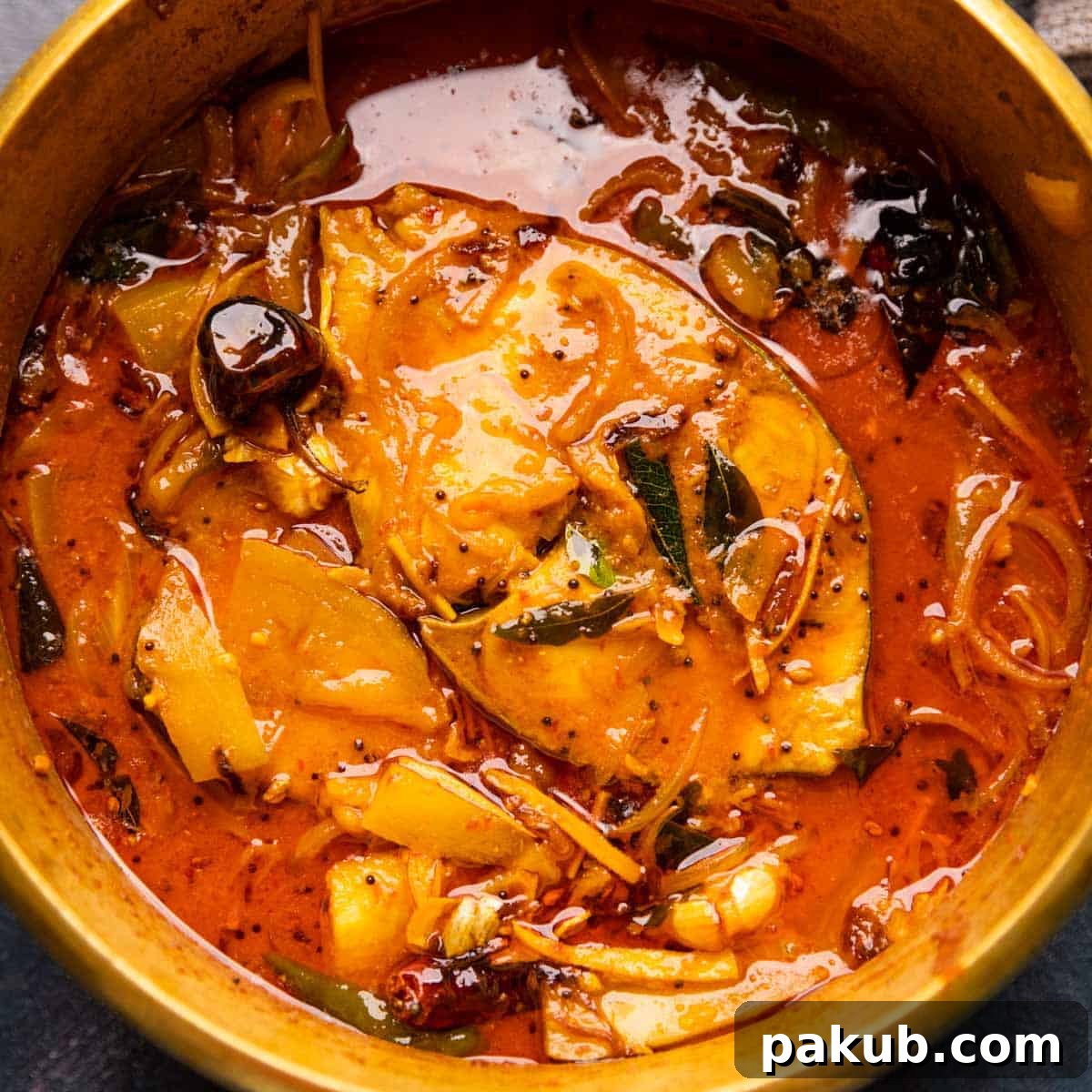
Authentic Raw Mango Fish Curry: A Spicy & Tangy Alleppey Delight
Prepare your taste buds for an unforgettable culinary journey! This Raw Mango Fish Curry is an explosion of spicy, tangy, and profoundly aromatic flavors, directly inspired by the renowned Alleppey fish curry from Kerala, India. The star ingredient, raw green mango, infuses the dish with a delicious sourness that perfectly complements the fiery spices. It’s a truly addictive experience – so be warned, you’ll definitely be craving seconds, even if your mouth is tingling from the heat!
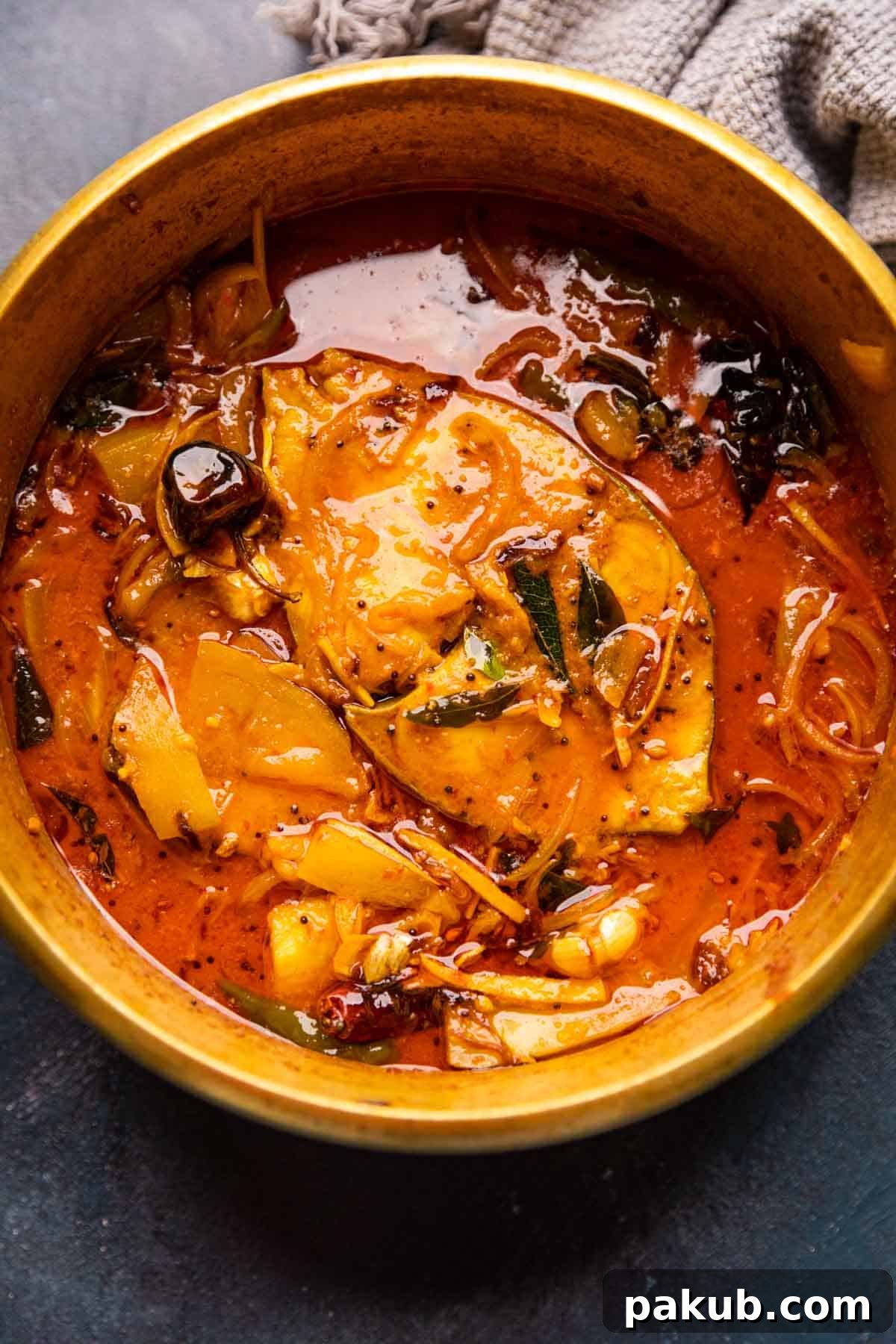
There’s something inherently comforting and exciting about a perfectly balanced fish curry. For me, the ideal fish curry must be both spicy and tangy – a vibrant celebration of flavors that ignites the palate. This Raw Mango Fish Curry perfectly embodies that vision, delivering a sensational “party in your mouth” experience that keeps you coming back for more. Drawing inspiration from the traditional Alleppey fish curry of Kerala, this recipe masterfully blends multiple dimensions of taste:
- Intense Spice: From a potent trio of fresh green chillies, dried red chillies, and a generous touch of red chilli powder.
- Bright Tang: Courtesy of the delightfully sour raw green mango, which is the heart and soul of this particular curry.
- Subtle Sweetness: Derived from gently sautéed shallots, adding a delicate balance to the heat and sourness.
- Pungent Aromatics: The earthy depth of curry leaves and garlic, which build the foundational aroma of the dish.
- Fragrant Depth: Hints of fenugreek seeds and mustard seeds from the tempering, elevating the overall complexity.
This isn’t just a meal; it’s a symphony of authentic South Indian flavors, meticulously crafted to ensure every spoonful is as delicious as the last. It’s a dish you’ll undoubtedly want to prepare again and again.
A Fan of Seafood? Explore more delightful seafood creations like the rich Goan Prawn Curry, the fiery Spicy Fish Curry with Coconut and Tamarind, crispy Prawn Rava Fry, savory Prawn Chow Mein, and a classic Mangalorean Fish Fry.
Table of Contents
- Why This Raw Mango Fish Curry Is A Must-Try
- Essential Ingredients for Your Fish Curry
- Choosing The Perfect Fish For This Recipe
- Step-by-Step Guide: How to Make Raw Mango Fish Curry
- Frequently Asked Questions About Raw Mango Fish Curry
- Expert Tips To Make The Best Raw Mango Fish Curry
- Watch the Recipe Video
- More Savory Mango Recipes
Why This Raw Mango Fish Curry Is A Must-Try
This isn’t just another fish curry recipe; it’s a culinary experience waiting to happen. Here’s why this particular raw mango fish curry will quickly become a cherished part of your recipe collection:
- A Taste of the Season: This recipe truly shines in the summertime when raw mangoes are abundant and at their peak. The freshness of seasonal ingredients makes a remarkable difference, infusing the curry with unparalleled zest and vibrancy that only fresh mango can provide.
- Surprisingly Simple, Outstanding Results: Don’t let the depth of flavor fool you. This recipe is remarkably straightforward to follow, making it accessible even for novice cooks. Yet, the outcome is a gourmet-level dish that tastes like it came from a high-end restaurant. It’s a testament to how simple ingredients, when combined thoughtfully, can create extraordinary culinary magic.
- Weeknight Friendly in Under 35 Minutes: In today’s fast-paced world, finding a delicious, homemade meal that comes together quickly is a treasure. With a prep time of just 5 minutes and a cook time of around 30 minutes, this fish curry is perfect for busy weeknights, allowing you to enjoy a flavorful, authentic meal without spending hours in the kitchen.
- The Unmistakable Flavor of Raw Mango: While raw mango is the star here, providing that unique sour and tangy kick, it’s good to know that in a pinch, other souring agents like kokum or tamarind can be used. However, for the true authentic Alleppey flavor, raw mango is irreplaceable, offering a distinct fruity tartness that elevates the entire dish.
- Healthy and Nutritious: Packed with lean protein from the fish and beneficial spices like turmeric and fenugreek, this curry is not just delicious but also contributes to a balanced diet.
Essential Ingredients for Your Fish Curry
The magic of this Raw Mango Fish Curry lies in the synergy of its fresh ingredients and aromatic spices. Each component plays a vital role in building the curry’s complex flavor profile:
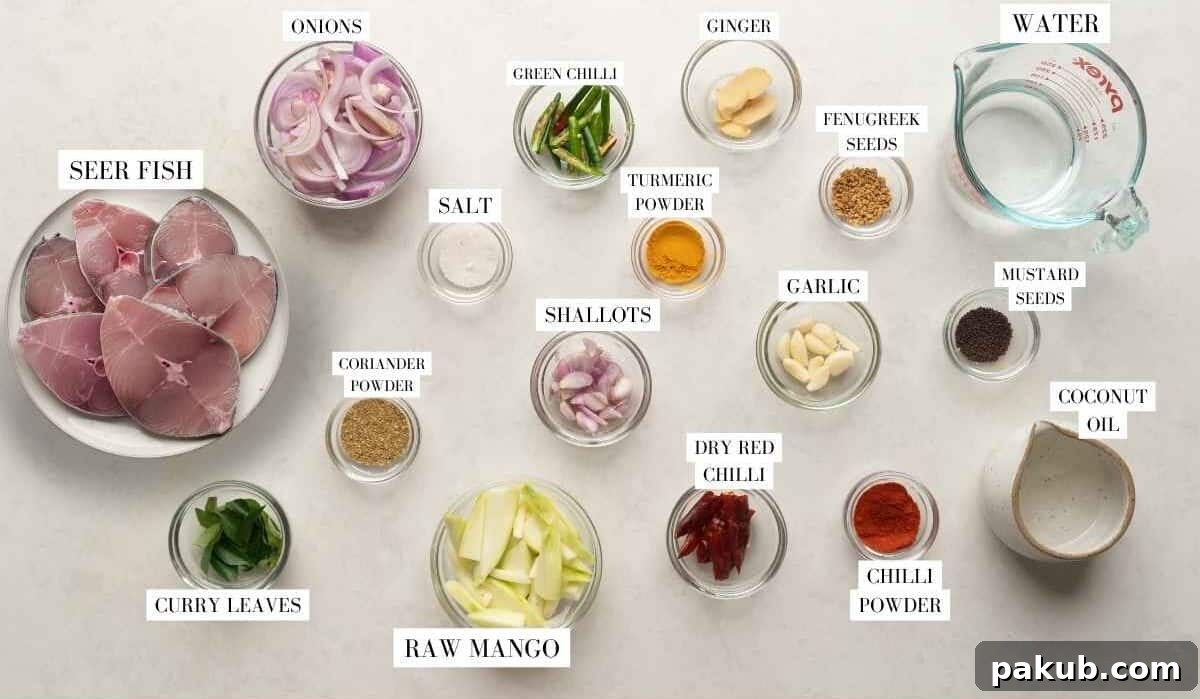
- For the Aromatic Paste: This paste is the flavor powerhouse of the curry, incredibly quick to prepare yet essential for depth.
- Garlic Cloves: Form the pungent, aromatic base, lending a robust flavor.
- Dried Red Chillies: Contribute the initial layer of heat and a smoky undertone.
- Turmeric Powder: Imparts a beautiful golden hue, earthy notes, and a wealth of health benefits.
- Coriander Powder: Adds a warm, citrusy, and slightly sweet aroma that’s characteristic of many Indian curries.
- Red Chilli Powder: Further enhances the spiciness, ensuring that satisfying kick that makes this curry so memorable.
- Water: Helps in blending the ingredients into a smooth, fine paste.
- For the Main Curry: Building the luscious gravy that cradles the fish and mango.
- Coconut Oil: The traditional and preferred cooking medium in Kerala, adding a distinct subtle sweetness and aroma.
- Ginger: Freshly sliced ginger provides a zesty, warming zing.
- Green Chillies: Fresh green chillies contribute a sharp, vibrant heat.
- Curry Leaves: Essential for that authentic South Indian aroma, releasing a burst of fragrance when sautéed.
- Onions (preferably Shallots): Sliced onions (or shallots for a milder, sweeter base) are sautéed until translucent, forming the savory foundation of the gravy.
- Raw Mango (Unripe/Sour Mango): The absolute showstopper! Peeled and sliced, it introduces the signature tangy and sour notes that define this curry.
- Salt: To season and balance all the flavors.
- Water: To adjust the consistency of the curry to your liking.
- Fish Fillets: Firm, white fish fillets like Pomfret or Seer fish are ideal, absorbing all the wonderful flavors of the curry.
- For the Irresistible Tempering (Tadka): While you could stop after cooking the fish, tempering the curry at the end is a step you absolutely shouldn’t skip. This final flavor infusion elevates the dish from great to extraordinary, adding layers of aroma and a delightful textural contrast. You will need:
- Coconut Oil: The base for tempering, carrying the flavors beautifully.
- Shallots: Delicately sliced, shallots impart a sweeter, less sharp onion flavor compared to red onions, ensuring they enhance rather than overpower the gravy.
- Garlic Cloves: Whole and lightly smashed, these fry to a golden crisp, releasing deep, savory notes.
- Mustard Seeds: As they splutter, they release a wonderfully pungent, nutty aroma and a slight bitterness that is crucial to South Indian cuisine.
- Dry Red Chilli: Adds a smoky heat and a beautiful visual element to the final dish.
- Curry Leaves: A second round of curry leaves ensures a fresh, aromatic burst just before serving.
- Fenugreek (Methi) Seeds: These tiny seeds are incredibly fragrant. A little goes a long way, contributing a unique, slightly bitter, and deeply aromatic note that rounds out the curry’s profile.
Choosing The Perfect Fish For This Recipe
The success of any fish curry largely depends on the quality and type of fish used. For this Raw Mango Fish Curry, selecting the right fish is key to ensuring it perfectly soaks up the vibrant, tangy, and spicy flavors without falling apart.
I highly recommend using firm-fleshed white fish. My top choices are pomfret or seer fish (King Mackerel) fillets. Both of these varieties are excellent for several reasons:
- Firm Texture: They hold their shape beautifully during cooking, preventing the fish from disintegrating into the curry. This is crucial for a pleasing presentation and mouthfeel.
- Low Oil Content: These fish are not excessively oily, which allows the rich flavors of the curry to shine through without being masked by a greasy texture.
- Excellent Flavor Absorption: Their firm yet tender flesh acts like a sponge, readily absorbing the complex blend of spices, sour mango, and aromatic tempering, resulting in incredibly flavorful pieces of fish.
What if you can’t find pomfret or seer fish? Don’t worry, there are plenty of delicious alternatives that will work wonderfully:
- Sardines: A popular choice in Kerala, offering a distinct flavor and a good source of omega-3 fatty acids.
- Sea Bass: Known for its delicate flavor and firm, flaky texture.
- Mackerel: Another excellent oily fish that holds up well and contributes its own rich taste.
- Tilapia: A mild-flavored white fish that is widely available and absorbs flavors well.
- Red Snapper: Offers a slightly sweet flavor and a firm, moist texture.
- Cod: A lean, flaky white fish that is versatile and takes on the curry flavors beautifully.
When selecting your fish, always look for fresh fillets with a clean smell and firm flesh. Whether you choose the traditional favorites or a suitable alternative, ensure the fish is cut into appropriate, bite-sized pieces to cook evenly and meld seamlessly with the curry.
Step-by-Step Guide: How to Make Raw Mango Fish Curry
Creating this flavorful Raw Mango Fish Curry is a rewarding experience. Follow these detailed steps to achieve a perfect, authentic dish.
Phase 1: Preparing the Aromatic Paste
This paste is the backbone of our curry’s flavor. It’s quick to make and packed with essential aromatics.
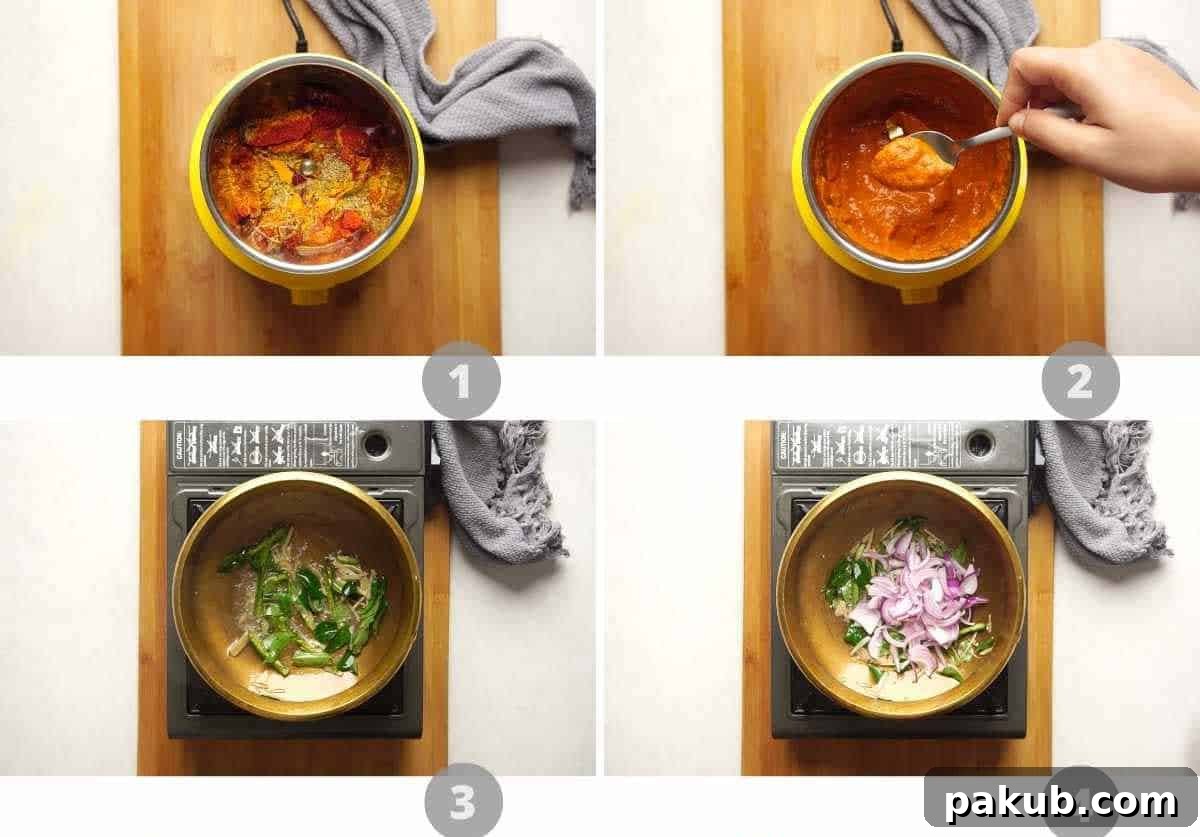
Step 1: Gather Paste Ingredients. In the small jar of a mixer grinder, combine 8 chopped garlic cloves, 3 dry red chillies (torn into pieces), 1 teaspoon turmeric powder, 2 teaspoons coriander powder, 1 teaspoon red chilli powder, and 1½ tablespoons of water.
Step 2: Grind to a Fine Paste. Blend all these ingredients until you achieve a very smooth, fine paste. The consistency should be even and free of large chunks. Once blended, set this vibrant paste aside; it’s ready to infuse our curry with deep flavor.
Phase 2: Building the Curry Base
Now, let’s create the rich and fragrant gravy that will perfectly complement our fish and mango.
Step 3: Sauté Aromatics. Heat 3 tablespoons of coconut oil in a traditional kadhai (or a deep pan) over medium heat. Once shimmering, add 1 inch of sliced ginger, 6 slit green chillies, and 15 fresh curry leaves. Sauté these aromatics for 1-2 minutes, stirring continuously until they become wonderfully fragrant and the ginger starts to mellow.
Step 4: Fry Onions. Add 1 medium sliced onion to the kadhai. Fry the onions, stirring occasionally, for about 2-3 minutes until they turn translucent and soft. Avoid browning them too much, as we want a subtle sweetness, not a caramelized flavor.
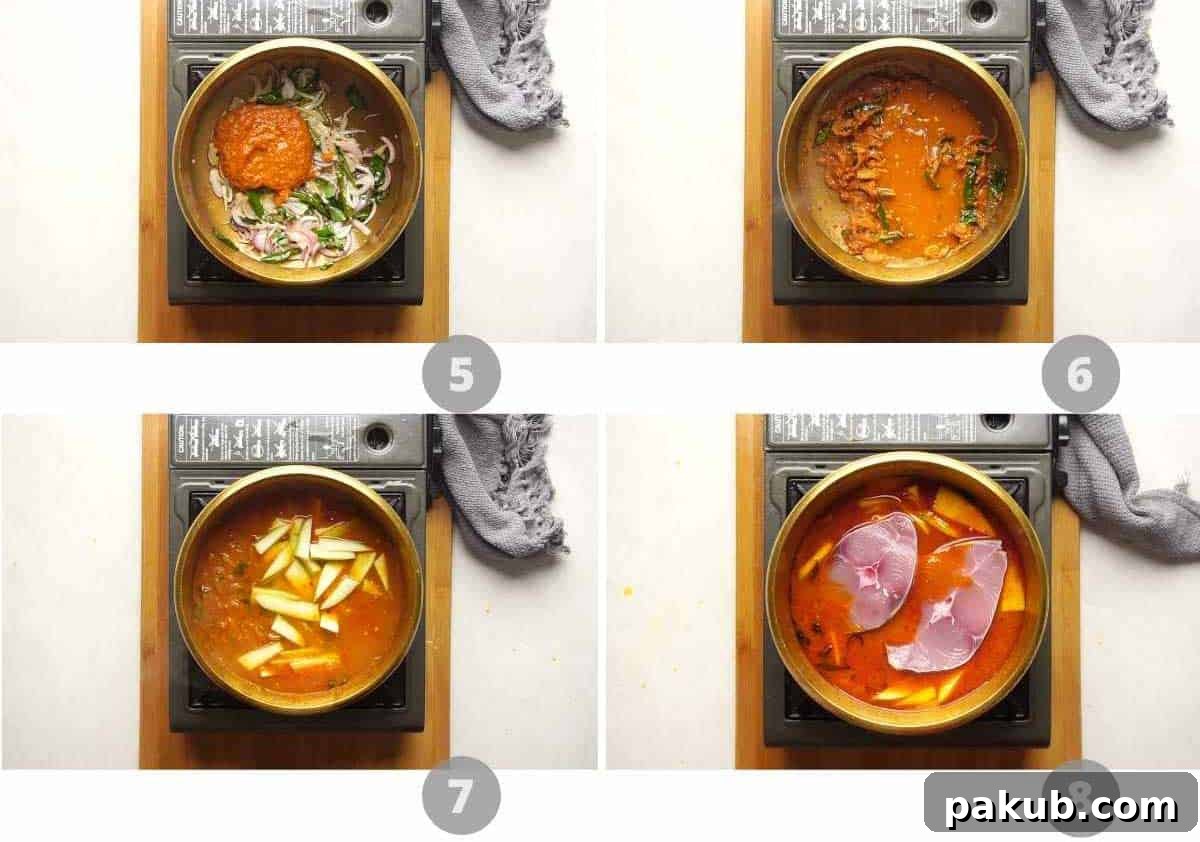
Step 5: Cook the Spice Paste. Now, add the finely ground paste you prepared earlier to the kadhai. Fry the paste over medium-low heat for 5-6 minutes. This step is crucial for developing the flavors and cooking out the raw taste of the spices. You’ll know it’s ready when the oil visibly separates and begins to float on top of the paste, indicating it’s well-cooked.
Step 6: Deglaze and Continue Cooking. Add ½ cup of water to your mixer grinder jar, swish it around to collect any remaining paste, and pour this flavorful water into the kadhai. Continue to cook for another 2 minutes, stirring well, until any lingering raw smell from the spices completely disappears and the gravy thickens slightly.
Step 7: Introduce Raw Mango and Water. Add 1 raw mango (peeled and sliced, approximately 85 grams) and 1 teaspoon of salt to the pan. Pour in 1 cup of water and mix everything gently to combine. Allow this to cook for 6-7 minutes, or until the raw mango slices begin to soften, absorbing the wonderful flavors of the gravy.
Step 8: Cook the Fish. Carefully add the 500 grams of seer fish fillets to the simmering curry. Gently submerge them in the gravy without stirring too vigorously to prevent the delicate fish from breaking. Cook for 10-12 minutes, or until the fish is opaque and cooked through. Be careful not to overcook the fish, as it can become tough.

Phase 3: The Final Tempering (Tadka)
This tempering adds an incredible layer of aroma and crunch, bringing the whole dish together.
Step 9: Prepare the Tempering Base. In a separate small frying pan, heat 1 tablespoon of coconut oil over medium flame. Add 6 chopped shallots and fry for a few seconds until they just begin to soften. Then, add 5-6 whole, smashed garlic cloves. Continue to fry for 1-2 minutes, or until both the shallots and garlic turn a beautiful golden brown and release their intoxicating aroma.
Step 10: Infuse Spices and Finish. Add 1 teaspoon of mustard seeds to the pan and allow them to splutter vigorously. This indicates they are releasing their full flavor. Immediately add ½ teaspoon fenugreek seeds (methi), 1 dry red chilli (torn into pieces), and 5 fresh curry leaves. Fry for about a minute, just until the curry leaves crisp up and the spices are fragrant. Turn off the flame to prevent burning.
Step 11: Combine and Serve. Pour the hot, aromatic tempering directly over the cooked fish curry in the kadhai. Stir gently to incorporate the tempering without breaking the fish. Serve this exquisite Raw Mango Fish Curry hot with steamed rice, appam, or string hoppers for a truly authentic South Indian meal. Enjoy the incredible balance of spice and tang!
Frequently Asked Questions About Raw Mango Fish Curry
Raw mango is truly what imparts the signature sourness and distinct tang to this dish, making its flavor profile unique. Without it, the curry will undeniably have a different character. However, if fresh raw mango is unavailable, you can achieve a similar sour element by using tamarind. Traditionally, whole tamarind or tamarind paste is a common souring agent in many Alleppey fish curries. Another excellent alternative is kokum, which provides a different but equally pleasant tartness and a beautiful reddish hue. Both tamarind and kokum will offer distinctly delicious final flavors, though they will not exactly replicate the fruity tang of raw mango.
I strongly advise against using raw mango (amchur) powder as a substitute for fresh raw mango in this particular recipe. A significant factor behind the vibrant and authentic flavor of this curry is the freshness of the ingredients, particularly the juicy, fibrous raw mango. Dried powders simply cannot replicate the complex fruity tartness, texture, or aromatic depth that fresh mango brings to the dish. For the best results, always prioritize fresh raw mango.
Absolutely! This recipe is incredibly versatile. If you prefer to make a vegetarian version, feel free to substitute the fish with meaty vegetables like brinjal (eggplant) or even chunky potatoes and gourds. The robust spice paste and tangy raw mango base will still create a wonderfully flavorful and satisfying curry. Beyond fish, you can also adapt this recipe for other proteins such as succulent prawns, tender squid, or even chicken pieces, making it a flexible option for various dietary preferences.
If pomfret or seer fish are not readily available in your local market, there are several excellent alternatives that will work beautifully in this curry. Look for other firm-fleshed white fish that can hold their shape during cooking and absorb flavors well. Great options include sardines, sea bass, mackerel, tilapia, red snapper, or even cod. These varieties will ensure your curry maintains its delicious texture and flavor profile.
Expert Tips To Make The Best Raw Mango Fish Curry
Elevate your Raw Mango Fish Curry from good to extraordinary with these seasoned tips:
- Stock Up on Raw Mangoes: Don’t limit this delicious curry to just mango season! When raw mangoes are plentiful and at their freshest, buy extra. Simply peel, slice them, and freeze them in airtight bags or containers. This way, you can easily make this spicy and tangy fish curry whenever the craving strikes, ensuring you always have that essential ingredient on hand for year-round enjoyment.
- Allow the Curry to Rest: Patience is a virtue, especially when it comes to curries. While it might be tempting to dig in immediately, allowing the curry to rest for a couple of hours after cooking, or even better, overnight, makes a significant difference. This resting period allows all the complex flavors from the spices, mango, and fish to meld and deepen, resulting in a much richer, more harmonious, and intensely flavorful dish. Reheat gently before serving.
- Proper Storage for Leftovers: This curry often tastes even better the next day! If you have any leftovers, ensure they are stored correctly. Transfer the cooled curry to an airtight container and refrigerate it promptly. It will keep well for up to 3 days. When reheating, do so gently on the stovetop over low heat, adding a splash of water if needed to adjust the consistency. Avoid microwaving fish curry if possible, as it can sometimes alter the texture of the fish.
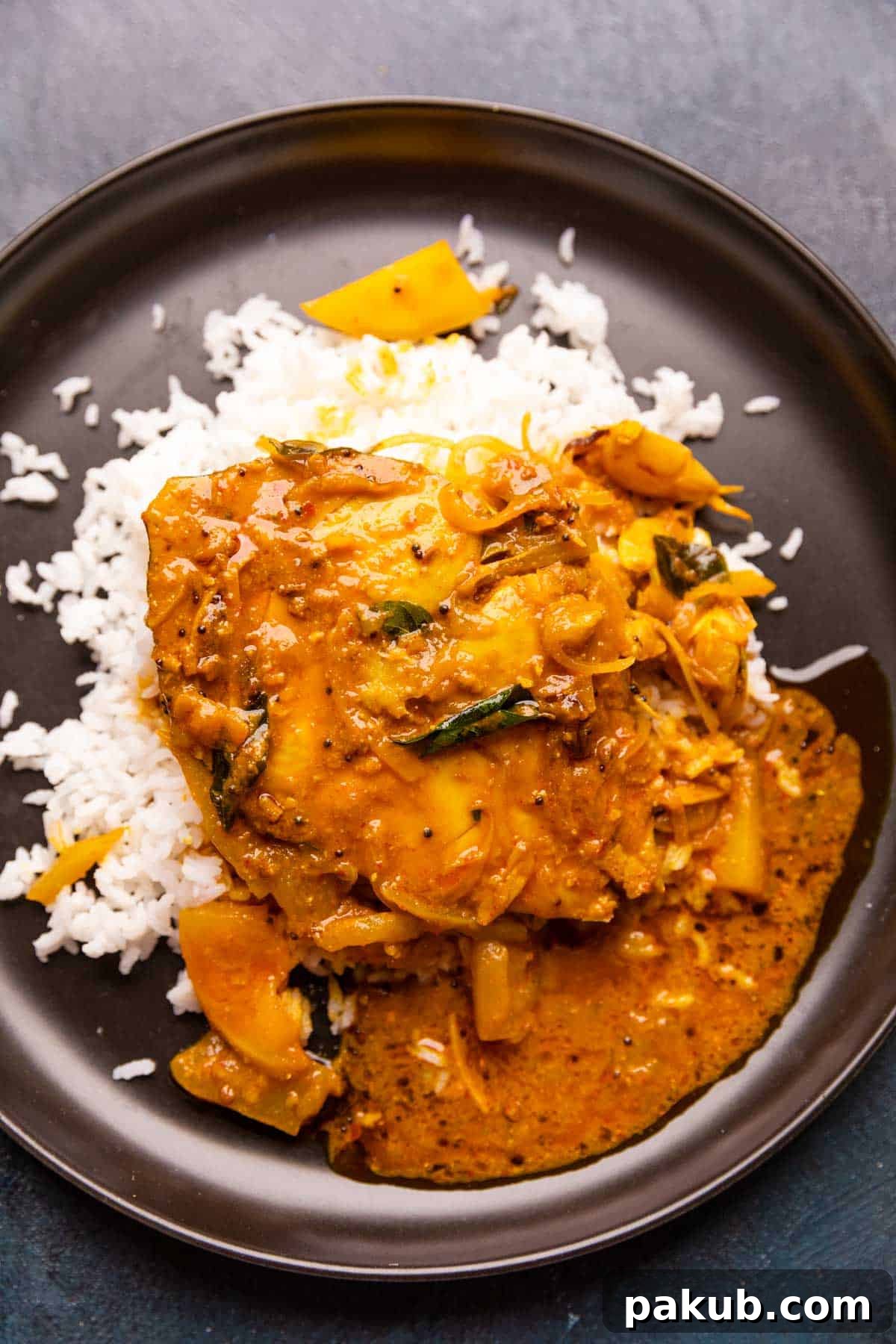
If the summer heat has you yearning for simpler yet utterly satisfying recipes, look no further! This Raw Mango Fish Curry comes together fairly quickly, boasting that delightful seasonal touch that makes it extra special and refreshing. Once you experience the vibrant flavors and perfect balance of spice and tang in this style of fish curry, you’ll undoubtedly find yourself making it again, and again, and again. Happy cooking and even happier eating!
Watch the Recipe Video
LOVE THIS RECIPE? Don’t miss out on more delicious creations! Subscribe to our newsletter and be the first to receive all new recipes straight to your inbox.
Raw Mango Fish Curry (Alleppey Style)
Rate Recipe
Print Recipe
Ingredients
Paste
- 8 Cloves Garlic, Chopped
- 3 Dry Red Chillies, Torn Into Pieces
- 1 Teaspoon Turmeric Powder
- 2 Teaspoon Coriander Powder
- 1 Teaspoon Red Chilli Powder
- 1 ½ Tablespoons Water
Curry
- 3 Tablespoons Coconut Oil
- 1 Inch Ginger, Sliced
- 6 Green Chillies, Slit
- 15 Curry Leaves
- 1 Medium Onion, Sliced
- 1 Teaspoon Salt
- 1-1 ½ Cups Water
- 1 Raw Mango (Green Mango), Unripe or Sour Mango, Peeled And Sliced (approx. 85 grams)
- 500 Grams Pomfret Or Seer Fish Fillet
Tempering
- 1 Tablespoon Coconut Oil
- 6 Shallots, Chopped
- 5-6 Cloves Garlic, whole, smashed
- 1 Teaspoon Mustard Seeds
- 1 Dry Red Chilli, Torn Into Pieces
- 5 Curry Leaves
- ½ Teaspoon Fenugreek Seeds (Methi)
Instructions
Paste
-
Add garlic, dry red chilli, turmeric powder, coriander powder, red chilli powder and water to the small jar of a mixer grinder. Grind this to a fine paste and set aside.
Curry
-
Heat oil in a kadhai. Add ginger, green chillies and curry leaves and sauté for 1-2 minutes or until fragrant.
-
Add onions and fry till translucent, about 2-3 minutes. Add the prepared paste and fry for 5-6 minutes or until the oil separates and can be seen floating on top.
-
Add 1/2 cup water to the mixer jar and shake to remove the paste still in the jar. Add this to the kadhai and continue to cook. Cook for 2 minutes or until the raw smell goes.
-
Add raw mangoes, salt and 1 cup water to the pan and mix. Cook for 6-7 minutes or until the mangoes start to soften. Add the seer fish fillets, gently submerge them in the curry and cook for 10-12 minutes or until the fish is cooked.
Tempering
-
Add coconut oil to a frying pan and allow it to heat up on medium flame. Add shallots and fry for a few seconds and then add garlic. Fry for 1-2 minutes or until they turn golden brown.
-
Add mustard seeds and allow it to splutter. Add fenugreek seeds, dry red chilli and curry leaves and fry for a minute and turn off the flame.
-
Add it to the curry and mix. Serve hot!
Video
Notes
- What can I use as a replacement to raw mango? Raw mango is what brings out the signature sourness and tang in this dish, so without it, this curry would not be the same. In saying that, using tamarind (either whole or paste) will add that sour element and is what is traditionally used in Alleppey fish curry. You can also use kokum if not using tamarind, but both will have distinctly different final flavors.
- Can I use raw mango (amchur) powder as a replacement to fresh raw mango? I wouldn’t recommend this! A big factor behind the flavor of this recipe is the freshness of the ingredients used, that dried powders just can’t bring out.
- Can I make this recipe without fish? Yes! Feel free to sub the fish for meaty vegetables like brinjal, it will still be delicious and is perfect for vegetarians! You can also make this using other proteins and not necessarily fish – such as prawns, squid, chicken etc.
- I can’t find pomfret or seer fish around me? What other fish do you recommend? If you cannot find pomfret or seer fish, use sardines, sea bass, mackerel, tilapia.
Nutrition (Per Serving)
Carbohydrates: 18g,
Protein: 19g,
Fat: 11g,
Saturated Fat: 8g,
Polyunsaturated Fat: 1g,
Monounsaturated Fat: 1g,
Cholesterol: 42mg,
Sodium: 596mg,
Potassium: 486mg,
Fiber: 4g,
Sugar: 9g,
Vitamin A: 672IU,
Vitamin C: 90mg,
Calcium: 62mg,
Iron: 1mg
Enjoyed this recipe? Share your thoughts and rate it below!
More Savory Mango Recipes
If you love the tangy and fresh flavors of mango in savory dishes, explore these other fantastic recipes that celebrate this versatile fruit:
- Mango Rice: A vibrant and flavorful rice dish with the refreshing tang of raw mango.
- Mango Bell Pepper Rice Paper Rolls: Light, fresh, and bursting with the sweet and tangy notes of mango and crisp bell peppers.
- Cucumber Noodle Prawn and Mango Salad: A refreshing, gluten-free salad perfect for a light meal, featuring succulent prawns and juicy mango.
- Grilled Chicken Mango Salad with Mango Cilantro Dressing: A hearty and flavorful salad with perfectly grilled chicken and a zesty mango cilantro dressing.
- Manglorean Ripe Mango Curry: A delightful curry that uses ripe mangoes for a sweeter, yet still savory, experience.
- Thai Prawn Mango Salad: A taste of Thailand with fresh prawns, sweet mango, and aromatic herbs in a zesty dressing.