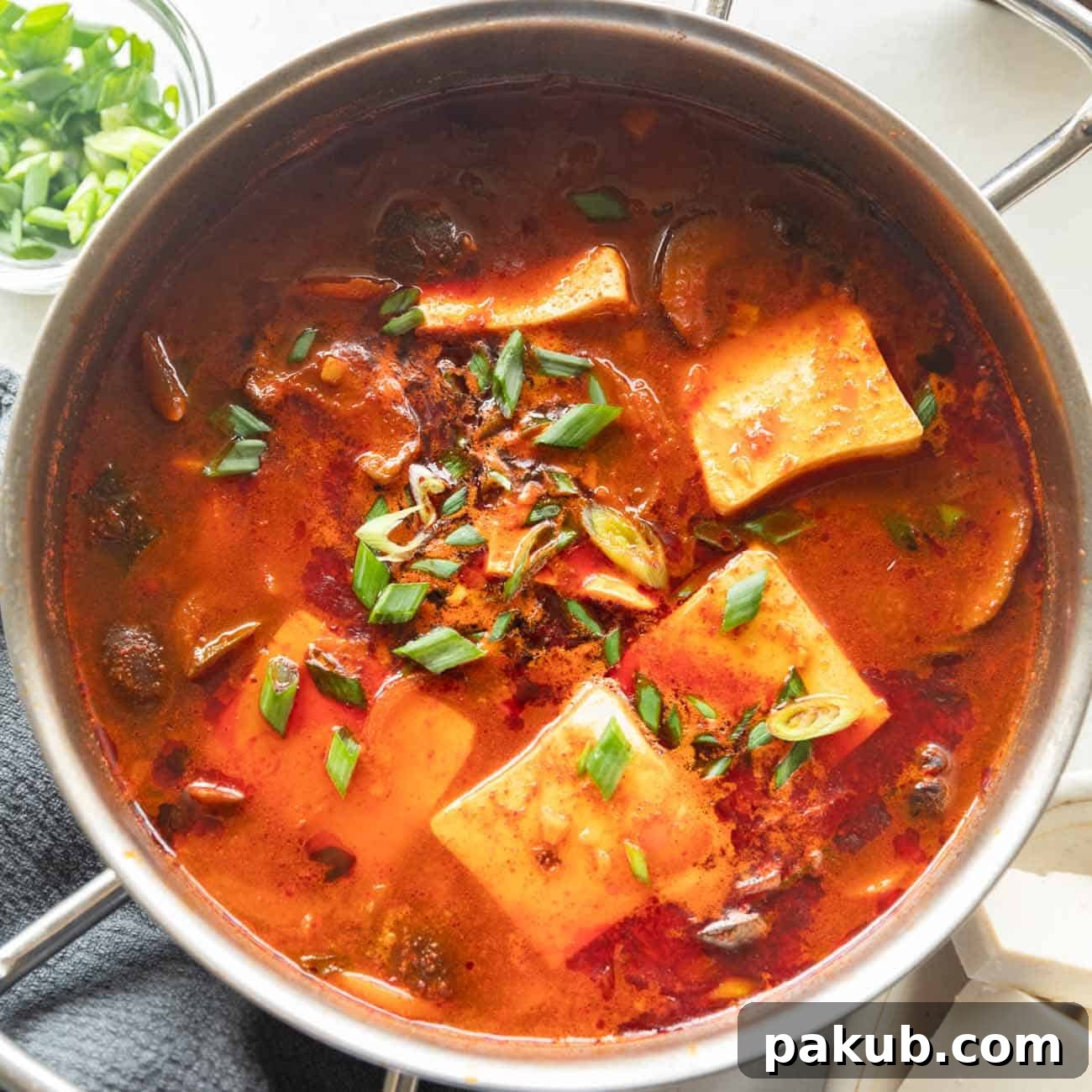
Indulge in the rich, spicy, and deeply savory flavors of Korean Soft Tofu Soup, famously known as Soondubu Jjigae. This comforting stew, packed with silky soft tofu and an assortment of vegetables, offers a delightful culinary experience that pairs perfectly with steamed jasmine rice or noodles. While often enjoyed at bustling K-BBQ restaurants, this exquisite dish is surprisingly simple to prepare in your own kitchen, making it an ideal addition to your regular dinner rotation.
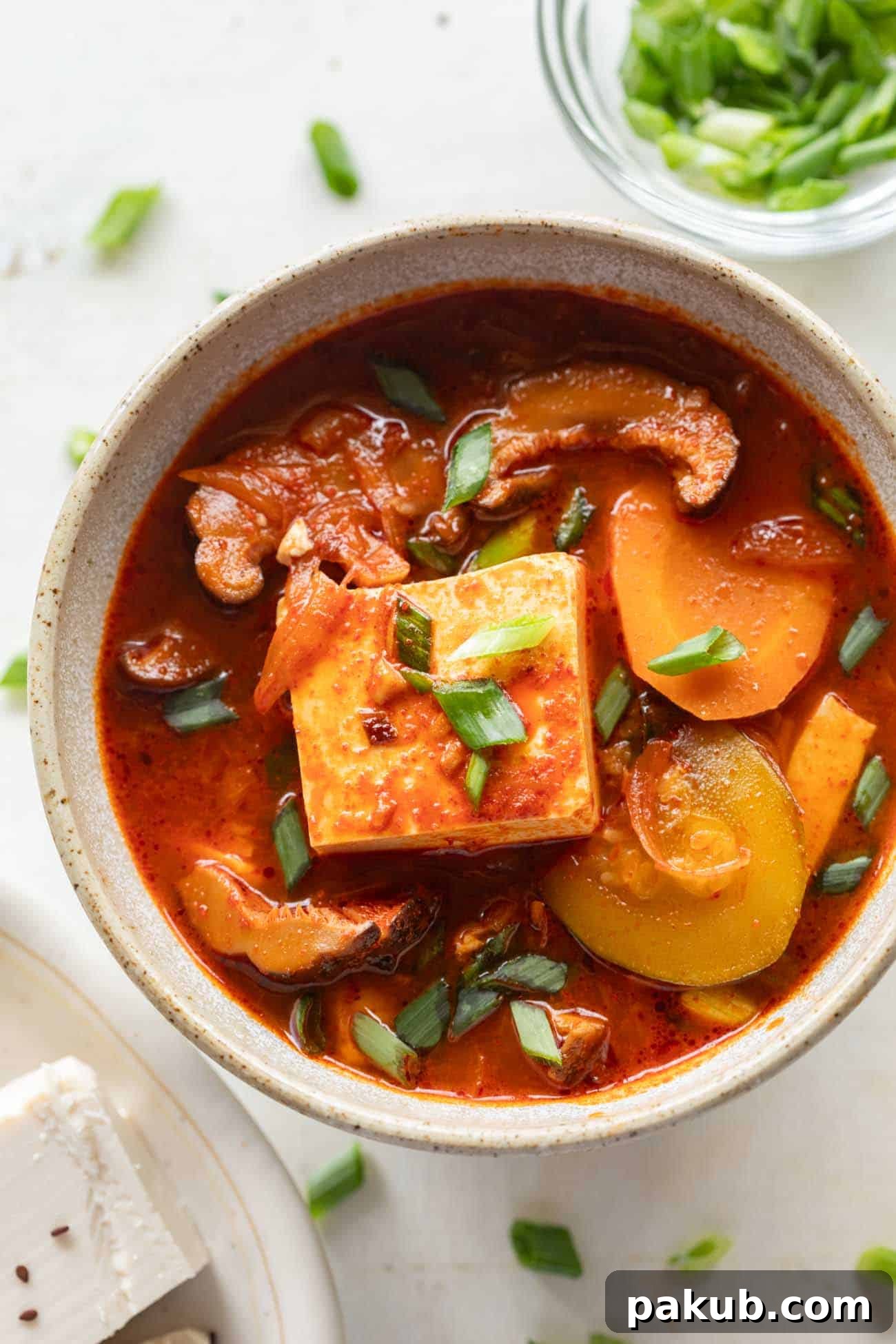
Soondubu Jjigae, a name derived from the Korean words “soondubu” (soft tofu) and “jjigae” (stew), perfectly encapsulates the essence of this beloved dish. At its heart, this stew celebrates the delicate texture and subtle flavor of soft tofu. However, its versatility allows for endless customization; you can effortlessly enhance it with an array of fresh vegetables, a perfectly poached egg, or your choice of meat or seafood. This particular recipe guides you through a delicious vegan rendition, but we also provide valuable insights into crafting the stew with a more traditional approach.
To truly unlock the authentic taste of Korean cuisine, we highly recommend stocking your pantry with two indispensable Korean staples: gochujang (Korean hot pepper paste) and gochugaru (Korean red chili flakes). These vibrant, flavorful condiments are not only crucial for Soondubu Jjigae but also incredibly versatile, promising to elevate a myriad of other dishes far beyond just Korean cooking.
Unleashing the Versatility of Gochujang and Gochugaru
Beyond the realm of Soondubu Jjigae, gochujang is a secret weapon in countless recipes. Its unique sweet, savory, and spicy profile makes it an excellent base for marinades, adding an incredible depth of flavor to chicken wings or thighs. Imagine a delectable sweet-and-spicy kick in your Baked Gochujang Chicken Wings or Spicy Korean Chicken Thighs. It can also be combined with soy sauce and oyster sauce (or mushroom sauce for a vegan alternative) to create an irresistible dipping sauce for dumplings or spring rolls.
Meanwhile, gochugaru is celebrated for its bright red hue and distinctive fruity, smoky, and moderately spicy flavor. Unlike ordinary chili powder, gochugaru offers a complex taste that enhances a dish’s visual appeal and its overall flavor profile. It’s fantastic as a simple seasoning, a key component in kimchi, or an essential element in many Korean stews and marinades. Its vibrant presence truly goes a long way in transforming ordinary ingredients into something extraordinary. With these two essential condiments, you’ll find your culinary horizons significantly expanded.
Aside from these special Korean ingredients, most other items required for this stew are likely already in your pantry. I always make sure to keep a package of silken tofu on hand in my fridge, ready for a quick and satisfying meal. Read on for specific brand recommendations and more details on each ingredient!
Essential Ingredients for Your Korean Soft Tofu Stew
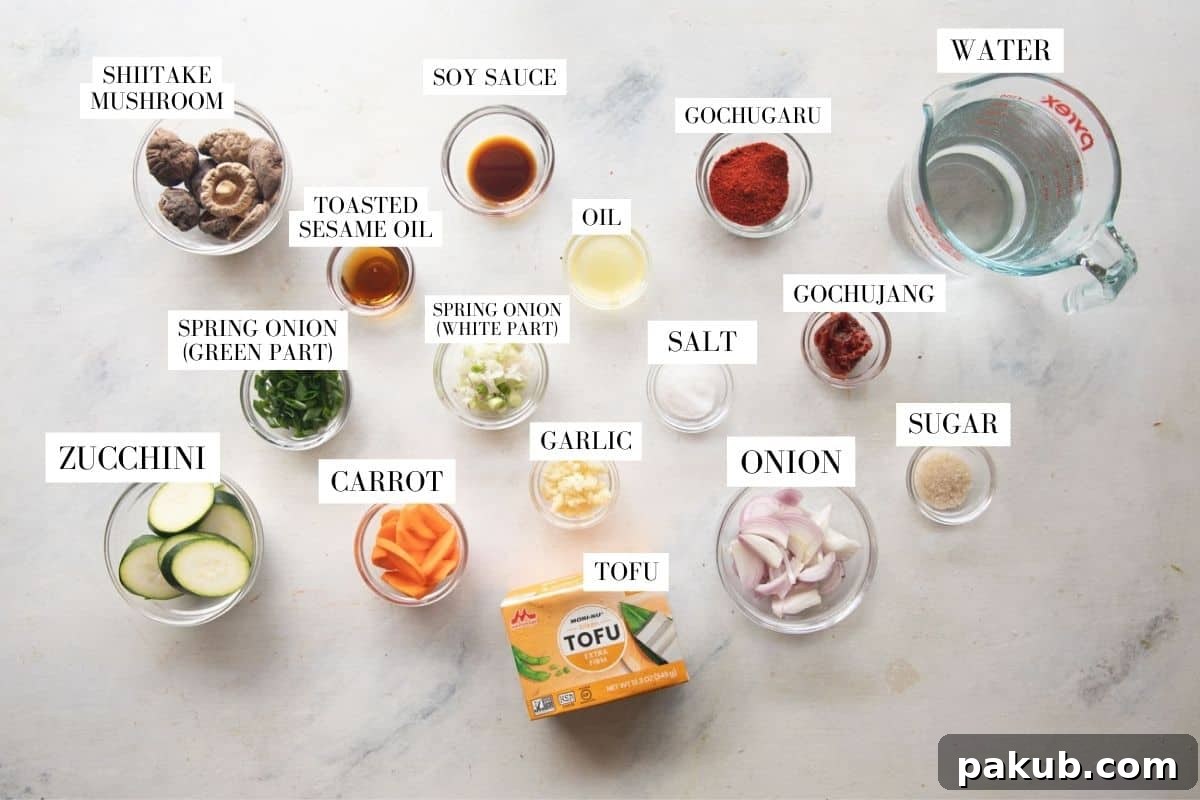
- Soft Tofu (Soondubu): The undisputed star of Soondubu Jjigae is silken soft tofu. Its incredibly delicate, melt-in-your-mouth texture is what defines this stew. For the best results, I highly recommend brands like Mori-nu, which offer both soft and firm silken tofu – either will work wonderfully here. You can typically find these readily available in the Asian condiments aisle of most major supermarkets. If you’re fortunate enough to have a Korean grocery store nearby, you might even find freshly made soft tofu, which elevates the dish even further.
- Dried Shiitake Mushrooms: These unassuming fungi are a powerhouse of umami, imparting a rich, savory depth to the stew that is simply irreplaceable. While traditional Soondubu Jjigae often utilizes kelp and anchovy broth packets for its base, dried shiitake mushrooms offer a fantastic vegetarian-friendly alternative that is also much more accessible for home cooks. Remember to soak them to rehydrate and extract their flavorful liquid, which becomes a crucial part of your stew’s broth.
- Toasted Sesame Oil: A cornerstone of Korean cooking, toasted sesame oil adds a distinctive nutty aroma and flavor that you will undoubtedly notice and appreciate in this stew. Its rich, aromatic notes are essential for creating an authentic taste. I even love to drizzle a little extra over my freshly steamed jasmine rice just before digging in – it’s an unbelievably delicious touch!
- Gochujang: This fermented Korean condiment is a non-negotiable ingredient for Soondubu Jjigae and countless other Korean recipes. Crafted from red chili peppers, glutinous rice, soybeans, and salt, it delivers a complex flavor profile that is simultaneously savory, sweet, and spicy. Just a single tablespoon can impart a significant punch of flavor and color. Look for it in the Asian food section of your local supermarket.
- Gochugaru: Korean red pepper flakes, or gochugaru, are distinct from other chili powders. They provide a beautiful, vibrant red color to the stew and a bright, slightly fruity heat. Brands like UrbanPlatter have made these more widely available. While you could technically substitute with regular red chili powder, the resulting color and nuanced flavor of your stew will not be as authentic or vibrant.
- Spring Onions: Separating the white and green parts of spring onions is key here. The white parts are sautéed to build a flavorful aromatic base, while the green parts are used as a fresh, crisp garnish, providing a crucial pop of freshness and a delicate oniony bite to the finished dish.
- Other Vegetables: Don’t forget zucchini and carrots! Sliced thickly, these vegetables add texture, subtle sweetness, and essential nutrients to the stew. They absorb the rich broth beautifully, becoming tender and flavorful.
Crafting Your Own Korean Soft Tofu Stew: A Step-by-Step Guide
Creating a delicious Soondubu Jjigae at home is a rewarding experience. Follow these simple steps to bring this iconic Korean stew to your table.
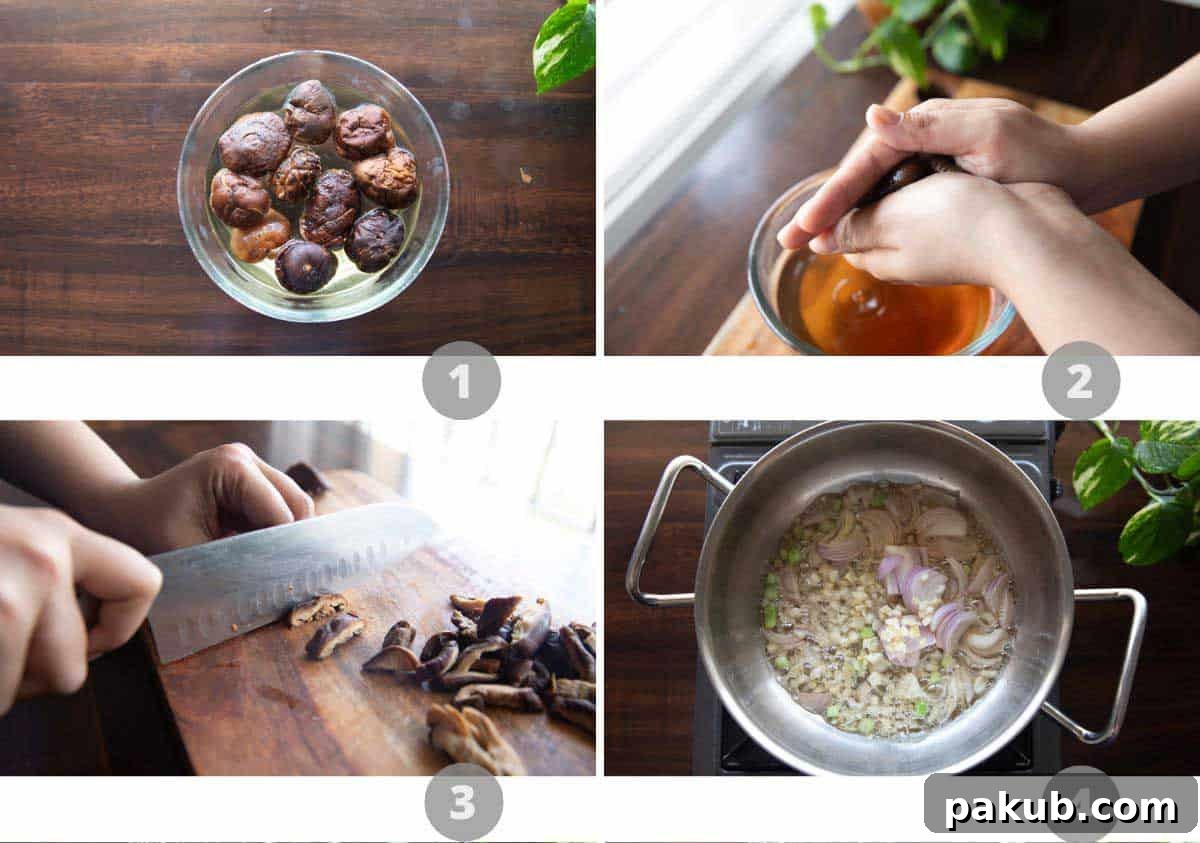
- Prepare the Shiitake Mushrooms: Begin by soaking the dried shiitake mushrooms in 1 cup of hot water for 10-15 minutes. This rehydrates them and extracts their precious umami-rich liquid. Once soft, squeeze out any excess water from the mushrooms, reserving all of this mushroom-infused water for your stew’s broth. Slice the rehydrated shiitake mushrooms and set them aside. This mushroom water is a fantastic, natural flavor enhancer.
- Build the Aromatic Base: In a sturdy pot, heat the toasted sesame oil and vegetable oil over medium heat. Add the white parts of the chopped green onions, sliced regular onions, and minced garlic. Sauté these aromatics for 1-2 minutes until they become fragrant and slightly softened, but not browned. This step is crucial for building the foundational flavors of your stew.
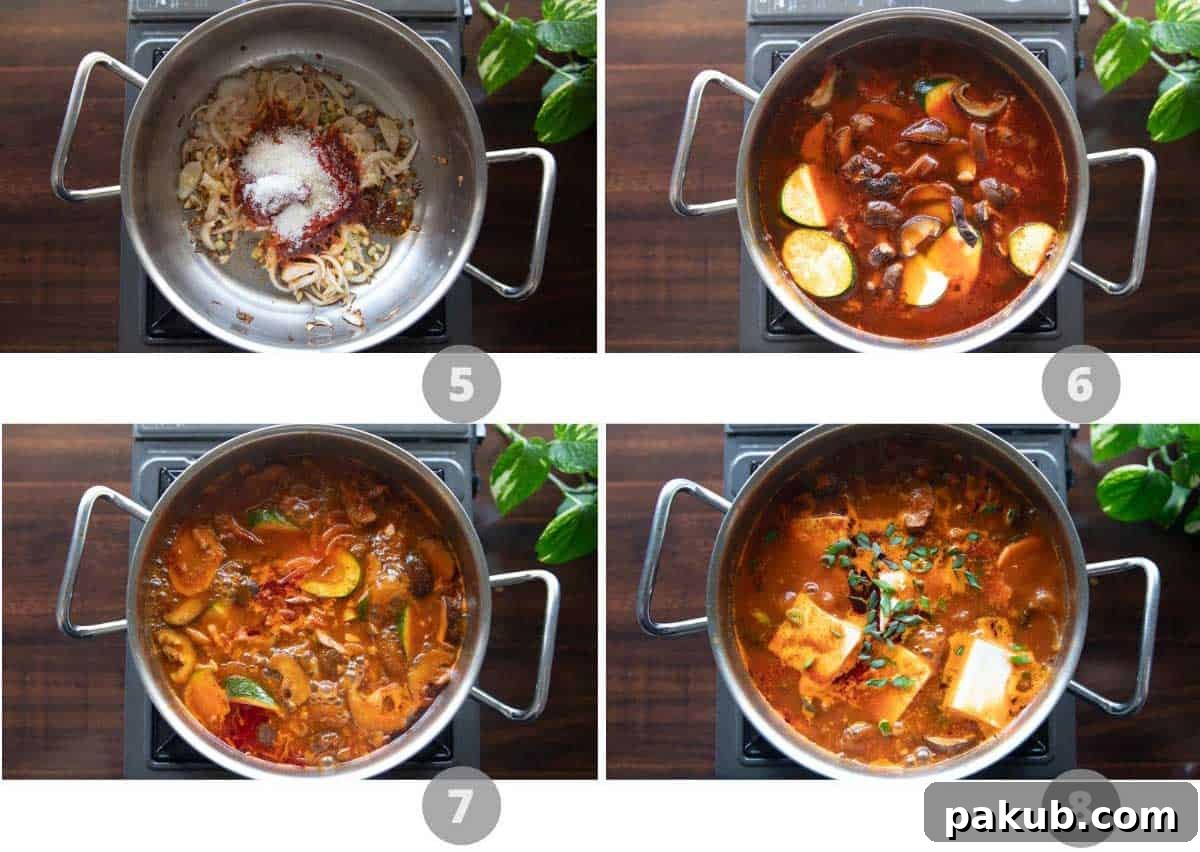
- Introduce the Key Spices and Liquids: To the sautéed aromatics, add the Korean chili powder (gochugaru), gochujang, salt, sugar, and light soy sauce. Stir well to combine, allowing the spices to toast slightly and release their full aroma for about 30 seconds. Then, pour in the reserved mushroom water along with an additional 2 cups of regular water. This combination forms the rich, spicy broth base.
- Simmer the Vegetables: Bring the stew to a quick boil. Once boiling, add the sliced zucchini, the prepared shiitake mushrooms, and sliced carrots. Reduce the heat to a gentle simmer, cover the pot, and let it cook for about 10 minutes, or until the zucchini and carrots are tender yet still retain a slight bite. This ensures the vegetables are cooked through and have absorbed the delicious broth.
- Add the Tofu and Serve: Finally, gently add the soft tofu to the stew. Avoid stirring vigorously to prevent the delicate tofu from breaking apart too much. Let it heat through for just a minute or two. Turn off the heat. Ladle the hot Soondubu Jjigae into serving bowls, topping each portion generously with the green parts of the spring onions for a burst of fresh flavor and color. Serve immediately, traditionally over sticky rice, and enjoy the comforting warmth of this homemade Korean delight.
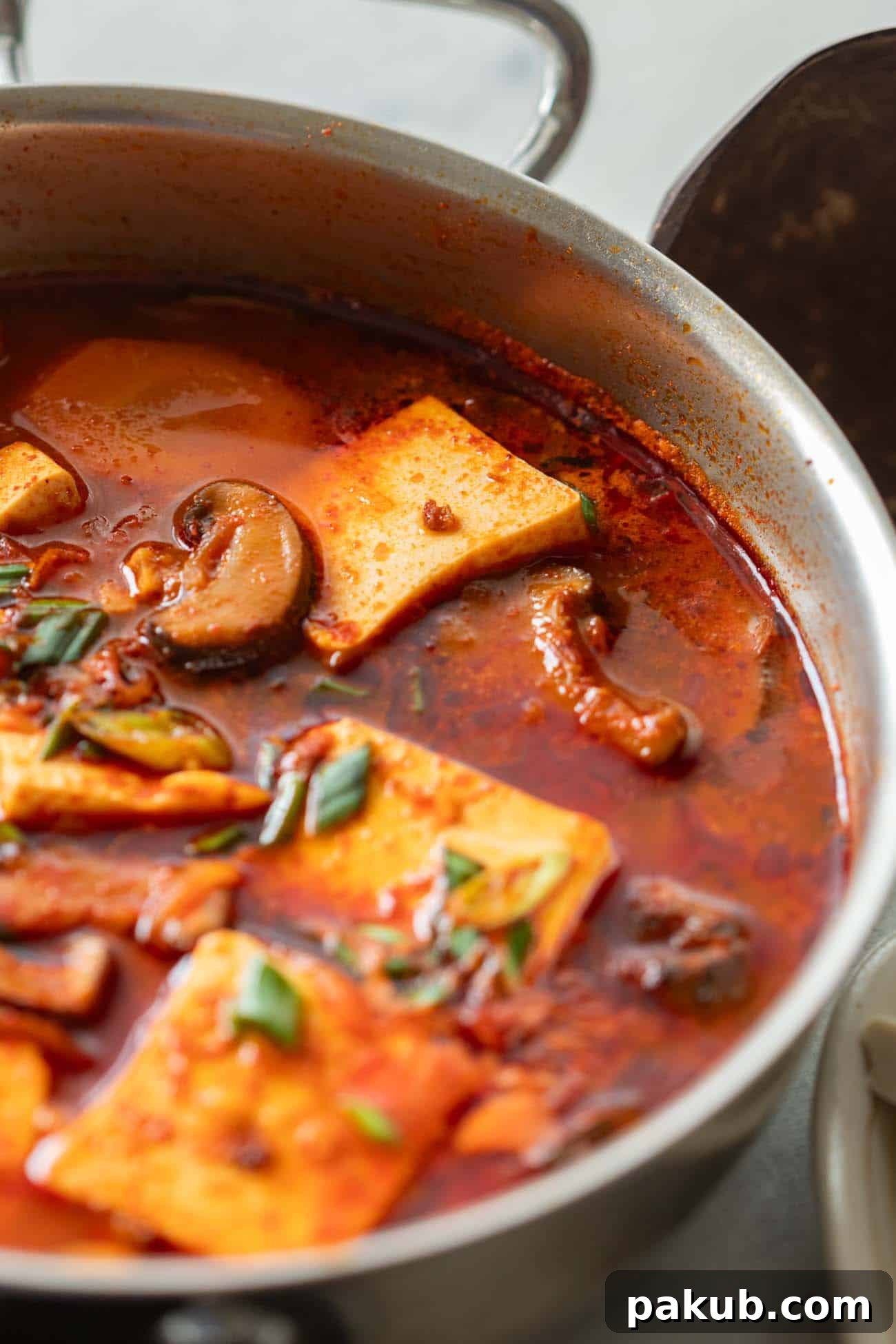
If you’re seeking straightforward yet incredibly flavorful recipes to invigorate your weeknight dinners, this Soondubu Jjigae should undoubtedly be at the top of your list. It might initially appear daunting, especially with its exotic-sounding name, but rest assured, its preparation is remarkably simple and forgiving. This stew is not only a wholesome way to incorporate diverse nutrient groups into your meal but also offers profound comfort and satisfaction. Each spoonful delivers warmth and happiness, making it a truly soul-satisfying dish.
Should this recipe capture your culinary imagination, you might also enjoy my Korean Pork Bulgogi Bowl for another delightful Korean comfort meal during the week. As always, I would love to see your delicious recreations! Please share them with me over on my Instagram @my_foodstory.
Watch the Recipe Video
For a visual guide to mastering this delicious stew, watch the comprehensive recipe video here. It provides a step-by-step demonstration to ensure your Soondubu Jjigae turns out perfect every time. [Link to Video, if desired: Korean Soft Tofu Soup Video]
LOVE THIS RECIPE? Subscribe to my newsletter and be the first to receive all new recipes and culinary inspirations!
Soondubu Jjigae (Korean Soft Tofu Stew)
Richa
10 mins
30 mins
40 mins
4 people
Ingredients
- 7-8 dried Shiitake Mushrooms
- 1 tbsp toasted sesame oil
- 1 tbsp vegetable oil
- 2 chopped green onions, keeping white and green part separate
- 1/2 cup sliced onions
- 1 tbsp chopped Garlic
- 2-3 tbsp Gochugaru , Korean chilli powder
- 1 tbsp Gochujang, Korean spicy fermented paste
- 1 tsp salt
- 1 tsp sugar
- 2 tsp light soy sauce
- 3 cups water, divided
- 1/2 zucchini, sliced thickly
- 1 small carrot, sliced thickly
- 150 grams Tofu, cut into 1 inch cubes, 1/2 inch in thickness
Instructions
-
Soak shiitake mushrooms in 1 cup hot water for 10-15 minutes. Drain the shiitake and squeeze, reserving all the mushroom water for later. Slice the shiitake and set aside.
-
In a pot, heat sesame oil and vegetable oil. Add the white part of green onions, sliced onions and garlic. Sauté for 1-2 minutes.
-
Add Korean chili powder, gochujang, salt, sugar, soy sauce and the mushroom water along with 2 cups of regular water.
-
Bring this to a quick boil and add zucchini, shiitake mushroom and carrot. Reduce the flame and simmer for 10 minutes till the zucchini and carrot are tender.
-
Top with tofu and green part of spring onions. Turn off the flame. Serve hot ladled over sticky rice.
Notes
- Some great additions to Korean Tofu Soup are kelp, wakame, kimchi, and an egg. These can significantly enhance the flavor and nutritional profile of your stew.
- Can you swap tofu for paneer? While paneer is often a versatile substitute for firm tofu in many recipes, it is not recommended for Soondubu Jjigae. This recipe specifically calls for silken or soft tofu, which has a distinctly delicate, custard-like texture that practically melts in your mouth, perfectly complementing the stew’s consistency. Paneer, being much firmer, would result in a tough and uncharacteristic texture in this particular dish.
- How do you eat Korean soft tofu soup? Soondubu Jjigae is wonderfully versatile in how it can be enjoyed. You can savor it simply as a rich, comforting soup. Alternatively, for a more substantial meal, you can add noodles directly into the broth to act as your carbohydrate component. My personal favorite way to enjoy it is served alongside a steaming bowl of fluffy jasmine rice, allowing the rice to soak up every drop of the flavorful broth.
Nutrition
Carbohydrates: 12g,
Protein: 4g,
Fat: 5g,
Saturated Fat: 1g,
Polyunsaturated Fat: 2g,
Monounsaturated Fat: 2g,
Sodium: 841mg,
Potassium: 360mg,
Fiber: 3g,
Sugar: 5g,
Vitamin A: 3851IU,
Vitamin C: 9mg,
Calcium: 54mg,
Iron: 1mg
More Delicious Korean Recipes to Explore
If you’re eager to continue your journey through the vibrant flavors of Korean cuisine, here are some other fantastic recipes you’ll love:
- Crunchy Korean Popcorn Chicken: A delightful snack or appetizer with a sweet and spicy glaze.
- Slow Cooker Korean Pork Bulgogi: Tender, marinated pork cooked to perfection, ideal for an easy weeknight meal.
- Baked Gochujang Chicken Wings: Irresistibly sticky and spicy wings that are perfect for gatherings.
- Spicy Korean Chicken Thighs: Flavorful and juicy chicken thighs, marinated and cooked to a delightful crisp.
Customizing Your Korean Tofu Stew: Exciting Additions and Variations
While the basic Soondubu Jjigae is incredibly satisfying on its own, its beauty lies in its adaptability. You can easily elevate and personalize your stew with various traditional and creative additions. Here are some fantastic ways to customize your next bowl:
- Kelp (Dashima): For an even deeper umami base, consider adding a strip of dried kelp (dashima) to your broth. You can often find kelp on Amazon or at Asian grocery stores. Simply add a small piece to the water when simmering the broth, allowing its unique oceanic flavor to infuse into the stew. In Korea, kelp is frequently used alongside dried anchovies to create a rich, savory stock for stews, providing a flavor similar to traditional dashi.
- Wakame Seaweed: While not strictly traditional for Soondubu Jjigae, wakame is a common and nutritious addition to many Korean stews. This type of edible seaweed is typically purchased dried; you rehydrate it in water, cut it into bite-sized pieces, and add it to the stew towards the end of cooking. Wakame offers a silky texture and is packed with essential nutrients like iodine and manganese. Its distinct oceanic flavor can be an acquired taste for some, but if you’re familiar with Korean cuisine and enjoy seaweed, keeping a bag at home allows for an easy and highly nutritious boost to your meals.
- Kimchi (Fermented Cabbage): If you have Kimchi on hand, adding some chopped kimchi along with a tablespoon or two of its flavorful juice when sautéing the spring onions can transform your stew. Kimchi introduces an incredible sour tang and a more profound depth of fermented flavor, making it a delicious “hybrid” between Soondubu Jjigae and Kimchi Jjigae (Korean Kimchi Stew). This variation is immensely popular and adds an exciting new dimension to the dish.
- Egg: For a touch of richness and creaminess, crack one or two eggs directly into the boiling broth just before serving. Cover the pot with a lid for a minute or two to allow the eggs to poach gently in the hot stew. The soft, runny yolk, when mixed with rice and the spicy broth, creates an incredibly comforting and satisfying texture.
- Meat or Seafood: For a non-vegan version, you can easily incorporate your favorite proteins. Sauté thinly sliced beef (like bulgogi meat), pork belly, shrimp, clams, or other seafood along with the spring onions and garlic in the initial step. This will infuse the broth with additional savory flavors from the start.
- Noodles: If you prefer a noodle-based meal, add ramen noodles, udon noodles, or even glass noodles directly into the pot when the broth is boiling. They will cook perfectly in the flavorful stew.
A little “cheat hack” I sometimes employ for an extra layer of savory depth is to sprinkle in some Shin Ramen seasoning at the end. It adds an intense, rich flavor that is absolutely delicious!
Frequently Asked Questions:
Soondubu Jjigae is incredibly versatile. You can enjoy it simply as a comforting soup, or for a more substantial meal, add noodles directly into the broth. My preferred method is to serve it with a side of freshly steamed jasmine rice, allowing the rice to absorb the rich, spicy broth.
The primary difference lies in their star ingredient and flavor profile. Kimchi Stew (Kimchi Jjigae) traditionally centers around fermented kimchi, which provides a distinctive sour and savory depth. Soft Tofu Stew (Soondubu Jjigae), on the other hand, highlights the silky texture and delicate flavor of soft tofu. While classic Soondubu Jjigae does not call for kimchi, I often enjoy making a “hybrid” version by adding kimchi to my soft tofu stew for an extra layer of complexity and tang!
In Korean, “soft tofu” is called Soondubu. The word “Soon” translates to soft or pure, and “Dubu” means tofu, perfectly describing this delicate ingredient.
Soft tofu is technically processed and ready-to-eat, so it is “raw” in the sense that it doesn’t require further cooking to be safe for consumption. In this Soondubu Jjigae recipe, we add it to a boiling broth, so it is served warm. Interestingly, eating fresh, unheated tofu with kimchi is a popular snack in Korea!
While paneer can be a good substitute for firm tofu in some dishes, it’s generally not recommended for this recipe. Soondubu Jjigae relies on the unique, incredibly soft, and melt-in-your-mouth texture of silken tofu. Paneer has a much denser and firmer consistency, which would feel too tough and would not achieve the desired delicate mouthfeel characteristic of this Korean stew.