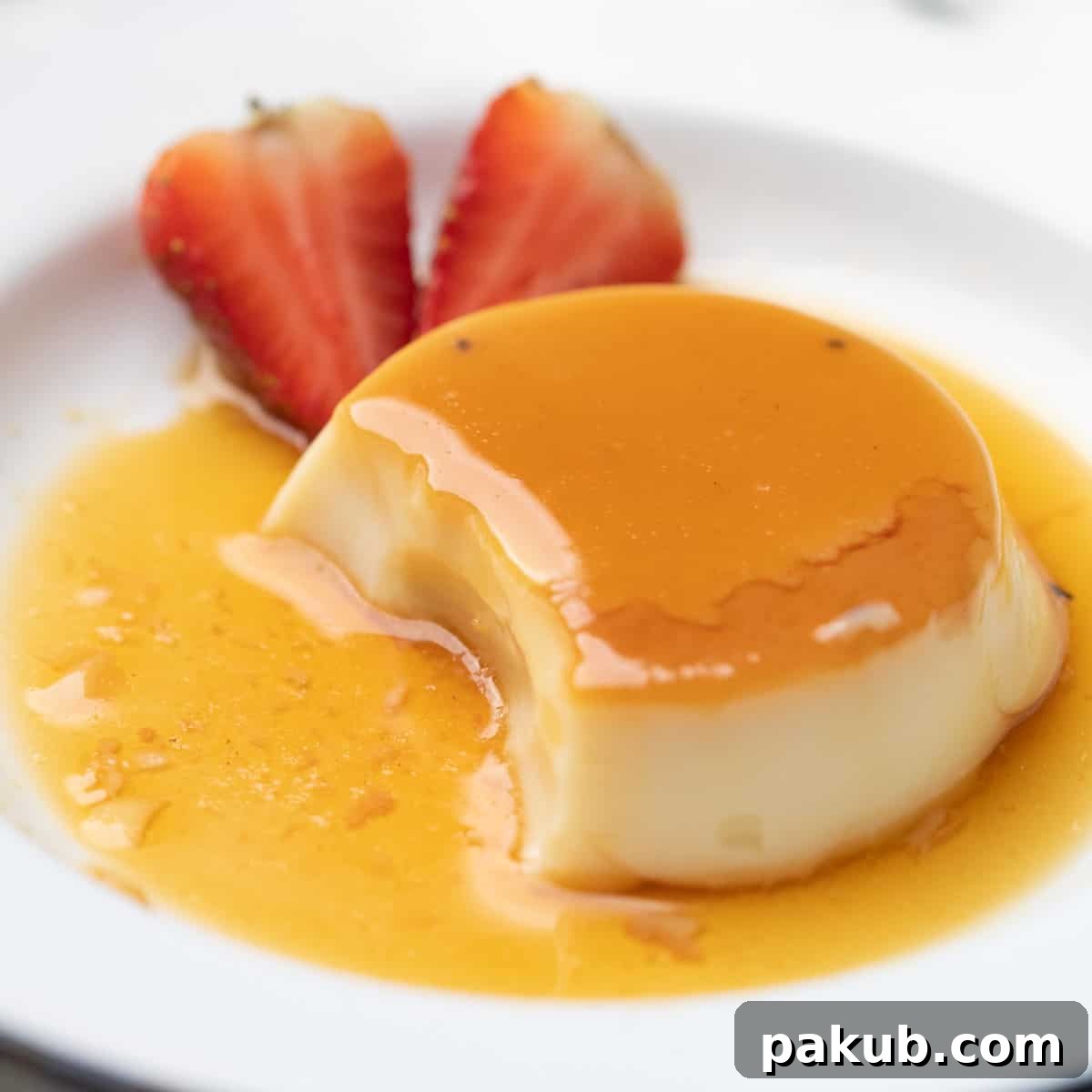
Indulge in the heavenly delight of homemade Caramel Custard! This timeless dessert, renowned for its velvety texture and rich caramel topping, is surprisingly simple to prepare. With just a handful of everyday pantry ingredients and a mere 15 minutes of active preparation, you can create a truly luscious and silky-smooth custard that is guaranteed to impress every guest. Forget complex techniques; this recipe is designed for ease and spectacular results, making it your perfect go-to for any occasion.
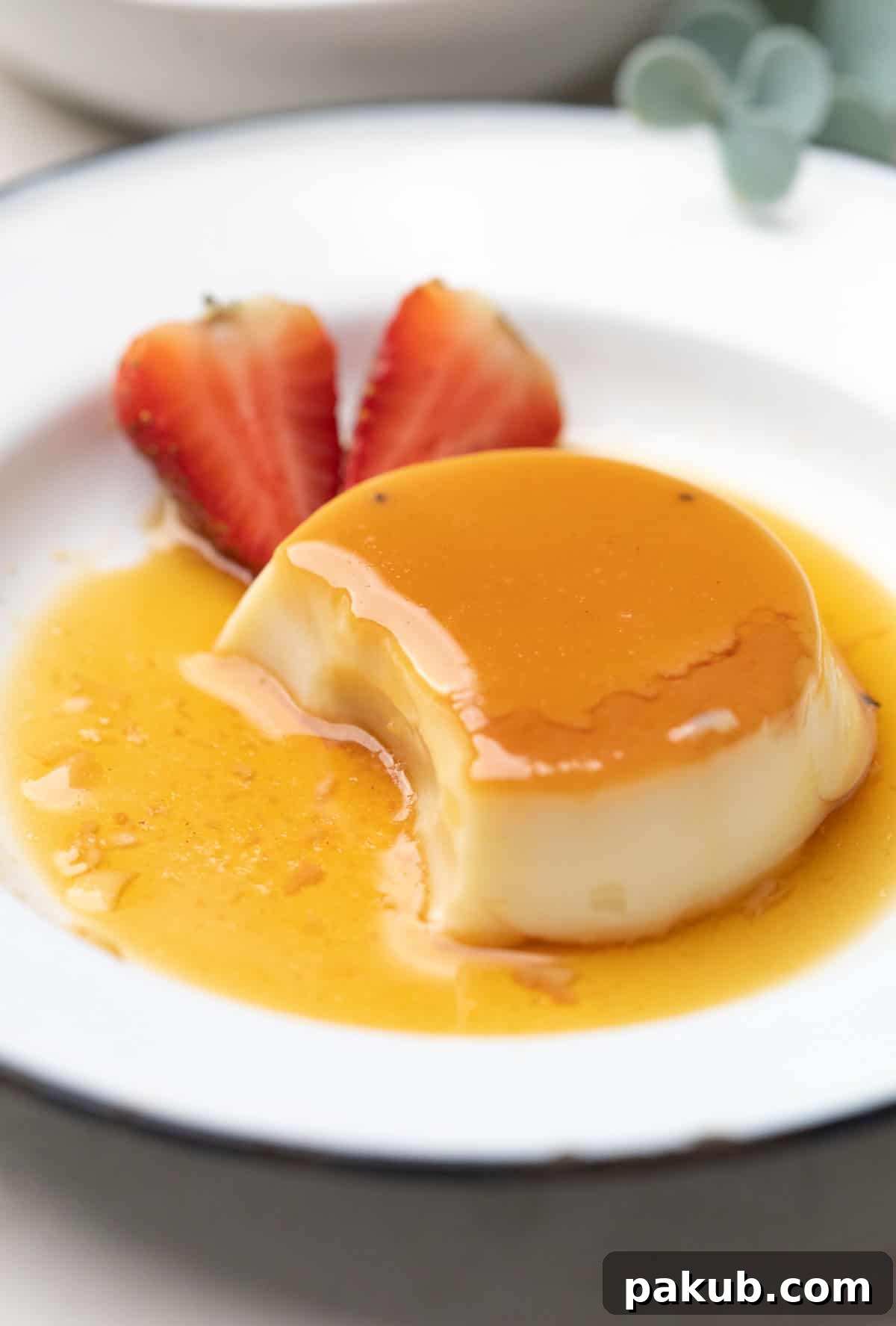
Craving more delightful dessert recipes? Explore some of our other favorites:
- 3-Ingredient Biscoff Thumbprint Cookies
- Quick 15 Minute Microwave Chocolate Pudding
- Eggnog Tres Leches
Unveiling the Magic of Caramel Custard: An Easy & Elegant Dessert
The thought of creating a dessert with such a delicate, bouncy texture and velvety consistency might seem intimidating, but mastering homemade caramel custard is far simpler than you imagine. Even if you’re a complete beginner in the kitchen, this recipe will guide you to a perfect, restaurant-quality result.
Known across the globe by various names such as Flan de Leche in Spanish-speaking countries and Crème Caramel in French cuisine, caramel custard boasts a rich culinary heritage, primarily originating from Southern Europe and Latin America. Its enduring popularity is no mystery once you taste it: it’s a harmonious blend of creamy richness and delightful lightness, perfectly sweet, and incredibly satisfying. Each spoonful offers a unique, bouncy texture that makes it not just a dessert, but a fun and memorable treat.
This classic dessert is characterized by two distinct layers: a smooth, delicate custard base and a glistening, amber caramel topping that cascades down the sides when inverted. The subtle bitterness of the caramel perfectly complements the sweet, eggy custard, creating a balanced flavor profile that appeals to all palates. Whether served at a casual family meal or a sophisticated dinner party, caramel custard is always a crowd-pleaser.
Table of Contents
- Ingredients You’ll Need
- The Secret to Perfect Caramel
- How to Make Caramel Custard (Step-by-Step)
- Frequently Asked Questions
- Top Tips for the Best Caramel Custard
- Caramel Custard Variations & Serving Suggestions
- Watch the Video: How to Make Caramel Custard
- More Easy Dessert Recipes
Essential Ingredients You’ll Need to Make Caramel Custard
Creating this delightful caramel custard requires only a few fundamental ingredients, most of which you likely already have in your kitchen. Quality matters here, as each component plays a crucial role in achieving the perfect flavor and texture.
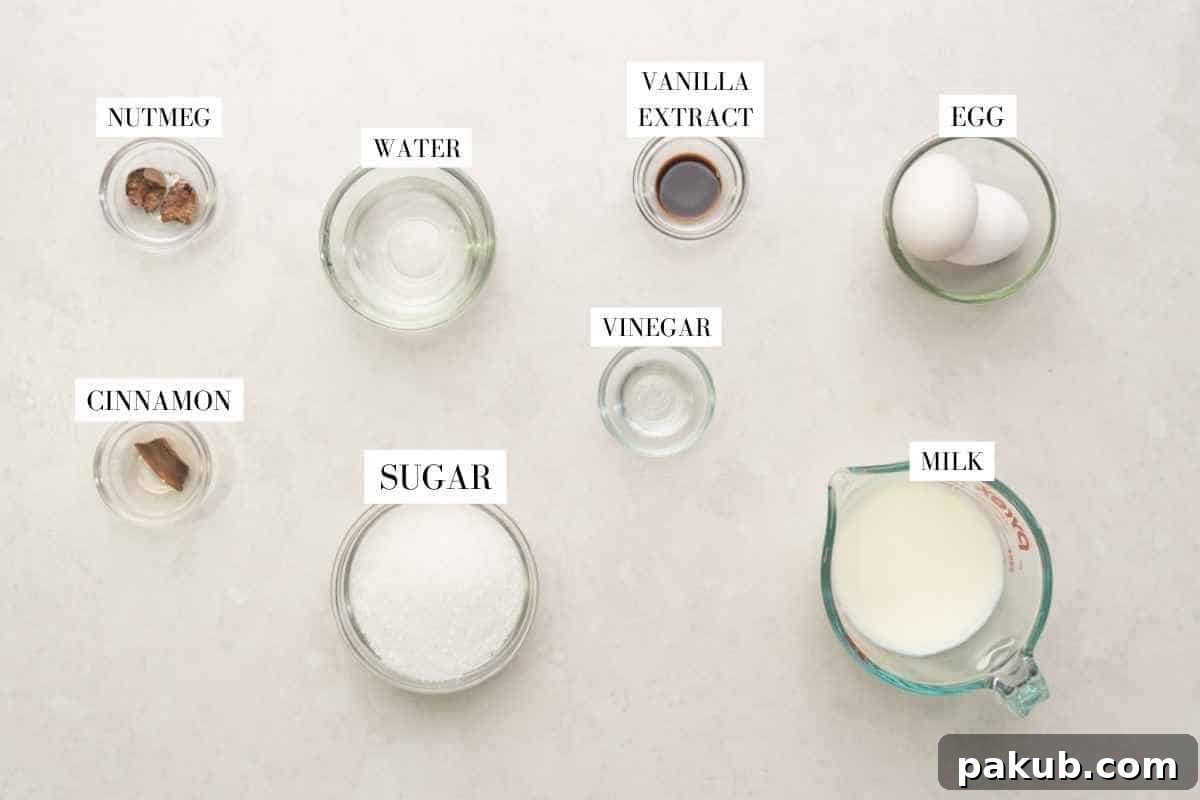
For the Caramel Layer:
- Granulated Sugar: The star of our caramel! We’ll use this to create the rich, golden base for our custard.
- Water: Essential for the “wet” caramel method, which helps prevent burning and crystallization.
- Lemon Juice or Vinegar: A small but mighty addition! A touch of acidity prevents the sugar from crystallizing, ensuring a smooth, clear caramel.
For the Custard Base:
- Whole Eggs: We use whole eggs for their binding properties and to achieve that classic custard richness and structure. Using room temperature eggs is recommended for a smoother mixture.
- Whole Milk: The foundation of our creamy custard. Whole milk provides the best richness and flavor, contributing to a truly luxurious texture. While other milks might work, whole milk delivers the most authentic and satisfying result.
- Granulated Sugar: Used to sweeten the custard itself. Remember, the caramel layer adds a hint of sweetness, so the custard sugar level is balanced accordingly.
- Vanilla Extract: A crucial flavoring agent that enhances the overall sweetness and aroma, while also effectively countering any potential “eggy” flavor in the custard. Use a good quality pure vanilla extract for the best results.
- Cinnamon Stick & Grated Nutmeg (Optional but Recommended): These spices infuse the milk with a warm, aromatic depth, adding a layer of sophisticated flavor to your custard. They elevate the dessert beyond just sweetness.
Essential Equipment:
- Baking Tin: You’ll need a large baking dish (such as a 9-inch square or rectangular pan) that can comfortably fit your individual ramekins or a larger mold. This is critical for creating a water bath (bain-marie), which ensures the custard bakes gently and evenly, preventing it from cracking or curdling. We aim for about 2-3 inches of hot water around the ramekins.
- Ramekins or Molds: Individual ramekins are perfect for creating those signature circular flans, ideal for single servings. If you’re serving a larger crowd or prefer a more rustic presentation, you can use a single large oven-safe dish and slice the custard when serving. Ensure your ramekins are oven-safe.
- Whisk: For combining ingredients thoroughly and incorporating air into the eggs and sugar.
- Fine Sieve: Essential for straining the custard mixture, guaranteeing a perfectly smooth, lump-free texture.
- Saucepan: For preparing the caramel and heating the milk.
The Secret to Perfect Caramel: A Foolproof Method
Many traditional recipes for caramel custard call for melting sugar directly in a saucepan until it turns golden. While effective, this “dry” method leaves little room for error; sugar can burn very quickly, leading to a bitter taste and a messy cleanup. For consistently perfect, non-burnt caramel, I highly recommend using the “wet” method, which involves dissolving the sugar in water. This technique is much more forgiving and ensures a beautiful, amber-colored caramel every time.
Here’s the trick: instead of just dry sugar, you’ll dissolve the sugar in a small amount of water in your saucepan. This allows the sugar to melt uniformly without immediately scorching. To further prevent crystallization—a common pitfall in caramel making—we’ll also add a touch of lemon juice or vinegar. The acidity acts as an invert sugar, breaking down the sugar molecules and stopping them from clumping together. While it adds a couple of extra ingredients, this simplified process makes caramelization much more manageable, less stressful, and results in an easier cleanup. Trust me, you’ll appreciate the difference!
This method not only ensures a smoother process but also gives you more control over the caramel’s color. You can watch it progress from clear syrup to a pale gold, then to a rich amber, stopping precisely when it reaches your desired shade of deliciousness. A perfectly made caramel should be slightly bitter, balancing the sweetness of the custard without overpowering it.
How to Make Caramel Custard: A Detailed Guide
Follow these step-by-step instructions to create a flawless caramel custard that will delight your senses. Each stage is crucial for achieving that signature silky texture and rich flavor.
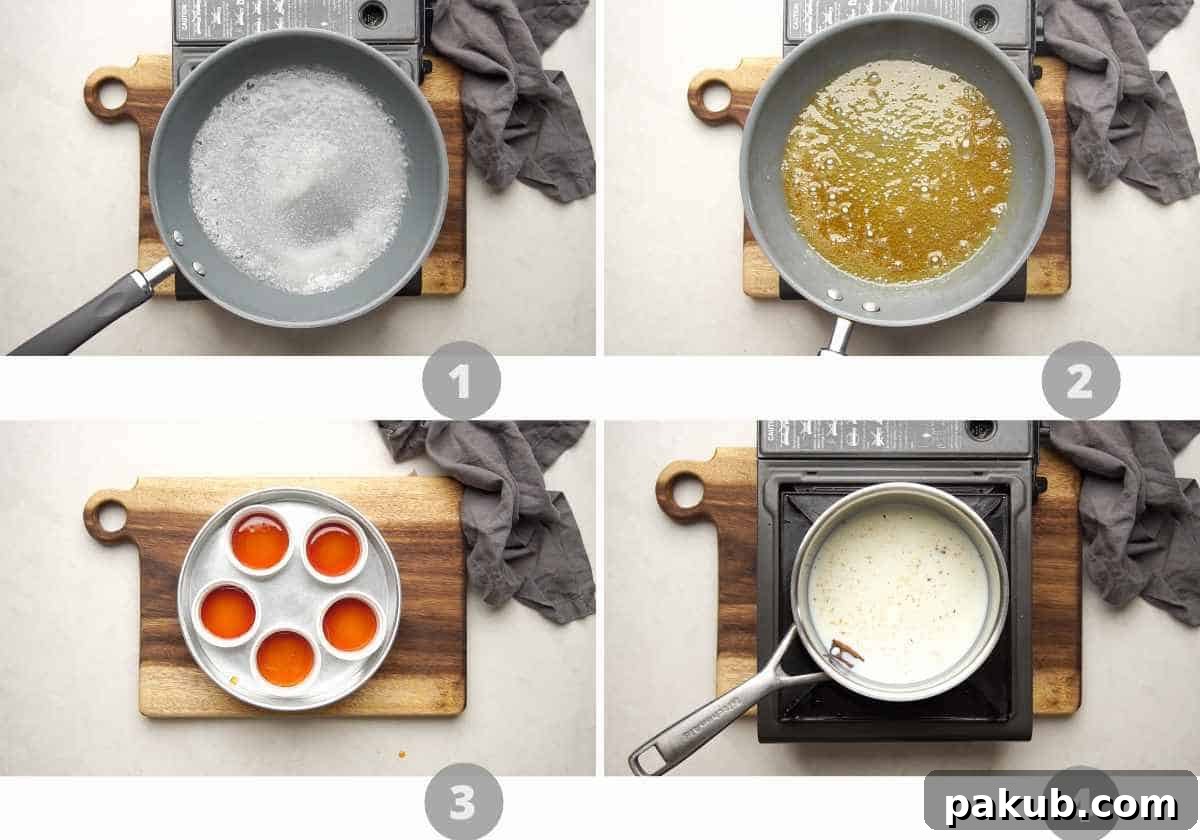
Part 1: Preparing the Caramel
- Start the Caramel: In a medium saucepan, combine the granulated sugar, water, and lemon juice (or vinegar). Place the pan over a medium flame. Stir gently but consistently until all the sugar has completely dissolved into the water. This initial stirring is vital to ensure an even melt.
- Caramelize with Care: Once the sugar has dissolved and the mixture begins to simmer, **refrain from stirring**. Stirring at this stage can cause the sugar to crystallize, ruining your caramel. Allow the mixture to bubble and cook undisturbed for approximately 3-4 minutes. Keep a close eye on it as it transitions from clear to a beautiful amber or golden color. The color will deepen quickly towards the end.
- Pour the Hot Caramel: As soon as your caramel reaches the desired amber hue, immediately and carefully pour it into your individual ramekin molds (or a larger baking dish if using one). Work quickly but cautiously, as hot caramel can cause severe burns if it comes into contact with your skin. Ensure the bottom of each mold is evenly coated.
- Harden the Caramel: Set the molds aside and allow the caramel to cool and harden completely. This typically takes about 10-15 minutes at room temperature. The caramel will become solid and brittle.
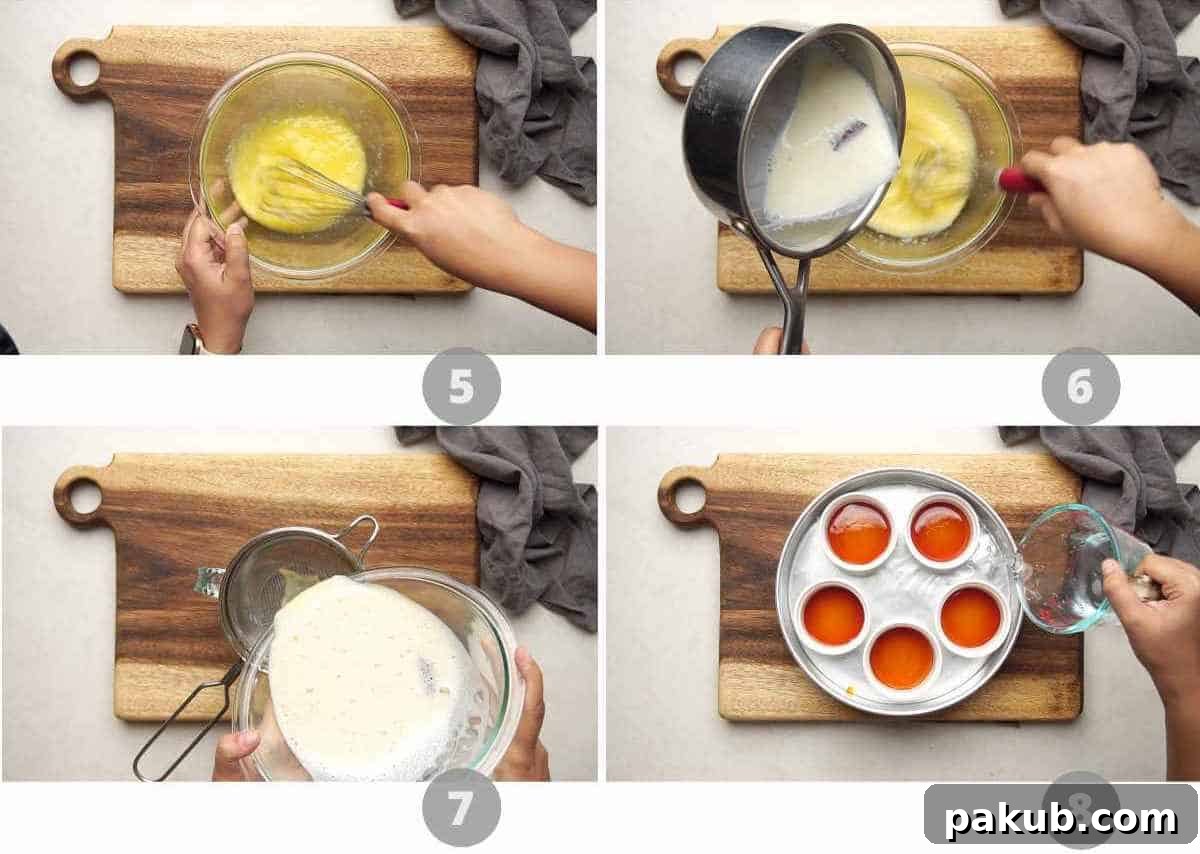
Part 2: Making the Custard
- Infuse the Milk: In a separate pot, heat the milk along with the cinnamon stick and grated nutmeg (if using) over medium heat. Do not bring the milk to a rolling boil. Instead, gently warm it until it is scalding – around 180°F (82°C) – where small bubbles form around the edges but it’s not aggressively boiling. Turn off the heat once scalding. Remove and discard the cinnamon stick.
- Whisk Eggs and Sugar: While the milk is heating, in a large bowl, whisk together the eggs and the remaining granulated sugar until the mixture is light, pale, and fluffy. This incorporates air, which contributes to the custard’s texture.
- Temper the Eggs: This is a crucial step to prevent the eggs from scrambling. While continuously whisking the egg and sugar mixture vigorously, slowly pour the hot milk in a thin, steady stream. Gradually adding the hot liquid while whisking vigorously allows the eggs to gently come up to temperature without cooking solid.
- Add Vanilla and Strain: Stir in the vanilla extract until well combined. For the smoothest custard possible, pour the entire mixture through a fine-mesh sieve into a pouring mug or pitcher. This removes any potential lumps from the egg, cinnamon, or nutmeg, ensuring a truly silky end product.
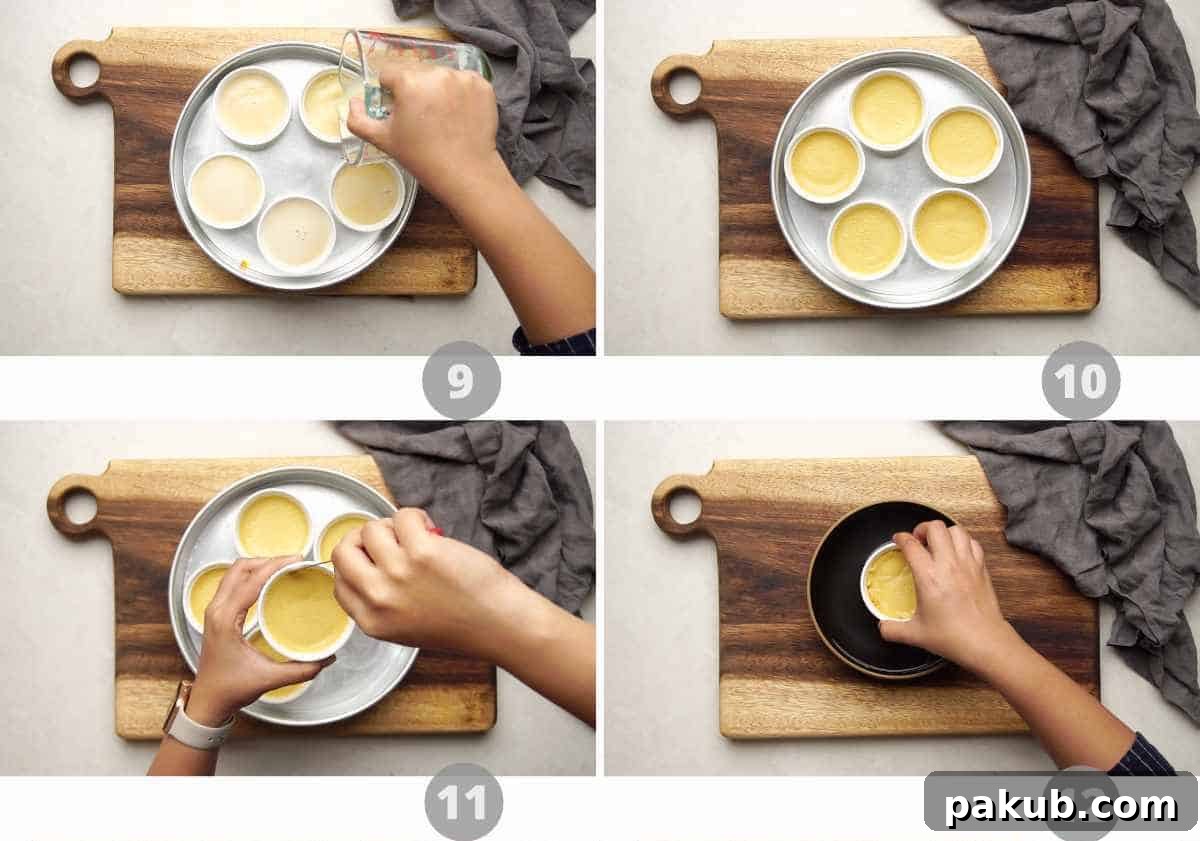
Part 3: Baking and Setting
- Prepare the Water Bath: Preheat your oven to 350°F (180°C). Place the ramekin molds, with the hardened caramel at the bottom, into a larger 9-inch baking tin. Carefully pour the strained custard mix into each ramekin. Do not fill them completely to the brim; leave about a 1 cm (approximately 0.4 inches) gap at the top to allow the custard room to expand slightly while baking. Then, fill the large baking tin with hot boiling water, ensuring the water level comes up about three-quarters of the way around the ramekins. This water bath (bain-marie) is essential for even, gentle cooking.
- Bake the Custard: Carefully transfer the baking tin with the water bath and ramekins into the preheated oven. Bake for approximately 40 minutes at 350°F (180°C). The exact baking time can vary slightly depending on your oven and the size of your molds. The custard is done when it appears mostly set around the edges but still has a slight, gentle wobble in the center when lightly shaken. The top should feel firm to the touch.
- Cool and Chill: Once baked, carefully remove the baking tin from the oven. Allow the ramekins to cool completely to room temperature while still in the water bath (the residual heat will continue to gently cook the custard). Once cool, transfer the ramekin molds to the refrigerator and let them chill and set for a minimum of 4-6 hours, or ideally overnight. This chilling period is crucial for the custard to firm up properly and for the flavors to meld beautifully.
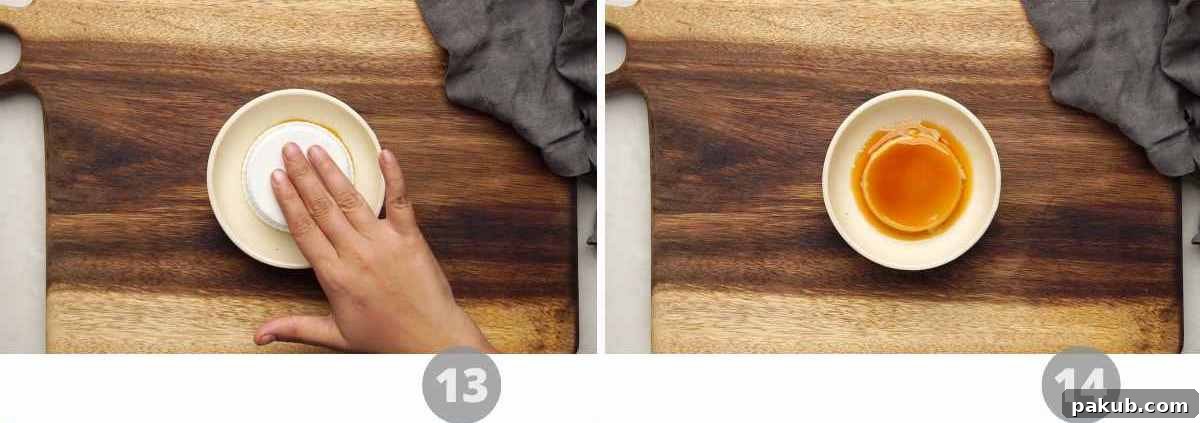
Part 4: Demoulding and Serving
- Loosen the Custard: When ready to serve, take a small, sharp knife and carefully run it around the inner edge of each ramekin to gently loosen the custard from the sides.
- Warm for Release: To help release the caramel, immerse the bottom of each ramekin in a shallow bowl of medium-hot water for about 10 seconds. Be very careful not to let any water seep into the custard itself. This gentle warming helps to melt the hardened caramel just enough for a clean release.
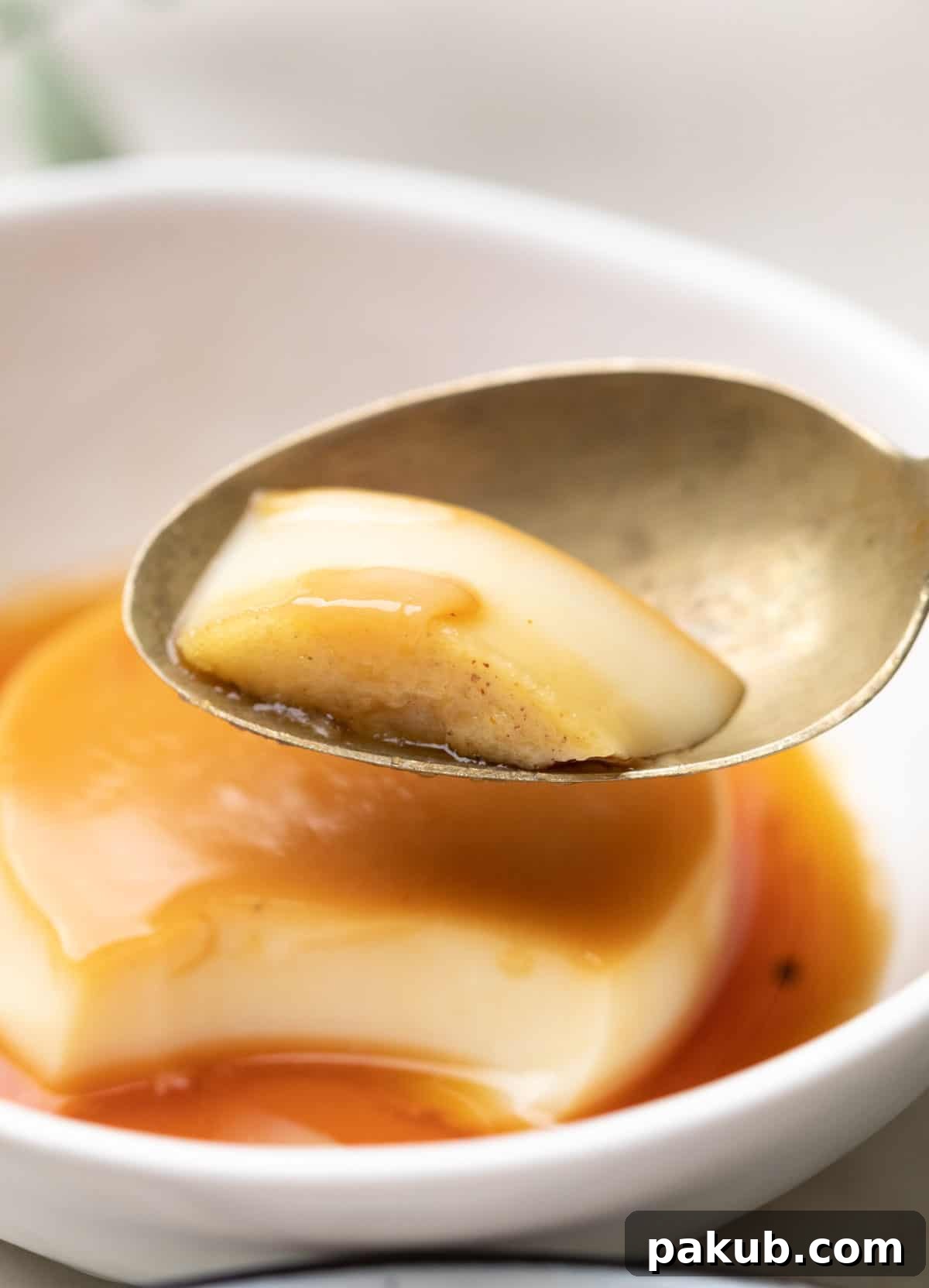
- Invert and Serve: Remove the ramekin from the hot water and let it rest on your counter for another 5-8 seconds. Then, place a serving plate upside down over the ramekin. Holding both the plate and the ramekin firmly, carefully invert them together. The caramel custard should slide out cleanly, with the golden caramel sauce pooling over the top.
- Enjoy! Serve your beautiful caramel custard immediately. Garnish with fresh berries or a dollop of whipped cream if desired.
Frequently Asked Questions
1. What are other names for caramel custard?
Caramel custard is widely known by several delightful names, most notably Flan and Crème Caramel. While the core concept remains the same – a rich egg custard with a caramel topping – regional variations exist in terms of flavorings, texture (some flans are denser), and how it is typically served or garnished. For instance, Latin American flans often incorporate condensed milk, while French Crème Caramel might be lighter.
2. Why is my caramel custard runny and not setting?
A runny custard is a clear indication that it has not been fully cooked and therefore hasn’t had enough time or heat to set properly. The eggs in the custard need to coagulate to create a firm yet delicate structure. You want to remove the custard from the oven when it appears mostly firm around the edges but still exhibits a slight, gentle wobble in the very center. It will continue to set as it cools and chills in the refrigerator. If it’s too runny, you can try baking it for an additional 5-10 minutes, checking for that slight wobble.
3. Why does my caramel custard taste eggy?
An “eggy” taste in caramel custard typically points to two main issues: either the custard has been overcooked, or insufficient vanilla extract (or other flavorings) was used. Overcooking causes the eggs to release sulfur compounds, leading to a stronger, undesirable eggy flavor. Remember to aim for that “slight wobble” when removing it from the oven to prevent this. Additionally, vanilla extract is crucial for masking and balancing the natural egg flavor, so always use good quality vanilla and don’t skimp on the amount.
4. Why is my caramel not thickening or hardening?
Caramel thickens and hardens based on the temperature it reaches during the cooking process. If your caramel isn’t thickening, it means it didn’t reach a high enough temperature (typically above 320°F / 160°C) to undergo proper caramelization and evaporation of water. Ensure you’re heating it over a consistent medium flame and allowing it to cook until it achieves a deep amber color, which indicates it has reached the necessary temperature for hardening upon cooling. The sugar-water ratio also plays a role; too much water can prevent it from thickening quickly.
5. Why doesn’t my caramel custard have a separate caramel layer?
For a distinct caramel layer at the top of your inverted custard, it’s essential to allow the caramel in the molds to harden completely before pouring in the custard mixture. If you add the liquid custard directly onto still-liquid or warm caramel, the two layers will combine during baking, resulting in a homogenous, caramel-infused custard rather than the beautiful, separate topping. Always wait a few minutes until the caramel is firm to the touch before proceeding with the custard.
6. Can I make caramel custard ahead of time?
Absolutely! Caramel custard is an excellent make-ahead dessert. In fact, it tastes even better when given ample time to chill and allow the flavors to fully develop. You can prepare and bake the custard, then chill it in the refrigerator for up to 2-3 days before serving. This makes it a perfect dessert for dinner parties or special occasions, as it reduces last-minute stress.
Top Tips to Make the Best Caramel Custard
Achieving a truly exceptional caramel custard involves a few key techniques. Keep these expert tips in mind to ensure your dessert is always a success:
- Mind the Caramel – No Stirring After Dissolution: Once your sugar and water mixture has completely dissolved and begins to simmer, **do not stir it!** Stirring at this stage can introduce sugar crystals back into the syrup, causing it to seize up or become grainy. Let the water evaporate and the sugar caramelize undisturbed.
- Monitor Caramel Color Closely: It typically takes around 6-8 minutes of steady heating for the caramel to form and reach the perfect color. Look for an even, deep amber hue. A darker color will result in a more bitter caramel, while a lighter color might not have enough depth. Be vigilant, as caramel can go from perfect to burnt in a matter of seconds.
- Extreme Caution with Hot Caramel: Always remember that hot caramel is extremely dangerous and can cause severe burns. Never touch it directly or taste it from the spoon while hot. Be incredibly careful and precise when pouring it into your molds.
- Allow Caramel to Harden Completely: After pouring the hot caramel into your dishes, allow it to cool and harden for several minutes. This crucial step prevents the warm custard mixture from immediately blending with the caramel, ensuring you get that beautiful, distinct caramel layer on top once inverted.
- Master the Art of Tempering Eggs: Tempering is essential for a smooth, unscrambled custard. This means slowly incorporating the warm milk into the egg mixture. Pour the warm milk into the whisked eggs and sugar in a thin, steady stream while **continuously and vigorously whisking**. This gradually raises the temperature of the eggs without cooking them, preventing a lumpy texture.
- Never Skip the Water Bath (Bain-Marie): Baking the flan in a water bath might seem like an extra step, but it’s indispensable. The water bath creates a moist, even heat environment, preventing the custard from cooking too quickly, cracking, or developing a rubbery texture. It ensures a silky-smooth, perfectly cooked custard every time.
- Ensure Smoothness with a Fine Sieve: Always strain your custard mixture through a fine-mesh sieve before pouring it into the molds. This step removes any tiny bits of cooked egg, spice residue, or undissolved sugar, guaranteeing a flawlessly smooth and luxurious custard.
- Proper Demoulding Technique: When it’s time to release your perfectly chilled custard, run a small, sharp knife carefully around the edges of the mold to loosen it. Then, briefly dip the bottom of the mold in hot water (5-10 seconds) to slightly melt the caramel, making inversion easier. Invert onto your serving plate swiftly and confidently.
Caramel Custard Variations and Serving Suggestions
While classic caramel custard is magnificent on its own, its simple elegance also makes it a fantastic canvas for creative variations. Once you’ve mastered the basic technique, feel free to experiment with these delightful twists to suit your taste or occasion:
- Flavor Infusions: For an aromatic twist, infuse the milk with other spices like a star anise, a vanilla bean pod (split), or a few cardamom pods. Orange or lemon zest can also be added to the custard mixture for a bright, citrusy note.
- Coffee or Chocolate: For coffee lovers, a tablespoon of instant espresso powder dissolved in the milk, or a strong shot of espresso, can transform it into a mocha caramel custard. Similarly, melted dark chocolate can be whisked into the warm milk for a rich chocolate flan.
- Creamier Textures: Some variations achieve an even creamier, richer texture by replacing some of the whole milk with evaporated milk or sweetened condensed milk (adjust sugar accordingly). Coconut milk can also be used for a tropical, dairy-free version, often paired with grated coconut.
- Boozy Bliss: A splash of rum, brandy, or an orange liqueur like Grand Marnier can be added to the custard mixture for an adult-friendly dessert.
Caramel custard is best served chilled, making it an ideal dessert for dinner parties, especially after heavier meals. Its light, refreshing nature provides a perfect palate cleanser. For an extra touch of elegance, garnish your demoulded custard with:
- A dollop of freshly whipped cream.
- Fresh berries like strawberries, raspberries, or blueberries.
- A sprinkle of toasted nuts like slivered almonds or chopped pistachios.
- A drizzle of dulce de leche or a touch of dark chocolate sauce.
Once you acquire the basic techniques, making caramel custard becomes incredibly simple and rewarding. It’s a fantastic go-to recipe because it relies on ingredients you likely always have at home, and its quick prep time is a huge bonus. Enjoy the process of creating this timeless, elegant dessert!
Watch How to Make Caramel Custard Video
LOVE THIS RECIPE? Subscribe to my newsletter and be the first to receive all new recipes directly in your inbox!
Caramel Custard Recipe
This caramel custard is the perfect dessert for those seeking a quick and easy recipe. With minimal pantry ingredients and a 15-minute preparation time, you can create a rich, silky custard that is sure to impress all who try it.
By: Richa
Prep Time: 15 mins
Cook Time: 40 mins
Resting Time: 4 hrs
Total Time: 4 hrs 55 mins
Servings: 4-6 people
Ingredients
For the Caramel:
- ⅔ Cup Sugar (150 Grams)
- ¼ Cup Water
- ½ Teaspoon Lemon Juice or Vinegar
For the Custard:
- 220 Millilitres Milk (Whole Milk recommended)
- ½ Inch Piece Cinnamon (Optional)
- A Pinch Grated Nutmeg (Optional)
- 2 Eggs (Whole, room temperature)
- ¼ Cup Sugar (50 Grams)
- ½ Teaspoon Vanilla Extract (Pure vanilla recommended)
Instructions
Caramel Preparation:
- Add sugar, water, and lemon juice (or vinegar) to a saucepan. Heat over a medium flame, stirring gently until the sugar completely dissolves.
- Once the sugar dissolves, stop stirring. Allow the mixture to bubble and cook for 3-4 minutes, or until it turns an amber or golden color. Watch carefully to prevent burning.
- Once the desired caramel color is achieved, carefully pour the hot caramel into 5 individual ramekin molds. Be extremely cautious as hot caramel can cause severe burns.
- Set the molds aside and allow the caramel to cool and harden completely at room temperature.
Custard Preparation:
- In a separate pot, heat the milk, cinnamon stick, and grated nutmeg over medium heat until scalding (approximately 180°F/82°C). Do not bring it to a boil. Turn off the heat and remove the cinnamon stick.
- While the milk is heating, whisk together eggs and sugar in a large bowl until the mixture is light and fluffy.
- To temper the eggs, slowly stream the hot milk into the egg mixture while continuously whisking vigorously. This prevents the eggs from scrambling. Add the vanilla extract and whisk until well combined.
- Strain the entire custard mix through a fine sieve into a pouring mug to ensure a perfectly smooth custard.
Baking and Serving:
- Preheat oven to 350°F (180°C). Place the ramekin molds (with hardened caramel) into a 9-inch baking tin. Pour the strained custard mix into the ramekins, leaving a 1 cm gap at the top.
- Fill the baking tin with hot boiling water, ensuring the water comes up three-quarters of the way around the ramekins. Carefully transfer the tin to the oven and bake for 40 minutes.
- The custard is done when it has a slight wiggle in the center but a firm top. Remove from the oven and allow to cool to room temperature, then transfer to the fridge to set for 4-6 hours (or overnight).
- To demould, run a knife along the side of each mold to loosen the custard. Immerse the ramekins in medium-hot water for 10 seconds (being careful not to get water into the custard).
- Let them rest on the counter for 5-8 seconds, then carefully invert each ramekin onto a serving plate. Serve immediately, perhaps with fresh berries or whipped cream.
Nutrition Facts (per serving)
- Calories:
- 243 kcal
- Carbohydrates:
- 49 g
- Protein:
- 5 g
- Fat:
- 4 g
- Saturated Fat:
- 2 g
- Polyunsaturated Fat:
- 0.5 g
- Monounsaturated Fat:
- 1 g
- Trans Fat:
- 0.01 g
- Cholesterol:
- 88 mg
- Sodium:
- 53 mg
- Potassium:
- 116 mg
- Fiber:
- 0.1 g
- Sugar:
- 49 g
- Vitamin A:
- 208 IU
- Vitamin C:
- 0.2 mg
- Calcium:
- 82 mg
- Iron:
- 0.4 mg
(Nutritional information is an estimate based on ingredients and preparation.)
Like this recipe? We’d love to hear from you! Please consider rating and leaving a comment below. Your feedback helps us grow!
More Easy Dessert Recipes to Explore
If you loved this caramel custard recipe, you’ll surely enjoy these other simple and delicious dessert ideas from our kitchen:
- Decadent Mocha Lava Cake
- Light and Fluffy Strawberry Mousse
- Comforting Cinnamon Bread Pudding
- Classic Vanilla Panna Cotta