Say Goodbye to Sticky Pots: The Ultimate Hack to Prevent Milk from Burning
Every home cook has faced the frustrating aftermath of boiling milk: a stubbornly sticky, often burnt layer clinging to the bottom of the pot. What starts as a simple task can quickly turn into a prolonged scrubbing session, wasting time and effort. If you’ve ever found yourself battling with scorched milk residue, you’re certainly not alone in this common kitchen conundrum.
But what if we told you there’s a ridiculously simple, almost magical trick that can completely eliminate this problem? A quick, single step before you even add the milk is all it takes to ensure your pot remains squeaky clean, making your life in the kitchen infinitely easier. Get ready to transform your milk-boiling experience forever!
Table of Contents
- The Game-Changing Milk Pot Hack
- Why the Water Trick Works: The Science Explained
- Beyond the Hack: Essential Tips for Perfect Milk Boiling
- Choosing the Right Pot for Boiling Milk
- Common Mistakes to Avoid When Boiling Milk
- Troubleshooting: What if Milk Still Sticks?
- Easy Cleanup If the Unthinkable Happens
- Watch The Simple Trick In Action (Video)
The Game-Changing Milk Pot Hack: Just Add Water!
Prepare to be amazed by the simplicity of this trick. You only need one humble ingredient that’s readily available in every kitchen: a few drops of water. That’s right, plain old water is your secret weapon against burnt milk!
How to Execute the Water Trick Perfectly:
Before you pour your milk into the pot, add a small amount of cold water—just a tablespoon or two, depending on the size of your pan. Swirl this water around the pot, ensuring it coats the entire bottom surface and even a little up the sides where the milk might reach. Once the bottom is thinly coated, you can pour your milk directly over it. Now, place your pot on the stove and proceed to boil your milk as usual. You’ll notice an incredible difference when you’re done!
This seemingly insignificant step creates a protective barrier between the hot metal surface of your pot and the delicate milk. Instead of milk proteins and sugars directly adhering to the pot’s bottom and caramelizing, they will interact with this thin layer of water first. This prevents direct contact and dramatically reduces the chances of sticking and burning, leaving you with a sparkling clean pot and perfectly boiled milk.
Why the Water Trick Works: The Science Behind the Magic
To truly appreciate this hack, it helps to understand why milk sticks and burns in the first place. Milk is a complex emulsion containing water, fats, proteins (like casein and whey), and sugars (lactose). When milk is heated, especially rapidly or at high temperatures, these components behave in specific ways:
- Protein Denaturation: The proteins in milk are highly sensitive to heat. As milk heats up, proteins denature and coagulate. They tend to settle at the bottom of the pot, forming a film.
- Sugar Caramelization: Lactose, the sugar in milk, starts to caramelize when it comes into direct contact with a hot surface. This caramelization process creates the distinctive brown, sticky, and often bitter burnt layer.
- Heat Transfer: The bottom of a pot directly over a heat source gets incredibly hot. Without a buffer, the milk solids in direct contact with this superheated surface quickly scorch.
The water trick works by providing a crucial buffer. When you add water first, it creates a steam barrier. As the pot heats up, the water quickly turns into steam, which then acts as a non-stick layer. This steam physically separates the milk solids from the hot metal surface, preventing them from adhering and burning. The milk then heats more evenly and gently, giving you more control and vastly reducing the likelihood of a sticky, burnt mess.
Beyond the Hack: Essential Tips for Perfect Milk Boiling
While the water trick is a game-changer, combining it with other best practices will ensure you achieve perfectly boiled milk every single time, free from scalding or boil-overs. Here are some additional expert tips:
1. Use Low to Medium Heat:
Patience is a virtue when boiling milk. High heat causes rapid temperature changes, making milk more prone to sticking and scorching. Gentle, consistent heat allows the milk to warm up gradually, preventing the proteins from denaturing too quickly and adhering to the pot. This also helps prevent boil-overs.
2. Stir Frequently (But Gently):
Even with the water trick, occasional stirring can further enhance even heat distribution and prevent milk solids from settling. Use a spatula or wooden spoon to gently scrape the bottom and sides of the pot as the milk heats. This is especially important if you’re boiling a large quantity of milk.
3. Don’t Leave it Unattended:
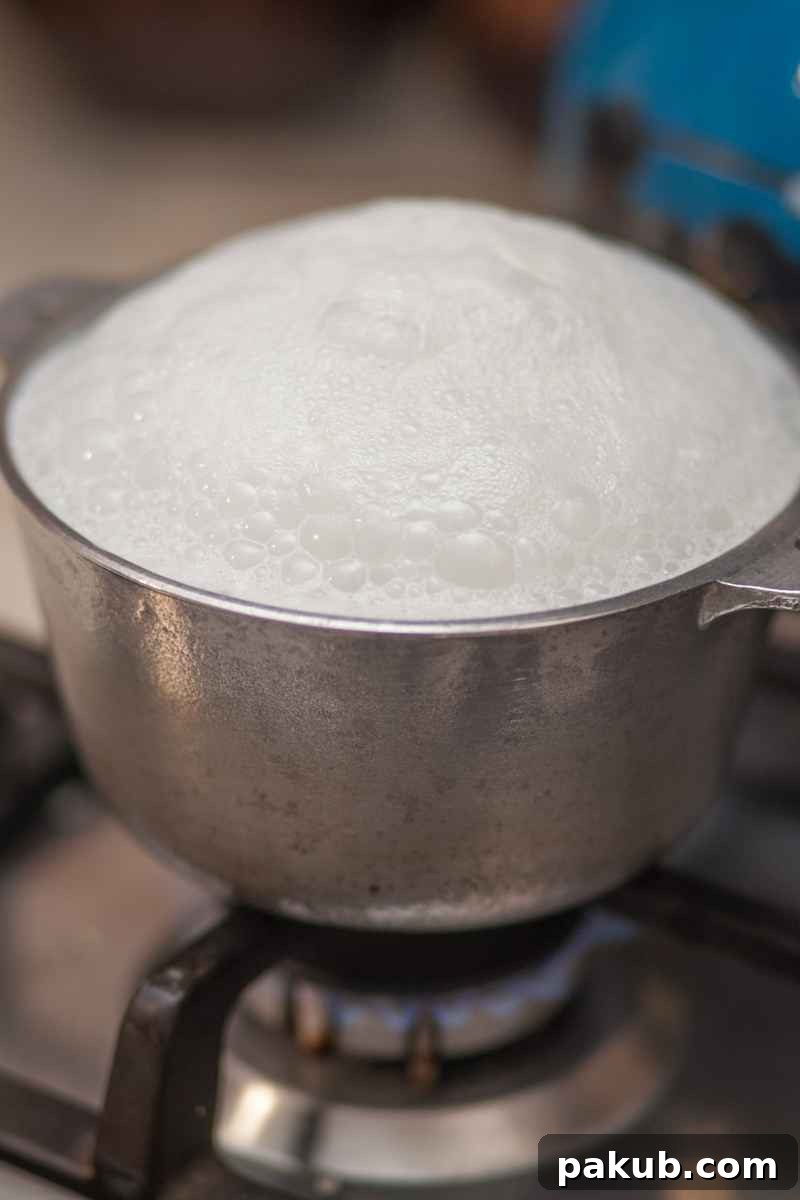
Milk can go from perfectly simmering to furiously boiling over in a matter of seconds. Stay near the stove and keep an eye on the milk, especially as it approaches boiling point. This vigilance allows you to adjust the heat or remove the pot in time to prevent a messy boil-over.
4. The Butter or Oil Rim Trick:
This is a fantastic complementary hack, particularly for preventing boil-overs. Before adding milk (and after the water for the sticking hack!), lightly grease the inside rim of your pot with butter, margarine, or a neutral oil. The fat creates a barrier that prevents the foam from climbing up and spilling over the edges when the milk starts to boil.
Choosing the Right Pot for Boiling Milk
The type of pot you use also plays a significant role in preventing milk from sticking and burning. Invest in good quality cookware for the best results:
- Heavy-Bottomed Pots: These are ideal because they distribute heat more evenly across the surface. This prevents hot spots that can cause milk to scorch quickly. Stainless steel or copper pots with thick bases are excellent choices.
- Avoid Thin Aluminum Pots: Thin-bottomed pots heat up too rapidly and unevenly, making them highly susceptible to burning milk. Aluminum can also react with milk, sometimes imparting an off-flavor.
- Appropriate Size: Use a pot that is large enough to accommodate the milk comfortably, leaving plenty of headspace. This helps to prevent boil-overs, giving you more reaction time.
Common Mistakes to Avoid When Boiling Milk
Understanding these pitfalls can further improve your milk-boiling success:
- Rushing the Process: Trying to boil milk quickly on high heat is the most common mistake. This almost guarantees a burnt bottom and potential boil-over.
- Using Cold Milk Directly from the Fridge on High Heat: A sudden drastic temperature change is not ideal. While the water trick helps, starting with milk that’s not ice-cold on low-medium heat is better.
- Not Stirring at All: Relying solely on the water trick without any stirring, especially for larger quantities, can still lead to some localized sticking.
- Overfilling the Pot: Leaving insufficient space at the top is an invitation for a messy boil-over the moment milk starts to foam.
Troubleshooting: What if Milk Still Sticks?
While the water trick is incredibly effective, sometimes life happens. If you still encounter some sticking, consider these points:
- Insufficient Water: Did you add enough water to coat the entire bottom? For larger pots, you might need a bit more.
- Too High Heat: Even with the water, extremely high heat can still overpower the protective layer. Always aim for low to medium.
- Very Old Milk: Milk that is nearing its expiry date might have altered protein structures that make it more prone to sticking.
- Leaving it Completely Unattended: As mentioned, vigilance is key. A quick stir can make a difference.
Easy Cleanup If the Unthinkable Happens
Even with all precautions, a small amount of residue might occasionally form. Don’t despair! Here’s how to clean a burnt pot with minimal effort:
- Soak Immediately: As soon as the pot cools down, fill it with warm water and a dash of dish soap. Let it soak for at least an hour, or even overnight. This softens the burnt layer significantly.
- Baking Soda Power: For tougher stains, sprinkle a generous layer of baking soda over the burnt area, add a little water to form a paste, and let it sit for a few hours before scrubbing. Baking soda is a gentle abrasive and helps lift stubborn residue.
- Vinegar Solution: Another effective method is to pour a cup of white vinegar into the pot, add a cup of water, and bring it to a simmer for a few minutes. The acidity helps to loosen the burnt bits.
Who knew a few drops of water and a dash of patience could make such a significant difference in your kitchen routine? This simple yet powerful hack will save you countless minutes of scrubbing and ensure your pots remain pristine. Give it a try the next time you boil milk and experience the ease for yourself!
We’ve got plenty more handy kitchen tips and tricks coming your way to simplify your cooking and cleaning. Stay tuned to our blog’s Kitchen How-Tos section for a treasure trove of helpful advice!
Watch How To Prevent Milk From Sticking To The Pan (Video)
This article was extensively researched and written by Harita Odedra.