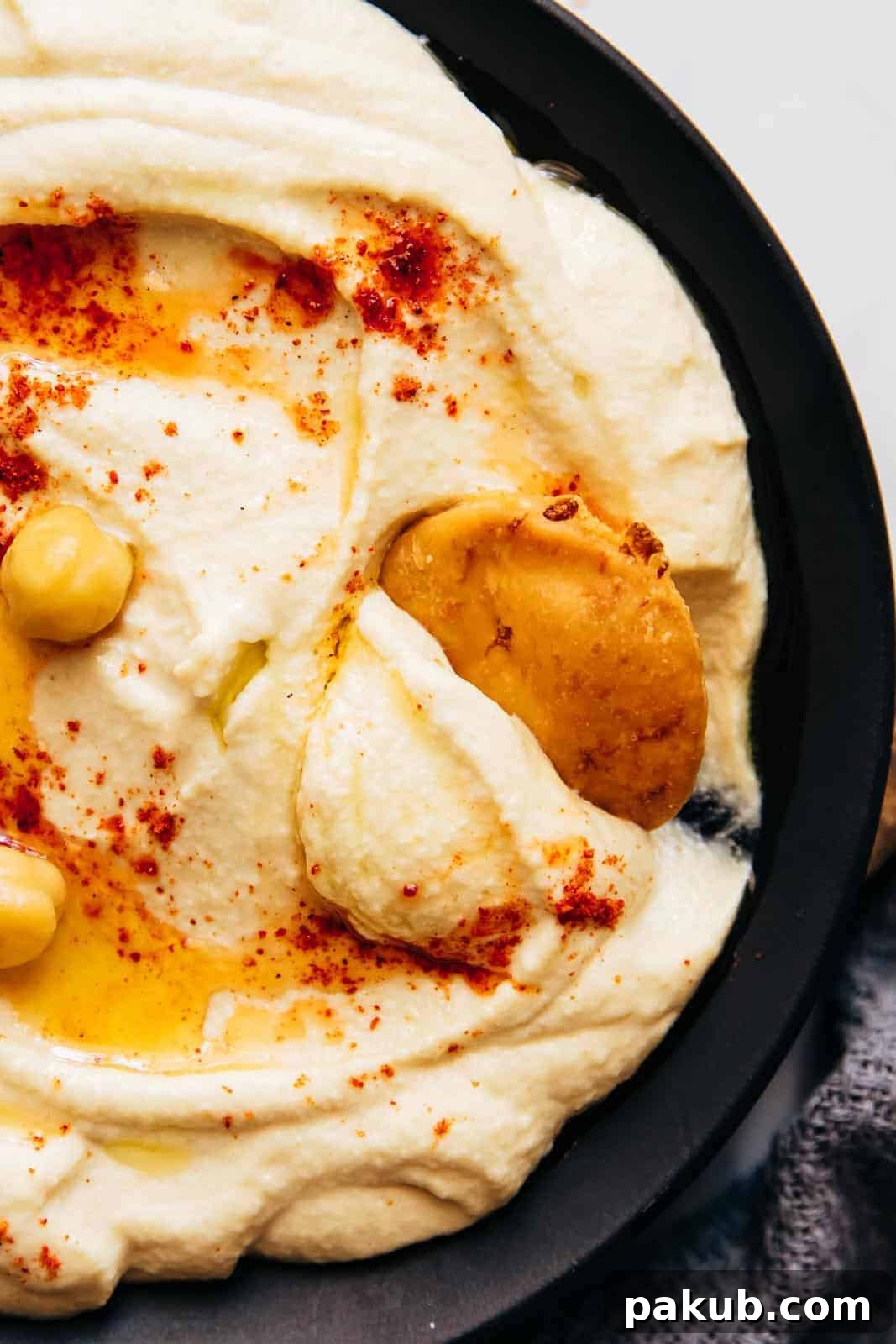
Discover the ultimate guide to making incredibly smooth and creamy homemade hummus with our simple, tried-and-tested recipe. Elevate your culinary skills and enjoy this versatile Middle Eastern dip like never before. Watch our kitchen video below for a visual step-by-step!
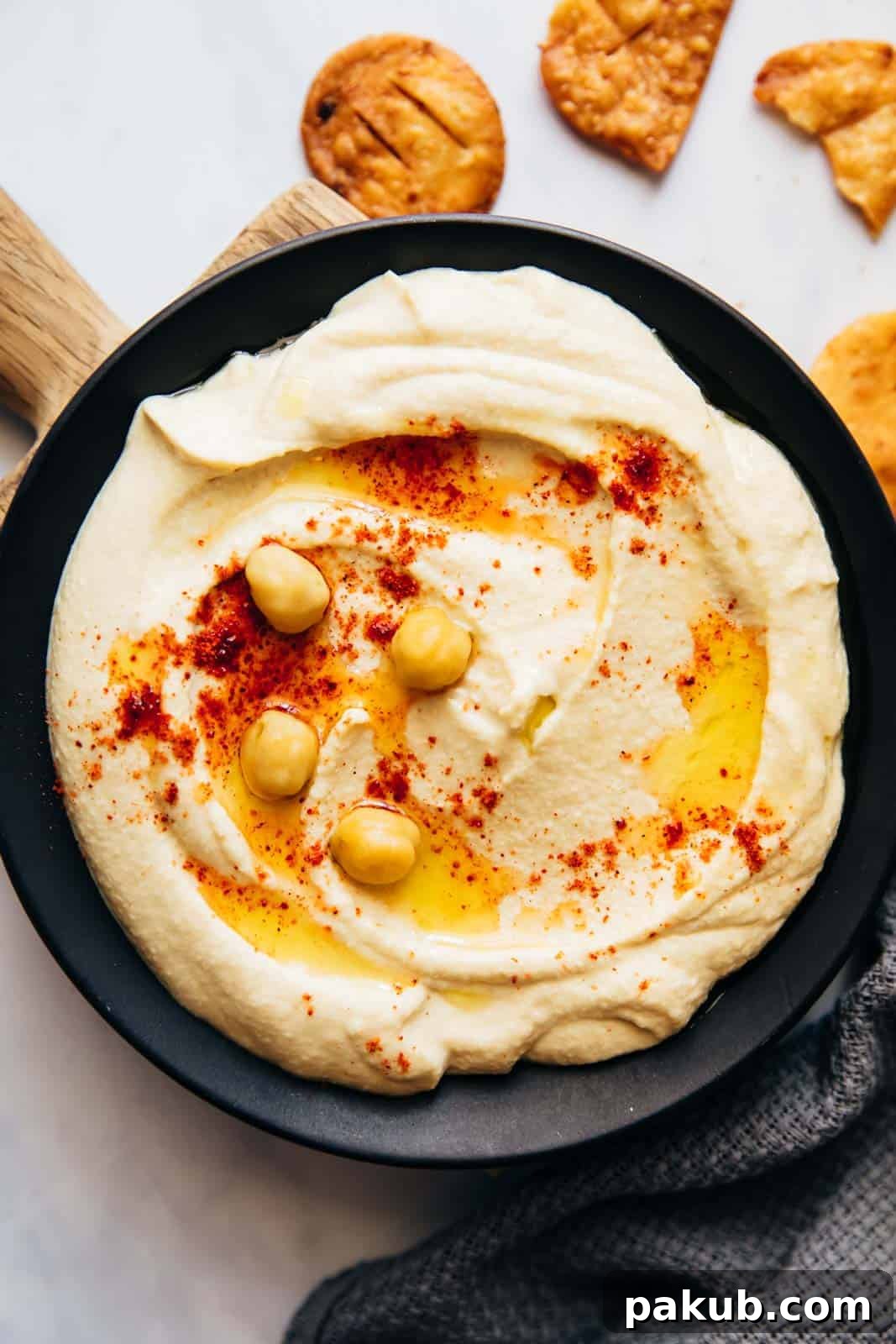
Craving an authentic Middle Eastern feast? Elevate your spread by pairing this exquisite homemade hummus with whole wheat pita bread, crispy falafel, a refreshing chickpea salad, vibrant Egyptian beetroot dip, and rich muhammara. Hummus is also the perfect, creamy base for a delicious shawarma roll, adding an unforgettable layer of flavor and texture that truly transforms the dish.
Why Homemade Hummus is Simply the Best
For years, hummus has been an unwavering staple in my kitchen – a constant resident in my fridge, ready to be slathered on everything from warm pita bread and crunchy toast to wholesome Indian roti and paratha. Its incredible versatility makes it an indispensable dip and spread for countless meals and snacks. But beyond sheer convenience, opting to make hummus at home offers unparalleled benefits that most store-bought versions simply cannot match.
Many commercial hummus brands, in their quest for extended shelf life and reduced costs, often come laden with excessive oils, preservatives, and artificial additives. This homemade hummus recipe, however, is a celebration of clean ingredients and pure, natural flavors. By preparing it yourself, you gain complete control over every component, ensuring a product that is not only healthier and free from unwanted extras but also bursts with a far superior taste and fresher essence.
This guide isn’t just about providing a recipe; it’s about empowering you to perfect the art of hummus making. I’ve packed it with an abundance of tested tips and clever tricks, all designed to lead you towards achieving the creamiest, smoothest, and most intensely flavorful hummus possible. As with any culinary endeavor, practice refines skill, and each batch you lovingly prepare will bring you closer to discovering your absolute perfect hummus. Let’s embark on this delicious journey together and create a truly extraordinary chickpea dip!
Table of Contents: Your Journey to Perfect Hummus
- Essential Hummus Ingredients
- Step-by-Step Guide to Creamy Hummus
- Expert Tips for Perfect Hummus
- Creative Serving Suggestions
- Watch the Hummus Making Video
- Explore More Delicious Dips
Essential Ingredients for the Best Homemade Hummus
Crafting truly exceptional hummus begins with a deep understanding of each core ingredient and its unique contribution to the final masterpiece. Here’s a detailed exploration of what you’ll need to gather:
Chickpeas (Garbanzo Beans) – The Foundation of Flavor and Texture
These humble legumes are undeniably the heart and soul of any authentic hummus. You have two primary options for your chickpeas: dried or canned, and each method has its nuances for achieving optimal smoothness. For the absolute smoothest and most luxurious hummus, the secret lies in **overcooking your chickpeas** until they are incredibly tender, almost to the point of being mushy. They should easily yield and smash between your fingers with very little effort.
- **For Dried Chickpeas:** Begin by soaking them overnight, or for at least 8-12 hours. This significantly reduces cooking time. Once soaked, cook them thoroughly. If using an Instant Pot, add the soaked chickpeas to the inner pot with enough fresh water to cover them by an inch, then cook on high pressure for about 45-50 minutes. For stovetop cooking, boil them for a generous 1.5 to 2 hours. The goal is to cook them far beyond al dente, ensuring maximum softness.
- **For Canned Chickpeas:** While convenient, canned chickpeas benefit from an extra step. Drain and rinse them thoroughly, then transfer them to a pot of boiling water and let them simmer for approximately 5 minutes. This gentle reheating and softening process is absolutely crucial for loosening their skins and achieving that extra creamy, dreamy texture that distinguishes homemade hummus.
Garlic – The Aromatic Heartbeat
I firmly believe that hummus simply doesn’t taste complete without the vibrant kick of fresh garlic. It infuses the dip with a pungent, aromatic depth that beautifully complements the earthy chickpeas and nutty tahini. The key is to add just enough to provide a lovely garlicky undertone, enhancing the overall flavor profile without overpowering the other delicate notes. Fresh garlic cloves are always recommended for the most potent and clean flavor. If you’re a fan of milder garlic nuances, or if it’s in season, consider using green garlic for a slightly fresher, less intense profile.
Tahini – The Creaminess Catalyst
Tahini, a rich, emulsified paste made from finely ground toasted sesame seeds, is the undisputed secret weapon for achieving hummus’s signature nutty flavor and its coveted luxurious creaminess. It’s arguably the most critical ingredient after the chickpeas themselves. While it is possible to prepare tahini at home using high-quality sesame seeds (such as “nylon til” in India or Ethiopian sesame seeds known for their superior oil content), I often recommend opting for a good quality store-bought tahini paste for consistency and convenience. Always check the expiration date and ensure the tahini has a fresh, nutty aroma, free from any bitterness or rancidity. Store any leftover tahini in the refrigerator to maintain its freshness and prevent spoilage. A high-quality tahini will make a profound and positive difference in the overall balance and richness of your hummus.
Fresh Lemon Juice – The Brightening Touch
The bright, zesty tang of freshly squeezed lemon juice is absolutely essential for cutting through the richness of the chickpeas and tahini. It provides a refreshing lift and a crucial element of balance to the hummus. Always, always use freshly squeezed lemon juice. Bottled varieties often lack the vibrant acidity and can sometimes introduce unwanted metallic notes or preservatives. Adjust the amount to your personal preference – some enthusiasts prefer a more pronounced citrusy zing, while others enjoy a more subtle, background note.
Seasoning – The Flavor Enhancers
A simple yet thoughtfully chosen blend of spices elevates homemade hummus from merely good to truly great. Here’s what you’ll need:
- Ground Cumin: This spice adds a warm, earthy, and slightly pungent depth that is utterly characteristic of authentic Middle Eastern cuisine. It’s a non-negotiable flavor component.
- Salt: A generous amount of salt is crucial for seasoning and enhancing all the other beautiful flavors in your hummus. Start with the recommended amount, but always taste and adjust to your palate.
- Paprika: While a tiny pinch can be blended in for a very subtle warmth, paprika is primarily used as a finishing garnish. Sprinkling it over the top adds a beautiful pop of color and a mild, sweet, or smoky note, depending on the type of paprika used.
Olive Oil – The Finishing Flourish, Not a Blending Ingredient
Here’s a crucial technique that significantly distinguishes this recipe from many others you might encounter online: **Do NOT add olive oil to your blender or food processor while making the hummus.** Blending olive oil with the chickpeas, especially at high speeds, can sometimes introduce an undesirable bitter taste to the final product. Instead, I strongly advocate for adding a good quality extra virgin olive oil at the very end. Once your hummus is smooth and ready, transfer it to a serving bowl, drizzle it generously over the top, and gently swirl it in with a spoon or create a beautiful well in the center. This method allows you to truly savor the fresh, fruity, and sometimes peppery notes of the olive oil, enhancing the overall experience without any bitterness. It’s the perfect, elegant finishing touch, both for flavor and exquisite presentation.
With these foundational ingredients thoroughly understood and gathered, the process of crafting glorious homemade hummus is surprisingly straightforward and incredibly rewarding, involving just a few key steps.
How to Make Unbelievably Creamy and Smooth Hummus – Step by Step
Follow these precise steps to achieve a hummus that is consistently smooth, delightfully light, and bursting with vibrant, authentic flavor. The secret to perfection lies in patience and meticulous attention to detail throughout the blending process.
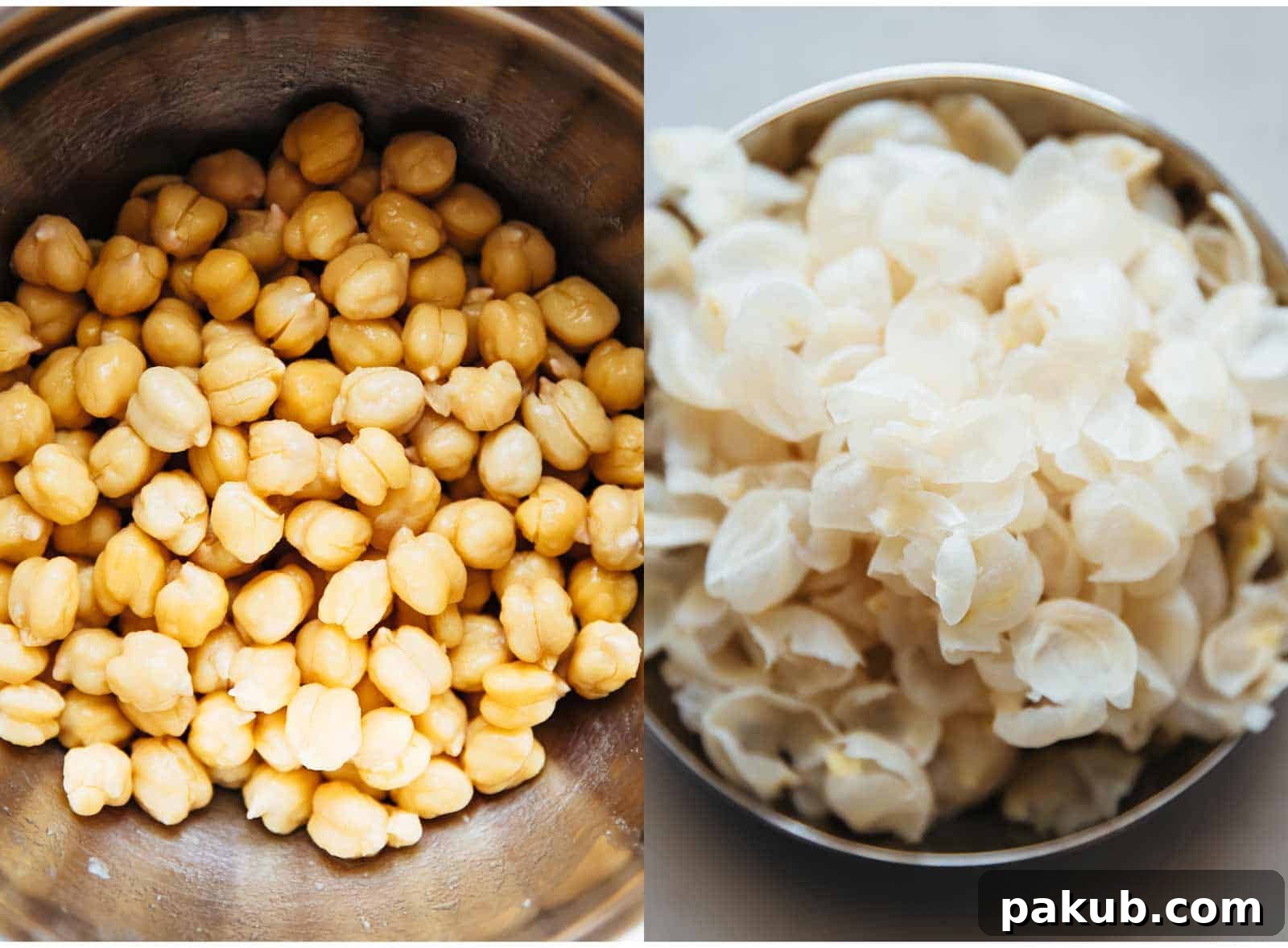
- Prepare and Peel the Chickpeas: This initial step is arguably the most crucial for achieving that signature velvety texture. Gently peel your thoroughly cooked chickpeas by pinching them between your thumb and forefinger; the outer skin should effortlessly slip away. While this step is entirely optional and can be skipped if you’re short on time, taking a few extra minutes to peel them will yield a significantly smoother and more luxurious hummus. Discard the removed skins, or for a zero-waste approach, you can reserve them to add fiber to soups or stews. (Remember, if using canned chickpeas, give them that crucial 5-minute simmer in boiling water first to further soften them and make peeling even easier).
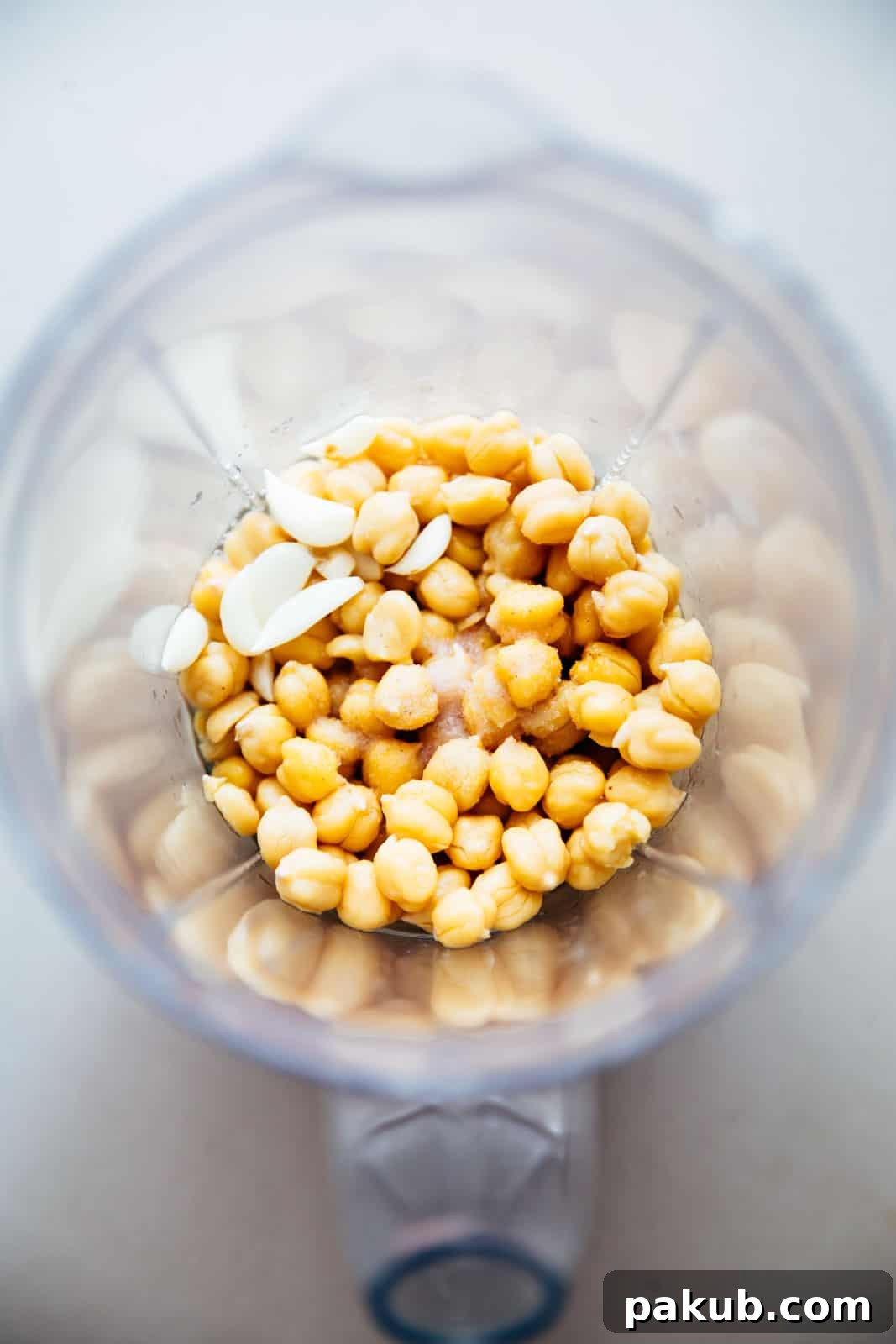
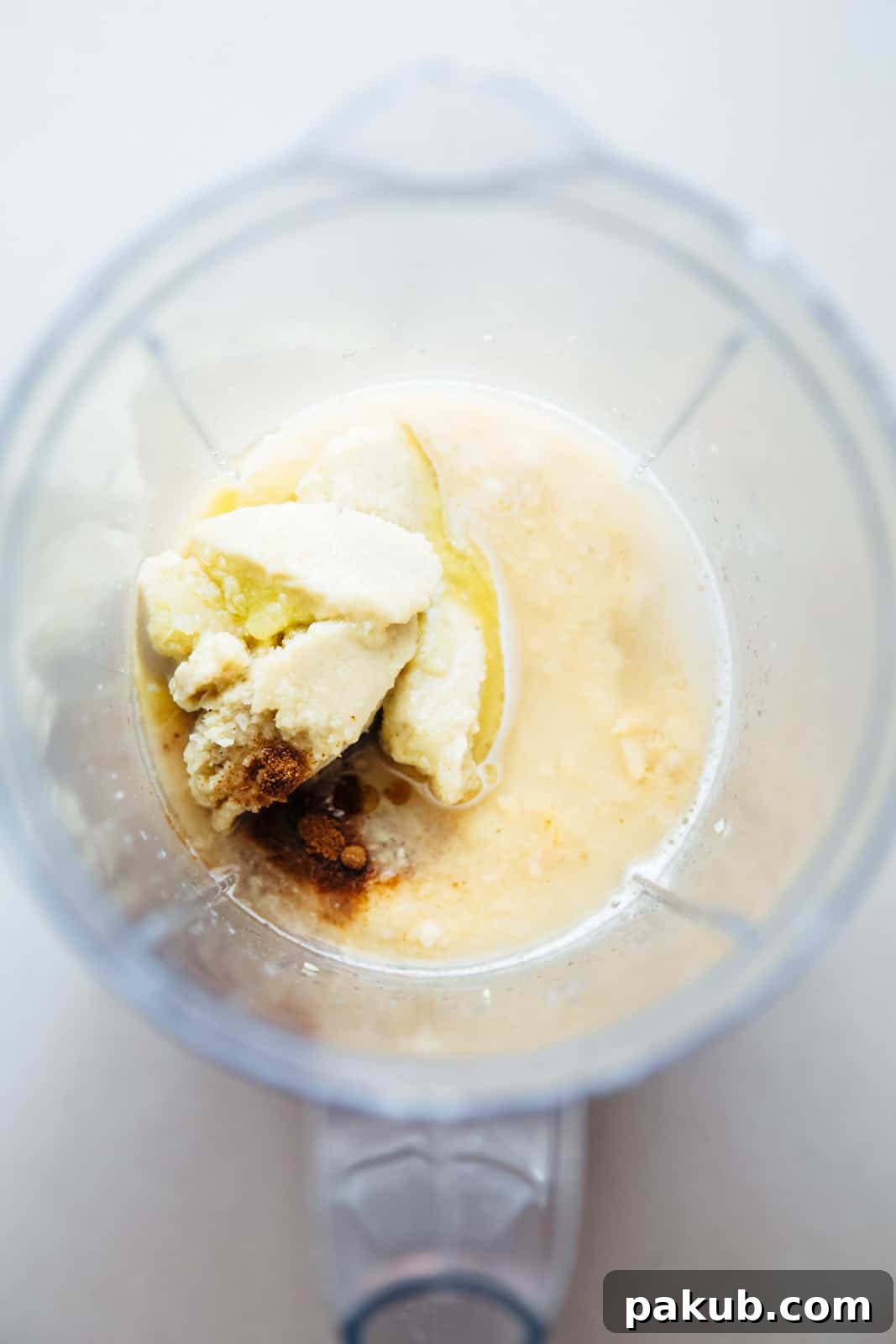
- Initial Blend of Solids: Carefully add the peeled (or unpeeled, if skipped) chickpeas, minced garlic cloves, and salt to the bowl of a powerful blender or food processor. Begin to process these ingredients. Your goal in this initial stage is to break down the chickpeas into a coarsely ground mixture, resembling a thick, grainy paste. Stop occasionally to scrape down the sides of the bowl with a spatula, ensuring all ingredients are evenly incorporated and processed. This preliminary blending establishes a good base before adding liquids.
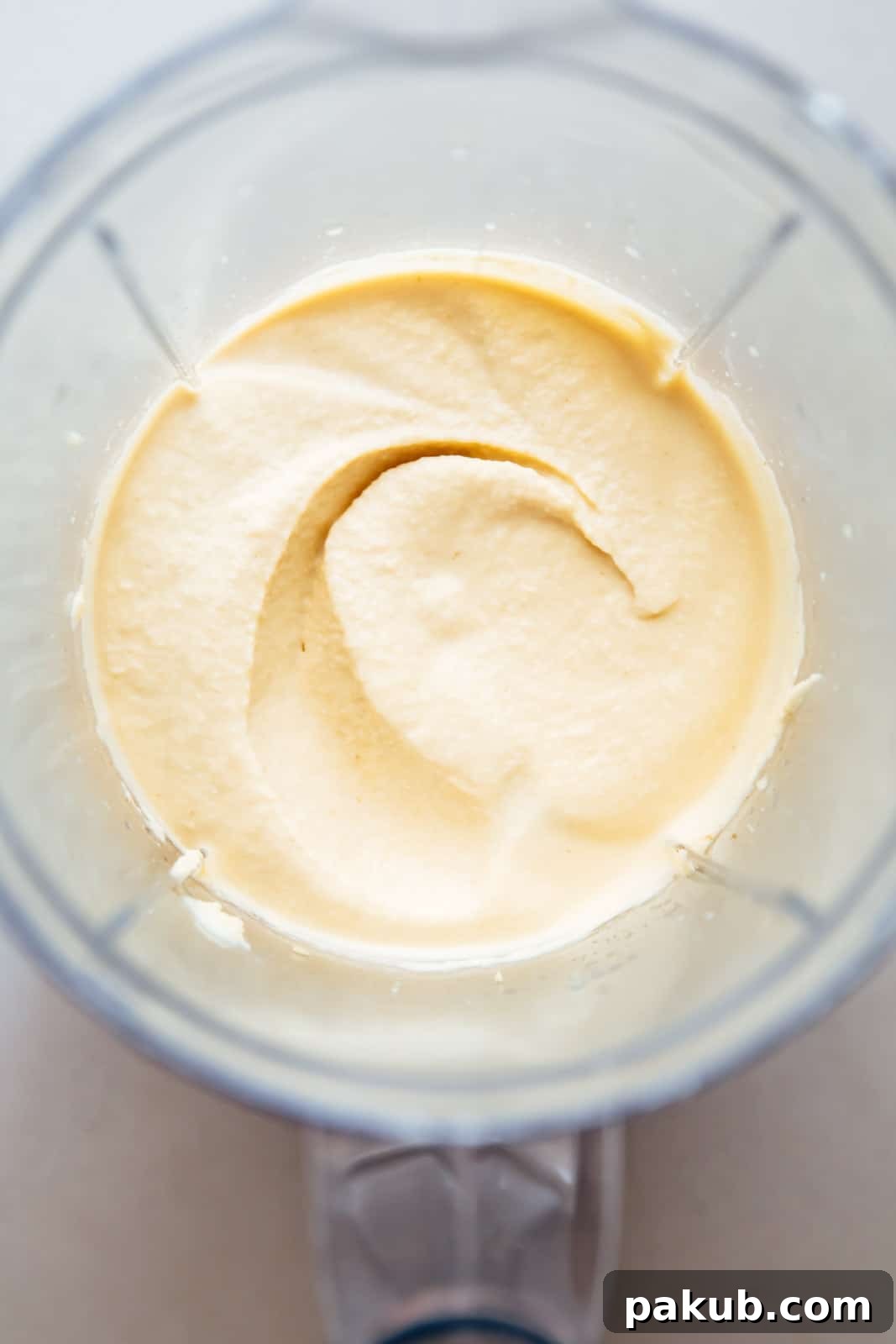
- The Creaminess Transformation with Cold Water: Now, introduce the tahini, ground cumin, and most importantly, the **ice-cold water** to the chickpea mixture in the blender. The ice-cold water is a true game-changer in hummus making; it actively prevents the mixture from overheating during the intense blending process, which can negatively impact texture, and crucially helps to emulsify all the ingredients more effectively. This results in an exceptionally light, airy, and undeniably creamy consistency. Continue to process the mixture on high for a substantial 3-4 minutes. Don’t hesitate to let the machine run – longer blending is often the ultimate secret to achieving that coveted, silky-smooth finish. Periodically scrape down the sides. If the hummus appears too thick or isn’t blending smoothly, add more ice-cold water, one tablespoon at a time, until the desired texture begins to form.
- Final Adjustments and Flavor Balancing: As the final step, incorporate the fresh lime juice into the now smooth hummus. Blend for another 30 seconds to fully integrate the citrusy notes. This is the critical moment for tasting and adjusting the seasoning. Sample a small amount and determine if it needs more salt, a touch more cumin for deeper warmth, or an extra squeeze of lemon juice for brighter acidity. If the consistency is still not quite right – perhaps a little too thick – incorporate a very small amount of additional ice-cold water and continue blending for another minute or two until it reaches a luxuriously smooth, spreadable, and perfectly dippable consistency.
And there you have it! Crafting this creamy, delicious, and deeply satisfying hummus at home is not only a surprisingly easy culinary endeavor but also immensely more rewarding than simply purchasing it from a store. By preparing it yourself, you gain full control over every single ingredient, guaranteeing a clean, healthy, and incredibly flavorful dip that is sure to impress everyone who tastes it.
Expert Tips for Crafting Truly Perfect Hummus
Achieving hummus perfection is an entirely attainable goal with these crucial insights and techniques. These tips, honed over countless batches of hummus, will help you consistently produce a superior, restaurant-quality dip right in your own kitchen:
- The Golden Rule: Overcook Your Chickpeas! This is perhaps the most vital and often overlooked secret to achieving grit-free, irresistibly velvety hummus. Whether you’re cooking dried chickpeas from scratch or utilizing the convenience of canned ones, the key is to ensure they are cooked significantly past the point of just being tender. They should be incredibly soft, almost mushy, and easily smashable between your fingers. For dried chickpeas, aim for an extra five to ten minutes beyond your usual cooking time in an Instant Pot or pressure cooker (approximately 45-50 minutes on high pressure after an overnight soak). On the stovetop, boil them for a generous 1.5 to 2 hours until they literally melt in your mouth. For canned chickpeas, after draining, dunk them into boiling water for about 5 minutes; this further softens their structure and primes them for ultimate smoothness. The softer your chickpeas are, the silkier and more dreamlike your hummus will ultimately be.
- Embrace the Effort: Peel Your Chickpeas (if time permits): While this step requires a little extra time and patience, peeling your chickpeas guarantees an unparalleled creamy and smooth texture that is simply unmatched. The thin outer skin, even when cooked, can introduce a subtle grittiness that prevents true smoothness. To peel, gently squeeze each cooked chickpea between your thumb and forefinger; the skin should effortlessly slip away. While optional, the textural difference is truly remarkable. If you’re genuinely pressed for time, skipping this step won’t ruin the taste, but be aware that the texture will be slightly less refined.
- The Tahini Test: Invest in Good Quality: Tahini is a crucial flavor and texture powerhouse, and its quality profoundly impacts your entire batch of hummus. Always opt for a reputable, high-quality brand of tahini. Good tahini should be smooth, relatively pourable (after a good stir if the oil has naturally separated), and possess a pleasant, distinctly nutty aroma, completely free from any bitterness or rancidity. Poor quality or expired tahini can impart an unpleasant off-flavor that will affect the entire dip. Always store leftover tahini in the refrigerator to prolong its freshness and preserve its delicate flavor.
- The Cold Shock: Utilize Ice-Cold Water for Lightness: This brilliant technique, famously championed by culinary maestros like Yottam Ottolenghi, involves incorporating ice-cold water during the blending process. As your food processor or blender runs, the friction generated creates heat, which can negatively affect the hummus’s texture, making it denser and heavier. The introduction of ice-cold water actively counters this heat, simultaneously helping to create a lighter, fluffier, and perfectly emulsified hummus. It’s a simple trick with a surprisingly dramatic impact on the final consistency and airiness.
- Olive Oil: Drizzle, Don’t Blend: As highlighted earlier, integrating olive oil directly into the blender with the chickpeas can, in some instances, cause your hummus to develop an undesirable bitter note. To avoid this and truly celebrate the oil’s flavor, reserve your best quality extra virgin olive oil specifically for drizzling generously over the finished hummus just before serving. This not only allows its fresh, peppery, and fruity notes to shine through unimpeded but also adds a beautiful glossy sheen and an extra layer of richness to the presentation.
- The Marathon Blend: Run Your Machine Longer: Do not be apprehensive about letting your food processor or high-speed blender run for an extra minute or two, or even three, beyond what you might initially perceive as sufficient. A common mistake many make is stopping the blending process too soon, which results in a slightly grainy or textured hummus. Continuous, thorough blending helps to fully break down every last chickpea and thoroughly emulsify all the ingredients into a homogeneous mixture, ultimately leading to that highly sought-after, velvety-smooth consistency. Remember to scrape down the sides of the bowl periodically to ensure everything is evenly processed.
- Taste and Adjust Liberally: Always, without exception, taste your hummus before serving and don’t hesitate to adjust the seasoning as needed. Flavors can mellow or intensify over time, and personal preference plays a significant role in finding your perfect balance. Add more salt, a touch more cumin, or an extra squeeze of lemon juice until it sings to your palate.
- Allow for Flavor Melding: The Rest Period: If your schedule permits, allowing your freshly made hummus to rest in the refrigerator for at least 30 minutes (or even a few hours) before serving allows all the incredible flavors to meld, deepen, and fully develop.
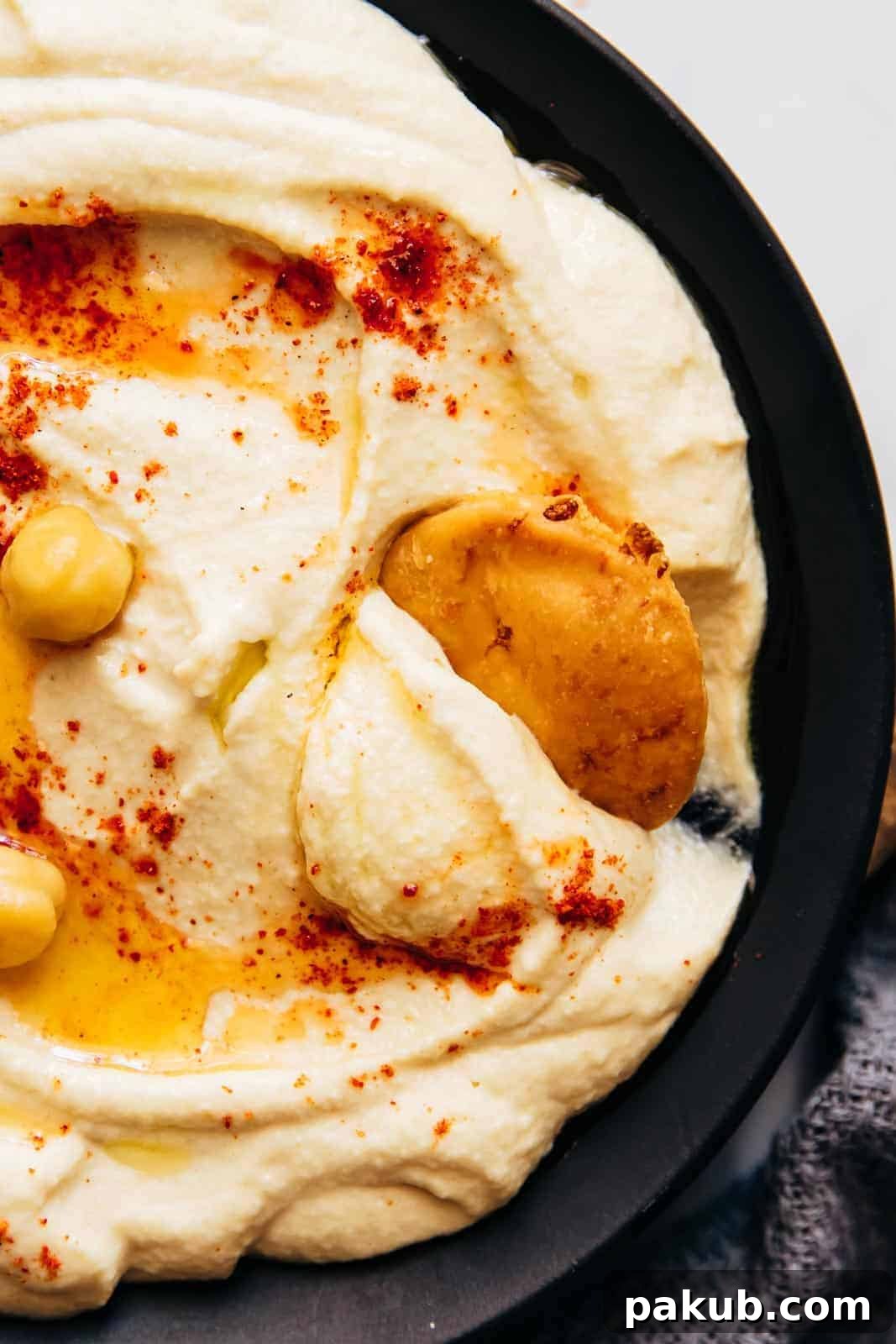
Seriously, with these expert tips and our perfected recipe, your homemade hummus will unequivocally surpass any store-bought version you’ve ever encountered. The profound satisfaction of crafting such a perfect dip in your own kitchen is truly unmatched! **Serve it generously with warm, freshly baked pita bread, crisp, freshly sliced vegetables like vibrant cucumber sticks, crunchy carrots, or bell pepper strips, or alongside savory kebabs and grilled meats.** This versatile dip is also an absolutely incredible addition to a hearty Chicken Shawarma wrap, bringing that authentic street-style flavor and creamy texture right to your home kitchen! Get creative and explore its endless possibilities!
Watch the Hummus Making Video
The Best Homemade Hummus Recipe: Silky Smooth & Flavorful
This recipe will meticulously guide you through making a light, airy, and incredibly smooth Middle Eastern hummus right in your own kitchen. It’s not only healthy and versatile but also perfect as a delightful dip with pita bread, a creamy spread in wraps, or a star component of a lavish mezze platter.
Recipe Details:
- By: Richa
- Prep Time: Approximately 20 minutes
- Total Time: Approximately 20 minutes (excluding chickpea cooking time)
- Yields: 8 generous portions
Equipment You’ll Need:
- A powerful Blender or a Food Processor
Ingredients:
- 3 cups Chickpeas, cooked thoroughly from dry or canned (refer to “Important Recipe Notes” for ideal preparation)
- 4 cloves Fresh Garlic, peeled and roughly chopped
- 1 teaspoon Salt (or adjust to your personal taste)
- 3/4 cup Tahini (ensure it’s of good quality; see “Important Recipe Notes”)
- 1/2 teaspoon Ground Cumin
- 1.5 cups Ice Cold Water (crucial for achieving the perfect texture; see “Important Recipe Notes”)
- 1.5 tablespoons Fresh Lime Juice (or lemon juice, freshly squeezed for best flavor)
- 1.5 tablespoons Extra Virgin Olive Oil, for drizzling on top (do not blend it in)
- 1 teaspoon Paprika, for sprinkling on top (optional, for garnish and a hint of warmth)
Instructions:
- Prepare Chickpeas: For the ultimate smooth consistency, gently peel the cooked chickpeas by pinching them to remove their outer skins. While optional, this step significantly improves texture. Discard the skins or save them for other culinary uses.
- Initial Blend of Solids: Transfer the peeled (or unpeeled) chickpeas, prepared garlic cloves, and salt into the bowl of your high-speed blender or food processor. Process these ingredients until they are coarsely ground, forming a thick, paste-like consistency. Scrape down the sides of the bowl as needed to ensure even processing.
- Achieve Creaminess with Cold Water: Add the tahini, ground cumin, and the crucial ice-cold water to the chickpea mixture. Blend on high speed for a full 3-4 minutes, pausing periodically to scrape down the sides. Continue blending until the hummus achieves an incredibly silky-smooth and light texture. If the mixture appears too thick or resists blending smoothly, gradually add an additional tablespoon of ice-cold water at a time until the desired consistency is reached.
- Final Flavor Adjustments: Stir in the fresh lime juice. Taste the hummus and adjust the seasoning to perfection. You may wish to add more salt, cumin, or lime juice to suit your preference.
- Serve with Style: Spoon the luxuriously smooth hummus into a serving bowl. Create a shallow well in the center, then generously drizzle with extra virgin olive oil. For an appealing garnish, sprinkle with paprika and, if desired, a few whole cooked chickpeas. Serve immediately or chill briefly to allow flavors to deepen.
Important Recipe Notes:
- Cooking Dried Chickpeas for Optimal Smoothness: To prepare dried chickpeas for this recipe, soak them overnight (8-12 hours). For an Instant Pot, combine soaked chickpeas with water to cover by 1 inch and cook on high pressure for 45 minutes. For stovetop, boil for 1.5-2 hours. The key is to cook them until they are exceptionally tender and can be easily mashed between your fingers, ensuring no grittiness in the final hummus.
- Enhancing Canned Chickpeas: If using canned chickpeas, drain and rinse them thoroughly. Then, transfer them to a pot of boiling water and simmer gently for 5 minutes. This extra step significantly softens the chickpeas, making them much more conducive to creating a velvety-smooth hummus texture.
- Understanding Tahini and Its Role: Tahini is a fundamental ingredient in hummus, imparting its signature nutty flavor and essential creaminess. There is truly no perfect substitute that will yield the exact same taste and texture. However, if tahini is absolutely unavailable, a mild-flavored almond or cashew butter could be used in a pinch, but be prepared for a noticeable difference in the flavor profile of your hummus.
- The Significance of Ice Cold Water: “Ice cold water” refers to water that has been thoroughly chilled with ice cubes until it is almost freezing. This cold temperature plays a vital role in preventing the hummus from overheating during the blending process and is crucial for achieving a lighter, airier, and perfectly emulsified texture.
Nutrition Information (per serving, approximate):
Please note: Nutritional values provided are estimates and can vary based on specific brands of ingredients used and exact preparation methods.
- Calories: 262 kcal
- Carbohydrates: 23g
- Protein: 10g
- Fat: 16g
- Saturated Fat: 2g
- Sodium: 306mg
- Potassium: 301mg
- Fiber: 6g
- Sugar: 3g
- Vitamin A: 155 IU
- Vitamin C: 4mg
- Calcium: 66mg
- Iron: 3mg
Enjoyed this recipe? Your feedback is invaluable! Please consider leaving a rating and comment below to share your experience with our community!
Explore More Delicious Dips and Spreads
Appetizers
Crazy Good Homemade Guacamole
Appetizers
Egyptian Beetroot Dip | Healthy and Easy!
Appetizers
Spicy Nacho Cheese Sauce in just 10 Minutes!
Mexican
Fresh & Zesty Mango Salsa
Vegetarian Recipes
Homemade Schezwan Sauce | Schezwan Chutney
Indian Recipes
Creamy Garlicky Yogurt Party Dip