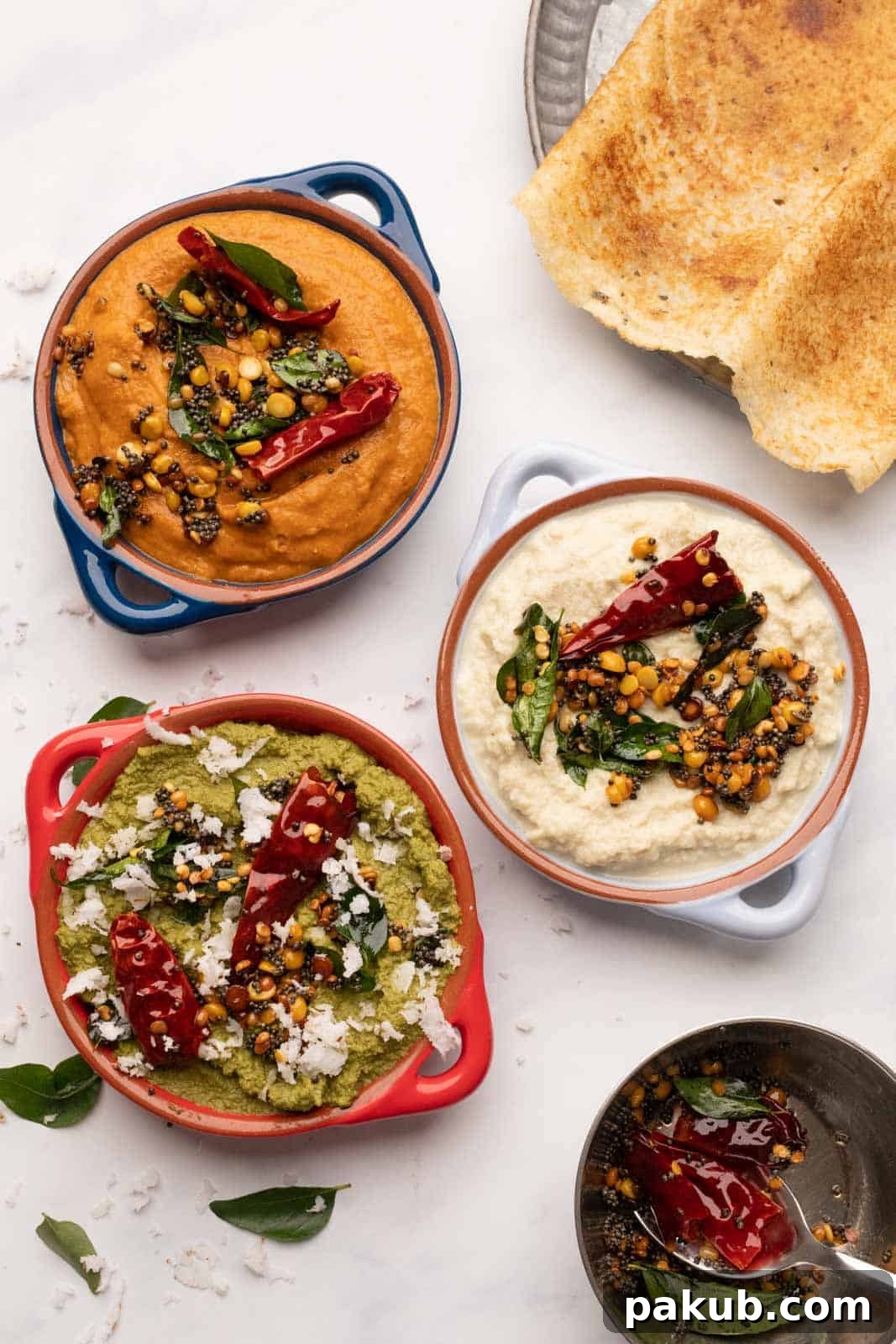
Discover the vibrant world of South Indian chutneys with our top three favorite recipes! These simple yet incredibly flavorful accompaniments are essential for any South Indian breakfast, transforming your idlis and dosas into an unforgettable culinary experience. With easy-to-find ingredients and straightforward methods, you can effortlessly prepare a different chutney daily, ensuring your meals are always exciting and never dull.
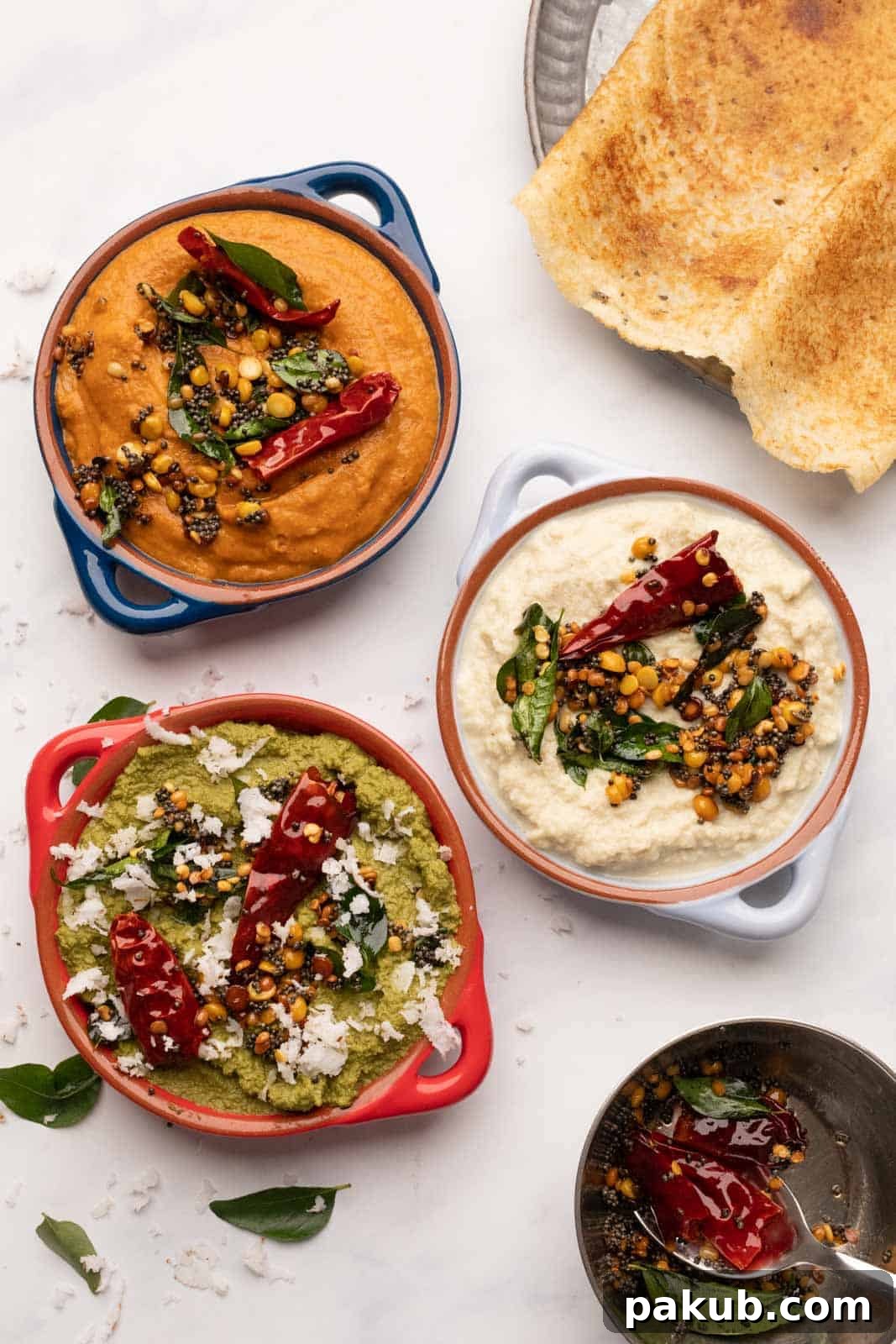
There’s a special joy in completing the “holy trinity” of South Indian breakfast essentials! After perfecting Idli Dosa Batter and a delectable Sambar, it’s finally time to share the secrets to these quintessential chutneys. These recipes bring together the foundational elements of a truly authentic South Indian meal right into your kitchen.
If you’ve ever had the pleasure of visiting a breakfast establishment in Bangalore or any other part of South India, you’ve likely encountered the irresistible and colorful array of chutneys served alongside fluffy idlis and crispy dosas. This trio isn’t just popular in bustling restaurants; it’s a staple in countless homes across the region. What makes them even more appealing is their incredible simplicity. Not only are they easy to whip up, but they can also be prepared in advance and even frozen, making them a fantastic option for busy weekdays or meal prepping.
In this comprehensive guide, we’re recreating this iconic trio of chutneys, ensuring you have all the recipes you need to elevate your South Indian breakfast game:
- Coconut Chutney (White Chutney)
- Coriander Coconut Chutney (Green Chutney)
- Tomato Chutney (Red Chutney)
Each chutney boasts its own distinct flavor profile, from mild and creamy to tangy and spicy, offering a wonderful contrast to your main dish. Their vibrant colors make them incredibly inviting on the plate, adding visual appeal to your meal. Whether you choose to make just one to suit your mood or prepare all three for an authentic South Indian spread, these recipes are guaranteed to delight your taste buds.
Table of Contents: Your Chutney Journey
- Coconut Chutney or White Chutney
- Coriander Chutney or Green Chutney
- Tomato Chutney or Red Chutney
- The Art of Tempering for Chutney
- Choosing the Right Mixer/Blender for Chutney
- Why Homemade Chutneys?
- Storage Tips for Fresh Chutneys
- Beyond Idli & Dosa: Versatile Chutney Uses
- More Delicious South Indian Fare
1. Classic Coconut Chutney (White Chutney)
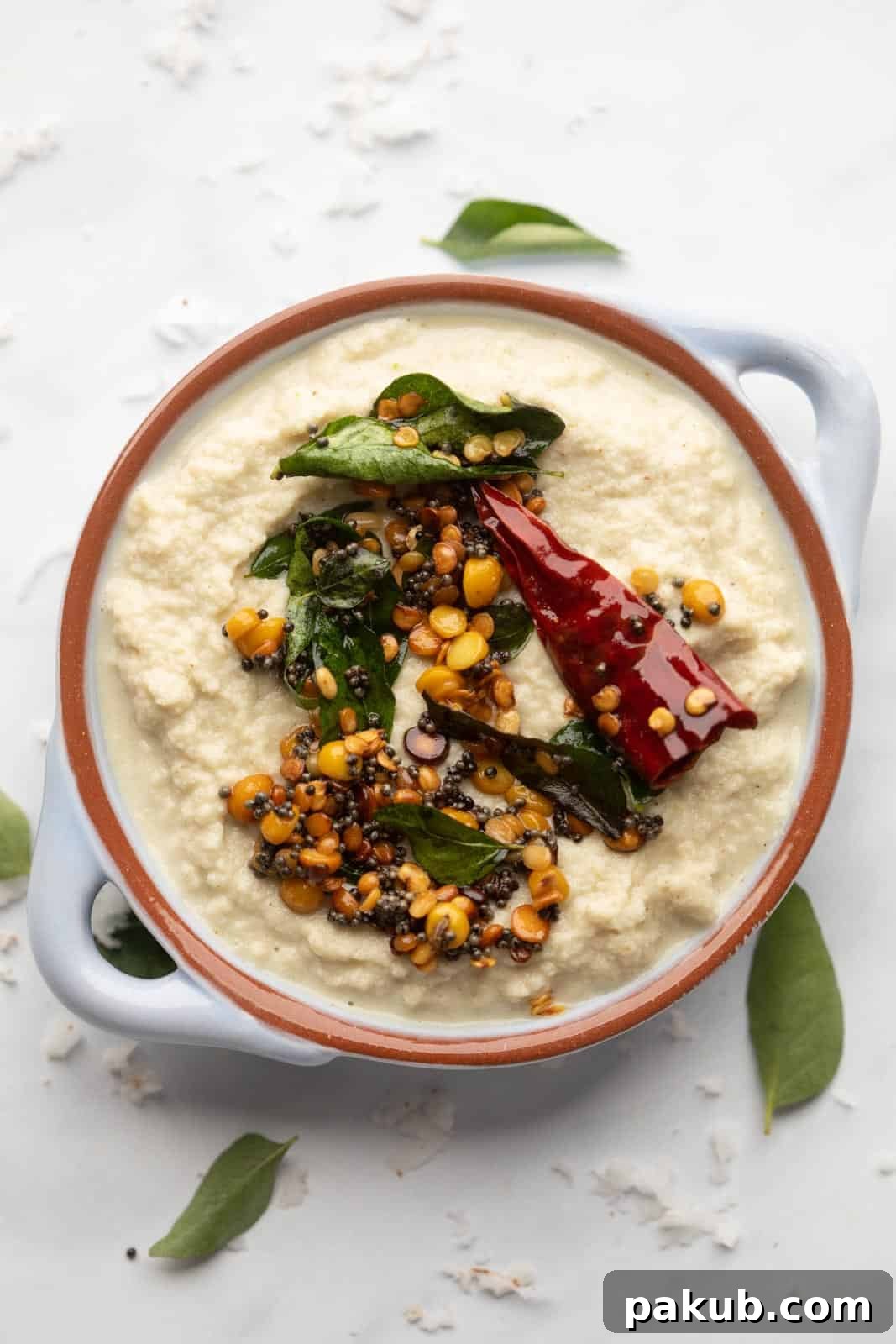
This is arguably the most recognized and frequently prepared South Indian accompaniment for idlis and dosas. Its mild yet refreshing flavor profile makes it a universal favorite. While there are countless regional variations, our recipe offers a delightful, fresh, and slightly tangy version that perfectly balances the rich flavors of your breakfast. This chutney is not only easy to make but also stores well; you can refrigerate it for up to 2-3 days without compromising on taste or texture.
The secret to a truly outstanding coconut chutney lies in the freshness of the coconut and the judicious use of spices. It’s often enhanced with a hint of tamarind for tang and green chilies for a gentle kick. The creamy texture, achieved by blending the ingredients with just the right amount of water, creates a harmonious bite that complements the fermented tang of idlis and dosas beautifully. Whether you prefer a smoother consistency or a slightly coarser grind, this recipe is easily adaptable to your preference.
Coconut Chutney Recipe
By: Richa
My go-to chutney, this coconut chutney is perfect for a South Indian breakfast and helps add freshness to the food.
Prep: 5 mins | Cook: 2 mins | Total: 7 mins | Servings: 4 people
Ingredients:
Chutney
- ½ Cup Grated Coconut (fresh or frozen, thawed)
- 1 Green Chilli (adjust to spice preference)
- 1 Tablespoon Roasted Bengal Gram (Dalia / Pottukadalai)
- 1/8 Teaspoon Tamarind (paste or a small piece)
- ½ Teaspoon Salt (or to taste)
- 6 Tablespoons Water (adjust for desired consistency)
Tempering
- 1 Teaspoon Vegetable Oil
- 1 Teaspoon Mustard Seeds
- ½ Teaspoon Urad Dal (split and skinned black gram)
- ½ Teaspoon Chana Dal (split Bengal gram)
- 1 Sprig Curry Leaves
- 1 Dry Red Chilli, halved
Instructions:
Chutney Preparation
- Combine all chutney ingredients (grated coconut, green chili, roasted Bengal gram, tamarind, and salt), except water, in a mixer grinder jar.
- Grind the mixture to a coarse yet wet consistency. Gradually add water, a tablespoon at a time, while grinding until you reach your desired consistency. Avoid making it too watery.
Tempering Process
- In a small, heavy-bottomed pot or tempering ladle, heat vegetable oil over medium flame.
- Add mustard seeds and allow them to splutter. This indicates they are cooked and releasing their aroma.
- Next, add urad dal and chana dal. Sauté them until they turn a light golden color, becoming fragrant and slightly crispy.
- Once the dals are golden, add the halved dry red chili and curry leaves. Fry for a few seconds until the curry leaves turn crisp and aromatic. Be careful not to burn them.
- Remove the tempering from heat and immediately pour it over the prepared coconut chutney.
- Mix the tempering thoroughly into the chutney just before serving for the best flavor and texture.
Nutrition Information (per serving):
Calories: 90kcal, Carbohydrates: 4g, Protein: 1g, Fat: 8g, Saturated Fat: 7g, Sodium: 333mg, Potassium: 64mg, Fiber: 3g, Sugar: 1g, Vitamin A: 19IU, Vitamin C: 12mg, Calcium: 9mg, Iron: 1mg
2. Zesty Coriander Coconut Chutney (Green Chutney)
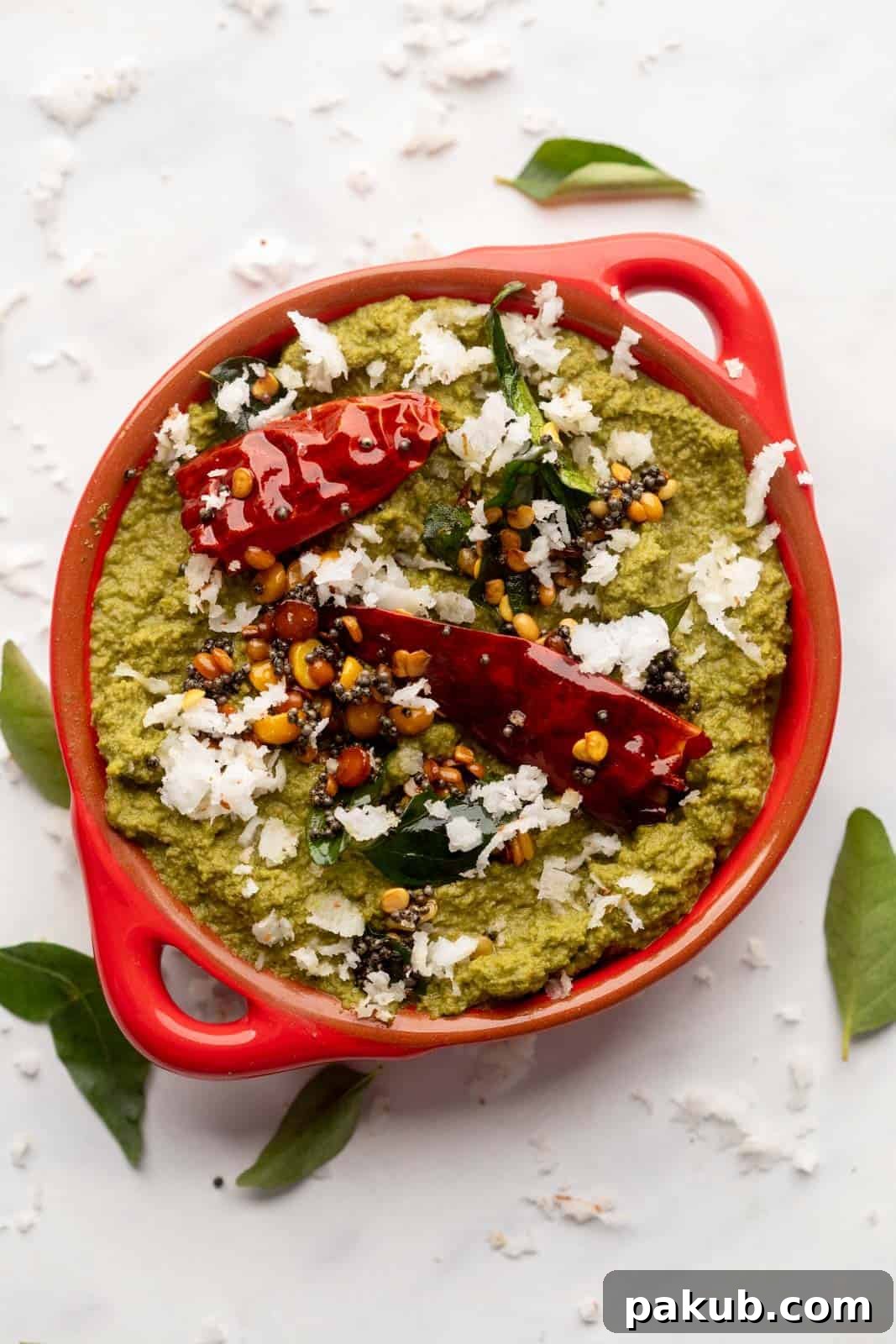
Introducing the versatile and visually stunning cousin of the classic white chutney: the Coriander Coconut Chutney, affectionately known as Green Chutney. This chutney is a burst of fresh flavors, primarily driven by freshly ground coriander and aromatic mint leaves. Its beautiful green hue is not just appealing to the eye but also signifies the freshness packed within each spoonful. To achieve that vibrant green color and enhance the depth of flavor, we recommend lightly sautéing the herbs before blending. This simple step helps to retain their bright color and unlock their full aromatic potential.
Like its white counterpart, this green chutney is incredibly easy to make and store. You can prepare a batch and enjoy its freshness for 2-3 days when refrigerated. For longer preservation, it freezes exceptionally well, allowing you to have a ready supply of this delicious condiment whenever a craving strikes.
Pro Tip: While it’s perfect for dunking idlis and dosas, don’t limit its potential! Elevate your dosa experience by spreading a generous layer of this green chutney onto it while it’s still on the hot tava. This infuses the dosa with incredible flavor. It also makes for an excellent sandwich spread, adding a refreshing and zesty kick to your everyday meals. Get creative with its applications!
Coconut Coriander Chutney Recipe
By: Richa
Easy Coconut Coriander Chutney or Green Chutney that makes such a great accompaniment to Idlis and Dosas. This is a South Indian chutney that’s fresh, tasty and zesty.
Prep: 5 mins | Cook: 5 mins | Total: 10 mins | Servings: 4 people
Ingredients:
Chutney
- 1 Teaspoon Vegetable Oil
- ¾ Cup Coriander (cilantro), with stalk (roughly chopped)
- ¼ Cup Mint Leaves
- 1-2 Green Chillies, slit (adjust to taste)
- 1 Small Piece Tamarind (about 1 cm ball size, or paste)
- ⅛ Teaspoon Turmeric Powder
- ½ Teaspoon Salt (or to taste)
- ½ Cup Grated Coconut (fresh or frozen, thawed)
- ¼ Cup Water (adjust for desired consistency)
Tempering
- 1 Teaspoon Vegetable Oil
- 1 Teaspoon Mustard Seeds
- ½ Teaspoon Urad Dal
- ½ Teaspoon Chana Dal
- 1 Sprig Curry Leaves
- 1 Dry Red Chilli, crushed lightly
Instructions:
Chutney Preparation
- In a heavy-bottomed pot or small pan, heat 1 teaspoon of vegetable oil over medium heat.
- Add the chopped coriander (with stalks), mint leaves, green chilies, tamarind, turmeric powder, and salt. Sauté for about 30 seconds, stirring frequently, until the coriander softens slightly and becomes aromatic. Do not overcook.
- Remove the sautéed mixture from the flame and transfer it to a mixer grinder jar. Add the freshly grated coconut.
- Add water gradually, little by little (starting with 1/4 cup), and grind the mixture to a coarse but wet chutney consistency. Adjust water as needed for your preferred texture.
Tempering Process
- In a small, heavy-bottomed pot, heat 1 teaspoon of vegetable oil over medium flame.
- Add mustard seeds and allow them to splutter.
- Next, add urad dal and chana dal. Roast until the dals turn a beautiful golden color.
- Once golden, add the lightly crushed dry red chili and curry leaves. Fry until fragrant and the curry leaves are crisp, being careful not to burn them.
- Remove from heat and pour the hot tempering over the green chutney.
- Mix well just before serving to combine the flavors and textures.
Notes:
- Sautéing the herbs and spices before grinding is key to achieving that bright green color and deepening the overall flavor. If you’re pressed for time, you can skip this step, but the color might be slightly less vibrant.
- The consistency of this chutney is a matter of personal preference. For a smoother chutney, grind for a slightly longer duration, adding an additional 1-2 teaspoons of water if necessary.
- Adjust the spice level by increasing or decreasing the number of green chillies used.
Nutrition Information (per serving):
Calories: 103kcal, Carbohydrates: 5g, Protein: 1g, Fat: 9g, Saturated Fat: 8g, Sodium: 335mg, Potassium: 100mg, Fiber: 3g, Sugar: 2g, Vitamin A: 341IU, Vitamin C: 13mg, Calcium: 18mg, Iron: 1mg
3. Tangy Tomato Chutney (Red Chutney)
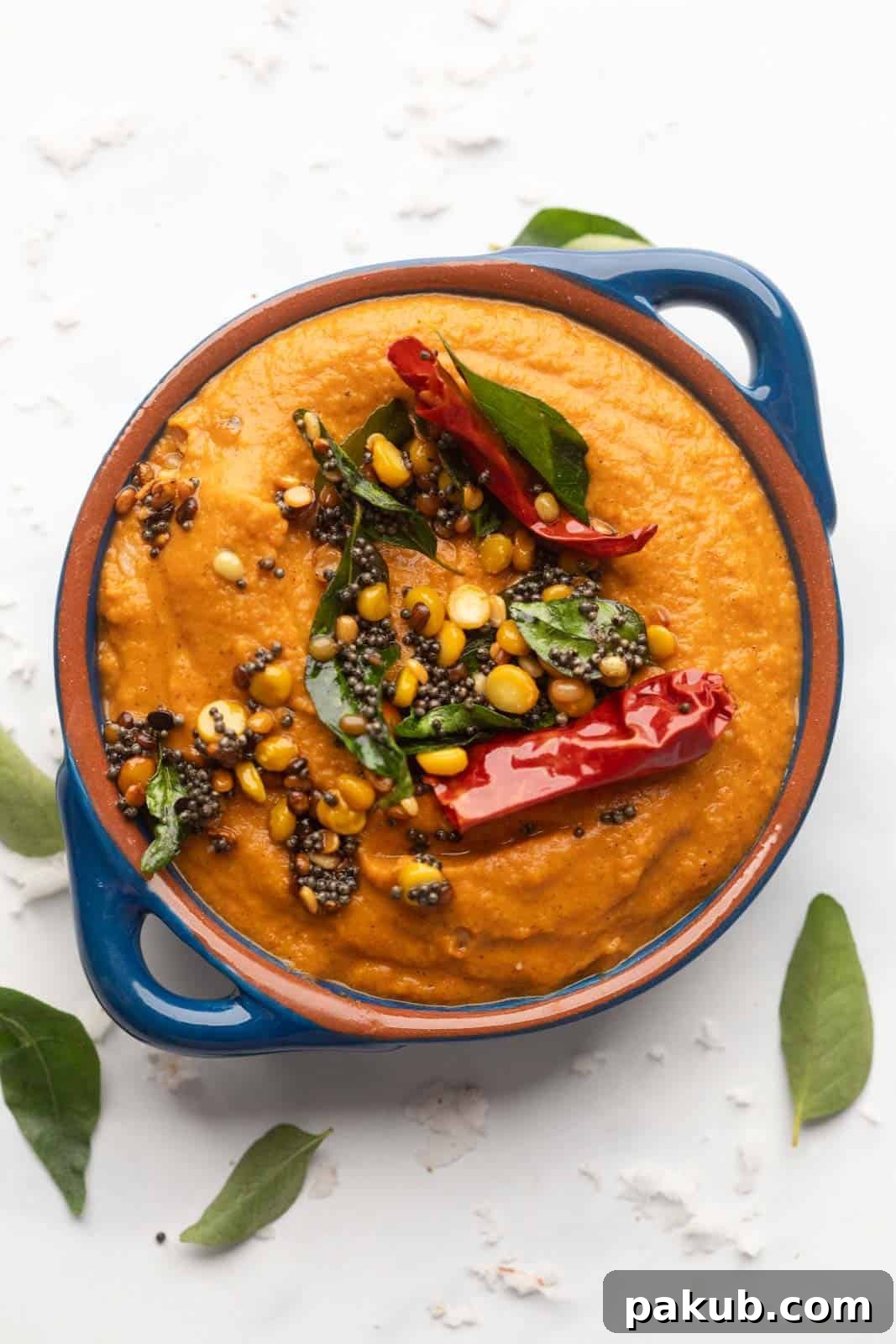
Completing our vibrant chutney trio is the irresistible Tomato Chutney, also known as Red Chutney. This chutney stands out with its delightful balance of tangy, sweet, and subtly sour notes. Crafted from ripe tomatoes and onions, infused with a medley of aromatic spices, it’s a true treat for the palate. Unlike some raw chutneys, the chopped tomatoes and onions in this recipe are first cooked down, ensuring a rich, mellow flavor without any raw aftertaste. This cooking process also deepens the beautiful red hue, making it visually appealing and incredibly appetizing.
The beauty of this chutney lies in its robust flavor profile, which can range from mildly spiced to fiery hot, depending on your preference. The combination of sautéed onions, garlic, ginger, and various dals creates a foundation of umami, while the tomatoes contribute their natural sweetness and acidity. A touch of red chili powder enhances its characteristic color and provides warmth. This chutney is not just an accompaniment; it’s a star in its own right, adding a significant layer of flavor to any South Indian meal.
Tomato Onion Chutney Recipe
By: Richa
A fresh, tangy, sweet and sour chutney made with roasted onions and tomatoes. This is a lovely accompaniment to a South Indian breakfast.
Prep: 5 mins | Cook: 5 mins | Total: 10 mins | Servings: 4 people
Ingredients:
Chutney Base
- 1 Tablespoon Vegetable Oil
- 6 Cloves Garlic, crushed
- ½ Inch Ginger, crushed
- 1 ½ Tablespoon Urad Dal
- 1 ½ Tablespoon Chana Dal
- 3 Dry Red Chilli, Byadgi (for color, mild heat)
- 3 Dry Red Chilli, Guntur (for heat, adjust to taste)
- 1 Onion, chopped
- 3 Tomato, chopped
- ½ Teaspoon Red Chilli Powder (optional, for extra color/heat)
- ¼ – ½ Cup Water (as needed for blending)
- ½ – 1 Teaspoon Salt (or to taste)
- ¼ Cup Coconut, freshly grated (optional, for richness)
Tempering
- 1 Teaspoon Vegetable Oil
- 1 Teaspoon Mustard Seeds
- ½ Teaspoon Urad Dal
- ½ Teaspoon Chana Dal
- 1 Sprig Curry Leaves
- 1 Dry Red Chilli, halved
Instructions:
Chutney Preparation
- In a heavy-bottomed pot or large pan, heat 1 tablespoon of vegetable oil over medium heat.
- Add the crushed garlic, crushed ginger, urad dal, chana dal, and both types of dry red chilies. Sauté until the dals start to turn a light golden color and become fragrant.
- Add the chopped onion and fry until it turns translucent, which should take about 1 minute.
- Stir in the chopped tomatoes, red chili powder, and salt. Cook, stirring occasionally, until the tomatoes soften completely and the mixture thickens, about 5-7 minutes. If the mixture starts to stick to the pot, add a tablespoon or two of water.
- Once cooked, remove the mixture from heat and allow it to cool down to room temperature.
- Transfer the cooled mixture to a mixer grinder jar. Add the freshly grated coconut (if using).
- Grind to a coarse but wet chutney consistency. Add a little water if necessary to achieve the desired texture.
Tempering Process
- In a small, heavy-bottomed pot, heat 1 teaspoon of vegetable oil over medium flame.
- Add mustard seeds and allow them to splutter.
- Next, add urad dal and chana dal. Roast until the dals turn a golden color.
- Once golden, add the halved dry red chili and curry leaves. Fry until fragrant and the curry leaves are crispy.
- Remove from heat and pour the hot tempering over the tomato chutney.
- Mix well right before you serve.
Nutrition Information (per serving):
Calories: 137kcal, Carbohydrates: 16g, Protein: 4g, Fat: 7g, Saturated Fat: 5g, Sodium: 885mg, Potassium: 309mg, Fiber: 5g, Sugar: 4g, Vitamin A: 863IU, Vitamin C: 27mg, Calcium: 46mg, Iron: 1mg
The Art of Tempering for Chutney
Tempering, known as “tadka” or “chaunk” in Indian cuisine, is a culinary technique that involves heating oil or ghee and then frying whole spices, herbs, and other aromatics to release their essential oils and infuse the oil with their flavors. This infused oil is then added to a dish, typically at the end of cooking, to provide a layer of aromatic depth, texture, and a beautiful finish. For chutneys, tempering is not merely a garnish; it’s an integral step that elevates the entire condiment, adding a new dimension of flavor and a delightful crunch.
While the specific ingredients for tempering can vary slightly across different chutney variants and regions, a common and universally loved combination is often used to simplify things, as we’ve done in these recipes. This tempering blend introduces a complex profile of nutty, pungent, and savory notes, with the crunchy dals and fragrant curry leaves contributing a wonderful textural contrast that enhances every bite. The sputtering mustard seeds add a sharp, piquant kick, while the urad dal and chana dal offer a satisfying chewiness and a subtle earthiness. Dry red chilies provide a gentle warmth and a pop of color, and the curry leaves release their distinct, irreplaceable aroma that is the hallmark of South Indian flavors.
For these chutneys, we’ve used a classic tempering combination, added in a specific order to ensure optimal flavor extraction and perfect texture:
- Mustard Seeds: These are usually added first to hot oil. They splutter and pop, releasing a pungent, slightly nutty flavor.
- Urad Dal (Split and Skinned Black Gram): Added after mustard seeds, they are roasted until golden. Urad dal adds a subtle nutty flavor and a delightful crunch.
- Chana Dal (Split Bengal Gram): Similar to urad dal, chana dal also adds texture and a nutty flavor when roasted to a golden hue.
- Dry Red Chillies: These are added briefly to infuse the oil with their heat and vibrant color, becoming crisp in the process.
- Curry Leaves: The final addition, curry leaves fry quickly, becoming intensely aromatic and slightly crunchy, contributing their signature fresh, peppery, and slightly citrusy notes.
Always pour the hot tempering over the chutney just before serving to maximize its aromatic impact and keep the dals and curry leaves crisp.
Choosing the Right Mixer/Blender for Chutney
The secret to perfectly textured chutneys often lies in the quality of your equipment. A good mixer grinder is indispensable for achieving the desired consistency, whether you prefer a fine paste or a coarser, chunkier blend. For these South Indian chutneys, a powerful and efficient mixer grinder is key.
I highly recommend the Sujata Dynamix Mixer Grinder (affiliate link). It’s renowned for its robust motor and sharp blades, which make grinding even tough ingredients like coconut or whole spices incredibly quick and efficient. Its speed and power allow you to easily control the texture of your chutney: a shorter pulse for a coarse, rustic texture, or a longer grind for a silky smooth finish. Investing in a good quality mixer grinder will make your chutney-making process much smoother and ensure consistently excellent results every time.
When selecting a mixer, look for one with multiple jars and sharp, durable blades. A powerful motor (ideally 750W or higher) will handle wet and dry grinding tasks with ease. Always ensure the jar is securely fitted and add liquids gradually to achieve the perfect consistency without over-processing.
Why Homemade Chutneys?
While store-bought chutneys offer convenience, nothing compares to the freshness, flavor, and nutritional value of homemade versions. When you make chutneys at home, you have complete control over the ingredients, ensuring they are fresh, high-quality, and free from artificial preservatives, colors, or excessive sugar/salt. This allows you to tailor the spice levels and tanginess precisely to your family’s preferences. The aroma of freshly ground spices and herbs truly elevates the entire dining experience, making homemade chutneys a healthier, tastier, and more authentic choice for your South Indian breakfast.
Storage Tips for Fresh Chutneys
To keep your homemade chutneys fresh and flavorful for longer, proper storage is essential. Once prepared and cooled, transfer the chutneys into airtight containers. They can be safely refrigerated for 2-3 days, maintaining their taste and aroma. For longer storage, especially for larger batches, these chutneys freeze beautifully. Simply portion them into small, freezer-safe containers or ice cube trays. Once frozen solid, transfer the chutney cubes to a freezer bag. They can be stored in the freezer for up to 2-3 weeks. Thaw in the refrigerator overnight or gently at room temperature before serving.
Beyond Idli & Dosa: Versatile Chutney Uses
While these chutneys are the perfect partners for Idlis and Dosas, their versatility extends far beyond the traditional South Indian breakfast plate. Get creative and integrate them into other meals! They make excellent accompaniments for:
- Lemon Rice: A spoonful can add a tangy, spicy kick.
- Vermicelli Upma: Enhance the flavors of this light breakfast.
- Poha: A vibrant side to your flattened rice dish.
- Sandwiches and Wraps: Use them as a flavorful spread instead of mayonnaise or other condiments for an Indian twist.
- Vadas and Pakoras: Serve as a dipping sauce for various Indian snacks.
- Parathas and Rotis: Spread a thin layer for a quick, flavorful meal.
Don’t be afraid to experiment! These chutneys can add a delightful burst of flavor to almost any savory dish, making them a fantastic addition to your culinary repertoire.
Try this colorful trio of chutneys today and bring the authentic flavors of South India to your home. We are confident they will become staples in your kitchen, just as they are in ours. And do leave us a comment with your thoughts and any creative ways you use them – we love hearing from you!
More Delicious South Indian Fare
Looking to explore more South Indian culinary delights? Check out these other fantastic recipes:
- Easy Lemon Rice
- Easy Coconut Rice
- Mushroom Pepper Fry
- South Indian Egg Curry
- Mangalorean Ripe Mango Curry
- Chicken Kori Rotti
- Rava Pomfret Fish Fry