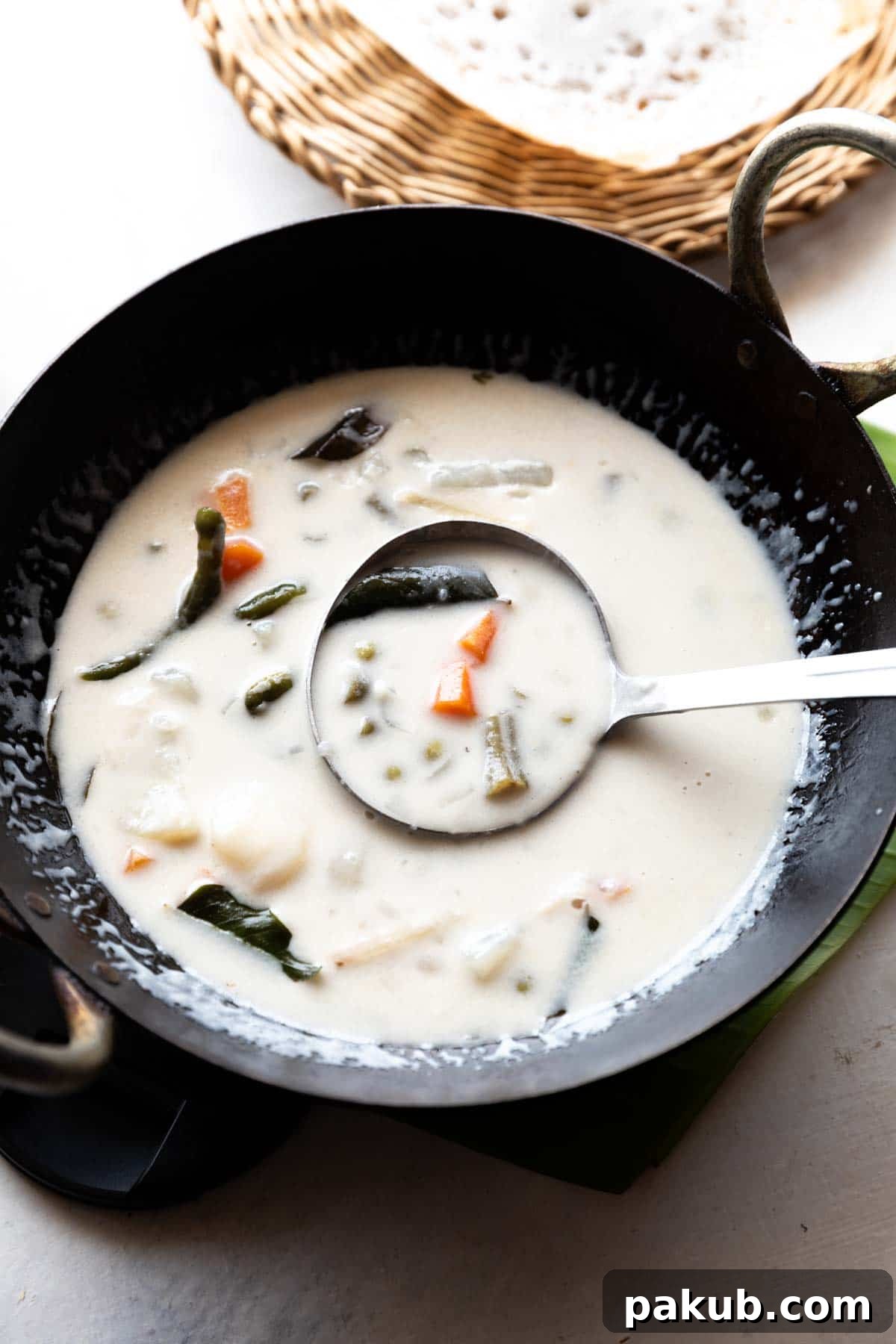
The Ultimate Kerala Vegetable Stew (Ishtu) Recipe: Creamy, Fragrant & Wholesome
Experience the true essence of South Indian cuisine with this exquisite Kerala Vegetable Stew, also known as ‘Ishtu’. This incredibly simple yet profoundly hearty recipe features a delightful assortment of tender vegetables simmered to perfection in rich coconut milk, infused with subtle aromatics and delicate spices. Whether you prefer to serve it the classic way alongside fluffy appams or pour it generously over a bowl of steaming hot rice, its comforting flavor promises a truly delicious meal every time.
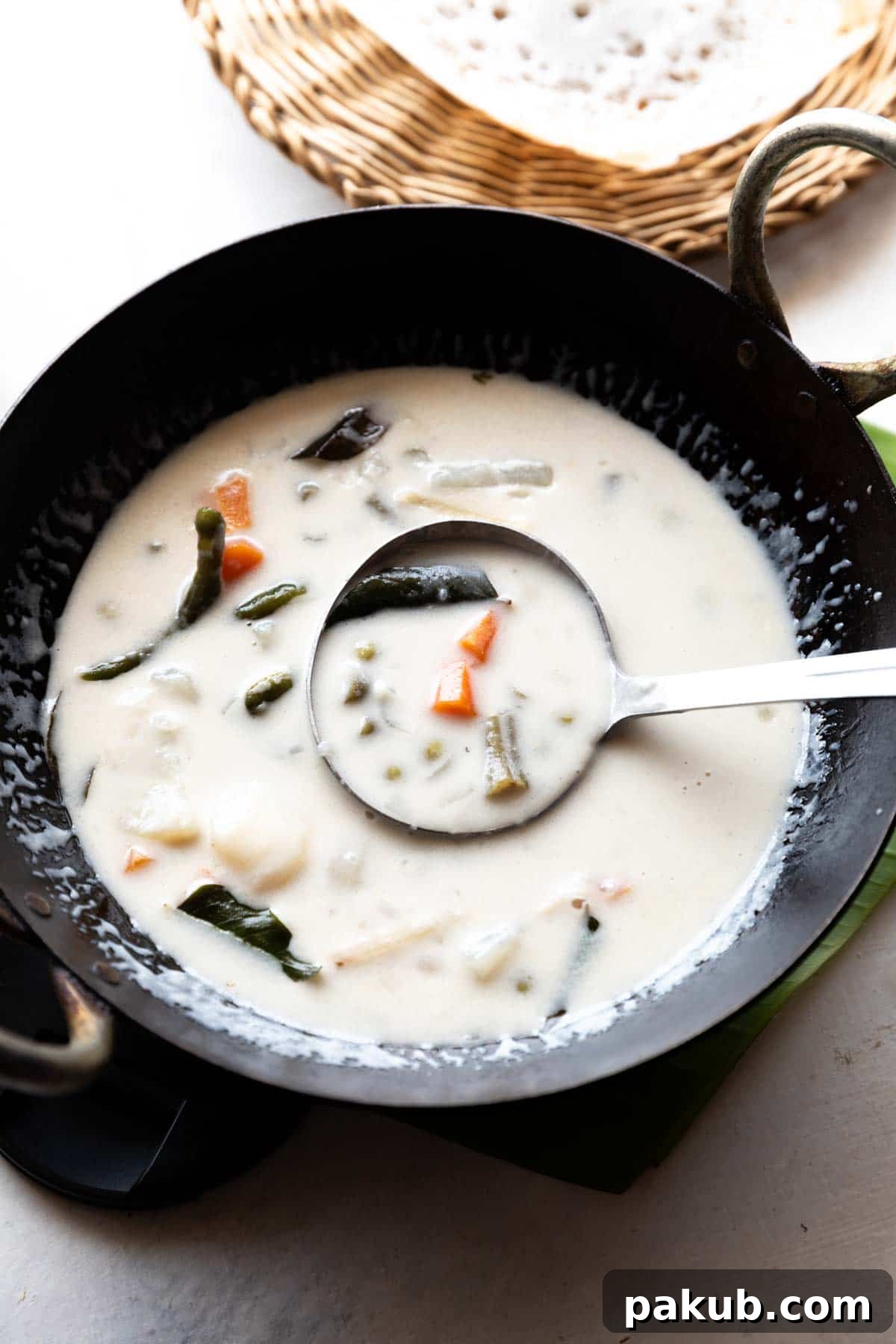
Craving more authentic South Indian flavors? Explore these beloved recipes: South Indian Style Egg Curry, Mushroom Pepper Fry, Irresistible Chutneys for Idli & Dosa, and Wholesome Millet Mysore Masala Dosa.
Discover the Comfort of Kerala Vegetable Stew (Ishtu)
Hailing from the picturesque coastal state of Kerala, often referred to as ‘God’s Own Country’, this vegetarian Kerala Stew (or Ishtu, as it’s affectionately known) is a culinary masterpiece celebrated for its gentle flavors and soothing texture. It stands out from other Indian curries with its distinctive mild spice profile and generous use of coconut milk, which imparts a natural sweetness and creamy consistency. This isn’t just a meal; it’s an experience that transports you straight to the backwaters and coconut groves of Kerala.
Requiring no more than 25 minutes to prepare, this delightful stew can be whipped up effortlessly using an assortment of vegetables you already have on hand. It’s a cherished vegetarian counterpart to the popular Kerala Mutton Stew (Ishtu), offering a fragrant and delicately nutty broth brimming with tender, braised vegetables. The classic pairing of this stew with pillowy appams has earned it the endearing name “Appam Stew,” making it an absolutely fantastic choice for a leisurely Sunday breakfast or a special brunch spread.
The beauty of this vegetable stew lies in its versatility. While traditionally a breakfast staple, it’s equally perfect for a wholesome lunch or a light, satisfying dinner. Its rich, aromatic broth is designed to be savored, making it an ideal accompaniment for various South Indian breads like idiyappams or flaky Malabar parottas. Essentially, any bread or grain that can lovingly soak up its coconut-infused goodness is a perfect match!
Why You’ll Fall in Love with This Recipe
- Effortlessly Delicious: With minimal prep and a quick cooking time, this recipe proves that incredible flavor doesn’t require hours in the kitchen. It’s ideal for busy weeknights or relaxed weekends.
- Wholesome & Healthy: Packed with fresh, nutrient-rich vegetables and the goodness of coconut milk, this stew is a healthy option that doesn’t compromise on taste. It’s a guilt-free indulgence!
- Incredibly Versatile: Customize it with your favorite seasonal vegetables, adjust the spice level to your preference, and serve it with various accompaniments – it adapts beautifully to your needs.
- Mild & Comforting: Unlike many fiery Indian curries, this stew offers a gentle warmth and soothing creamy texture, making it a perfect comfort food for all palates, including those sensitive to spice.
- Diet-Friendly: This Kerala Vegetable Stew is naturally vegan, gluten-free, and dairy-free, catering to a wide range of dietary preferences without needing any modifications.
Understanding the Heart of Kerala Veg Stew
The unique character of Kerala Vegetable Stew comes from a thoughtful balance of simple, fresh ingredients. It’s not about an explosion of strong spices, but rather a harmony of subtle notes that highlight the natural sweetness of coconut and the freshness of vegetables.
- Coconut Milk: The Soul of the Stew: This is the hero ingredient. Kerala’s cuisine relies heavily on coconut, and in this stew, it provides both creaminess and a delicate flavor base. Using both “thick” and “thin” coconut milk at different stages of cooking is crucial. Thin coconut milk cooks the vegetables, allowing them to absorb its essence, while thick coconut milk is added at the end to provide that luxurious, rich finish without curdling.
- Aromatics & Gentle Spices: Unlike many Indian curries that call for a long list of powdered spices, Kerala Stew keeps it minimal and whole. Fresh ginger, green chilies, whole peppercorns, and a hint of cinnamon are enough to create an aromatic foundation. Curry leaves add an unmistakable South Indian fragrance. These ingredients contribute warmth and depth without overpowering the delicate flavors of the vegetables or the coconut milk.
- The Vegetable Medley: The choice of vegetables is key to maintaining the stew’s mild profile. Traditionally, mild, quick-cooking root vegetables and legumes are preferred. They absorb the flavors beautifully and contribute to the hearty texture without dominating the dish.
Ingredients You’ll Need To Make Kerala Vegetable Stew
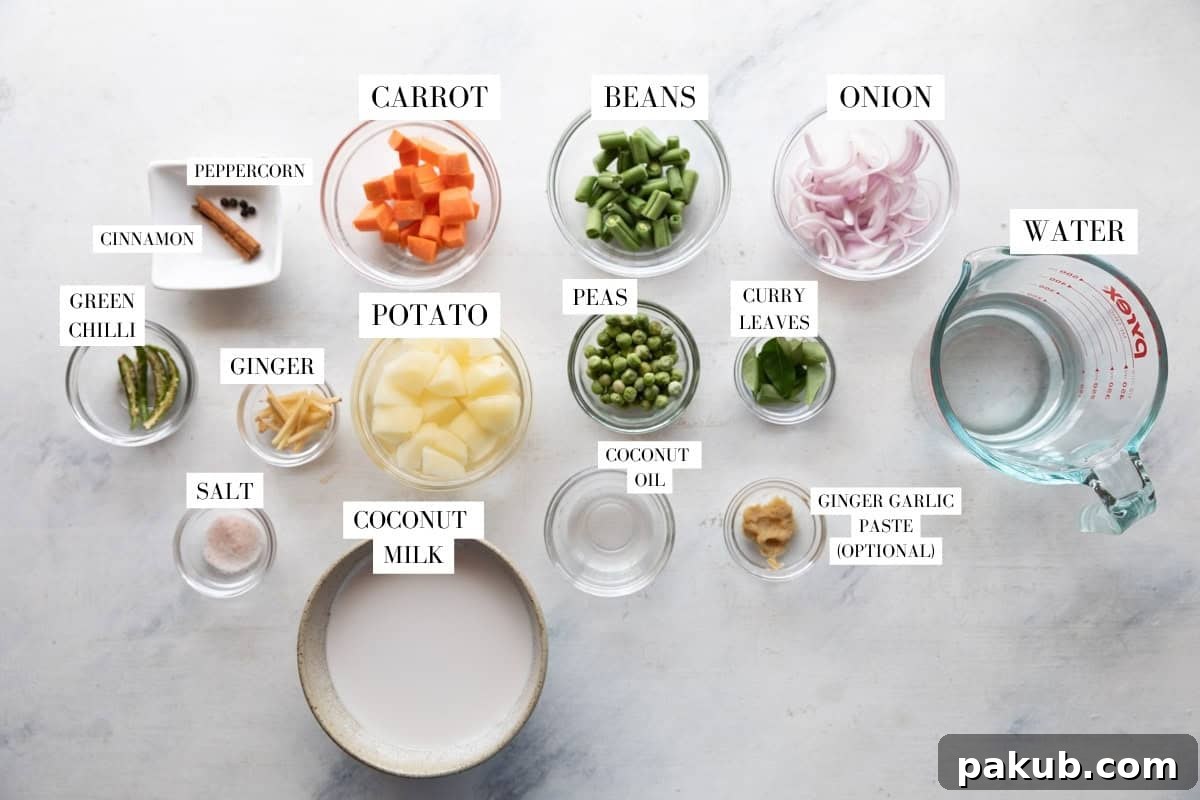
Ingredients
- 2 teaspoons coconut oil, divided
- 5 whole peppercorns
- 2 green chillies, slit lengthwise
- 1 inch ginger, julienned or thinly sliced lengthwise
- ⅓ cup sliced onions
- ½ cup cubed potatoes, approximately ½ inch pieces
- ¼ cup cubed carrots, approximately ½ inch pieces
- ¼ cup cut beans, approximately ½ inch pieces
- ¼ cup shelled peas, fresh or frozen
- ½ teaspoon salt (or to taste)
- 1 ¼ cup thick coconut milk
- 10 fresh curry leaves
- ¾ cup water
- 1 inch cinnamon stick
Step-by-Step Guide to Crafting Your Kerala Veg Stew
Instructions
-
Begin by heating 1 teaspoon of rich coconut oil in a heavy-bottomed pot or Dutch oven over medium heat. Once warm, add the whole cinnamon stick and peppercorns. Sauté these aromatics for about 30 seconds, allowing their fragrance to bloom and infuse the oil.
-
Next, add the slit green chillies and the julienned or thinly sliced ginger to the pot. Continue to sauté for another 30 seconds, until they release their vibrant aromas. Be careful not to brown them.
-
Introduce the sliced onions to the pot. Sauté them gently, stirring occasionally, until they soften and turn translucent. This step ensures a mild, sweet base for the stew without any harsh raw onion flavor.
-
Now, add all the prepared vegetables (cubed potatoes, carrots, cut beans, and shelled peas) along with the salt. Stir everything together well, ensuring the vegetables are coated with the infused oil. Cook for approximately 2 minutes, stirring gently.
-
Pour in ¼ cup of the thick coconut milk (this will act as your “thin” coconut milk after dilution with water) and the ¾ cup of water into the pot. Bring the mixture to a gentle boil, then reduce the heat to a simmer. Cover the pot and allow the vegetables to braise for 12-15 minutes, or until they are tender when pierced with a fork. Ensure they are cooked through but still hold their shape.
-
Once the vegetables are tender, add the remaining thick coconut milk and the fresh curry leaves. Stir gently and bring the stew to a quick, gentle boil. Do not boil vigorously or for too long at this stage, as it can cause the thick coconut milk to curdle.
-
Remove the pot from the heat immediately. Drizzle the remaining 1 teaspoon of coconut oil over the top for an extra layer of authentic flavor and aroma. Serve your Kerala Vegetable Stew hot, ideally with freshly made appams, idiyappams, or steamed rice.
Notes
- This recipe is wonderfully adaptable; it works beautifully with frozen vegetables as a convenient alternative if fresh produce isn’t readily available.
- For even cooking and a pleasing presentation, ensure you cut all the vegetables to approximately the same size (around ½ inch cubes).
- The quality of your coconut milk significantly impacts the final taste. Opt for the best quality thick coconut milk you can find, as it is truly where the heart of the stew’s flavor lies.
- To achieve “thin” coconut milk from store-bought thick coconut milk, simply dilute a portion of it with water as specified in step 5.
Nutrition
(Nutritional information is an estimate based on ingredients used and may vary)
- Calories: 239 kcal
- Carbohydrates: 15g
- Protein: 3g
- Fat: 20g
- Saturated Fat: 18g
- Polyunsaturated Fat: 0.3g
- Monounsaturated Fat: 1g
- Sodium: 388mg
- Potassium: 402mg
- Fiber: 5g
- Sugar: 5g
- Vitamin A: 1552 IU
- Vitamin C: 66mg
- Calcium: 47mg
- Iron: 2mg
Expert Tips for the Perfect Kerala Vegetable Stew
While the recipe itself is straightforward, a few key pointers can elevate your Kerala Vegetable Stew from good to absolutely unforgettable:
- The Coconut Milk Secret: As mentioned, coconut milk is paramount. If using canned, always shake well before opening. To get thin coconut milk from thick, simply dilute a portion with water as instructed. The thin milk is for cooking the vegetables, allowing flavors to meld, while the thick milk is added at the end for richness and body. Avoid boiling the stew vigorously after adding the final thick coconut milk to prevent it from splitting.
- Embrace Coconut Oil: This isn’t just any cooking oil; coconut oil imparts an essential nutty aroma and authentic flavor profile to the stew that cannot be replicated with neutral oils. It’s a non-negotiable ingredient for genuine Kerala taste.
- Uniform Vegetable Cuts: Consistency in cutting your vegetables (around ½ inch cubes for most) ensures they cook evenly and become tender at the same time. This also contributes to the pleasing visual appeal of the dish.
- Don’t Overcook the Vegetables: The vegetables should be tender yet retain a slight bite and their vibrant colors. Overcooking can make them mushy and diminish their fresh taste and texture.
- Taste and Adjust Seasoning: Always taste your stew before serving and adjust the salt if necessary. The natural sweetness of coconut milk requires careful seasoning to balance the flavors perfectly.
- Customizing Spice Level: The stew is designed to be mild. If you prefer a little more heat, you can add an extra green chili or a pinch more black peppercorns at the beginning. However, be mindful not to overpower the delicate coconut flavor.
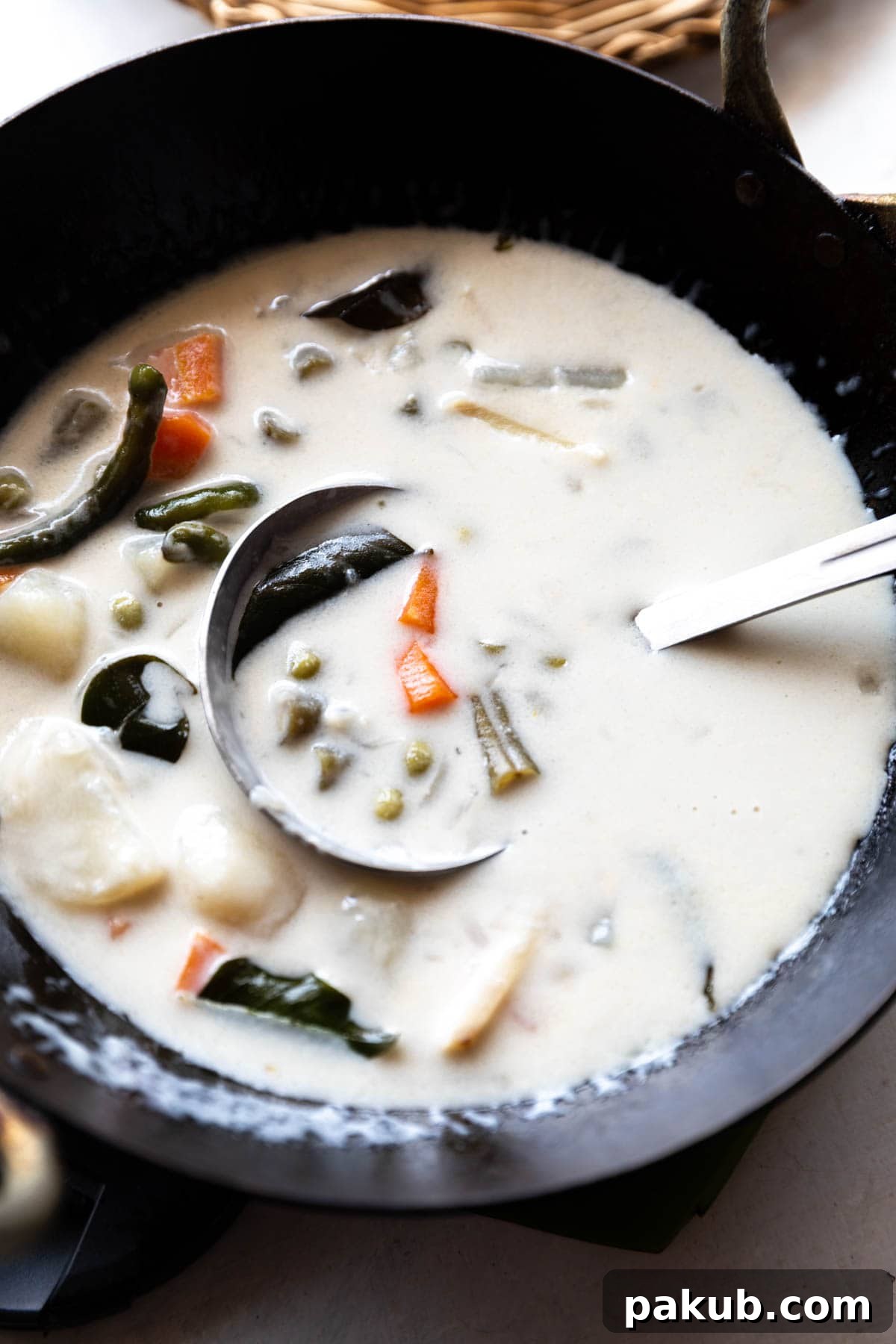
Serving Suggestions: More Than Just Appams
While Appams are the quintessential pairing for Kerala Stew, its versatility allows for many delicious combinations:
- The Classic Duo: Appams, with their soft, lacy edges and fluffy centers, are perfect for soaking up every drop of this creamy stew. Idiyappams (string hoppers) offer a similar light texture that complements the stew beautifully.
- With Rice: A simple bowl of perfectly cooked steamed white rice or brown rice provides a comforting base, allowing the flavors of the stew to shine.
- South Indian Breads: flaky Malabar parottas, soft chapatis, or even crisp dosas make excellent vehicles for this fragrant curry.
- Beyond Indian Staples: For a fusion approach, serve it with crusty bread, toasted pita, or even as a light, warming soup on its own.
Variations to Explore
Feel free to get creative with your Kerala Vegetable Stew, adapting it to your taste and what you have available:
- Protein Boost: For added protein, consider stirring in cubed paneer, firm tofu, or even chickpeas during the last few minutes of cooking. If you’re not strictly vegetarian, a subtle inclusion of cooked chicken pieces (added towards the end) can also be delicious, mimicking a traditional Mutton Ishtu.
- Seasonal Vegetable Swaps: Don’t limit yourself to the vegetables listed. Cauliflower florets, mushrooms, green bell peppers, sweet potatoes, or even butternut squash can be wonderful additions. Just ensure they are cut to a similar size for even cooking.
- Subtle Spice Adjustments: For a slightly different aromatic profile, a single green cardamom pod or a small bay leaf can be added along with the cinnamon stick and peppercorns. A tiny pinch of white pepper powder at the end can also add a gentle kick without altering the color.
Frequently Asked Questions
What vegetables are best for Kerala Stew?
For an authentic Kerala Vegetable Stew, mild-flavored vegetables work best as they allow the delicate notes of coconut milk and subtle spices to shine. Excellent choices include carrots, potatoes, green beans, peas, and baby corn. You can certainly use whatever vegetables you have on hand, but do keep in mind that strong-flavored vegetables like broccoli or spinach might alter the traditional taste profile and potentially overpower the stew’s gentle essence. Aim for a mix of textures and colors for a more appealing dish.
What is the difference between Veg Korma, Veg Kurma, and Kerala Veg Stew?
These three dishes, while all vegetable-based, originate from different regions of India and have distinct characteristics:
- Veg Korma is typically a North Indian curry, known for its rich, thick gravy often made with a yogurt or cream base, sometimes incorporating cashew or almond paste, and a more pronounced blend of powdered spices. It’s usually creamier and heavier in texture.
- Veg Kurma, on the other hand, is a South Indian curry, primarily from states like Tamil Nadu (especially Chennai). It features a thick, aromatic masala paste made from grated coconut, cashew nuts, poppy seeds, and sometimes peanuts, giving it a denser, nuttier consistency and a different spice profile compared to Korma.
- Kerala Veg Stew (Ishtu) originates from Kerala and is characterized by its light, milky consistency. It’s a vegetable curry where the vegetables are braised in both thick and thin coconut milk, flavored with whole spices like cinnamon, peppercorns, ginger, and green chilies. It is lighter, more “drinkable” or “soakable” with bread, and less “scoopable” than Korma or Kurma, focusing on the fresh taste of coconut and vegetables.
How do I thicken my veg stew?
The primary method to achieve a beautifully thick and luscious Kerala Veg Stew is by adding quality thick coconut milk towards the end of the cooking process and allowing it to simmer gently. This final addition is crucial for that characteristic richness that perfectly coats your appams or rice. Ensure you don’t over-boil at this stage to prevent curdling. If you find your stew still too thin, you can try simmering it uncovered for a few extra minutes to reduce the liquid, or, as a last resort, dissolve a small amount of rice flour or cornstarch in a tablespoon of cold water to create a slurry and stir it in while simmering until it reaches your desired consistency. However, a well-made stew usually thickens naturally with the final addition of thick coconut milk.
Can I use frozen vegetables for this recipe?
Absolutely! This recipe is incredibly forgiving and works beautifully with both fresh and frozen vegetables. Using frozen mixed vegetables can be a fantastic time-saver. If using frozen, there’s no need to thaw them beforehand; simply add them to the pot as you would fresh vegetables. You might need to adjust the cooking time slightly, as frozen vegetables can sometimes cook a bit faster or release more water, but the end result will still be wonderfully delicious.
Is Kerala Vegetable Stew vegan?
Yes, traditional Kerala Vegetable Stew (Ishtu) is inherently vegan. It relies entirely on plant-based ingredients like vegetables, coconut milk, and coconut oil, making it an excellent choice for those following a vegan diet. Always double-check ingredient labels if you have specific dietary concerns, especially for store-bought coconut milk, but generally, it’s a safe and delicious vegan option.
Is this recipe gluten-free?
Yes, this Kerala Vegetable Stew recipe is naturally gluten-free. All the ingredients used – fresh vegetables, coconut milk, coconut oil, and whole spices – are free from gluten. It’s a fantastic option for individuals with celiac disease or gluten sensitivity, offering a flavorful and safe meal choice.
Storage and Reheating
Proper storage ensures you can enjoy your delicious Kerala Vegetable Stew for days to come:
- Refrigeration: Allow the stew to cool completely before transferring it to an airtight container. It can be stored in the refrigerator for up to 2-3 days.
- Freezing: While possible, freezing may slightly alter the texture of potatoes and some vegetables, making them a bit softer upon reheating. If freezing, cool completely, then store in freezer-safe containers for up to 1 month.
- Reheating: Gently reheat the stew on the stovetop over low to medium heat, stirring occasionally, until it is warmed through. If the stew appears too thick, you can add a splash of water or thin coconut milk to reach your desired consistency. Avoid boiling vigorously, especially if reheating from frozen, to maintain the creamy texture of the coconut milk.
This Kerala Style Veg Stew is poised to become a cherished, routine feature of your Sunday morning brunches or any meal seeking a touch of comfort. Its mild, light, and wonderfully fragrant profile encapsulates everything you desire in a truly soul-satisfying meal. If you try this recipe, I’d love to see your delicious creations! Feel free to share them over on my Instagram!
LOVE THIS RECIPE? Don’t miss out on future deliciousness! Subscribe to my newsletter and be the first to receive all new recipes straight to your inbox!
More South Indian Dishes To Check Out
- Andhra Chilli Chicken
- Stuffed Brinjal Curry
- Kerala Style Prawn Green Curry
- South Indian Style Egg Curry
- Mushroom Pepper Fry