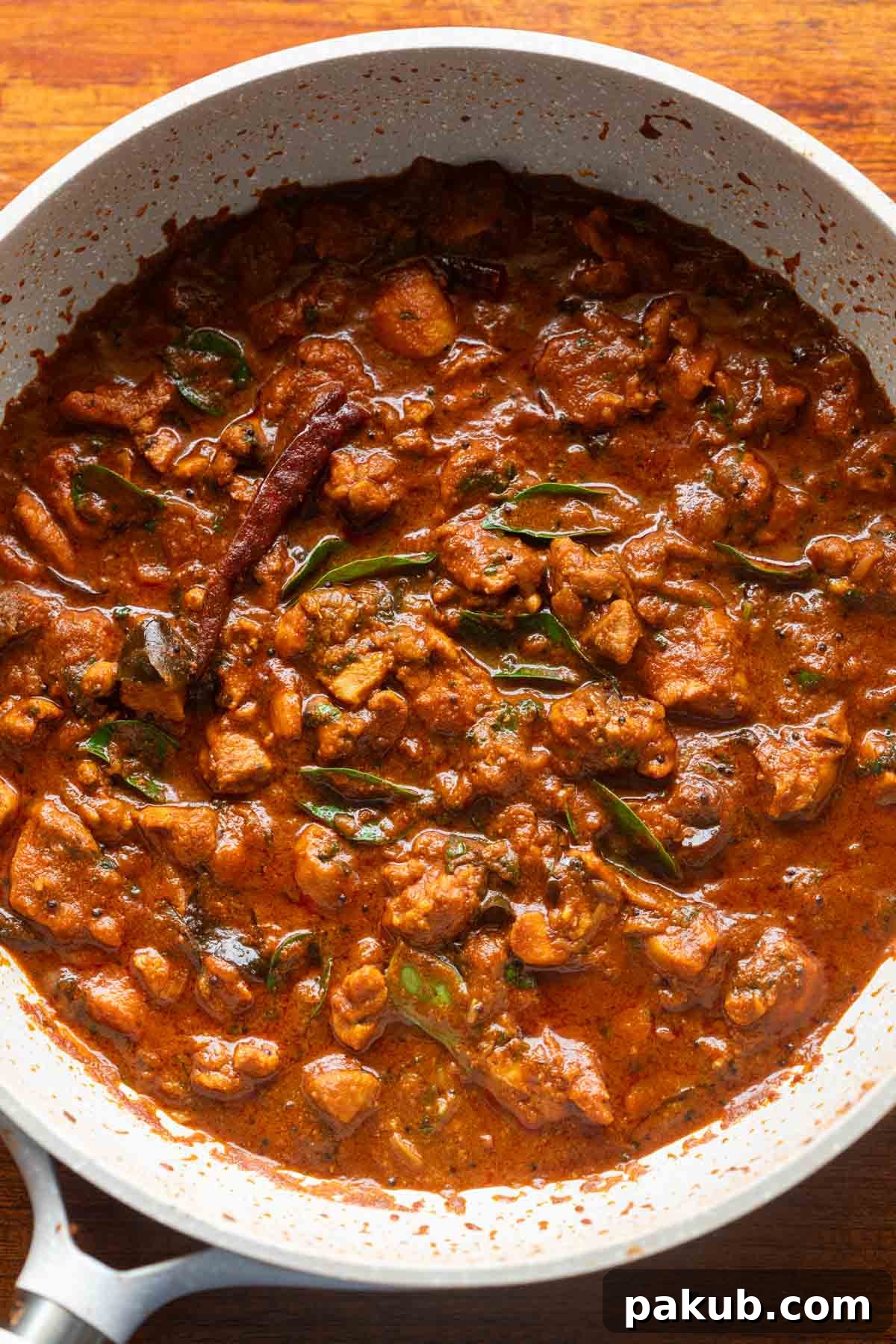
Experience the vibrant flavors of South India with this Chettinad Chicken Curry – a beautifully layered, spicy, coconut-infused, and herb-rich delight. Serve it with steamed rice, crispy dosa, or soft roti for an unforgettable meal!
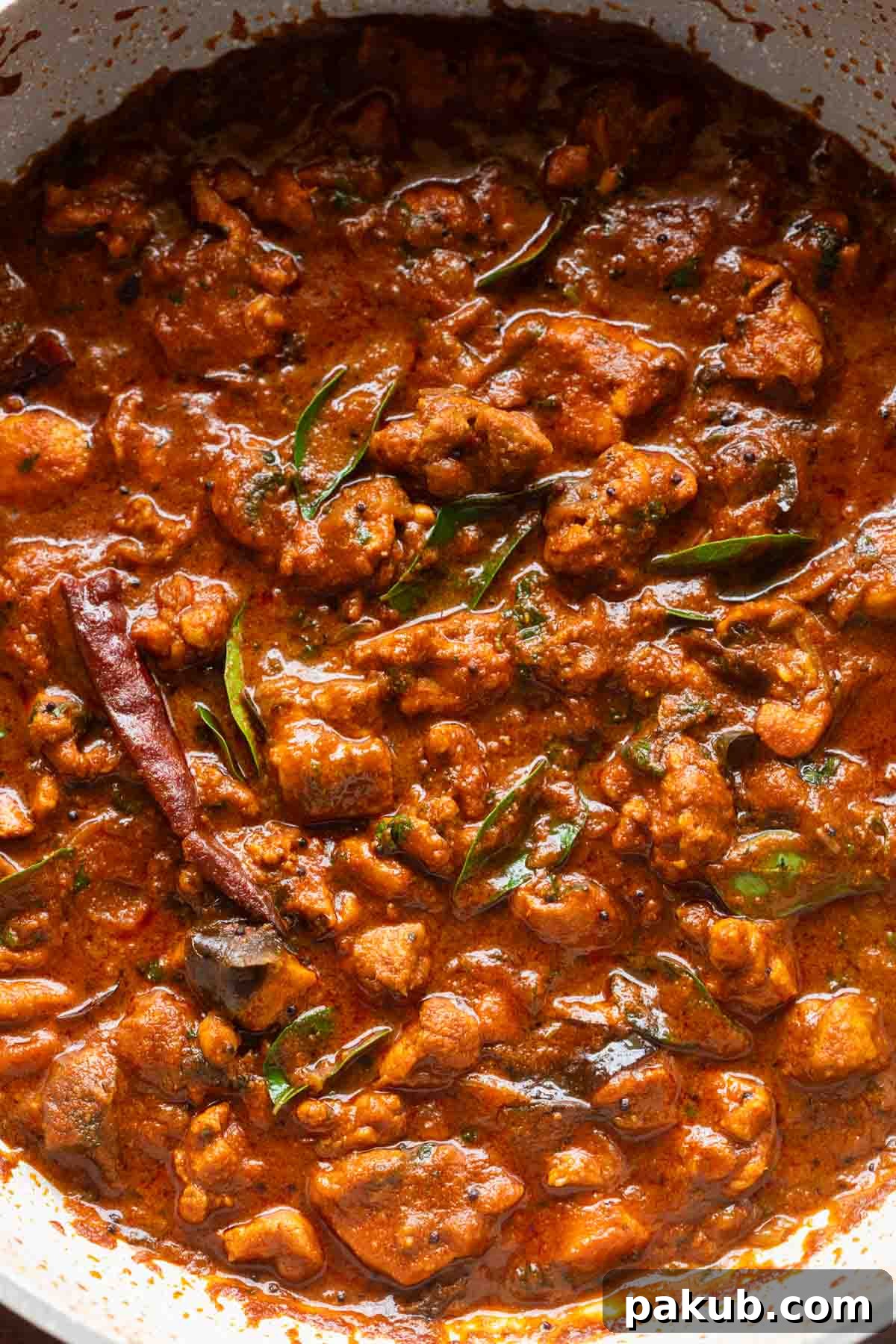
Authentic Chettinad Chicken Curry: A Spicy South Indian Delight
Among the pantheon of Indian chicken curries, the Chettinad Chicken Curry stands out as a true culinary masterpiece. Its reputation for bold flavors and aromatic depth precedes it, promising an experience that tantalizes the senses. When prepared in your own kitchen, this dish transforms your home into a fragrant haven, filling every corner with the invigorating aromas of toasted black pepper, fresh curry leaves, and the nutty sweetness of coconut. It’s a symphony of scents that immediately signals a truly special meal is underway.
This recipe embodies a perfect paradox: intensely spicy yet profoundly comforting, a hallmark of exceptional homemade food. The secret lies in the meticulous creation of a slow-roasted spice paste, a vibrant blend that forms the very soul of the curry. Combined with a touch of creamy coconut, these elements meld into a rich, deeply satisfying gravy that coats every piece of tender chicken. It’s the ideal dish for those evenings when you crave something hearty, flavourful, and utterly memorable, transporting your taste buds straight to the heart of Tamil Nadu.
Table of Contents
- What’s Special About Chettinad Chicken Curry?
- Essential Chettinad Chicken Curry Ingredients
- Expert Tips for the Perfect Chettinad Chicken
- Frequently Asked Questions
- Storage and Reheating Tips
- Delicious Serving Ideas
- Customization Ideas for Every Palate
- The Heritage of Chettinad Cuisine
- Chettinad Chicken Curry Recipe Card
- Watch Chettinad Chicken Curry Recipe Video
What Makes Chettinad Chicken Curry So Special?
The magic of Chettinad Chicken Curry isn’t just in its heat, but in the intelligent layering of flavors. Originating from the Chettiar community of Tamil Nadu, this cuisine is renowned for its vibrant, freshly ground spice blends and the subtle balance achieved despite its fiery nature. Unlike many other Indian curries that rely on pre-made spice powders, authentic Chettinad recipes insist on dry-roasting whole spices and then grinding them into a paste. This process unlocks a depth of aroma and taste that is simply unparalleled.
Each spoonful of Chettinad Chicken Curry offers a complex profile – the earthiness of cumin and coriander, the pungent kick of black pepper, the sweet warmth of cinnamon and cardamom, all harmoniously brought together by the distinct fragrance of curry leaves and the richness of coconut. It’s a dish that engages every part of your palate, leaving a lasting impression of rich tradition and culinary finesse.
Essential Chettinad Chicken Curry Ingredients
Crafting an authentic Chettinad Chicken Curry begins with sourcing the right ingredients and understanding their specific roles. Each component contributes uniquely to the curry’s signature taste and texture:
- Chicken: For the most succulent results, we recommend using boneless chicken thigh pieces, cut into 3/4-inch cubes. Thigh meat remains wonderfully juicy and tender throughout the slow cooking process, absorbing the rich flavors beautifully. While bone-in chicken can also be used, chicken breast pieces are best avoided as they tend to dry out and become stringy with the longer cooking time required for this curry.
- Coconut Oil: This is the soul of authentic South Indian cooking. Using coconut oil imparts that distinctive nutty, slightly sweet aroma and flavor that defines the curry. If unavailable, a neutral-flavored oil or ghee can be used as a substitute in a pinch, but be aware that it will subtly alter the traditional flavor profile.
- Whole Spices for Tempering: The initial tempering (tadka) sets the aromatic foundation. Mustard seeds crackle with a pungent kick, fennel seeds (saunf) offer a delicate sweetness and anise-like note, and fresh curry leaves infuse an unparalleled earthy, citrusy fragrance that is quintessential to South Indian cuisine.
- Aromatics: A vibrant base of aromatics is crucial. Sliced sambar onions (or shallots) provide a sweeter, milder onion flavor than regular onions, complementing the spices. Fresh green chillies and a whole red chilli introduce controlled heat, while a robust ginger-garlic paste adds a warm, pungent depth.
- Tomato Puree: A small amount of tomato puree is added to balance the spice, contributing a subtle tang and a hint of sweetness, while also giving body to the gravy.
- The Heart of the Curry – Chettinad Spice Paste: This freshly ground blend is where the magic truly happens. It includes whole cumin seeds and coriander seeds for their earthy notes, dried red chillies (such as Byadgi or Kashmiri for color and moderate heat, or spicier varieties for a more intense kick), fragrant black pepper for its characteristic bite, additional fennel seeds, warm cinnamon, aromatic green cardamoms, and finely grated coconut. This combination creates the peppery, rich, and complex flavor profile that Chettinad cuisine is famous for.
- For Finishing: A final flourish of freshly chopped coriander leaves and a handful of fresh curry leaves brightens the curry with a burst of fresh flavor and aroma.
Expert Tips for the Perfect Chettinad Chicken
Achieving the rich, authentic flavor of Chettinad Chicken Curry requires attention to a few key techniques. Follow these expert tips for a truly delicious outcome:
- Master the Spice Paste: The foundation of this curry is its freshly prepared spice paste. Dedicate time to slowly dry-roast the whole spices and grated coconut on a low flame. This process, known as “bhunoing,” releases their essential oils and intensifies their aromas. You’ll know they’re ready when they smell wonderfully nutty and the coconut turns a light golden brown. Be vigilant to prevent burning, as burnt spices will impart a bitter taste.
- Grind to Perfection: Once roasted, grind the spices with a small amount of water into a super-fine, smooth paste. A well-ground paste ensures that the flavors are evenly distributed throughout the curry and gives it that luxurious, restaurant-quality texture that beautifully coats every piece of chicken. A coarse paste will result in a grainy texture and less cohesive flavor.
- Choose Your Chicken Wisely: As mentioned, avoid using chicken breast. The longer cooking time required for the spices to meld and the gravy to thicken is too harsh for lean breast meat, often leading to dry, tough, and unappetizing results. Boneless chicken thighs or bone-in pieces are far superior choices, staying moist and flavorful.
- Don’t Rush the Simmer: Patience is paramount. Once all the ingredients are combined in the pan, resist the urge to crank up the heat. Instead, allow the curry to gently bubble and simmer over a low flame. This slow cooking allows the chicken to become incredibly tender and, more importantly, gives ample time for all the intricate flavors from the spices, aromatics, and coconut to fully meld and deepen, creating a harmonious and complex gravy. Regular stirring is key to prevent sticking.
- Layering the Flavors: Pay attention to the order in which ingredients are added. Tempering whole spices first, then sautéing aromatics, and finally cooking the ground spice paste until the oil separates are crucial steps that build the characteristic depth of Chettinad flavors.
- Adjusting Spice Levels: While traditionally spicy, you can customize the heat. For a milder curry, reduce the number of dried red chillies or opt for varieties like Kashmiri red chillies, which provide color with less heat. For extra fire, add a couple more green chillies or a pinch of cayenne pepper during the cooking process.
Frequently Asked Questions
It’s renowned for its unique, freshly roasted and ground whole spices, rather than pre-made powders. This distinct blend of coconut, black pepper, fennel, cinnamon, and curry leaves creates an earthy flavor profile that is wonderfully spicy yet remarkably balanced and aromatic. It’s the depth of the hand-ground masala that truly sets it apart.
Traditionally, yes, it’s known for its robust heat, primarily from black pepper and dried red chillies. However, the spice level is easily adjustable. You can tone it down by using fewer chillies or opting for milder varieties like Kashmiri red chillies, which offer color without excessive heat.
Madras curry typically features a more prominent tomato base and often relies on a pre-mixed curry powder. Chettinad curry, conversely, is distinguished by its use of freshly roasted and ground whole spices, offering a much more layered, complex, and intensely aromatic flavor profile with a stronger emphasis on pepper and coconut.
Absolutely! Chettinad Chicken Curry is one of those dishes that often tastes even better the next day. The flavors continue to meld and deepen as it rests, making it an excellent choice for meal prepping or entertaining.
The core spices include cumin seeds, coriander seeds, black pepper, fennel seeds, cinnamon, and green cardamoms, along with dried red chillies and grated coconut. The precise ratios and roasting method are what give it its distinctive character.
Storage and Reheating Tips
Proper storage ensures your delicious Chettinad Chicken Curry remains flavorful and safe to enjoy for days:
- Fridge: Leftover Chettinad Chicken Curry can be stored in an airtight container in the refrigerator for up to 3 days. You might even find that the flavors deepen and improve overnight, making it even more delicious the next day.
- Freezer: For longer storage, this curry freezes beautifully. Allow it to cool completely before transferring it to freezer-safe containers or heavy-duty freezer bags. It can be frozen for up to one month. Thaw it overnight in the refrigerator before reheating.
- Reheating: To reheat, gently warm the curry on the stovetop over medium-low heat. If the gravy has thickened significantly in the fridge, add a splash of water or a touch of coconut milk to achieve your desired consistency. Avoid reheating on high heat, as slow and gentle reheating helps to keep the chicken tender and prevents the sauce from splitting.
- Pro Tip: If you’ve prepared a very large batch and plan to freeze a portion, consider storing the chicken pieces and gravy separately if possible. This can sometimes help maintain the optimal texture of the chicken when reheated, though freezing them together also works well for convenience.
Delicious Serving Ideas
This spicy, rich, and aromatic curry truly shines when paired with sides that complement and balance its robust flavors. Here are some of my favorite pairings to create a complete and authentic South Indian-style meal:
- Over Steamed Rice: The simplicity of plain steamed basmati or sona masoori rice is often the best accompaniment, allowing the intricate flavors of the Chettinad curry to take center stage and soak into every grain.
- With Coconut Rice: For an extra layer of coconut goodness and a subtle sweetness that beautifully mellows the curry’s spice, coconut rice is an excellent choice.
- With Lemon Rice: The bright, zesty notes of lemon rice provide a refreshing contrast and lift the warm, complex flavors of the curry, creating a dynamic culinary experience.
- With Ragi Dosa: A light, earthy, and nutritious pairing, ragi dosa transforms this dish into a wholesome and satisfying weekend lunch or dinner. Its slight crispness works well with the thick gravy.
- Alongside Appams: The soft, lacy, and slightly sweet texture of appams (fermented rice pancakes) is absolutely divine for scooping up the rich, spiced gravy. This is a classic South Indian pairing.
- With Idiyappam (String Hoppers): Another traditional Chettinad-style pairing, idiyappam are delicate steamed rice noodles that are perfect for absorbing all the deliciousness of the curry’s gravy.
- With Chapati or Phulka: If you prefer a simpler, softer bread option, soft chapatis or phulkas are a comforting choice that make for an easy and satisfying meal.
- Alongside a Simple Raita or Salad: A cooling cucumber raita or a crisp, fresh salad can offer a lovely contrast to the curry’s heat and richness, cleansing the palate between bites.
Customization Ideas for Every Palate
This Chettinad Chicken Curry recipe is wonderfully versatile, allowing for various adjustments to suit your personal preferences or dietary needs:
- Make it Richer and Creamier: For a more indulgent and luxurious curry, especially for special occasions, stir in a generous splash of thick coconut milk or a dollop of ghee just before serving. This adds a beautiful creamy texture and enhances the richness.
- Boost with Veggies: To make the curry heartier and more nutritious, consider adding vegetables. Cubed potatoes, sliced mushrooms, tender drumsticks, or even chunks of bell peppers can soak up the spicy Chettinad masala beautifully, adding texture and flavor. Add them after sautéing the chicken and ensure they are cooked through.
- Repurpose the Spice Paste: The star of this dish is undoubtedly the Chettinad masala paste, and its versatility is immense! Try using this flavorful paste with other proteins or vegetables for quick variations. It works exceptionally well with paneer (Indian cottage cheese), plump prawns, hard-boiled eggs, or a mix of your favorite seasonal vegetables. Just adjust the cooking time accordingly.
- Swap the Protein: If chicken isn’t what you’re craving, the Chettinad masala is equally delicious with other proteins. It pairs wonderfully with tender mutton (goat meat), flaky fish fillets (add fish towards the end to prevent it from breaking), or even firm tofu for a vegetarian option. Remember to adjust the cooking time based on the protein you choose. For plant-based alternatives like chickpeas or lentils, ensure they are cooked separately before adding them to the masala to simmer.
- Adjust Spice Levels: If you prefer a milder curry, reduce the amount of dried red chillies or black pepper in the spice paste. Conversely, for an extra fiery kick, add another green chilli or a pinch of red chilli powder during the tempering stage.
The Heritage of Chettinad Cuisine
Did You Know? Chettinad cuisine is far more than just a style of cooking; it’s a reflection of the rich history and vibrant culture of the Nattukottai Chettiar community. Hailing from the Chettinad region of Tamil Nadu, South India, the Chettiars were a prosperous merchant community known for their extensive trade routes that spanned across Southeast Asia. This global exposure profoundly influenced their culinary traditions, leading to the incorporation of diverse ingredients and cooking techniques, yet always with a distinctive local flair.
Their cuisine is celebrated for its vivid use of freshly ground spices, its bold and complex flavors, and its distinctive aromas. It’s often regarded as one of the spiciest and most aromatic cuisines in India, characterized by an intricate balance of heat, sourness, and tang. Each Chettiar household traditionally boasts its own secret masala blend, passed down through generations, making every family’s curry subtly unique.
Interestingly, historically, many traditional Chettinad curries were cooked in large clay pots over firewood. This slow-cooking method, combined with the earthen pots, imparted a signature smoky depth and an incomparable richness to the dishes. While modern kitchens have largely moved away from firewood, the essence of slow, deliberate cooking to allow flavors to develop remains a cornerstone of Chettinad culinary philosophy. Furthermore, while Chettinad Chicken Curry is now a world-famous restaurant staple, the original versions often featured a variety of local meats, including quail, rabbit, or even succulent crab, showcasing the community’s resourcefulness and diverse palate.
The culinary philosophy of Chettinad is one of meticulous preparation and an appreciation for quality ingredients. From the careful selection and dry-roasting of whole spices to the slow simmering of the gravies, every step is designed to coax out the maximum flavor and aroma. This dedication transforms simple ingredients into extraordinary meals, truly making Chettinad cuisine a treasure of Indian gastronomy.
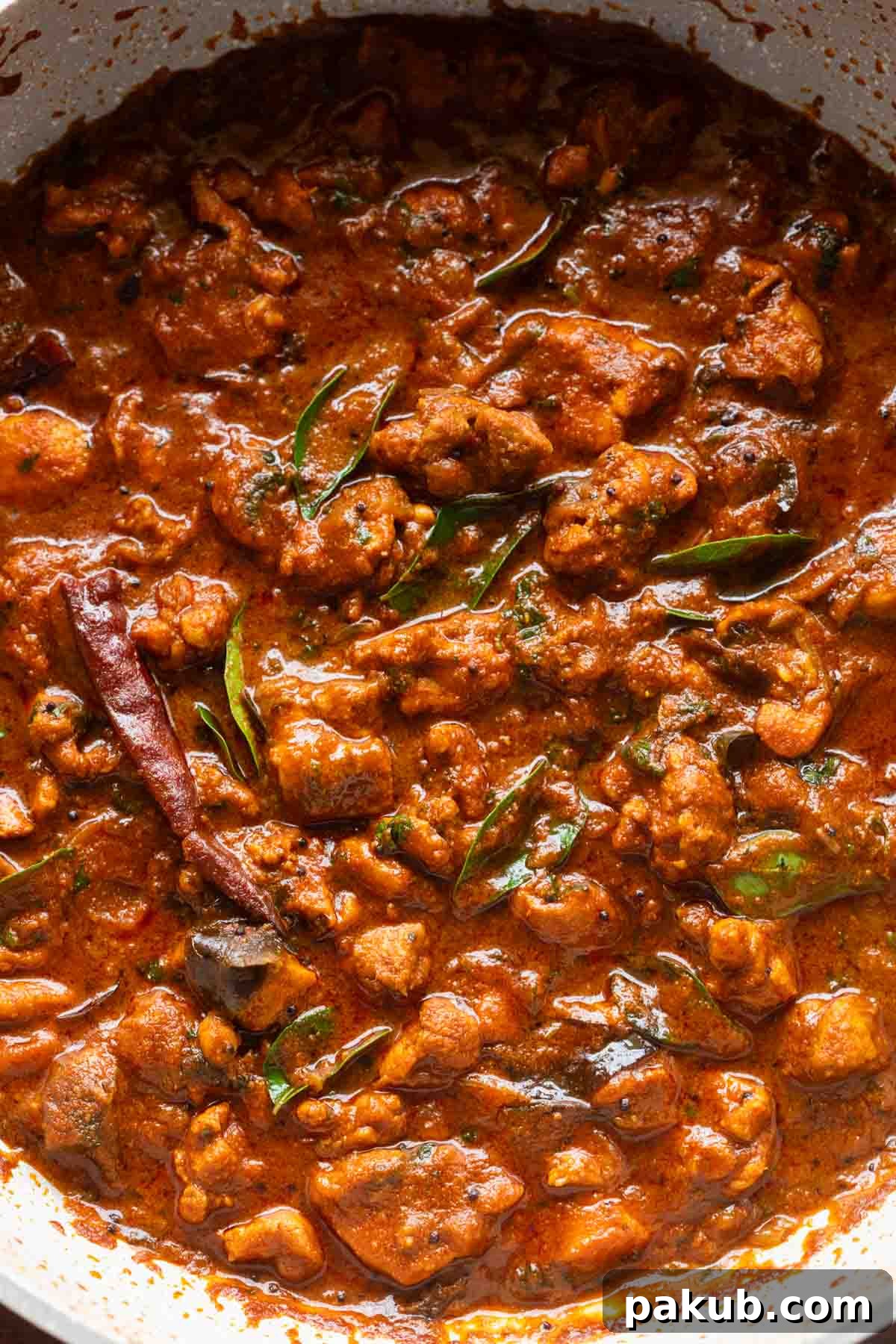
This Chettinad Chicken Curry is more than just a recipe; it’s a testament to how simple, fresh ingredients, when handled with a little time and care, can be transformed into something truly special and deeply flavorful. The harmonious blend of freshly ground spices, the creamy essence of coconut, and the vibrant aroma of curry leaves come together to create that unforgettable Chettinad experience that lingers deliciously long after the last bite. Once you’ve made this curry from scratch, you’ll understand precisely why it holds such a cherished place in the hearts of food lovers worldwide. Don’t forget to share your culinary creations and tag @my_foodstory on Instagram when you try it!
Watch Chettinad Chicken Curry Recipe Video
Chettinad Chicken Curry
Richa
5
35
40
4 servings
Liked this recipe? Rate and comment below!
For more recipes, subscribe to our newsletter.
Pin Recipe
Ingredients
- 500 grams chicken, boneless thigh, cut into 3/4th inch cubes
- ½ teaspoon turmeric powder
- 2 tablespoons coconut oil
- 1 teaspoon mustard seeds
- ½ teaspoon fennel seeds, or saunf
- 3 – 4 sprigs curry leaves, divided
- 25 sambar onions approx. ¾ cup, thinly sliced
- 1 green chilli, slit
- 1 red chilli, whole
- 1 teaspoon ginger garlic paste
- ¼ cup tomato puree
- ¾ teaspoon salt
- 1 – 1 ¼ cup water, divided
- 1 tablespoon chopped coriander leaves
Spice Paste Ingredients
- 1 tablespoon cumin seeds, or jeera
- 1 tablespoon coriander seeds, or dhaniya
- 6 byadgi or kashmiri red chillies, dry
- 1 teaspoon black pepper, whole or kali mirch
- ½ teaspoon fennel seeds, or saunf
- 1 inch cinnamon stick
- 4 green cardamoms
- ¼ cup grated coconut
- ¼ – ½ cup water (for grinding)
Instructions
-
Begin by preparing the chicken. Marinate the 500 grams of boneless chicken thigh pieces with ½ teaspoon of turmeric powder. Mix well to ensure the chicken is evenly coated, then set it aside to marinate while you prepare the spice paste.
-
For the Chettinad spice paste, take all the listed ingredients (cumin seeds, coriander seeds, dried red chillies, black pepper, fennel seeds, cinnamon, green cardamoms, and grated coconut) and add them to a dry pan, reserving the water for later. Dry roast these spices on a low flame for about 3-4 minutes. Keep stirring continuously to prevent burning. The spices should become fragrant and nutty, and the grated coconut will turn a light golden brown. Once roasted, allow them to cool slightly. Transfer the roasted spices to a grinder or food processor, add ¼ – ½ cup of water, and grind into a very fine, smooth paste. The smoother the paste, the silkier your curry will be.
-
Heat 2 tablespoons of coconut oil in a large pan or Dutch oven over medium heat. Once the oil is hot, add 1 teaspoon of mustard seeds and ½ teaspoon of fennel seeds. Let them splutter and release their aroma. Immediately add 3 sprigs of fresh curry leaves, the thinly sliced sambar onions (or shallots), 1 slit green chilli, 1 whole red chilli, and 1 teaspoon of ginger-garlic paste. Sauté these aromatics until the onions turn a light pink and become translucent, ensuring they don’t brown too much.
-
Now, add the freshly ground Chettinad spice paste to the pan. Cook this paste for 5-7 minutes over a low to medium flame, stirring frequently. This step is crucial for developing the depth of flavor. Next, stir in ¼ cup of tomato puree and continue to cook for another 5-6 minutes. You’ll know it’s ready when the raw smell of the tomato disappears, and the oil starts to separate from the masala, glistening on the edges of the pan.
-
Add the marinated chicken pieces to the cooked masala and sauté for 2 minutes, ensuring each piece is well coated with the aromatic spice mixture. Pour in ¼ cup of water and add ¾ teaspoon of salt. Stir well, then cover the pan with a lid and reduce the heat to low. Let the chicken cook gently for about 15 minutes, or until it is tender and fully cooked through. During this simmering period, check the gravy every 5-6 minutes and give it a stir to prevent it from sticking to the bottom of the pan. If the gravy becomes too thick or starts to stick, add an additional 2-3 tablespoons of water as needed.
-
Once the chicken is tender and the gravy has reached your desired consistency, remove the pan from the heat. Garnish generously with the remaining 1 sprig of fresh curry leaves and 1 tablespoon of freshly chopped coriander leaves. Serve hot with your favorite South Indian accompaniments and enjoy the authentic taste of Chettinad!
Notes
- I strongly prefer coconut oil for this recipe due to its authentic South Indian flavor contribution, but you can use any neutral oil of your choice or even ghee if preferred.
- Feel free to increase or reduce the number of chillies (both green and dried red) based on your personal preference for spice level.
- While we have used boneless chicken thigh pieces for their juiciness, bone-in chicken pieces would work equally well, often adding more flavor to the curry.
- For an extra rich gravy, a final swirl of coconut milk can be added at the very end of cooking.
Nutrition (per serving, estimated)
Calories: 401kcal
Carbohydrates: 41g
Protein: 18g
Fat: 21g
Saturated Fat: 12g
Polyunsaturated Fat: 3g
Monounsaturated Fat: 5g
Trans Fat: 0.1g
Cholesterol: 45mg
Sodium: 557mg
Potassium: 1083mg
Fiber: 10g
Sugar: 18g
Vitamin A: 982IU
Vitamin C: 146mg
Calcium: 130mg
Iron: 6mg
This article was researched and written by Harita Odedra.