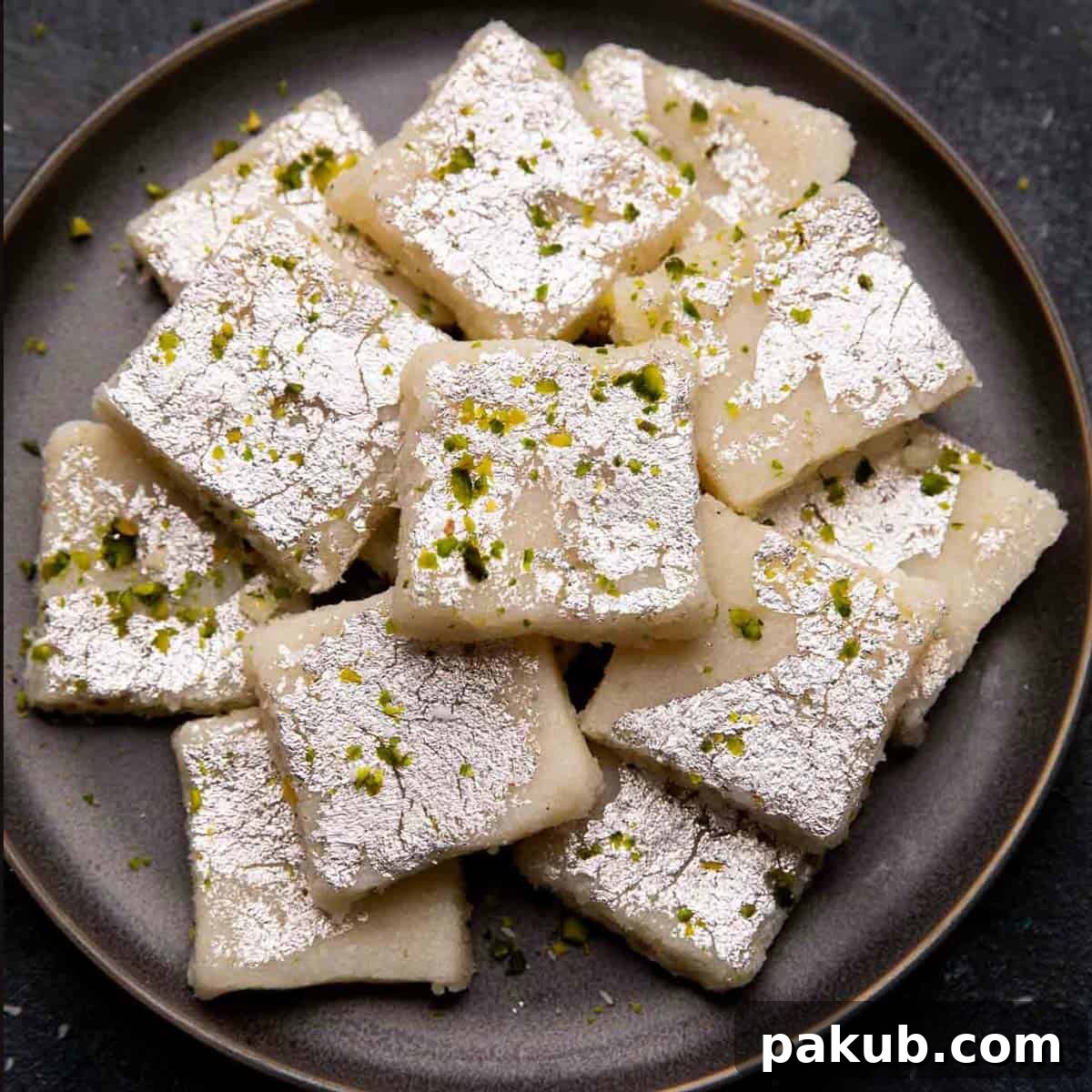
Master the Art of Homemade Coconut Barfi (Nariyal Barfi): An Easy 5-Ingredient Recipe for Festive Delights
Imagine biting into a soft, fragrant, and perfectly balanced sweet treat – that’s the magic of homemade Coconut Barfi. This traditional Indian fudge, known as Nariyal Barfi, is a celebrated delicacy, especially during festivals. Our simplified recipe ensures a delightful, halwai-style flavor and texture with just 5-6 readily available ingredients, making it an absolute must-try this festive season!
The allure of homemade Indian sweets, or ‘mithai,’ is undeniable. While store-bought options offer convenience, nothing quite compares to the freshness, authentic taste, and personal touch of a dessert prepared in your own kitchen. This Easy Coconut Barfi recipe bridges the gap between traditional flavors and modern ease, proving that you don’t need to be an experienced chef to create a truly spectacular Indian sweet. Forget complicated processes and long lists of obscure ingredients – this Nariyal Barfi recipe focuses on simplicity without compromising on taste or texture, making it perfect for both novice and experienced cooks.
Often, a common concern with homemade sweets is their perceived shorter shelf life compared to commercially produced counterparts. However, this Nariyal Barfi recipe is designed for lasting enjoyment. When stored correctly in an airtight container, these delightful squares remain fresh and delicious for 7-10 days at room temperature, and even longer if refrigerated. This makes them ideal for preparing in advance for festive gatherings, thoughtful gifting to loved ones, or simply having a sweet treat on hand throughout the week to satisfy those sudden cravings.
Table of Contents
- The Essence of Nariyal Barfi: A Beloved Indian Sweet
- Essential Ingredients for Perfect Coconut Barfi
- Step-by-Step Guide to Making Homemade Coconut Barfi
- Frequently Asked Questions About Coconut Barfi
- Expert Tips for Flawless Nariyal Barfi
- Watch the Recipe Video: Your Visual Guide
- Classic Homemade Coconut Barfi Recipe Card
- Explore More Easy Homemade Indian Sweets
The Essence of Nariyal Barfi: A Beloved Indian Sweet
Nariyal Barfi, widely known as Coconut Fudge, is a timeless Indian dessert cherished for its rich, tropical coconut flavor and delicate, melt-in-your-mouth texture. It’s a staple during grand celebrations like Diwali, Eid, Holi, Raksha Bandhan, and countless other auspicious occasions, symbolizing joy, prosperity, and togetherness. The enduring appeal of this sweet lies in its inherent simplicity, relying on a few core ingredients to create a profound and satisfying taste experience. Unlike many complex Indian sweets that demand intricate techniques, precise syrup consistencies, or specialized equipment, Coconut Barfi is remarkably approachable, making it a fantastic starting point for anyone venturing into the enchanting world of Indian confectionery. The irresistible aroma of simmering milk, heavy cream, and coconut, delicately infused with a hint of warm cardamom, will effortlessly fill your home and instantly transport you to a vibrant, festive Indian kitchen.
This particular recipe aims to faithfully recreate that authentic ‘halwai-style’ (traditional sweet shop) barfi, renowned for its perfect balance of sweetness, moisture, and creamy texture. The secret lies in the careful selection and harmonious combination of ingredients, coupled with precise cooking techniques to achieve that signature soft yet firm consistency that allows for clean, neat slices. Whether you’re a seasoned cook looking for a quick and reliable recipe, or a complete beginner eager to try your hand at Indian sweets, this comprehensive guide will equip you with all the necessary knowledge and confidence to whip up a batch of Coconut Barfi that will undoubtedly impress everyone who tastes it. Get ready to delight your senses and those of your loved ones with this exquisite homemade treat!
Essential Ingredients for Perfect Coconut Barfi
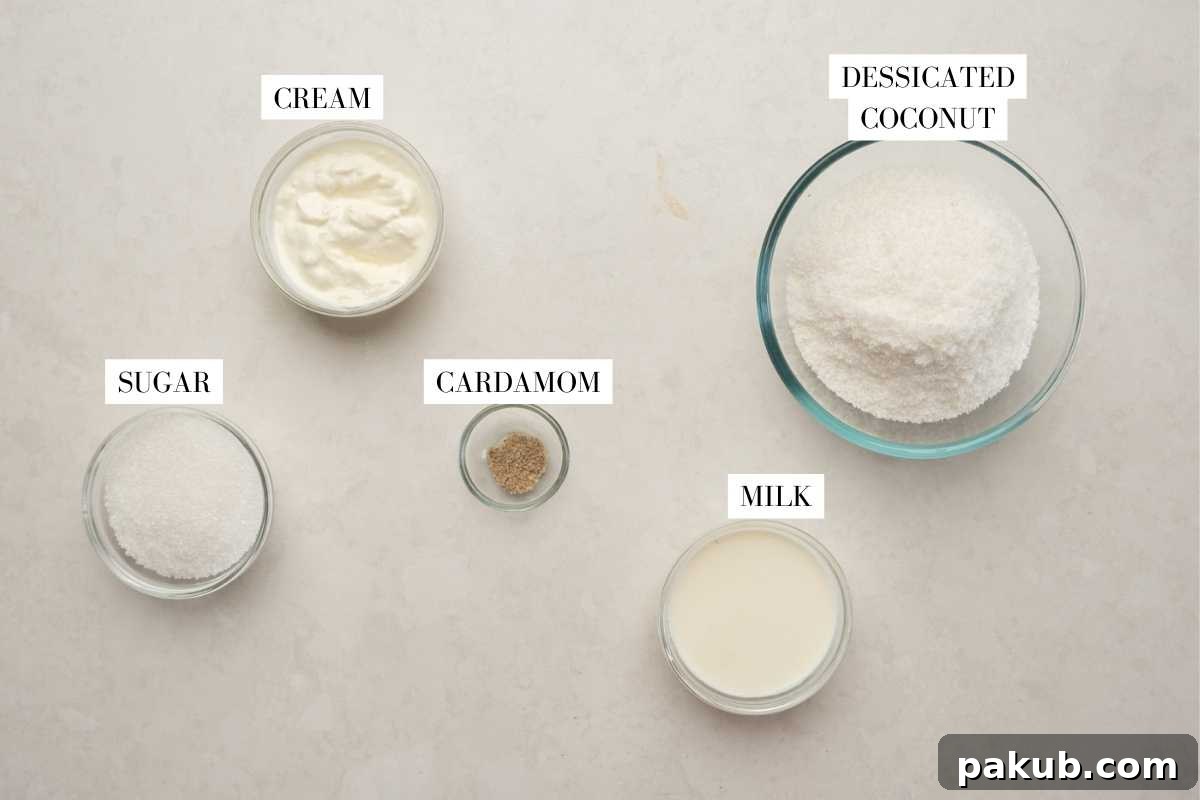
Crafting exquisite Coconut Barfi starts with understanding each ingredient and its pivotal role in shaping the final product’s flavor, texture, and aroma. Here’s a closer, more detailed look at the essential components that make this dessert truly special and how each contributes to its perfection:
- Desiccated Coconut: This is unequivocally the star ingredient of our Nariyal Barfi. Desiccated coconut is essentially finely grated or shredded coconut meat that has been thoroughly dried to remove moisture. It is widely available in most grocery stores and provides the characteristic texture and an intense, concentrated coconut flavor that makes the barfi so appealing. While fresh grated coconut can certainly be used, desiccated coconut offers a consistent moisture content, which often makes it easier to work with for achieving a perfect barfi consistency. If you choose to opt for fresh coconut, it’s crucial to lightly roast it on a very low flame for a few minutes before incorporating it into the milk mixture. This vital step helps to reduce its higher moisture content and simultaneously enhances its natural aroma, preventing the final barfi from being too soft or runny.
- Whole Milk (Full-Fat Milk): For that truly rich, authentic halwai-style flavor and luxuriously creamy texture, whole or full-fat milk is not just recommended, but highly advised. The higher fat content present in whole milk contributes significantly to the overall richness, mouthfeel, and crucially, helps the barfi set beautifully and maintain its structure. Using low-fat milk might yield a less creamy and slightly drier result, and could also potentially require slightly longer cooking times to achieve the desired consistency due to its higher water content.
- Heavy Cream: The addition of a touch of heavy cream elevates the richness of the barfi to another level and is instrumental in ensuring your finished barfis are incredibly soft, moist, and possess that desirable melt-in-your-mouth quality. It complements the whole milk beautifully, working to prevent the barfi from becoming dry, crumbly, or overly dense. This ingredient is a key secret to achieving the quintessential soft and fudgy texture that defines a truly perfect Nariyal Barfi.
- Granulated Sugar: Granulated sugar not only provides the necessary and delightful sweetness but also plays a critical role in the barfi’s texture, structure, and ability to set properly. The quantity can be adjusted slightly to suit individual preference, but the recommended amount in this recipe strikes a perfect and balanced sweetness. While condensed milk can serve as an alternative source of sweetness and milk solids, using separate milk and sugar, as instructed in this traditional recipe, gives you more precise control over the consistency and sugar level, and often results in a barfi that holds its shape better and stays fresh for a longer duration.
- Cardamom Powder (Elaichi Powder): Just a small pinch of freshly ground green cardamom powder acts as a magical flavor enhancer, transforming the barfi with its intoxicating aroma and subtle, warm, citrusy notes. It’s an absolutely quintessential spice in almost all traditional Indian desserts, adding an authentic, distinctive touch that truly elevates Nariyal Barfi. For the most intense and freshest flavor, it is always recommended to use freshly crushed cardamom pods, rather than pre-ground, older powder.
- Chopped Pistachios (Pista): Primarily used for an elegant garnish, finely chopped pistachios offer a delightful crunch that contrasts wonderfully with the soft, smooth texture of the barfi. Their vibrant green color also adds a beautiful visual appeal, making the barfis even more enticing and festive. You can also experiment with other complementary nuts like finely slivered almonds or crushed cashews, depending on your preference.
- Edible Silver Leaf (Chandi Vark): This decorative element is entirely optional but highly recommended for achieving an authentic, truly festive presentation. Edible silver leaf, or ‘chandi vark,’ is a traditional, ultra-thin decorative foil used extensively on premium Indian sweets. It adds an elegant shimmer and makes your homemade barfis look just like those from a professional, high-end sweet shop, adding that final touch of luxury.
Step-by-Step Guide to Making Homemade Coconut Barfi
Creating delicious Coconut Barfi at home is a wonderfully rewarding experience, especially when you follow a clear, detailed process. These meticulous steps will guide you through each stage, ensuring you achieve a perfect batch of Nariyal Barfi every single time:
- Prepare Your Setting Tray with Precision: Begin by preparing an 8×8 inch baking tin or a suitable tray. It is crucial to line it thoroughly with parchment paper, ensuring there’s ample overhang on all sides. This overhang will serve as convenient ‘handles’ to easily lift the set barfi sheet later. If parchment paper is unavailable, grease the tin very generously and meticulously with ghee (clarified butter) or a neutral oil. Proper and thorough greasing is absolutely vital to prevent the barfi from sticking to the tin and ensures a clean, effortless removal once it has set.
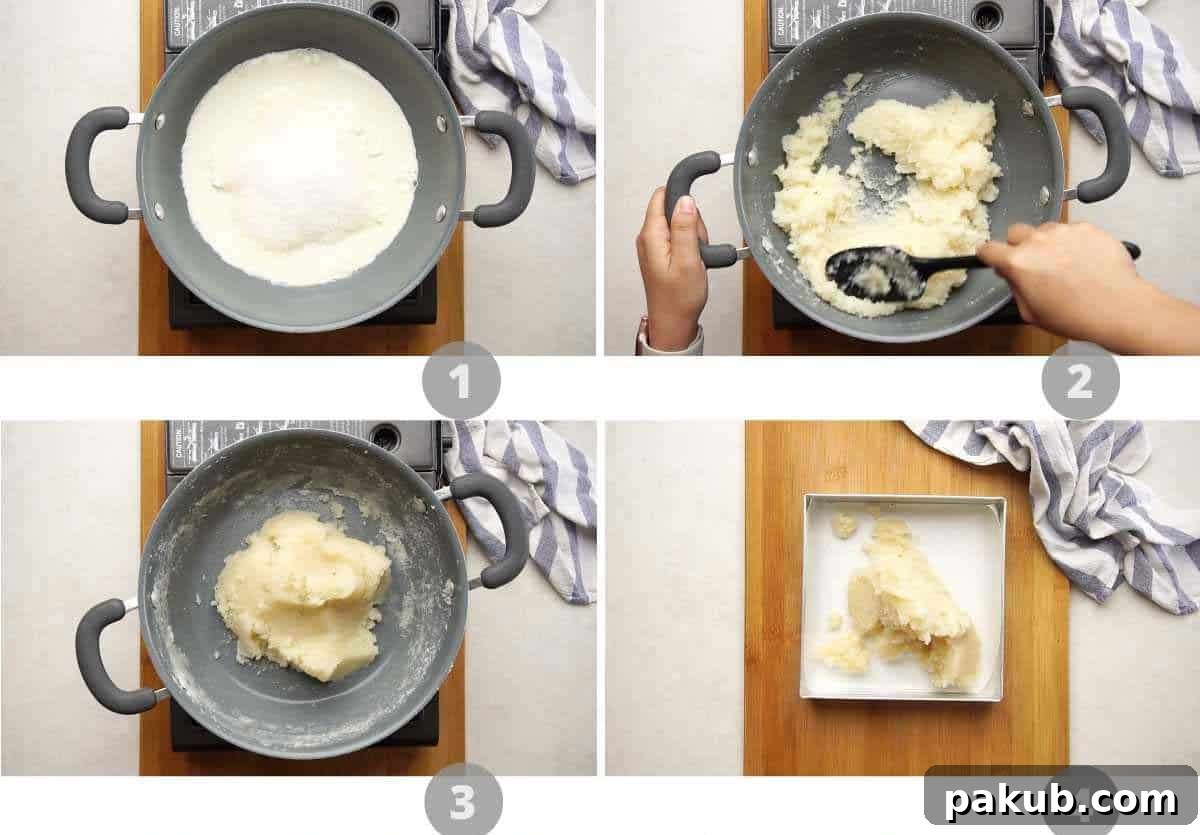
- Combine Liquid Ingredients on Low Heat: In a heavy-bottomed kadhai (a traditional Indian wok) or a thick-bottomed non-stick pan, combine the whole milk, heavy cream, and granulated sugar. Place the pan over a consistently low flame. Stir continuously and gently until the sugar completely dissolves into the liquid. It’s imperative to maintain low heat during this initial stage to prevent the milk from scorching at the bottom of the pan and to allow the sugar to melt uniformly without crystallizing or burning.
- Incorporate Desiccated Coconut and Cook to Thicken: Once the sugar has fully dissolved and the liquid mixture is gently warm and slightly steaming, carefully add the desiccated coconut to the pan. Mix it thoroughly and patiently with the liquid ingredients, ensuring every strand of coconut is moistened and well incorporated. Continue to cook this mixture on a low flame, stirring occasionally but consistently to prevent any lumps from forming and to avoid the mixture sticking to the bottom. This crucial cooking process will take approximately 20-22 minutes. During this period, you will observe the mixture gradually thickening, reducing in volume, and starting to come together, forming a thick, moist, and cohesive ball-like consistency.
- Achieve the Perfect Consistency and Flavor Infusion: The barfi mixture is ready and has reached its optimal consistency when it starts to pull away cleanly and effortlessly from the sides of the pan as you stir. This is a crucial visual and tactile indicator that sufficient moisture has evaporated, and the mixture has attained the correct texture for setting into firm barfi squares. At this precise point, promptly remove the pan from the heat and stir in the fragrant cardamom powder. Mix it exceptionally well to distribute the aromatic spice evenly throughout the entire barfi mixture, ensuring every bite is infused with its delightful essence.
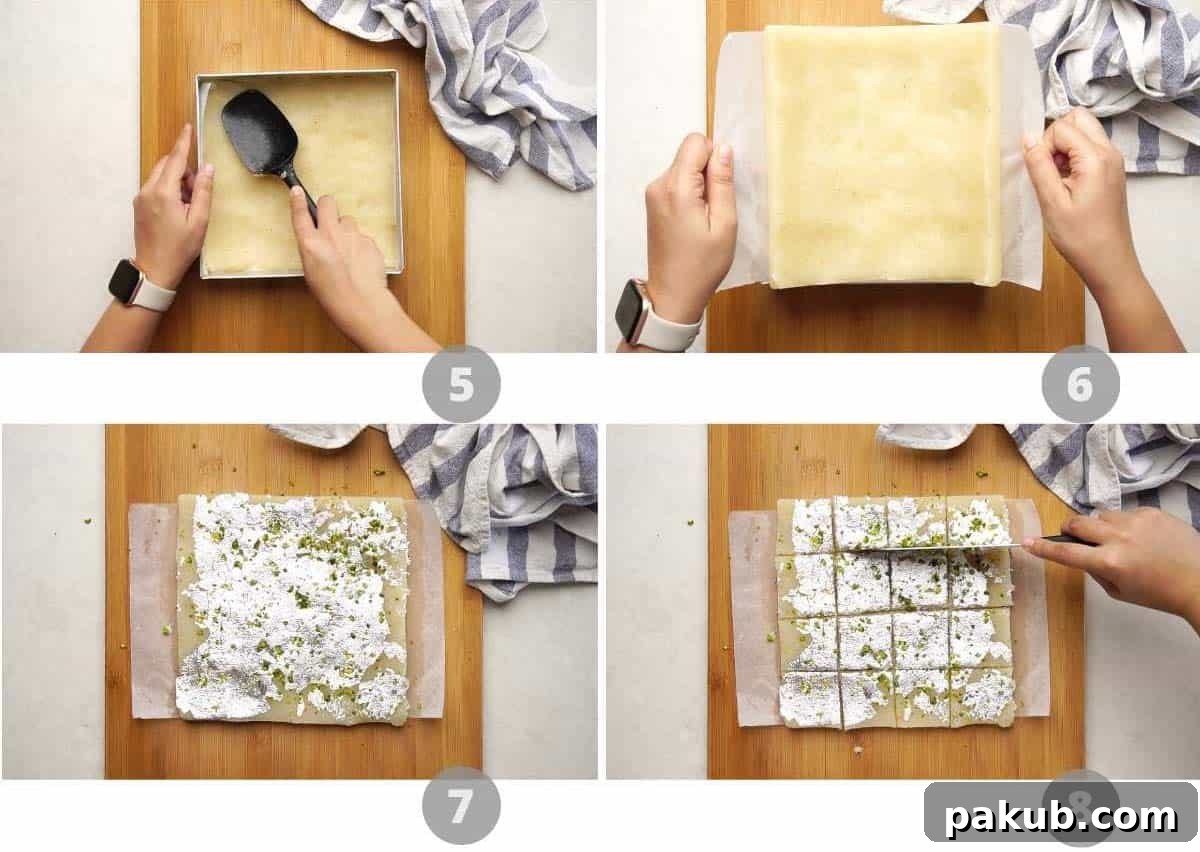
- Transfer and Firmly Press for a Dense Barfi: Without delay, transfer the warm, prepared barfi mixture into your previously lined and/or greased baking tin. Using a sturdy spatula or the clean back of a spoon, evenly spread the mixture across the tin and press it down very firmly and meticulously. The objective here is to create a tightly packed, smooth, and level surface. This compaction is exceptionally important for achieving a dense, well-set barfi that will hold its shape beautifully and won’t crumble or fall apart when subsequently cut.
- Cool and Set with Patience: Set the prepared tin aside in a cool, dry place to allow the barfi to cool completely and set. This process typically takes approximately 1-2 hours at ambient room temperature. While refrigeration for about an hour can certainly speed up the setting process, allowing the barfi to set naturally at room temperature often results in a slightly softer, more tender texture that many prefer. Patience during this critical cooling phase is absolutely key for achieving perfectly firm and neat slices.
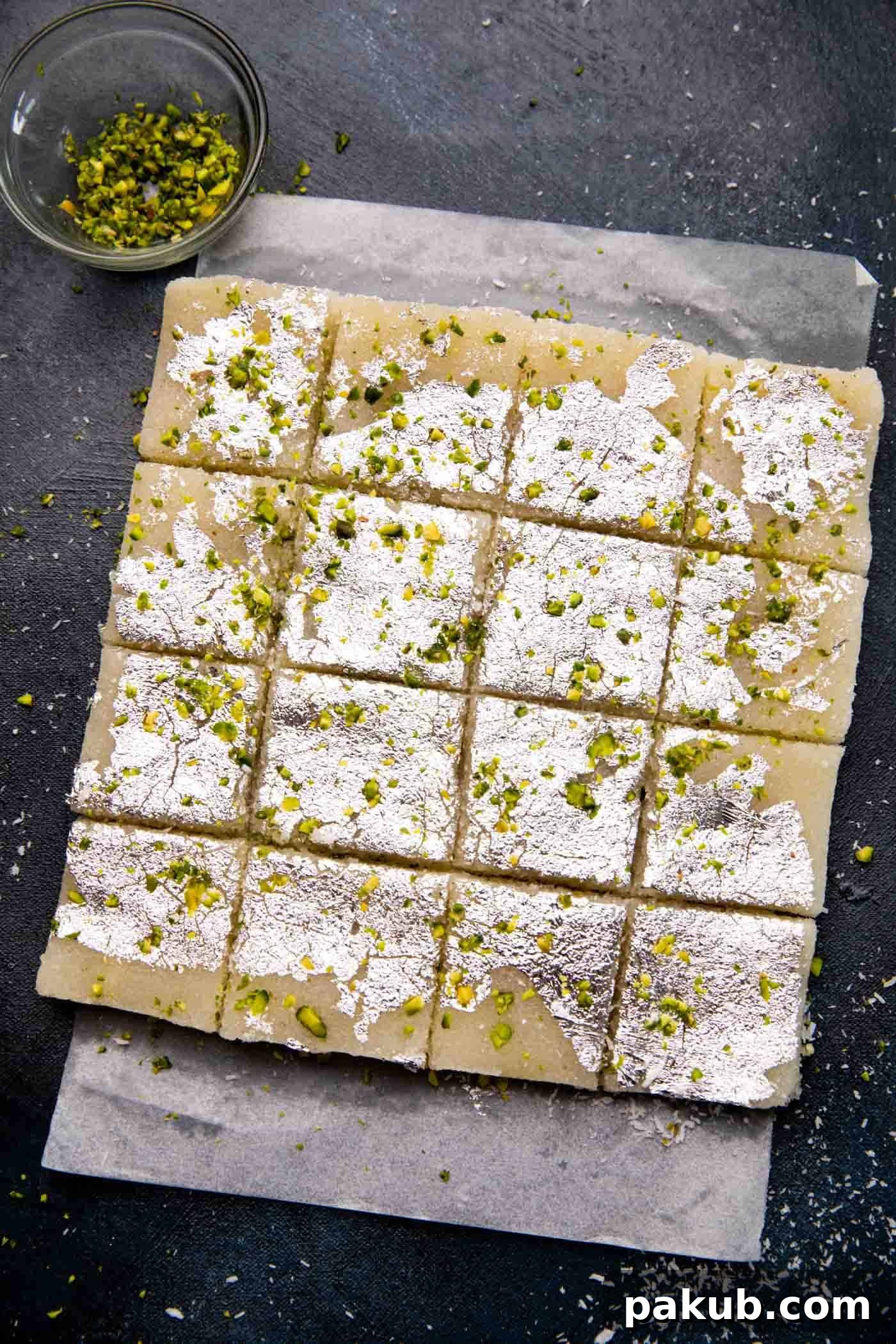
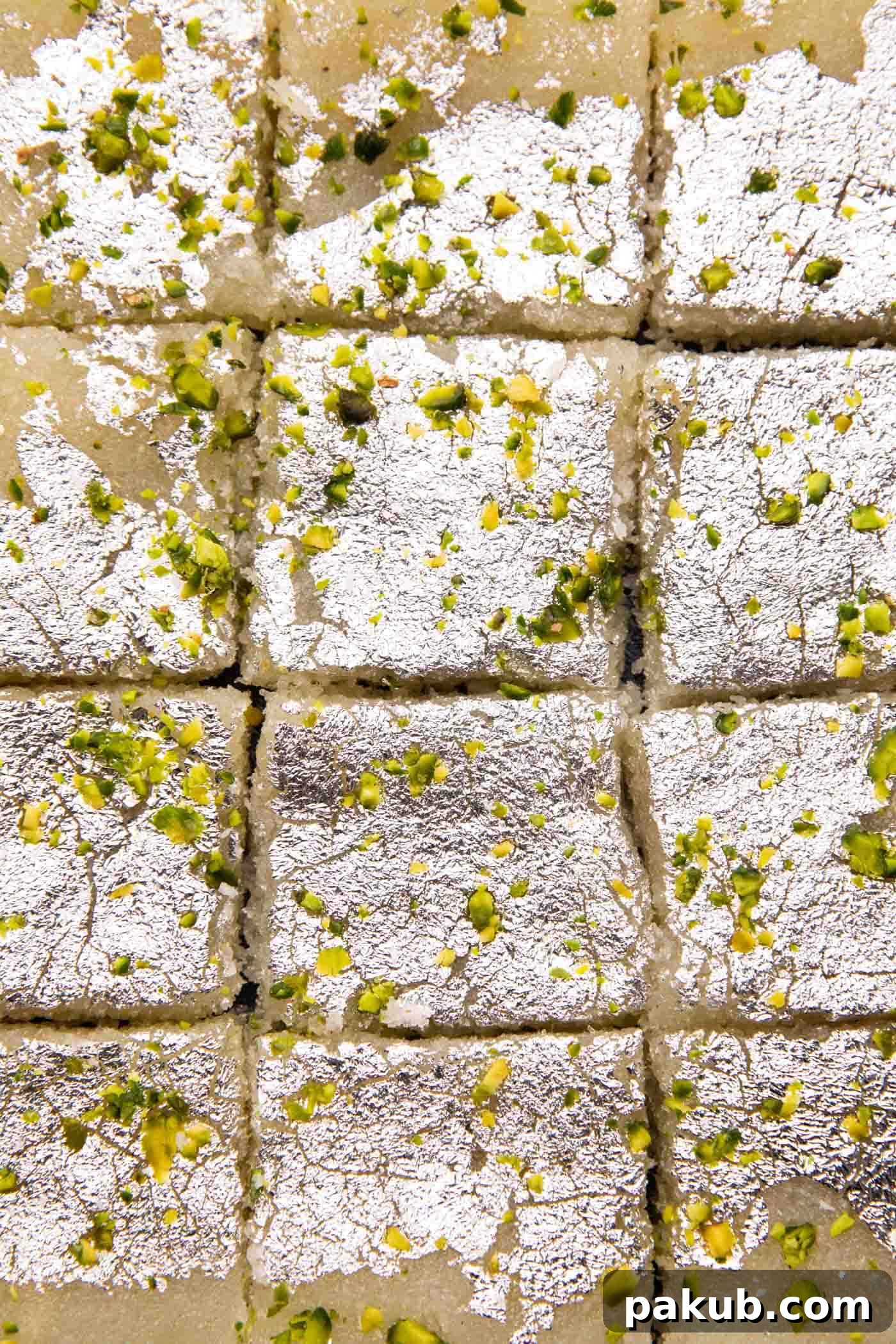
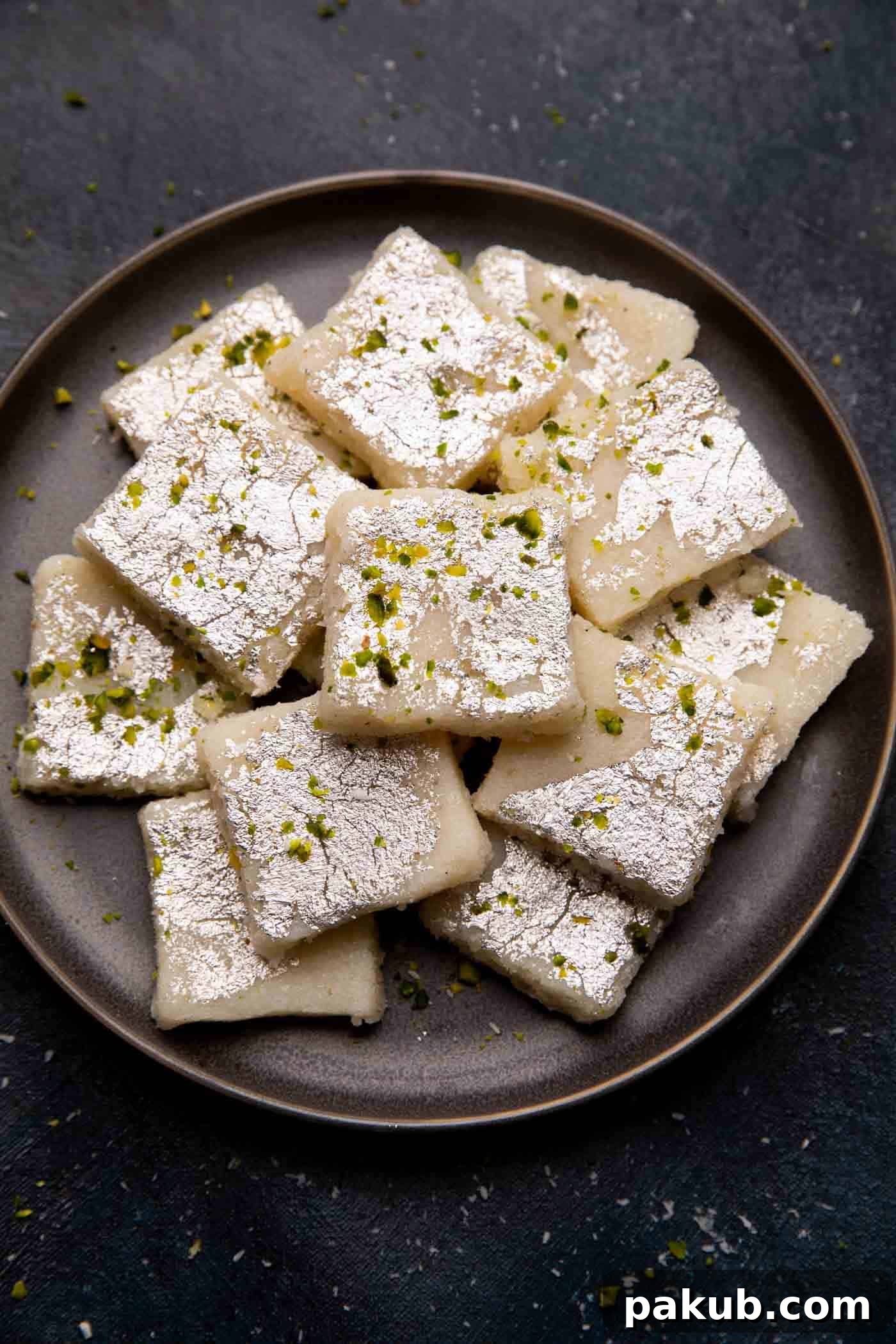
- Garnish with Elegance and Flavor: Once the barfi is completely set and cool to the touch, use the parchment paper overhang to carefully and gently lift the entire barfi sheet out of the tin. If you choose to use edible silver leaves (chandi vark) for garnish, gently transfer them onto the barfi. This is a delicate process; it’s often best done by gently flipping the silver foil onto the barfi directly from its paper backing without touching it directly with your fingers, to avoid tearing. Immediately after, generously sprinkle the surface with your finely chopped pistachios.
- Cut and Serve Your Masterpiece: Finally, using a very sharp knife, meticulously cut the set barfi into your desired shapes – classic squares, elegant diamonds, or any other preferred form. Ensure clean cuts for a professional finish. Serve these delightful homemade Coconut Barfis immediately to eager guests, or carefully store them for later enjoyment and savoring.
Frequently Asked Questions About Coconut Barfi
Coconut Barfi, like the vast majority of traditional Indian mithai, is primarily categorized as a sweet treat meant for delicious indulgence rather than a staple health food. However, a significant advantage of preparing it at home is that you have complete and transparent control over the quality and freshness of all the ingredients used, ensuring purity. You can also make minor, subtle adjustments, such as slightly reducing the sugar content, to align it more closely with your personal dietary preferences, though it’s important to note that drastic changes might affect the final texture and setting properties. As with all delightful treats, the key to enjoyment lies in consuming it in moderation as a part of a balanced and varied diet.
The most delicious and authentic Nariyal Barfis are crafted from a surprisingly simple yet incredibly powerful combination of core ingredients. These include finely desiccated (or freshly grated) coconut, rich and creamy whole milk, luxurious heavy cream, granulated sugar for perfectly balanced sweetness, and a touch of fragrant and aromatic cardamom powder. A delicate garnish of finely chopped pistachios often provides the perfect finishing touch, completing this delightful and easy-to-make Indian dessert.
For optimal freshness, to preserve its delicate flavors, and to significantly extend its shelf life, it’s best practice to store your homemade Coconut Barfi in an airtight container. Placing this container in the refrigerator can keep the barfis fresh, moist, and delicious for up to two full weeks. For the absolute best texture and to allow the flavors to fully bloom, it is recommended to take the barfis out of the refrigerator about 30 minutes before serving, allowing them to gently come to ambient room temperature.
If you find that your barfi mixture isn’t setting correctly or remains stubbornly soft, it’s a strong and clear indication that it is undercooked and still retains an excess amount of moisture. The critical key to a perfectly set barfi with a firm yet tender texture is thoroughly cooking the mixture until it thickens sufficiently and noticeably starts to pull away cleanly from the sides of the pan, ultimately forming a cohesive, thick ball. Don’t despair, an undercooked batch can almost always be salvaged! Simply reheat the mixture on a consistently low flame for a few more minutes, stirring continuously, until it visibly reaches the correct, thicker consistency, then press and set it again with confidence.
Desiccated coconut refers to finely grated or flaked coconut meat that has undergone a drying process to completely remove its moisture content. It is a highly convenient and versatile pantry staple, perfectly suitable for preparing large batches of barfi or for a multitude of culinary applications such as enriching curries and serving as a delightful topping. You can absolutely use freshly grated coconut as a viable substitute. However, it’s important to note that fresh coconut naturally contains significantly more moisture. To compensate, you’ll need to lightly roast it on a low flame for several minutes before adding it to the milk mixture. This crucial pre-step helps evaporate the excess moisture, ensuring your barfi sets correctly and achieves the desired firm yet tender texture. Exercise caution not to brown the coconut during this roasting process, as it can impart an undesirable color and altered flavor to your finished barfi.
Absolutely! While the classic and fragrant cardamom is undeniably delightful and a traditional choice, Nariyal Barfi is wonderfully versatile and welcomes experimentation with other flavors. You can explore adding a few delicate drops of rose water or Kewra essence for a beautiful floral note that complements the coconut perfectly. Alternatively, for a touch of luxurious aroma and a subtle, rich golden hue, infuse the milk with a few precious strands of saffron. Just be mindful not to overpower the natural, exquisite coconut flavor, allowing it to remain the star of this sweet symphony.
Expert Tips for Flawless Nariyal Barfi
Achieving the perfect, melt-in-your-mouth Nariyal Barfi is a delightful culinary endeavor that truly benefits from attention to detail and a few expert insights. Here are some invaluable tips to ensure your homemade batch is nothing short of perfection, delivering that authentic sweet shop quality:
- Mind Your Coconut Choice: As previously emphasized, while desiccated coconut offers incredible convenience and consistent results, using fresh coconut can sometimes impart a slightly different, perhaps more vibrant and nuanced, flavor profile. If you opt for fresh coconut, do not, under any circumstances, skip the crucial step of lightly roasting it on a low flame for a few minutes to effectively reduce its inherent moisture content. Critically, ensure it doesn’t brown or toast too much, as this can dramatically alter both the delicate color and the subtle taste of your final barfi, leaning towards a toasted flavor rather than fresh coconut.
- The Peril of Overcooking – AVOID IT: This is arguably the single most critical tip for perfect barfi. Overcooking the coconut and milk mixture will cause an excessive amount of moisture to evaporate, which inevitably results in a hard, dry, and crumbly barfi that completely lacks the desired soft, tender, and fudgy texture. Maintain a vigilant eye on the mixture, stirring frequently and consistently. Remove it from the heat precisely as soon as it forms a cohesive, soft ball and noticeably begins to pull away cleanly from the sides of the pan.
- Consistently Maintain Low Heat: Throughout the entire cooking process, from the initial stage of dissolving the sugar to the final thickening of the barfi mixture, it is absolutely essential to maintain a consistently low flame. High heat is the enemy of perfect barfi – it can scorch the milk, burn the delicate coconut, or cause the mixture to rapidly stick to the bottom of the pan, all of which lead to an unpleasant, off-taste and an undesirable brownish color. Remember, low and slow is the undeniable secret to achieving even cooking, preventing burning, and ultimately creating a barfi with a perfectly uniform and exquisite texture.
- Prioritize Quality Ingredients: Given the beautiful simplicity of this recipe, the quality of each individual ingredient truly shines through in the final product. Always strive to use the freshest, highest-quality whole milk and heavy cream you can find for the absolute best flavor and luxurious richness. Similarly, using freshly ground green cardamom, ideally from whole pods, will make a profoundly noticeable difference in aroma and taste compared to older, pre-ground powder that may have lost its potency.
- Patience is Your Greatest Virtue: Whether it’s allowing the sugar to dissolve slowly and thoroughly, patiently cooking the mixture until it reaches the perfect thick consistency, or perhaps most importantly, allowing the barfi to cool and set completely and undisturbed, patience is an indispensable virtue in barfi making. Rushing any one of these crucial steps can easily compromise the final texture, appearance, and overall success of your homemade sweet.
- Achieve Even Pressing for Uniformity: When transferring the cooked barfi mixture to the prepared tray, take the necessary time to press it down very firmly, evenly, and meticulously with a sturdy spatula or the back of a spoon. This deliberate compaction removes any hidden air pockets and ensures a wonderfully uniform density throughout the barfi, which is absolutely essential for achieving those cleanly cut, well-formed, and aesthetically pleasing barfi squares.
There’s a profoundly unique satisfaction that comes with making traditional Indian sweets at home. It’s more than just a culinary act; it’s a heartfelt connection to culture, a respectful continuation of cherished tradition, and the immense joy of sharing handmade delicacies with those you love. For many, including myself, making these festive treats each year transforms into a cherished ritual, adding a special warmth, aroma, and personal touch to all the celebrations. This incredibly easy Coconut Barfi recipe is your personal invitation to start your own tradition, offering a delectable, visually appealing, and surprisingly simple way to bring authentic, rich Indian flavors directly into the heart of your home. Add this Nariyal Barfi recipe to your festive cooking list today – it’s guaranteed to be an absolute, unforgettable hit with everyone!
Watch the Recipe Video: Your Visual Guide to Nariyal Barfi
Sometimes, seeing is believing, and watching a recipe come to life can be incredibly helpful. This detailed video guide walks you through each step of making homemade Coconut Barfi, ensuring you can visualize the textures and techniques for a perfect outcome. Follow along to master your Nariyal Barfi creation!
LOVE THIS RECIPE? Don’t miss out on more delicious creations! Subscribe to our newsletter and be among the first to receive all new recipes directly to your inbox!
Classic Homemade Coconut Barfi Recipe
Richa
2 mins
25 mins
27 mins
16 pieces
Ingredients
- 2 cups desiccated coconut (see note 1 for fresh coconut option)
- ½ cup whole milk
- ½ cup heavy cream
- ⅔ cup granulated sugar
- ¼ teaspoon cardamom powder
- 4-5 edible silver leaves for garnish (optional, for authentic presentation)
- 8-10 pistachios, roughly chopped, for garnish
Instructions
- Grease an 8×8 inch baking tin or tray. Line it with parchment paper, ensuring enough overhang on the sides to easily lift the barfi later. If parchment paper is not available, grease the tin well with ghee or oil.
- In a thick-bottomed pan or kadhai, combine whole milk, heavy cream, and granulated sugar. Heat on low, stirring continuously until the sugar completely dissolves.
- Add the desiccated coconut and mix thoroughly. Continue to cook on low heat, stirring occasionally, for approximately 20-22 minutes. The mixture should gradually thicken and come together into a moist, cohesive ball.
- The mixture is ready when it starts to pull away cleanly from the sides of the pan. Remove the pan from heat, add the cardamom powder, and mix well to distribute the spice evenly.
- Transfer the warm barfi mixture into the prepared tin. Use a spatula or the back of a spoon to spread it evenly and press down very firmly to pack it tightly. This ensures a dense and well-set barfi.
- Allow the barfi to cool and set completely at room temperature for 1-2 hours. Alternatively, you can refrigerate it for 1 hour for faster setting, though room temperature setting often yields a slightly softer texture.
- Once the barfi is completely set and cool, use the parchment paper overhang to carefully lift the entire barfi sheet out of the tin. If using, gently transfer edible silver leaves onto the barfi without touching them directly. Immediately sprinkle with roughly chopped pistachios.
- Using a sharp knife, cut the barfi into desired square or diamond shapes. Serve these delightful homemade Coconut Barfis immediately, or store them for later enjoyment.
Recipe Video Guide
Notes
- Substitute for Desiccated Coconut: This recipe can also be made with freshly grated coconut. However, fresh coconut contains more moisture. If using fresh coconut, lightly roast it on a low flame for a few minutes before adding it to the milk mixture. This step helps evaporate excess moisture; ensure it doesn’t brown.
- Storage Tips: For optimal freshness, store your homemade Coconut Barfi in an airtight container in the refrigerator. It will stay fresh and delicious for up to two weeks. For the best soft texture, allow the barfis to come to room temperature for about 30 minutes before serving.
- Troubleshooting – Barfi Not Setting: If your barfi mixture is not setting, it indicates that it is undercooked and still has too much moisture. The key is to cook the mixture until it thickens sufficiently and starts to pull away from the sides of the pan, forming a cohesive ball. To fix it, simply reheat the mixture on a low flame for a few more minutes, stirring continuously, until it reaches the correct thick consistency, then press and set it again.
Nutrition Information (per piece, approximate)
Did you love this recipe? We’d be thrilled if you could share your experience, rate it, and leave a comment below! Your valuable feedback helps us refine our recipes, inspires other home cooks, and contributes to our vibrant community of food lovers.
Explore More Easy Homemade Indian Sweets
If you thoroughly enjoyed making this delightful Coconut Barfi and are keen to explore more of India’s rich dessert heritage, you’ll absolutely love these other simple and authentic Indian sweet recipes:
- Sooji Halwa (Classic Semolina Pudding)
- Puran Poli (Sweet Lentil Stuffed Flatbread)
- Jaggery Mawa Cake (Wholesome Indian Milk Solids Cake)
- Instant Rabdi (Quick & Creamy Condensed Milk Dessert)
- Homemade Jalebis (Crispy, Syrup-Soaked Sweet Pretzels)