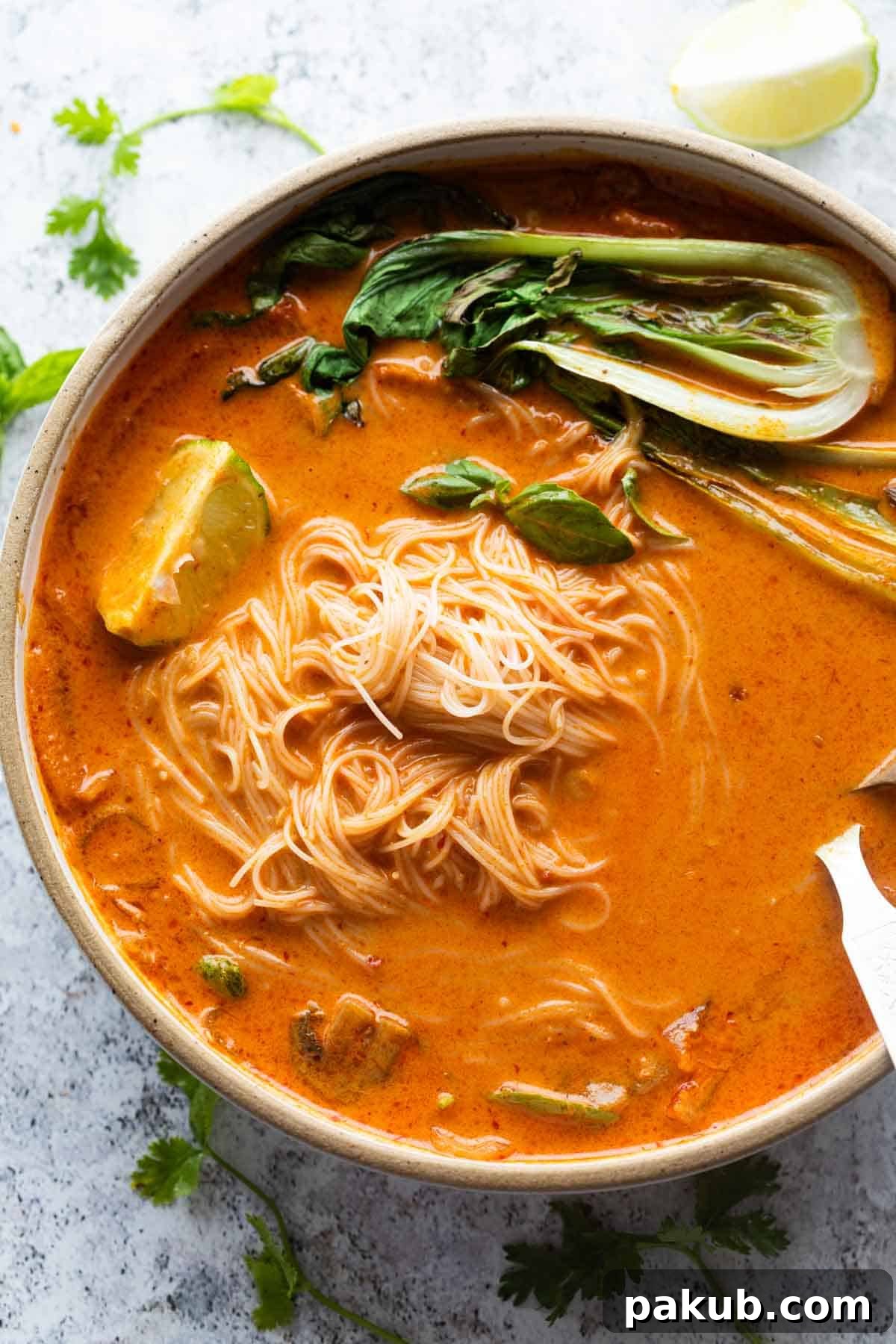
Imagine a bowl of pure comfort, brimming with warmth, vibrant flavors, and silky noodles. This Creamy and Fragrant Thai Curry Noodle Soup is not just a meal; it’s a deeply satisfying embrace that transports you to the bustling streets of Thailand with every single slurp!
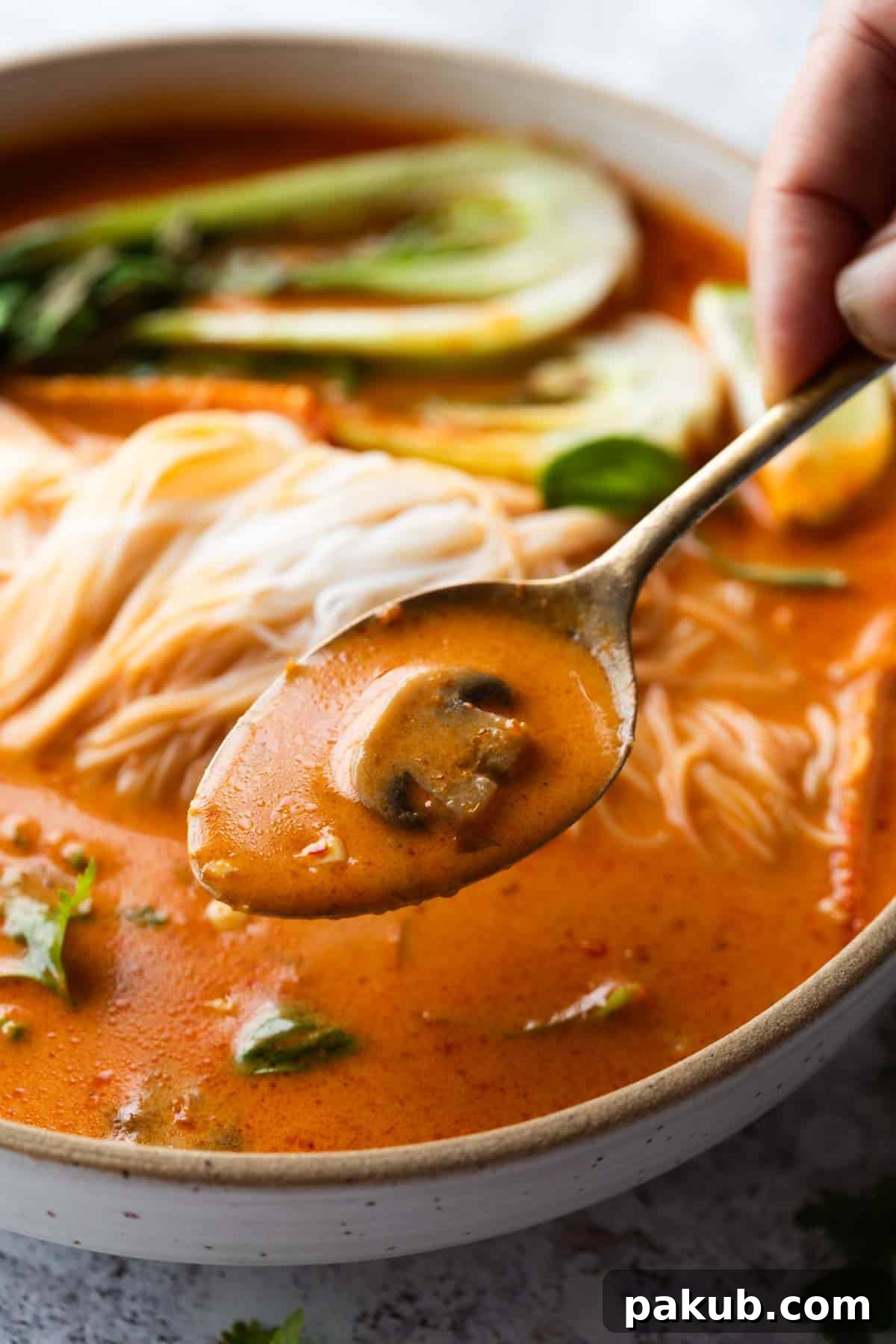
There are days when only a substantial, soul-warming bowl of noodle soup will do, and this Thai Curry Noodle Soup consistently delivers. Crafted with a luxurious coconut milk base, infused with the gentle warmth of authentic curry paste, and packed with an abundance of wholesome vegetables, it strikes the perfect balance between indulgent and nourishing. What makes it even better? This delightful dish comes together in your kitchen much faster than you might expect, making it an ideal choice for busy weeknights or when you simply crave something extraordinary without the fuss.
This recipe is truly a household favorite – a culinary escape I often turn to when I long for the sophisticated flavors of a restaurant-quality dish but yearn for the coziness of my own couch, wrapped in a blanket. It’s comforting, subtly spicy (with adjustable heat!), incredibly wholesome, and utterly slurp-worthy. Beyond its incredible taste, this Thai noodle soup is remarkably adaptable, allowing you to tailor it to your dietary preferences and available ingredients. Whether you’re a seasoned cook or just starting your culinary journey, you’ll find this recipe straightforward and deeply rewarding.
Jump to Section: Your Guide to Thai Curry Noodle Soup
- Why You Will Love This Thai Curry Noodle Soup
- Essential Thai Curry Soup Ingredients
- Mastering Your Thai Curry Noodle Soup: Top Tips
- Frequently Asked Questions About Thai Curry Soup
- Customization Ideas for Your Noodle Soup
- Storage and Reheating Tips
- Watch Thai Curry Soup Recipe Video
- Full Thai Curry Noodle Soup Recipe
Why You Will Love This Thai Curry Noodle Soup
This isn’t just another recipe; it’s an experience waiting to happen in your kitchen. Here’s why this Thai Curry Noodle Soup will quickly become a cherished part of your meal rotation:
- Unforgettable Flavor Profile: It masterfully blends the rich, creamy texture of coconut milk with the aromatic depth of Thai curry paste, balanced by savory notes and a hint of sweetness. Each spoonful is a symphony of sweet, spicy, sour, and umami.
- Incredibly Comforting: There’s something inherently soothing about a warm bowl of soup, especially one packed with tender noodles and fresh ingredients. It’s the perfect antidote to a chilly day or a long, stressful week.
- Quick & Easy Preparation: Don’t let the complex flavors fool you; this soup comes together surprisingly fast. With minimal prep and cook time, you can have a gourmet-tasting meal on the table in under 30 minutes.
- Nutrient-Rich: Loaded with a colorful array of vegetables like bell peppers, carrots, baby corn, mushrooms, and bok choy, this soup is a fantastic way to boost your daily nutrient intake.
- Highly Customizable: This recipe is a canvas for your culinary creativity. Easily adjust the spice level, swap vegetables, or add your favorite protein to make it uniquely yours. It’s naturally vegetarian and can be made vegan with a simple substitution.
- Meal Prep Friendly: The broth can be made ahead of time and stored, making future weeknight dinners a breeze. Just cook the noodles and add fresh bok choy when ready to serve.
- Restaurant Quality at Home: Impress your family and friends with a dish that tastes like it came straight from your favorite Thai eatery, all from the comfort of your own home kitchen.
Essential Thai Curry Soup Ingredients
Crafting the perfect Thai Curry Noodle Soup begins with understanding the core ingredients and how they contribute to its overall harmony. Here’s a deeper look into what makes this soup truly special:
- Thai Red Curry Paste: The Heart of the Dish
This is the absolute hero ingredient, delivering the iconic flavor and a gentle heat that defines Thai curry. For convenience and consistent results, I recommend using a high-quality store-bought red Thai curry paste. Look for brands with natural ingredients and a good spice level. If you prefer a homemade paste, that’s even better, but the store-bought option makes this recipe incredibly quick. Ensure it’s fresh for the best aroma and potency. - Aromatics: The Flavor Foundation
Finely chopped shallots and garlic are crucial for building a rich, fragrant base. When sautéed, they release irresistible aromas that lay the groundwork for the complex flavors of the soup. Don’t skimp on these; they are fundamental to Thai cuisine. - Coconut Oil (or Neutral Oil): Subtle Depth
Coconut oil adds a lovely, subtle nutty depth that complements the coconut milk beautifully. However, if you don’t have it on hand or prefer a lighter flavor, any neutral-flavored cooking oil like canola, vegetable, or grapeseed oil will work perfectly. - Fresh Vegetables: Texture, Flavor, and Nutrition
A colorful medley of red capsicum (bell pepper), crisp carrots, sweet baby corn, earthy mushrooms, and tender bok choy adds both flavor and essential nutrients. These vegetables provide a delightful textural contrast against the creamy broth and soft noodles. They also boost the visual appeal, making your bowl even more inviting. Feel free to vary these based on seasonal availability and personal preference. - Umami-Rich Sauces: Elevating the Flavor
Soy sauce and fish sauce are indispensable for introducing a profound umami depth that elevates this Thai curry soup to an entirely new level. Fish sauce, in particular, offers a unique savory complexity that is characteristic of authentic Thai dishes. If you’re aiming for a vegetarian or vegan version, a good quality soy sauce combined with a touch of rice vinegar or a vegan fish sauce substitute can achieve similar results. - Jaggery (or Brown Sugar): Balancing Sweetness
Just a small pinch of jaggery (unrefined cane sugar) is essential to balance out the spice from the curry paste and the saltiness from the sauces. It rounds out the flavors, creating a harmonious and well-balanced broth without making the soup overly sweet. Brown sugar can be used as a substitute. - Full-Fat Coconut Milk: The Creamy Heart
This ingredient is what makes the soup incredibly rich, creamy, and hearty. Always opt for full-fat coconut milk to achieve that luscious texture and full-bodied flavor. Light coconut milk tends to be watery and will dilute the intensity of your soup. - Rice Noodles: The Perfect Vessel
Light and tender rice noodles are the ideal addition to make this dish a complete and satisfying meal. They absorb the delicious broth wonderfully. While rice noodles are traditional, you can easily substitute them with any noodles of your choice, such as udon, vermicelli, soba, or even linguine, depending on your preference. - Water: Adjusting Consistency
Used to thin the soup to your desired consistency and to cook the vegetables. - Fresh Coriander Leaves: Garnish and Freshness
A generous sprinkle of fresh coriander (cilantro) leaves as a garnish adds a burst of freshness and a vibrant herbal finishing touch that brightens the entire dish. - Thai Red Chillies (Optional): For an Extra Kick
For those who crave an extra fiery punch, thinly sliced fresh Thai red chillies can be added at the end, either directly into the soup or as a tableside garnish. Adjust to your heat tolerance!
Mastering Your Thai Curry Noodle Soup: Top Tips
Follow these expert tips to ensure your Thai Curry Noodle Soup turns out perfectly every time, bursting with flavor and the ideal texture:
- Don’t Overcook the Veggies: Maintain That Perfect Crunch!
The key to vibrant, delicious vegetables in your soup is to cook them quickly over high heat. This method ensures they become tender-crisp, retaining their natural texture and bright color. Overcooking will lead to soggy, dull vegetables that detract from the overall experience. Aim for a slight bite; they will continue to soften slightly in the warm broth. - Always Use Full-Fat Coconut Milk for Optimal Creaminess:
For the most luxurious, rich, and creamy texture that Thai curries are famous for, full-fat coconut milk is non-negotiable. Light coconut milk contains more water, which will thin out your broth and significantly diminish its flavor and silky mouthfeel. Shake the can well before opening to ensure the cream and liquid are fully combined. - Soak Noodles Separately: Preserve a Silky Broth:
To prevent your beautiful curry broth from becoming starchy and cloudy, always cook or soak your noodles separately in boiling water according to package directions. Once cooked, drain them thoroughly and add them directly to individual serving bowls just before ladling in the hot soup. This keeps your broth clear, vibrant, and perfectly silken. - Lightly Char the Bok Choy for Enhanced Flavor:
Before adding the bok choy to your soup, quickly sear or fry it lightly in a separate pan with a tiny bit of oil. This caramelization creates a subtle char and develops a deeper, more complex flavor that elevates the greens beyond simply being boiled. It also maintains a pleasant crispness. - Boost Heartiness with Your Protein of Choice:
While delicious on its own, this soup is incredibly versatile for adding protein. Consider poached chicken breast, pan-fried tofu cubes (for a vegetarian/vegan option), succulent shrimp, or even cubes of paneer. Add your chosen protein during the last few minutes of cooking the soup, ensuring it’s heated through but not overcooked. - Excellent for Meal Prep: Make Ahead for Easy Weeknights:
This dish is a fantastic candidate for meal prepping. The curry soup base (without noodles or bok choy) can be made in a large batch and stored. It’s both fridge-friendly and freezer-friendly, allowing you to enjoy quick and easy weeknight meals without sacrificing flavor or quality. (Refer to the storage instructions below for best practices).
Frequently Asked Questions About Thai Curry Soup
While I love the light and delicate texture of rice noodles in this dish, their versatility makes them a fantastic choice. However, feel free to experiment with other varieties! Hakka noodles offer a slightly chewier bite, udon noodles are wonderfully thick and satisfying, vermicelli noodles are extra thin and absorb the broth beautifully, soba noodles add an earthy, nutty flavor, and even pad Thai noodles work incredibly well. Choose whatever you enjoy most or have on hand!
If you’re preparing a vegetarian or vegan version of this soup, or simply don’t have fish sauce, you have a few excellent alternatives. The best substitute is a combination of soy sauce and a splash of rice vinegar; this blend effectively mimics the savory and slightly tangy notes. Another option is oyster sauce, which offers a similar umami depth, though it will introduce a slightly different flavor profile. The soup will still be absolutely delicious!
Absolutely! This recipe is incredibly adaptable. Swapping red Thai curry paste for green Thai curry paste will create a different but equally delicious flavor profile, often slightly spicier and more herbaceous. The cooking method and other ingredients remain the same, making it an easy switch for a fresh twist on this beloved soup.
The spice level can be easily adjusted to your preference. Most store-bought red Thai curry pastes have a medium heat level, but you can find mild or hot varieties. If you prefer it milder, use less curry paste. For more heat, add extra curry paste, a pinch of red pepper flakes, or fresh sliced Thai red chilies when serving. Taste and adjust!
Customization Ideas for Your Noodle Soup
One of the best aspects of this Thai Curry Noodle Soup is its incredible flexibility. Don’t hesitate to make it your own with these delicious customization ideas:
- Add Your Favorite Protein: For an even more substantial meal, incorporate a protein of your choice. Pan-fried or baked tofu cubes are fantastic for a vegetarian or vegan option, adding a lovely texture. Succulent prawns (shrimp) cook quickly and absorb the curry flavors beautifully. Shredded poached chicken breast is another excellent addition, making the soup wonderfully hearty.
- Vary the Vegetables: This recipe is a perfect way to use up whatever fresh vegetables you have in your fridge. Consider adding florets of broccoli, slices of zucchini, vibrant snap peas, snow peas, bamboo shoots, or even thinly sliced cabbage. Just remember to add them at appropriate times during cooking to ensure they are tender-crisp and not overcooked.
- Adjust the Spice Level: Thai curry paste comes in various heat levels, from mild to fiery hot. Start with the recommended amount and then taste before adding more if you desire extra kick. If you prefer it very mild, use a little less paste. For chili lovers, a few extra slices of fresh Thai red chilies or a dash of chili oil at serving time will elevate the heat.
- Make it Vegan: This recipe is naturally vegetarian, and transforming it into a fully vegan dish is incredibly simple. The only non-vegan ingredient is fish sauce. Simply omit it and replace it with an equal amount (or a little more) of good quality soy sauce or tamari (for a gluten-free option). You can also find vegan fish sauce alternatives in specialty stores.
- Experiment with Herbs: While coriander (cilantro) is classic, try garnishing with fresh Thai basil leaves for an additional layer of aromatic flavor. A squeeze of fresh lime juice just before serving brightens all the flavors beautifully.
Storage and Reheating Tips
This Thai Curry Noodle Soup is excellent for meal prep, and with proper storage, you can enjoy its deliciousness for days. Here’s how to keep it fresh and reheat it perfectly:
- Refrigerate the Soup Base: To maintain optimal flavor and prevent the noodles from becoming soggy, always store the curry soup base (without the cooked noodles or bok choy) separately in an airtight container. It will keep beautifully in the refrigerator for 2-3 days. Storing it in a sealed container also prevents the coconut milk from absorbing other odors from your fridge.
- Freezing the Broth: The rich and flavorful curry broth can be frozen for up to one month. Allow the soup to cool completely before transferring it to freezer-safe containers or bags. When thawing, you might notice that coconut milk sometimes separates; this is completely normal. A quick whisk while reheating on the stovetop will bring it back to its creamy consistency.
- Reheating Instructions: When you’re ready to enjoy your soup, gently warm the curry base on the stovetop over low to medium heat. Avoid high heat, as rapid boiling can cause the coconut milk to split. Once the broth is simmering gently, add freshly cooked (or reheated) noodles and the lightly seared bok choy directly to the bowl just before serving. This ensures that your noodles are perfectly tender and your bok choy retains its slight char and crispness.
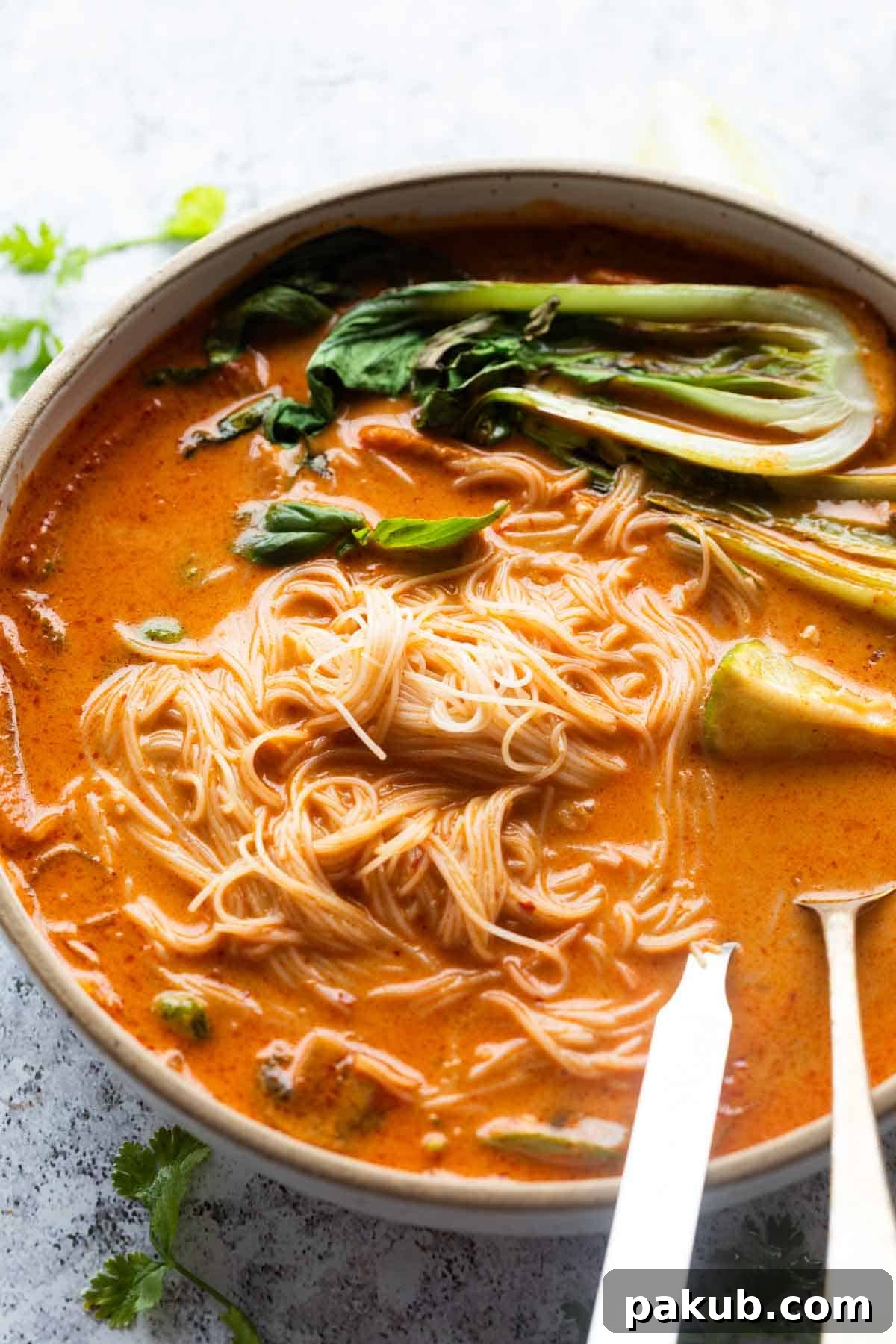
If you’re seeking a meal that effortlessly combines comfort, exotic flavor, and surprising ease, this Thai Curry Noodle Soup is your answer. It’s quick enough to whip up on a busy weeknight, yet special and impressive enough to serve when you have friends or family over. So go ahead, create this culinary masterpiece, slurp up every last drop, and let the warm, cozy, and utterly delicious vibes envelop you!
I absolutely love seeing your culinary creations! If you make this fantastic Thai Curry Noodle Soup at home, please don’t forget to share your photos and tag me in your DMs @my_foodstory on Instagram. Your feedback and recreations bring me so much joy!
Watch Thai Curry Soup Recipe Video
Full Thai Curry Noodle Soup Recipe
Thai Curry Noodle Soup
By: Richa
A big, slurpy, comforting bowl of noodle soup is all I crave on some days, and this creamy, fragrant, and bursting with flavors Thai Curry Noodle Soup hits the spot each time!
Cook: 7 mins
Total: 12 mins
Servings: 4 portions
Rate Recipe
Print Recipe
Ingredients
- 1 tablespoon coconut oil or any neutral cooking oil, divided
- 2 teaspoons finely chopped garlic
- 1 ½ tablespoons Thai curry paste
- 5-6 shallots, thinly sliced
- ½ red capsicum (bell pepper), cut into broad sticks
- ½ medium carrot, thinly sliced
- 5 baby corns, sliced into 4 pieces each
- 5 mushrooms, halved
- 1 ½ teaspoon soy sauce
- ½ teaspoon fish sauce
- 1 teaspoon jaggery (or brown sugar)
- 1 cup thick coconut milk
- 1 bok choy, sliced vertically into 2
- 100 grams rice noodles
- 5 cups water, divided
- 2 tablespoons of fresh coriander leaves, chopped
- 2 Thai red chillies, thinly sliced (for serving / optional)
Instructions
Making the Soup Base
- Heat 2 teaspoons of the coconut oil in a large pan or pot over high heat. Add the finely chopped garlic and sauté for a few seconds until fragrant. Be careful not to burn it.
- Reduce the heat to low, add the Thai curry paste, and sauté for about one minute, stirring constantly, to release its aromatic flavors.
- Add the thinly sliced shallots and continue to sauté for another minute until they soften slightly.
- Stir in the capsicum (bell pepper), carrot, baby corn, and mushrooms. Sauté for one minute on low heat to lightly cook the vegetables.
- Pour in 2 cups of water and cook on low heat for 2-3 minutes, just until the vegetables are tender-crisp. It’s crucial not to overcook them, as they will become soggy.
- Stir in the soy sauce, fish sauce, and jaggery (or brown sugar). Mix well until the jaggery dissolves.
- Finally, add the thick coconut milk and bring the soup to a gentle simmer. Do not boil vigorously to prevent the coconut milk from splitting. Taste and adjust seasonings if needed. Keep warm on low heat.
Cooking the Noodles
- Place the rice noodles in a heatproof bowl. Heat 2 cups of water until it comes to a rolling boil.
- Pour the boiling water over the noodles in the bowl. Let them soak for 1-2 minutes, or according to package directions, until they are tender.
- Immediately drain the cooked noodles thoroughly and set them aside.
Frying the Bok Choy
- Heat the remaining 1 teaspoon of coconut oil in a separate pan over medium heat.
- Add the vertically sliced bok choy and roast for approximately 2 minutes on each side, until it’s lightly browned and tender with a slight char.
- Remove the bok choy from the pan and set it aside on a plate.
Serving Your Delicious Curry Soup
- Ladle a generous amount of the hot Thai curry soup base into individual serving bowls.
- Add a portion of the drained rice noodles to each bowl.
- Arrange the lightly fried bok choy on top of the noodles and soup.
- Garnish generously with fresh coriander leaves and a few thin slices of Thai red chillies (if desired, for an extra spicy kick).
- Serve immediately and enjoy your comforting, flavorful Thai Curry Noodle Soup!
Recipe Video
Nutrition (per serving, approximate)
- Calories: 351 kcal
- Carbohydrates: 42g
- Protein: 8g
- Fat: 19g
- Saturated Fat: 16g
- Polyunsaturated Fat: 1g
- Monounsaturated Fat: 1g
- Sodium: 344mg
- Potassium: 991mg
- Fiber: 6g
- Sugar: 11g
- Vitamin A: 12084IU
- Vitamin C: 124mg
- Calcium: 272mg
- Iron: 4mg
This article has been meticulously researched and written by Urvi Dalal.