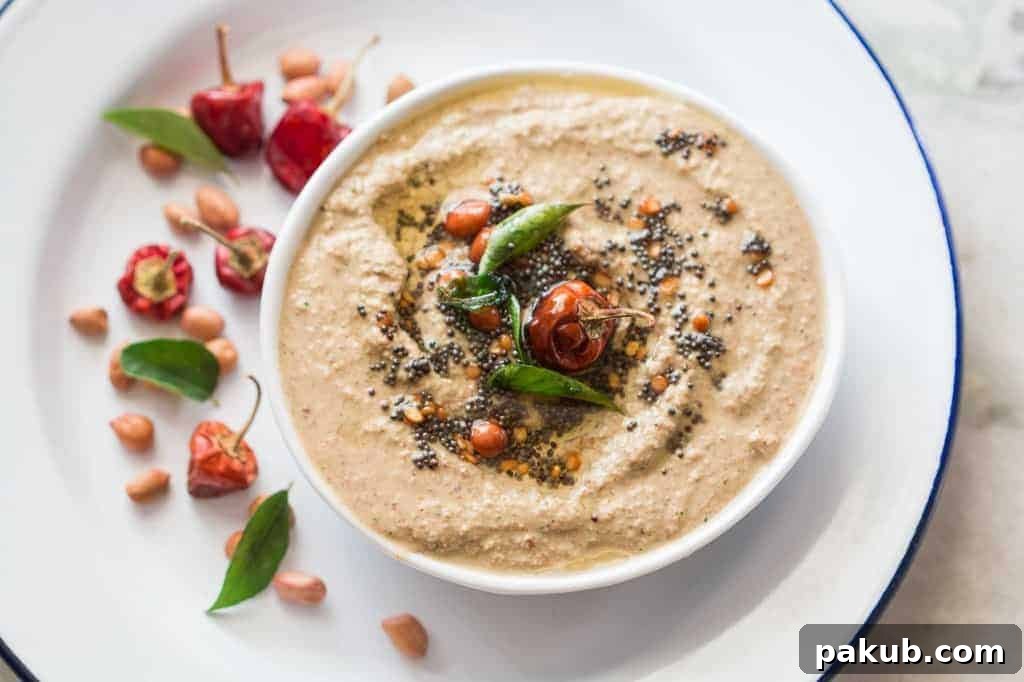
Introducing the ultimate game-changer for your South Indian breakfast spread: this Indian Style No Coconut Peanut Chutney! It’s a delightful twist on traditional condiments, offering a burst of authentic Indian flavors without relying on coconut. Its rich, creamy texture is absolutely perfect for scooping up with fluffy idlis, crispy dosas, and savory vadas, transforming your meal into an unforgettable experience.
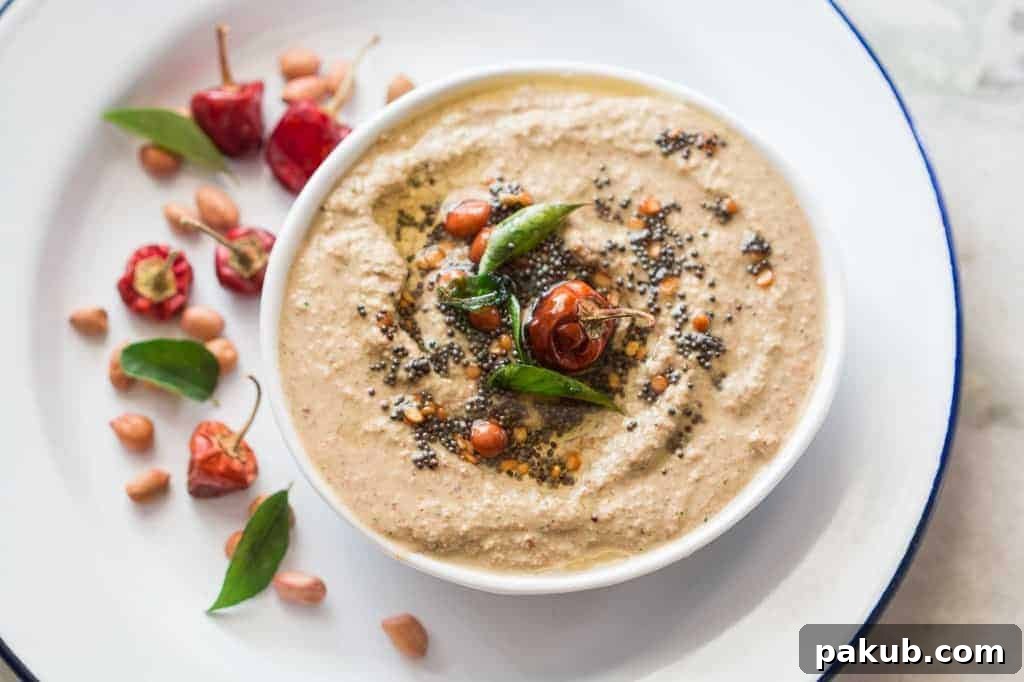
Picture this: you’re planning a cozy South Indian breakfast, perhaps craving some piping hot dosas or soft, steamed idlis. You rush to the store for ready-made batter, only to realize a crucial ingredient is missing from your pantry – coconut for the chutney! Fret not, because this Indian style no coconut peanut chutney is the hero you need. This ingenious recipe is designed to be your go-to solution, ensuring that your breakfast plans are never derailed by a missing ingredient. It’s incredibly quick to prepare, coming together with just a handful of everyday pantry staples, making it an ideal choice for those spontaneous cravings or busy mornings.
For many, this versatile peanut chutney has become a staple, often preferred over traditional coconut chutney due to its simplicity and robust flavor profile. It seamlessly complements any South Indian breakfast, adding a layer of creamy, nutty, and subtly spicy deliciousness that truly completes the meal. Its rich texture and balanced flavors are a testament to the brilliance of Indian culinary innovation, proving that sometimes, the simplest ingredients can create the most profound tastes.
Quick Walk Through: No Coconut Peanut Chutney
- Why You’ll Fall in Love with This Peanut Chutney
- Frequently Asked Questions About Peanut Chutney
- Expert Tips To Make The Best No Coconut Peanut Chutney
- More South Indian Delights
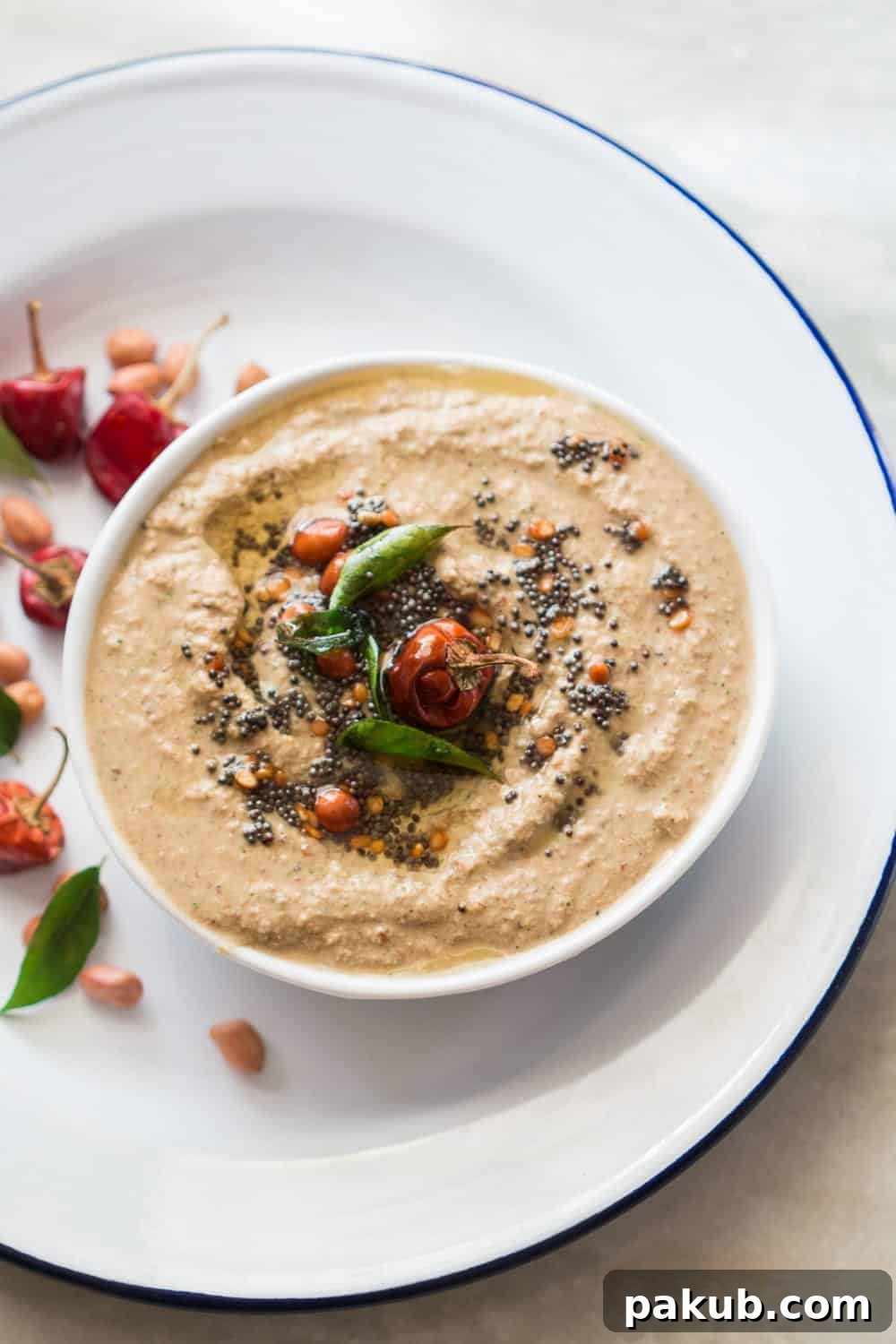
Why You’ll Fall in Love with This Peanut Chutney
- Exquisitely Delicious Indian Flavor: This chutney is a flavor powerhouse, perfectly balanced with savory, nutty, and a hint of spicy notes that will awaken your taste buds. It’s the ideal accompaniment, designed to elevate the taste of your favorite South Indian dishes like crispy dosas, soft idlis, and fluffy vadas, making every bite a truly satisfying experience.
- Made with Simple Pantry Staples, No Coconut Needed: One of the greatest advantages of this recipe is its simplicity. You won’t need to make a special trip to the grocery store for fresh coconut. All the ingredients, primarily peanuts and a few lentils, are readily available in most Indian or general grocery stores, ensuring you can whip this up anytime, anywhere.
- A Protein-Packed Powerhouse: Thanks to the generous inclusion of peanuts and various lentils (like urad dal and chana dal), this chutney isn’t just tasty; it’s also remarkably nutritious. It’s an excellent source of plant-based protein, providing a substantial boost that helps keep you feeling full and energized throughout the morning.
- Whip It Up in Under 15 Minutes: Life gets busy, and sometimes there’s no time for elaborate preparations. This peanut chutney understands that! From roasting the ingredients to grinding them into a smooth paste and adding the final tempering, the entire process takes a mere 15 minutes, making it perfect for impromptu cravings or last-minute meal additions.
- Naturally Vegetarian and Easily Vegan & Gluten-Free: Catering to various dietary preferences is effortless with this recipe. It is naturally vegetarian and gluten-free, suitable for a wide range of diets. To make it completely vegan, simply substitute the ghee (clarified butter) with your preferred neutral-tasting cooking oil, such as vegetable oil or canola oil, without compromising on flavor.
Frequently Asked Questions About Peanut Chutney
To maintain its freshness and flavor, store this delicious peanut chutney in an airtight container in the refrigerator. It will keep well for up to 4 days. I often prepare a larger batch because it pairs wonderfully with various South Indian dishes throughout the week, offering a quick and flavorful condiment whenever needed. Freezing is generally not recommended as peanuts can alter their texture and become mealy when thawed, affecting the chutney’s luscious consistency.
Absolutely! Peanut chutney can be a highly nutritious component of your daily diet. Peanuts are packed with fiber, protein, and beneficial monounsaturated fats, all of which contribute to a healthy lifestyle. The added lentils further boost its protein and fiber content. However, like many calorie-dense foods, peanuts are best consumed in moderation to balance their nutritional benefits with your overall caloric intake.
Yes, definitely! The spice level can be easily adjusted to suit your personal preference. For a milder chutney, you can reduce the number of green chilies or even remove them entirely. If you enjoy a spicier kick, feel free to add an extra green chili or a small piece of dried red chili during the roasting process. Taste and adjust as you go to find your perfect balance of heat.
Expert Tips To Make The Best No Coconut Peanut Chutney
- Always Use Fresh, High-Quality Peanuts: The foundation of an exceptional peanut chutney lies in the quality of its primary ingredient. Ensure you are using a fresh batch of raw, good quality dry peanuts. Older peanuts are prone to turning rancid, which can impart an unpleasant, stale flavor that will undeniably compromise the overall taste and creamy texture of your chutney.
- Don’t Skip the Chana Dal: This ingredient plays a crucial role in achieving the desired consistency and unique texture of the chutney. Chana dal (split and skinned Bengal gram) acts as a natural thickener, providing a lovely body and creamy mouthfeel that distinguishes this chutney. Its subtle earthy flavor also complements the peanuts beautifully.
- Adjust the Consistency to Your Liking: The beauty of homemade chutney is the ability to tailor it to your preference. If you prefer a smoother, more flowing chutney that’s easy to drizzle, simply increase the amount of water during the grinding process. For a thicker, coarser texture that offers more bite, reduce the amount of water, adding it sparingly until you reach your ideal consistency.
- Keep the Peanut Skins On for Extra Flavor and Fiber: While some recipes suggest removing the peanut skins, I highly recommend keeping them on for this chutney. The skins are rich in fiber and contribute significantly to the chutney’s robust, nutty flavor. They also impart a slightly darker, rustic appearance and enhance the overall health benefits of the dish.
- Achieve the Perfect Roasting for Deep Flavor: Roasting the peanuts and dals correctly is key to developing their full flavor potential. Ensure you roast them over a low to medium flame, stirring continuously, until they turn a light golden brown and release a fragrant aroma. Be careful not to burn them, as this can result in a bitter taste in your chutney.
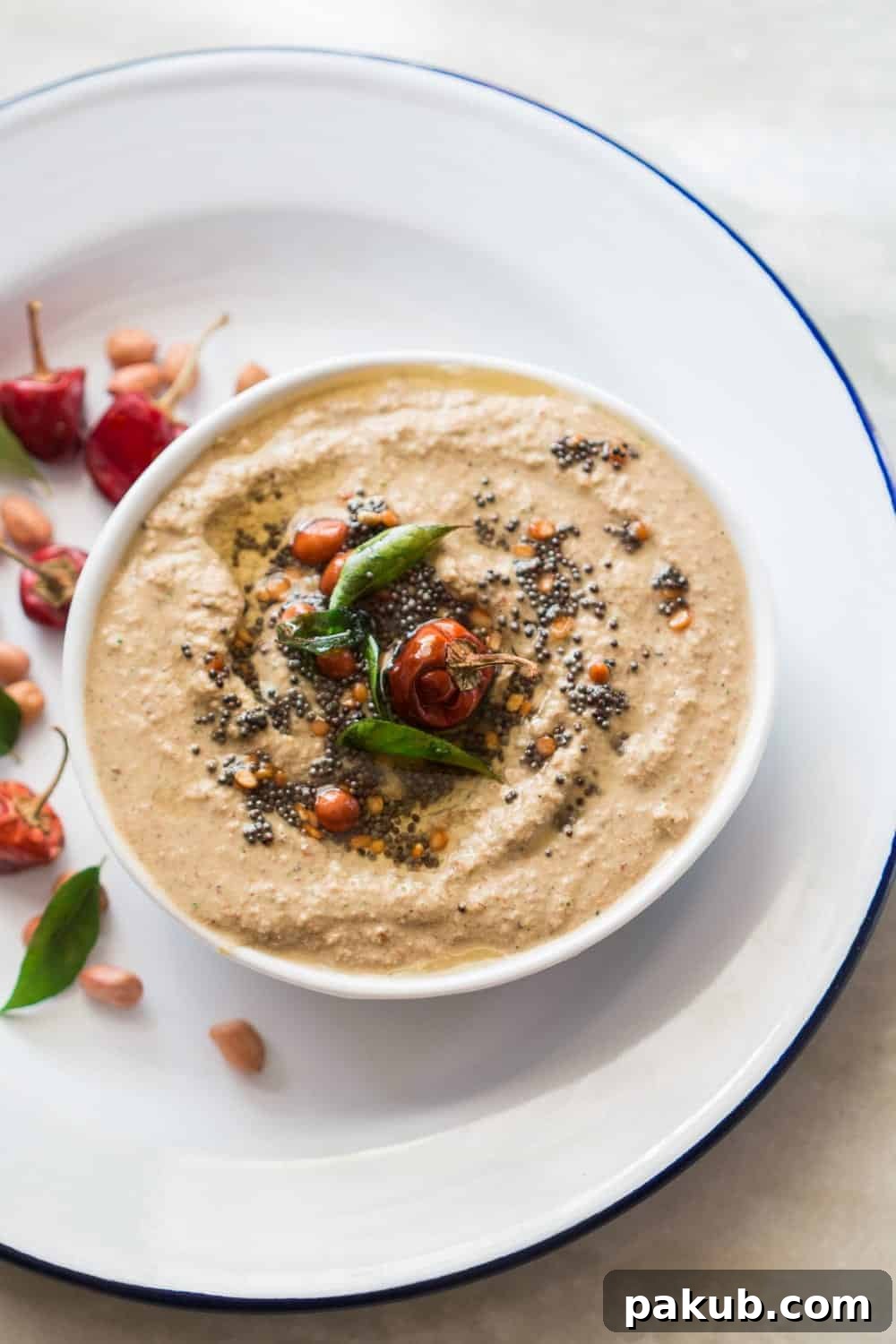
Quick, simple, utterly delicious, and incredibly versatile – that’s how I proudly describe this Indian Style No Coconut Peanut Chutney. This isn’t just a recipe; it’s a culinary revelation that promises to simplify your breakfast preparations while delivering exceptional flavor. Seriously, give this chutney a try just once, and I guarantee it will earn a permanent, cherished spot in your regular rotation for idlis, dosas, and all your favorite South Indian spreads. Its compelling taste and ease of preparation make it an indispensable condiment for any Indian food enthusiast.
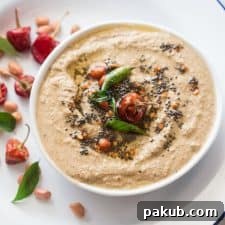
Indian Style No Coconut Peanut Chutney
Richa
5
10
15
1 cup (approx. 4-6 servings)
Rate Recipe
Print Recipe
Ingredients
- 1/2 teaspoon Ghee (or oil for vegan)
- 3/4 cup Peanuts
- 1 teaspoon Urad dal, Black gram skinned
- 2 tablespoons Chana dal, Bengal gram split and skinned
- Handful of fresh Curry leaves
- 1 Green Chilli (adjust to taste)
- 1/2 inch piece of Ginger
- Salt to taste
For tempering:
- 1 teaspoon Ghee (or oil for vegan)
- 1/2 teaspoon Mustard seeds
- 1/4 teaspoon Urad dal
- 1 sprig of fresh Curry leaves
- 1 – 2 dry Red chilies, broken
Instructions
-
In a medium-sized pan or skillet, heat 1/2 teaspoon of ghee (or oil if making it vegan) over a low flame. Once shimmering, add the peanuts. Roast them gently for about two to three minutes, stirring continuously, until they are lightly golden brown and fragrant. This step is crucial for bringing out their nutty flavor.
-
Next, add the urad dal and chana dal to the pan with the roasted peanuts. Continue to roast, stirring constantly, until both dals begin to turn a light brown color. Be careful not to let them burn. To this mixture, add the curry leaves and the green chili. Stir these ingredients for just about a minute to allow the flavors to meld, then immediately switch off the flame.
-
Allow the roasted ingredients to cool down completely to room temperature. Once cool, transfer them to a grinder or blender. Add the ginger, salt to taste, and a small amount of water. Grind until you achieve a smooth, luscious paste. Add water incrementally to reach your desired consistency – more water for a runnier chutney, less for a thicker one.
-
To prepare the tempering (tarka), heat 1 teaspoon of ghee (or oil) in a small skillet or tempering pan over medium heat. Add the mustard seeds. Once they start to splutter, add the urad dal, curry leaves, and the broken dry red chilies. Stir briefly until the urad dal turns golden and the curry leaves become crisp. As soon as the mustard seeds and urad dal finish spluttering, switch off the flame. Pour this aromatic tempering immediately over the prepared peanut chutney. Mix gently and serve your delicious chutney fresh.
Notes
- To make this recipe entirely vegan, a simple substitution is all it takes. Replace the ghee with a neutral-tasting vegetable oil, such as canola oil or sunflower oil. The flavor profile will remain robust and delicious.
- The consistency of your chutney is a matter of personal preference. For a smoother, more fluid consistency that’s ideal for dipping, incrementally add more water during the grinding process. If you prefer a thicker, coarser chutney with more texture, use less water and grind it to your desired coarse paste.
- Do not underestimate the importance of the roasted chana dal. This ingredient is not merely for flavor; it serves as an excellent natural thickener, providing body and substance to the chutney. Skipping it would result in a thinner, less satisfying texture.
- The calorie information provided below is an estimate for 10 individual servings of this chutney. Please note that exact nutritional values can vary based on ingredient brands and preparation methods.
Nutrition
Carbohydrates: 56g,
Protein: 38g,
Fat: 64g,
Saturated Fat: 13g,
Cholesterol: 19mg,
Sodium: 187mg,
Potassium: 1249mg,
Fiber: 23g,
Sugar: 10g,
Vitamin A: 1285IU,
Vitamin C: 219mg,
Calcium: 191mg,
Iron: 7mg
Like this recipe? Rate and comment below!
Your feedback helps others discover delicious meals.
More South Indian Delights to Explore
If you’ve enjoyed the bold and comforting flavors of this No Coconut Peanut Chutney, we highly recommend diving deeper into the rich tapestry of South Indian cuisine. These dishes represent just a glimpse of the diverse and delicious meals you can create, perfect for expanding your culinary repertoire:
- Oats Upma: A Wholesome & Quick Breakfast – A healthy and savory breakfast porridge made with oats, vegetables, and aromatic spices, offering a nutritious start to your day.
- Mangalorean Ripe Mango Curry: Sweet & Tangy Perfection – A unique and flavorful curry featuring the sweetness of ripe mangoes balanced with traditional Mangalorean spices, perfect with rice.
- Coconut Rice Stir Fry: Fragrant & Flavorful Side Dish – A simple yet incredibly aromatic rice dish infused with the richness of coconut, often served as a delightful accompaniment to various curries.
- Spicy Chettinad Pepper Chicken Fry/Roast: A Fiery Classic – A robust and intensely flavorful chicken dish from the Chettinad region, known for its liberal use of black pepper and other freshly ground spices, offering a truly unforgettable culinary experience.