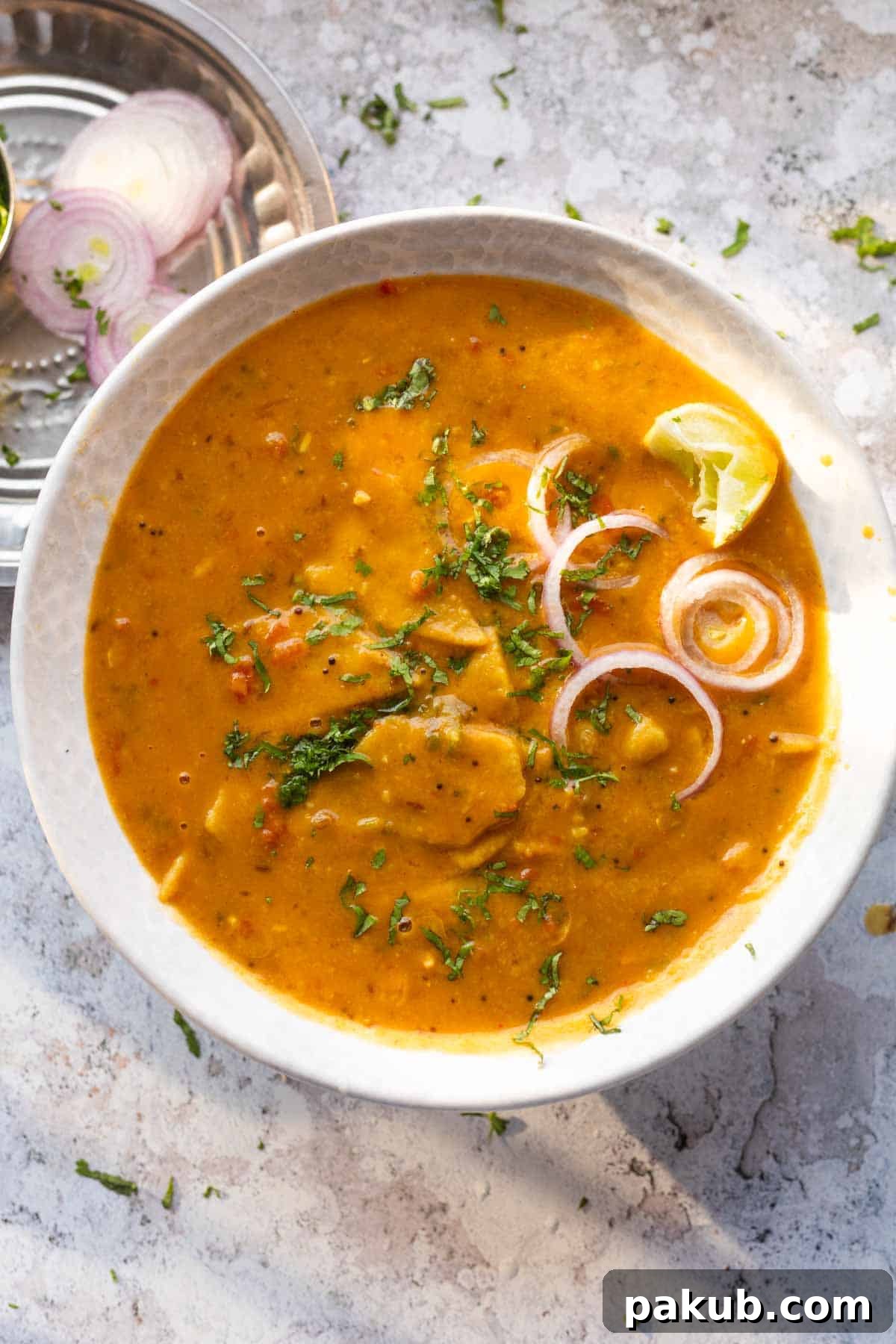
Craving a truly satisfying meal that feels complete without needing anything on the side? Look no further than this delightful Dal Dhokli recipe. This traditional Gujarati one-pot dish brings together tender wheat dumplings (dhoklis) lovingly simmered in a fragrant, gently spiced lentil (dal) stew, creating a dish that is both incredibly filling and deeply comforting.
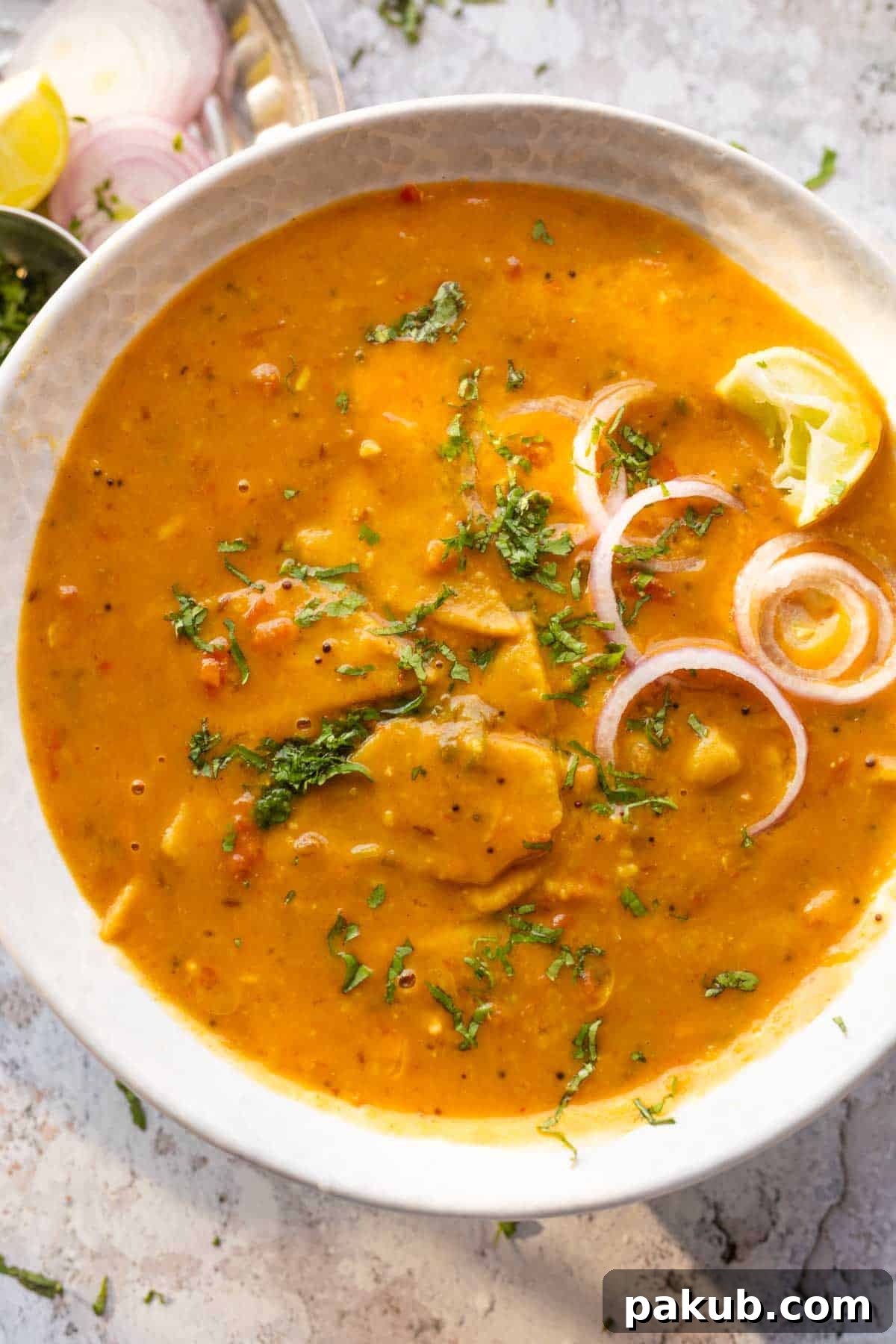
Authentic Gujarati Dal Dhokli Recipe: A Wholesome One-Pot Indian Meal
In countless Gujarati households, Dal Dhokli holds a special place, often served as a cherished complete meal rather than just one component of a larger spread. It’s a beloved staple for everyday cooking, especially when you desire a dish that offers both rich sustenance and exquisite flavor without the fuss of preparing multiple courses. Its balanced profile of protein, complex carbohydrates, and subtle, vibrant spices makes it a perfect choice for a hassle-free, nourishing, and deeply satisfying experience.
If you’re fond of the heartwarming simplicity found in home-style Gujarati cuisine, like a soothing Kadhi or a wholesome Khichdi, then Dal Dhokli will resonate instantly with your palate. This recipe is designed to be straightforward, relying on readily available ingredients commonly found in most Indian pantries. It truly shines as a perfect candidate for either a satisfying lunch or a comforting dinner, promising a wholesome embrace in every single spoonful.
Table of Contents
- What is Dal Dhokli?
- Why You’ll Love This Recipe
- Essential Ingredients for Dal Dhokli
- How to Make Authentic Gujarati Dal Dhokli
- Expert Tips for Perfect Dal Dhokli
- Creative Customization Ideas
- Elevate Your Meal: Delicious Serving Ideas
- Storage and Reheating Tips
- Frequently Asked Questions
- Watch the Dal Dhokli Recipe Video
What is Dal Dhokli? A Culinary Journey to Gujarat
Dal Dhokli is a truly unique and deeply cherished one-pot dish originating from the vibrant and culturally rich state of Gujarat in Western India. At its very heart, it’s a harmonious and ingenious blend of two primary components: ‘Dal,’ which refers to a flavorful, spiced lentil stew, and ‘Dhokli,’ small, thin, hand-rolled wheat flour dumplings that are cooked directly within the dal. This traditional dish elegantly solves the common culinary dilemma of balancing a main course with an accompaniment by ingeniously incorporating the ‘roti’ or bread element directly into the dal itself, thereby transforming it into a self-contained, complete, and remarkably satisfying meal.
The dish is celebrated across Gujarat and beyond for its distinctive sweet, sour, and mildly spicy flavor profile, a hallmark of authentic Gujarati cuisine. This exquisite balance is achieved through the thoughtful inclusion of key ingredients like jaggery (for sweetness) and tamarind (for tanginess), which dance beautifully with a medley of aromatic spices. Beyond its delightful taste, Dal Dhokli stands as a testament to resourceful and flavorful cooking, designed to be both hearty and nourishing, making it a beloved comfort food for families and individuals alike.
Why You’ll Love This Authentic Dal Dhokli Recipe
This Dal Dhokli recipe isn’t just another meal; it’s an invitation to experience wholesome, satisfying Indian cooking that brings joy and comfort. Here’s why this particular recipe deserves a prominent spot in your kitchen and on your dining table:
- A Complete One-Pot Wonder: Forget the hassle of preparing multiple dishes. This recipe ingeniously combines protein-rich lentils with satisfying whole wheat dumplings in a single pot, creating a truly complete meal. It’s the ultimate answer to “what’s for dinner?” when you crave something nourishing, flavorful, and effortless.
- Nutritionally Balanced & Wholesome: Dal Dhokli is an exceptionally well-rounded dish. Toor dal provides essential plant-based protein and fiber, while the whole wheat dhoklis offer complex carbohydrates that digest slowly, keeping you feeling full, energized, and satisfied for extended periods. It’s a healthy and hearty option for any day of the week.
- Exquisite & Unique Flavor Profile: The culinary magic of Gujarat truly shines through in this dish. It masterfully balances sweet notes from jaggery, tanginess from tamarind, and warmth from a carefully selected array of savory spices. This creates a complex, irresistible flavor profile that is both profoundly comforting and refreshingly exciting, offering a delightful interplay of tastes in every spoonful.
- Simple, Accessible Ingredients: You won’t need to hunt for exotic or hard-to-find ingredients. This recipe utilizes staples commonly found in most Indian pantries, making it an approachable and convenient dish for home cooks of all skill levels.
- The Ultimate Comfort Food: There’s something incredibly soulful and heartwarming about a warm, steaming bowl of Dal Dhokli. It’s the kind of dish that provides instant comfort, perfect for a cozy evening, a chilly day, or whenever you need a culinary hug. The tender dhoklis and creamy, flavorful dal create a texture that is pure bliss.
- Highly Versatile & Customizable: While the traditional recipe is perfection on its own, Dal Dhokli offers ample room for personalization. Feel free to incorporate your favorite seasonal vegetables, adjust the spice levels to your preference, or tweak the sweet-sour balance to perfectly suit your individual taste buds.
- Flavors Deepen Over Time: One of the best qualities of Dal Dhokli is that it often tastes even better the next day as the ingredients have more time to meld and deepen. This makes it an excellent candidate for meal prepping.
This Dal Dhokli recipe is a reliable, satisfying, and incredibly nutritious option that will seamlessly integrate into your weekly meal rotation. Give it a try, and you might just discover your new favorite comfort food, a true gem of Indian cuisine!
Essential Ingredients for Crafting Your Perfect Dal Dhokli
Creating an authentic and truly delicious Dal Dhokli relies on a thoughtful selection of fresh, high-quality ingredients and a vibrant array of aromatic spices. Here’s a detailed breakdown of everything you’ll need, along with insights into their crucial role in developing the dish’s signature flavor:
- For the Dhokli Dough:
- Whole Wheat Flour (Atta): This forms the foundational base of the dhoklis, providing them with a wholesome, sturdy texture and a subtle, robust flavor. It’s essential for creating dhoklis that are tender yet firm enough to hold their shape beautifully within the simmering dal.
- Spices for Dhokli Dough: A carefully chosen blend of turmeric powder (for color and earthy notes), coriander powder, cumin powder (jeera powder), red chilli powder (for a gentle kick), and a touch of oil. These ingredients are not merely for seasoning; they subtly infuse the dough itself with flavor, ensuring the dhoklis have their own distinct and complementary taste, preventing them from being bland.
- Water: Used to bind the flour and spices together, forming a pliable, semi-soft dough that is easy to roll.
- For the Dal (Lentil Base):
- Toor Dal (Arhar Dal or Split Pigeon Peas): This is the indispensable cornerstone of the entire dish. Pressure cooked until exceptionally soft and then thoroughly mashed while still hot, it creates the characteristic thick, creamy, and profoundly comforting base of the dal. Its earthy, mild flavor is absolutely essential for the authentic taste of Dal Dhokli.
- Water: Used initially for cooking the dal to perfection and later for adjusting its final consistency to a hearty, soup-like texture.
- Turmeric Powder: A small amount is added both when cooking the dal and in the dhokli dough. It imparts a beautiful golden hue, provides warmth, and is known for its beneficial properties.
- For the Tempering (Tadka) & Flavor Base:
- Cooking Oil (or Ghee): This is the medium in which the whole spices and aromatics are fried. Using ghee (clarified butter) can significantly elevate the flavor profile, adding a luxurious, nutty richness to the dal.
- Whole Spices: A powerful aromatic mix including mustard seeds (rai), cumin seeds (jeera), fenugreek seeds (methi), a small piece of cinnamon (dalchini), whole cloves, and dried red chillies. This collection forms the essential tempering (tadka), building layers of warmth, earthiness, and a complex aroma that truly defines the dal.
- Asafoetida (Hing): A crucial ingredient in Indian cooking, especially with dals and lentil dishes. It aids digestion and provides a distinctly pungent, savory depth that enhances the overall flavor.
- Aromatics: Freshly crushed ginger, garlic, green chilli, and fragrant curry leaves. These are sautéed until their potent flavors and aromas are fully released, forming the savory core of the dal’s taste profile.
- Tomatoes: Finely chopped and cooked down until they become soft and slightly mushy. They contribute a mild, pleasant tanginess, add texture, and help balance the rich flavors of the dish.
- Ground Spice Powders: This includes ground coriander, cumin (jeera), turmeric, and Kashmiri red chilli powders, along with salt. These are vital for developing deep flavor, imparting a vibrant color, and ensuring proper seasoning. Kashmiri chilli powder is particularly valued for providing a beautiful red hue without excessive heat.
- Tamarind Pulp: Delivers a gentle, authentic tanginess that is a distinctive characteristic of traditional Gujarati cuisine. It brightens the dal and creates a wonderful contrast with the other sweet and savory elements.
- Jaggery: Just a small, carefully measured amount of this unrefined cane sugar is added. Its purpose is to introduce the subtle, signature Gujarati sweetness, which is not meant to make the dish overtly sweet but rather to round out, harmonize, and balance the complex sweet, sour, and spicy notes.
- Roasted Peanuts (Optional, but Recommended): Stirred in towards the end, these add a delightful crunch and a subtle nutty undertone, significantly enhancing the textural experience of the dish.
- Fresh Coriander Leaves: Used generously as a vibrant garnish just before serving, providing a burst of refreshing herbal flavor and a beautiful splash of color.
How to Make Authentic Gujarati Dal Dhokli
Follow these detailed, step-by-step instructions to create a truly authentic and delicious Dal Dhokli in your own kitchen:
Part 1: Preparing the Dhokli Dough (Yields approximately 45 dhoklis)
- Prepare the Dough: In a spacious mixing bowl, combine ½ cup whole wheat flour (atta), a pinch of turmeric powder, ½ teaspoon coriander powder, ¼ teaspoon red chilli powder, ¼ teaspoon salt, and 1 teaspoon oil. Mix these dry ingredients thoroughly with your fingertips until well combined.
- Knead the Dough: Gradually add 2-3 tablespoons of water, kneading to form a semi-soft, smooth dough. The consistency should be pliable, similar to that of a chapati dough – firm enough to roll but not too stiff. Adjust water quantity as needed.
- Rest the Dough: Cover the prepared dough with a damp cloth and let it rest at room temperature for 10-15 minutes. This resting period is crucial as it allows the gluten in the whole wheat flour to relax, making the dough much easier to roll thinly and preventing the dhoklis from shrinking back excessively once cut.
- Divide and Roll: Divide the rested dough into three equal portions and gently form them into smooth, round balls. Take one dough ball, lightly dust it with dry flour, and roll it out into a large, thin disc, similar to a chapati or roti. Ensure it’s rolled evenly – neither paper-thin, which can make them disintegrate, nor overly thick, which can result in undercooked centers.
- Cut the Dhoklis: Using a sharp knife or a pizza cutter, carefully cut the rolled-out chapati into your desired shapes – traditional options include small squares, diamonds, or thin strips.
- Prevent Drying: Place the cut dhoklis on a plate and keep them covered with a damp cloth to prevent them from drying out while you prepare the remaining dough portions. Repeat the rolling and cutting process for the other two dough balls.
Part 2: Cooking the Dal (Lentil Base)
- Wash and Soak Dal: Begin by thoroughly washing ½ cup of toor dal (split pigeon peas) under running water until the water runs clear. Soak the washed dal in fresh water for approximately 30 minutes. This step aids in faster and more even cooking.
- Pressure Cook Dal: Drain the soaked dal and transfer it to a pressure cooker. Add 1½ cups of fresh water and ¼ teaspoon of turmeric powder. Secure the lid and cook the dal for 3-4 whistles, or for about 10 minutes, until it’s exceptionally soft and tender. Allow the pressure to release naturally before carefully opening the lid.
- Mash the Dal: While the dal is still piping hot, mash it well with a spoon, a whisk, or a hand blender until it reaches a smooth, consistent texture, free of any lumps. This ensures a creamy base for your Dal Dhokli. Set the mashed dal aside.
Part 3: Assembling the Dal Dhokli
- Prepare the Tempering (Tadka): Heat 1½ tablespoons of cooking oil (or ghee for an even richer flavor) in a large kadai (wok) or a deep, heavy-bottomed pan over medium heat.
- Sauté Whole Spices: Once the oil is hot, add the whole spices: ½ teaspoon mustard seeds, ½ teaspoon cumin seeds, ¼ teaspoon fenugreek seeds, a ½-inch piece of cinnamon stick (dalchini), 4 whole cloves, and 2 whole dry red chillies. Sauté for a few seconds until the mustard seeds begin to splutter vigorously and the cumin seeds turn golden brown, releasing their fragrant aroma.
- Add Aromatics: Immediately add ½ teaspoon asafoetida (hing), 1 crushed green chilli, 1 teaspoon crushed ginger, 6-7 crushed garlic cloves, and 15-20 fresh curry leaves. Sauté for about a minute, stirring constantly, until the aromatics are fragrant and lightly golden.
- Cook Tomatoes and Ground Spices: Add ½ cup of finely chopped tomatoes to the pan. Stir well and cook over medium flame for 2-3 minutes, pressing down occasionally with your spoon, until the tomatoes soften and become slightly mushy. Now, add the powdered spices: ½ teaspoon coriander powder, ¼ teaspoon cumin powder (jeera powder), ⅛ teaspoon turmeric powder, 1 teaspoon Kashmiri red chilli powder, and ¾ teaspoon salt. Mix everything thoroughly and cook for another minute, allowing the spices to toast gently and combine well with the tomatoes and aromatics.
- Combine with Dal: Pour the mashed cooked dal into the pan with the tempered spices and tomatoes. Add an additional 2½ to 3 cups of water to adjust the consistency to your liking (it should resemble a thick, hearty soup).
- Add Sweet & Sour Notes: Stir in 1 tablespoon of tamarind pulp and 1 teaspoon of jaggery (or adjust to taste for your preferred balance of sweet and sour). Mix everything well to ensure these key Gujarati flavors are fully incorporated. Bring the dal mixture to a gentle boil.
- Add Dhoklis and Simmer: Once the dal is gently boiling, carefully add the prepared dhoklis one by one, ensuring they don’t clump together. Stir gently once or twice immediately after adding. Reduce the heat to low and let the Dal Dhokli simmer uncovered for 12-14 minutes, or until the dhoklis are fully cooked, tender, and have swollen slightly. Stir very gently 2-3 times during this simmering period to prevent the dal from sticking to the bottom of the pan.
- Adjust Consistency (if needed): If the dal thickens too much during cooking, you may add an additional ¼ to ½ cup of hot water to achieve a desirable soup-like consistency.
- Garnish and Serve: Finally, stir in 2 tablespoons of roasted peanuts (if using) for added crunch and flavor. Garnish generously with 1 tablespoon of freshly chopped coriander leaves.
- Serve your homemade, authentic Gujarati Dal Dhokli hot and savor every comforting spoonful!
Expert Tips for Crafting the Perfect Dal Dhokli
Achieving the ideal Dal Dhokli is all about mastering a few key techniques and paying attention to subtle details. Here are some expert tips to ensure your dish turns out beautifully, bursting with flavor and perfect texture, every single time:
- Adequate Dough Resting is Crucial: Never skip the 10-15 minute resting period for your dhokli dough. This seemingly small step is vital because it allows the gluten in the whole wheat flour to relax. A well-rested dough becomes significantly easier to roll thinly without resistance and, more importantly, prevents the dhoklis from shrinking back excessively or becoming tough once cut and cooked. Tender, pliable dhoklis are the goal!
- Roll Dhoklis to the Right Thickness: The thickness of your dhoklis directly impacts their texture in the final dish. Aim for an even, medium thickness – they should be neither paper-thin (which can cause them to disintegrate into the dal) nor too thick (which can result in undercooked, doughy centers). An even, consistent thickness ensures they cook through perfectly and maintain a pleasant, firm-yet-tender chew.
- Mash the Dal While Hot for Smoothness: This is a non-negotiable tip for a silky-smooth dal base. Always mash your pressure-cooked toor dal immediately after opening the cooker lid, while it’s still piping hot. Hot dal mashes much more easily and thoroughly into a smooth, cohesive consistency, effectively preventing any undesirable lumps in your final dish.
- Introduce Dhoklis to Gently Boiling Dal: It’s imperative that the dal is at a steady, gentle boil before you carefully introduce the raw dhoklis. Adding them to cold or even lukewarm dal can cause them to clump together, stick to the bottom of the pot, or cook unevenly. The boiling action helps them separate, cook uniformly, and prevents them from becoming a sticky mass.
- Keep Rolled Dhoklis Covered: After you’ve rolled and cut your dhoklis, it’s important to keep them covered with a damp kitchen towel until you’re ready to add them to the dal. This simple step prevents them from drying out and becoming brittle, which can make them difficult to handle and less pleasant once cooked.
- Stir Gently and Sparingly: Once the dhoklis are simmering in the dal, stir very gently and only sparingly (2-3 times during the entire simmering process). The dhoklis are delicate when cooking, and over-stirring can cause them to break apart, compromising the texture of your dish.
- Adjust Dal Consistency to Taste: Authentic Dal Dhokli typically has a rich, thick, soup-like consistency. As it simmers, the dhoklis will absorb liquid and the dal will naturally thicken. If you find it becomes too thick for your liking, don’t hesitate to add a splash of hot water (not cold, to maintain the boil) to achieve your desired texture.
- Master the Sweet-Sour-Spicy Balance: Gujarati cuisine is renowned for its delicate interplay of sweet, sour, and spicy flavors. Taste your dal before adding the tamarind and jaggery, then add them gradually, adjusting to your personal preference. Some prefer a slightly sweeter profile, while others lean towards a tangier kick.
Creative Customization Ideas for Your Dal Dhokli
While the traditional Dal Dhokli recipe is a masterpiece in its own right, it also offers a wonderful canvas for culinary creativity. Don’t be afraid to experiment and personalize your dish to perfectly suit your taste preferences. Here are some delightful ideas to customize your Dal Dhokli and make it uniquely yours:
- Enrich with Ghee for Deeper Flavor: For a richer, more profound flavor and an incredible aroma, consider substituting cooking oil with pure ghee (clarified butter) for the tempering (tadka). Ghee adds an unparalleled nutty depth that beautifully complements the dal and elevates the entire dish.
- Introduce Wholesome Vegetables: Make your Dal Dhokli even more nutritious and satisfying by adding your favorite vegetables. Diced bottle gourd (dudhi/lauki), carrots, green peas, or a handful of fresh spinach leaves work exceptionally well. Add them to the dal along with the chopped tomatoes or just before the dhoklis, ensuring they have enough time to cook through properly without altering the dhoklis’ texture.
- Boost the Nutty Crunch: For an added layer of texture and a delightful nutty undertone, stir in a small handful of roasted peanuts (as suggested in the recipe) or even lightly toasted cashews towards the end of the cooking process. This provides a wonderful contrast to the soft dhoklis.
- Add Sesame Seeds to the Tadka: A pinch of white sesame seeds, added to the tempering alongside the mustard and cumin seeds, provides a subtle nuttiness and a pleasant, delicate crunch. This addition works particularly well with the characteristic sweet and sour notes of the dal.
- Extra Garlic Kick for Garlic Lovers: If you’re a true garlic enthusiast, lightly fry a few extra sliced garlic cloves separately in a spoonful of ghee until they turn golden brown and crispy. Spoon these aromatic garlic chips over the Dal Dhokli just before serving for an irresistible boost of garlicky flavor and a delightful textural element.
- Spicier Dhoklis: For those who prefer a bit more heat, you can subtly increase the amount of red chilli powder in the dhokli dough. Alternatively, finely chop a small green chilli and mix it directly into the dough mixture for a fresh, spicy kick.
- Incorporate Leafy Greens: Beyond spinach, consider adding other finely chopped leafy greens such as fresh fenugreek leaves (methi) or dill leaves (suva) to the dal during the cooking process. These add an extra layer of unique flavor and a nutritional boost.
- Adjust Sweetness Levels: Gujarati cuisine is renowned for its delicate balance of sweet and sour. Feel free to adjust the amount of jaggery (or sugar, if preferred) to perfectly match your personal preference for sweetness in the dish.
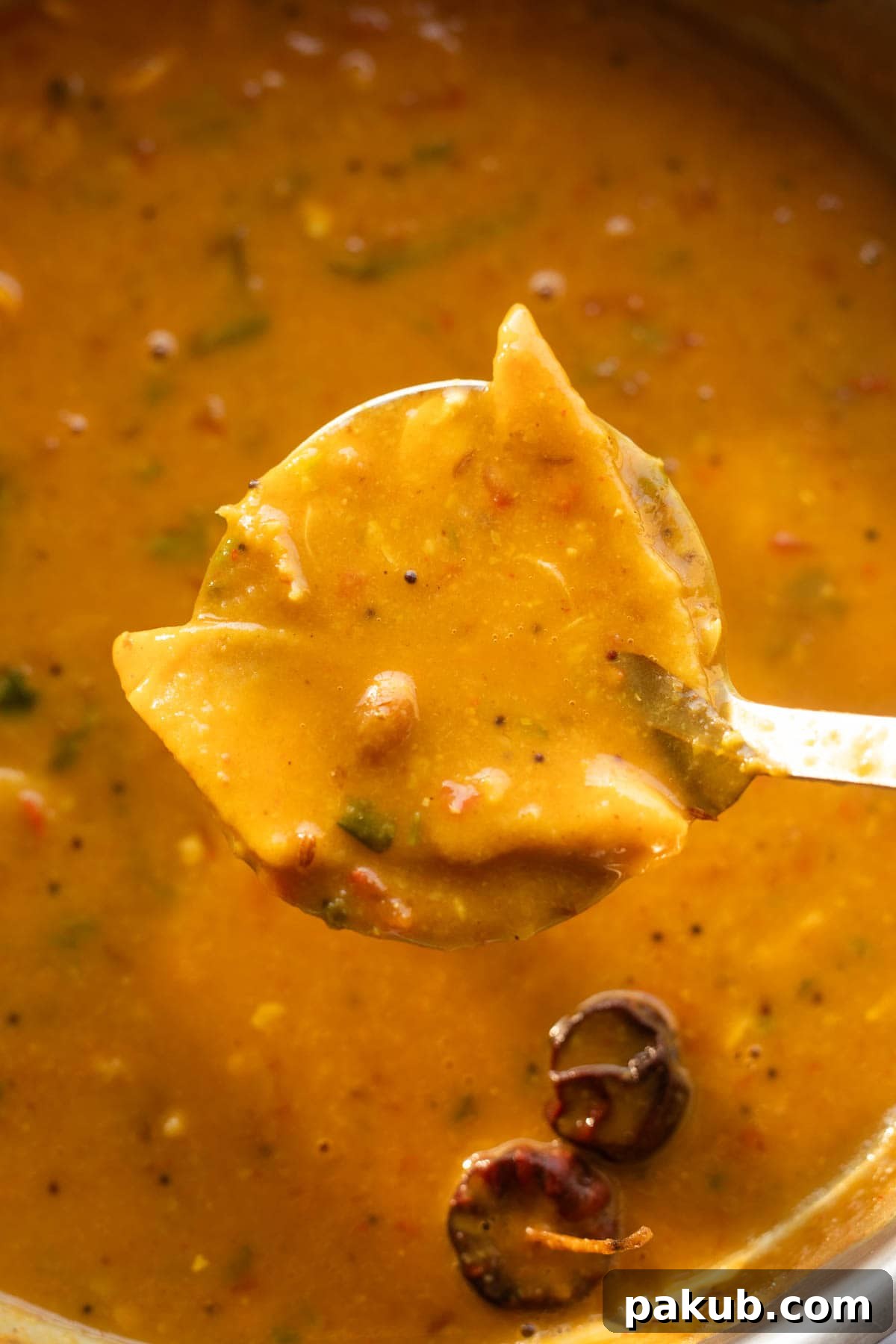
Elevate Your Meal: Delicious Serving Ideas for Dal Dhokli
Dal Dhokli is undeniably a hearty and fulfilling meal on its own, expertly designed to satisfy completely. However, a few simple additions can beautifully complement its complex sweet, sour, and spicy flavors and tender textures, rounding out your dining experience without ever overpowering the star of the dish. Here are some delightful combinations to elevate your Dal Dhokli meal:
- With Cooling Cucumber Raita: A refreshing side of plain cucumber raita or boondi raita offers a perfect cool and creamy contrast to the warm, spiced dal. The yogurt-based raita beautifully balances the slight sweetness and gentle spiciness of the Dal Dhokli, providing a soothing counterpoint. Try this homemade Cucumber Raita recipe for a perfect pairing!
- Alongside a Fresh Kachumber Salad: For a vibrant burst of freshness and a delightful crunch, serve your Dal Dhokli with a simple, classic Kachumber salad. This popular Indian salad, typically made with finely chopped fresh onions, tomatoes, and cucumbers dressed with a squeeze of lemon juice and a pinch of salt, adds a wonderfully light and tangy element to the meal. Explore other refreshing salads, like this Asian Cucumber Salad, for more inspiration.
- Pair with Refreshing Chaas (Buttermilk): A tall glass of lightly spiced Chaas on the side makes the meal feel utterly complete, especially on warmer days. This traditional Indian buttermilk drink not only aids digestion but also beautifully cuts through the richness of the dal, leaving you feeling refreshed and light. Discover various delicious Chaas recipes here to find your favorite!
- Crunchy Papad: Roasted or fried papad (thin, crisp lentil wafers) provides that much-needed crunch and textural contrast to the soft dhoklis and creamy dal. Crushing a piece of papad over your bowl just before eating adds a wonderfully satisfying element to every bite.
- A Squeeze of Fresh Lemon or Lime: This simple addition is often overlooked but truly transforms the dish. Always serve Dal Dhokli with fresh lemon or lime wedges. A generous squeeze of citrus just before eating brightens all the flavors, adds a zesty finish, and enhances the overall aromatic profile.
- A Side of Pickle and Chutney: For those who love an extra layer of complexity and a burst of concentrated flavor, a small serving of your favorite Indian mango pickle, lime pickle, or a tangy green chutney can elevate the meal with an additional spicy or sour dimension.
Storage and Reheating Tips for Dal Dhokli
Dal Dhokli is one of those wonderful dishes that often tastes even better the next day, as the flavors have more time to meld and deepen. Here’s how to properly store and reheat your leftovers to enjoy them at their best:
- Refrigeration: Store any leftover Dal Dhokli in an airtight container and place it in the refrigerator. It will keep well for up to 2 days. It’s important to note that it’s completely normal for the dish to thicken considerably as it cools; the dhoklis will continue to absorb more of the dal, and the starches will settle. Don’t be alarmed by the thicker consistency.
- Reheating on the Stovetop: To reheat, transfer the desired portion of Dal Dhokli to a saucepan or a deep pot. Add a splash of water (typically ¼ to ½ cup, or even more, depending on how thick it has become overnight) to loosen the consistency back to its desired soup-like texture. Heat gently over medium-low heat, stirring carefully and intermittently to prevent the dhoklis from breaking apart and to ensure even warming. Continue heating until it is piping hot throughout.
- Microwave Reheating: You can also reheat Dal Dhokli conveniently in the microwave. Place your portion in a microwave-safe bowl, add a little water (as mentioned above to adjust consistency), and heat in 1-minute intervals. Stir the dish halfway through to ensure even heating and prevent any hot spots, always being gentle with the dhoklis.
- Freezing: Dal Dhokli is generally not ideal for freezing. The texture of the whole wheat dhoklis tends to become excessively soft, mushy, and sometimes crumbly once thawed, which significantly alters the overall eating experience of the dish. For the best quality, it’s advisable to enjoy it fresh or within a couple of days from the refrigerator.
Frequently Asked Questions About Dal Dhokli
Which dal is best for making Dal Dhokli?
Toor dal, also widely known as arhar dal or split pigeon peas, is unequivocally the best and most traditional choice for making authentic Dal Dhokli. It possesses the unique quality of cooking down to a wonderfully soft and creamy consistency, which mashes easily and provides the dish with its signature thick, slightly creamy, and deeply comforting base. While other types of dals might technically work, they will not impart the same authentic texture and the distinct flavor profile that makes Dal Dhokli so exceptionally special.
How do I know the dhokli is fully cooked?
You’ll know the dhoklis are fully cooked when they swell slightly in size and become noticeably soft and tender throughout, yet still manage to retain their distinct, individual shape. To be absolutely certain, you can carefully remove one dhokli from the simmering dal, allow it to cool slightly (to avoid burning yourself), and then cut it in half. The interior should be uniformly cooked through, with no raw, hard, or doughy center visible.
My dhokli sticks together while cooking. What went wrong?
Dhoklis sticking together is a common issue that home cooks sometimes face, typically due to one of two main reasons: either the dal was not at a gentle boil when the dhoklis were introduced, or they were not stirred adequately (but gently!) after being added to the pot. Always ensure your dal is at a steady, gentle boil before you carefully drop in the dhoklis one by one. After adding, give them a very light, careful stir once or twice in the initial few minutes of simmering to prevent them from settling at the bottom, sticking to the pan, or clinging to each other.
Can I add vegetables to Dal Dhokli?
Absolutely! Adding vegetables is a fantastic and highly recommended way to enhance both the nutritional value and the overall flavor profile of your Dal Dhokli. Diced bottle gourd (dudhi/lauki), carrots (diced), green peas, or even a handful of finely chopped fresh spinach leaves are all excellent and popular additions. For best results, it’s advisable to add these vegetables to the dal and allow them to cook partially until tender-crisp before you introduce the dhoklis. This ensures they are cooked perfectly without becoming mushy or affecting the dhoklis’ cooking time and delicate texture.
Is Dal Dhokli typically vegan or gluten-free?
As traditionally prepared with toor dal and whole wheat flour for the dhoklis, Dal Dhokli is naturally vegetarian. To ensure it is fully vegan, simply make sure to use cooking oil (such as vegetable or sunflower oil) instead of ghee (clarified butter) for the tempering. Given that the dhoklis are made from whole wheat flour, the traditional recipe is not gluten-free. For those with gluten sensitivities, you would need to experiment with alternative gluten-free flours for the dhoklis, although this would significantly alter the authentic texture and taste of the dish.
Watch the Dal Dhokli Recipe Video
Dal Dhokli
By: Richa
Dal Dhokli is a quintessential Gujarati one-pot dish that is incredibly easy to prepare, deeply satisfying, and supremely comforting. Enjoy it on its own or enhance the experience with simple sides like papad and fresh salad for added texture and flavor.
Prep Time: 15 mins (active)
Cook Time: 25 mins (active)
Total Time: 40 mins (active, plus passive soaking/resting)
Servings: 4
Ingredients
For Dhokli (approx. 45 dhoklis)
- ½ cup whole wheat flour (atta)
- A pinch of turmeric powder
- ½ teaspoon coriander powder
- ¼ teaspoon red chilli powder
- ¼ teaspoon salt
- 1 teaspoon oil
- 2-3 tablespoons water (as needed for dough)
For Cooking Dal
- ½ cup toor dal (arhar dal)
- ¼ teaspoon turmeric powder
- 1½ cups water
For Dal Dhokli
- 1½ tablespoons cooking oil (or ghee)
- ½ teaspoon mustard seeds (rai)
- ½ teaspoon cumin seeds (jeera)
- ¼ teaspoon fenugreek seeds (methi)
- ½ inch cinnamon stick (dalchini)
- 4 cloves
- 2 dry red chillies (whole)
- ½ teaspoon asafoetida (hing)
- 1 green chilli (crushed)
- 1 teaspoon ginger (crushed)
- 6-7 garlic cloves (crushed)
- 15-20 curry leaves
- ½ cup chopped tomatoes
- ½ teaspoon coriander powder
- ¼ teaspoon cumin powder (jeera powder)
- ⅛ teaspoon turmeric powder
- 1 teaspoon Kashmiri chilli powder
- ¾ teaspoon salt
- 2½ – 3 cups water (divided, for dal consistency)
- 2 tablespoons roasted peanuts (optional, for garnish)
- 1 tablespoon tamarind pulp
- 1 teaspoon jaggery (or to taste)
- 1 tablespoon fresh coriander leaves (chopped, for garnish)
Instructions
Preparing the Dhokli Dough
- In a bowl, combine atta, a pinch of turmeric, ½ tsp coriander powder, ¼ tsp red chilli powder, ¼ tsp salt, and 1 tsp oil. Mix well. Gradually add 2-3 tablespoons of water to form a semi-soft dough, similar to chapati dough. Cover with a damp cloth and rest for 10-15 minutes.
- Divide the dough into 3 portions. Dust one portion with dry flour and roll into a large, thin chapati/roti (not too thick or thin). Cut into squares, diamonds, or strips using a knife. Keep covered with a damp cloth to prevent drying. Repeat for the remaining dough.
Cooking the Dal
- Wash ½ cup toor dal and soak for 30 minutes. Drain and add to a pressure cooker with 1½ cups water and ¼ tsp turmeric powder. Cook for 3-4 whistles (approx. 10 minutes) until soft. Let pressure release naturally. Mash the dal well while still hot until smooth.
Assembling Dal Dhokli
- Heat 1½ tablespoons oil (or ghee) in a kadai or pan. Add ½ tsp mustard seeds, ½ tsp cumin seeds, ¼ tsp fenugreek seeds, ½ inch cinnamon, 4 cloves, and 2 dry red chillies. Sauté for a few seconds until fragrant and mustard seeds splutter.
- Add ½ tsp asafoetida, 1 crushed green chilli, 1 tsp crushed ginger, 6-7 crushed garlic cloves, and 15-20 curry leaves. Sauté for a minute on medium heat.
- Add ½ cup chopped tomatoes, ½ tsp coriander powder, ¼ tsp cumin powder, ⅛ tsp turmeric powder, 1 tsp Kashmiri chilli powder, and ¾ tsp salt. Stir and cook for 2-3 minutes until tomatoes are slightly mushy.
- Add the mashed dal and 2½-3 cups of water to adjust consistency. Stir in 1 tablespoon tamarind pulp and 1 teaspoon jaggery. Bring to a gentle boil.
- Once boiling, add the prepared dhoklis gently. Cook for 12-14 minutes on low heat until dhoklis are tender and cooked through, stirring gently 2-3 times to prevent sticking. Add more water if dal becomes too thick (should be soup-like consistency).
- Stir in 2 tablespoons roasted peanuts (if using). Garnish generously with 1 tablespoon fresh coriander leaves and serve hot.
Notes
- For a smooth consistency, always mash the dal while it is still hot.
- Keep the cut dhoklis covered with a damp kitchen towel to prevent them from drying out before adding to the dal.
- Stir gently after adding dhoklis to avoid breaking them.
- The final consistency of Dal Dhokli should be like a thick, hearty soup. Adjust with water if needed.
Nutrition (per serving, estimated)
- Calories: 201 kcal
- Carbohydrates: 25g
- Protein: 6g
- Fat: 10g
- Saturated Fat: 1g
- Polyunsaturated Fat: 3g
- Monounsaturated Fat: 5g
- Trans Fat: 0.03g
- Sodium: 706mg
- Potassium: 282mg
- Fiber: 5g
- Sugar: 4g
- Vitamin A: 444 IU
- Vitamin C: 81mg
- Calcium: 81mg
- Iron: 2mg
This article was researched and written by Harita Odedra.