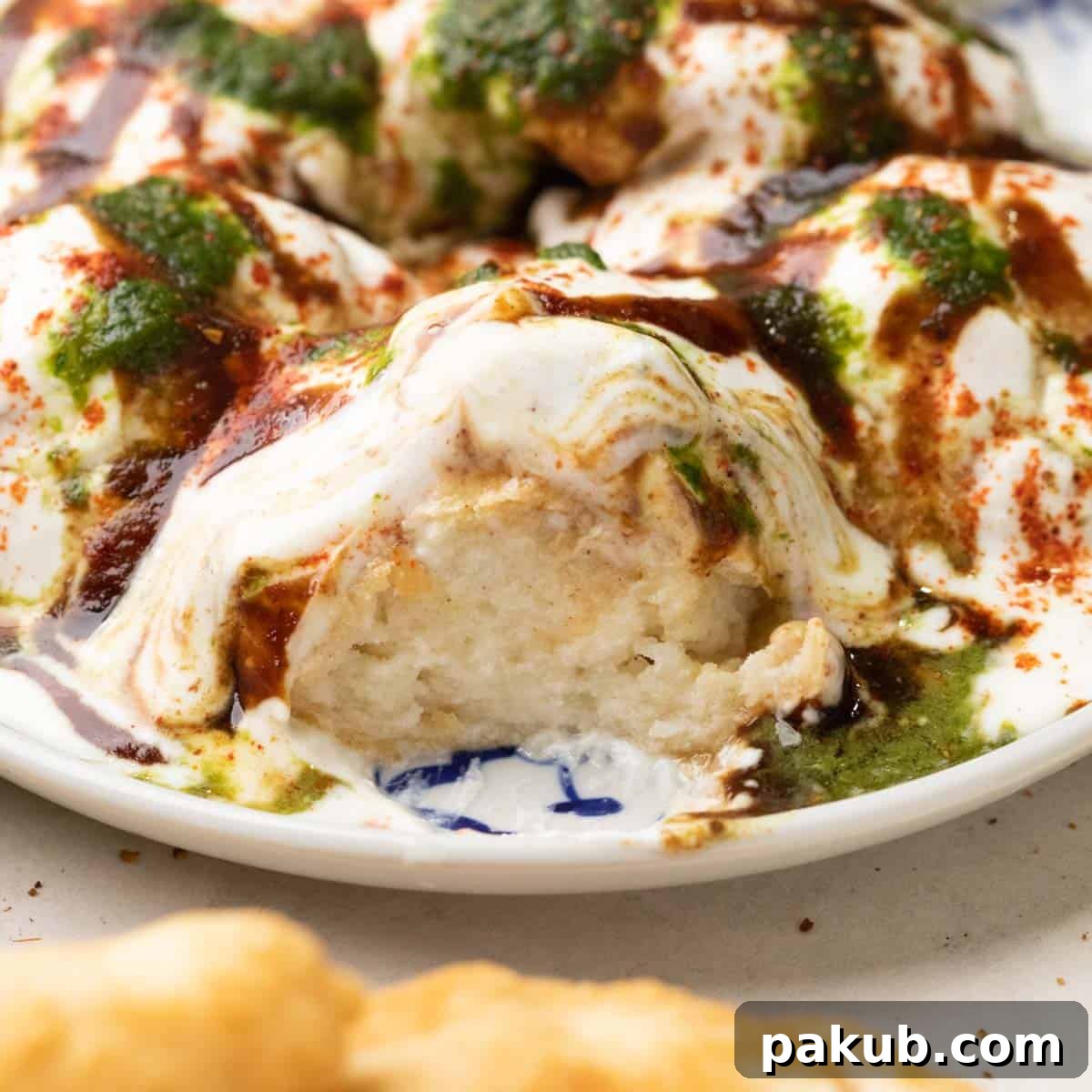
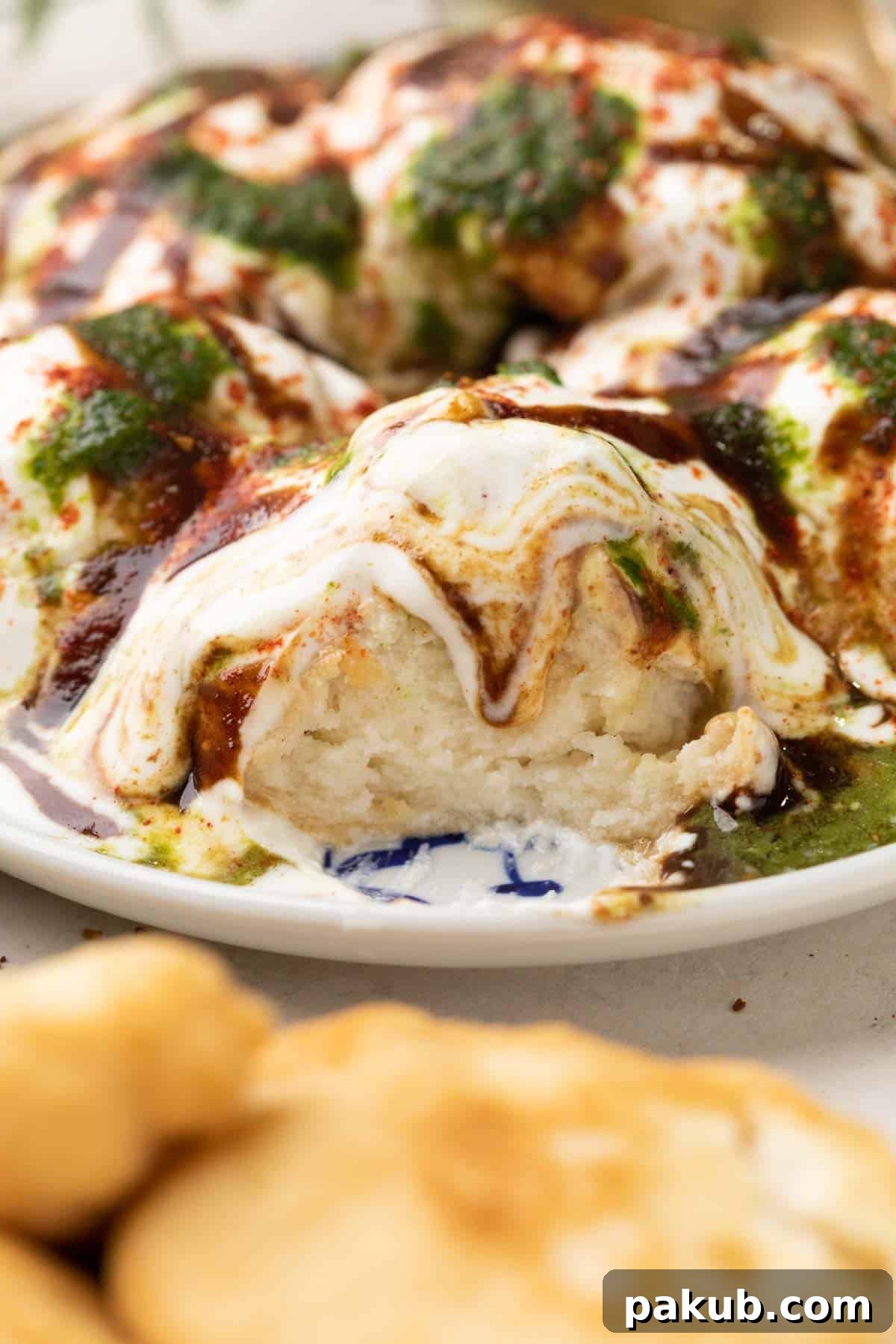
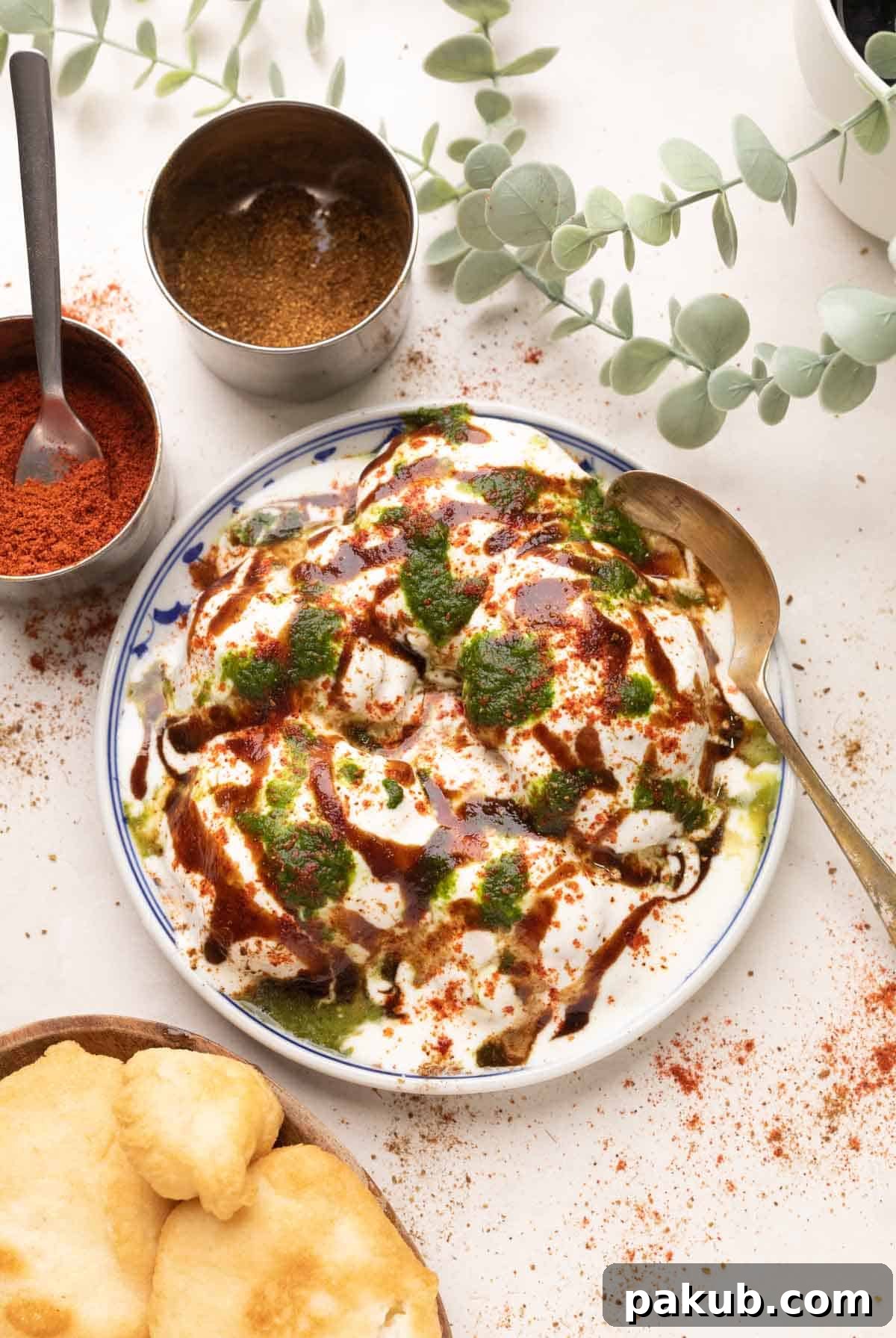
Dahi Vada, also known as Dahi Bhalla, is more than just a dish; it’s a celebration of flavors and textures that tantalizes the palate. These soft, melt-in-your-mouth lentil fritters, lovingly bathed in cool, whisked yogurt, are then crowned with an array of sweet, tangy, and spicy toppings. Is there truly a more exquisite chaat experience? This iconic North Indian snack promises an unforgettable culinary journey.
- Bread Chaat
- Pani Puri (Golgappa/ Puchka) Recipe
- Air Fryer Papdi
- Easy Aloo Chaat
I am utterly convinced that Dahi Vada reigns supreme as the most delectable chaat recipe ever conceived. It’s a symphony of tastes, where the gentle sweetness, refreshing sourness, and invigorating spice unite with incredibly soft textures, creating a harmonious blend that simply works SO well. The contrasting temperatures, with the chilled yogurt embracing the warm, spiced vadas, add another layer to its irresistible charm.
Beyond its incredible flavor, Dahi Vada shines as a fantastic party snack or starter. Its greatest advantage lies in its make-ahead convenience, allowing you to prepare a large batch for numerous guests and serve it effortlessly when you’re ready. Since it’s traditionally served chilled, there’s no need to fret about heating or reheating before serving, making it a stress-free option for entertaining. This also means it stores beautifully in the fridge, promising delightful leftovers for days!
Many home cooks might feel intimidated by the idea of making vadas from scratch, but there’s no need to fret! I’ve meticulously gathered all my tried-and-tested tips and tricks to ensure you achieve the spongiest, most perfect vadas every single time. These authentic vadas are crafted from urad dal (split black gram), transformed into light, fried lentil fritters, which are then delicately soaked and enrobed in luscious yogurt and vibrant sauces.
This isn’t just a recipe; it’s a culinary staple you’ll find yourself returning to time and again. It has become my go-to dish for every festive season, a beloved tradition that never fails to impress and satisfy!
Jump to Section: Dahi Vada Recipe
- Ingredients You’ll Need for Dahi Vada
- How To Make Dahi Vada: A Step-by-Step Guide
- Expert Tips for Perfect Dahi Vada
- Frequently Asked Questions About Dahi Vada
- Watch How To Make Dahi Vada
Ingredients You’ll Need for Authentic Dahi Vada
Crafting the perfect Dahi Vada begins with selecting the right ingredients. Here’s a detailed look at what you’ll need to create both the vadas and the vibrant chaat assembly.
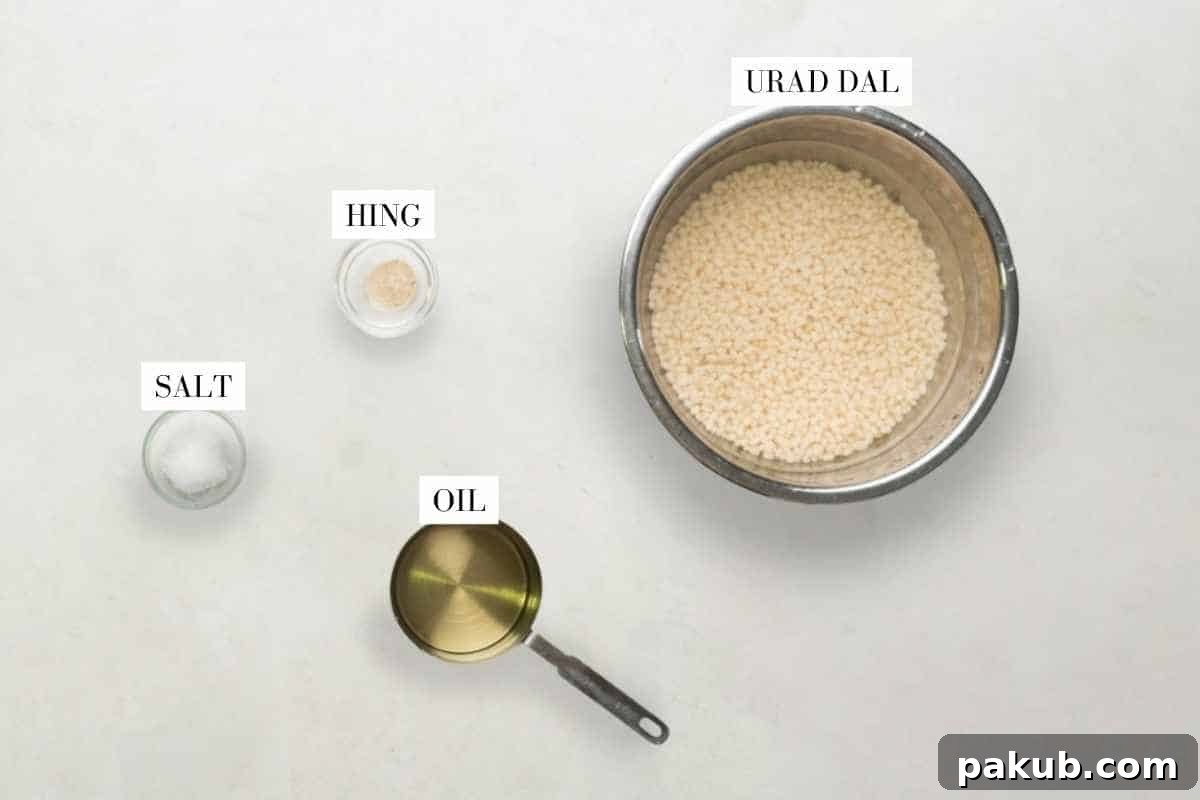
- For the Vada:
- Urad Dal (Split Black Gram): This is the cornerstone of our vadas. While there are varieties of dahi vada, some made with moong dal (often called ‘dahi pakodi’), this particular recipe champions the classic urad dal vadas. Urad dal gives the vadas their characteristic soft yet slightly chewy texture and helps them absorb the yogurt beautifully.
- Hing (Asafoetida): A small pinch of hing works wonders, acting almost like a natural leavening agent. It aids in making the vadas light and fluffy, contributing to their spongy texture, and also assists with digestion.
- Water: Used sparingly to blend the dal into a smooth, thick batter. The amount of water is crucial for the perfect consistency.
- Salt: Essential for seasoning the vadas, enhancing their inherent flavor.
- Oil: For deep-frying the vadas to a beautiful golden crispness. A neutral oil with a high smoke point is recommended.
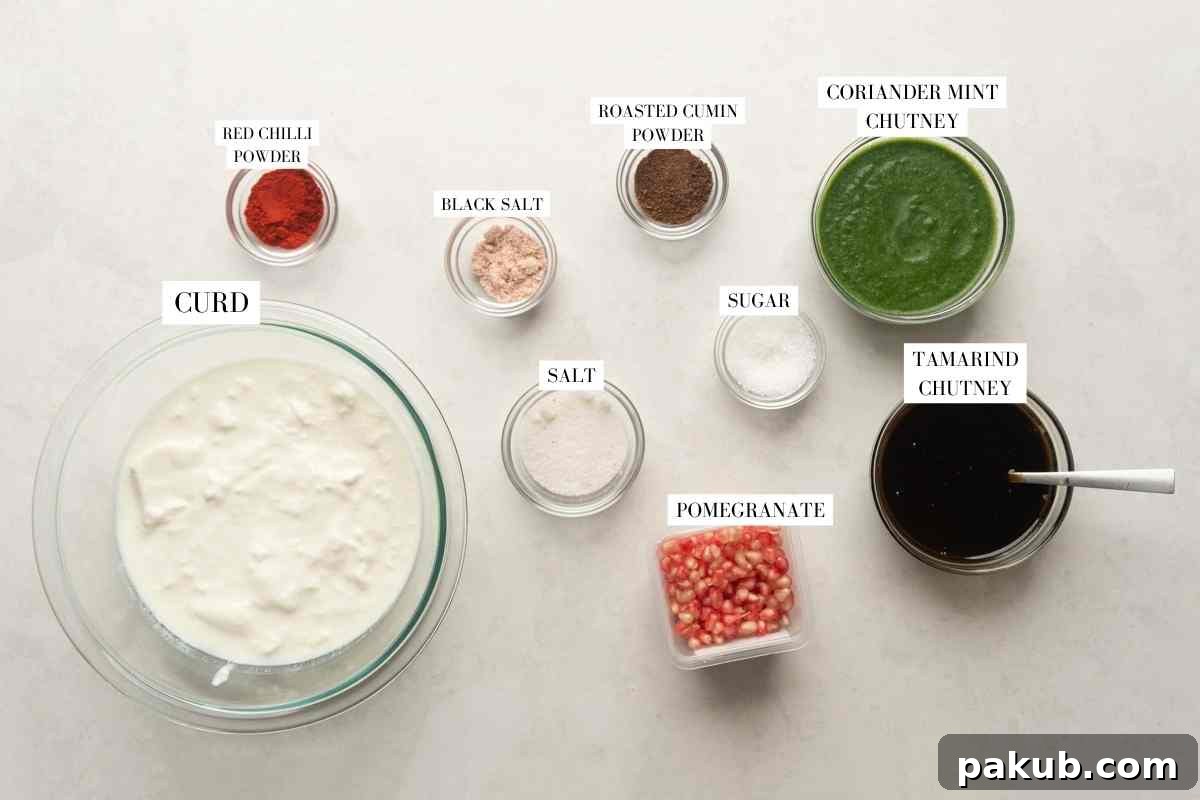
- For the Dahi Vada Chaat Assembly:
- Curd (Yogurt): The heart of Dahi Vada. We aim for thick, fresh curd, as its rich consistency provides the best texture once whisked smooth. It offers a cooling, tangy contrast to the vadas and chutneys.
- Sugar: Just a pinch of sugar is added to the yogurt to subtly balance its inherent tanginess and complement the other sweet and spicy elements of the chaat.
- Green Coriander Chutney: This vibrant chutney infuses a refreshing, tangy, and spicy kick, typically made with fresh coriander, mint, green chilies, and ginger.
- Sweet Tamarind Chutney (Meethi Imli Chutney): The cornerstone of chaat, providing that quintessential sweet and sour taste. Made from tamarind pulp, jaggery, and a blend of spices, it adds depth and complexity.
- Roasted Cumin Powder (Bhuna Jeera Powder): Earthy, aromatic, and slightly smoky, roasted cumin powder is indispensable for chaat. It pairs exceptionally well with curd, enhancing its flavor profile.
- Kashmiri Red Chili Powder: Known for its brilliant red color and mild heat, this chili powder adds a beautiful visual pop and a gentle warmth without overwhelming the other flavors.
- Black Salt (Kala Namak): This unique mineral salt is crucial for achieving that authentic ‘chatpata’ (tangy, savory, spicy) taste characteristic of Indian chaat. Its distinct sulfurous aroma adds an unparalleled depth.
- Optional Garnishes: Finely chopped fresh coriander leaves, a sprinkle of sev (crispy chickpea flour noodles), or a few pomegranate seeds can add extra texture, flavor, and visual appeal.
How To Make Dahi Vada: A Step-by-Step Guide
Follow this detailed tutorial to create exquisite Dahi Vadas that are soft, spongy, and bursting with flavor. The process might seem elaborate, but each step contributes to the perfect end result.
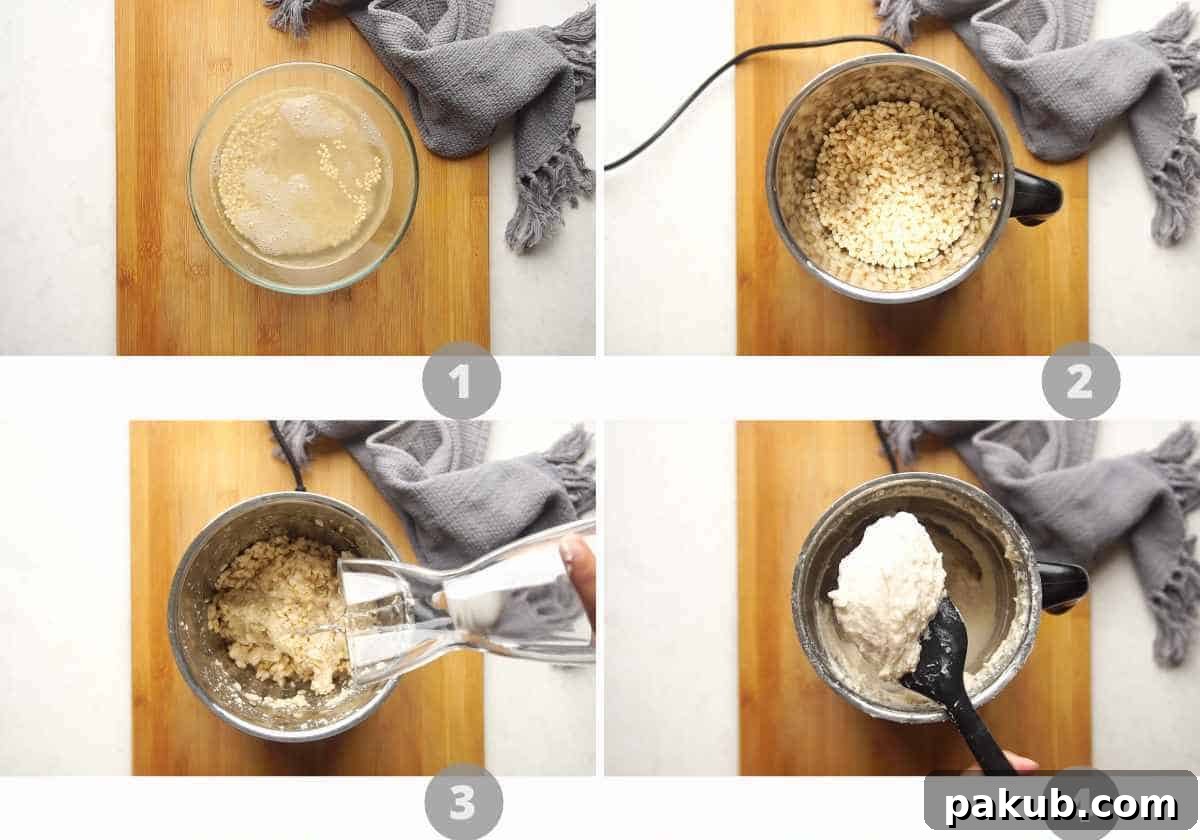
- Prepare the Urad Dal: Begin by thoroughly washing 1 cup of urad dal under running water until the water runs clear. This removes any impurities. Then, soak the cleaned urad dal in fresh water for approximately 6-8 hours. Soaking overnight is generally fine, but avoid soaking for more than 8 hours to prevent the batter from absorbing too much oil during frying.
- Drain and Grind: After soaking, place the urad dal in a sieve to drain all the water completely. It’s crucial that the dal is well-drained. Transfer the drained dal to a mixer grinder or food processor. Add water very gradually, a tablespoon at a time (typically 4-6 tablespoons in total, but adjust as needed). Grind the dal to a very smooth, thick paste. The grinding process can take 6-8 minutes, requiring you to stop and scrape down the sides with a spatula several times to ensure an even, lump-free consistency. The less water you use, the better, as it prevents the batter from becoming too thin.
- Season the Batter: Once the dal is ground to a smooth paste, mix in ¾ teaspoon of salt and a pinch of hing (asafoetida). Hing is vital here, as it not only adds flavor but also helps to aerate the batter, contributing to lighter and fluffier vadas. Let the seasoned batter rest for about ten minutes.
- Prepare for Frying: While the batter rests, heat oil in a kadhai (deep frying pan) over medium-high heat. Meanwhile, it’s time to whisk the batter to incorporate air.
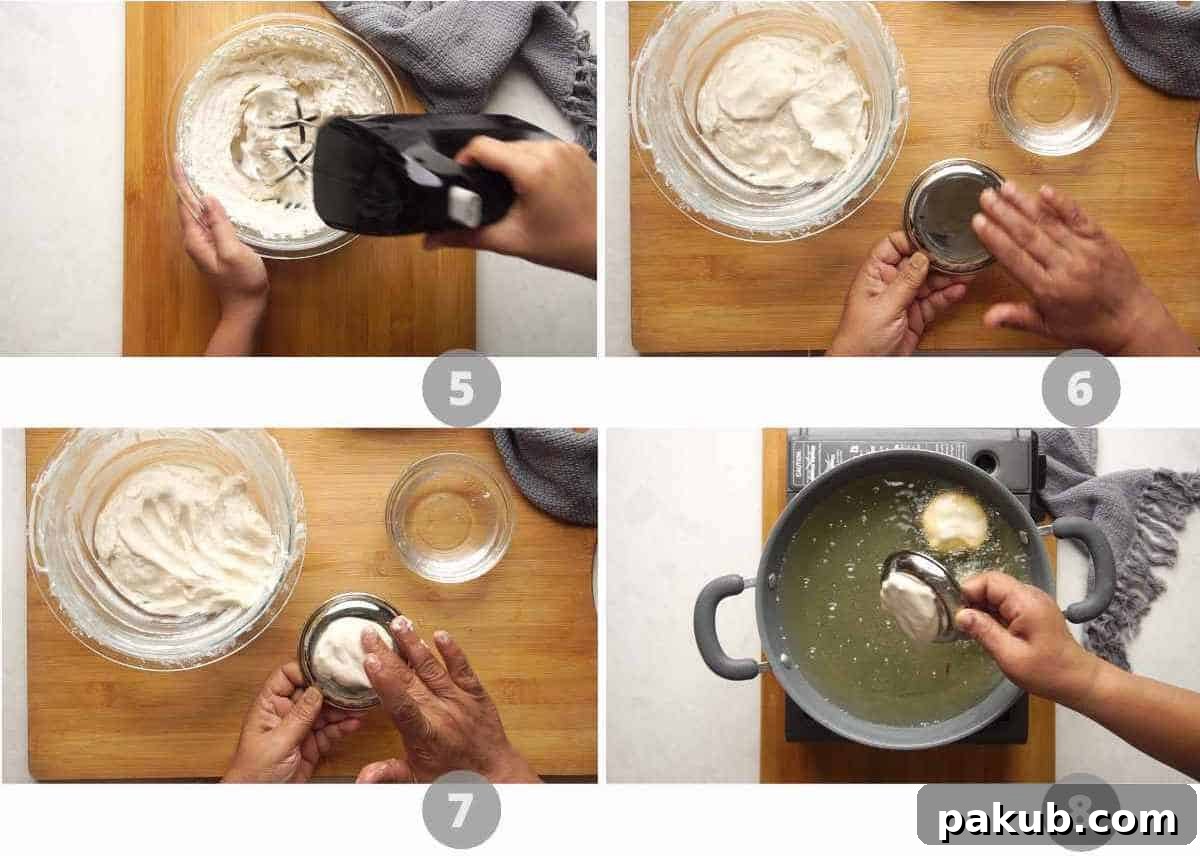
- Whisk the Batter for Airiness: Transfer the batter to a large bowl. Using a hand whisk, or even your hand, vigorously whisk the ground urad dal for approximately 5 minutes. You will notice the batter gradually becoming lighter in color (from yellow to pale white), airier, and significantly fluffier. This aeration is the secret to soft, spongy vadas. A good test for readiness is the “water drop test” (see Expert Tips below).
- Shape the Vadas: To shape the vadas, lightly wet the back of a flat katori (small bowl) with water. Take a lime-sized amount of the whisked batter in your dominant hand and gently place it on the wet surface of the katori.
- Form the Fritters: Using the fingers of your dominant hand, gently tap and press the batter into a flat, roughly circular shape, about ½ inch thick. You can make a small hole in the center if desired, which helps them cook evenly, though it’s not strictly necessary for Dahi Vada.
- Fry the Vadas: Carefully drop the shaped vada into the hot oil. To do this, invert the katori close to the oil surface, and use your fingers to gently slide the vada into the hot oil, preventing splashes. Alternatively, you can shape them directly in your wet palm and slide them in.
- Cook to Golden Perfection: You should observe the vada puffing up slightly as it fries. Cook on a medium flame for 2-3 minutes, turning occasionally, until both sides are beautifully golden brown and cooked through. Avoid overcrowding the pan to maintain oil temperature.
- Drain Excess Oil: Remove the fried vadas using a slotted spoon or skimmer and place them on a tissue-lined plate to drain any excess oil. Repeat this process until all the batter is used.
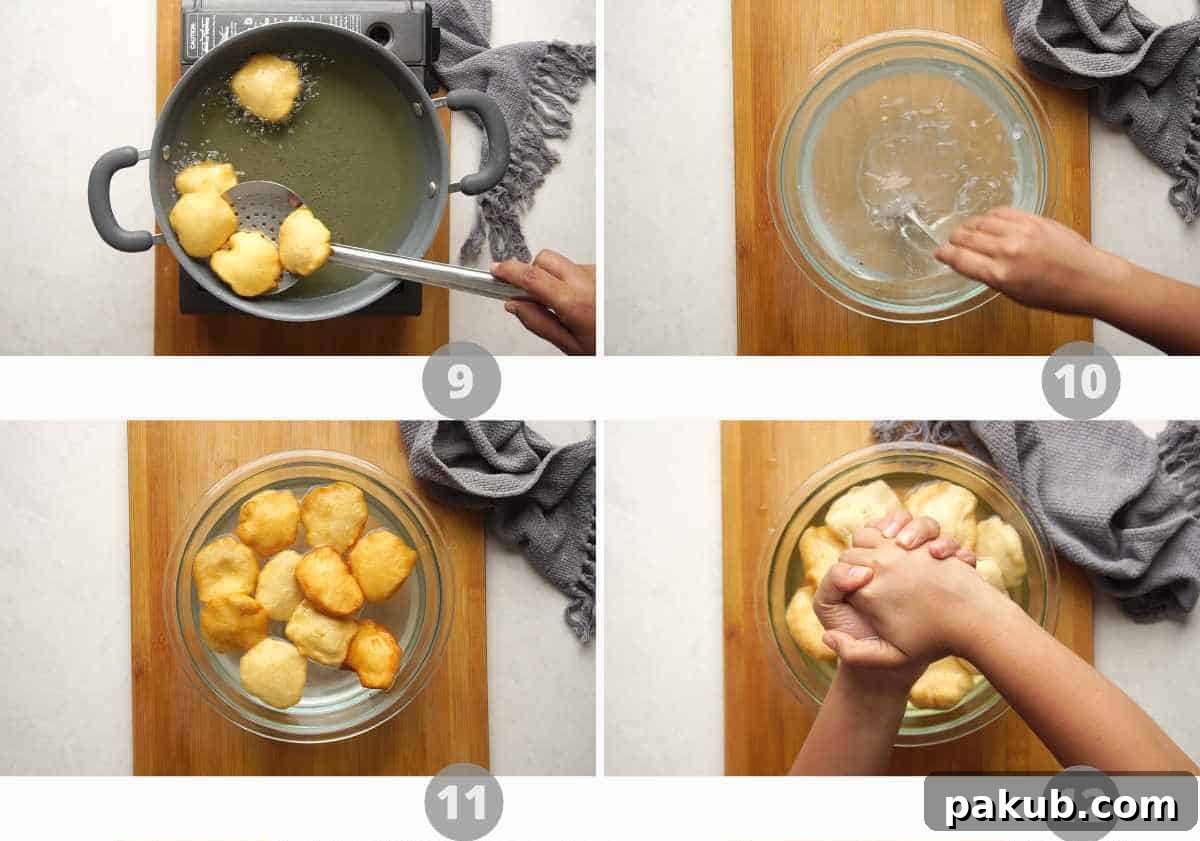
- Soak the Fried Vadas: In a bowl, combine 2-3 cups of hot water with 1 teaspoon of salt. Submerge the hot, fried vadas in this warm salted water. Let them soak for about 20 minutes. This crucial step helps the vadas become incredibly soft and spongy, and also encourages them to release any residual oil they might have absorbed during frying.
- Squeeze and Prepare for Assembly: Once soaked, remove each vada one by one. Gently but firmly squeeze each vada between your palms to remove as much excess water as possible. Be careful not to break them. They should feel soft and plump.
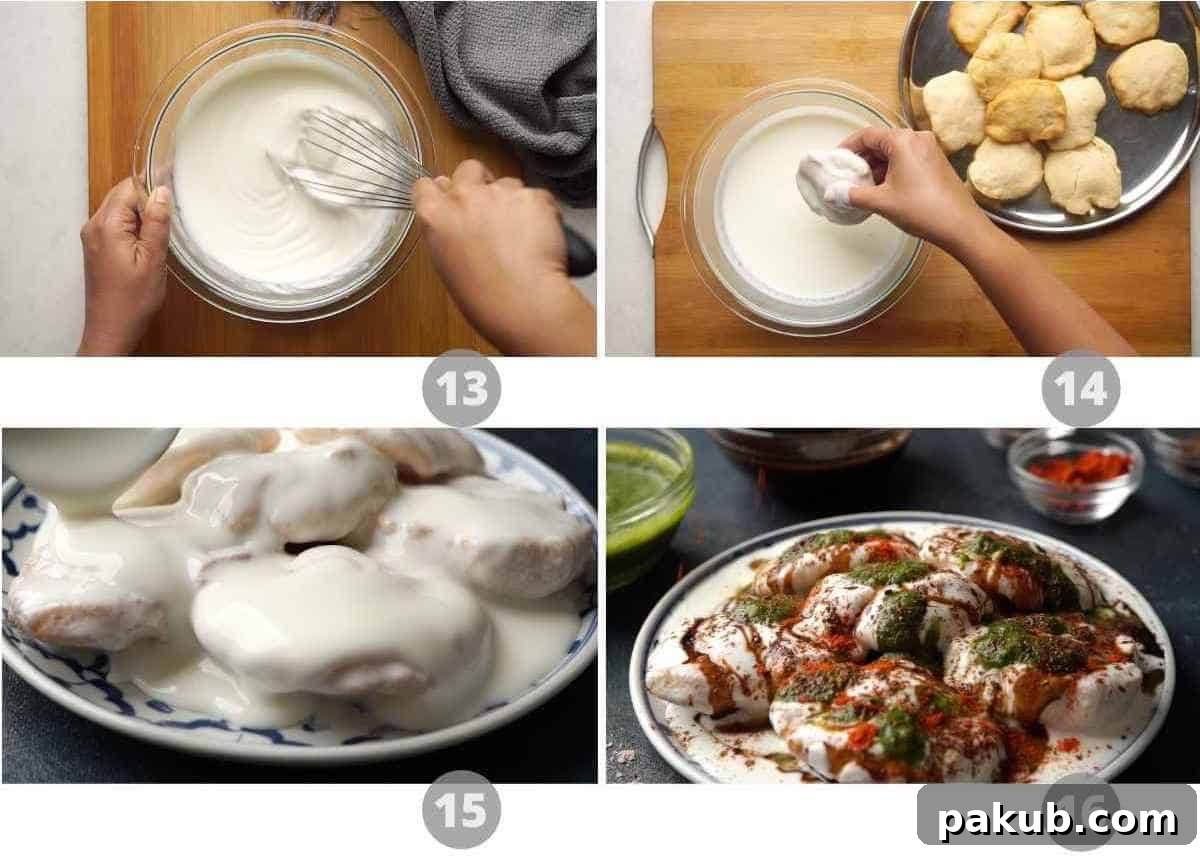
- Prepare the Yogurt: In a separate bowl, combine the thick curd and sugar. Whisk thoroughly until the curd is completely smooth, creamy, and free of any lumps. You can add a tablespoon or two of cold water if needed to achieve a pourable consistency.
- Assemble the Dahi Vada: Dip the squeezed vadas into the whisked curd mixture, ensuring they are well coated. Transfer the curd-soaked vadas to a serving plate. Pour some extra whisked curd generously over the vadas on the plate.
- Garnish and Serve: Drizzle spoonfuls of sweet imli chutney and spicy green coriander chutney over the yogurt. Finish with a sprinkle of roasted cumin powder, a dash of Kashmiri red chili powder for color, and a pinch of black salt and regular salt according to your preference. For an extra flourish, you can also top with sev or fresh coriander. Serve immediately and enjoy!
Expert Tips for Achieving Perfect Dahi Vada Every Time
Making truly exceptional Dahi Vada involves a few key techniques and secrets. Follow these expert tips to ensure your vadas are light, fluffy, and absorb the creamy yogurt beautifully.
- Optimal Dal Soaking Time: For the ideal texture, soak your urad dal for precisely 6 hours. If you’re pressed for time, 4-5 hours can work, but avoid soaking it overnight or for longer than 8 hours. Over-soaked dal can lead to a batter that becomes too thin and absorbs excessive oil during frying, resulting in greasy vadas.
- Grind with Minimal Water: When grinding the dal, always add water in small increments. The goal is a smooth, thick paste that has a “dropping” consistency (it should fall heavily from a spoon). Using too much water at once will make the batter runny, which makes shaping difficult and causes the vadas to flatten and absorb oil. If your blender is small, grind the dal in two batches for better control.
- Crucial Batter Aeration: This step is non-negotiable for spongy vadas. After grinding, transfer the batter to a bowl and vigorously whip it using a spatula, whisk, or even your hand for a full 4-5 minutes. This process incorporates air into the batter, making it light, fluffy, and increasing its volume. This aeration is what gives the vadas their signature bouncy, melt-in-your-mouth texture.
- The Water Drop Test for Consistency: To confirm your batter has reached the perfect consistency after whisking, perform this simple test: take a small amount of the batter and gently drop it into a cup filled with water. If the batter floats immediately to the surface, it means it’s light and airy enough – the consistency is perfect. If it sinks, it needs more whisking.
- Perfect Oil Temperature for Frying: Before you start frying, test your oil temperature. Drop a tiny bit of batter into the hot oil. If the batter sinks to the bottom, your oil is too cool, and the vadas will become greasy. If it browns instantly, the oil is too hot, which will burn the outside while leaving the inside raw. We aim for a medium-high flame where the test batter rises to the surface steadily and begins to brown gently.
- Avoid Overcrowding the Pan: When frying, resist the urge to fill the pan with too many vadas at once. Overcrowding will significantly reduce the oil temperature, leading to vadas that soak up more oil and become dense rather than light and crispy. Fry in small batches to maintain consistent oil temperature.
- Salted Hot Water Soak: Once fried, immediately transfer the vadas to a bowl of hot salted water. Allow them to soak for 15-30 minutes. This critical step not only makes the vadas incredibly soft and spongy but also helps them release any excess oil absorbed during frying. Always gently squeeze out the absorbed water before tossing them into the curd.
- Whip Your Curd for Smoothness: For the creamiest Dahi Vada, ensure your curd (yogurt) is perfectly smooth. Vigorously whisk your curd until it’s entirely free of lumps and has a smooth, pourable consistency. You can add a tablespoon or two of cold water to achieve this desired texture, especially if your curd is very thick.
Frequently Asked Questions About Dahi Vada
If your urad dal batter turns out too thin, you can rescue it by adding 1-2 tablespoons of rice flour or semolina (rava). Mix it in thoroughly and beat the batter again vigorously for a few minutes to re-aerate it. The rice flour or semolina will help absorb excess moisture and thicken the batter, giving you the right consistency for shaping the vadas.
Yes, absolutely! While soaking hot vadas in hot water helps them release excess oil more effectively and become incredibly soft faster, you can still soak vadas that have cooled down. Just make sure the water you use for soaking is hot. The hot water is the key to softening the vadas and allowing them to become plump and spongy, regardless of their initial temperature.
The best way to determine if your batter is ready is the “water drop test.” Take a very small amount of the whisked batter (about half a teaspoon) and gently drop it into a bowl of plain water. If the batter floats immediately to the surface, it signifies that it’s light, airy, and has the correct consistency. If it sinks, you need to continue whisking it for a few more minutes to incorporate more air.
Greasy vadas are typically due to two main reasons: the batter is too thin, or your oil is not hot enough. If the oil isn’t at the correct temperature (medium-high), the vadas will slowly cook and absorb a lot of oil before they brown. Always test your oil temperature by dropping a small piece of batter into it – it should rise to the top quickly without browning too fast. Also, ensure your batter is thick enough; a thin batter will naturally soak up more oil.
The most common culprits for hard vadas are insufficient soaking of the lentils or inadequate aeration of the batter. Ensure you soak your urad dal for the recommended 6 to 8 hours. More importantly, don’t skip the crucial step of vigorously whisking the ground batter for 4-5 minutes. This process injects air, making the vadas light and fluffy. Without proper aeration, the vadas will be dense.
Flat vadas are often a sign that your batter is too thin. A runny batter will spread out in the oil rather than holding its shape and puffing up. To remedy this, if you notice your batter is too thin, try adding 1-2 tablespoons of rice flour to it and beat it well to thicken it and aerate simultaneously. Also, ensure your oil is hot enough for the vadas to quickly rise and set.
Yes, you can absolutely prepare the vada batter up to one day in advance. Store it covered in an airtight container in the refrigerator. When you’re ready to fry the vadas, allow the batter to come to room temperature first. It is crucial to give it a good, vigorous whisk for a few minutes before frying to re-aerate it and ensure the vadas remain light and fluffy.
For frying vadas, any neutral oil with a high smoke point will work beautifully. Good options include sunflower oil, groundnut oil, vegetable oil, or canola oil. These oils won’t impart a strong flavor to your vadas and can withstand the high temperatures required for deep frying.
The key to smoothly whipped curd for Dahi Vada is to start with thick, fresh yogurt. If your curd is too watery, it will be difficult to achieve that creamy, luscious texture. Using thick curd or even Greek yogurt will yield the best results when whipping. If your curd is still a bit stiff, you can add a tiny splash of cold water (one tablespoon at a time) while whisking to help it become smoother.
If there’s one recipe from my collection that you absolutely must try, let it be this one! I distinctly remember feeling a little intimidated the first time I ventured into making vadas from scratch. However, I can assure you that the effort is incredibly rewarding, and the joy I feel every time I serve this dish is immense. The best part? Dahi Vada is universally loved across all age groups – it is, without a doubt, the very definition of a crowd-pleasing dish that brings smiles to every face!
For more incredibly delicious and authentic Indian chaat recipes, be sure to explore my Easy Aloo Chaat and Bread Chaat! They are perfect companions to your Dahi Vada culinary adventure.
Watch How To Make Dahi Vada
LOVE THIS RECIPE? Subscribe to our newsletter and be the first to receive all new recipes directly in your inbox!
Dahi Vada
Richa
15 minutes
20 minutes
8 hours
8 hours 35 minutes
4 people
Saved
Pin Recipe
Rate Recipe
Print Recipe
Ingredients
Vada
- 1 Cup Urad Dal
- A pinch Hing
- 3-4 Teaspoons Water
- ¾ Teaspoon Salt
- Oil, for frying
Dahi Vada Chaat Assembly
- 2 Cups Curd, thick
- ¾ Teaspoon Sugar
- Coriander Mint Chutney, as required
- Meethi Imli Chutney, as required
- 1-2 Teaspoons Roasted Cumin Powder
- 1-2 Teaspoons Kashmiri Red Chilli Powder
- 1/2 Teaspoon Salt
- A pinch Black salt, optional
Instructions
Vada Preparation
-
Wash 1 cup of urad dal thoroughly under running water until clear, then soak overnight (or for 6-8 hours for optimal texture).
-
Drain the soaked urad dal completely using a sieve, ensuring no excess water remains.
-
Add the drained dal to a mixer grinder. Introduce water one tablespoon at a time (totaling 4-6 tablespoons) and grind to a very smooth, thick paste. This process may take 6-8 minutes; pause and scrape the sides frequently for even grinding. Use as little water as possible.
-
Stir ¾ teaspoon salt and a pinch of hing into the ground urad dal batter. Let it rest for ten minutes; hing helps lighten the batter.
-
While the batter rests, place oil in a kadhai (deep pan) and heat it over medium-high flame for frying.
-
Using a hand whisk or your hand, vigorously whisk the batter for approximately 5 minutes until it becomes light, airy, and fluffy, changing color from yellowish to pale white.
-
To shape vadas, wet the back of a flat katori (small bowl). Take a lime-sized portion of batter in your dominant hand and place it on the wet katori surface.
-
With your dominant hand’s fingers, gently tap and press the batter into a flat circle. Carefully slide the vada into the hot oil by tilting the katori close to the oil. Alternatively, shape it directly in your wet palm.
-
As it cooks, the vada should puff up. Fry on a medium flame for 2-3 minutes per side until golden brown. Remove vadas with a skimmer and place on a tissue-lined plate to drain. Repeat for all batter.
-
In a bowl, combine 2-3 cups of hot water with 1 teaspoon of salt. Submerge the fried vadas in this water and soak for 20 minutes to soften and release excess oil.
-
After soaking, remove each vada individually and gently squeeze out as much water as possible between your palms.
Dahi Vada Assembly
-
In a bowl, add thick curd and ¾ teaspoon sugar. Whisk thoroughly until smooth and creamy.
-
Dip the squeezed vadas into the whisked curd, ensuring full coating, then transfer to a serving plate. Pour additional curd generously over the vadas.
-
Drizzle with meethi imli chutney and green coriander chutney. Sprinkle roasted cumin powder, salt, black salt (optional), and Kashmiri red chili powder to taste. Garnish with sev if desired, and serve immediately.
Notes
- Soak the urad dal for 6 hours for the best texture – or 4-5 hours if you’re shorter on time. Don’t soak the dal overnight/ for longer than 8 hours as this will result in a batter that absorbs too much oil and becomes difficult to manage.
- Add water in parts when grinding – this will make sure that your batter is smooth and fluffy with a thick dropping consistency (this is what we want!). You can grind in two batches based on the size of your blender for better control.
- It’s really important that we aerate the batter – this is done through whipping the ground batter in a bowl using a spatula/whisk/spoon for 4-5 minutes. This is what gives our vadas that bouncy, spongy texture and prevents them from becoming dense.
- To check if your batter has the right consistency after whisking – do the water drop test. Take a small amount of the batter and drop it into a cup filled with water. If it floats, that means the consistency is perfect and it’s full of air.
- When frying, test your oil with a drop of batter. If your batter falls to the bottom of the pan – your oil is too cool, and the vadas will soak up oil. If it browns immediately, the oil is too hot, burning the outside while leaving the inside raw. We want to fry our vadas on a medium-high flame where the batter rises steadily.
- Make sure not to overcrowd the pan when frying – this will reduce the oil temperature and cause your vadas to soak more oil, becoming heavy and greasy. Fry in small batches.
- Soak the vadas in hot salted water for 15-30 minutes for soft, spongy vadas. This step also helps to release any absorbed oil. Remember to gently squeeze out the excess water before tossing them in curd.
- Make sure to whip your curd – you can even add some cold water to it – to give it this smooth, pourable consistency that works so great here and coats the vadas beautifully.
- Coriander Mint Chutney Recipe – https://myfoodstory.com/green-coriander-chutney-recipe/
- Tamarind or Imli Chutney Recipe – https://myfoodstory.com/tamarind-chutney/
Nutrition
Carbohydrates: 30g,
Protein: 22g,
Fat: 1g,
Saturated Fat: 0.1g,
Polyunsaturated Fat: 0.1g,
Monounsaturated Fat: 0.1g,
Trans Fat: 0.01g,
Cholesterol: 5mg,
Sodium: 2083mg,
Potassium: 160mg,
Fiber: 10g,
Sugar: 4g,
Vitamin A: 161IU,
Vitamin C: 2mg,
Calcium: 149mg,
Iron: 4mg
Enjoyed this recipe? Please consider rating and leaving a comment below!