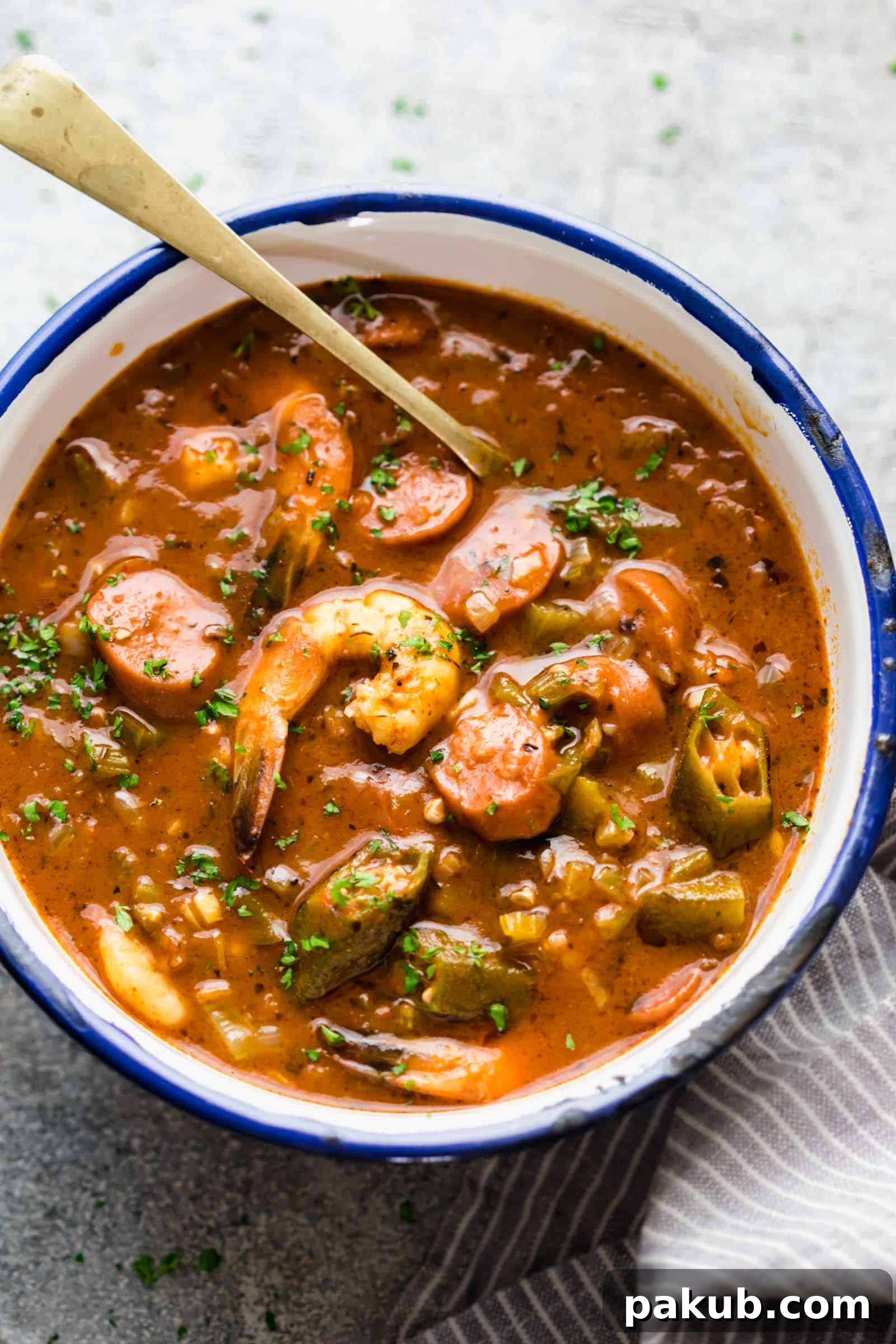
New Orleans Shrimp and Sausage Gumbo is more than just a dish; it’s a culinary institution, a celebration of rich heritage and deep, soulful flavors. This iconic stew, deeply rooted in the vibrant traditions of Louisiana, stands in a category all its own. Its intensely complex flavor profile is meticulously built upon the foundation of a patiently toasted dark roux, a symphony of authentic Cajun spices, a homemade, savory shrimp stock, and the unique addition of okra, which masterfully enhances its thick, velvety richness. Preparing this gumbo is truly a rewarding weekend project—a labor of love that promises unparalleled satisfaction in every hearty spoonful. A generous pot of this slow-simmered goodness offers not just a meal, but an experience that lingers, making every moment spent in the kitchen utterly worthwhile.
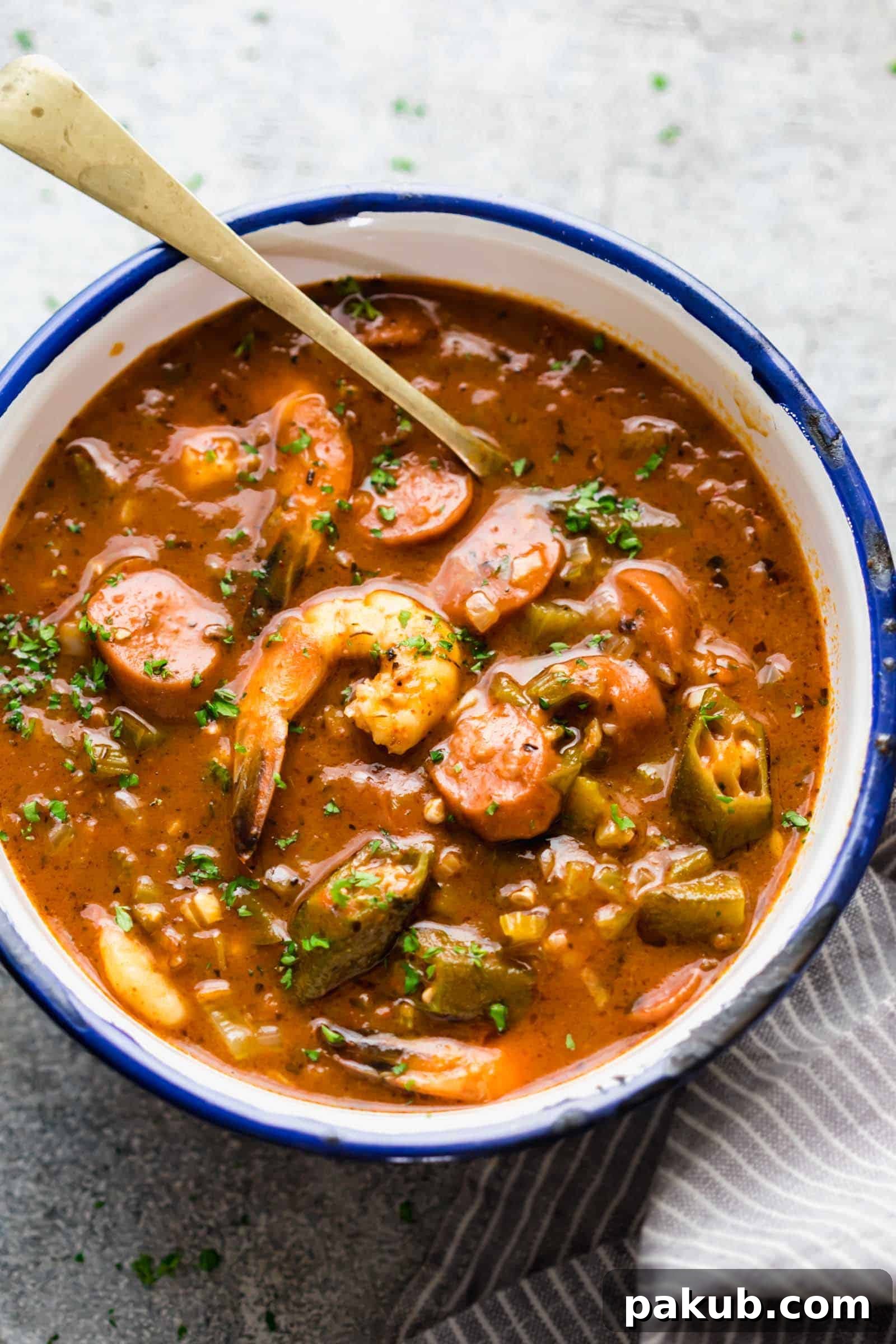
While our usual recipes focus on speed and simplicity, today we embark on a delightful detour to share a slightly more intricate and time-honored creation: the quintessential New Orleans Shrimp and Sausage Gumbo. Before you consider navigating away, let us assure you, this is one culinary adventure you absolutely *must* experience! Much like our cherished chicken biryani or dal makhani, this gumbo is designed as a weekend endeavor, demanding a dedicated investment of time and effort—yet it rewards you tenfold with its profound flavors and comforting essence. The beauty of this dish also lies in its longevity; a large batch keeps wonderfully, allowing you to savor its deliciousness for days, truly getting your fill.
Our recent journey to the U.S. introduced us to the legendary gumbo, and from the very first taste, we were captivated. The profound, intricate flavors of this soul-satisfying stew have left an indelible mark, inspiring us to meticulously recreate that unforgettable experience. While we make no claim of delivering the *single* most authentic gumbo recipe (as variations abound across Louisiana!), this rendition has consistently earned rave reviews and adoration from everyone we’ve had the pleasure of serving it to. It’s a testament to the irresistible charm of a well-made gumbo, bringing a piece of New Orleans directly to your kitchen.
Table of Contents: New Orleans Shrimp & Sausage Gumbo
- The Essence of Gumbo: A Culinary Heritage
- Essential Equipment for Gumbo Success
- Mastering the Roux: The Soul of Your Gumbo
- Mise En Place: Your Key to Seamless Cooking
- Crafting the Perfect Stock for Gumbo
- Okra in Gumbo: A Traditional Thickener
- Serving Your Delicious Gumbo
- Exploring Gumbo Variations
- Watch Our Shrimp & Sausage Gumbo Video Recipe
- More Hearty Recipes for Meat Lovers
To ensure your culinary journey is as smooth and enjoyable as possible, we’ve meticulously broken down this rich recipe into clear, manageable steps. Preparing this New Orleans Shrimp and Sausage Gumbo will be an engaging and rewarding experience, resulting in a dish that truly embodies the spirit of Southern cooking and leaves a lasting impression.
The Essence of Gumbo: A Culinary Heritage
Gumbo is far more than just a stew; it’s a culinary tapestry woven from diverse cultural threads, including West African, French, Spanish, and Native American influences, all converging in the vibrant melting pot of Louisiana. The name “gumbo” itself is believed to derive from the West African word for okra, “ki ngombo,” or the Choctaw word for filé, “kombo.” This rich history contributes to the dish’s incredible depth and complexity, reflecting the culinary innovation born from cultural fusion. Our Shrimp and Sausage Gumbo captures this essence by combining succulent shrimp, savory Andouille sausage, and a deeply flavored roux, creating a hearty and comforting meal that transports you straight to the heart of New Orleans. Every ingredient plays a crucial role, from the aromatic “holy trinity” of celery, bell peppers, and onions, to the patient cooking of the roux that defines the gumbo’s character and provides its signature depth.
Essential Equipment for Gumbo Success
While preparing an authentic New Orleans gumbo might seem daunting, the equipment required is surprisingly minimal. The most crucial piece of kitchenware you’ll need is a Dutch oven or any other heavy-bottomed pot. This isn’t merely a suggestion; it’s a fundamental requirement for gumbo perfection. The robust construction and even heat distribution of a Dutch oven are paramount for preventing the roux—the irreplaceable foundation of your gumbo—from sticking to the bottom and burning, a common pitfall that can easily ruin the entire dish. A heavy-bottomed pot ensures that your roux cooks evenly to that perfect deep golden-brown hue, lending your gumbo its signature rich flavor and color without scorching. Investing in a good quality pot will make your gumbo-making experience significantly smoother and more successful, allowing you to achieve that coveted, consistent texture and flavor.
Mastering the Roux: The Soul of Your Gumbo
The roux is unequivocally the heart and soul of any great gumbo, and mastering its preparation is arguably the most critical and intricate step in crafting this dish from scratch. We highly recommend dedicating your full attention to this task, setting aside all other distractions until your roux reaches perfection. A roux is traditionally a thickening agent made by cooking equal parts fat (oil or butter) and flour. While a roux for a Béchamel sauce (white sauce) is typically cooked for only a minute or two until lightly colored, a gumbo roux demands significantly more patience and cooking time, typically ranging from 20 to 30 minutes, resulting in a much deeper color and profound, nutty flavor. This prolonged cooking transforms the flour, creating a complex foundation unlike any other.
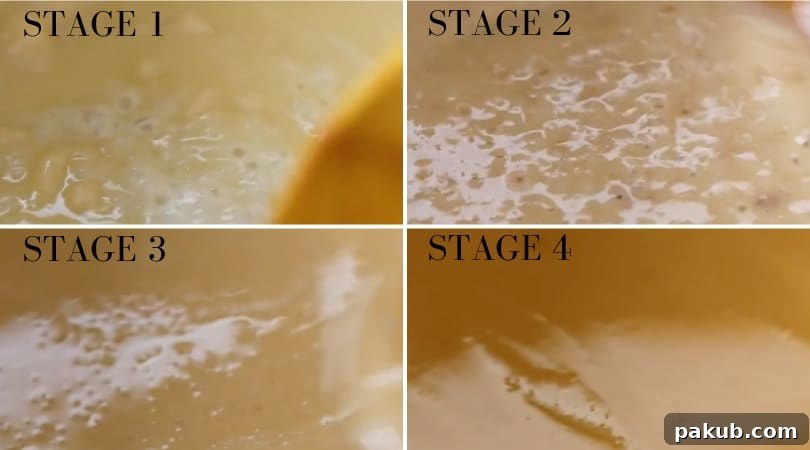
For this Shrimp and Sausage Gumbo, we aim for a rich, peanut butter-colored roux, which usually takes around 20-25 minutes to achieve. Begin by heating a combination of canola oil and butter (we prefer the blended richness for flavor and stability) in your heavy-bottomed Dutch oven. Once shimmering, gradually whisk in the all-purpose flour. The key throughout this process is constant, diligent stirring with a sturdy whisk or wooden spoon. This continuous movement prevents the flour from settling and burning at the bottom of the pot, ensuring an even cook and preventing bitter spots. You’ll observe the roux slowly transform, progressing from a pale white to a light tan, then a golden hue, and finally to a deep, nutty golden-brown—much like the color of creamy peanut butter. This particular shade provides an ideal balance of thickening power and deep, toasted flavor, creating a robust base for your gumbo.
While some seasoned chefs prefer to push the roux even further, cooking it for up to 30-40 minutes to achieve a rich dark chocolate or mahogany color, it’s worth noting that a darker roux tends to have significantly less thickening ability. For home cooks and beginners, aiming for the peanut butter shade is a safer and equally delicious bet, offering substantial flavor without the risk of burning. Observing the color change is crucial; visual cues are often more reliable than a strict timer, as stove temperatures can vary. (We encourage you to consult our video recipe for a visual demonstration of these critical color stages, which truly illustrate the transformation.) The patience you invest in creating the perfect roux will lay the indelible foundation for a truly exceptional gumbo, infusing it with unparalleled depth and a signature roasted flavor that is simply irresistible and speaks to the soul of Louisiana cooking.
Mise En Place: Your Key to Seamless Cooking
Once your meticulously prepared roux has reached its desired perfection, the pace of cooking quickens significantly. This is precisely why “mise en place”—the French culinary term for “everything in its place”—becomes an indispensable ally, especially for a complex dish like gumbo. Before you even begin heating your pot for the roux, we strongly advocate for having all your remaining ingredients prepped and ready. This means dicing the onions, celery, and green bell peppers (affectionately known as the “holy trinity” of Cajun cooking), chopping your savory Andouille sausages into neat diagonal pieces, and thoroughly cleaning, peeling, and deveining your shrimp. Imagine the efficiency: as your roux finishes cooking, your aromatic diced vegetables are within arm’s reach, ready to be introduced to the hot pot without delay. This proactive approach minimizes stress, prevents ingredients from overcooking or burning during crucial stages, and ensures a smooth, enjoyable cooking process from start to finish. A well-organized kitchen is a happy kitchen, especially when crafting a masterpiece like New Orleans gumbo, allowing you to focus on the magic happening in your pot.
Crafting the Perfect Stock for Gumbo
Just as the roux forms the structural backbone of your gumbo, the stock provides its aromatic and flavorful soul. We consider the quality of your chosen stock to be just as essential as the expertly cooked roux, as it profoundly influences the final flavor profile of this magnificent stew. For an unparalleled Shrimp and Sausage Gumbo, we wholeheartedly recommend using a homemade shrimp stock. The process is surprisingly straightforward and incredibly rewarding, adding an authentic layer of flavor that truly sets your gumbo apart. Simply collect shrimp heads, tails, or any shell remnants (a great way to utilize what might otherwise be discarded) and simmer them in water for approximately 40 to 60 minutes. The shells impart a delicate yet distinctly oceanic flavor that elevates the entire dish, creating a depth of taste that store-bought alternatives simply cannot replicate. Once simmered, strain the liquid meticulously to remove all solids, and your rich, flavorful shrimp stock is ready to transform your gumbo into a truly authentic experience.
However, we understand that time is a precious commodity in today’s busy world. If preparing homemade shrimp stock is a step you prefer to skip, a good quality low-sodium chicken stock makes an excellent substitute. While it won’t offer the specific seafood essence that shrimp stock provides, it will still provide a robust and savory liquid base that complements the other ingredients beautifully and helps build a hearty stew. Regardless of your choice, ensure your stock is warmed before adding it to the hot roux. This prevents temperature shock, which can cause the roux to seize or become lumpy, ensuring a smooth, harmonious consistency in your developing gumbo.
Okra in Gumbo: A Traditional Thickener
The inclusion of okra in gumbo is a topic that often sparks passionate discussion among culinary enthusiasts. However, most authentic gumbo recipes from Louisiana proudly feature okra, not only because it is native to the region where gumbo originated but also for its remarkable natural thickening properties. In a gumbo where the roux is cooked to a deep, dark color (which, as discussed, significantly diminishes its thickening power), okra serves as a vital secondary thickener, imparting a distinct texture and earthy flavor. In many parts of the world, including India, okra is affectionately known as “lady finger,” reflecting its slender, elongated shape.
Some individuals express reservations about okra due to its perceived “slimy” texture. However, it’s crucial to understand that okra is *only* slimy if it’s not prepared or cooked correctly. When properly cooked, especially in a long-simmered stew like gumbo, okra completely sheds its mucilaginous quality. Instead, it softens beautifully, becoming almost creamy and lending a wonderful, velvety mouthfeel to the dish without any unwanted sliminess. The key is adequate cooking time, allowing the mucilage to break down. For those still hesitant, we offer a dedicated guide on how to cook okra so it is not slimy, ensuring you can confidently incorporate this traditional ingredient into your gumbo. Its earthy flavor and tender texture are integral to the authentic gumbo experience, contributing significantly to both its body and its unique, comforting taste. If you absolutely cannot tolerate okra, a tablespoon of filé powder (ground sassafras leaves) added at the very end of cooking (off the heat) can also serve as a traditional thickener and flavor enhancer, though it offers a different textural profile.
Serving Your Delicious Gumbo
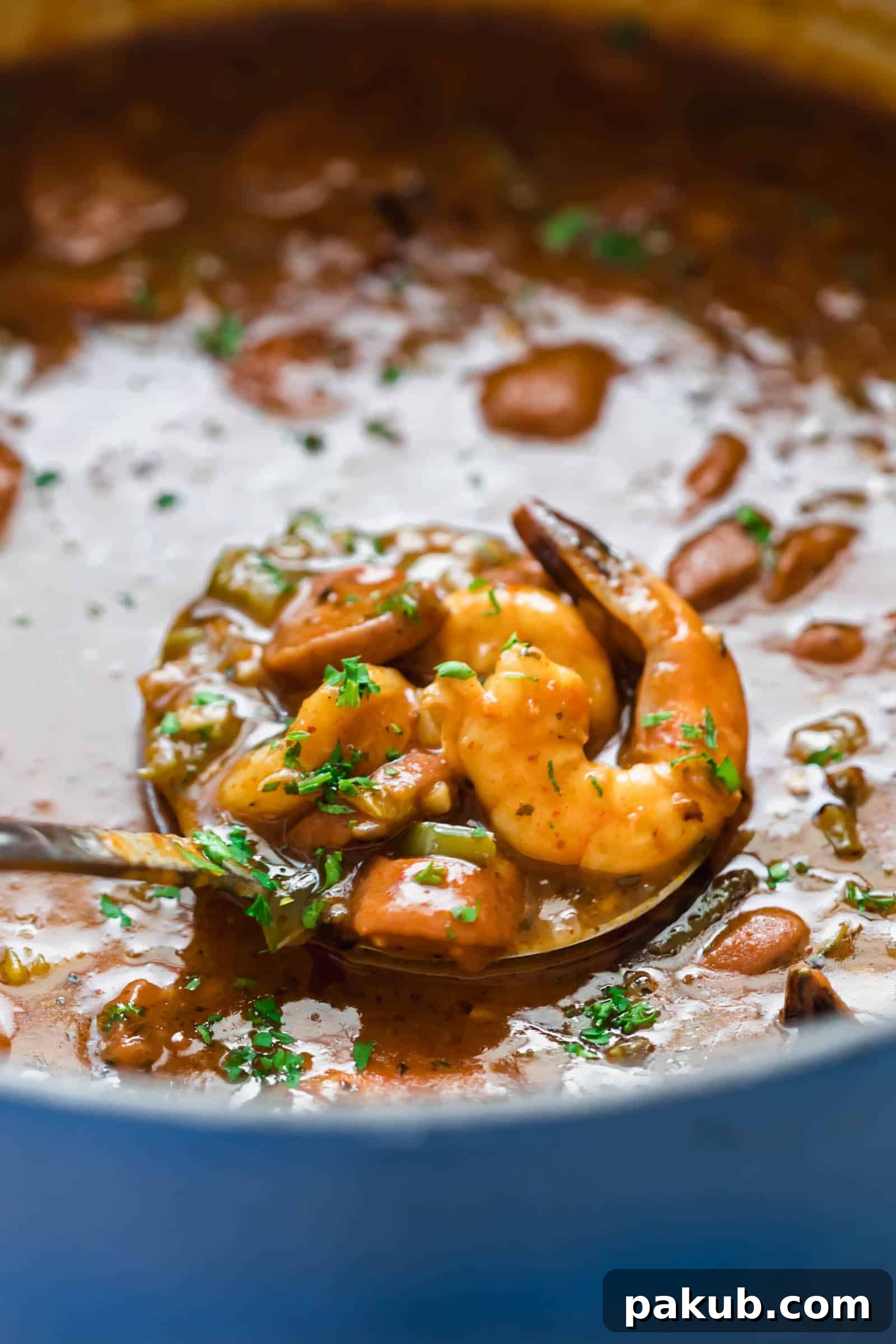
Traditionally, a steaming bowl of New Orleans Gumbo is served generously ladled over a bed of fluffy white rice, allowing the rice to soak up every drop of the rich, flavorful stew. This classic pairing is undoubtedly delicious and remains the most popular choice, providing a satisfying and balanced meal. However, culinary preferences are wonderfully diverse, and we wholeheartedly encourage you to customize your gumbo experience to suit your taste. As ardent fans of dipping crusty bread into hearty stews, we often find ourselves tearing off a generous piece of warm, crusty baguette or cornbread to sop up the savory liquid. The crispy exterior and soft interior of the bread create a delightful textural contrast with the thick gumbo, adding another layer of enjoyment. Beyond rice and bread, some enthusiasts also enjoy serving gumbo with a side of creamy mashed potatoes, which offers a similar comforting effect. Ultimately, you are the master of your gumbo; choose the accompaniment that brings you the most comfort and joy – whether it’s traditional rice, crusty bread, cornbread, or perhaps even something else entirely! Don’t forget a sprinkle of fresh chopped parsley or a dash of hot sauce for an extra kick.
Exploring Gumbo Variations
The beauty of gumbo lies in its incredible versatility. Once you’ve mastered the fundamental techniques—especially the patient preparation of the roux and the aromatic base—you can confidently experiment with a myriad of ingredient combinations to suit your palate and what you have on hand. The core principle remains the same: a deep, flavorful base, the “holy trinity” of vegetables, and your preferred blend of Cajun or Creole spices. Feel free to explore different proteins and create your own signature gumbo, transforming it from a recipe into a personal culinary expression. Here are a few popular variations to inspire your next culinary creation:
- Chicken Sausage Gumbo: A hearty and comforting option, typically featuring tender pieces of chicken (thighs work wonderfully) and robust smoked or Andouille sausages.
- All Seafood Gumbo: For the true seafood connoisseur, this version is packed with an array of oceanic delights such as various types of white fish, shrimp, crab meat, and succulent oysters.
- Sausage Seafood Gumbo: A classic and popular blend that combines the savory depth and smoky notes of sausage with the fresh, delicate flavors of the sea, often including shrimp and crab.
- Crawfish Gumbo: A beloved Louisiana staple, featuring the sweet, delicate taste of fresh crawfish tails, creating a uniquely regional and highly prized gumbo.
- Turkey Gumbo: A fantastic and flavorful way to utilize leftover turkey, especially after holidays. This version offers a rich and comforting stew, perfect for chilly evenings.
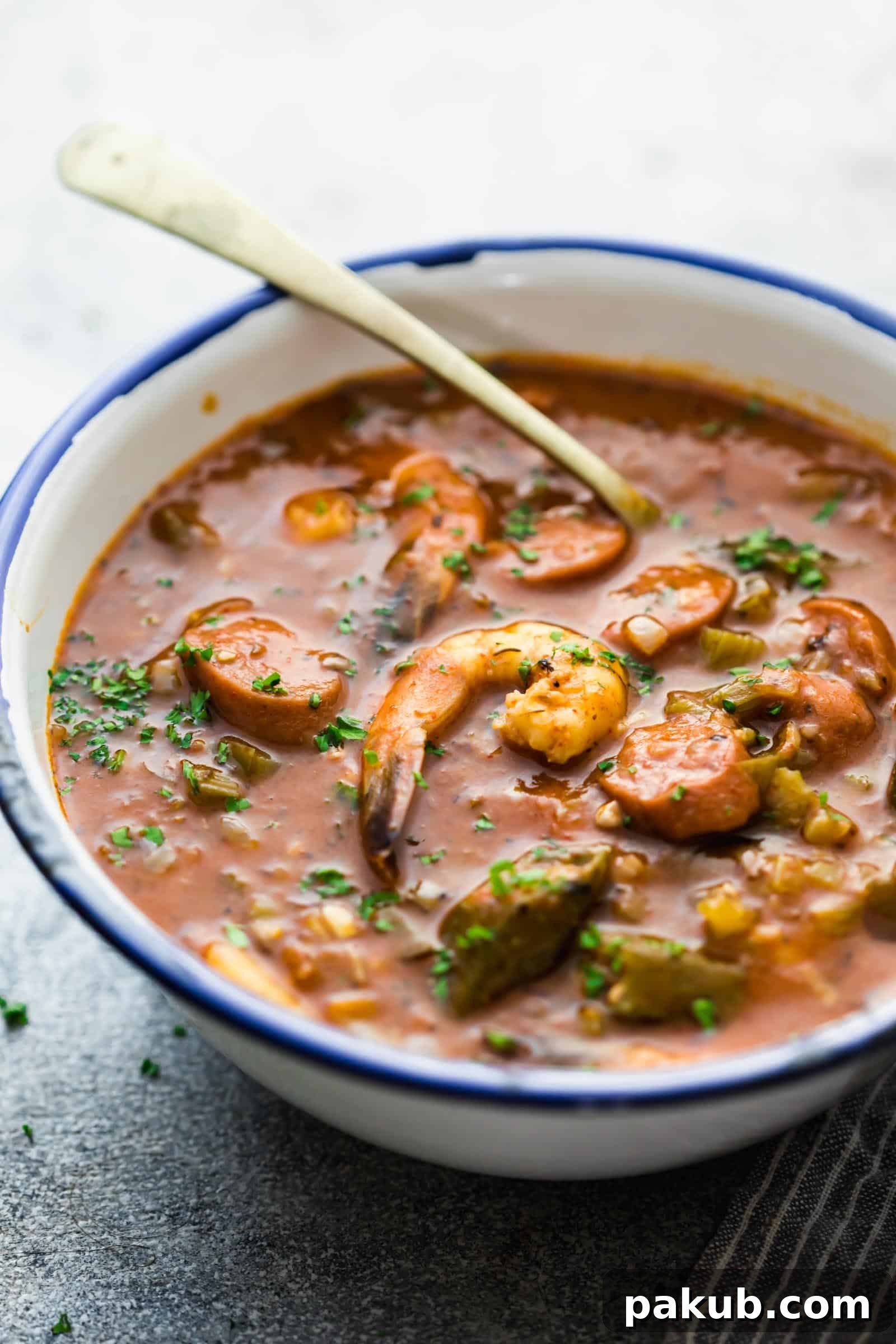
Embarking on this New Orleans Shrimp and Sausage Gumbo recipe might feel a tad intricate on your initial attempt, given the patience required for the roux. However, trust us when we say that with each subsequent preparation, you’ll gain immense confidence and finesse, cooking like a seasoned pro! The unparalleled depth of flavor and the pure satisfaction derived from a big pot of homemade gumbo, especially the even more delicious leftovers (as flavors deepen overnight), will undoubtedly inspire you to revisit this recipe time and time again. It’s a dish that truly gets better with practice and often, with age, becoming a cherished part of your culinary repertoire.
Watch Our Shrimp & Sausage Gumbo Video Recipe
New Orleans Shrimp Sausage Gumbo
Ingredients
- 1/4 cup Canola Oil
- 3 tablespoons Butter
- 1/2 cup All Purpose Flour
- 1 Bayleaf
- 1 cup White Onions, finely chopped
- 1 cup Celery, finely chopped
- 1 cup Capsicum, finely chopped (green bell pepper)
- 1 teaspoon Garlic, minced
- 4 cups Low sodium Shrimp Stock
- 1/2 cup Crushed Tomatoes / tomato puree
- 1/2 cup Homemade Cajun Seasoning, see Note 6 below
- 5-6 Andouille Sausages, diced diagonally
- 2 cups Okra, diced
- 15-20 medium Shrimp, peeled and deveined
- Salt, to taste
- Parsley, chopped (for garnishing)
Instructions
- Prepare the Roux: In a heavy-bottomed Dutch oven or pot, heat the canola oil and butter over medium heat. Once melted, gradually whisk in the all-purpose flour. Cook the flour while stirring constantly and diligently, for approximately 20-25 minutes. The roux will slowly darken from pale white to a deep, rich peanut butter color. Constant stirring is crucial to prevent burning and ensure even cooking. This patient step is vital for the gumbo’s deep, nutty flavor.
- Sauté Aromatics: Once your roux has achieved the desired deep golden-brown hue, add the bay leaf, finely chopped white onions, celery, and green bell peppers (the “holy trinity” of Cajun cooking). Sauté for 3-5 minutes, stirring until the vegetables begin to soften and become fragrant. Stir in the minced garlic for about 1 minute until aromatic.
- Build the Stew Base: Slowly pour in the warm low-sodium shrimp stock, whisking continuously to incorporate it smoothly into the roux and prevent lumps. Bring the mixture to a gentle boil, allowing it to thicken slightly as the roux emulsifies.
- Add Key Ingredients & Simmer: Stir in the crushed tomatoes (or tomato puree), homemade Cajun seasoning, and salt to taste. Add the diagonally diced Andouille sausages and the diced okra. Mix everything thoroughly to combine. Once the stew returns to a boil, reduce the heat to low, cover the pot, and let it gently simmer for 15-20 minutes. This simmering time allows the flavors to meld beautifully and ensures the okra is thoroughly cooked and loses any sliminess.
- Incorporate Shrimp & Finish: Finally, add the medium shrimp to the simmering gumbo. Cook for another 5-8 minutes, or until the shrimp turn opaque and are just cooked through. Be careful not to overcook the shrimp, as they can become tough and rubbery. Remove the pot from the heat immediately after the shrimp are cooked to stop the cooking process.
- Serve: Ladle the hot gumbo into bowls, garnish generously with fresh chopped parsley, and serve immediately. This New Orleans Shrimp and Sausage Gumbo is traditionally served over fluffy white rice, but it’s equally delicious with crusty bread for dipping.
Video Tutorial
Expert Tips for a Perfect Gumbo
- Prevent Roux from Burning: The roux is delicate and can burn quickly. If you don’t have a heavy-bottomed Dutch oven, use a cast-iron skillet or a very thick-bottomed pan for making the roux, then carefully transfer it to your main soup pot. The key is consistent, continuous stirring over medium heat to prevent sticking and burning, which would impart a bitter taste.
- The Importance of Green Bell Peppers: Green bell peppers are preferred for gumbo over red or yellow varieties. They lend a distinct savory sharpness without sweetness, contributing authentically to the Cajun flavor profile. They are part of the “holy trinity” for a reason!
- Sausage Selection: Andouille sausage is the traditional and highly recommended choice for gumbo due to its spicy, smoky flavor and firm texture, which perfectly complements the other ingredients. If authentic Andouille is unavailable, choose another high-quality, flavorful smoked pork sausage.
- Homemade Shrimp Stock for Depth: For the most flavorful and authentic gumbo, homemade shrimp stock is highly recommended. It’s simple to make by simmering shrimp shells (heads and tails) in water for 40-60 minutes, then straining. This truly enhances the seafood essence of the dish, adding an incomparable depth.
- Okra’s Role: Okra acts as a natural thickener and imparts a unique, earthy flavor. If you choose to omit it, your gumbo will be thinner in consistency. To avoid sliminess, ensure the okra is thoroughly cooked (the longer it cooks, the less slimy it becomes); it will become tender and almost creamy. Over-ripened okra might take longer to cook and can be tougher.
- Cajun Seasoning Control: When using homemade Cajun seasoning (which typically does not contain added salt), you have full control over the salt content of your gumbo. If opting for store-bought Cajun seasoning, which often contains salt, start with a smaller amount (e.g., 2 tablespoons) and taste before adding more, to avoid over-salting the dish.
- Perfectly Cooked Shrimp: Add shrimp at the very end of the cooking process. They cook quickly—usually within 5-8 minutes—and can become rubbery and tough if overcooked. Adjust cooking time slightly for smaller or larger shrimp sizes to ensure they remain tender and succulent.
Nutrition Information (per serving)
Calories: 463 kcal, Carbohydrates: 26 g, Protein: 22 g, Fat: 32 g, Saturated Fat: 7 g, Cholesterol: 84 mg, Sodium: 707 mg, Potassium: 819 mg, Fiber: 6 g, Sugar: 5 g, Vitamin A: 5591 IU, Vitamin C: 45 mg, Calcium: 114 mg, Iron: 5 mg
Enjoyed crafting this authentic gumbo? We’d love to hear your thoughts!
Share your experience and let us know what you think in the comments below!
More Hearty Recipes for Meat Lovers
- One-Pot Mexican Rice and Sausages: A flavorful and convenient meal, perfect for a quick weeknight dinner, packed with savory sausage and vibrant Mexican-inspired flavors.
- Creamy Pumpkin Sausage Mac and Cheese: Indulgent comfort food with a delightful seasonal twist, combining creamy pasta with savory sausage and subtle pumpkin notes for a truly cozy dish.
- One Pot Curried Sausages and Potatoes: A simple yet profoundly satisfying dish bursting with aromatic spices, making it an easy and flavorful option for any meal.
- Creamy Chicken Meatballs in Mushroom Sauce: Tender, perfectly seasoned chicken meatballs generously smothered in a rich, savory mushroom sauce, ideal for a comforting family dinner.
- Slow Cooker Teriyaki Meatballs with Pineapple: An effortless recipe for sweet and tangy meatballs, featuring juicy pineapple chunks, making it ideal for entertaining or a hands-off meal.