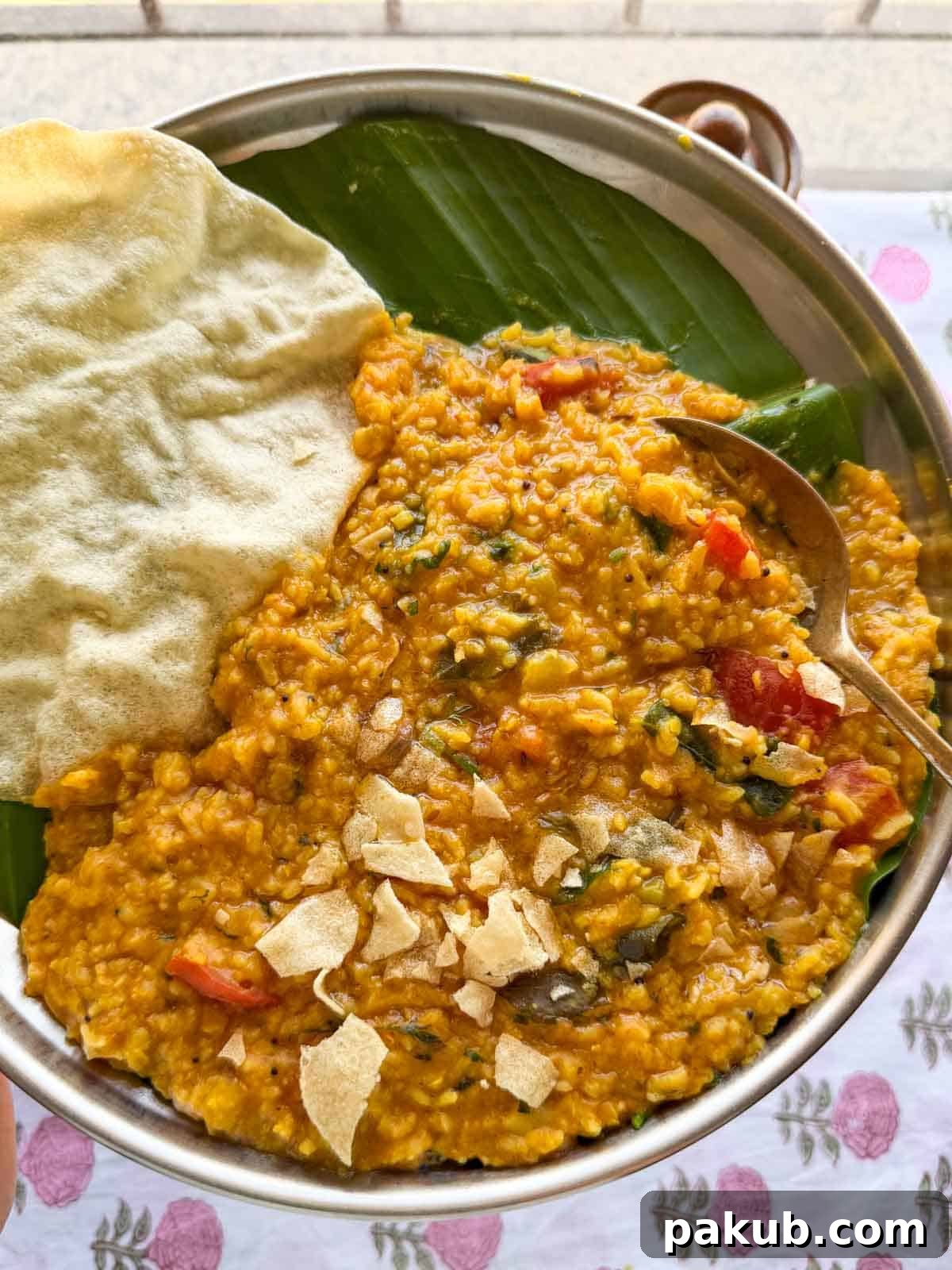
One-Pot Sambar Rice (Sambar Sadam): Your Go-To South Indian Comfort Food
Craving a dish that’s both comforting and bursting with flavor? Look no further than this incredible One-Pot Sambar Rice, famously known as Sambar Sadam. This tangy, spicy, and wholesome South Indian staple comes together effortlessly in a single pot, promising a delightful meal that will leave you completely satisfied. Get ready to savor every spoonful!
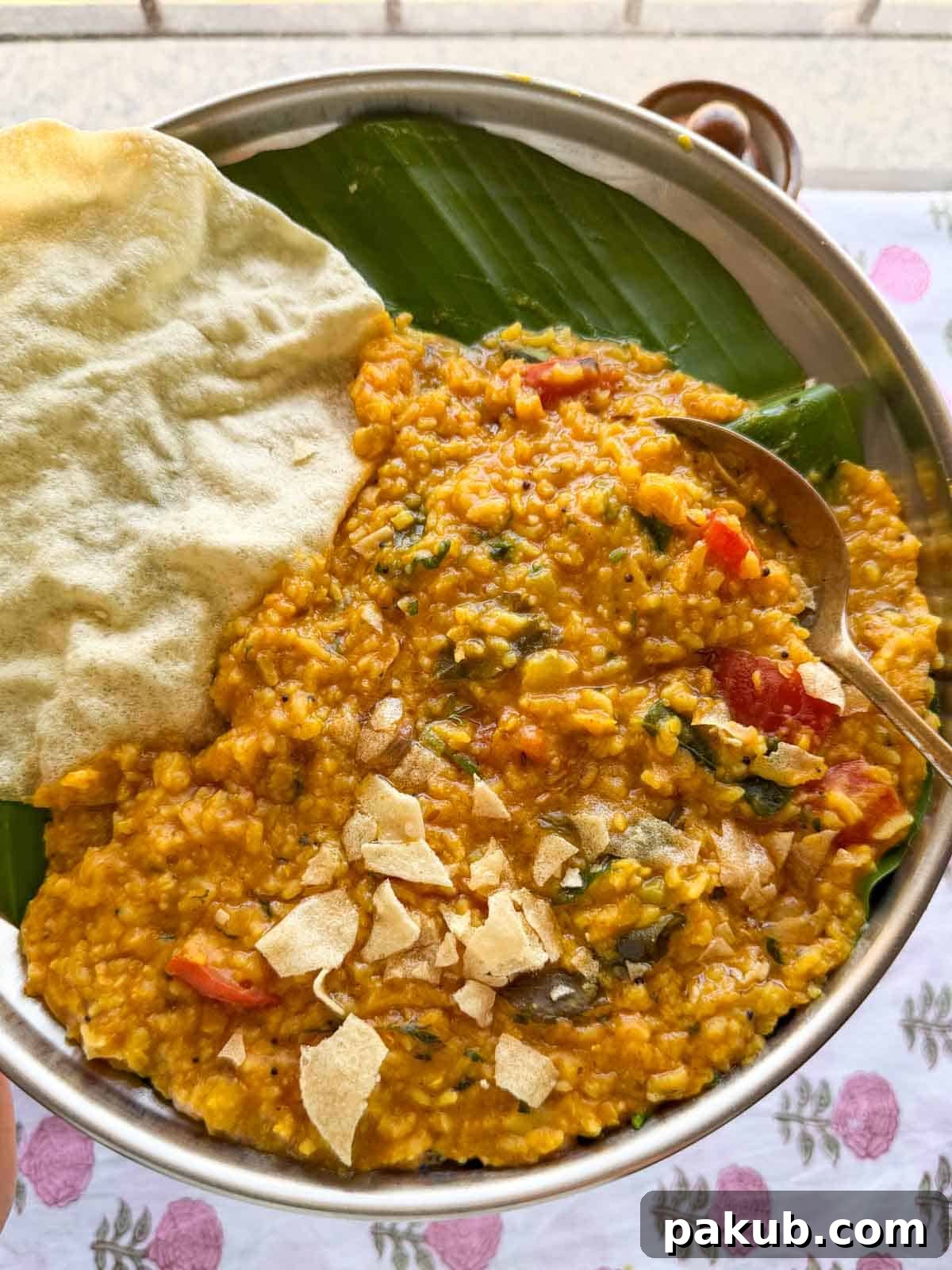
In the vibrant culinary landscape of South India, certain dishes hold a special place in every household. Sambar Rice, affectionately called Sambar Sadam in Tamil Nadu, is undoubtedly one of them. Often enjoyed multiple times a week, this flavorful creation is Tamil Nadu’s comforting answer to Karnataka’s renowned Bisi Bele Bath. It’s a complete meal in itself – a harmonious blend of rice, lentils, and an array of fresh vegetables, all cooked together to create a dish that truly embodies warmth and home-style goodness.
This recipe for One-Pot Sambar Rice is a lifesaver on those hectic weekdays when time is short, but the desire for a nourishing, flavorful meal is strong. It’s also my personal favorite for a relaxed Sunday evening, requiring minimal effort yet delivering maximum satisfaction. The beauty of this dish lies in its simplicity and the fact that everything cooks in just one pot, which means less time spent on washing up and more time enjoying your delicious creation. It’s truly a win-win for busy individuals and families alike.
Serving Sambar Rice is an experience in itself, offering endless possibilities for delicious accompaniments. My kids absolutely adore it with a side of crunchy air fryer potato chips, turning a healthy meal into an exciting treat. For adults, we often pair it with a refreshing cucumber raita, crispy papadums, thinly sliced onions, and a squeeze of fresh lemon wedge to enhance the tangy notes. No matter your preference, this versatile and universally loved dish is guaranteed to be a crowd-pleaser every single time.
Table of Contents: Your Guide to Perfect Sambar Sadam
- What is Sambar Rice (Sambar Sadam)?
- Why You’ll Love This One-Pot Recipe
- Essential Sambar Rice Ingredients
- Step-by-Step Cooking Instructions
- Expert Tips for the Best Sambar Rice
- Frequently Asked Questions
- Storage and Reheating Tips
- Perfect Serving Ideas
- The Complete One-Pot Sambar Rice Recipe Card
What is Sambar Rice (Sambar Sadam)? A South Indian Staple
Sambar Rice, or Sambar Sadam, is a quintessential dish from South Indian cuisine, particularly popular in Tamil Nadu. It’s a wholesome, flavorful, and incredibly satisfying one-pot meal that combines rice, lentils (dal), and a medley of vegetables, all simmered in a tangy, spicy, and aromatic broth infused with tamarind and a special blend of spices known as Sambar powder. This dish is celebrated for its ability to offer a complete nutritional profile, rich in protein from lentils, complex carbohydrates from rice, and essential vitamins from fresh vegetables. It’s often likened to a hearty stew or a thick khichdi, but with a unique South Indian flavor profile that sets it apart.
The beauty of Sambar Sadam lies in its dynamic flavor profile – a perfect balance of sourness from tamarind, spiciness from chili and sambar powder, and a subtle sweetness from some vegetables. Each spoonful offers a burst of textures and tastes, making it an incredibly enjoyable meal. It’s not just food; for many, it’s a taste of home, a memory of childhood, and a symbol of South Indian hospitality and culinary tradition.
Why You Will Love This One-Pot Sambar Rice Recipe
This One-Pot Sambar Rice recipe isn’t just another meal; it’s a culinary experience designed for modern life without compromising on authentic flavors. Here’s why it’s destined to become a favorite in your kitchen:
- Effortless One-Pot Preparation: The biggest draw is that everything cooks in a single pot, simplifying your cooking process and drastically cutting down on cleanup time. Perfect for busy weeknights!
- Authentic South Indian Flavors: Using traditional Sambar powder and fresh ingredients, this recipe captures the true essence of Sambar Sadam, bringing the taste of Tamil Nadu right to your dining table.
- Nutritious and Wholesome: Packed with protein from lentils, energy from rice, and a vibrant mix of vegetables, this dish is a complete and balanced meal, ensuring you get a healthy dose of nutrients.
- Highly Customizable: Don’t have a specific vegetable on hand? No problem! This forgiving recipe allows for easy substitutions and additions, letting you experiment with different flavors and textures.
- Comfort Food at its Best: There’s something inherently soothing about a warm bowl of Sambar Rice. Its rich aroma and hearty texture make it the ultimate comfort food, perfect for any time of the year.
- Naturally Vegetarian & Easily Vegan: This recipe is vegetarian by default, and with a simple swap of ghee for oil, it effortlessly becomes a delicious vegan meal accessible to everyone.
Essential Sambar Rice Ingredients: Crafting Authentic Flavors
To create the perfect One-Pot Sambar Rice, a thoughtful selection of ingredients is key. Each component plays a vital role in building the layered flavors and comforting texture of this classic South Indian dish. Here’s a detailed look at what you’ll need:
- Dal (Lentils): The backbone of Sambar Sadam is toor dal (split pigeon peas), prized for its quick cooking time and creamy texture. While toor dal is traditional, you can experiment with moong dal, masoor dal, chana dal, or a combination for slightly varied taste and consistency. Remember that alternative dals might subtly alter the dish’s final flavor and texture.
- Rice: For an authentic South Indian touch, jeera samba rice is ideal, known for its small grains and fragrant aroma. However, feel free to use any small-grain rice variety readily available to you, such as Sona Masuri or even short-grain basmati, ensuring it’s well-rinsed for optimal texture.
- Aromatics and Herbs:
- Sambar Onions: Small, flavorful onions (also known as shallots or pearl onions) are crucial. When peeled and cooked, they add a sweet and pungent depth that’s characteristic of authentic sambar.
- Curry Leaves: Fresh curry leaves are indispensable, infusing the dish with their unique, slightly nutty, and aromatic fragrance that is synonymous with South Indian cuisine.
- Key Spices: A precise blend of whole and ground spices elevates the flavor profile.
- Mustard Seeds (Rai): Essential for tempering, they pop and release a sharp, nutty flavor.
- Fenugreek Seeds (Methi): Adds a subtle bitterness and a distinct aroma that complements the other spices.
- Asafoetida (Hing): A powerful digestive aid, hing imparts a savory, umami-like flavor, especially beneficial for lentil dishes.
- Turmeric Powder: Provides a warm color and earthy undertones, along with its renowned health benefits.
- Cinnamon Powder: A touch of cinnamon adds a subtle warmth and aromatic complexity.
- Sambar Powder: This is the heart and soul of the dish. Sambar powder is a pre-made spice blend containing dried lentils, whole red chilies, coriander seeds, cumin, fenugreek, and other aromatics. It delivers the signature taste of Sambar. If you’re outside India, look for it in specialty Indian grocery stores; its flavor is irreplaceable.
- Fresh Vegetables: These add nutrition, texture, and natural sweetness.
- Tomatoes: Provide acidity and a juicy texture, balancing the richness of the lentils.
- Chow Chow (Chayote): A mild-flavored squash that absorbs the sambar flavors beautifully, adding a tender bite.
- Capsicum (Bell Pepper): Contributes freshness, a slight crunch, and a vibrant color. This dish is also highly customizable, welcoming other vegetables like green peas, bottle gourd, pumpkin, drumsticks, carrots, or potatoes.
- Tamarind: Soaked in water, tamarind pulp is the traditional source of the characteristic tanginess in sambar. Its sweet and sour notes elevate the entire dish. While lemon juice can be a substitute in a pinch, it won’t replicate the deep, complex tartness of tamarind.
- Oil: Cold-pressed sesame oil is recommended for its distinctive nutty flavor, which perfectly complements South Indian dishes. However, any neutral-flavored cooking oil will work well.
- Salt: For perfect seasoning and to bring out all the flavors.
For the Flavorful Tempering (Tadka)
A final tempering, or tadka, is essential to finish the Sambar Rice, adding a burst of fresh aromas and an irresistible sheen.
- Ghee (Clarified Butter): Adds a luxurious richness, depth of flavor, and an enticing aroma. For a vegan version, simply substitute with a neutral oil that has a high smoke point, such as peanut, sunflower, or vegetable oil.
- Spices for Tadka:
- Hing (Asafoetida): Re-introduced in the tempering for an extra layer of savory aroma.
- Kashmiri Red Chilli Powder: Provides a beautiful reddish hue without excessive heat.
- Cumin Seeds: Earthy and aromatic, they crackle in the hot ghee, releasing their fragrance.
- Fresh Herbs for Tadka:
- Fresh Coriander Leaves: Brightens the dish with a refreshing, citrusy note.
- Curry Leaves: A final addition of fresh curry leaves enhances the authentic South Indian aroma significantly.
One-Pot Sambar Rice: Easy Step-by-Step Cooking Guide
Preparing this comforting Sambar Sadam is simpler than you might think, especially when it all comes together in one pot. Follow these clear steps for a perfectly cooked, flavorful meal.
- Initial Tempering & Aromatics: Heat 2 teaspoons of sesame oil in a pressure cooker over medium heat. Add mustard seeds and fenugreek seeds. Once the mustard seeds begin to splutter vigorously, add ⅛ teaspoon asafoetida (hing) and the first sprig of fresh curry leaves. Sauté these aromatics for about 30 seconds until fragrant.
- Sauté Vegetables & Ground Spices: Add the peeled sambar onions and chopped tomatoes to the cooker. Stir in turmeric powder, sambar powder, cinnamon powder, and 1 ¼ teaspoon salt. Continue to sauté for 2-3 minutes, ensuring the spices are well combined with the vegetables and the tomatoes start to soften.
- Bring to a Boil & Add Tang: Pour in 2 cups of water and bring the mixture to a rolling boil. Add the chopped chow chow and capsicum. Strain the liquid from the pre-soaked tamarind into the pot, pressing firmly to extract all the tangy juice. Discard the fibrous tamarind pulp.
- Combine Dal & Rice: Thoroughly drain the soaked toor dal and rice, then add them into the pressure cooker. Pour in the remaining 1 ½ cups of water and the last 1 teaspoon of sesame oil. Give everything a good, gentle mix to ensure all ingredients are evenly distributed in the liquid.
- Pressure Cook: Securely close the lid on your pressure cooker. Cook on low heat for exactly 10 minutes after the first whistle sounds (adjust timing slightly based on your pressure cooker model and altitude). Once cooking is complete, turn off the heat and allow the pressure to release naturally, which takes about 5-10 minutes. Do NOT force open the lid.
- Prepare Final Tadka: While the Sambar Rice is depressurizing, heat 1 tablespoon of ghee (or oil for a vegan option) in a small tadka pan or saucepan over medium heat. Add cumin seeds. As soon as they splutter, add the remaining ⅛ teaspoon hing, Kashmiri chilli powder, fresh chopped coriander leaves, and the second sprig of curry leaves. Stir quickly for about 15 seconds until fragrant, taking care not to burn the spices.
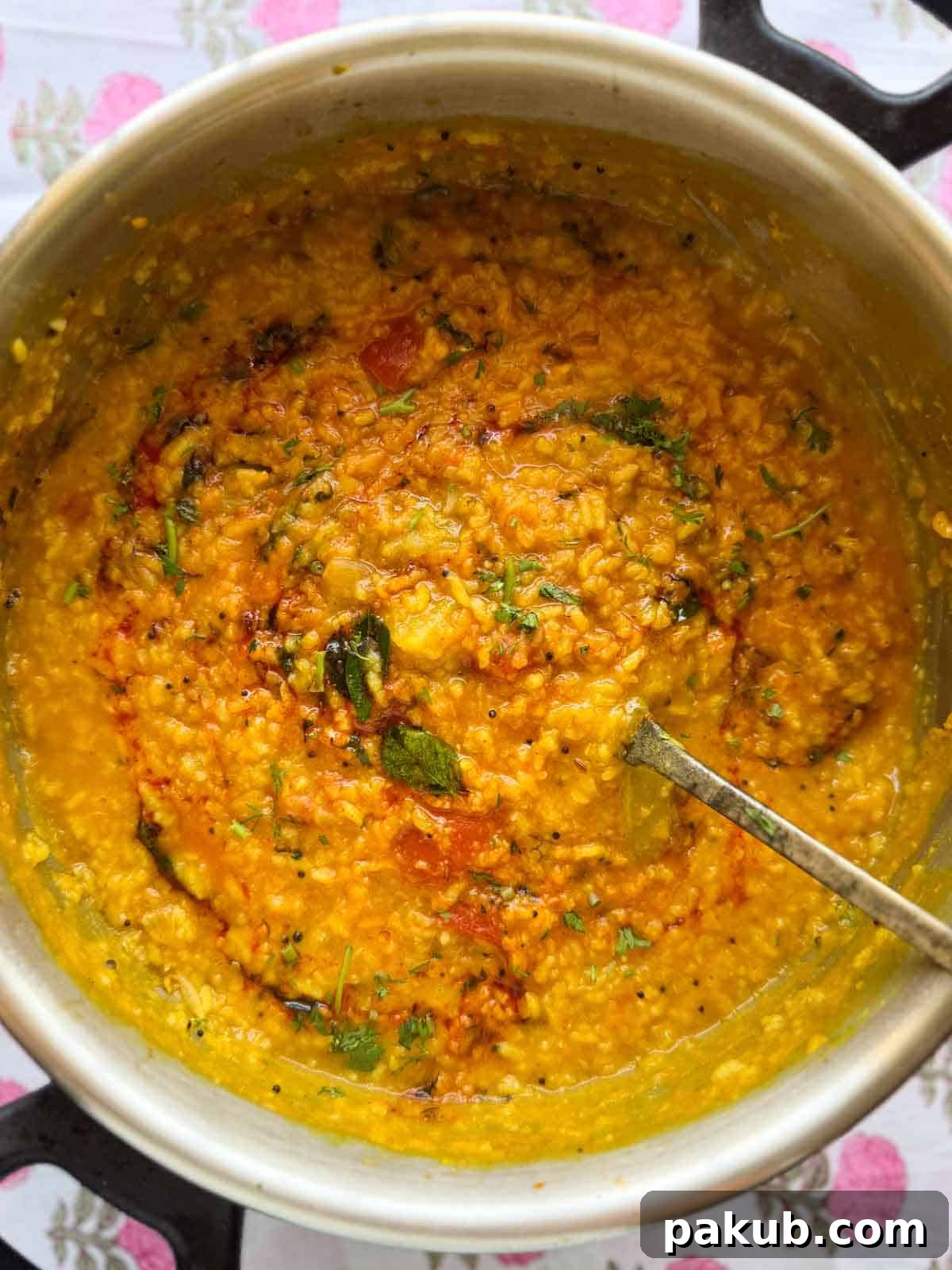
- Final Mix & Serve: Once the pressure cooker has naturally released all pressure, carefully open the lid. Gently mix the Sambar Rice to combine all flavors and textures. Immediately pour the hot, aromatic tempering (tadka) over the Sambar Rice and mix thoroughly once more. Serve this comforting dish hot with your chosen accompaniments.
Expert Tips for the Best One-Pot Sambar Rice
Achieving the perfect Sambar Rice is easy with these insider tips:
- Rinse Rice and Dal Thoroughly: Always rinse your rice and dal multiple times under running water until the water runs clear. This step is crucial for removing excess starch, which prevents the dish from becoming gummy and ensures a beautifully separated, yet creamy, texture.
- Soaking is Recommended: While not strictly mandatory, soaking both the rice and dal for at least 15-30 minutes beforehand is highly recommended. Soaking significantly reduces cooking time, makes the grains and lentils more digestible, and contributes to a better overall texture.
- Vegan Modification: This recipe is naturally vegetarian. To make it completely vegan, simply replace the ghee used in the final tempering (tadka) with an equal amount of your preferred neutral cooking oil (like sesame, sunflower, or peanut oil).
- Adjusting Consistency: Sambar Rice tends to thicken considerably as it cools. If you prefer a looser consistency upon reheating or serving, don’t hesitate to add a splash of hot water or vegetable broth and stir it in gently until it reaches your desired texture.
- Uniform Vegetable Size: For even cooking and consistent texture throughout the dish, ensure all your vegetables are chopped into roughly small, uniform 1-inch cubes. This prevents some vegetables from being overcooked while others remain undercooked.
- Quality Sambar Powder: The quality of your sambar powder significantly impacts the final taste. Invest in a good quality, authentic sambar powder for the best flavor profile.
Frequently Asked Questions About Sambar Rice
Absolutely! Sambar Rice is incredibly versatile and forgiving when it comes to vegetables. You can easily customize it with whatever you have on hand or prefer. Popular additions include green peas, bottle gourd (lauki), pumpkin, carrots, potatoes, and even drumsticks. Each addition will contribute its unique flavor and texture, making the dish even more delightful and nutritious. Feel free to experiment!
Yes, this recipe is perfectly adaptable for an Instant Pot, making it even quicker! After sautéing the aromatics, vegetables, and spices (steps 1-5), add the dal, rice, tamarind water, and the total required water (3.5 cups). Secure the lid and pressure cook on high for 10 minutes. Allow the pressure to release naturally for another 10 minutes, then do a quick release for any remaining pressure. Once opened, give it a good stir, add your tempering, and serve. Your one-pot Sambar Sadam in an Instant Pot will be ready in no time!
While the recipe suggests jeera samba rice for its authentic flavor and aroma, you can use any small-grain rice variety that cooks to a soft consistency. Sona Masuri is another excellent choice. The key is to use a rice that blends well with the lentils and vegetables, becoming part of the creamy texture rather than remaining too separate or firm.
Traditional Sambar Rice has a pleasant, moderate spice level from the sambar powder and chilies. You can absolutely adjust the spice to your preference. For less heat, reduce the amount of sambar powder or omit the Kashmiri chili powder in the tempering. For more heat, you can add a small green chili along with the aromatics or increase the chili powder slightly.
Storage and Reheating Tips for Sambar Sadam
Sambar Rice is one of those dishes that often tastes even better the next day as the flavors have more time to meld. Here’s how to store and reheat it perfectly:
- Refrigeration: Store any leftover Sambar Rice in an airtight container in the refrigerator for up to 2 days. You’ll notice the flavors deepen and improve overnight!
- Thickens on Cooling: As Sambar Rice cools and chills in the fridge, it will naturally thicken significantly due to the starches from the rice and lentils.
- Reheat Method: To reheat, transfer the desired portion to a saucepan on the stovetop or a microwave-safe bowl. Add a splash of hot water or vegetable broth (about ¼ cup per serving) and mix well to loosen the consistency. Heat gently, stirring occasionally, until it’s thoroughly warmed through. Avoid overheating to maintain texture.
- Not Freezer-Friendly: Unfortunately, rice-based one-pot dishes like Sambar Sadam tend to lose their desirable texture and can become mushy or grainy when frozen and thawed. It’s best enjoyed fresh or simply refrigerated.
- Pack-for-Lunch Tip: If packing for lunch, consider adding a little extra dollop of ghee or a teaspoon of oil before sealing the container. This helps keep the rice moist and incredibly flavorful until it’s time to eat.
Perfect Serving Ideas for Sambar Rice
While Sambar Rice is a complete meal on its own, pairing it with certain accompaniments can elevate the dining experience and add delightful contrasts in flavor and texture.
- Crispy Papad (Roasted or Fried): This is arguably the most classic accompaniment. The crispiness of roasted or fried papad (or appalam) provides a wonderful textural contrast to the soft Sambar Rice, and its savory crunch is absolutely irresistible. Don’t forget a generous spoonful of ghee on top of your Sambar Rice for an extra layer of richness!
- Plain Curd or Buttermilk: If your Sambar Rice leans towards the spicier side, a dollop of plain yogurt (curd) or a refreshing glass of buttermilk (chaas) is the perfect cooling counterpoint. It balances the heat and adds a creamy element.
- Simple Potato Stir-Fry (Aloo Fry): A quick and easy potato stir-fry, seasoned with South Indian spices, makes for a truly soul-satisfying and hearty combination with Sambar Rice.
- Vegetable Stir-Fry or Poriyal: Any dry vegetable preparation like a simple green bean poriyal or carrot stir-fry complements the Sambar Sadam beautifully, adding more nutrition and diverse textures.
- Pickle and Roasted Chillies: A small side of your favorite Indian pickle (mango, lemon, or mixed vegetable) adds an extra zing, while roasted green chilies can amp up the heat for spice lovers.
- Coconut Chutney: A fresh coconut chutney can also be a delightful addition, offering a burst of fresh, savory flavors.
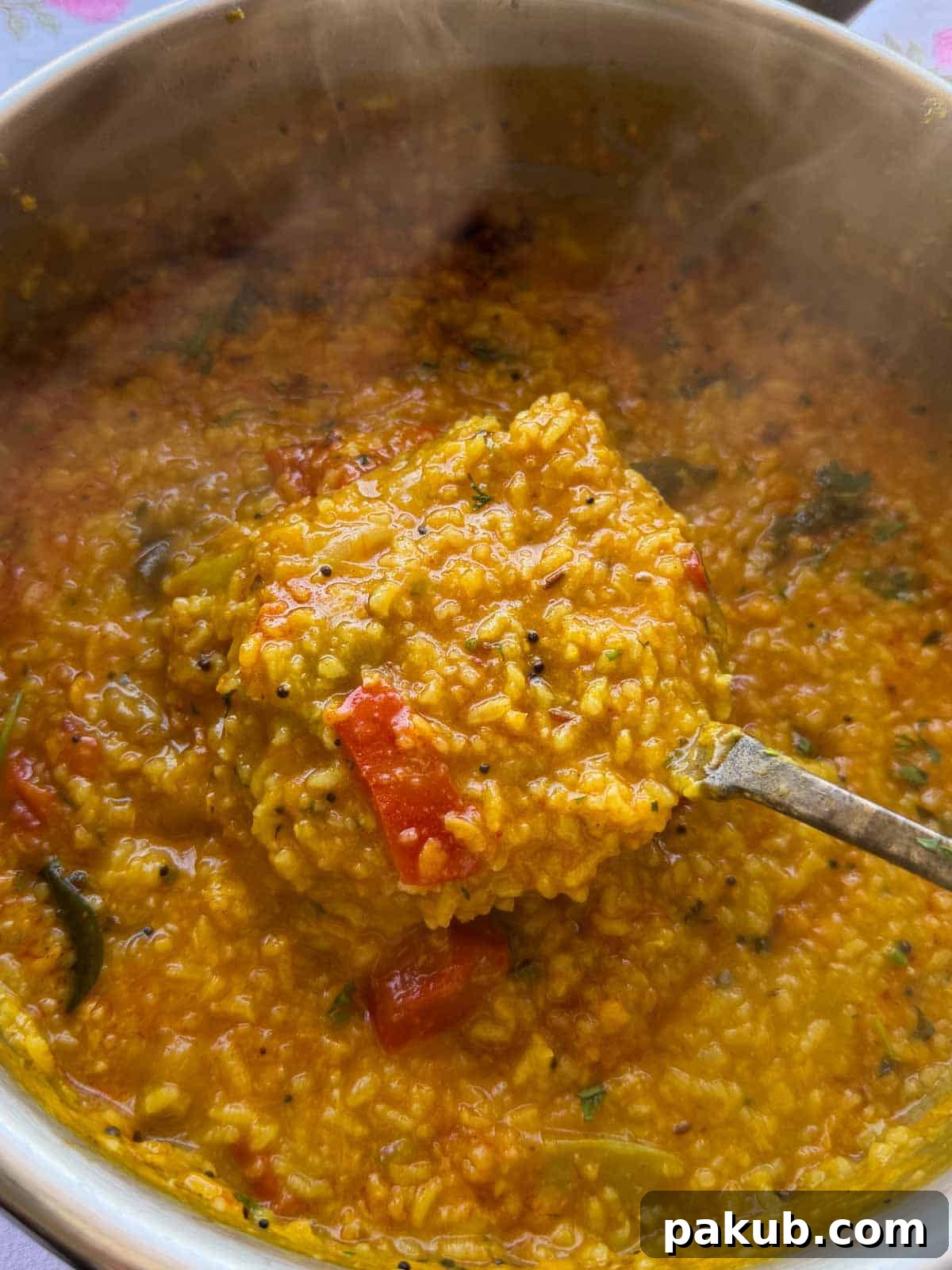
This One-Pot Sambar Rice, or Sambar Sadam, is more than just a recipe; it’s an invitation to experience the simple joys of South Indian home cooking. It’s the perfect dish for those days when you crave something wholesome, deeply flavorful, and effortlessly prepared. After a demanding day, a bowl of this comforting lentil and rice delight truly hits the spot.
I genuinely hope this recipe brings warmth and flavor to your kitchen. If you try this Sambar Sadam at home, I would absolutely love to see your delicious creations! Please feel free to share pictures and tag me on Instagram @my_foodstory. Happy cooking!
Recipe Card: One-Pot Sambar Rice | Sambar Sadam
By: Richa
One-Pot Sambar Rice is a quick and easy rice, lentil, and veggie dish from South India. It’s spicy, tangy, nutritious, and absolutely yummy and comforting.
Prep Time: 5 mins
Cook Time: 25 mins
Total Time: 30 mins
Servings: 4 persons
Equipment
- 1 Pressure Cooker
- 1 Small Tadka Pan (or small saucepan)
Ingredients
Main Dish
- 1 tablespoon sesame oil, divided (2 teaspoons for initial cooking, 1 teaspoon for dal/rice)
- ½ teaspoon mustard seeds (rai)
- ¼ teaspoon fenugreek seeds (methi)
- 1 sprig curry leaves (for initial tempering)
- ⅛ teaspoon asafoetida (hing) (for initial tempering)
- 30 small sambar onions, peeled (or 1 large red onion, roughly chopped)
- 2 medium tomatoes, chopped into 1-inch cubes
- ½ teaspoon turmeric powder
- 2 ½ teaspoons sambar powder
- 1 ¼ teaspoon salt (adjust to taste)
- ⅛ teaspoon cinnamon powder
- 3 ½ cups water, divided (2 cups initially, 1 ½ cups later)
- ⅓ cup chow chow (chayote), chopped into 1-inch cubes
- ⅓ cup capsicum (bell pepper), chopped into 1-inch cubes
- 2 teaspoons tamarind, soaked in 1 ½ tablespoons of hot water (extract pulp and discard solids)
- ½ cup toor dal (split pigeon peas), rinsed thoroughly and soaked for 15 minutes
- ½ cup rice (jeera samba or small-grain variety), rinsed thoroughly and soaked for 15 minutes
For Tadka / Tempering
- 1 tablespoon ghee (clarified butter) OR neutral oil for vegan option
- ½ teaspoon cumin seeds
- ⅛ teaspoon hing (asafoetida)
- 1 teaspoon Kashmiri chilli powder (for color and mild heat)
- 1 tablespoon fresh coriander leaves, chopped
- 1 sprig fresh curry leaves
Instructions
- Initial Tempering & Aromatics: Heat 2 teaspoons of sesame oil in a pressure cooker over medium heat. Add mustard seeds and fenugreek seeds. Once the mustard seeds begin to splutter vigorously, add ⅛ teaspoon asafoetida (hing) and the first sprig of fresh curry leaves. Sauté these aromatics for about 30 seconds until fragrant.
- Sauté Vegetables & Ground Spices: Add the peeled sambar onions and chopped tomatoes to the cooker. Stir in turmeric powder, sambar powder, cinnamon powder, and 1 ¼ teaspoon salt. Continue to sauté for 2-3 minutes, ensuring the spices are well combined with the vegetables and the tomatoes start to soften.
- Bring to a Boil & Add Tang: Pour in 2 cups of water and bring the mixture to a rolling boil. Add the chopped chow chow and capsicum. Strain the liquid from the pre-soaked tamarind into the pot, pressing firmly to extract all the tangy juice. Discard the fibrous tamarind pulp.
- Combine Dal & Rice: Thoroughly drain the soaked toor dal and rice, then add them into the pressure cooker. Pour in the remaining 1 ½ cups of water and the last 1 teaspoon of sesame oil. Give everything a good, gentle mix to ensure all ingredients are evenly distributed in the liquid.
- Pressure Cook: Securely close the lid on your pressure cooker. Cook on low heat for exactly 10 minutes after the first whistle sounds (adjust timing slightly based on your pressure cooker model and altitude). Once cooking is complete, turn off the heat and allow the pressure to release naturally, which takes about 5-10 minutes. Do NOT force open the lid.
- Prepare Final Tadka: While the Sambar Rice is depressurizing, heat 1 tablespoon of ghee (or oil for a vegan option) in a small tadka pan or saucepan over medium heat. Add cumin seeds. As soon as they splutter, add the remaining ⅛ teaspoon hing, Kashmiri chilli powder, fresh chopped coriander leaves, and the second sprig of curry leaves. Stir quickly for about 15 seconds until fragrant, taking care not to burn the spices.
- Final Mix & Serve: Once the pressure cooker has naturally released all pressure, carefully open the lid. Gently mix the Sambar Rice to combine all flavors and textures. Immediately pour the hot, aromatic tempering (tadka) over the Sambar Rice and mix thoroughly once more. Serve this comforting dish hot with your chosen accompaniments.
Nutrition Information (Approximate values per serving, based on 4 servings)
- Calories: 641 kcal
- Carbohydrates: 126 g
- Protein: 19 g
- Fat: 9 g
- Saturated Fat: 3 g
- Polyunsaturated Fat: 2 g
- Monounsaturated Fat: 3 g
- Cholesterol: 10 mg
- Sodium: 924 mg
- Potassium: 1446 mg
- Fiber: 20 g
- Sugar: 39 g
- Vitamin A: 1096 IU
- Vitamin C: 96 mg
- Calcium: 231 mg
- Iron: 4 mg
Please note that nutrition values are estimates and may vary based on specific ingredients, portion sizes, and preparation methods.
This article was researched and written by Urvi Dalal.