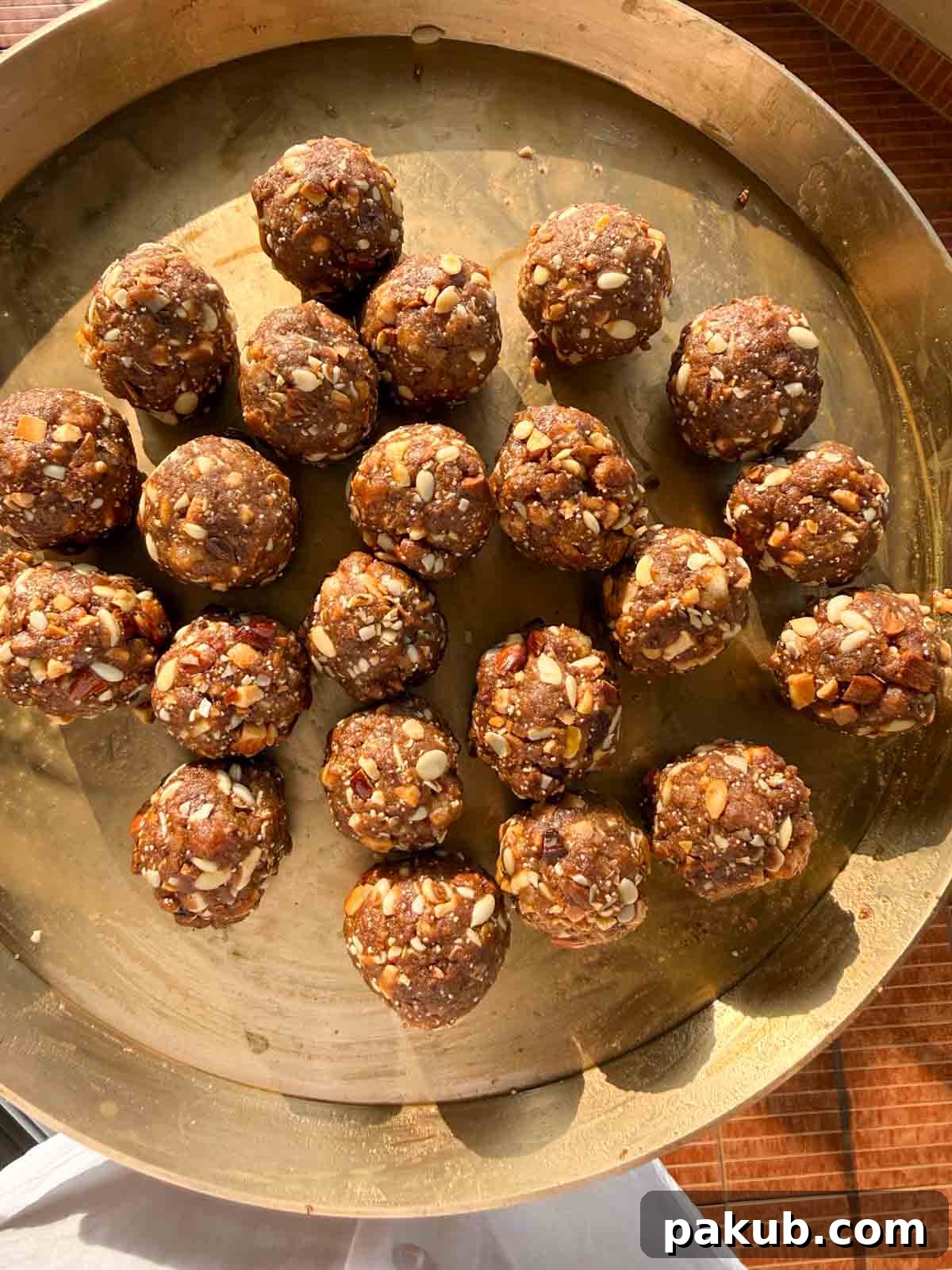
Gond Ke Laddu, a truly special and nourishing delight, is an essential traditional winter staple in countless Indian households. These wholesome, delicious, and deeply satisfying laddoos are celebrated for their remarkable immunity-boosting and warming properties, making them perfect for the colder months.
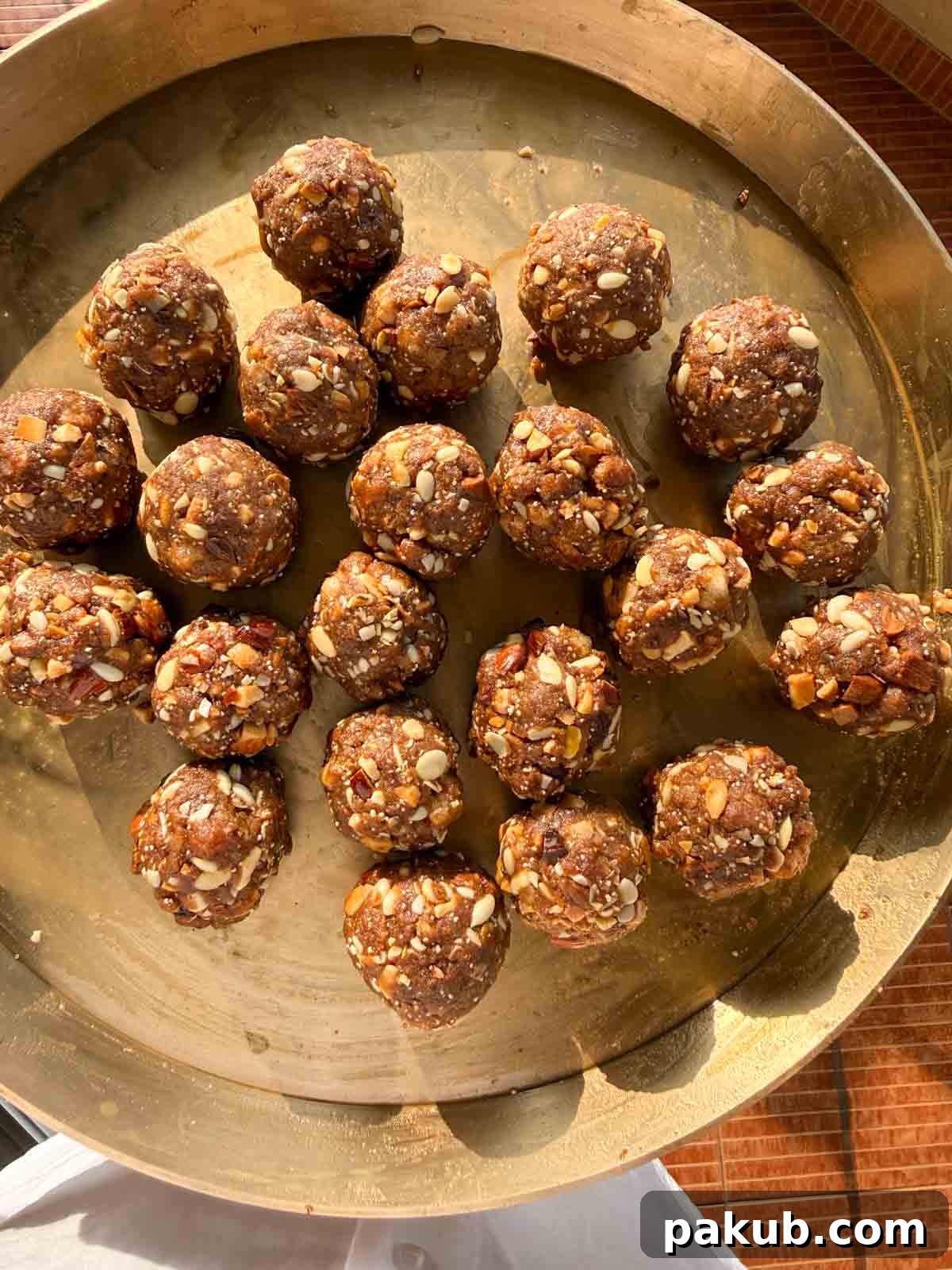
There’s an undeniable magic and profound nostalgia woven into the process of making Gond Ke Laddu at home. For generations, this cherished tradition has been passed down, creating warmth and unforgettable memories. I fondly recall watching my mum and granny meticulously prepare these nutritious spheres, their kitchen filled with the comforting aroma of roasted ghee, nuts, and jaggery. Now, as a parent myself, I continue this beautiful legacy, crafting these healthful treats for my own children, sharing not just a recipe but a piece of our heritage.
For those new to the world of Indian sweets, Gond Ke Laddu is a quintessential traditional Indian winter delicacy. It’s lovingly prepared using a star ingredient called ‘gond’ (edible gum), complemented by the natural sweetness of jaggery, a generous assortment of crunchy nuts, and wholesome whole wheat flour. Far from being just a simple treat, each laddu is a powerhouse of benefits, carefully designed to nourish and fortify the body during the chilly winter season. These delightful, bite-sized sweets offer a perfect blend of taste, texture, and vital nutrients, making them a popular choice for families seeking both indulgence and wellness during the colder months.
Across the diverse tapestry of India, these delightful laddoos are known by various names, reflecting the rich linguistic and culinary traditions of each state. Whether you call them Gond Ke Laddu, Pinni (especially popular in Punjab), or Dinkache Laddu (a Maharashtrian variant), the essence remains the same: a comforting, energy-rich, and incredibly flavorful sweet meant to warm and nourish. This particular recipe for Gond Ke Laddu originates from North India, a region where it holds a special place in winter diets. It’s the very version I grew up savoring, a taste that instantly transports me back to my childhood. For me, alongside iconic winter delights like Gajar Halwa (carrot pudding) and Methi Matar Malai (a creamy fenugreek and peas curry), Gond Ke Laddu is an absolute must-have winter recipe, embodying the true spirit of seasonal Indian cuisine and its profound connection to well-being.
Table of Contents: Gond Ke Laddu Essentials
- What is Gond and Its Remarkable Health Benefits
- Key Ingredients for Authentic Gond Ke Laddu
- Expert Tips for Perfect Gond Ke Laddu
- Frequently Asked Questions About Gond Ke Laddu
- Effective Storage Tips for Longevity
- Delightful Serving Ideas
- Creative Customization Ideas for Your Laddu
- Watch Our Gond Laddu Recipe Video Tutorial
What is Gond and Its Remarkable Health Benefits?
Gond, often referred to as edible gum or Tragacanth gum, stands as one of the oldest and most revered natural superfoods in traditional Indian culinary and medicinal practices. Sourced from the natural sap of the babool (Acacia nilotica) tree, this incredible ingredient transforms into light, crunchy puffs when fried in ghee, becoming the textural heart of our laddoos. Its significance extends far beyond its unique texture, however. Gond is primarily celebrated for its exceptional warming properties, making it an invaluable component of the winter diet, particularly in regions experiencing harsh cold climates. This natural gum resin is essentially a dietary fiber, often consumed for its numerous health-promoting attributes.
For centuries, traditional Indian households have relied on gond for a multitude of health benefits. It is renowned for its ability to generate internal warmth, crucial for warding off the chill of winter and supporting overall body temperature regulation. Beyond warmth, gond is a powerhouse for boosting stamina and energy levels, providing a sustained release of energy that helps combat winter sluggishness. This makes it an ideal food for anyone needing an energy lift, from active individuals and growing children to the elderly facing seasonal fatigue. Its unique composition helps in building strength and resilience, which is especially beneficial when the body needs extra support.
Furthermore, gond holds a deeply respected place in Ayurvedic traditions for its profound benefits in supporting postpartum recovery. New mothers are often given gond-based preparations to help regain strength, promote bone health, and aid in the healing process after childbirth. It’s believed to strengthen joints, a common area of concern for many, especially during the colder months or after physical exertion. Its natural lubricating properties are thought to contribute to joint health and flexibility. Regular consumption of gond during winter is also linked to improved immunity, helping the body to fend off common seasonal ailments like colds and coughs. Its comprehensive nutritional profile, coupled with its warming and restorative effects, firmly establish gond not just as an ingredient, but as a holistic wellness aid deeply embedded in Indian cultural wisdom and traditional medicine.
Key Ingredients for Authentic Gond Ke Laddu
Crafting the perfect batch of Gond Ke Laddu requires a careful selection of wholesome ingredients, each playing a crucial role in both flavor and nutrition. Here’s a closer look at what goes into these delectable winter sweets, highlighting their individual contributions:
- Gond (Edible Gum): As the name suggests, this is truly the star ingredient. When fried in ghee, gond puffs up into light, crisp, and crunchy morsels, providing the laddoos with their characteristic texture. Beyond texture, gond is prized for its exceptional health benefits, including strengthening bones, lubricating joints, and generating internal warmth, making it a powerful natural supplement during winter.
- Ghee (Clarified Butter): Pure ghee is the soul of these laddoos, fundamental to their rich, authentic flavor and smooth, melt-in-your-mouth texture. Used generously for frying the gond and roasting the flour, ghee infuses the entire dish with a comforting warmth and an unparalleled aroma. Beyond taste, ghee is celebrated in Ayurveda for aiding digestion, promoting gut health, and acting as a carrier for nutrients. Opting for good quality, ideally homemade ghee, significantly enhances the final result.
- Assorted Nuts & Seeds: A thoughtfully chosen mix of nuts and seeds adds vital crunch, healthy fats, protein, and dietary fiber. This recipe traditionally uses chopped cashews and almonds, along with melon seeds and khus khus (poppy seeds). These not only enhance the classic laddoo texture but also provide sustained energy, support brain function, and contribute to heart health. Feel free to experiment with other additions like walnuts, pistachios, or sunflower seeds for an even richer nutritional profile.
- Copra (Dried Coconut): Finely grated or shredded dried coconut, known as copra, introduces a delicate sweetness and a wonderfully nutty, tropical aroma when lightly roasted. It adds a pleasant chewiness to the laddoos and is a natural source of healthy saturated fats, essential for energy, and dietary fiber, supporting digestive health.
- Atta (Whole Wheat Flour): Serving as the primary binder and a substantial base, whole wheat flour gives the laddoos their desired body and helps hold all the ingredients together once perfectly roasted. It provides complex carbohydrates, offering sustained energy release, and its earthy, nutty flavor perfectly complements the richness of ghee and sweetness of jaggery.
- Jaggery (Gud): This natural, unrefined sweetener is a healthier, more traditional alternative to white sugar. Jaggery melts into a sticky, fragrant syrup that masterfully binds all the dry ingredients, creating a cohesive and shapeable mixture. Beyond its distinct, caramel-like sweetness, jaggery is rich in iron, which helps prevent anemia, and is highly regarded in traditional Indian practices for its warming properties, making it an ideal choice for winter consumption.
- Water: Just a small amount of water is used to help melt the jaggery into a smooth syrup, ensuring it coats and binds the other ingredients evenly without becoming too hard.
Expert Tips for Perfect Gond Ke Laddu (from Richa’s Kitchen)
Achieving the perfect texture, flavor, and shelf-life for your Gond Ke Laddu is simpler than you think with these expert tips, honed over years of family tradition and culinary experience:
- Fry Gond on Low Heat for Fluffy Perfection: This is a crucial step that determines the final texture of your laddoos. Always fry your gond in small, manageable batches over consistently low to medium heat. The gond should puff up slowly and evenly, expanding into light, airy, and wonderfully crispy morsels. If the heat is too high, the gond will brown too quickly on the outside while remaining dense, hard, and chewy in the center. Patience here ensures a delightfully light and crunchy texture that truly melts in your mouth, avoiding any unpleasant hardness.
- Roast Each Ingredient Separately for Optimal Flavor: Different ingredients require varying roasting times and temperatures to develop their full flavor and aroma. Nuts, whole wheat flour (atta), and copra (dried coconut) all cook at different speeds. Attempting to roast them together can easily lead to some ingredients burning while others remain undercooked or tasteless. Roasting them individually ensures each component reaches its perfect golden hue and develops its rich, nutty flavor without any bitter notes. This methodical approach contributes significantly to the overall depth of taste and the inviting aroma of your laddoos.
- Melt Jaggery, Don’t Overcook It: When preparing the jaggery syrup, the primary goal is simply to melt it until it forms a smooth, cohesive mixture with the added water. There’s absolutely no need to achieve a specific ‘string consistency’ (like one-string or two-string syrup) as you would for other intricate sweets. As soon as the jaggery has fully dissolved and is liquid, turn off the heat immediately. Overcooking the jaggery will cause it to crystallize and harden significantly upon cooling, resulting in laddoos that are not only difficult to bind but also rock-hard and challenging to eat. Keep the jaggery soft for perfectly tender, easy-to-chew laddoos.
- Shape the Laddus While Warm for Easy Binding: The mixture for Gond Ke Laddu is best shaped while it’s still warm to the touch. As the mixture cools, the ghee solidifies, making it much harder to bind and form into neat, round spheres. If your mixture happens to cool down too much during the shaping process, don’t despair! Simply return it to a heavy-bottomed pan and gently warm it over very low heat for a few minutes, stirring occasionally. This will soften the ghee and loosen the mixture again, making it pliable and easy to shape.
- Invest in Good-Quality Ghee for Superior Taste: Ghee is arguably the most dominant flavor component in Gond Ke Laddu, contributing immensely to its richness, authenticity, and overall indulgence. Using high-quality ghee, especially freshly homemade ghee, will elevate the flavor profile of your laddoos significantly. The subtle nutty aroma, pure richness, and smooth texture of excellent ghee truly make a profound difference to both the taste and the final mouthfeel, enhancing the entire experience of this cherished traditional sweet.
Frequently Asked Questions About Gond Ke Laddu
Pinni and Gond Laddu are both traditional winter sweets originating from North India, and they share many similarities, often leading to confusion. Both are typically prepared with generous amounts of ghee, a variety of nuts, and flour (usually whole wheat). The primary distinction often lies in the emphasis of ingredients and regional variations. While Gond Laddu prominently features ‘gond’ (edible gum) as a star ingredient for its unique texture and specific health benefits, Pinni usually has a higher proportion of flour and might contain more mawa (reduced milk solids) or a different blend of spices like cardamom or ginger powder. Many recipes for Pinni also incorporate gond, making them very similar, with regional traditions dictating the precise ratios and additional flavorings. Essentially, they are close culinary cousins in the vast and delicious family of Indian winter sweets.
Hard laddoos are a common issue but entirely fixable! They usually become hard for a couple of main reasons: either the atta (whole wheat flour) or the gond was over-roasted, or the jaggery syrup was cooked for too long. Over-roasted flour or gond can become tough and brittle, and overcooked jaggery will crystallize and harden significantly when it cools. To remedy a batch of hard laddoos, gently warm the entire mixture in a heavy-bottomed pan over very low heat. As it warms, the ghee will soften, and the jaggery will become pliable again. You can also add an extra tablespoon or two of melted ghee to help loosen the mixture and improve its consistency. Once warm and soft, quickly reshape the laddoos before the mixture cools down and hardens again.
Absolutely, this recipe can be easily adapted for a vegan diet! The primary ingredient to substitute is ghee. You can replace ghee with an equal amount of good quality, unrefined coconut oil or a solid plant-based butter alternative. Coconut oil will impart a slightly different, subtle coconut flavor to the laddoos, which many find delicious and complementary to the other ingredients. When selecting a substitute, ensure that the plant-based fat you choose is solid or semi-solid at room temperature, as this is crucial for helping the laddoos bind properly and hold their shape. The overall texture and binding will remain excellent, ensuring you can still enjoy these nourishing winter treats.
While you technically *can* use granulated sugar, jaggery is highly recommended for Gond Ke Laddu for several compelling reasons. Jaggery contributes a unique, deep, caramel-like flavor and a richer, more appealing color that is characteristic of traditional Indian sweets. More importantly, jaggery offers significant nutritional benefits, including natural iron content, and is widely considered to have warming properties crucial for a winter sweet. Granulated sugar, while providing sweetness, lacks these nutritional and traditional benefits, and might result in a different texture (potentially drier and harder) and a less authentic flavor profile. If using sugar, you might need to adjust the liquid content slightly and be mindful of its quicker caramelization properties.
The key to well-bound laddoos lies in two main factors: proper roasting of the flour and adequate melting of the jaggery, along with shaping while warm. Ensure your atta is thoroughly roasted until fragrant and golden, as raw flour won’t bind as effectively. Also, make sure the jaggery is completely melted and evenly mixed with the other ingredients. Most importantly, begin shaping the laddoos as soon as the mixture is cool enough to handle but still warm. The warmth of the mixture keeps the ghee soft, allowing it to act as a binder. If it cools too much, the ghee solidifies, making the laddoos crumbly. If this happens, gently rewarm the mixture over low heat until it becomes pliable again, then try shaping them.
Effective Storage Tips for Longevity
Properly stored Gond Ke Laddu can retain its freshness, delectable flavor, and satisfying texture for an extended period, ensuring you have a wholesome and readily available snack whenever you desire. Here’s how to maximize their shelf life and keep them tasting great:
- Room Temperature Storage for Immediate Enjoyment: For everyday consumption and to savor their optimal texture, store your Gond Ke Laddu in an airtight container at room temperature. Thanks to the fact that all the ingredients are thoroughly roasted and generously prepared with ghee, these laddoos possess excellent natural preservation qualities. They typically stay fresh and delicious for an impressive 2 to 3 weeks. Always keep them away from direct sunlight, open air, or excessively warm spots in your kitchen to prevent rancidity or melting.
- Refrigeration for Extended Freshness (Optional): While not strictly necessary in most moderate climates due to their robust nature, refrigeration can further extend their shelf life, especially if you live in a very warm or humid environment, or wish to store them for longer than a month. If you choose to refrigerate them, be aware that the ghee will harden significantly, making the laddoos much firmer. To restore their softer, more desirable texture and rich aroma, simply bring them out of the fridge and allow them to come to room temperature for an hour or two before eating.
- Freezing for Long-Term Preservation: Gond Ke Laddu freeze remarkably well, making them an excellent candidate for meal prep or enjoying a batch over several months. To freeze, arrange them in a single layer on a baking sheet to firm up, then transfer them to a freezer-safe, airtight container or heavy-duty freezer bags. They can be stored in the freezer for up to 2 months without significant loss of quality. To enjoy, simply thaw a few laddoos overnight on your kitchen counter. They will taste just as fresh and delightful as if they were freshly made.
- Avoid Moisture at All Costs: Moisture is the absolute enemy of freshness for these laddoos. To prevent spoilage and extend their shelf life, always use a clean, dry spoon or thoroughly dry hands when handling them. Even a small amount of moisture can introduce bacteria, significantly shorten their shelf life, and potentially lead to mold.
Delightful Serving Ideas for Gond Ke Laddu
Gond Ke Laddu, with its rich flavor, unique texture, and inherent warming properties, pairs wonderfully with a variety of other traditional Indian dishes, especially during the colder winter season. These nutritious spheres are versatile and can be enjoyed in numerous delightful ways. Here are some excellent ideas to serve and savor these wholesome treats:
- Alongside Other Halwas: Create a truly cozy, old-school Indian sweet platter by serving Gond Ke Laddu alongside other beloved halwas like Sooji Halwa (semolina pudding) or Gajar Halwa (carrot pudding). The delightful contrast in textures – the soft richness of halwa against the crunchy, chewy laddu – and complementary flavors make for a truly indulgent and satisfying dessert experience, perfect for festive gatherings or a quiet evening.
- As a Perfect End to a Hearty Winter Meal: Enjoy these nourishing laddoos as the ideal finishing touch to a substantial and warming winter Indian meal. Imagine savoring them after a satisfying bowl of spicy Sarson Ka Saag (mustard greens curry) and fresh, hot Roti or Makki ki Roti. The comforting sweetness and internal warmth provided by the laddu perfectly balance the savory notes of the main course, leaving you feeling fully satisfied and cozy.
- With a Warming Evening Snack Platter: For an indulgent and comforting evening snack, pair Gond Ke Laddu with a steaming cup of aromatic Masala Chai. The robust flavors of the chai complement the richness of the laddu beautifully. You can further enhance this platter by adding crispy Mathri (savory crackers) or other light savory Indian snacks, creating a balanced sweet and savory experience that is perfect for a chilly evening or an afternoon pick-me-up.
- As an Energy-Boosting Breakfast Companion: For a quick, easy, and incredibly nutritious start to your day, enjoy one Gond Ke Laddu with a glass of warm milk. This combination provides a substantial boost of instant energy, keeps you feeling full and satisfied, and helps generate internal warmth, preparing you well for the day ahead, especially during cold mornings.
- A Thoughtful Gift for Loved Ones: Package beautifully crafted Gond Ke Laddu in decorative boxes or jars. They make an incredibly thoughtful and healthful gift for family and friends during festivals or as a gesture of care, especially for those needing an extra boost of energy and warmth.
Creative Customization Ideas for Your Gond Ke Laddu
While the traditional Gond Ke Laddu recipe is a masterpiece on its own, there are many exciting and genuinely useful ways to customize it, allowing you to add new flavors, textures, or even more targeted health benefits. Don’t hesitate to experiment and make this classic sweet truly your own:
- Incorporate More Edible Gum Varieties for Nuance: If you’re keen to explore the full spectrum of edible gums and their unique properties, consider adding small portions of other varieties like Babul gond or Mahua gond. These can be mixed with the regular gond for an added depth of texture and potentially introduce different nuances of traditional health benefits. Always remember to fry them separately and ensure they puff up correctly, as their frying characteristics might slightly differ.
- Create a Decadent Chocolate Version for a Modern Twist: For a kid-friendly twist or simply for avid chocolate lovers, introduce 1 to 2 tablespoons of high-quality unsweetened cocoa powder when you are roasting the atta (whole wheat flour). This infusion gives the laddoos a delightful chocolatey aroma and flavor, transforming them into an instant hit while still retaining all their wholesome and nourishing qualities.
- Elevate with Aromatic Winter Spices: To intensify the warming properties and add another layer of traditional Indian flavor, sprinkle in a pinch of freshly grated nutmeg (jaiphal), a teaspoon of dry ginger powder (saunth), or a hint of cardamom powder into the mixture after roasting the flour. These spices are renowned for their digestive and warming benefits during winter and will make your laddoos even more comforting and aromatically complex.
- Boost Nutrition with Extra Seeds: For an additional crunch and an incredible boost of nutrients, toss in some toasted flaxseeds, sunflower seeds, pumpkin seeds, or even tiny chia seeds to the mixture along with the nuts. These super seeds are rich in omega-3 fatty acids, dietary fiber, and essential minerals, making your laddoos even healthier, more satisfying, and providing a subtle textural contrast.
- Make Mini Laddoos for Gifting and Portion Control: Instead of rolling standard-sized laddoos, opt for bite-sized versions. These mini laddoos are not only perfect for elegant gifting on festive platters but are also excellent for portion control, allowing you to enjoy the treat without overindulging. They also cool and set faster, which can be a time-saver.
- Add Dried Fruits for Natural Sweetness and Chewiness: Finely chop a handful of naturally sweet dried fruits like dates, figs, raisins, or apricots and add them to the mixture along with the nuts. This will provide additional natural sweetness, a lovely chewy texture, and a boost of extra fiber and vitamins, enriching the overall flavor and nutritional profile of your laddoos.
- Enhance with Mawa or Khoya: For an even richer, denser, and more decadent laddoo, you can lightly roast some mawa (reduced milk solids) or khoya in ghee until it turns light pink, then crumble it into the mixture. This adds a creamy depth and makes the laddoos truly melt-in-your-mouth.
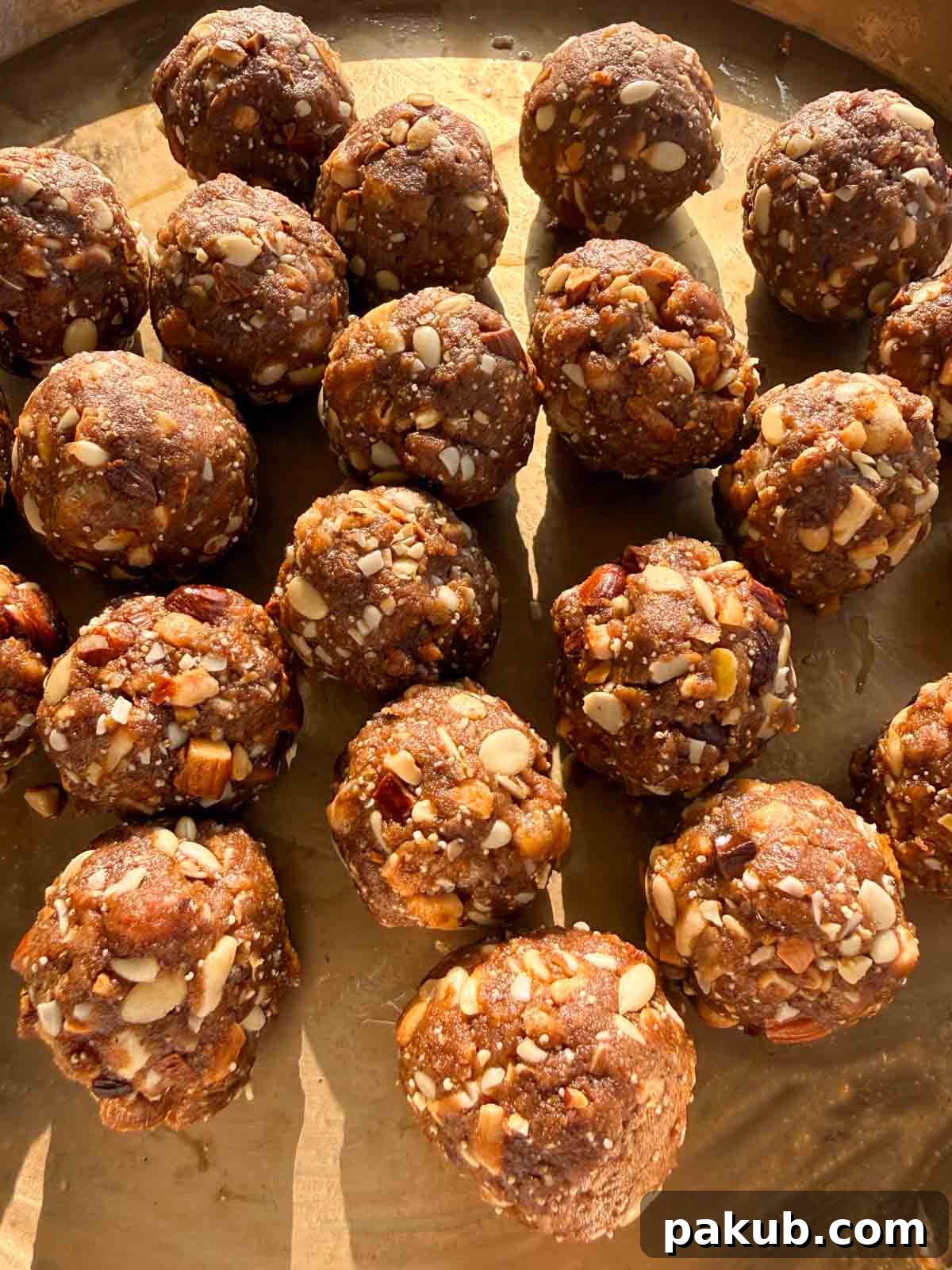
Ultimately, Gond Ke Laddu is far more than just a sweet; it’s like winter wrapped up in a small, comforting bite. Each laddu embodies warmth, nuttiness, wholesome goodness, and a familiar sense of tradition that truly hits the spot during the colder months. Its unique blend of meticulously chosen ingredients, carefully balanced to provide both exquisite flavor and profound health benefits, makes it a timeless and invaluable addition to any winter kitchen. It’s a treat that nourishes both body and soul, connecting us to generations past and reminding us of the simple joys of homemade food.
We absolutely love seeing your culinary creations and hearing about your kitchen adventures! If you decide to make a batch of these wonderful Gond Ke Laddu, please don’t hesitate to share your winter kitchen magic with us. Tag us on Instagram @my_foodstory. Your delightful pictures and experiences inspire us and our growing community of food enthusiasts!
Watch Our Gond Laddu Recipe Video Tutorial
Gond Ke Laddu (Pinni / Dink Laddu)
Richa
15
25
40
18
laddus
Ingredients
- ½ cup + 1 tsp ghee, divided
- ⅔ cup gond (approx. 50 gms edible gum)
- ½ cup + 2 tablespoons chopped cashews (approx. 50 gms)
- ¼ cup + 1 tablespoon chopped almonds (approx. 50 gms)
- ¼ cup + 2 tablespoons melon seeds (approx. 50 gms)
- 1 cup atta / whole wheat flour
- 1 tablespoon khus khus (poppy seeds)
- ¼ cup grated khopra (dried coconut, approx. 25 gms)
- 1 cup jaggery (gud, approx. 180 gms)
- 2 tablespoons water
Instructions
-
1. Heat 3 tablespoons of ghee in a heavy-bottomed kadai or large pan over low-medium heat. Add gond in small batches to ensure even frying. Fry until each piece puffs up beautifully, turning light, airy, and crispy. This usually takes 1-2 minutes per batch. Transfer the puffed gond to a separate large plate. Repeat until all gond is fried.Ghee,
Gond -
2. In the same kadai (add a little more ghee if needed), add the chopped cashews and fry on low heat for 2-3 minutes until they turn a light golden color and become fragrant. Transfer them to the plate with the gond. Next, add the melon seeds to the kadai and fry for 1-2 minutes until they also turn light golden and start to pop. Add the chopped almonds and fry for just a few seconds until lightly golden (almonds cook very quickly). Transfer all fried nuts and seeds to the same plate. Once slightly cooled, lightly crush the fried gond using your hands or a pestle. You want a coarse texture, not a fine powder.Cashews,
Almonds,
Melon seeds -
3. Add the remaining 1 tablespoon of ghee to the kadai. Once melted, add the whole wheat flour (atta). Roast the atta on low heat for 8-10 minutes, stirring continuously, until it turns golden brown and releases a fragrant, nutty aroma. Be careful not to burn it. Then, add the khus khus (poppy seeds) and grated khopra (dried coconut) to the roasted atta. Mix well and continue to roast for another minute until the coconut is lightly toasted. Transfer this roasted flour mixture to the plate with the fried gond and nuts. Give everything a good toss to ensure all the dry ingredients are thoroughly combined.Atta / wheat flour,
Khus khus,
Grated khopra -
4. In the same clean kadai, add 1 teaspoon of ghee, then add the jaggery (gud) along with 2 tablespoons of water. Heat on low-medium flame, stirring occasionally, until the jaggery completely melts and forms a smooth, sticky syrup. As soon as it melts and is smooth, turn off the heat immediately to prevent it from hardening. Pour the melted jaggery syrup over the mixed dry ingredients on the large plate. Working quickly while the mixture is still warm (but not too hot to handle), use your hands (grease them lightly with ghee if it’s too sticky) to mix everything thoroughly until well combined. Form the mixture into lemon-sized laddoos, pressing firmly to bind them. This recipe typically yields approximately 16-18 delicious laddoos. Serve and enjoy!Jaggery,
Water
Recipe Video Guide
Notes
- For the most authentic flavor and best health benefits, always use fresh and high-quality ingredients, especially pure ghee and good quality gond.
- Ensure the jaggery is finely chopped or grated before melting; this helps it dissolve evenly and quickly without burning.
- The nutrition information provided below is an approximation and does not include the caloric count for gond and melon seeds, but their approximate contribution would be an additional 30-50 kcal per serving depending on the precise quantity.
- If the mixture becomes too crumbly to form laddoos, don’t worry. Gently reheat it over a very low flame with an extra teaspoon of melted ghee until it becomes pliable again, then quickly reshape.
- The addition of a pinch of cardamom powder or dry ginger powder can enhance the flavor and warming properties, especially appealing during peak winter.
Nutrition Facts (per serving)
Calories:
151
kcal
,
Carbohydrates:
18
g
,
Protein:
2
g
,
Fat:
8
g
,
Saturated Fat:
4
g
,
Polyunsaturated Fat:
1
g
,
Monounsaturated Fat:
3
g
,
Trans Fat:
0.001
g
,
Cholesterol:
13
mg
,
Sodium:
1
mg
,
Potassium:
70
mg
,
Fiber:
1
g
,
Sugar:
12
g
,
Vitamin A:
1
IU
,
Vitamin C:
0.1
mg
,
Calcium:
20
mg
,
Iron:
1
mg
Enjoyed this recipe? Share your thoughts below!
This article was carefully researched, written, and lovingly compiled by Harita Odedra.