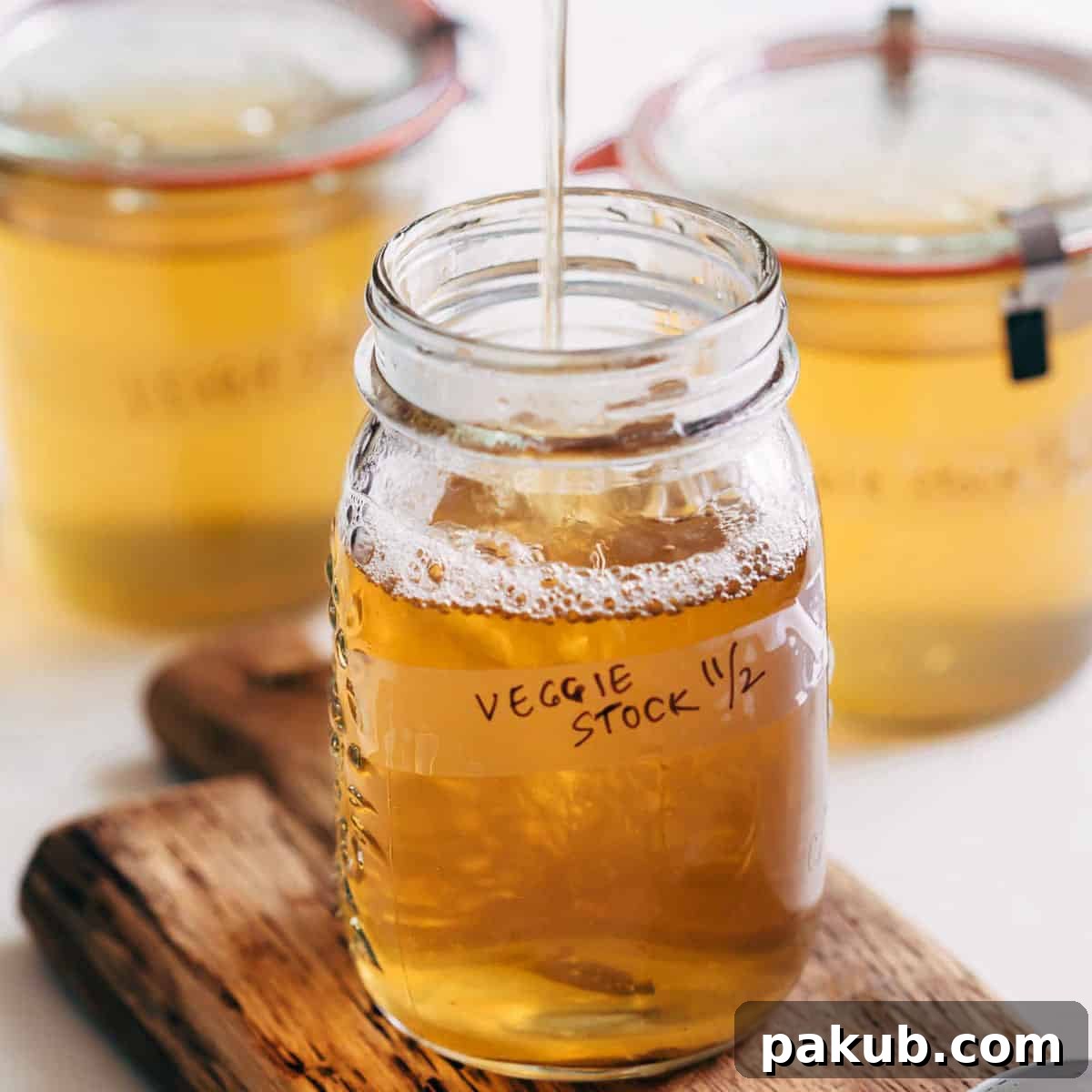
Unlock Unrivaled Flavor & Reduce Waste: Your Ultimate Guide to Homemade Vegetable Stock from Kitchen Scraps
Revolutionize your kitchen by transforming everyday vegetable discards into a rich, aromatic, and incredibly versatile homemade vegetable stock. This comprehensive guide provides easy directions, helping you significantly reduce kitchen waste, save money, and infuse your cooking with unparalleled natural flavor. Our chemical-free, preservative-free stock is not just delicious in soups and curries, but also a cornerstone of sustainable, wholesome eating.
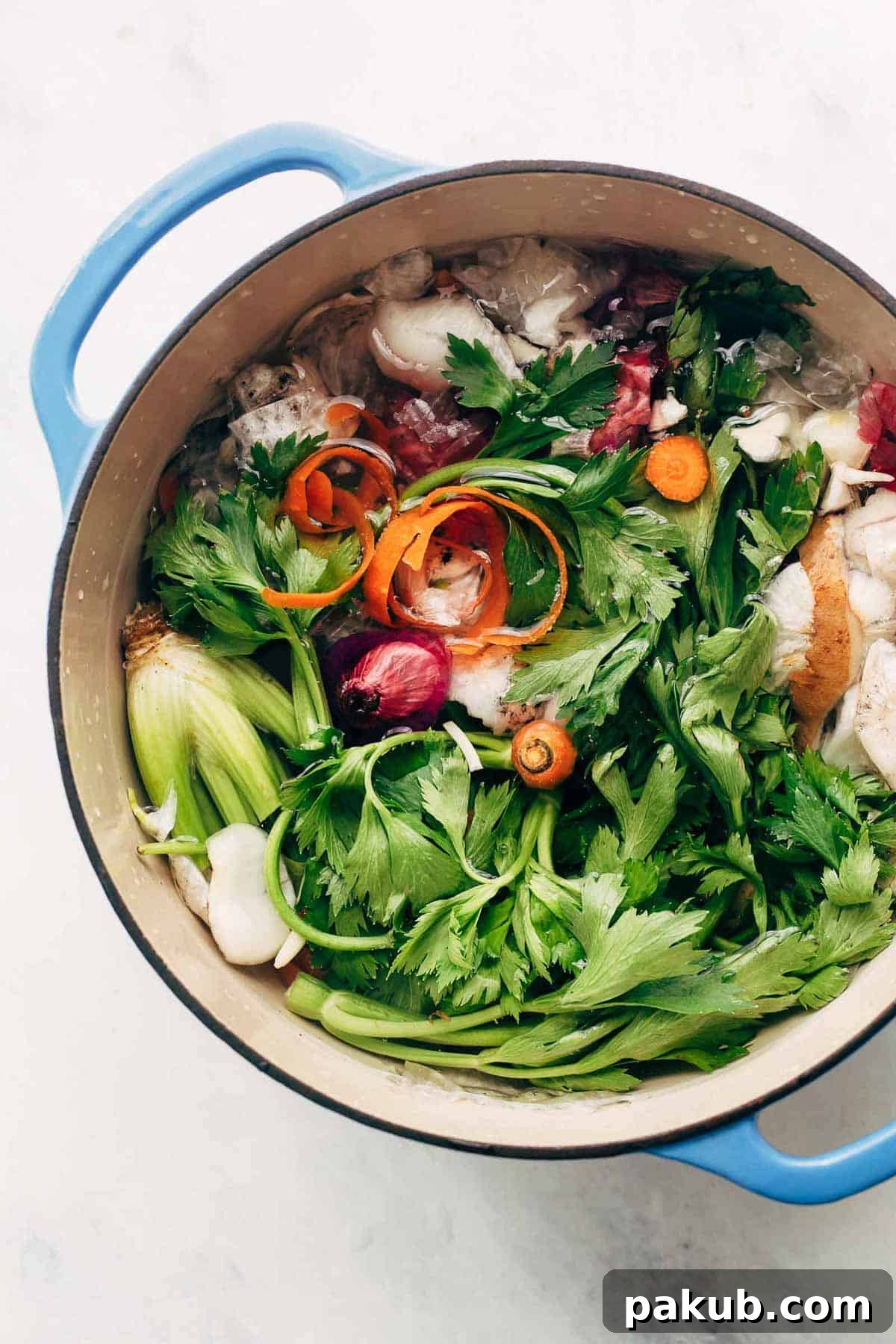
What if I told you that the bits and pieces of vegetables you typically toss into the compost bin or trash — the peels, the root ends, the trimmed leaves — are actually culinary gold waiting to be discovered? Imagine turning those seemingly worthless kitchen scraps into a deeply flavorful, aromatic, and incredibly tasty stock that forms the perfect base for countless dishes. Not only is this method brilliantly effective, but it also dramatically reduces your household’s food waste, giving new life to every part of your produce.
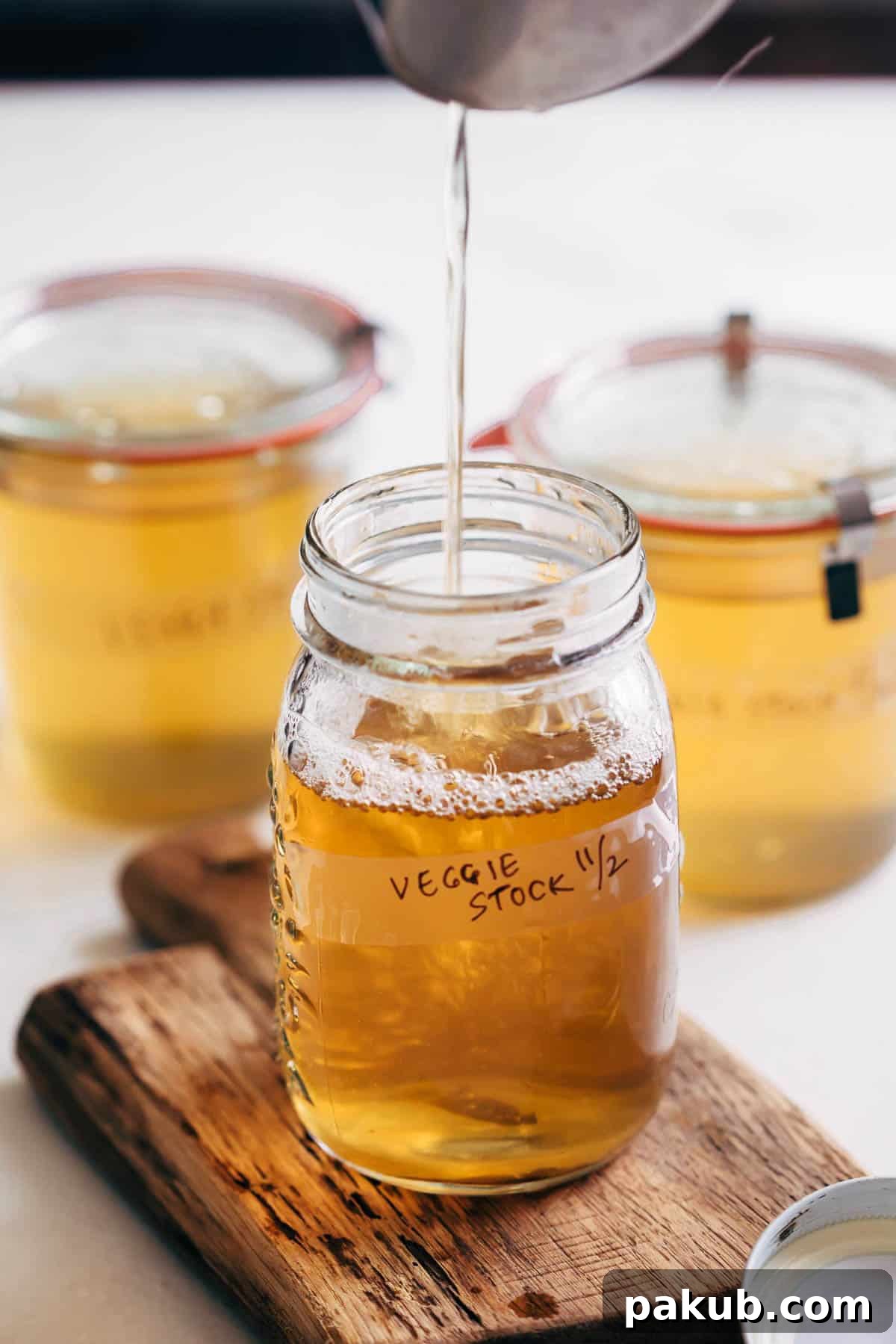
This approach to cooking has been a revelation for me over the past several months, genuinely transforming how I view kitchen waste. In our home, where vegetables are a daily staple, we used to generate a considerable amount of these “scraps.” The truth is, these peels, ends, and trimmings are often packed with concentrated flavors and valuable nutrients that, until now, were simply going to waste. But no more!
Today, I am excited to share with you a remarkably simple yet profoundly impactful way to make your own wholesome vegetable stock directly from these kitchen discards. It’s an incredibly easy process: you literally gather all your designated scraps, toss them into a large pot, add some carefully chosen herbs and spices, cover everything with water, and let it gently simmer for about an hour. The result? A beautiful, richly flavored, and highly nutritious pot of homemade vegetable stock that is far superior to any store-bought alternative. This versatile liquid is perfect for elevating everything from hearty curries and comforting soups to savory sauces, rich gravies, and even as a flavorful replacement for water in rice or quinoa dishes.
Why Homemade Vegetable Stock is a Kitchen Essential
Beyond the undeniable satisfaction of creating something wonderful from what would otherwise be discarded, making your own vegetable stock offers a myriad of benefits that make it an indispensable part of a conscious kitchen:
- Unbeatable Flavor and Purity: Store-bought stocks, while convenient, often contain high levels of sodium, obscure additives, and artificial flavors. Your homemade version, crafted from fresh vegetable scraps, delivers an authentic, deep, and clean flavor profile that commercial options simply cannot replicate. You have complete control over the ingredients, ensuring a pure, unadulterated taste.
- Significant Cost Savings: Think of it – you’re transforming items you would normally throw away into a valuable culinary ingredient. This zero-cost approach to stock making means substantial savings over time, reducing your grocery bill and making your kitchen more efficient.
- A True Zero-Waste Practice: This is a powerful step towards reducing your environmental footprint. By repurposing vegetable scraps, you divert organic waste from landfills, contributing to a more sustainable and eco-friendly household. It’s a tangible way to practice mindful consumption.
- Rich in Nutrients, Free from Chemicals: Even after trimming, vegetable scraps retain a surprising amount of vitamins, minerals, and antioxidants. Simmering these extracts their goodness into the liquid, providing a healthy boost to your meals. Crucially, your homemade stock is free from chemical preservatives, artificial colors, and excess sodium.
- Effortless and Hands-Off Cooking: Unlike preparing meat stocks, which often require frequent skimming to remove impurities and fat, vegetable stock is wonderfully low-maintenance. Once you’ve assembled your ingredients in the pot, you can let it gently simmer largely unsupervised, freeing you up for other kitchen tasks or simply to relax.
- Versatility in the Kitchen: A well-made vegetable stock is a culinary chameleon. It enhances savory dishes across cuisines, adding depth and moisture without overpowering other flavors. It’s truly a secret weapon for home cooks looking to elevate their everyday meals.
Mastering Scrap Collection and Storage
The foundation of great homemade stock lies in smart scrap management. You don’t need to gather all your scraps in one go; consistency is key. Here’s a simple, effective system:
Designate a specific freezer-safe container for your vegetable scraps. This could be a large resealable freezer bag, a reusable plastic tub with a lid, or even a sturdy gallon-sized container. As you prepare your daily meals, take a moment to wash any suitable vegetable scraps thoroughly under cold running water. This removes dirt, pesticide residues, and any lingering contaminants. After washing, simply toss the cleaned scraps into your designated freezer container. Store this container in your freezer, and continue adding to it over several days or weeks. Once the container is full, or whenever you’re ready to make a batch of stock, you can simply dump the frozen contents directly into your stockpot. There’s no need to thaw the scraps beforehand, making the process incredibly convenient and efficient.
Ideal Vegetable Scraps for Flavorful Stock
While almost any clean vegetable scrap can contribute, focusing on certain types will yield the best, most balanced flavor. For a rich, clear, and universally appealing stock, prioritize these commonly discarded parts:
- Onion Peels and Ends: These are absolute flavor heroes, providing deep savory notes and contributing a beautiful golden hue to your stock. Both yellow and red onion scraps work perfectly.
- Carrot Peels and Ends: They add a subtle sweetness and a pleasant earthy undertone, enhancing the overall body of the stock.
- Celery Ends and Leaves: Essential for building a classic aromatic base, these contribute a fresh, green, and slightly peppery flavor.
- Garlic Peels and Ends: Even the thin papery skins and trimmed ends of garlic cloves can infuse your stock with a wonderful savory depth.
- Mushroom Stems: Don’t throw them away! Mushroom stems are fantastic for adding a rich, umami flavor that can make your stock taste profoundly more savory and complex.
- Cauliflower and Broccoli Stems/Cores: Often overlooked, these sturdy parts offer a mild, slightly nutty flavor. Break them into smaller pieces to maximize flavor extraction.
- Herb Stems: Woody stems from parsley, cilantro, thyme, and rosemary are bursting with flavor and are ideal for stock.
- Leek Greens and Ends: Similar to onions, leek greens offer a delicate, sweet oniony flavor. Be sure to wash them very thoroughly, as they can trap a lot of soil.
- Bell Pepper Cores and Seeds: These can add a mild, sweet pepper flavor. Avoid the white pith if you want to prevent any bitterness.
Vegetables to Use Sparingly or Avoid for Stock:
While the goal is to use scraps, some vegetables can overpower or negatively impact your stock’s flavor:
- Cruciferous Vegetables (Cabbage, Brussels Sprouts, Strong Kale varieties): If used in large quantities, these can impart a strong, sometimes bitter, or overly sulfurous aroma and taste to your stock. Use sparingly if you enjoy their distinct flavors.
- Beet Peels: They will turn your stock a vibrant, deep red color, which might not be desirable for all culinary applications.
- Artichoke or Asparagus Scraps: These can sometimes contribute a bitter or overly “green” flavor.
- Overly Spoiled or Moldy Scraps: Always use fresh, clean scraps. If a vegetable is past its prime, it’s best to discard or compost it separately, as off-flavors can transfer to your stock.
Essential Equipment for Effortless Stock Making
You don’t need a professional kitchen to make excellent vegetable stock. A few basic tools will suffice:
- A Large Stock Pot or Dutch Oven: This is your primary vessel. A capacity of 8 quarts (approximately 7.5 liters) or more is ideal for accommodating a good volume of scraps and water, ensuring you produce a decent batch of stock. A stock pot with a convenient insert can simplify the straining process. I personally find a heavy-bottomed Dutch oven to be excellent for stocks, broths, and soups, as its even heat distribution is perfect for maintaining a gentle, consistent simmer without scorching.
- Fine-Mesh Strainer or Colander: Absolutely crucial for separating the clear liquid stock from the cooked-down vegetable solids. For an exceptionally clear stock, you can line your strainer with cheesecloth, though for everyday use, a regular fine-mesh strainer is usually sufficient.
- Storage Containers: You’ll need clean glass jars, freezer-safe plastic containers, or ice cube trays to store your finished stock efficiently.
Storing Your Liquid Gold: Homemade Vegetable Stock
Once you’ve made a fresh batch of stock, proper storage is key to maintaining its quality and extending its shelf life. You have a couple of excellent options, depending on how quickly you plan to use it:
- Refrigerator Storage (Short-Term): After your stock has completely cooled to room temperature (this is critical for food safety), pour it into clean, airtight glass jars or containers. Stored in the refrigerator, your homemade vegetable stock will remain fresh and delicious for 5-7 days. Always ensure it’s fully cooled before refrigerating to inhibit bacterial growth.
- Freezer Storage (Long-Term): For longer preservation, the freezer is your best ally. This method is incredibly convenient for having stock on hand whenever inspiration strikes:
- Ice Cube Trays: Pour the cooled stock into standard ice cube trays. Once the cubes are thoroughly frozen solid, pop them out and transfer them to a freezer-safe resealable bag or a sturdy, rigid freezer container. This allows you to easily grab just the right amount of stock – a cube or two – as needed for various recipes, minimizing waste.
- Larger Portions: For recipes requiring larger volumes, freeze cooled stock in freezer-safe containers in pre-measured 1-cup or 2-cup portions. If using glass mason jars, be sure to leave at least an inch of headspace at the top to allow for expansion as the liquid freezes, preventing the jars from cracking.
Properly frozen, homemade vegetable stock can retain its quality and flavor for up to a year! Regardless of your chosen storage method, always make it a habit to label your containers with the date of preparation. This simple step helps you keep track of freshness and ensures you’re always using ingredients at their peak.
Jazzing Up and Customizing Your Vegetable Stock Flavors
The base recipe provided below yields a wonderfully versatile stock suitable for everyday use. However, one of the greatest joys of making your own stock is the freedom to customize its flavor profile to suit specific culinary needs or adventurous tastes. Think of your stock as a blank canvas, ready to absorb additional layers of aroma and spice:
- Thai Flavors: For an aromatic and bright stock perfect for Asian-inspired soups, curries, or noodle dishes, introduce a few stalks of bruised lemongrass and a handful of kaffir lime leaves (fresh or dried) to your stock pot while it simmers. The vibrant citrusy and floral notes will transport your taste buds.
- Turmeric Powerhouse: Adding turmeric to your homemade vegetable stock is a brilliant idea, not just for its beautiful golden hue and earthy flavor, but also for its renowned anti-inflammatory properties. You can either use a 1-inch piece of fresh turmeric root, sliced thinly, or a teaspoon of high-quality turmeric powder.
- Chinese Flavors: Elevate your stock to become the ideal base for clear Chinese soups, wonton soups, or rich ramens by incorporating 1-2 whole star anise pods and a small cinnamon stick during the simmering process. These spices impart a warm, subtly sweet, and distinctly aromatic depth.
- Mediterranean Herb Blend: For a stock that perfectly complements Italian or Greek-inspired dishes, toss in sprigs of fresh rosemary, oregano, and basil during the simmer. A bay leaf is already included in the base recipe, further enhancing this profile.
- Spicy Kick: If you enjoy a bit of heat, a few dried red chilies, a sliced jalapeño, or even a pinch of red pepper flakes can infuse your stock with a pleasant warmth.
- Smoky Undertones: A small amount of smoked paprika (about half a teaspoon) can add a subtle, intriguing smoky depth, particularly well-suited for bean dishes, stews, or even a hearty vegetarian chili.
- Foresty Freshness: A few sprigs of fresh dill can add a unique, herbaceous note, especially good for fish-based vegetarian dishes or light spring soups.
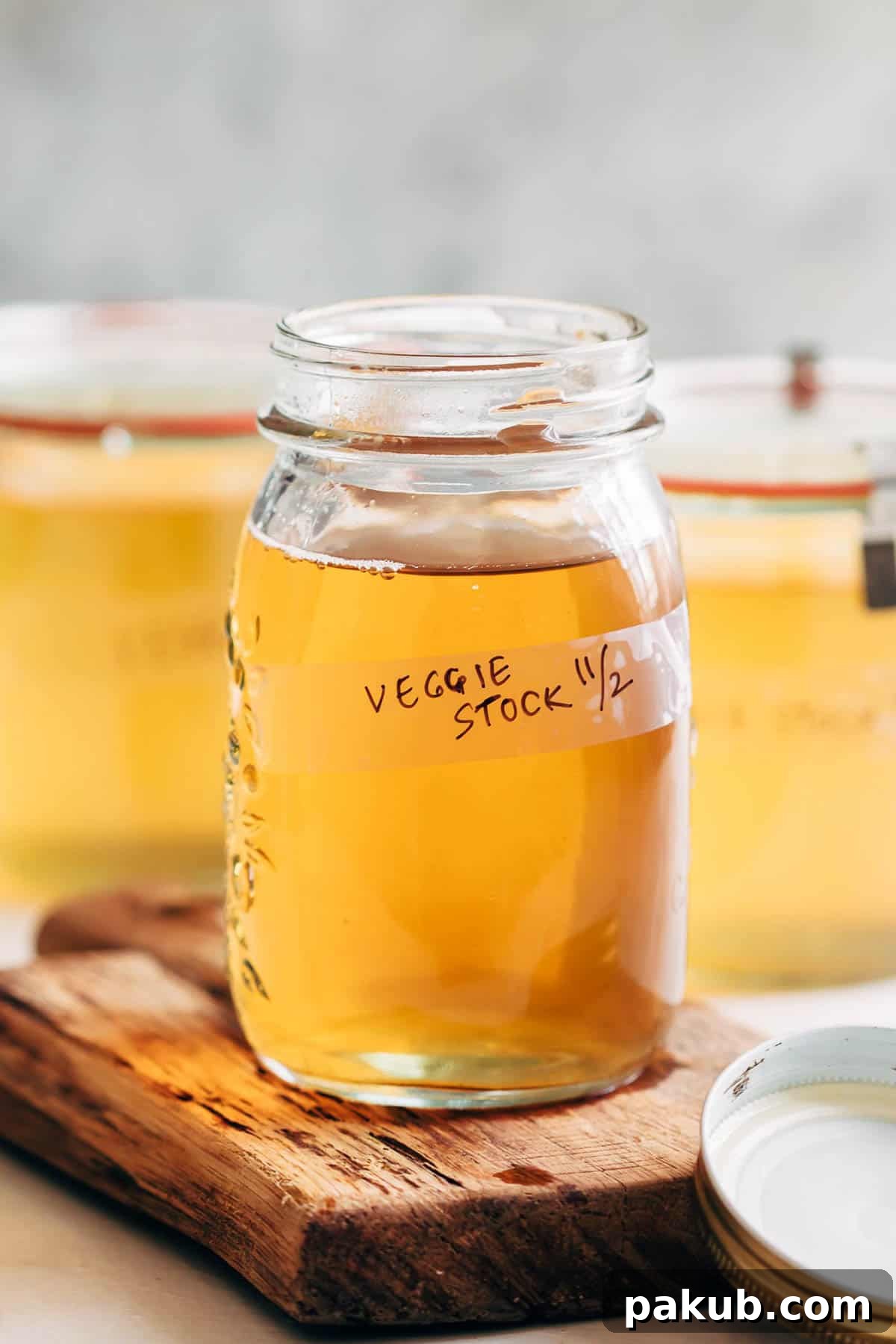
One of the most appealing aspects of making vegetable stock from scraps, especially when compared to chicken or beef stock, is its inherent simplicity. There’s no need for the continuous skimming of fat or impurities from the surface. Once all your ingredients are nestled in the pot, it becomes a wonderfully hands-off process, allowing you to focus on other tasks or simply enjoy the comforting aromas filling your kitchen.
Treat this recipe as a calming and productive Sunday afternoon activity. I can almost guarantee that once you taste the profound difference and experience the satisfaction of using your own homemade stock, you will never go back to buying the bland, often additive-laden cartons from the store again!
Creative Uses for Your Homemade Vegetable Stock
Your homemade vegetable stock is an incredibly versatile culinary asset, capable of elevating a vast array of dishes beyond just basic soups. Its rich, clean flavor can transform ordinary meals into extraordinary culinary experiences:
- The Heart of Soups and Stews: This is its most classic role. From light and vibrant broths like Vegetarian Pho Soup to hearty, comforting stews such as Kerala Mutton Stew (where it can form a delicious vegetarian base even for traditionally meat-based dishes), stock provides an essential depth of flavor.
- Enhancing Grains and Risottos: Use stock instead of plain water when cooking rice, quinoa, couscous, or bulgur to infuse them with an extra layer of savory taste. It’s truly transformative in creamy risottos, lending a velvety texture and complex flavor.
- Building Flavorful Sauces and Gravies: A splash of hot stock can deglaze a pan after sautéing vegetables, capturing all the browned bits (fond) to create a rich, flavorful pan sauce. It also forms an excellent base for thinning out gravies or creating roux-based sauces.
- Braising Vegetables and Legumes: Ideal for slow-cooking tougher vegetables or plant-based proteins, allowing them to become incredibly tender and deeply flavored as they absorb the stock. Cook dried beans or lentils in stock for a more complex and savory result than using water alone.
- Steaming Vegetables: For a subtle flavor boost, use stock instead of water in your steamer to gently infuse your steamed vegetables with aromatic goodness.
- Flavoring Pasta Dishes: A ladle of warm stock can add body and savory depth to pasta sauces or be used to finish pasta dishes, enhancing the overall taste.
- Healthful Hydration: On a cold day or when feeling under the weather, a warm cup of your homemade, chemical-free stock can be incredibly comforting and nourishing on its own.
Watch How to Make Vegetable Stock: Recipe Video
Homemade Vegetable Stock from Kitchen Scraps
By: Richa
This easy recipe teaches you how to create rich, flavorful, and healthy vegetable stock from everyday kitchen scraps. It’s a fantastic way to practice zero-waste cooking, save money, and infuse your soups, curries, sauces, and gravies with unparalleled natural goodness. This stock is naturally vegan, gluten-free, Whole30 compliant, and utterly delicious.
Prep Time: 10 mins
Cook Time: 1 hr
Total Time: 1 hr 10 mins
Yields: Approximately 4 cups (about 1 liter)
Cuisine: Global
Diet: Vegan, Gluten-Free, Whole30
Rating: 5 out of 5 stars (based on 1 community vote)
Ingredients
- 5 cups Assorted Vegetable Scraps (e.g., peels and ends of carrots, onions, garlic, celery; stems of broccoli, cauliflower, mushrooms; outer leaves of leeks. Ensure they are thoroughly washed.)
- 3 liters Water (approximately 12 cups)
- 1 Large Bay Leaf
- 1 teaspoon Whole Black Peppercorns
- 1 Small Bunch Fresh Herbs (such as parsley stems and thyme sprigs)
Instructions
- In a large stock pot or Dutch oven, combine all the thoroughly washed assorted vegetable scraps. Add 3 liters of cold water, the bay leaf, whole peppercorns, and the fresh herb bunch. Ensure all the solids are submerged in water.
- Place the pot over high heat and bring the mixture to a strong boil. Once boiling vigorously, reduce the heat significantly to a gentle, steady simmer. Partially cover the pot with a lid, leaving a small gap for steam to escape.
- Allow the stock to simmer gently for approximately 40 minutes to 1 hour. During this time, the vegetables will release their aromatic compounds and rich flavors into the water, creating a potent broth. Do not simmer for much longer than an hour, as this can sometimes lead to a diminished or slightly bitter flavor.
- Once the simmering is complete, carefully remove the pot from the heat. Using a fine-mesh strainer or a colander (optionally lined with cheesecloth for extra clarity), strain the liquid into a clean, heatproof bowl or container. Discard all the cooked-down vegetable solids – they have given their all! These can be composted.
- Allow the freshly made vegetable stock to cool completely to room temperature before storing. Once cooled, it’s ready to be used immediately or stored for later enjoyment.
Notes for Best Results
- Optimal Simmering Time: For the most flavorful and balanced vegetable stock, aim for a simmering time between 45 minutes and 1 hour. Simmering for too long (e.g., several hours) can sometimes cause the stock to lose its fresh flavor or even become slightly bitter.
- Storing Your Stock: Store cooled stock in an airtight container in the refrigerator for 5-7 days. For longer-term storage, freeze the stock in ice cube trays (then transfer cubes to a freezer bag) or in freezer-safe containers, leaving headspace. Frozen stock is good for up to a year.
- Salt is Optional: This recipe intentionally omits salt. This provides maximum flexibility, allowing you to season your final dishes to taste without worrying about over-salting. You can always add salt to your stock when you’re ready to cook with it.
- Keep it Clean: Always ensure your vegetable scraps are thoroughly washed before adding them to the pot to avoid unwanted grit or contaminants.
Nutrition Information (Approximate values per serving, based on 4 servings)
Calories: 149kcal
Carbohydrates: 31g
Protein: 8g
Fat: 1g
Saturated Fat: 1g
Sodium: 145mg
Potassium: 497mg
Fiber: 9g
Sugar: 1g
Vitamin A: 11574IU
Vitamin C: 24mg
Calcium: 84mg
Iron: 2mg