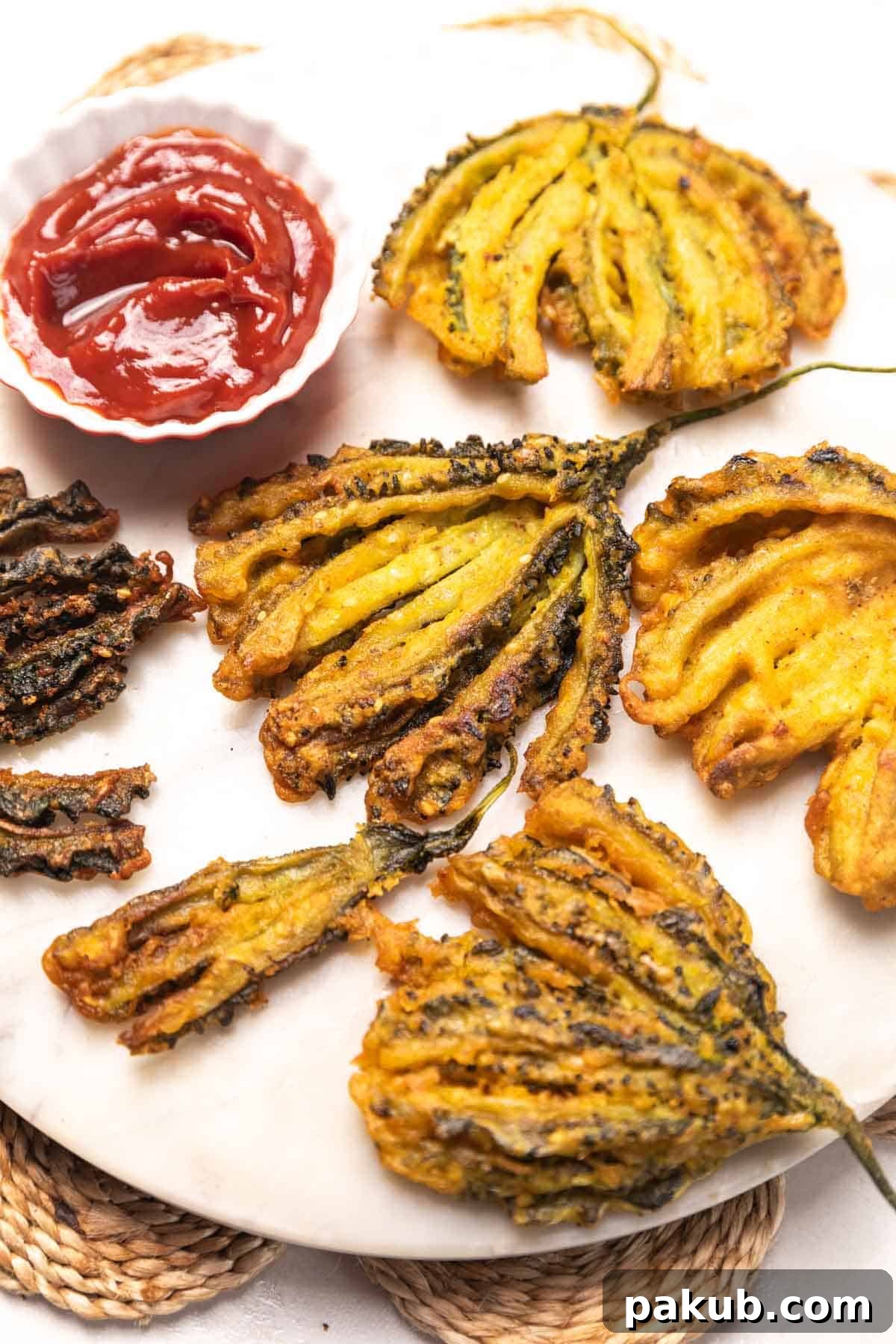
Karela like you’ve never had before—crispy, flavorful, and absolutely lip-smacking, this Karela Pakoda is 10/10!
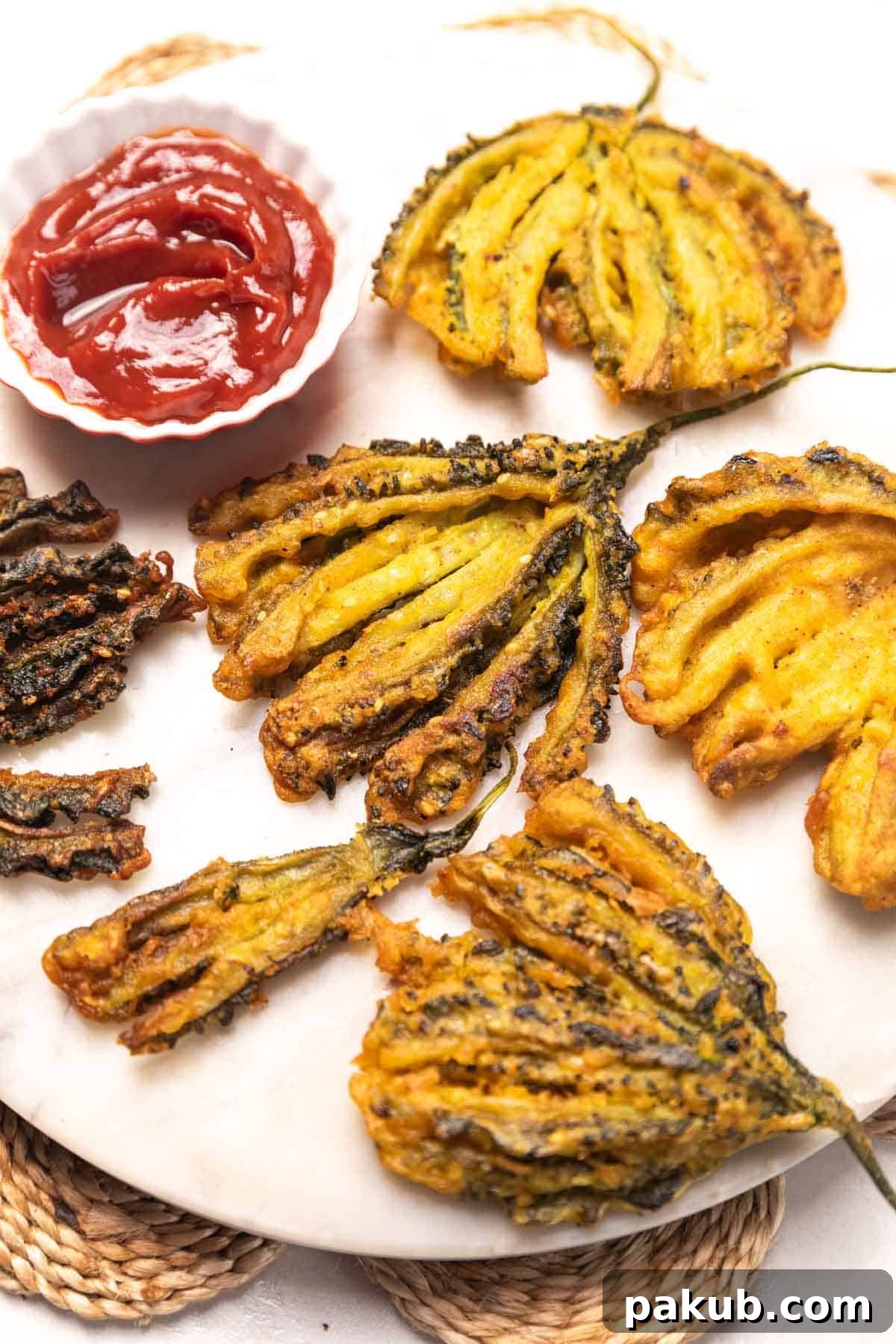
If the mere mention of bitter gourd (karela) makes you shy away, prepare to have your mind — and taste buds — completely revolutionized. Our **Karela Pakoda recipe**, inspired by Mrs. YumTum’s Crispy Karela, is designed to convert even the most skeptical eaters into fervent fans. These crispy bitter gourd fritters are a delightful explosion of taste and texture, proving that karela can indeed be an incredibly enjoyable ingredient.
Forget everything you thought you knew about bitter gourd. This isn’t your average bitter vegetable dish. We’re talking about thin slices of karela, meticulously prepared to strip away any harsh bitterness, then enveloped in a vibrant, spiced chickpea flour batter. Shallow-fried to a glorious golden perfection, each bite delivers an unparalleled crunch, followed by a savory, subtly spiced flavor that will leave you reaching for more.
By simply prepping the karela with a strategic salt and lemon water soak and coating it in a perfectly seasoned slurry, this recipe effectively neutralizes the bitterness and elevates karela into a universally crowd-pleasing treat. It’s an ideal snack for tea time, a unique appetizer for gatherings, or a surprisingly delicious side dish to complement your main course. Pair these golden fritters with a zesty garlicky yogurt dip or classic tomato ketchup for an extra burst of flavor, or even a refreshing mint chutney. Get ready to discover your new favorite Indian snack!
Jump to section: Karela Pakoda
- Why You’ll Love This Recipe
- The Magic of Karela Pakoda: A Culinary Revelation
- Karela Pakoda Ingredients Overview
- How To Make Karela Less Bitter: The Secret to Success
- Step-by-Step Guide to Crispy Karela Pakoda
- Serving Suggestions and Perfect Pairings
- Richa’s Top Tips for Flawless Fritters
- Frequently Asked Questions
- Watch How to Make Karela Pakoda
Why You’ll Love This Karela Pakoda Recipe
This Karela Pakoda recipe isn’t just another snack; it’s a culinary triumph that makes bitter gourd genuinely enjoyable. Here’s what makes it so special and why it will become a staple in your kitchen:
- Effortlessly Bitterness-Free: The unique salt and lemon water soak is a game-changer. It effectively draws out the natural bitterness from the karela, transforming it into a mild, palatable vegetable that even bitter gourd skeptics will adore. No more cringing – just pure, savory delight!
- Unbelievably Crispy Perfection: Achieving that irresistible crunch without deep-frying can be tricky, but our precisely balanced spiced slurry makes it possible. This batter creates a super crispy outer layer when shallow-fried, offering a satisfying texture with every bite. It’s light, airy, and wonderfully golden.
- Remarkably Easy to Make: Don’t let the gourmet taste intimidate you. This recipe utilizes simple, readily available pantry staples and follows a straightforward shallow-frying method, making it accessible for home cooks of all skill levels. From prep to plate, you’ll be enjoying these delicious fritters in no time.
- Bursting with Flavor: Beyond just crispiness, these pakodas are infused with a delightful blend of Indian spices. Turmeric, red chili powder, and optional sesame seeds combine to create a savory, aromatic profile that perfectly complements the karela, turning a simple vegetable into an extraordinary snack.
- Versatile and Crowd-Pleasing: Whether you need a quick snack for unexpected guests, a flavorful appetizer for a party, or a healthy (yet indulgent-tasting) side dish, Karela Pakoda fits the bill. It’s a fantastic way to introduce a nutritious vegetable into your diet in a fun and delicious format.
The Magic of Karela Pakoda: A Culinary Revelation
Karela Pakoda, or bitter gourd fritters, are a beloved snack in Indian cuisine, known for their unique texture and surprising flavor, especially when prepared correctly. While bitter gourd itself has a reputation for its intense bitterness, this particular recipe ingeniously transforms it into a delightful treat. The tradition of making pakodas from various vegetables, from onions to potatoes, is deeply rooted in Indian culture, serving as a comforting tea-time accompaniment or a festive appetizer.
What sets Karela Pakoda apart is its ability to challenge perceptions. Many shy away from bitter gourd due to its distinct taste, which is primarily attributed to compounds like momordicin. However, culinary wisdom passed down through generations, combined with modern techniques, allows us to harness the vegetable’s nutritional benefits without compromising on taste. This recipe embraces that wisdom, offering a method that significantly reduces bitterness while maximizing crunch and flavor. It’s a testament to how simple ingredients, when handled with care, can create truly remarkable dishes.
Beyond being a tasty snack, bitter gourd is revered in Ayurveda and traditional medicine for its numerous health benefits, including regulating blood sugar levels and being rich in vitamins and antioxidants. Enjoying it in the form of these delicious pakodas is a wonderful way to incorporate this superfood into your diet, proving that healthy eating can indeed be incredibly satisfying and flavorful.
Karela Pakoda Ingredients Overview
Crafting these irresistible Karela Pakodas requires a careful selection of ingredients that work in harmony to achieve the perfect balance of flavor and crispiness. Most of these are likely already in your pantry, making this recipe incredibly accessible.
The star ingredient, of course, is **karela (bitter gourd)**. For this recipe, we recommend using mini karelas, as their smaller size often translates to slightly less bitterness and easier handling. They are prepped by soaking them in a solution of **salt and lemon water**—a crucial step that significantly reduces their inherent bitterness, making them palatable and enjoyable.
The magic behind the crispy, light coating lies in our specially formulated batter. It’s a precise blend of three flours:
- Besan (Gram Flour): The foundation of most Indian pakodas, besan provides a robust, nutty flavor and helps create a thick, adherent coating.
- Rice Flour: This is key for imparting an incredible crispiness to the fritters. It makes the batter light and ensures a crunchy texture that lasts.
- Cornflour (or Tapioca Flour): Adding cornflour or tapioca flour contributes to the fritters’ delicate crispness and helps bind the batter, preventing it from becoming too heavy.
To infuse these fritters with characteristic Indian flavors, we incorporate a medley of spices:
- Turmeric Powder: Lends a beautiful golden hue and adds a subtle earthy note, along with its well-known anti-inflammatory properties.
- Red Chilli Powder: Provides a gentle kick of heat. Adjust the quantity to suit your preference for spice.
- Sesame Seeds: An optional but highly recommended addition, sesame seeds contribute a delightful nutty flavor and an extra layer of crunch, elevating the texture profile.
Finally, a bit of **cooking oil** is all you need for shallow frying these fritters to their golden, crunchy perfection. Opt for a neutral-flavored oil like sunflower, canola, or groundnut oil to let the flavors of the karela and spices shine through.
How To Make Karela Less Bitter: The Secret to Success
The primary reason many people avoid bitter gourd is, understandably, its intense bitterness. However, with the right preparation techniques, you can significantly reduce this characteristic taste, transforming karela into a surprisingly delicious and versatile vegetable. Our recipe employs a tried-and-true method involving a simple salt and lemon water soak, which is incredibly effective.
Here’s the science and method behind it:
- Scoring and Slicing: The first step is to prepare the karela properly. Making deep, long cuts along the gourd, about 1 cm apart, increases the surface area. This allows the bitter compounds to be drawn out more effectively during the soaking process. For larger karelas, cutting them in half and de-seeding them further aids in this process. The stem and ends are often kept intact for mini karelas, which helps maintain their structural integrity during soaking and frying, allowing them to fan out beautifully.
- The Salt’s Role (Osmosis): When karela slices are soaked in salt water, the principle of osmosis comes into play. The high concentration of salt outside the karela cells draws out water, along with the bitter compounds and excess moisture, from within the vegetable. This process effectively ‘bleeds’ out a significant portion of the bitterness.
- The Lemon’s Role (Acidity and Softening): Lemon juice, being acidic, works in two key ways. Firstly, its acidity helps to break down the tough fibers of the bitter gourd, resulting in a softer, more tender texture once cooked. Secondly, the lemon’s bright, zesty flavor helps to counteract and mask any residual bitterness, adding a fresh dimension to the karela.
- The Squeeze: After soaking, it’s crucial to thoroughly squeeze out the liquid from the karela slices. This step is vital for two reasons: it removes the bitter liquid that has been drawn out, and it ensures the karela is dry enough for the batter to adhere properly, leading to a crispier pakoda.
Together, the salt and lemon water create a powerful duo that makes karela milder, more flavorful, and perfectly primed for coating and frying. This simple but essential pre-treatment is what makes our Karela Pakoda recipe a true success, turning a challenging vegetable into an enjoyable culinary experience.
Step-by-Step Guide to Crispy Karela Pakoda
Making these delicious Karela Pakodas is a straightforward process when you follow these clear steps:
- Prepare the Karela: Begin by taking your mini karelas. Keep the stem and the two ends intact, as this helps them maintain their shape. Now, make deep, long cuts along each karela, ensuring each cut is about 1 cm apart. If you find any large seeds, carefully chop off one end and de-seed the karela. This scoring allows the bitter compounds to be released effectively.
- Soak for Bitterness Reduction: In a bowl, mix the juice of 2 lemons (approximately 4 tablespoons), 4 tablespoons of water, and ¾ teaspoon of salt. Submerge the prepared karelas in this mixture and let them soak for a full 10 minutes. This essential step draws out the bitterness. After soaking, firmly squeeze out as much liquid as possible from the karelas. This is crucial for reducing bitterness and ensuring crispiness. Place the squeezed karelas on a chopping board and gently spread them out in a fan-like shape, ready for coating.
- Prepare the Batter (Slurry): In a wide mixing bowl, combine all the dry ingredients for the batter: ¼ cup besan (gram flour), ¼ cup rice flour, ¼ cup cornflour (or tapioca flour), ¼ teaspoon turmeric powder, ½ teaspoon red chilli powder, 1 teaspoon sesame seeds (if using), and ½ teaspoon salt. Gradually add approximately 1 cup of water, mixing continuously, until you achieve a semi-thick, smooth slurry. The consistency should be thick enough to coat the karela slices evenly without dripping excessively.
- Coat the Karela: Take each prepared karela slice and dip it thoroughly into the batter, ensuring it is well-coated from all sides, reaching into the cuts you made earlier.
- Heat the Oil: Heat a flat pan or a kadai with about ½ inch of cooking oil over medium heat. You want the oil to be hot enough to sizzle when a drop of batter is added, but not smoking.
- Shallow Fry to Golden Perfection: Carefully place the batter-coated karelas into the hot oil, ensuring they are spread out in their fan-like shape. Do not overcrowd the pan, as this can lower the oil temperature and result in soggy pakodas. Shallow fry them on a low to medium flame for approximately 3 minutes, or until they turn a light golden color and start to crisp up.
- Achieve Ultimate Crispiness: To get that extra crunch, increase the flame to high for the last few seconds of frying. Watch them carefully, turning them as needed, until they achieve a deep golden-brown color and are perfectly crispy.
- Serve Immediately: Remove the Karela Pakodas from the oil and place them on a paper towel-lined plate to drain any excess oil. Serve them hot and fresh with your favorite dips!
Serving Suggestions and Perfect Pairings
Once your Karela Pakodas are golden brown and perfectly crispy, they are ready to be enjoyed! The true beauty of these fritters lies in their versatility. While they are incredibly delicious on their own, pairing them with the right accompaniments can elevate the experience even further.
- Classic Dips:
- Garlicky Yogurt Dip: A cool, tangy yogurt dip infused with fresh garlic, a hint of mint, and a pinch of salt provides a refreshing contrast to the warmth and spices of the pakodas. Its creaminess balances the crisp texture beautifully.
- Homemade Tomato Ketchup: For a universally loved pairing, classic tomato ketchup offers a sweet and tangy counterpoint that appeals to all ages.
- Green Chutney: A vibrant mint and coriander chutney (Pudina Dhaniya Chutney) or a spicy green chili chutney adds a fresh, herbaceous, and sometimes fiery kick that complements the pakodas wonderfully.
- Sweet Tamarind Chutney: For those who enjoy a touch of sweetness and tang, Imli (tamarind) chutney makes a delightful partner.
- As a Tea-Time Snack: Karela Pakodas are quintessential Indian tea-time snacks. Serve them with a steaming cup of masala chai or filter coffee for a comforting and satisfying afternoon treat. The crispiness and warmth are perfect for a cozy evening.
- Appetizer for Parties: Looking for a unique appetizer that will impress your guests? Arrange a platter of Karela Pakodas with an assortment of dips. Their exotic appeal and surprising flavor will be a guaranteed conversation starter. They’re also a great vegan and gluten-free (if using gluten-free besan) option for diverse dietary needs.
- Side Dish with Meals: Don’t limit pakodas to just snacks. They can make an excellent crispy side dish to a simple lentil (dal) and rice meal, or alongside a vegetable curry, adding texture and flavor to your main course.
- With a Twist:
- Chaat-Style: Crumble some pakodas over a bed of yogurt, sprinkle with chopped onions, tomatoes, and a dash of chaat masala for an unconventional pakoda chaat.
- Burger or Wrap Filling: Get creative and use larger karela pakodas as a unique patty in a vegetarian burger or crumble them into a wrap with some fresh veggies and chutney.
No matter how you choose to serve them, these Karela Pakodas are sure to be a hit. Their delightful crunch and surprising lack of bitterness will make them a sought-after dish.
Richa’s Top Tips for Flawless Fritters
To ensure your Karela Pakodas turn out perfectly crispy, flavorful, and absolutely bitterness-free every single time, here are some invaluable tips from Richa:
- Consistent Slurry is Key: The batter (slurry) consistency is paramount for achieving that perfect crispy coating. It should be semi-thick—not too watery that it drips off the karela, and not too thick that it becomes doughy. Aim for a consistency that coats the karela slices evenly and adheres well. A good test is to dip a spoon; the batter should coat the back of the spoon without running off quickly.
- Shallow Fry on Low to Medium Flame for Even Cooking: While it might be tempting to crank up the heat, cooking your fritters on a low to medium flame initially is crucial. This ensures that the karela cooks through properly without burning the batter, allowing the moisture to escape and the fritters to crisp up beautifully from the inside out. Rushing this step often leads to soft, undercooked pakodas.
- Finish with a High Flame for Extra Crispiness: Once the pakodas are light golden and mostly cooked through on a low flame, briefly increase the heat to high for the last 30-60 seconds. This final burst of high heat creates an incredibly crispy, golden-brown exterior. Watch them carefully during this stage to prevent burning.
- Don’t Skimp on the Soaking: The salt and lemon water soak is not an optional step. It’s the secret weapon against bitterness. Ensure the karelas are fully submerged and soak for the recommended 10 minutes. More importantly, squeeze out every last drop of liquid after soaking. This removes the bitter compounds and excess water, which is essential for a crispy end product.
- Add Sesame Seeds for Nutty Crunch: While optional, a teaspoon of sesame seeds in the batter adds a wonderful nutty flavor and an appealing textural crunch. It enhances the overall taste profile and visual appeal.
- Avoid Overcrowding the Pan: Frying in batches is essential. Overcrowding the pan will drastically lower the oil’s temperature, leading to soggy, oil-laden pakodas instead of light, crispy ones. Give each karela pakoda enough space to fry evenly.
- Serve Immediately: For the best taste and texture, Karela Pakodas are best enjoyed hot and fresh right off the pan. The crispiness is at its peak immediately after frying.
Frequently Asked Questions About Karela Pakoda
While air fryers are great for many dishes, this particular recipe is best suited for shallow or deep frying. Fritters made with a loose, liquid batter, like these pakodas, tend not to turn out well in an air fryer. The batter requires the direct, even heat of oil to become truly crispy and golden. Air frying can often result in a dry or unevenly cooked texture for such batters.
Absolutely! Deep frying works beautifully and can make the pakodas even crispier, especially if you prefer a thicker coating. If deep frying, ensure the oil is hot enough (around 350-375°F or 175-190°C) and fry in batches to maintain oil temperature. Drain excess oil on a wire rack or paper towels after frying.
Store any leftover pakodas in an airtight container in the refrigerator for up to 2 days. To bring back some of their crispiness, reheat them in a dry pan over medium heat, in an oven preheated to 350°F (175°C) for 5-7 minutes, or even in an air fryer at 350°F (175°C) for a few minutes until heated through and crispy again. Avoid reheating in a microwave, as this will make them soft.
Yes, you can. If using regular-sized karelas, simply cut them in half lengthwise, de-seed thoroughly, and then slice them into thin, half-moon pieces or make deep cuts and fan them out. The soaking and squeezing process will be even more crucial for larger karelas to minimize bitterness.
It’s best to prepare the batter fresh just before frying. If you make it too far in advance, the flours can absorb too much water, altering the consistency and potentially leading to less crispy pakodas. However, you can certainly prep the karela by soaking and squeezing it hours ahead and storing it in the refrigerator until you’re ready to make the batter and fry.
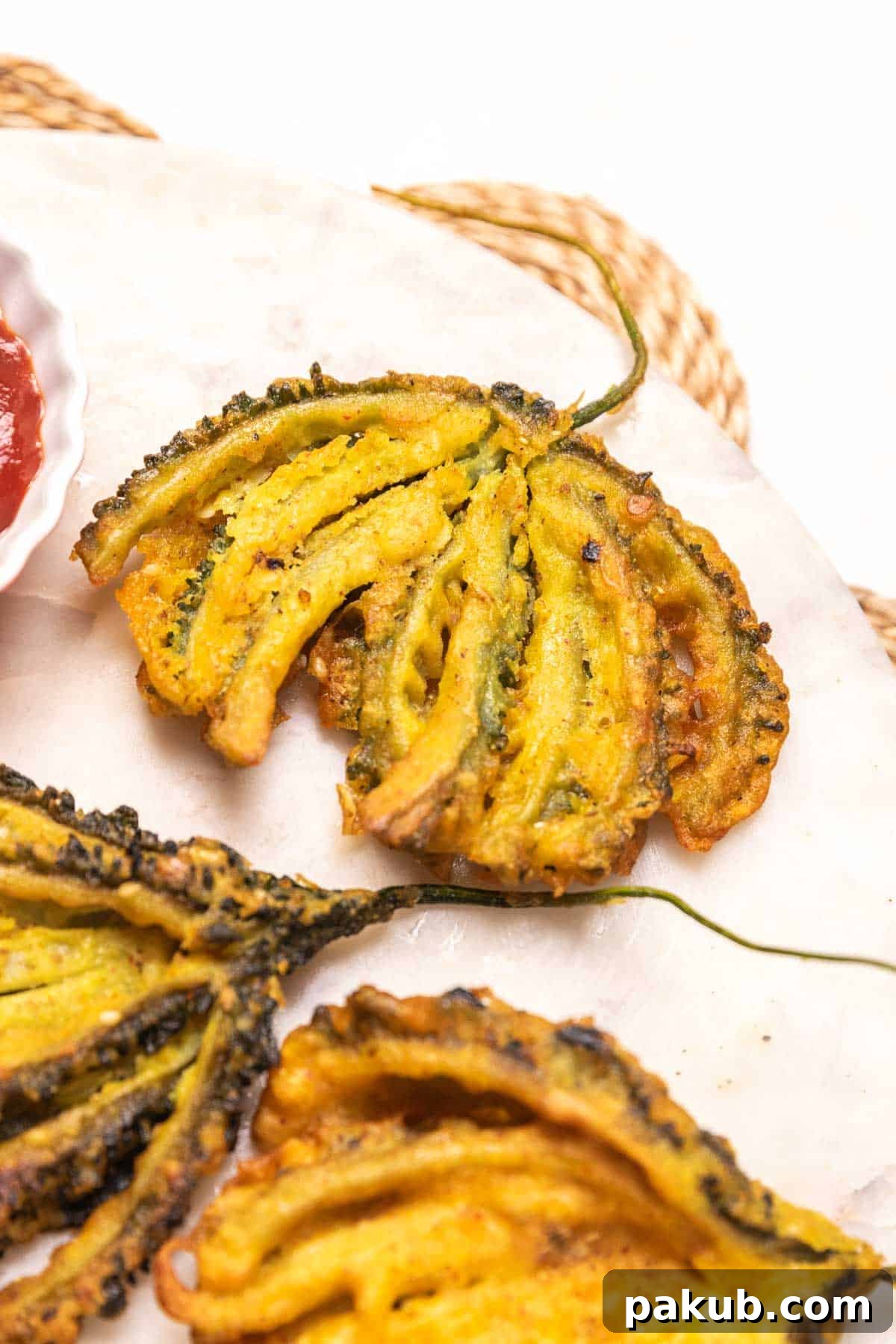
If you’ve never loved karela before, this recipe could be the one to win you over. These **Karela Pakodas** are all about crunch, flavor, and fun—perfect for sharing with family and friends or simply enjoying on your own. They truly redefine what bitter gourd can be!
We absolutely adore seeing your culinary creations. Don’t forget to share your karela pakoda masterpieces on Instagram and tag @my_foodstory—we’d love to see how you make this recipe your own and spread the love for this surprisingly delicious snack!
Watch How to Make Karela Pakoda
Karela Pakoda
Richa
10 minutes
10 minutes
20 minutes
4
people
Rate Recipe
Print Recipe
Ingredients
-
4
mini karelas - Cooking oil for frying
For soaking karelas
-
Juice of 2 lemons,
approx 4 tablespoons -
4
tablespoons
water -
¾
teaspoons
salt
For batter
-
¼
cup
besan,
gram flour -
¼
cup
rice flour -
¼
cup
corn flour or tapioca flour -
¼
teaspoon
turmeric powder -
½
teaspoon
red chilli powder -
1
teaspoon
sesame seeds -
½
teaspoon
salt - Approx. 1 cup water
Instructions
-
Keep the stem and two ends of mini karelas intact & make deep, long cuts on them which should be 1 cm apart. Chop off one of the ends & de-seed, if any.4 mini karelas
-
Mix all ingredients for soaking and dip karelas in this for 10 minutes. Squeeze out the karelas and set aside. Place them on a chopping board & spread fan-like.Juice of 2 lemons,
4 tablespoons water,
¾ teaspoons salt -
Take all ingredients of the batter in a wide bowl & mix well to make a semi thick slurry.¼ cup besan,
¼ cup rice flour,
¼ cup corn flour or tapioca flour,
¼ teaspoon turmeric powder,
½ teaspoon red chilli powder,
1 teaspoon sesame seeds,
½ teaspoon salt,
Approx. 1 cup water -
Dip karelas in the slurry to make sure it is well coated from all sides.
-
Heat a flat pan with about ½ inch of oil until it’s medium hot. Place the dipped karelas while ensuring they are spread out fan-like.Cooking oil for frying
-
Shallow fry on low flame till they are light golden for approx. 3 minutes.
-
Fry on high for a few seconds till they are crispy & serve.
Video
Notes
- This recipe is most suitable for mini karelas but may be replaced with regular karelas, cut into half & then follow the instructions.
- Follow the exact instructions for cutting karelas, to get the best taste.
- Spreading the batter coated karelas fan-like ensures they get evenly fried.
- Any cooking oil may be used for frying karelas such as sunflower oil or groundnut oil.
Nutrition
Calories:
112
kcal
,
Carbohydrates:
22
g
,
Protein:
4
g
,
Fat:
1
g
,
Saturated Fat:
0.2
g
,
Polyunsaturated Fat:
1
g
,
Monounsaturated Fat:
0.3
g
,
Sodium:
741
mg
,
Potassium:
376
mg
,
Fiber:
4
g
,
Sugar:
1
g
,
Vitamin A:
516
IU
,
Vitamin C:
78
mg
,
Calcium:
39
mg
,
Iron:
1
mg
This article was researched and written by Harita Odedra.