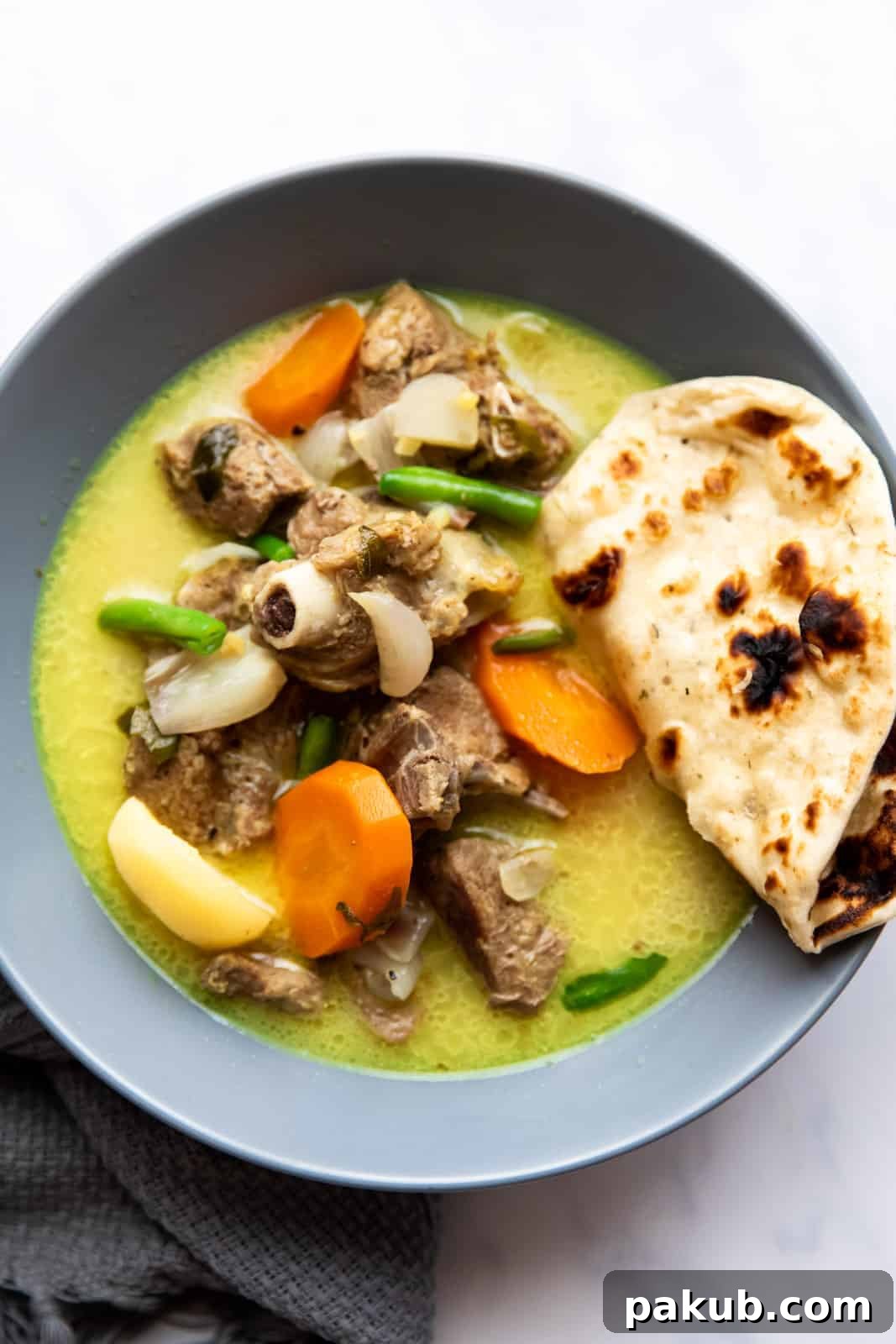
Authentic Kerala Mutton Stew (Ishtu) with Coconut Milk
Experience the soul-warming comfort of this authentic Kerala Mutton Stew, known locally as Ishtu. This delightful dish features tender mutton simmered in a fragrant, mild coconut milk broth, subtly spiced with whole aromatic spices. It’s a light yet incredibly hearty meal, offering a comforting embrace in every spoonful.
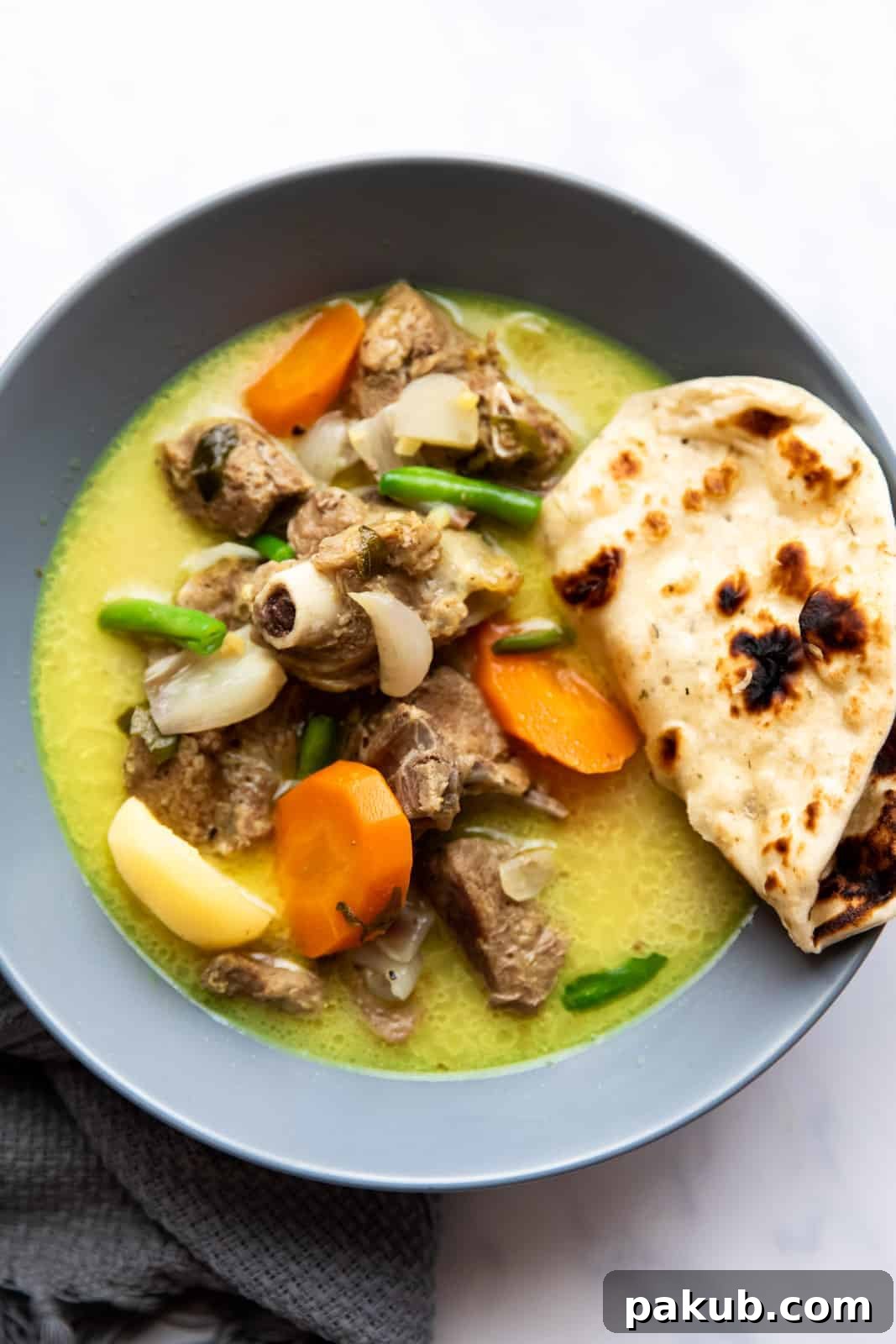
Prepare to embark on a culinary journey to the lush landscapes of Kerala with this truly unique Mutton Stew. Unlike many heavily spiced Indian curries, Ishtu offers a beautifully balanced flavor profile that is both mild and perfectly seasoned, without being overpoweringly hot. The rich, turmeric-stained coconut broth is so exquisitely flavorful, you’ll find yourself wanting to savor every last drop.
Imagine a warm bowl of sunshine and comfort, ready to be enjoyed in under an hour of active cooking time. This Kerala Mutton Ishtu has long been a cherished Sunday meal in our home, beloved for its delicate yet satisfying nature. It’s a complete meal, offering a perfect blend of protein, essential carbohydrates, and fiber, ensuring a wholesome and deeply satisfying dining experience.
What is Kerala Mutton Stew (Ishtu)?
Ishtu, or stew, is a staple of Kerala cuisine, a South Indian state renowned for its use of coconut and mild spices. It’s distinct from other Indian curries due to its light color and creamy coconut base, which provides a cooling contrast to the subtle warmth of whole spices. This particular stew focuses on the natural flavors of the meat and vegetables, gently enhanced by a handful of aromatics and the richness of coconut milk. It’s a testament to the fact that incredibly flavorful dishes don’t always require an extensive list of ingredients or complex cooking techniques.
Why You’ll Love This Authentic Mutton Ishtu Recipe
This Kerala Mutton Stew isn’t just another meal; it’s an experience. Its appeal lies in its simplicity and the profound comfort it delivers. Here’s why this recipe will quickly become a favorite in your kitchen:
- Effortlessly Delicious: Despite its gourmet taste, the steps are straightforward, making it accessible even for novice cooks.
- Balanced Flavors: The gentle warmth of whole spices perfectly complements the creamy sweetness of coconut milk, creating a harmony that is incredibly palatable. It’s neither too spicy nor too bland.
- Digestible and Light: Unlike heavier, oil-laden curries, Ishtu is celebrated for being light on the stomach, making it an excellent choice for any time of the day.
- Nutrient-Rich: Packed with protein from the mutton, healthy fats from coconut milk, and vitamins from fresh vegetables, this stew is as nutritious as it is delicious.
- Perfect for Meal Prep: It tastes even better the next day as the flavors meld and deepen, making it ideal for batch cooking and enjoying throughout the week.
The Fastest Way to Achieve Tender Lamb or Mutton
For this stew, achieving perfectly tender mutton is crucial, and the most efficient method is undoubtedly pressure cooking. After marinating your mutton, simply combine it with a measured amount of water in a pressure cooker. Cook for approximately 4-5 whistles on a traditional stovetop pressure cooker, or for 20 minutes if using an Instant Pot. The goal is for the meat to be tender enough to bite into, but not so soft that it completely falls apart. This initial cooking ensures the mutton is almost done, allowing it to absorb the rich flavors of the stew as it finishes cooking with the other ingredients.
Essential Spices for Kerala Mutton Stew (Ishtu)
The beauty of Kerala Mutton Stew lies in its minimalist approach to spices. You won’t find a complex array of ground powders here, but rather a carefully selected handful of whole spices that impart a distinct, delicate aroma and flavor. Do not underestimate their impact; these spices are the heart and soul of this dish:
- Cloves: Offering a warm, sweet, and aromatic note that adds depth.
- Cinnamon: Provides a sweet and woody aroma, a classic base for many Indian dishes.
- Cardamom: Known for its intensely aromatic, resinous, and subtly sweet flavor, particularly green cardamom which is commonly used.
- Turmeric: Beyond its vibrant golden hue, turmeric offers earthy notes and a wealth of health benefits, including anti-inflammatory properties.
- Ground Black Pepper: Delivers a gentle heat and pungent aroma, acting as a natural flavor enhancer without overwhelming the palate.
In addition to these whole spices, fresh aromatics play a vital role. Fresh ginger, thinly sliced green chillies, and fragrant curry leaves are sautéed to release their invigorating essences, laying a perfect foundation for the stew. While this might seem like a short list for an Indian recipe, trust us, their combined profile is incredibly potent and contributes to a truly memorable taste in every single bite!
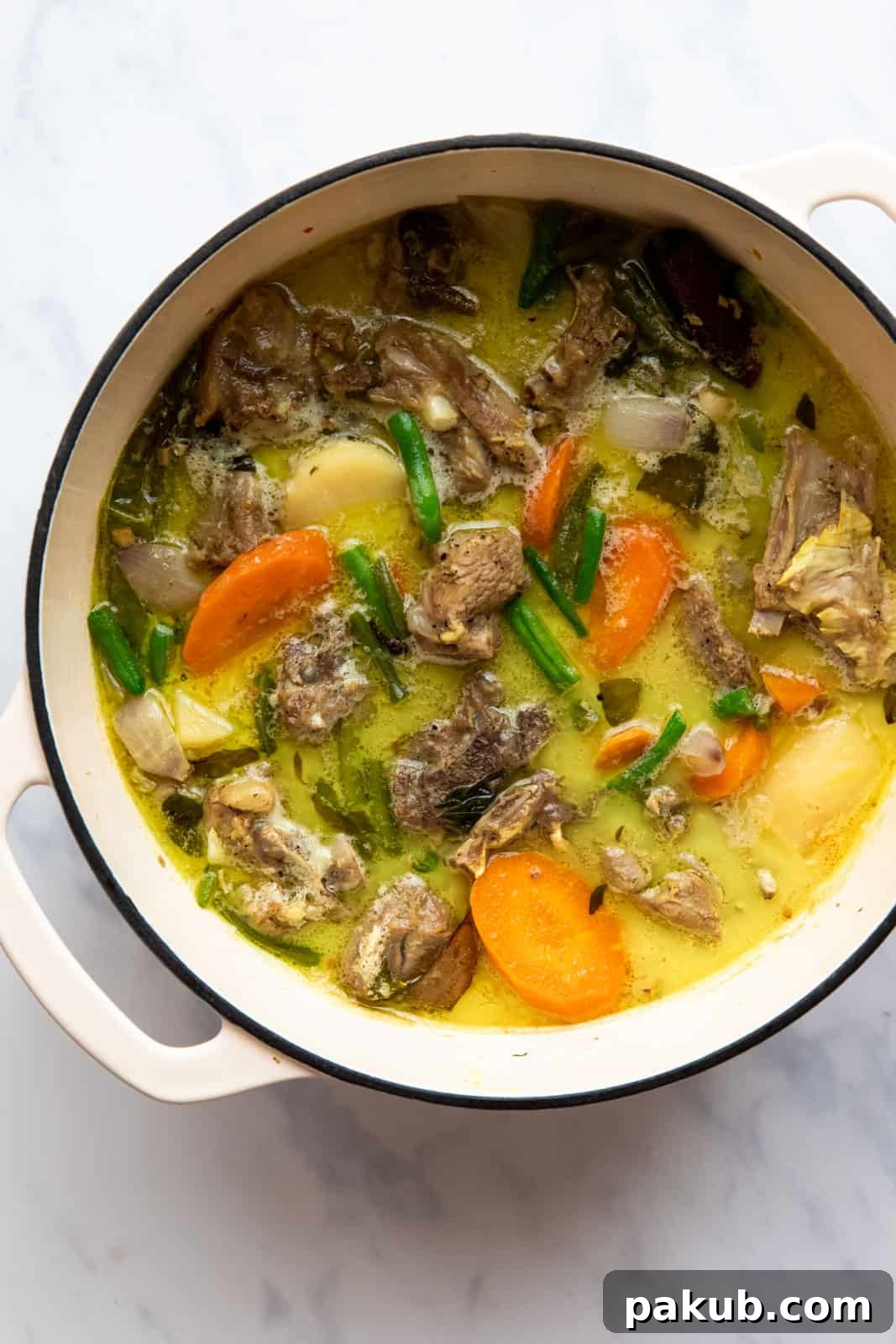
Choosing the Best Cut of Meat for Mutton Stew
For an exceptionally flavorful and tender mutton stew, the cut of meat makes a significant difference. Based on our culinary experience, the shoulder cut is undeniably the best choice for this Kerala-style stew. Here’s why:
- Enhanced Flavor: Shoulder meat typically has a richer, more robust flavor compared to leaner cuts, which translates beautifully into the final stew.
- Ideal Tenderness: It contains a good balance of muscle, connective tissue, and some fat. When slow-cooked (or pressure-cooked and then simmered), this connective tissue breaks down, resulting in incredibly tender, melt-in-your-mouth mutton.
- Gelatinous Stock: The presence of some fat and bone within the shoulder cut helps to create a naturally gelatinous and rich stock. This adds a desirable mouthfeel and an incredible depth of flavor to the coconut broth, elevating the entire dish.
When purchasing your mutton or lamb, always try to select pieces that include some bone. The bones release marrow and collagen during cooking, further enriching the stew’s taste and consistency.
Serving Suggestions for Kerala Mutton Stew
The creamy, aromatic broth of Kerala Mutton Stew is designed to be soaked up and savored with an accompaniment. Here are some traditional and popular serving suggestions:
- Appam: Light, lacy, fermented rice pancakes with crispy edges and a soft, fluffy center. They are the quintessential pairing for Ishtu.
- Idiyappam: Also known as string hoppers, these are delicate nests of rice noodles, perfect for absorbing the rich coconut broth.
- Malabar Parotta: Flaky, layered flatbread that is a favorite in Kerala, offering a wonderful texture contrast.
- Dinner Rolls or Pav: Soft, fluffy bread rolls are an excellent, readily available option for scooping up every drop of the delicious stew.
- Plain White Rice: For a simpler accompaniment, serving Ishtu with steamed white rice allows the flavors of the stew to truly shine.
I often prepare a generous batch of this stew, enough for two meals, as it’s so incredibly tasty and hearty. It’s one of those dishes that we happily enjoy for both lunch and dinner!
Other Comforting Stew Recipes to Explore:
- Easy Instant Pot Beef Stew (Pressure Cooker Recipe)
- Comfort Food: Chicken Stew
- Tastiest Vegetable Korma Curry
Watch How to Make Kerala Mutton Stew (Ishtu)
Kerala Mutton Stew (Ishtu) With Coconut
This Kerala Style Mutton Stew or Ishtu is celebrated for its harmonious blend of simple whole spices and a mild, creamy coconut milk broth. It truly feels like a warm hug in a bowl, offering comfort and exquisite flavor in every spoonful.
By: Richa
Prep Time: 20 mins | Cook Time: 50 mins | Total Time: 1 hr 10 mins
Servings: 8 Portions
Equipment
- Pressure Cooker
- Dutch Oven or Large Pot
Ingredients
For Marinating Mutton
- 1 kg Mutton or Lamb, 2.2 pounds (shoulder cut into 2-inch pieces)
- 1 teaspoon Turmeric
- 1 teaspoon Ginger Paste
- 1 teaspoon Salt
- 1 1/2 cups Water (for pressure cooking)
For the Stew
- 1 1/2 tablespoon Coconut Oil
- 3-4 Cloves, whole
- 3 Cardamom pods
- 1 inch Cinnamon Stick
- 2 Green Chillies, slit lengthwise
- 2 sprigs Curry Leaves
- 1 large Onion, thickly sliced
- 1 tablespoon Ginger, finely chopped
- 1 large Carrot, diced
- 2 medium Potatoes, peeled and halved or quartered
- 8 Green Beans, cut into 1-inch pieces
- 1 teaspoon Salt (or to taste)
- 1 1/2 teaspoons ground Black Pepper (or to taste)
- 1 cup thin Coconut Milk
- 1/2 cup thick Coconut Milk
Instructions
- Marinate the Mutton: In a bowl, combine the mutton pieces with turmeric, ginger paste, and 1 teaspoon of salt. Mix well to ensure the meat is evenly coated. Let it marinate for at least 30 minutes to allow the flavors to penetrate the meat.
- Pressure Cook the Mutton: Transfer the marinated mutton to a pressure cooker. Add 1 1/2 cups of water. Cook until the mutton is about 90% tender. This typically takes 4-5 whistles on a traditional pressure cooker or about 20 minutes in an Instant Pot. Once cooked, carefully drain the mutton, reserving the flavorful stock. Set both the cooked mutton and stock aside.
- Sauté Aromatics: Heat coconut oil in a large pot or a Dutch oven over medium heat. Add the whole spices: cloves, cardamom, cinnamon stick, green chillies, and curry leaves. Sauté for 1-2 minutes until they become fragrant, releasing their oils into the hot oil.
- Cook Onions and Ginger: Add the thickly sliced onions and finely chopped ginger to the pot. Sauté for another 2 minutes until the onions begin to soften and turn translucent.
- Assemble the Stew: Add the diced carrots, potatoes, green beans, and the pre-cooked mutton to the pot. Pour in the reserved mutton stock and the thin coconut milk. If necessary, add a little more water to achieve the desired consistency, ensuring the ingredients are mostly submerged. Season with the remaining salt and ground black pepper.
- Simmer to Perfection: Bring the stew to a gentle boil. Once boiling, reduce the heat to low, cover the pot, and let it simmer for 15-20 minutes. Continue cooking until the vegetables are fork-tender and the mutton is completely cooked through and very tender.
- Finish with Thick Coconut Milk: Stir in the thick coconut milk. Allow the stew to heat through gently for a few more minutes, but do not bring it to a rolling boil after adding the thick coconut milk, as it can curdle.
- Adjust and Serve: Taste the stew and adjust the seasoning (salt and pepper) if needed. Serve hot with your preferred accompaniment.
Notes
- Mutton or Lamb: In many parts of India, “mutton” refers to goat meat, while “lamb” is sheep meat. Both can be used interchangeably in this recipe, yielding delicious results.
- Cut of Meat: As recommended, the shoulder cut is ideal. For maximum flavor, ensure your meat includes some bone-in pieces, as the bones contribute significantly to the richness of the stew.
- Vegetables: This recipe traditionally uses carrots, potatoes, beans, and onions. Feel free to incorporate other root vegetables like turnips or peas. However, avoid strong-flavored vegetables such as broccoli or Brussels sprouts, as they can overpower the delicate taste profile of the Ishtu.
- Coconut Milk: If you’re using freshly extracted coconut milk, the first extraction is typically the thick coconut milk, and subsequent extractions (with added water) yield thin coconut milk. For store-bought varieties, you can create thin coconut milk by diluting concentrated coconut milk or cream with water (e.g., 50 ml coconut milk with 200 ml water). Adjust this ratio to your preference for consistency and richness.
- Consistency: The consistency of Ishtu can vary. If you prefer a thinner stew, simply add more thin coconut milk, reserved stock, or water until it reaches your desired texture.
Nutrition (Approximate per serving)
Calories: 542kcal, Carbohydrates: 17g, Protein: 23g, Fat: 43g, Saturated Fat: 25g, Cholesterol: 91mg, Sodium: 713mg, Potassium: 708mg, Fiber: 4g, Sugar: 4g, Vitamin A: 1560IU, Vitamin C: 26mg, Calcium: 51mg, Iron: 3mg
Like this recipe? We’d love to hear from you!
Please rate this recipe and share your thoughts in the comments below. Your feedback helps us create more delicious content!