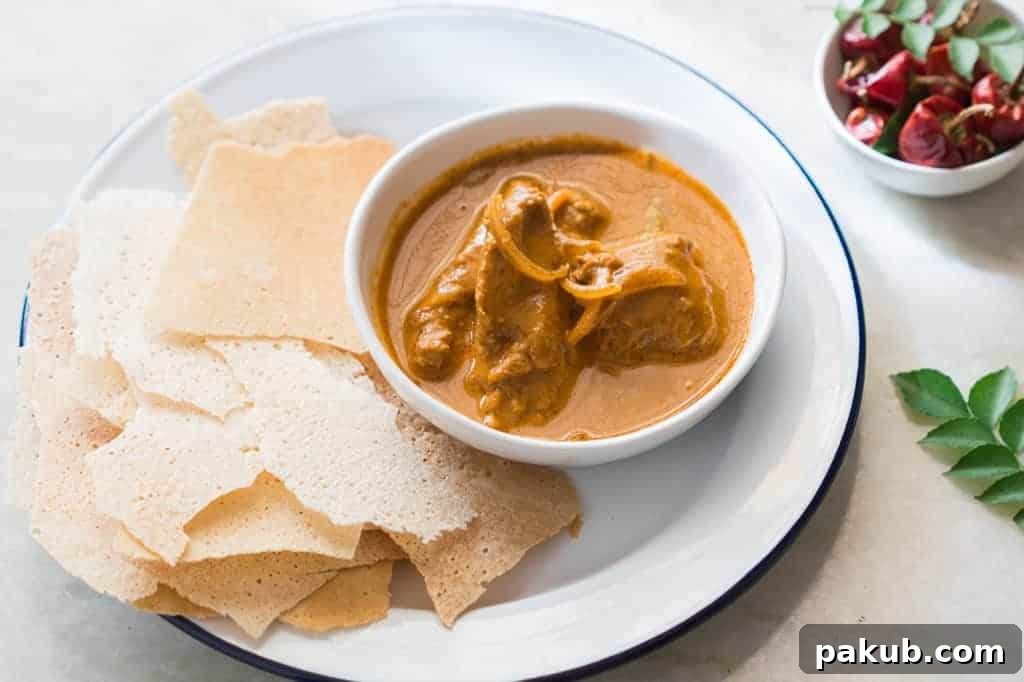
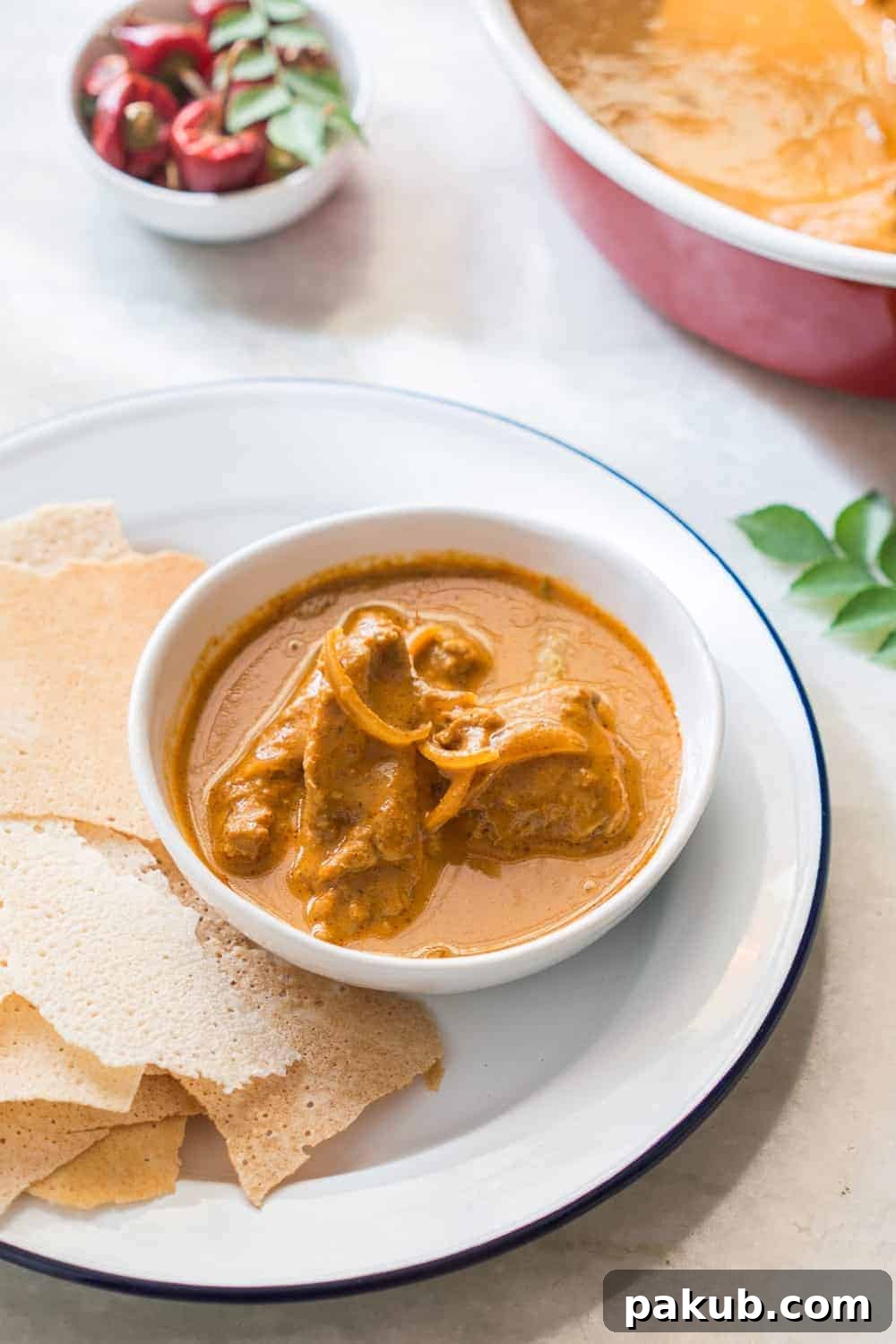
Embark on a culinary journey to Mangalore with this incredible Kori Rotti, a spicy and creamy chicken curry known locally as Kori Gassi. This iconic dish is a symphony of roasted spices and rich coconut, guaranteed to tantalize your taste buds and leave you craving more. Perfect for a hearty dinner, its unique flavors are truly irresistible!
Prepare to fall in love with Mangalorean cuisine! If you haven’t yet explored the vibrant flavors of this coastal region of Karnataka, you’re in for a treat. My own journey into this delightful culinary world began when I met Denver, and since then, I’ve been utterly captivated. The very first time I tasted Kori Rotti, or Kori Gassi served with its namesake crispy rice rotti, I anticipated a mild, coconut-infused curry. What I discovered instead was a surprisingly spicy, intensely flavorful, and utterly addictive experience that redefined my understanding of Indian curries.
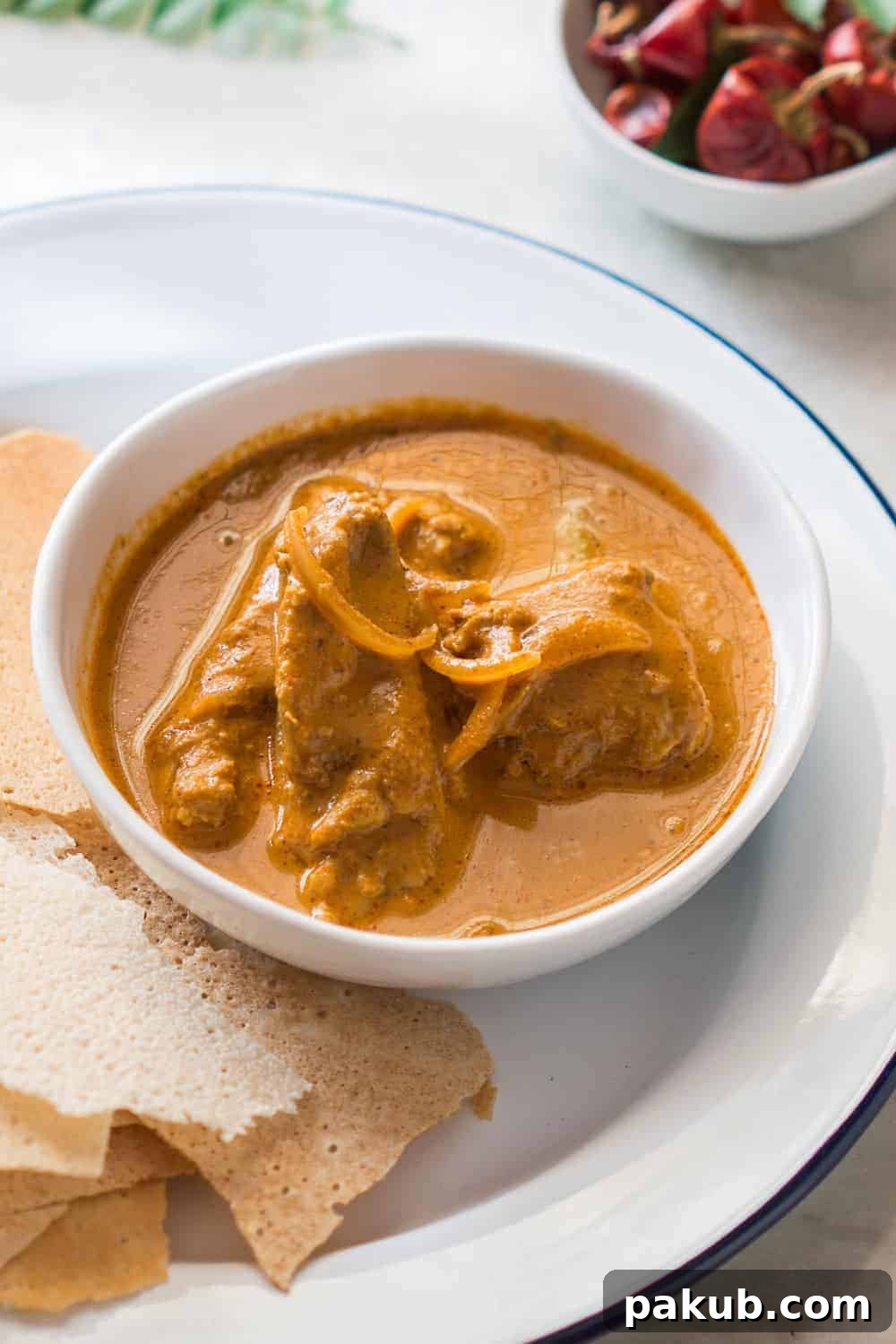
What truly sets Kori Rotti apart is its distinctive serving tradition. Unlike many Indian curries typically enjoyed with rice or chapatis, this curry finds its perfect partner in a special, incredibly crispy rice rotti. The experience is wonderfully tactile and deliciously messy – a true hands-on affair. Denver and I often roll up our sleeves and dive in! The ritual involves lightly crushing the delicate rice rotti onto your plate, then generously spooning the rich, aromatic curry over it. A brief minute of waiting allows the rotti to absorb some of the curry, creating a delightful contrast of crispy and slightly softened textures. Then, without a single spoon in sight, you savor every bite with your hands, embracing the authentic Mangalorean way.
My enthusiasm for Mangalorean food knows no bounds; I could honestly enjoy it every single day. Beyond this sensational Kori Rotti, there’s the legendary Mangalorean Fish Fry, famous for its incredible marinade (a recipe I eagerly anticipate sharing soon!). And then there are the delectable ‘sukkas’ – dry preparations that I am yet to master. So, to any Mangalorean connoisseurs reading this, if you possess a cherished chicken sukka recipe you’re willing to impart, I would be eternally grateful!
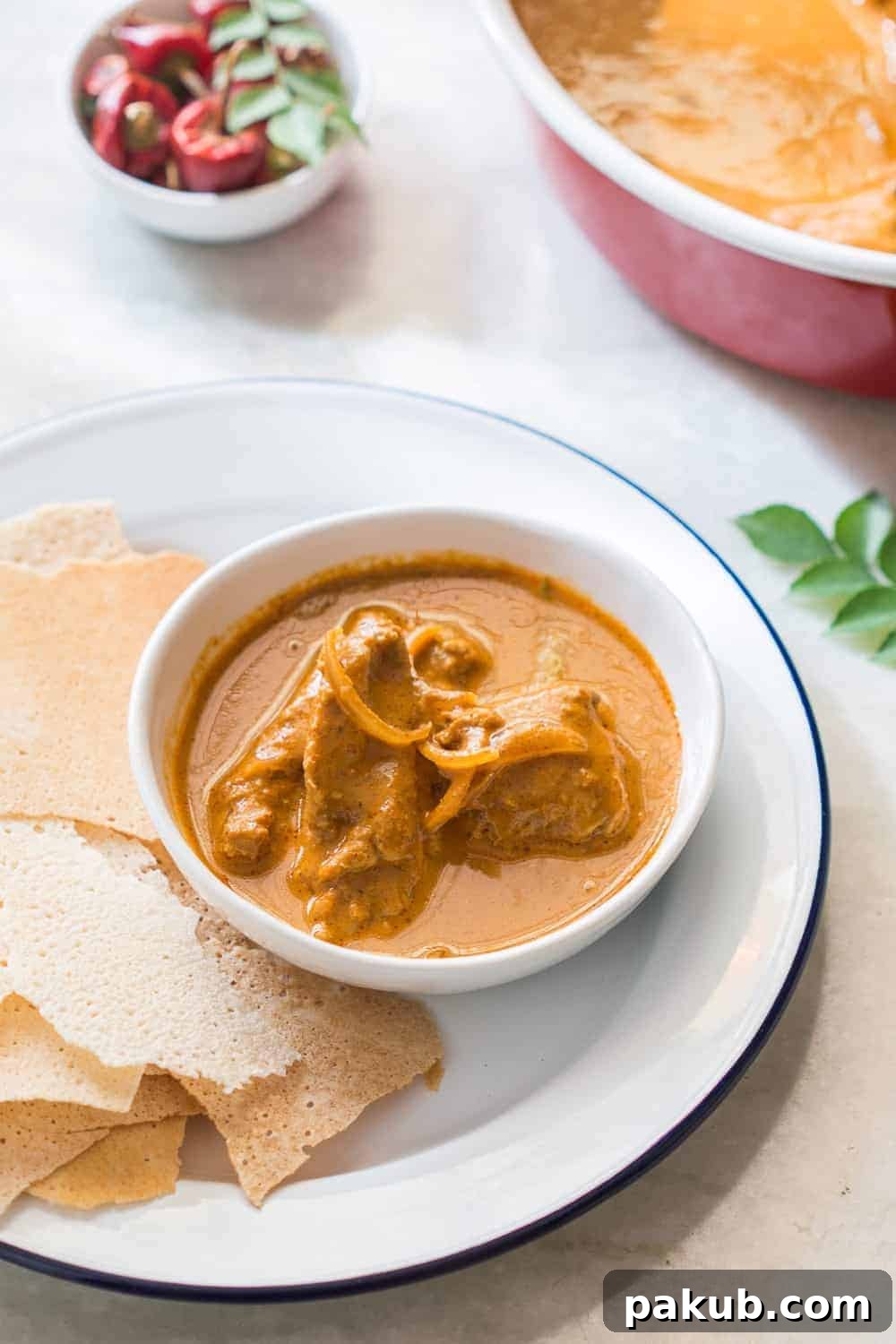
The joy this dish brings is palpable. Just this morning, for instance, we enjoyed some leftover Kori Rotti with dosas (rice and lentil crepes) for breakfast. Denver, usually quite restrained, ate well beyond his typical portion. I watched as he reached for yet another dosa, then paused, looked at me, and made the most endearing puppy-dog face – a clear sign he simply couldn’t stop eating! This is the kind of irresistible charm Mangalorean cuisine holds.
The Heart of Mangalorean Cuisine: Mastering the Masala
Central to the unparalleled flavor of Mangalorean dishes, especially Kori Rotti, is the meticulously prepared masala (spice blend). What’s wonderful is that you likely already have most of the required spices in your pantry. The process of dry roasting these whole spices is not just a step in the recipe; it’s an aromatic experience that fills the kitchen with an intoxicating fragrance. The precise proportions of each spice work in perfect harmony, creating a deep, complex flavor profile that forms the very soul of this curry.
This careful preparation elevates the dish from a simple chicken curry to a true culinary masterpiece. The art of balancing the heat from the chillies, the earthy notes of coriander and cumin, the subtle bitterness of fenugreek, and the warmth of peppercorns, all mellowed by fresh coconut, is what gives Kori Gassi its distinctive character. It’s a testament to the rich culinary traditions of Mangalore, where every ingredient plays a vital role in crafting unforgettable flavors.
Top Tips for Crafting the Perfect Mangalorean Kori Rotti (Kori Gassi)
- Spices: The Foundation of Flavor: The secret to an outstanding Kori Rotti lies in the perfectly roasted dry spices. Always dry roast them on a low flame, stirring continuously. This gentle heat helps release their essential oils and deepens their aromatic intensity, preventing them from burning and ensuring a rich, nuanced flavor.
- Turmeric – Whole vs. Powder: For an authentic touch and a vibrant color, I highly recommend using a piece of whole dried turmeric in your masala blend. However, if whole turmeric is unavailable, a ¾ teaspoon of high-quality turmeric powder makes an excellent substitute, providing both color and the essential earthy notes.
- Chicken Selection for Best Results: Opt for pre-cut ‘curry cut chicken’ pieces, ideally around 1.5 inches in size. Larger pieces will require longer cooking times, risking dryness. Using bone-in curry cut chicken is crucial, as the bones infuse the curry with extra flavor and help the meat remain succulent and juicy throughout the cooking process.
- The Authentic Rotti: The traditional accompaniment for Kori Rotti is a delicate, crispy rice rotti, often specific to Mangalore. While making these at home requires considerable skill and technique, high-quality store-bought rotti, readily available in Indian or Mangalorean grocery stores, offers a convenient and delicious alternative that perfectly complements the curry. If you don’t have access to Rotti, hot steamed rice is a good alternative.
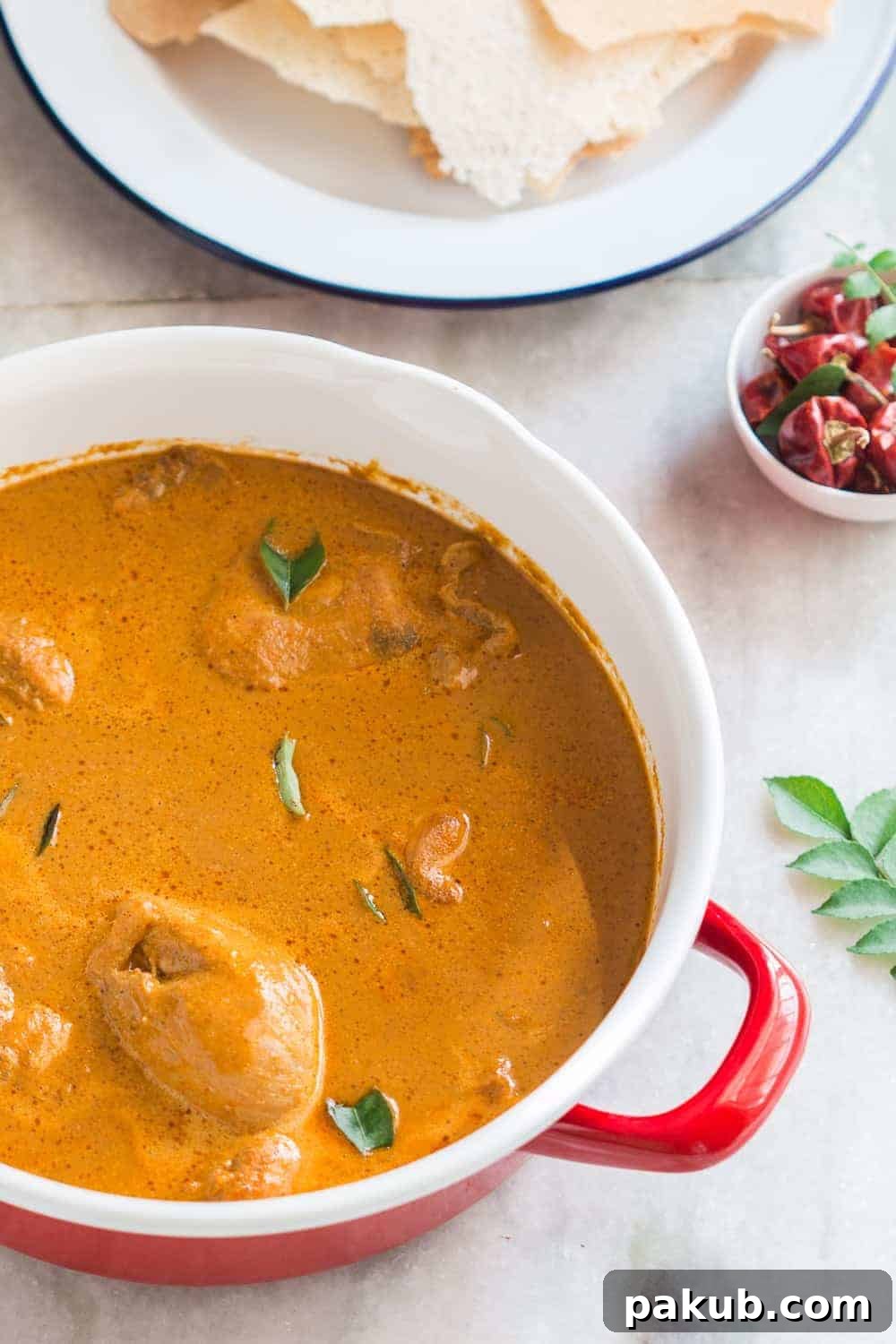
Even if you don’t have access to the specific crispy rice rotti, don’t let that deter you from trying this phenomenal Mangalorean Chicken Kori Rotti. While you might miss out on the full traditional experience, the curry itself is a masterpiece worth savoring with plain steamed rice, dosas, or even idlis. I’m already looking forward to my dinner tonight, knowing there are delicious leftovers to enjoy!
For an extended Mangalorean feast, consider pairing this Kori Rotti with the exquisite Mangalorean Fish Fry, a match made in culinary heaven.
Explore More Coastal Indian Delights
The culinary traditions of coastal India are incredibly diverse and rich in flavor. If you’ve enjoyed this taste of Mangalore, we encourage you to explore other regional specialties that celebrate fresh seafood, aromatic spices, and coconut:
- Mangalorean Ripe Mango Curry: A delightful blend of sweet and tangy flavors.
- Goan Prawn Curry with Coconut: A classic Goan dish bursting with coastal zest.
- Spicy King Fish Curry with Coconut: A robust and flavorful fish curry.
Watch the Preparation Video
Chicken Kori Rotti | Mangalorean Chicken Curry
An authentic recipe for Chicken Kori Rotti, also celebrated as Mangalorean Chicken Curry or Kori Gassi. This creamy, spicy, and perfectly balanced curry is ideal for a memorable dinner!
Ingredients
Chicken Marinade
- 1 kg Chicken, Curry Cut
- 1/2 teaspoon Turmeric Powder
- 1/2 teaspoon Salt
Masala Paste
- 2 tablespoons Ghee
- 2 large Onions, sliced
- 3/4 cup Coconut, grated
- 1 piece Tamarind, lime-sized ball
- 1/2 inch Turmeric, whole (See Note 1)
- 1 tablespoon Coriander Seeds, whole (Dhaniya seeds)
- 1 teaspoon Peppercorns (Kali Mirch)
- 1/2 teaspoon Fenugreek (Methi seeds)
- 1 teaspoon Cumin (Jeera seeds)
- 1 pod Garlic, peeled (See Note 2)
- 8 Salem Gundu Dry Red Chillies, small round red (spicy variety)
- 12 Kashmiri Dry Red Chillies, wrinkled red (for color, less spice)
- 1 – 1 1/2 cups Water
Curry
- 3/4 cup Coconut Milk, thin (See Note 3)
- 1/2 cup Coconut Milk, thick
- Salt to taste
- Curry Leaves, optional
Instructions
Chicken Marinade
- Start by marinating the chicken. In a bowl, combine the chicken pieces, turmeric powder, and salt. Mix well and set aside to marinate while you prepare the masala.
Preparing the Masala Paste
- In a pan, heat a tablespoon of ghee. Add one sliced onion, grated coconut, tamarind, and the whole turmeric (if using). Fry this mixture for 8-10 minutes over medium-low heat until the coconut and onions turn slightly brown and become fragrant and toasty. Remove from heat and let cool.
- In a separate dry pan, add the coriander seeds, peppercorns, fenugreek seeds, cumin seeds, peeled garlic, and both types of dry red chillies. Dry roast these spices on a low flame for about 5 minutes, stirring frequently, until they release a slightly sweet and spicy aroma. Be very careful not to burn them. Remove from heat and let cool completely.
- Once both mixtures have cooled, combine the toasted coconut-onion mixture and the roasted dry spices in a blender. Add about 1 cup of water and grind into a very smooth, fine paste. Add a little more water if necessary to achieve the desired consistency, ensuring it remains thick.
Cooking the Curry
- In a large pot or heavy-bottomed pan, pour the freshly ground masala paste. Stir in the thin coconut milk and the remaining sliced onions. Bring this mixture to a gentle boil, then add the marinated chicken pieces and adjust salt to taste.
- Reduce the heat to a simmer and let the curry cook, covered, until the chicken is tender and thoroughly cooked through. This process typically takes about 35-40 minutes, depending on the size of your chicken pieces.
- Once the chicken is cooked, stir in the thick coconut milk. Give it one good stir to combine all the flavors, then immediately switch off the flame. Drizzle a tablespoon of ghee over the top for an extra layer of richness, and serve hot with traditional crispy rice rotti, steamed rice, or dosas.
Notes
- If you don’t have access to whole turmeric, you can substitute it with 3/4 teaspoon of turmeric powder.
- For convenience, if you are using pre-peeled garlic cloves, approximately 10-12 cloves will be equivalent to one pod.
- To prepare thin coconut milk from most packaged thick coconut milk, simply mix equal parts coconut milk and water. For example, to get one cup of thin coconut milk, combine half a cup of thick coconut milk with half a cup of water.
Nutrition
Carbohydrates: 16g,
Protein: 16g,
Fat: 25g,
Saturated Fat: 14g,
Cholesterol: 62mg,
Sodium: 67mg,
Potassium: 632mg,
Fiber: 3g,
Sugar: 8g,
Vitamin A: 1170IU,
Vitamin C: 167mg,
Calcium: 44mg,
Iron: 3mg