
Experience a symphony of flavors with this incredible Raw Mango Chutney, also known as Aam ki Launji! Sweet, tantalizingly spicy, and wonderfully sour, this vibrant chutney is a true summer essential that promises to elevate any meal. Remarkably quick and easy to prepare, this traditional Indian condiment is a versatile companion, perfect for brightening up a wide array of Indian dishes. Get ready to embark on a culinary journey that celebrates the fresh, tangy essence of raw mangoes in every delightful spoonful.

For many, including myself, this raw mango chutney holds a special place in childhood memories. I vividly recall the summers spent at my grandmother’s house, where this delightful sweet, spicy, and perfectly puckeringly sour concoction was a constant fixture on the dining table. We savored it with every meal, spoon after glorious spoon, making it a beloved staple that my grandma would lovingly prepare in fresh batches every few days. The sheer joy and unique taste of this traditional Indian mango chutney were simply irresistible, a flavor that transports me back to those cherished days.
Crafted from simple ingredients like diced raw green mangoes, jaggery (Indian unrefined cane sugar), and a carefully selected blend of aromatic spices, this recipe truly embodies the essence of homemade comfort. What makes this Aam ki Launji even more appealing is its incredible simplicity and speed – it comes together effortlessly in just about 20 minutes, making it an ideal choice for busy weeknights or impromptu gatherings. Each spoonful of this homemade mango chutney bursts with fresh, vibrant flavors and a delightful interplay of textures, ensuring that you’ll be reaching for more long after your plate is clean!
Table of Contents: Raw Mango Chutney
- Essential Ingredients for Raw Mango Chutney
- Frequently Asked Questions
- Richa’s Top Tips To Make The Best Mango Chutney
- Watch How To Make Aam Ki Launji
- Full Recipe Card: Raw Mango Chutney
Essential Ingredients for Raw Mango Chutney
Creating this flavorful raw mango chutney requires just a handful of readily available ingredients, most of which you might already have in your pantry. The key to its distinct taste lies in the quality of the raw mangoes and the balance of traditional Indian spices. Here’s a detailed look at what you’ll need to gather:
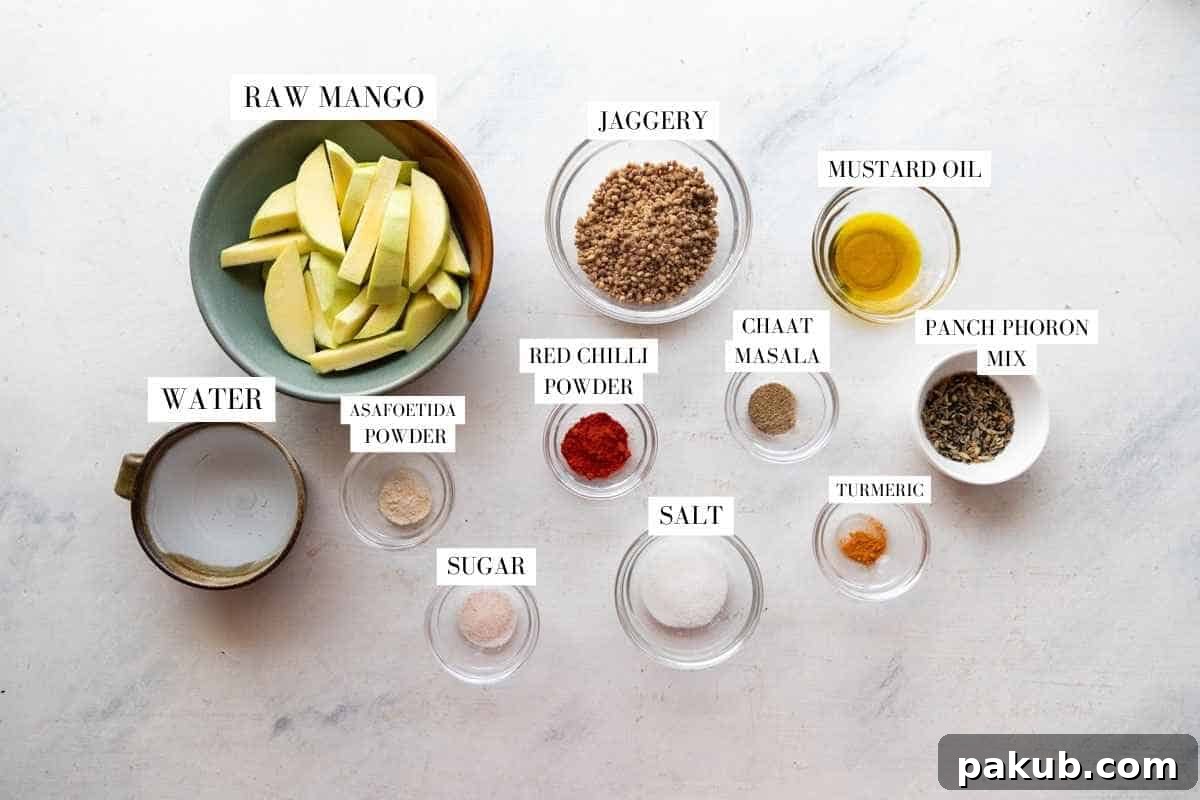
- Green Raw Mangoes: The star ingredient! Opt for medium-sour, firm green mangoes. They provide the perfect tanginess that is characteristic of Aam ki Launji. Ensure they are peeled and thickly sliced or diced into bite-sized pieces. Approximately 1 cup (120 grams) is ideal for this recipe.
- Mustard Oil: This oil is fundamental to authentic Indian cooking, especially in chutneys. Its pungent flavor adds depth and a unique aroma that complements the mangoes beautifully. You’ll need about 2 teaspoons.
- Panch Phoron Mix: This traditional Bengali five-spice blend is a game-changer. It consists of whole spices: mustard seeds (rai), cumin seeds (jeera), fennel seeds (saunf), nigella seeds (kalonji), and fenugreek seeds (methi). If you can’t find a pre-mixed blend, you can easily create your own by combining ⅛ teaspoon of each spice. About 1 teaspoon of the mix is perfect.
- Salt: A quarter teaspoon of salt helps balance the sweetness and tartness, enhancing all the other flavors.
- Asafoetida Powder (Hing): A pinch of hing (about ⅛ teaspoon) is crucial for digestion and adds an inimitable savory depth to the chutney.
- Water: About ¾ cup of water is needed to help cook the mangoes and create the desired consistency for the chutney.
- Kashmiri Chilli Powder: Half a teaspoon of this mild chili powder provides a beautiful red hue without overwhelming heat, allowing the other flavors to shine.
- Turmeric Powder: A pinch of turmeric (haldi) adds a warm color and its characteristic earthy notes, along with its numerous health benefits.
- Jaggery: This unrefined cane sugar (approximately ¼ cup) is key to the chutney’s signature sticky sweetness and deep, caramel-like flavor. It’s healthier than refined sugar and offers a richer taste.
- Sugar: A small amount of white sugar (½ tablespoon) is used alongside jaggery to fine-tune the sweetness and ensure a smooth texture.
- Chat Masala: A final pinch of chat masala, sprinkled at the end, provides an extra layer of tangy, savory, and slightly spicy flavor, giving the chutney an irresistible zing.
With these ingredients at hand, you’re well on your way to crafting a homemade Raw Mango Chutney that will impress everyone at your table!
Frequently Asked Questions
What is the difference between chutney and salsa?
While both chutney and salsa are flavorful condiments, their primary distinction lies in their flavor profiles and origins. Chutneys, particularly Indian ones like Aam ki Launji, are typically cooked, often sweeter, and boast a more complex blend of sweet, sour, and spicy notes, sometimes with a sticky, jam-like consistency. They are deeply rooted in South Asian cuisine. Salsas, on the other hand, are often fresh, uncooked, and tend to be spicier and tarter, with a focus on fresh vegetables and herbs, hailing mainly from Mexican and Latin American culinary traditions.
What is mango chutney good with?
Raw mango chutney is incredibly versatile and pairs wonderfully with an extensive range of dishes. Its unique sweet, sour, and spicy character makes it an excellent accompaniment. You can enjoy it as a vibrant dip for appetizers, a spread for sandwiches, or a flavorful side with your main meals. It’s traditionally served with warm parathas (Indian flatbreads), alongside rich curries, or simply mixed with plain rice. During mango season, I find myself pairing it with almost everything – from simple dal-rice to elaborate biryanis. Its ability to elevate any dish is truly remarkable, making it a condiment you’ll want to have on hand!
How should I store homemade Raw Mango Chutney?
To keep your homemade raw mango chutney fresh and delicious, store it in an airtight glass jar or container in the refrigerator. When properly stored, it can last for up to 2 to 3 weeks. Always use a clean, dry spoon when serving to prevent contamination and extend its shelf life. Avoid leaving it at room temperature for prolonged periods, especially in warm weather.
Can I adjust the sweetness or spiciness?
Absolutely! This recipe is highly adaptable to your personal taste preferences. If you prefer a sweeter chutney, you can increase the amount of jaggery or sugar. For those who love a spicier kick, feel free to add a bit more Kashmiri chilli powder, or even a tiny amount of a hotter red chili powder. Conversely, if you prefer it milder, reduce the chilli powder. Remember to taste as you go and adjust accordingly until it reaches your perfect balance of flavors.
Richa’s Top Tips To Make The Best Mango Chutney
Achieving that perfect balance of sweet, spicy, and sour in your Aam ki Launji is simple with a few expert tips. Follow these guidelines to ensure your raw mango chutney is nothing short of spectacular:
- Choose the Right Mangoes: For optimal results, use medium sour green mangoes. Their natural tartness is essential for the characteristic “puckerish-ly sour” flavor of the chutney. Don’t discard the mango pit right away; you can add it to the chutney during cooking. Many enjoy sucking on the flavorful pit, or you can simply remove it before serving.
- Master the Panch Phoron: Panch phoron is a pivotal spice blend that gives this chutney its distinct aroma and flavor. It’s a mix of five whole spices: mustard seeds (rai), cumin seeds (jeera), fennel seeds (saunf), nigella seeds (kalonji), and fenugreek seeds (methi). If you can’t find a pre-made mix at your local Indian grocery store, you can easily make your own by combining ⅛ teaspoon of each individual spice. Ensure you temper them correctly in oil to release their full fragrance.
- Timing is Key for Sweeteners: It’s crucial to add the jaggery and sugar only after the mango pieces are half-cooked. Adding them too early can prevent the mangoes from softening properly, resulting in a tougher texture in your finished chutney. Allow the mangoes to tenderize slightly in water first, then introduce the sweeteners.
- Cook to Perfection, Not Mush: Be mindful not to overcook the mangoes. The goal is to cook them until the pieces are tender and cooked through, but still retain a slight bite. Overcooking will cause the mangoes to become mushy, losing their delightful texture and making the chutney less appealing. Keep an eye on them and remove from heat once they reach this desired consistency.
- Batch Cooking and Storage: This raw mango chutney is fantastic for meal prepping! You can easily make a larger batch and store it in an airtight container in the refrigerator. It stays fresh and delicious for up to 3 weeks, allowing you to enjoy this summer staple whenever a craving strikes.
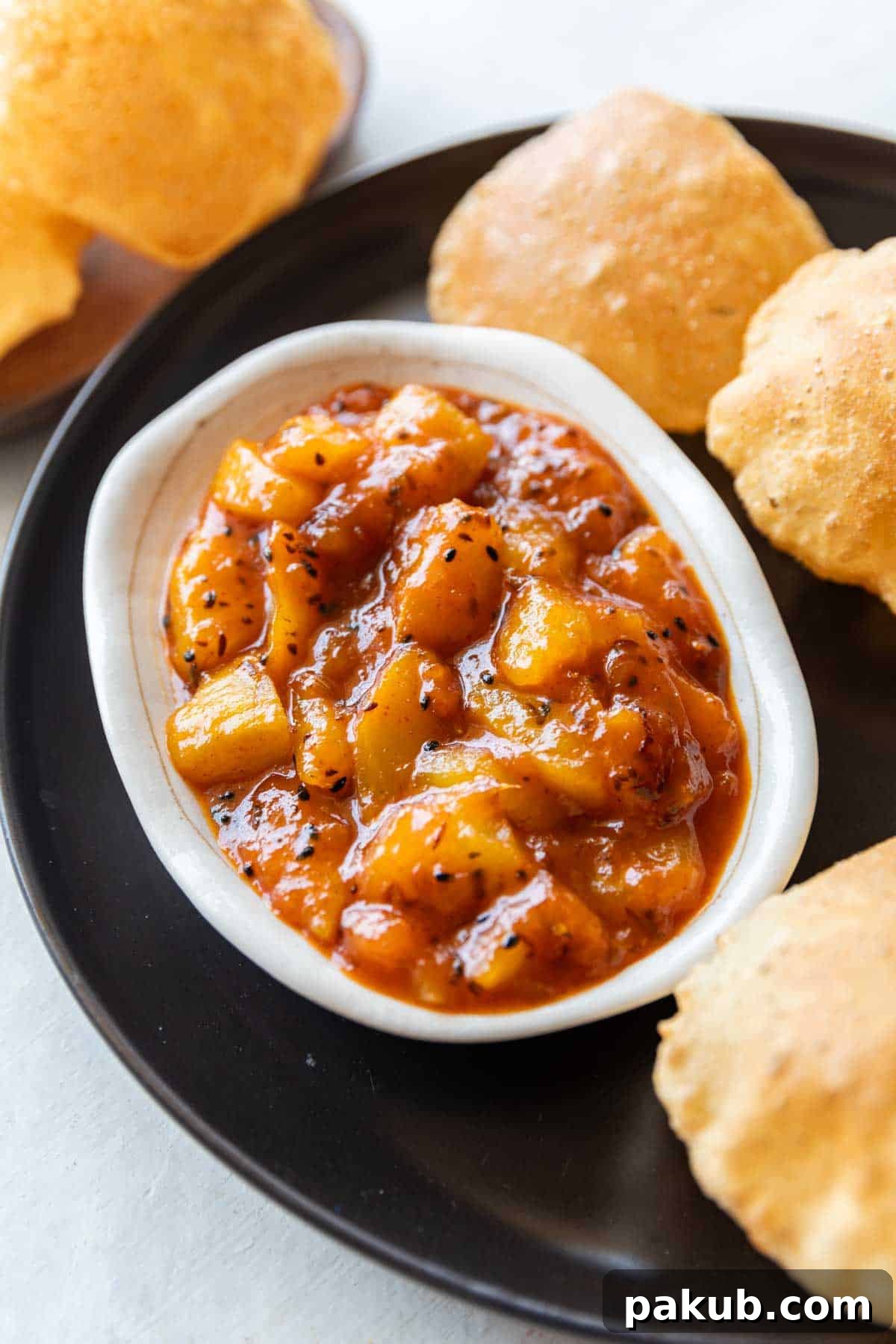
I find myself preparing this sweet and sour raw mango chutney multiple times throughout the vibrant summer season, and each time, it’s savored with immense pleasure by my family and friends. While it’s a personal tradition to enjoy it as a versatile side dish with almost all my meals during these warmer months, its adaptability knows no bounds. Feel free to experiment and serve it with anything your heart desires! If you decide to bring this delightful chutney to life in your kitchen, I’d absolutely love to see your creations. Don’t forget to share your culinary masterpieces with me on Instagram!
Watch How To Make Aam Ki Launji
For those who prefer a visual guide, I’ve put together a concise video demonstrating each step of this easy Aam ki Launji recipe. Follow along as I walk you through the process, ensuring your raw mango chutney turns out perfectly every time.
Raw Mango Chutney | Aam ki Launji
By: Richa
Raw mango chutney, a fresh, vibrant, and sticky concoction, is something I have grown up eating. This is a really simple recipe, but the sweet, spicy, and sour flavors of this mango chutney will have you making this one again and again. It’s a perfect accompaniment for any Indian meal.
Cook: 15 mins
Total: 20 mins
Servings: 6
Ingredients
- 1 cup green raw mangoes, peeled & thickly sliced (approx. 120 grams)
- 2 teaspoons mustard oil
- 1 teaspoon panch phoron mix (see notes for details)
- ¼ teaspoon salt
- ⅛ teaspoon asafoetida powder (hing)
- ¾ cup water, divided
- ½ teaspoon Kashmiri chilli powder
- A pinch of turmeric powder
- ¼ cup jaggery, grated or chopped
- ½ tablespoon sugar
- A pinch of chat masala
Instructions
- Heat mustard oil in a pan over medium-high heat. Once hot, add the panch phoron mix. Allow the spices to crackle for a few seconds, releasing their aroma.
- After the panch phoron crackles, add the asafoetida powder and sauté for about 10 seconds until fragrant. Immediately add the prepared mango wedges. Cook the mangoes for 4-5 minutes, stirring occasionally, until they start to soften slightly.
- Pour in ¾ cup of water. Once the water begins to boil, add salt, Kashmiri chilli powder, and turmeric powder. Cover the pan with a lid and continue to cook for approximately 5 minutes, or until the mangoes are half cooked and tender but still firm.
- Uncover the pan and add the jaggery, sugar, and chat masala. Stir well to combine. Cook for another 3-4 minutes, allowing the jaggery and sugar to melt and create a sticky, glossy sauce. Be careful not to overcook the mangoes at this stage; they should remain cooked through but still have a pleasant bite, not become mushy.
- Once the mangoes reach the desired tenderness and the chutney has thickened, turn off the heat. Your delicious raw mango chutney (Aam ki Launji) is ready!
- Serve this flavorful chutney at room temperature or chilled, it pairs wonderfully with warm Roti, Paratha, or Poori, and makes a fantastic side for any Indian meal.
Notes
- Use sour mangoes for the best results. You can add the mango pit to the chutney while cooking for extra flavor; some people enjoy sucking on it, or you can discard it later.
- Panch phoron is a mix of 5 spices: mustard seeds (rai), cumin seeds (jeera), fennel seeds (saunf), nigella seeds (kalonji), and fenugreek seeds (methi). If you don’t have the pre-mix, you can use ⅛ teaspoon of each individual spice.
- Add jaggery & sugar only after the mangoes are half cooked. This is important because adding sweeteners too early can prevent the mangoes from cooking properly and becoming tender.
- This chutney stays fresh and flavorful for up to 3 weeks when stored in an airtight container in the refrigerator.
Nutrition
Per Serving (approximate):
- Calories: 53 kcal
- Carbohydrates: 10g
- Protein: 0.02g
- Fat: 2g
- Saturated Fat: 0.2g
- Polyunsaturated Fat: 0.3g
- Monounsaturated Fat: 1g
- Sodium: 101mg
- Potassium: 4mg
- Fiber: 0.1g
- Sugar: 9g
- Vitamin A: 50 IU
- Vitamin C: 0.01mg
- Calcium: 5mg
- Iron: 0.1mg
Loved this recipe? Share your thoughts and experiences in the comments below! Your feedback helps us grow and inspires other home cooks.