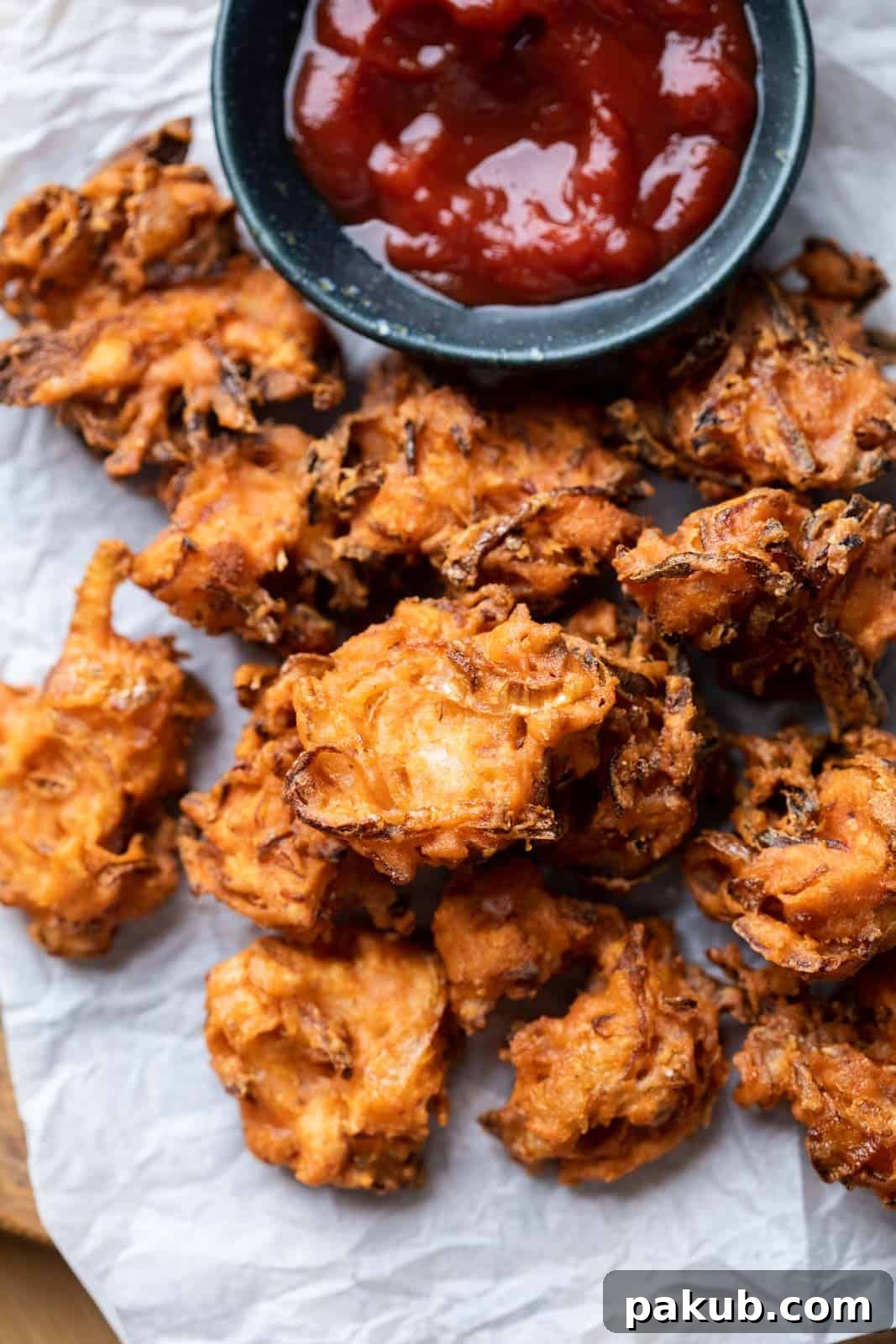
Master the Art of Extra Crispy Onion Pakoda (Kanda Bhaji): Your Ultimate Rainy Day Snack!
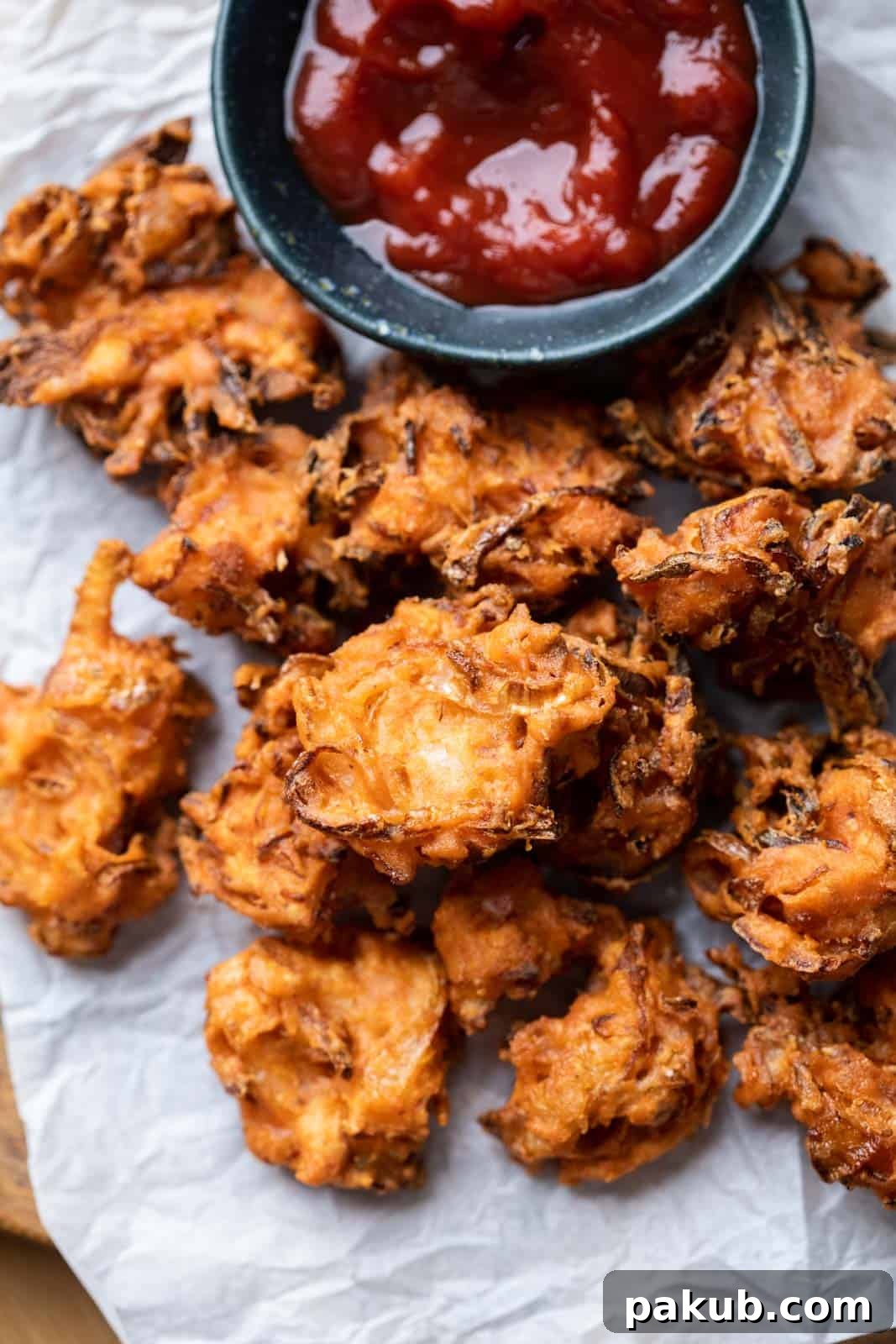
There’s nothing quite like the comforting aroma and satisfying crunch of freshly made Onion Pakodas, especially when the monsoon rains lash down. These beloved Indian fritters, also known as Kanda Bhaji, are more than just a snack; they’re an emotion, a culinary tradition that brings warmth and joy to every rainy day. While I once championed a healthier baked version, the irresistible allure of truly crispy, deep-fried pakodas, reminiscent of those served by your favorite street-side chai wala, proved too strong to resist. So, if you’re ready for an indulgent treat and believe in the occasional cheat day, this recipe is for you. For those on a strict diet, remember my healthier baked pakodas recipe is always an option, but today, we’re diving into the glorious world of crispy perfection!
Achieving that coveted street-style crispiness for your Onion Pakodas isn’t a mystery. It all comes down to a few critical techniques and meticulous attention to detail. I’ve refined these methods over countless batches, ensuring each bite delivers that delightful crunch and perfectly cooked onion core. Forget soggy, oily fritters; we’re aiming for golden-brown, airy, and utterly delicious pakodas that will transport you straight to the bustling streets of India.
Quick Guide to Crispy Onion Pakodas:
- How to Cut Onions for Perfect Pakodas
- The Secret to a Dry Batter Mixture
- Essential Tips for the Best Pakodas
- Watch the Onion Pakoda Recipe Video
- Complete Onion Pakoda Recipe
- More Evening Snack Recipes to Enjoy with Chai
How to Cut Onions for Perfectly Crispy Pakodas
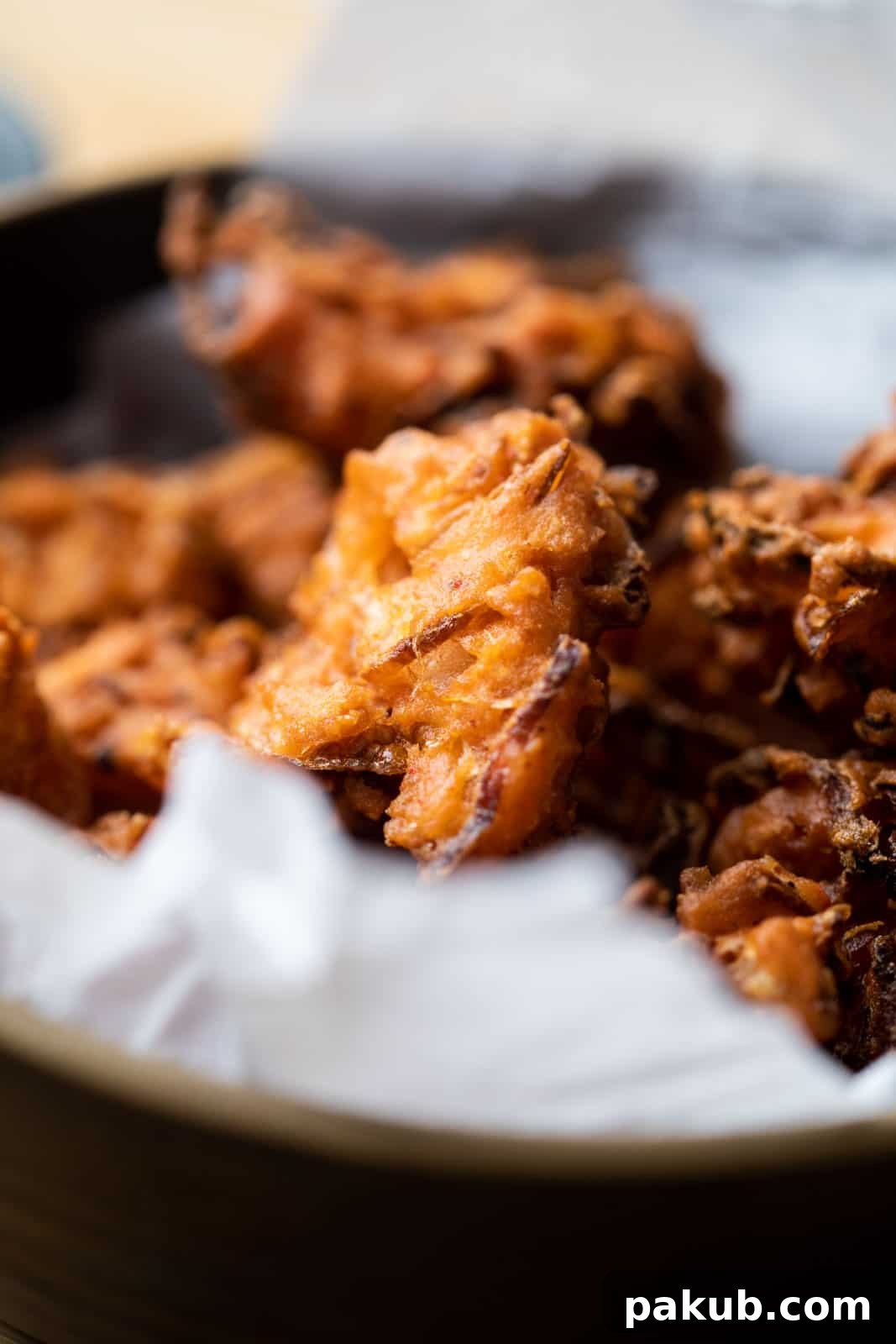
The foundation of a great Onion Pakoda lies in how you prepare your onions. Onions are naturally high in water content, and if not managed correctly, this moisture can lead to soggy, undercooked fritters. The key is to cut your onions into thin, uniform slices, approximately 1/8th of an inch thick. Why so precise? Thick slices present two major challenges: first, they don’t cook evenly or quickly, leaving you with raw onion inside and a burnt exterior; second, their bulk prevents the batter from adhering properly, leading to a less crispy result.
Thin slices, on the other hand, offer more surface area for the batter to cling to, ensuring every strand of onion is coated and cooks through rapidly. This promotes uniform crispiness throughout the pakoda. To achieve these ideal slices, a sharp chef’s knife, a mandolin slicer, or even a spiralizer can be incredibly helpful. The goal is consistency and thinness, which directly translates into faster cooking times and that desirable crisp texture we’re chasing.
The Secret to a Super Crispy Dry Batter Mixture
Another crucial factor in preventing soggy pakodas is the batter consistency. Because onions release a significant amount of water, a watery batter is a recipe for disaster. It will struggle to coat the onions effectively, result in an overly thick and bland crust, and absorb excessive oil during frying. Our approach involves starting with a relatively dry mixture, adding minimal water only if absolutely necessary.
I rely on a strategic blend of besan (chickpea flour) and rice flour. Besan is essential for binding the onions together, providing that characteristic nutty flavor and a tender interior. However, its binding properties alone might not deliver the ultimate crispiness. That’s where rice flour comes in! A generous addition of rice flour is your secret weapon for achieving unparalleled crunch. It creates a lighter, crispier exterior that stays crunchy long after frying. This combination ensures a perfect balance: the besan holds everything together while the rice flour delivers that irresistible shatter-like crispness, without making the outer layer thick or “blubbery.” The magic happens when the onions, after being mixed with the dry flour, begin to release their natural moisture, gradually transforming the dry flours into a cohesive, thick batter that perfectly coats each onion strand.
Essential Tips to Make the Best Onion Pakodas
Beyond the fundamental onion preparation and batter mix, these critical tips will elevate your Onion Pakodas from good to unforgettable, ensuring every batch is a crispy success:
- Season Generously and Early: This is a non-negotiable step. Always season your onions and batter mixture thoroughly before frying. Salt, spices, and aromatics need time to meld and penetrate the onions. Properly seasoned pakodas have a depth of flavor that’s simply missing in hastily seasoned batches. Taste is paramount, and early seasoning makes a world of difference.
- Check Your Besan’s Freshness: Store-bought besan (gram flour) can go rancid relatively quickly, especially if stored improperly or for extended periods. Rancid flour will impart a bitter, unpleasant taste to your pakodas, ruining the entire batch. Before you begin, take a small pinch of your besan and taste it. If it has any hint of bitterness, it’s best to discard it and use fresh flour. This simple check saves you from disappointment.
- Let Onions Release Their Water Naturally: After you’ve combined the dry ingredients with the thinly sliced onions, resist the urge to immediately add water. Instead, mix everything well with your hands, pressing and ‘smashing’ the onions gently. Then, let the mixture sit for a few minutes. The salt will draw out moisture from the onions, creating a naturally damp mixture that helps coat the flour. You might find you need very little, if any, additional water to form a thick, cohesive batter. This natural hydration is key to maintaining crispness.
- Oil Temperature is Critical: The temperature of your oil is perhaps the most important factor for crispy pakodas. If the oil isn’t hot enough, the pakodas will absorb too much oil, becoming greasy, heavy, and soggy. Conversely, if the oil is too hot, they’ll burn on the outside before cooking through on the inside. Aim for a medium-hot flame. A simple test: drop a tiny piece of the battered onion into the oil. It should sizzle immediately and float to the surface within a few seconds, indicating the perfect temperature. Always fry in batches to maintain consistent oil temperature.
- Don’t Overcrowd the Pan: When frying, resist the temptation to dump too many pakodas into the oil at once. Overcrowding drastically lowers the oil’s temperature, leading to greasy, soft pakodas. Fry in small batches, giving each pakoda ample space to cook evenly and crisp up beautifully. Patience here pays off in superior texture.
- Serve Immediately with Classic Pairings: Pakodas are best enjoyed hot and fresh from the pan. Their crispiness is at its peak right after frying. Dunk these golden delights into tangy homemade tomato ketchup, spicy Green Coriander Chutney, or even a sprinkle of Chaat Masala for an extra flavor kick.
- Pair with Authentic Chai: The ultimate Indian experience involves pairing your crispy pakodas with a steaming cup of masala chai. Explore these 5 Amazing Chai Recipes to find your perfect accompaniment.
Watch Our Crispy Onion Pakoda Recipe Video
Onion Pakoda (Kanda Bhaji)
Richa
10 mins
15 mins
25 mins
4 people
Rate Recipe
Print Recipe
Ingredients
- 3 Onions, thinly sliced (approx 1/8 inch)
- 1 cup Besan or Gram flour
- 3 tablespoon Rice Flour
- 2 teaspoon Chilli Powder or Paprika
- a pinch Hing or Asafoetida
- ¼ teaspoon Ajwain (Carom Seeds)
- 2 teaspoon Salt
- ½ tbsp Ginger Garlic paste
- a pinch Baking Soda
- 1 1/2 cups Oil , for deep frying
Instructions
-
Begin by thinly slicing the onions to approximately 1/8th inch thickness. You can quickly soak them in water for a few minutes, then drain thoroughly. This helps separate the layers and removes excess starch. Place the drained onions into a large mixing bowl.
-
Add the gram flour (besan), rice flour, chilli powder (or paprika), hing (asafoetida), ajwain (carom seeds), salt, ginger garlic paste, and baking soda to the bowl with the onions. Using your hands, thoroughly toss and gently smash the onions with the dry mixture. This action helps break down the onion layers and encourages them to release their natural moisture. Let the mixture sit for 5-10 minutes, tossing it once or twice during this period. The onions will gradually release water, which will moisten the dry flours, forming a semi-wet, thick batter around them. Only add a tablespoon or so of water if absolutely necessary to achieve a thick, binding coat; avoid making a watery batter.
-
Heat the oil for deep frying in a deep pan or kadai over a medium flame. To test if the oil is at the correct temperature, drop a small piece of the battered onion into it. It should sizzle immediately and quickly float to the top without browning too fast. This indicates the oil is hot enough for frying.
-
Gently drop small, lime-sized portions of the battered onions into the hot oil. Do not overcrowd the pan; fry in batches to maintain the oil temperature and ensure even cooking. Fry on a medium flame for about 3-5 minutes, turning occasionally, until the pakodas are golden brown and cooked through from the inside, ensuring a crispy exterior.
-
Once golden and crispy, use a slotted spoon or skimmer to remove the pakodas from the oil. Drain any excess oil, then transfer them to a plate lined with paper towels to absorb any remaining oil. For an extra zing, sprinkle some chaat masala on top while they are still hot. Serve immediately and enjoy your perfectly crispy Onion Pakodas!
Notes
- Ensure your onions are sliced to approximately 1/8th inch. Slices that are too thick will take too long to fry and may remain raw inside, while excessively thin slices might burn quickly.
- This versatile batter can be used to make various vegetable pakoras. Experiment with cauliflower florets, spinach, brinjal (eggplant), methi (fenugreek leaves), or even mixed vegetables for delightful variations.
- While gram flour alone works, we highly recommend incorporating rice flour. It’s the secret ingredient that makes these pakoras exceptionally crispy. If unavailable, you can proceed with just besan, but the texture might differ.
- For a luxurious twist, try making Paneer Pakoras (cottage cheese fritters) with a similar batter – they are incredibly tasty!
- Pakoras are best enjoyed fresh. They do not store well and tend to lose their crispiness over time. Fry and serve them immediately for the ultimate experience.
Nutrition (per serving)
Carbohydrates: 13g,
Protein: 1g,
Fat: 11g,
Saturated Fat: 1g,
Sodium: 1183mg,
Potassium: 140mg,
Fiber: 2g,
Sugar: 4g,
Vitamin A: 297 IU,
Vitamin C: 6mg,
Calcium: 22mg,
Iron: 1mg
Loved this recipe for crispy Onion Pakodas? We’d be thrilled if you could rate it and leave a comment below! Your feedback helps us share more delicious recipes.
More Delicious Evening Snack Recipes to Enjoy with Chai
- Paneer Pakodas (Indian Cottage Cheese Fritters)
- Assorted Vegetable Pakoras (Mixed Veg Fritters)
- Spiced Indian Banana Fritters
- Crispy Veg Nuggets
- Flavorful Mexican Corn Fritters
- Collection of 10 Festive Diwali Snacks Recipes