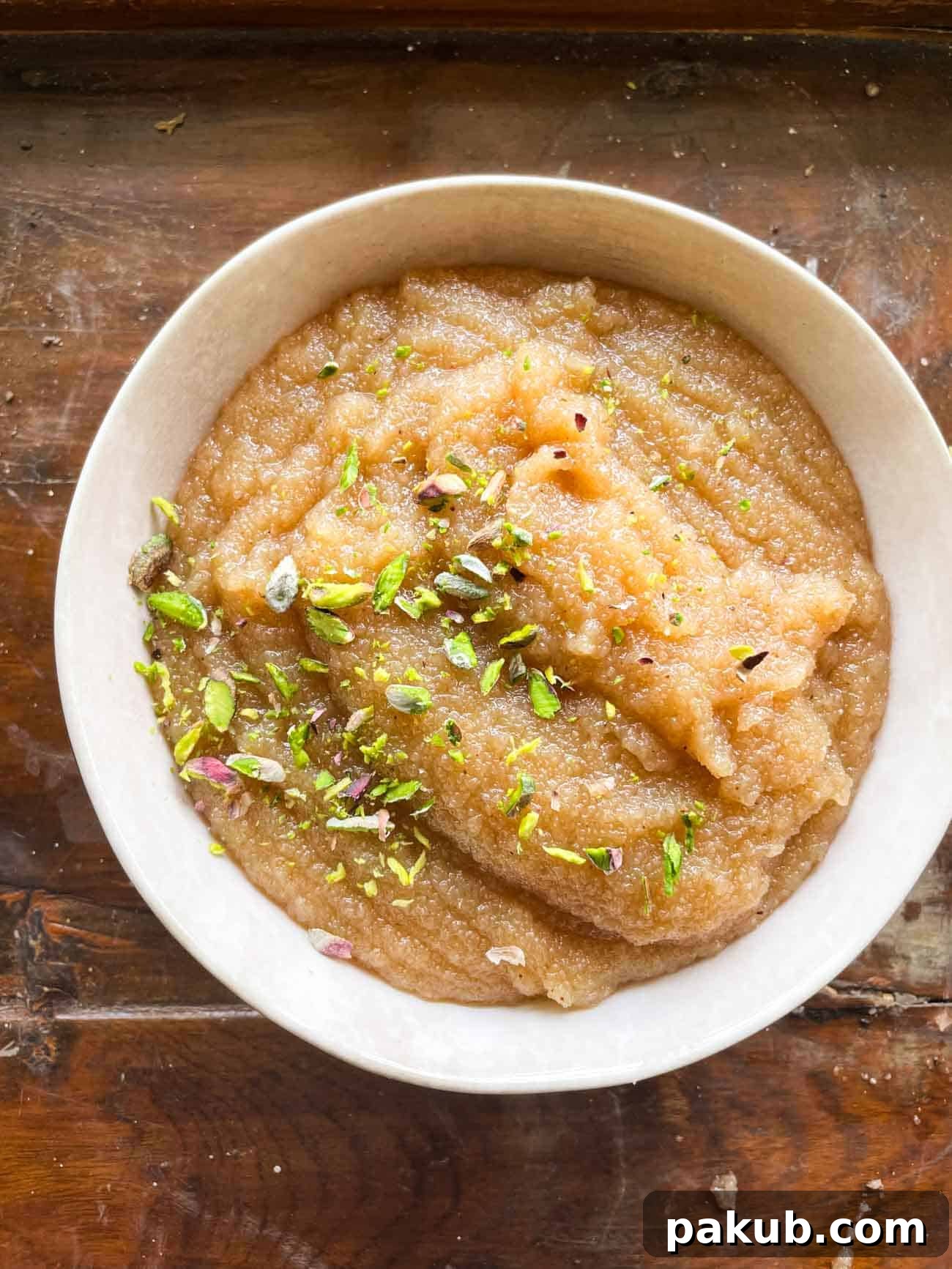
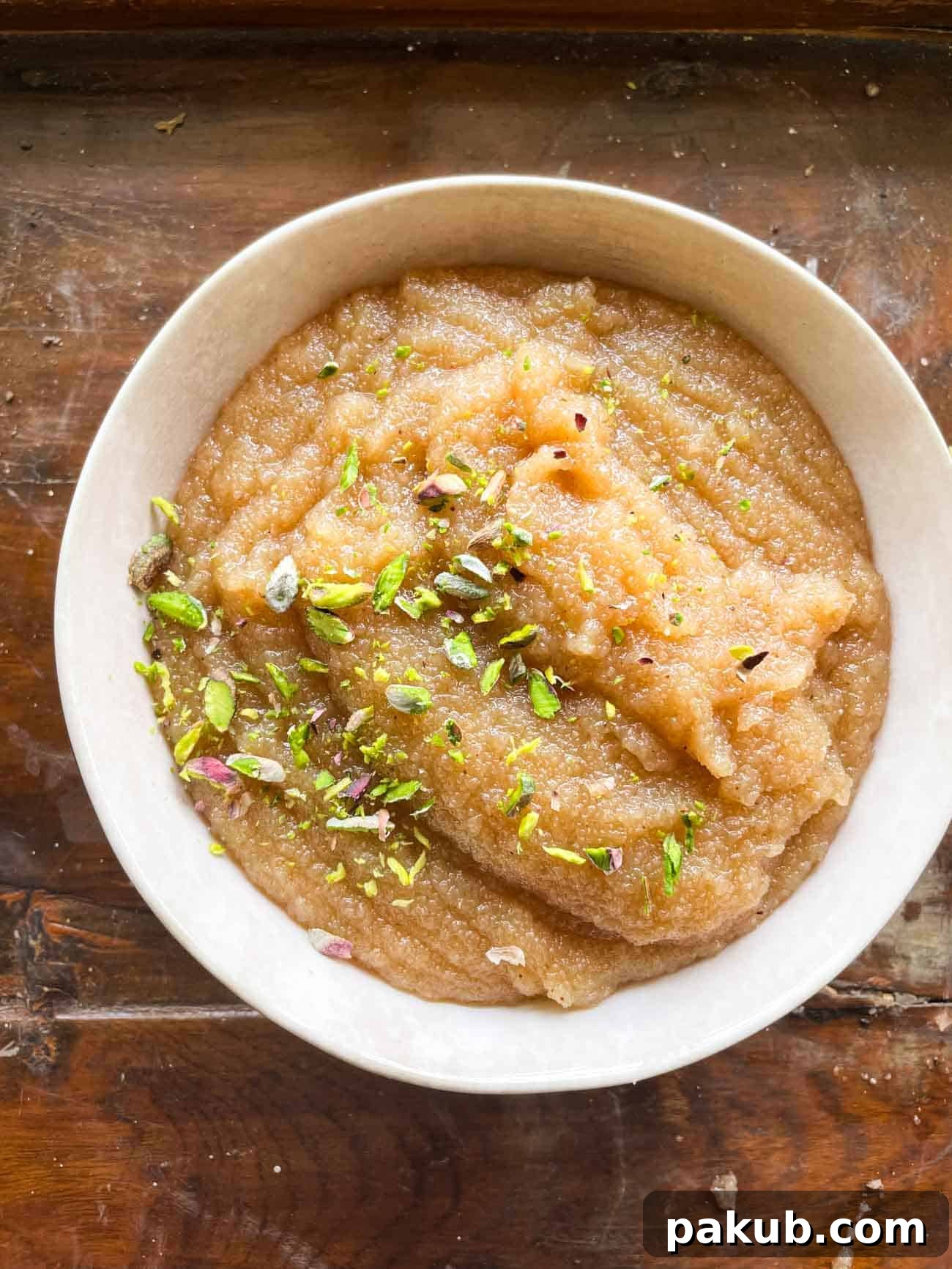
Unlock the secret to the most irresistible Sooji Halwa! This special family recipe features a unique caramelized nuttiness from patiently roasting semolina in ghee, transforming a simple dessert into an extraordinary experience. Once you try it this way, you’ll never go back!
Craving More Traditional Indian Sweets? Explore these delightful recipes:
- Easy Rice Kheer (Indian Rice Pudding)
- Homemade Jalebis – Thin and Crispy
- Coconut Barfi (Nariyal Burfi)
The Secret to Perfect Sooji Halwa: A Caramelized Delight
In the vibrant tapestry of Indian cuisine, few desserts evoke a sense of warmth, tradition, and celebration quite like Sooji Halwa. Also known as Semolina Halwa or Rava Halwa, this beloved sweet is a staple during Indian festivals, religious ceremonies (pujas), and cherished family gatherings. While many versions exist, this particular recipe holds a special place in my heart, passed down from my mother. It’s truly unique, boasting a depth of flavor and a gorgeous caramel-like sheen that sets it apart. The magic lies in a simple yet crucial step: the meticulous roasting of the semolina in pure ghee, which unlocks an unparalleled nutty aroma and a rich, golden-brown hue.
This isn’t just any Sooji Halwa; it’s a culinary embrace that coats every grain of semolina with a luxurious, melt-in-your-mouth texture and an exquisite caramel essence. This transformation, from humble white semolina to a deep, toasty delight, is my mum’s culinary secret, and it’s the only way I’ve come to love and prepare this classic dish. The patience invested in slowly roasting the sooji for 20-25 minutes in fragrant ghee is what builds its complex flavor profile and irresistible appeal. Whether you’re observing a festival, performing a puja, or simply yearning for a comforting sweet on a quiet evening, this Sooji Halwa recipe promises to hit all the right notes, bringing joy and a taste of tradition to your table.
Table of Contents
- Why This Sooji Halwa is Special
- Sooji Halwa Ingredients Breakdown
- Step-by-Step Guide to Making Caramelized Sooji Halwa
- Frequently Asked Questions About Sooji Halwa
- Expert Tips for the Best Sooji Halwa
- Creative Serving Suggestions
- Storage and Reheating Tips
- Watch The Sooji Halwa Recipe Video
Why This Sooji Halwa is Special
What elevates this Sooji Halwa from good to truly exceptional? It all comes down to the meticulous preparation and a touch of culinary wisdom. Unlike many quick recipes that simply toast the semolina until light golden, our method embraces patience. We spend a dedicated 20-25 minutes slowly roasting the sooji in a generous amount of pure ghee until it transforms from pale white to a deep, rich chocolate brown. This extended roasting time isn’t merely about color; it’s about flavor development. The semolina undergoes a beautiful caramelization process, infusing the entire dish with a profound nuttiness and a complex, almost toffee-like undertone that is simply irresistible. This deep roasting, combined with the creamy, melt-in-your-mouth texture, creates a truly unforgettable Indian dessert that has become a cherished family heirloom.
Sooji Halwa Ingredients Breakdown
Creating an outstanding Sooji Halwa begins with understanding the role each ingredient plays. While the list is short, the quality and type of each component significantly impact the final taste and texture.
- Sooji (Semolina/Rava): The undeniable star of our Halwa. For the smoothest, melt-in-your-mouth texture and rich flavor, opt for fine-grained Bombay sooji. Its consistent texture ensures even cooking and absorption. If you prefer a slightly coarser, more toothsome halwa with a bit more bite, Bansi rawa can also be used, offering a different but equally delightful experience. Avoid coarse varieties unless you specifically desire a very grainy texture.
- Besan (Gram Flour): A secret ingredient for many experienced cooks, besan adds an incredible depth of flavor and a wonderfully nutty aroma that complements the roasted sooji. Just a small amount can significantly enhance the complexity of the halwa, making it richer and more aromatic. It also contributes to the beautiful caramel color.
- Ghee (Clarified Butter): This is non-negotiable for authentic, flavorful Sooji Halwa. Ghee is the key to achieving that characteristic richness, aroma, and glistening texture. Its high smoke point allows for patient roasting, and its distinct nutty flavor is irreplaceable. Always use good quality, pure ghee for the best possible results – avoid substitutes if you want truly traditional halwa.
- Sugar: Provides the essential sweetness and helps in the caramelization process, balancing the nutty flavors from the roasted semolina and ghee. The quantity can be adjusted to your personal preference, but remember it also contributes to the halwa’s texture and sheen.
- Water: The liquid medium that cooks the semolina, transforming it into a soft, smooth pudding-like consistency. The ratio of water to sooji is critical for the desired texture. While some recipes use milk for a creamier texture, water allows the distinct caramel flavor of the roasted sooji to shine through more prominently.
- Nuts (Almonds/Pistachios): Primarily used for garnish and to add a delightful crunch. Slivered almonds, pistachios, or even cashews can elevate the presentation and offer a textural contrast. They can also be lightly roasted in ghee before adding to the halwa for enhanced flavor.
Step-by-Step Guide to Making Caramelized Sooji Halwa
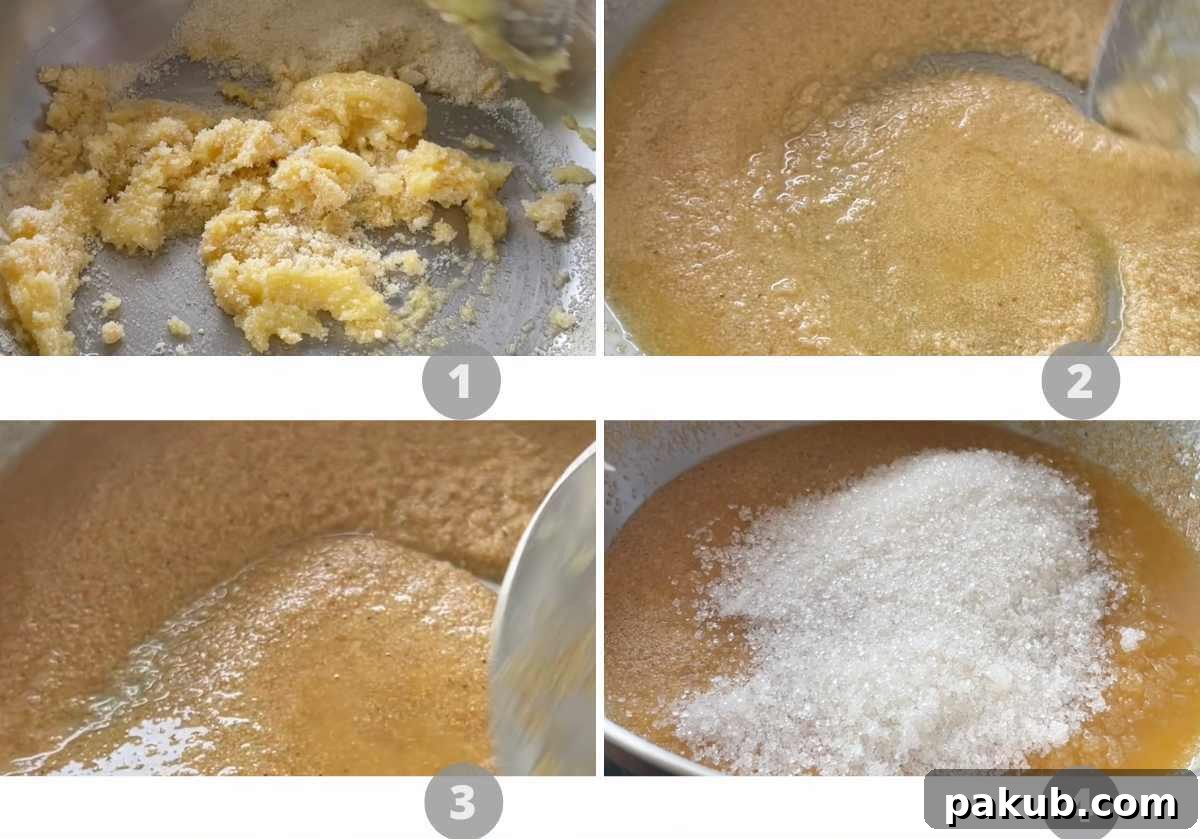
- Initial Dry Roasting: Begin by combining the sooji (semolina) and besan (gram flour) in a heavy-bottomed pan. Place it over a low to medium-low flame. This initial dry roasting helps to remove any raw smell from the besan and starts the toasting process for the sooji. Stir continuously for 5-6 minutes, ensuring even heating and preventing any burning. You’ll notice a subtle change in aroma.
- Ghee Roasting for Caramelization: Now, add the generous amount of ghee to the sooji and besan mixture in the pan. Continue cooking on a low flame. This is the most crucial step for achieving the halwa’s signature caramelized flavor and deep color. Keep stirring constantly and patiently. Over the next 15-20 minutes, the mixture will gradually change from off-white to a light chocolate brown, releasing a wonderfully fragrant, nutty aroma. Do not rush this step; patience is key here.
- Deepening the Color: Continue roasting for a few more minutes, still on low heat, until the brown color becomes slightly deeper and richer. Aim for a shade reminiscent of milk chocolate. This prolonged roasting ensures maximum flavor development and the gorgeous caramel notes that make this recipe so special. The mixture should be flowing and smooth, not clumpy.
- Adding Sweetness: Once the sooji has reached the desired deep golden-brown hue and nutty fragrance, add the sugar directly to the roasted mixture. Mix it in thoroughly. Adding the sugar before the water allows it to melt slightly and integrate with the ghee and sooji, preventing any hardening when the water is introduced and contributing to a beautiful glossy finish.
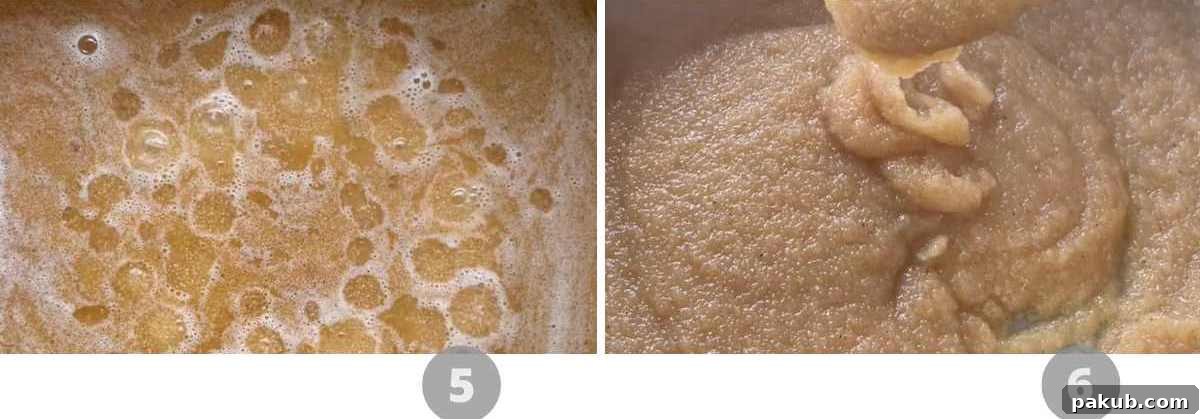
- Incorporating Water Carefully: This step requires caution. Slowly pour in the water in a steady stream while continuously stirring the halwa mixture. Increase the flame to medium. The mixture will bubble and splutter vigorously as the hot semolina absorbs the water, so stand back and stir carefully. Constant stirring at this stage is vital to prevent lumps from forming and to ensure a smooth, even consistency.
- Cooking to Perfection & Garnishing: Continue stirring the halwa on medium heat. The mixture will rapidly thicken as the semolina absorbs all the liquid. Keep cooking and stirring until the halwa reaches a thick, pudding-like consistency and you start to see ghee gently oozing out from the sides of the pan. This indicates that it’s perfectly cooked. Remove from heat immediately. Garnish generously with slivered pistachios, almonds, or your favorite nuts for added texture and visual appeal. Serve warm and enjoy!
Frequently Asked Questions About Sooji Halwa
For a supremely smooth, melt-in-the-mouth halwa that has a delicate texture, Bombay sooji (fine semolina) is highly recommended. It absorbs liquid quickly and cooks evenly. If you prefer a slightly nuttier, coarser texture with more delightful bite, Bansi rava is an excellent alternative. Both work beautifully; your choice simply depends on your desired texture preference for the Sooji Halwa.
Absolutely! Using jaggery is a fantastic way to impart a deep, earthy sweetness and a distinct, rich color to your Sooji Halwa. Jaggery also adds a subtle complexity that granulated sugar doesn’t. When substituting, make sure to melt the jaggery in a little water first, then strain it through a fine-mesh sieve to remove any impurities before adding it to your halwa mixture. This ensures a smooth and clean jaggery flavor in your final dish.
Lumpy Sooji Halwa is a common issue, and it almost always occurs if the water is added too quickly without adequate stirring. The semolina grains can clump together instantly. To prevent this, always add the hot water slowly and gradually in a thin stream while stirring continuously and vigorously. This allows the semolina to hydrate evenly, resulting in a perfectly smooth and lump-free halwa.
While you technically can use other fats like butter or a neutral cooking oil, I strongly advise against it for this particular recipe. The unique, deep caramel-nutty flavor and rich aroma of this Sooji Halwa are intrinsically linked to the generous use of good quality ghee. Ghee not only aids in the crucial long roasting process but also imparts a depth of flavor that butter or oil simply cannot replicate. For an authentic and truly special Sooji Halwa, ghee is an irreplaceable ingredient.
Sooji Halwa, Sheera, and Rava Kesari are all delightful variations of essentially the same semolina-based sweet pudding, with regional differences and specific additions. Rava Kesari, often popular in South India, typically includes saffron strands or food coloring to give it a bright yellow or orange hue, along with pineapple or cardamom for flavor. Sheera, a term frequently used in Maharashtra and Gujarat, might incorporate milk instead of water for a creamier texture, and sometimes includes mashed banana. Our Sooji Halwa focuses on the deep caramelization of semolina in ghee, making its nutty flavor the star.
Yes, Sooji Halwa is an excellent make-ahead dessert! You can prepare it and store it in an airtight container in the refrigerator for up to 2-3 days. When ready to serve, simply reheat individual portions. To restore its soft, moist texture, add a splash of water or milk during reheating and stir gently until it softens and warms through. This makes it perfect for meal prepping or busy festive periods.
Absolutely, the amount of sugar can be adjusted to suit your personal taste preferences. If you prefer a less sweet dessert, feel free to slightly reduce the sugar quantity. However, do keep in mind that sugar not only provides sweetness but also contributes to the halwa’s characteristic moistness and slightly sticky, glossy texture. Reducing it significantly might result in a slightly drier or less cohesive halwa, though it will still be delicious.
Expert Tips for the Best Sooji Halwa
- Embrace the Ghee: Do not skimp on the ghee. It is the very soul of this Sooji Halwa, imparting unparalleled flavor, a rich aroma, and that beautiful glistening texture. A generous amount of ghee ensures that the semolina roasts perfectly and contributes to the dish’s luxurious feel.
- Master the Heat: Always roast the sooji on a medium to low flame. Too high, and the semolina will burn quickly on the outside without cooking thoroughly on the inside, leading to a bitter taste. Too low, and it will take an excessively long time to develop the desired deep flavor and color. Consistent medium-low heat is your best friend here.
- Choose the Right Sooji: As mentioned, Bombay sooji (fine semolina) is ideal for this recipe. Its fine grains ensure a smooth, uniform texture that absorbs the liquids beautifully. If fine sooji isn’t available, or if you prefer a slightly textured halwa, Bansi rawa is a good second choice, but avoid extremely coarse varieties.
- Patience is a Virtue: Be prepared to dedicate a good half-hour to the kitchen, especially during the roasting phase. Sooji can burn or brown unevenly very quickly if neglected. Continuous stirring, every minute or so, is crucial. This ensures that every grain of semolina toasts uniformly, leading to the best, most even results and that signature caramelized flavor.
- Understand Consistency: Remember that Sooji Halwa will naturally thicken as it cools. It’s best to take it off the heat slightly before it reaches your absolute desired consistency while still warm. This way, it won’t become too stiff or gloopy as it sits.
- Sugar Before Water: Always add the sugar to the roasted sooji before pouring in the water. This allows the sugar to melt and integrate into the ghee-semolina mixture, creating a lovely caramel base and preventing the sugar from hardening or seizing when it comes into contact with the water.
- Ideal Halwa Consistency: The perfect Sooji Halwa should be thick, yet still moist and slightly flowy. It shouldn’t be overly runny, nor should it be a solid, gloopy mass. It should hold its shape but melt in your mouth. If it appears too thick, a splash of hot water or milk can be added while reheating to adjust.
- Flavor Enhancements: For an extra layer of aroma, consider adding a pinch of cardamom powder during the last few minutes of cooking, or a few strands of saffron soaked in warm milk with the water.
Creative Serving Suggestions
- Traditional Puja Prasad: Sooji Halwa is often offered as prasad (a religious offering) during pujas and festivals. It pairs exquisitely with savory elements like kala chana (black chickpea curry), fluffy pooris (fried Indian bread), and tangy vrat wale dahi aloo (yogurt-based potato curry) for a complete festive meal.
- Warm Dessert: Serve it warm as a comforting dessert after any meal. A simple garnish of slivered almonds, cashews, or pistachios enhances both its visual appeal and textural contrast.
- Aromatic Additions: For an additional layer of flavor and a touch of elegance, stir in a few saffron strands soaked in warm milk during the last stage of cooking. This not only imparts a beautiful golden hue but also a delicate aroma. A sprinkle of freshly ground cardamom powder is also a wonderful addition.
- With Ice Cream: For a modern twist, serve a scoop of warm Sooji Halwa alongside a scoop of vanilla or pistachio ice cream. The hot and cold contrast is surprisingly delicious.
- Breakfast Treat: In many Indian households, a small bowl of Sooji Halwa can be a delightful and energizing sweet start to the day.
Storage and Reheating Tips
To keep your delicious Sooji Halwa fresh and ready to enjoy, store it in an airtight container. It will keep well in the refrigerator for up to 2-3 days. When you’re ready to indulge again, simply reheat it gently on the stovetop or in the microwave. To revive its soft, moist consistency, add a small splash of water or milk during reheating and stir until it’s warmed through and soft again. Avoid overheating, as it can dry out the halwa. This makes Sooji Halwa a convenient dessert to prepare in advance for unexpected cravings or gatherings.
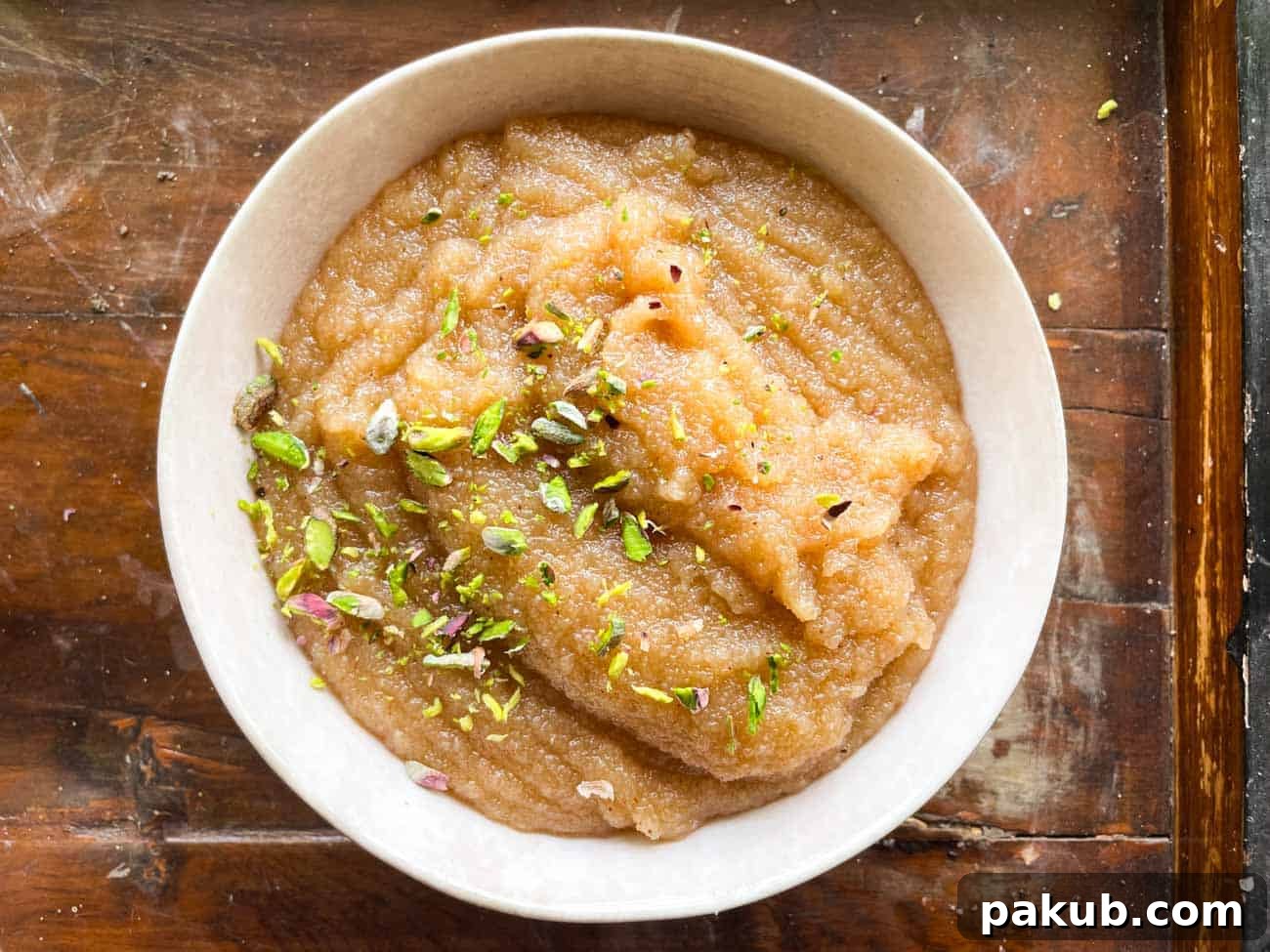
One bite of this homemade Sooji Halwa, with its deep caramelized notes and smooth, rich texture, and you’ll instantly understand why it’s a constant source of raving in our family! It’s warm, comforting, exquisitely rich, and utterly satisfying – truly everything you could ever desire in a dessert, and absolutely ideal for the festive season or any time you need a sweet escape. I genuinely hope you give this unique recipe a try and fall in love with its distinct flavor. It’s more than just a dessert; it’s a taste of tradition, perfected.
If you create this delightful dish, I would absolutely love to see your renditions! Please share your recreations with me over on Instagram @my_foodstory. Your culinary adventures inspire me so much!
For more festive culinary inspiration, don’t forget to check out my comprehensive Navratri recipes round-up. It’s packed with ideas to make your celebrations extra special!
Watch The Sooji Halwa Recipe Video
LOVING THIS RECIPE? Don’t miss out on more delicious creations! Subscribe to my newsletter and be the first to receive all new recipes and culinary inspiration directly in your inbox!
Sooji Halwa Recipe
By:
Richa
This semolina dessert is my mum’s recipe, featuring a unique caramelized and nutty note from extensive ghee roasting, making it absolutely delectable and a family favorite.
Prep Time: 5 mins
Cook Time: 20-25 mins
Total Time: 25-30 mins
Yields: 4 servings
Print Recipe
Ingredients
- 1 Cup Sooji (Fine Semolina or Rava)
- 1 1/2 tablespoons Besan (Gram Flour)
- 1/2 Cup plus 1 tablespoon Ghee (Clarified Butter)
- 3/4 Cup Granulated Sugar (adjust to taste)
- 3 Cups Water
- Slivered Almonds or Pistachios, for garnish (optional)
- A pinch of Cardamom Powder or Saffron strands (optional)
Instructions
- In a heavy-bottomed pan, combine the Sooji and Besan. Dry roast over a low flame, stirring continuously for 5-6 minutes until a subtle aroma emerges.
- Add the Ghee to the pan. Continue cooking on a low flame, stirring constantly and patiently for 15-20 minutes. The mixture will gradually transform from white to a deep chocolate brown, developing a rich, nutty, and caramelized fragrance.
- Once the sooji has reached a deep golden-brown color and is intensely fragrant, add the Sugar and mix it in thoroughly.
- Slowly pour in the Water while stirring continuously and vigorously to prevent lumps. Increase the flame to medium. Be cautious as the mixture will bubble and splutter.
- Continue stirring until the halwa thickens to a desired pudding-like consistency and you see the ghee begin to ooze out from the sides of the pan.
- Remove from heat. Garnish generously with slivered pistachios or almonds before serving. Serve warm.
Recipe Video
Nutrition Information (Approximate per serving)
Serving: 2g,
Calories: 2011kcal,
Carbohydrates: 278g,
Protein: 24g,
Fat: 93g,
Saturated Fat: 56g,
Polyunsaturated Fat: 4g,
Monounsaturated Fat: 26g,
Cholesterol: 230mg,
Sodium: 48mg,
Potassium: 409mg,
Fiber: 8g,
Sugar: 151g,
Vitamin A: 5IU,
Calcium: 56mg,
Iron: 8mg
Enjoyed this recipe? Share your thoughts and leave a comment below!
This article was researched and written by Navya Khetarpal.