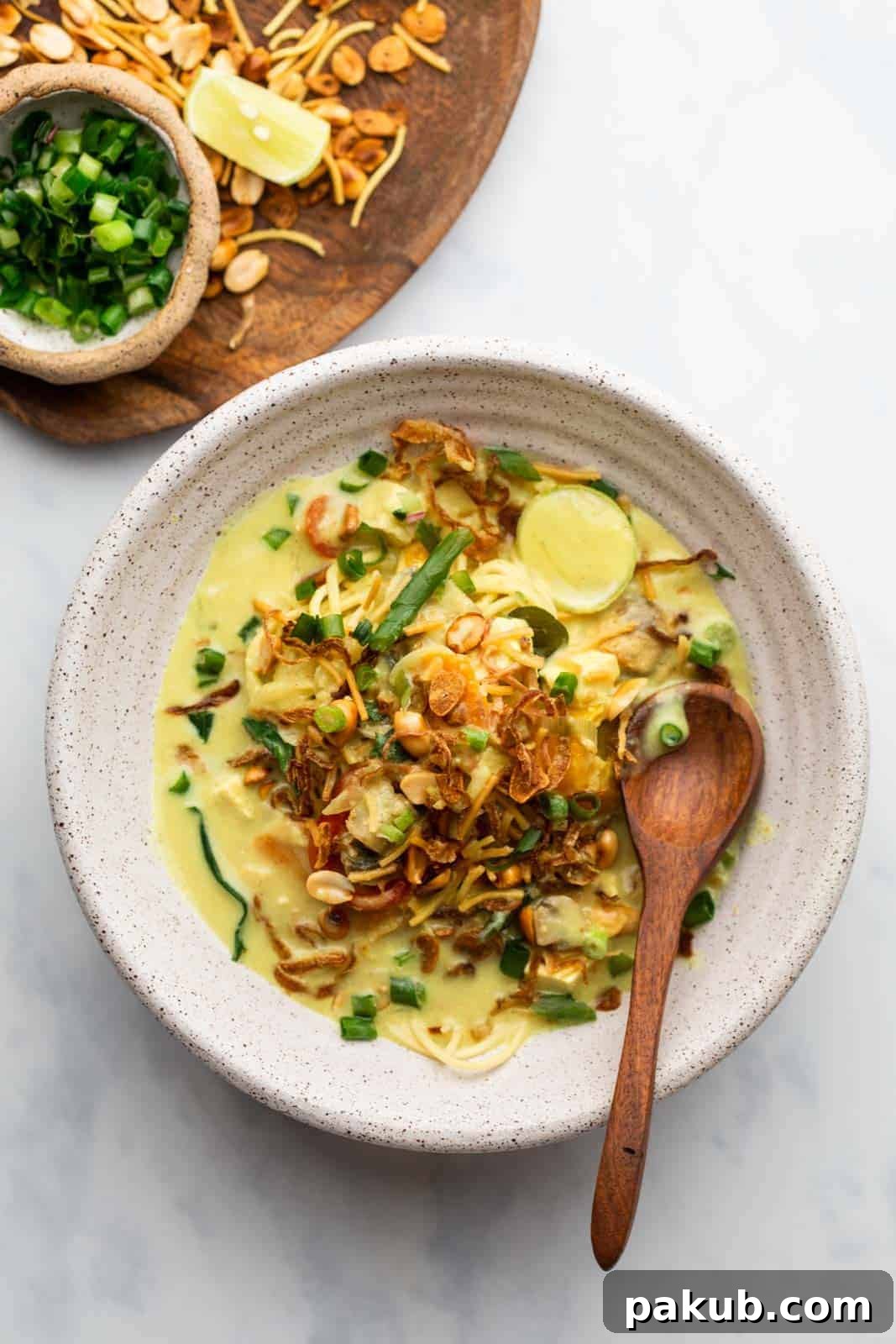
Authentic Vegetarian Burmese Khow Suey: Your Guide to a Soul-Satisfying Noodle Soup
Craving a bowl of warm, deeply flavored comfort food? Learn to master this vegetarian Burmese Khow Suey recipe, brimming with authentic curry broth flavors, creamy coconut goodness, and an exciting array of customizable toppings. It’s the perfect pick-me-up for any day!
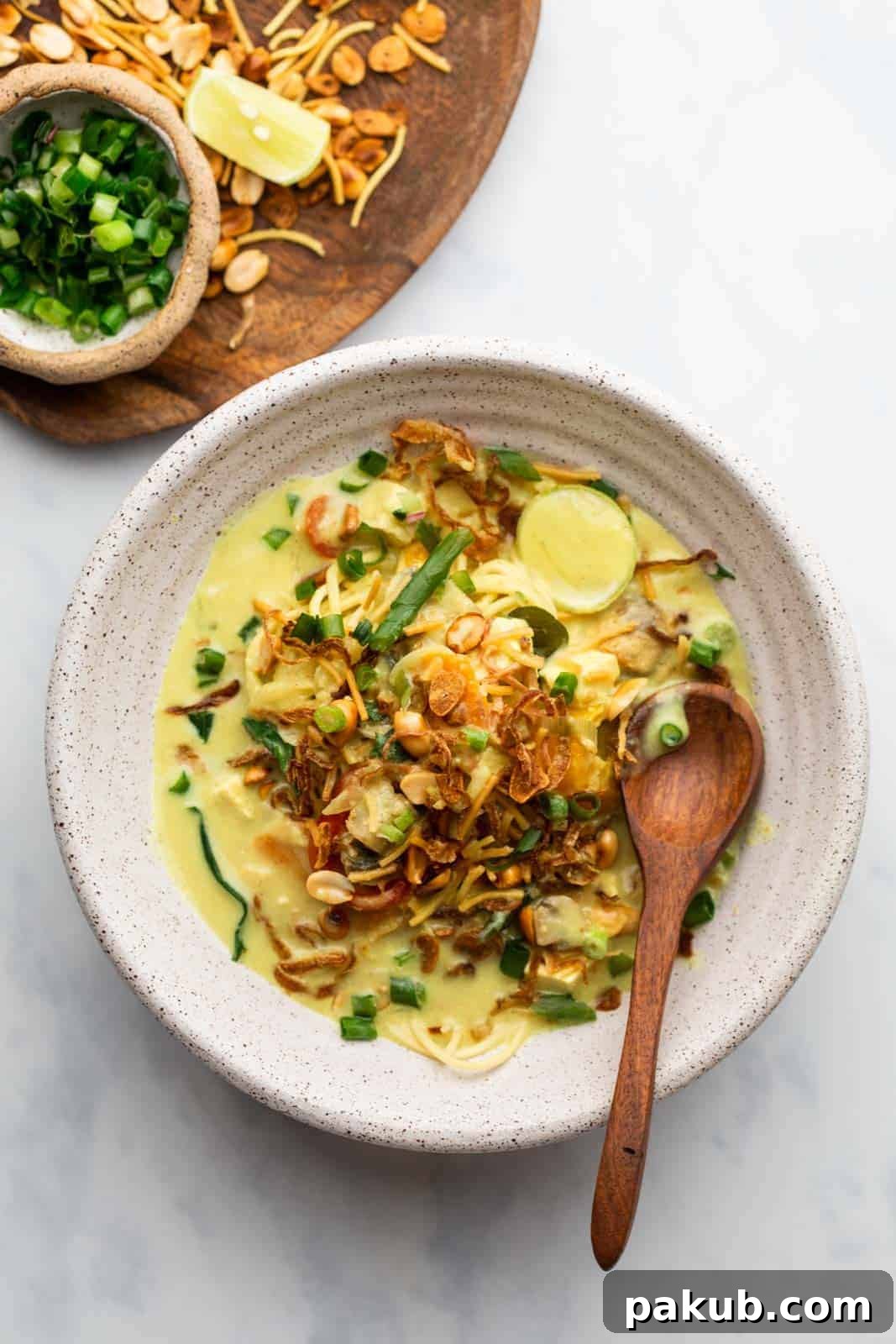
There’s something uniquely satisfying about a meal you can truly make your own, and for me, that often means a hearty curry noodle soup like Khow Suey. Its layers of flavor and texture make it an irresistible choice whenever I visit an Asian restaurant. This deep appreciation naturally led me to recreate my very own Burmese Khow Suey recipe right here in my kitchen, a vegetarian version that I’m thrilled to share with you all.
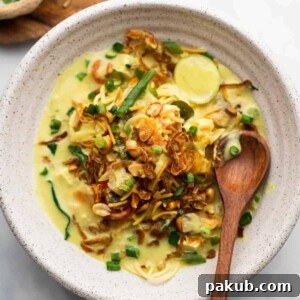
This homemade Khow Suey might boast a mellow yellow hue, but don’t let its gentle appearance fool you – it’s an absolute explosion of flavor! Each spoonful is a journey through bold Southeast Asian notes, starting with a vibrant, aromatic curry paste. This is beautifully complemented by the rich creaminess of coconut milk, creating a broth that’s both comforting and exotic. Add to that the delightful crunch of fried noodles and an assortment of fresh toppings, and you have a complete flavor bomb in a bowl – a truly immersive and unforgettable culinary experience.
Table of Contents: Your Khow Suey Journey
- Deconstructing Burmese Khow Suey: Essential Elements
- Frequently Asked Questions About Khow Suey
- Expert Tips for the Perfect Khow Suey
- Storage & Leftover Khow Suey: Enjoying It Later
- Customization Ideas: Make Khow Suey Your Own
- Vegetarian Burmese Khow Suey Recipe Card
- Watch the Burmese Khow Suey Recipe Video
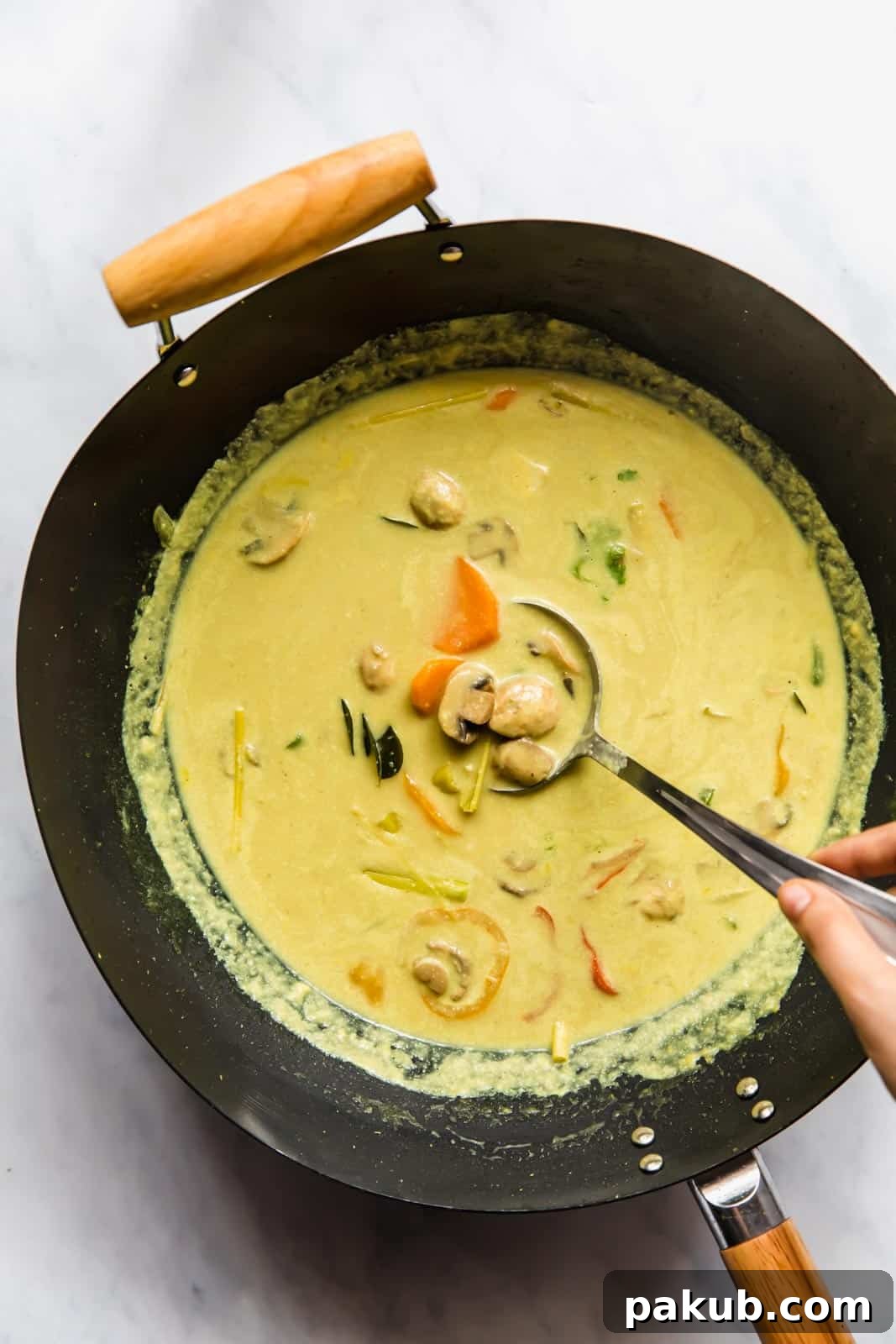
Deconstructing Burmese Khow Suey: Essential Elements for Success
This Vegetarian Burmese Khow Suey, like many great complex dishes, is built from several distinct components that come together to create a harmonious whole. While the ingredient list might appear extensive at first glance, each part is surprisingly straightforward to prepare. Let’s break down the essential elements that make this dish so special and easy to assemble:
- The Heart: Khow Suey Curry Paste
This intensely aromatic paste is the very foundation of our Burmese Khow Suey, delivering its signature, unmistakable flavor. It’s crafted from a blend of fresh, vibrant Asian ingredients. Expect the pungent warmth of garlic and ginger, the bright, herbaceous notes from coriander stems (a flavor powerhouse, so never discard them!), the subtle heat of peppercorns, and the fiery kick of green chillies. Grinding these fresh ingredients creates a paste that truly awakens the senses and sets the stage for a rich, complex broth. - The Soul: Creamy Coconut Broth
The coconut broth is where this Burmese Khow Suey truly finds its luxurious body and comforting, soupy consistency. It’s a velvety blend that balances savory depth with sweet coconut undertones. This rich base transforms the dish into a hearty and deeply satisfying meal, perfect for warming you from the inside out. It’s designed to absorb the flavors of the curry paste and any added vegetables, making every spoonful an experience. - The Foundation: Perfectly Cooked Noodles
Often the simplest component to prepare, the noodles are nevertheless crucial to the Khow Suey experience. I personally prefer using egg noodles for their texture and wide availability in most supermarkets and Asian grocery stores. However, the beauty of this dish lies in its adaptability. For a vegan version, readily available plain flour or rice noodles are excellent alternatives. If you’re feeling adventurous, explore options like ramen noodles for a chewier bite or delicate angel hair pasta for a lighter feel. The key is to cook them al dente, ensuring they hold up well in the rich broth. - The Flair: Abundant and Customizable Toppings
For many, the toppings are the most exciting part of Khow Suey – they certainly are for me! This is where you can truly unleash your creativity and tailor each bowl to your exact preference. The variety of textures and flavors from the toppings adds an incredible dimension to the dish, transforming a simple noodle soup into an interactive feast. Here’s a comprehensive list of delightful toppings to elevate your Khow Suey:- Crispy Delights: Fried shallots or onions, golden-fried garlic chips, crispy fried noodles or wonton strips for that essential crunch.
- Fresh & Tangy: Thinly sliced raw onions, fresh or finely julienned ginger, finely chopped green chillies for a fresh bite, bright lemon or lime wedges for a crucial acidic counterpoint.
- Herbal Accents: Fresh spring onions (scallions), generous handfuls of chopped coriander (cilantro) for aromatic freshness.
- Spicy Kick: Crushed chili flakes or a drizzle of homemade chili oil for those who love extra heat.
- Nutty Crunch: Chopped or coarsely powdered groundnuts (peanuts), or even whole roasted peanuts, providing a satisfying nutty texture and flavor.
These diverse toppings allow each diner to build their own personalized bowl, creating a truly memorable and engaging meal experience.
Frequently Asked Questions About Burmese Khow Suey
Yes, absolutely! This vegetarian recipe can easily be adapted to be entirely vegan. Simply use vegetable broth (or water combined with a vegan stock cube), ensure your chosen noodles are vegan-friendly (opting for rice noodles or plain flour noodles is a safe bet), and select vegan toppings. All the suggested toppings in this recipe are naturally vegan.
Serving Khow Suey for a gathering is incredibly fun and interactive! The best approach is to prepare the broth and noodles separately in advance. Then, set up a “Khow Suey bar” or buffet-style spread. Arrange large bowls of hot, simmering broth, a separate platter of perfectly cooked noodles, and a wide array of toppings in individual small dishes. This allows guests to assemble their own bowls, customizing their Khow Suey exactly to their liking. It’s a wonderful way to encourage interaction and ensures everyone gets their ideal combination of flavors and textures.
Expert Tips for Crafting the Perfect Burmese Khow Suey
- Personalize Your Protein: While this recipe is vegetarian, feel free to enhance it with your favorite protein. Cooked chicken, succulent prawns, or even halved boiled eggs make fantastic additions that complement the rich curry broth beautifully. Ensure any added protein is cooked thoroughly before combining.
- Amplify the Heat: For those who appreciate a fiery kick, don’t hesitate to drizzle a bit of high-quality chilli oil into your Khow Suey. You can also offer extra fresh green chillies or chili flakes on the side for individual customization.
- Noodle Perfection is Key: To avoid mushy or sticky noodles, always splash them with cold water immediately after draining them from the boiling pot. This halts the cooking process, ensuring they remain perfectly al dente with a pleasant bite. Pay close attention to package instructions and avoid overcooking.
- Embrace Fresh Aromatics: The depth of flavor in this coconut-curry broth heavily relies on fresh aromatics. Prioritize using fresh lemongrass, ginger, garlic, and especially the often-overlooked coriander stems. These ingredients provide an unparalleled fragrance and complexity that dried alternatives simply cannot replicate.
- The Zest of Citrus: Coconut milk lends a wonderfully lush and creamy texture to Khow Suey. To beautifully cut through this richness and balance the flavors, a squeeze of fresh lemon or lime juice just before serving is absolutely essential. It brightens the entire dish and adds a refreshing tang.
- Serve DIY-Style for Fun: My absolute favorite way to serve Khow Suey is by offering the components separately. Present a communal platter of all the delicious toppings alongside bowls of hot broth and noodles. This interactive, “build-your-own-bowl” approach makes the meal super engaging and allows everyone to customize their Khow Suey to their unique taste preferences, making for a truly memorable dining experience.
Storage & Leftover Tips: Enjoying Your Khow Suey for Days
Burmese Khow Suey can be a fantastic meal prep option or a delightful leftover, provided you store and reheat it correctly to maintain its quality and flavor. Here’s how to make the most of your delicious dish:
- Revitalize Crispy Toppings: Many of the crispy toppings, like fried shallots or noodles, will naturally lose their crunch over time when stored. For the best experience, if possible, prepare a small, fresh batch of these crispy elements just before serving your leftovers. This simple step can dramatically enhance the texture and overall appeal of your Khow Suey.
- Separate Storage for Optimal Texture: To prevent the noodles from becoming soggy or mushy, it’s crucial to store the main components separately. Keep the coconut-curry broth in one airtight container and the cooked noodles in another. When you’re ready to enjoy, simply warm the broth gently and pour it over freshly heated noodles.
- Gentle Reheating is Key: When reheating the coconut-curry broth, use a low to medium flame. Avoid boiling it vigorously, as high heat can sometimes cause coconut milk to curdle or alter its creamy texture, affecting the consistency of your soup.
- Restore Creaminess: Upon cooling, the Khow Suey gravy tends to thicken. To restore its original creamy consistency and luscious texture, add a splash of water or a little extra coconut milk when reheating. Stir gently until it reaches your desired consistency.
- Consume Promptly: Due to the fresh ingredients, especially coconut milk and vegetables, it’s best to consume leftover Khow Suey within 2-3 days when stored properly in the refrigerator. Always ensure it’s kept in an airtight container to maintain freshness and prevent odor absorption.
Customization Ideas: Making Your Burmese Khow Suey Uniquely Yours
One of the many charms of Burmese Khow Suey is its incredible versatility. This dish readily adapts to whatever ingredients you have on hand or any particular cravings you might be experiencing. Don’t be afraid to experiment and create a version that perfectly suits your palate and dietary needs. Here are some exciting twists to inspire you:
- Boost Your Protein: For a more filling meal, easily toss in cubes of firm tofu, pre-cooked chicken, shrimp, or prawns. A halved boiled egg also makes a fantastic and visually appealing protein addition, offering a different texture and richness.
- Noodle Noodling: While traditional egg noodles are delicious, you can easily swap them for rice noodles to make this a gluten-free delight. For those watching their carb intake, spiralized zucchini or other vegetable noodles offer a healthy and refreshing alternative that still captures the essence of a noodle soup.
- Spice It Up: If you’re a fan of bold flavors and a fiery kick, incorporate extra green chillies into the broth or as a topping. A generous drizzle of your favorite chilli oil will also add significant depth and heat. Always serve with extra chili flakes on the side for guests who prefer to control their spice level.
- Nut-Free Alternatives: For individuals with peanut or groundnut allergies, you can easily achieve a similar crunchy texture and nutty flavor profile by using roasted seeds. Pumpkin seeds, sunflower seeds, or a mixed seed blend are excellent choices that contribute a satisfying bite without the allergens.
- Veggie Power: Beyond the suggested carrots, green beans, mushrooms, and bell peppers, feel free to load your Khow Suey with an abundance of other vegetables. Zucchini slices, fresh spinach, tender baby corn, or cauliflower florets all work wonderfully, soaking up the flavorful curry broth and adding more nutrients and textures. Almost any robust vegetable that can stand up to simmering in curry will be a great fit.
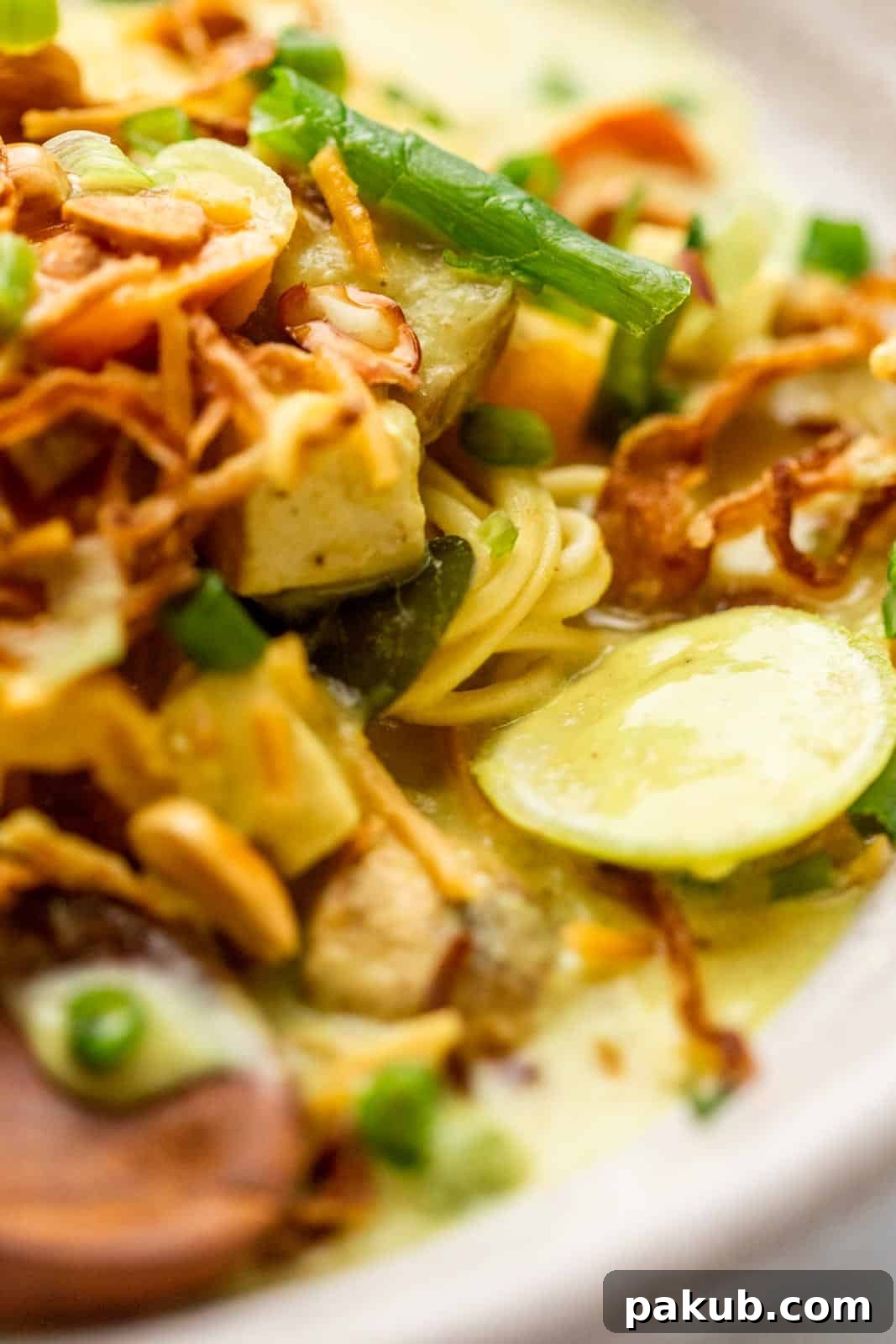
Whether you’re hosting a lively gathering with a big gang or enjoying a cozy date night with your loved one, this adaptable and incredibly flavorful Burmese Khow Suey is sure to impress. It’s a dish that brings people together and guarantees happy, hearty smiles. Share your wonderful Khow Suey experiences and any creative twists you’ve discovered in the comments section below – I’d love to hear from you!
Vegetarian Burmese Khow Suey Recipe Card
Average Rating: 4.98 from 38 votes
Vegan Khow Suey
Richa
20 mins
30 mins
50 mins
6 people
Rate Recipe
Print Recipe
Ingredients
Curry Paste
- 8-10 cloves Garlic
- ½ tbsp Ginger
- 3 tbsp Coriander, stems only
- ½ tsp Whole Coriander Seeds
- 2 tsp Fresh Turmeric
- 2 Shallots
- ½ tsp Whole Peppercorns
- 2 Green Chillies
Coconut Broth
- 2 tbsp Oil
- 4-6 cloves Garlic, sliced
- 3-4 Shallots, sliced
- 2 Birds Eye Chillies, slit lengthwise
- 8-10 Curry Leaves
- 4 cup Vegetable Broth/Water
- 2 tbsp Besan, Gram flour
- 2 stalks Lemongrass, white part only (lightly crushed)
- ⅓ cup Carrot, thickly sliced
- ¼ cup Green Beans, cut into 1 inch pieces
- ⅓ cup Bell Pepper, diced
- ½ cup Mushroom, quartered
- 1 tbsp Soy Sauce
- 1 tsp Salt (or to taste)
- ½ cup cubed Tofu
- 1½ cups Thick Coconut Milk
Noodles
- 250 gram Noodles (egg, rice, or ramen)
- 1 tbsp Oil
- 1 tsp Salt
Toppings
- 2-3 tbsp Coconut Oil
- ¼ cup Shallots, thinly sliced (for frying)
- 1 inch piece Ginger, julienned (for frying)
- 1 tbsp Garlic, thinly sliced (for frying)
- ⅓ cup cooked Noodles (for frying into crispy noodles)
- ¼ cup Groundnuts (peeled, roasted or fried)
- 3 Green Chillies, thinly sliced (optional, fresh topping)
- Fresh Coriander, chopped
- Lemon/Lime wedges
- Spring Onions, chopped
Unit Conversion: Metric – US Customary (Note: Automatic conversion functionality removed as per instructions, this is a placeholder text)
Instructions
Curry Paste Preparation
- Grind all the ingredients listed under “Curry Paste” into a smooth paste using a blender or food processor. Add a small amount of water as needed to facilitate blending. Set this aromatic paste aside.
Crafting the Coconut Broth
- Lightly crush the white part of the lemongrass stalks using a mortar and pestle or the back of a knife. This helps release its fragrant oils into the broth.
- Heat the oil in a large pot or wok over medium heat. Add the sliced garlic and sauté gently until it just begins to turn light golden. Immediately add the sliced shallots, fresh Birds Eye chillies (if using), and curry leaves. Stir and sauté for 2-4 minutes until the shallots become translucent and fragrant.
- Stir in the prepared curry paste and cook over a medium flame for 4-5 minutes, stirring occasionally, until the raw aroma of the spices dissipates and the oil starts to separate. Add the gram flour (besan) and stir vigorously to combine, cooking for another 2 minutes while continuously stirring to prevent lumps and ensure it toasts lightly. Slowly pour in the vegetable broth, mixing continuously with a whisk or spoon to ensure a smooth, lump-free consistency.
- Add the chosen vegetables (carrot, green beans, bell pepper, mushroom), the crushed lemongrass, soy sauce, and salt to taste. Bring the mixture to a gentle simmer and let it cook for at least 20 minutes, allowing all the flavors to meld and deepen. For a more intense and robust flavor, you can simmer it for a longer duration over low heat.
- Finally, add the cubed tofu and the thick coconut milk. Stir well to combine. Heat gently for a few minutes, but do not bring to a rolling boil after adding the coconut milk, as this can cause it to separate. Turn off the flame and set the broth aside, ready to be served.
Cooking the Noodles
- In a large stockpot, bring a generous amount of water to a rolling boil. Add a pinch of salt and a tablespoon of oil to the water; this helps prevent the noodles from sticking together. Add your chosen noodles and cook according to the package instructions.
- If no specific instructions are provided, typically cook the noodles for 3-4 minutes, or until they are tender yet still have a slight al dente bite. Drain the noodles immediately and rinse them quickly under cold running water to stop the cooking process and maintain their texture. Set aside.
Preparing the Toppings
- Heat coconut oil in a small saucepan over low heat. Add the thinly sliced shallots and fry until they turn a beautiful golden brown and become crispy. Use a slotted spoon or skimmer to remove the fried shallots and place them on a paper towel-lined plate to absorb any excess oil.
- In the same pan, if there’s enough oil, add the thinly sliced garlic. Fry until golden brown and crispy. Remove and place on a paper towel.
- Next, add the julienned ginger to the pan. Fry for about a minute until the ginger softens slightly and becomes fragrant. Remove and place on a paper towel.
- To make crispy fried noodles, add a small portion of the cooked noodles to the hot oil. Fry until they turn golden brown and develop a crunchy texture. Remove and place on a paper towel.
- Wipe down the pan. Add the peeled groundnuts and dry roast them over medium heat for 1-2 minutes until lightly toasted and fragrant. Alternatively, you can shallow fry them in a little oil until golden. Keep aside.
Serving Your Burmese Khow Suey
- To serve this delightful dish, arrange all the prepared toppings beautifully on a large serving platter. In individual serving bowls, place a generous portion of the fresh, cooked noodles. Ladle the hot, creamy coconut milk broth over the noodles. Finally, invite everyone to customize their bowl by adding their favorite selection of crispy fried shallots, garlic chips, ginger, groundnuts, fresh green chillies, spring onions, chopped coriander, and a squeeze of fresh lemon or lime. Enjoy it hot and savor every flavorful bite!
Video Tutorial
Important Recipe Notes
- Fresh Lemongrass is Key: For an authentic and vibrant flavor profile, using fresh lemongrass in the broth is highly recommended. It’s imperative to the dish’s distinctive taste. If fresh lemongrass is unavailable, you can substitute with dry lemongrass leaves. Tie them into a small bundle using muslin cloth and simmer them with the broth, removing them before serving.
- Toppings Offer Endless Customization: The beauty of Khow Suey lies in its versatile toppings. Feel free to adjust them based on your personal taste and dietary preferences. As mentioned, you can also add sautéed chicken, prawns, or other proteins if you wish to make it a more comprehensive meal.
- Gram Flour (Besan) for Depth: Gram flour is incorporated not just as a thickener, but also because it significantly contributes to the unique flavor of the broth. If gram flour is not available, cornflour can be used as a substitute for thickening, though the flavor contribution will differ.
- Broth Options: As this is a vegetarian and vegan-friendly recipe, vegetable broth has been used. However, it can easily be substituted with chicken broth if you’re not adhering to vegetarian dietary guidelines. For convenience, store-bought bouillon cubes or stock cubes dissolved in hot water are also excellent alternatives.
Nutrition Information (per serving)
Carbohydrates: 55 g,
Protein: 14 g,
Fat: 31 g,
Saturated Fat: 18 g,
Sodium: 1104 mg,
Potassium: 628 mg,
Fiber: 7 g,
Sugar: 9 g,
Vitamin A: 1685 IU,
Vitamin C: 71 mg,
Calcium: 95 mg,
Iron: 4 mg
Enjoyed this delicious Khow Suey recipe?
Please take a moment to rate it and share your thoughts in the comments below! Your feedback helps others discover and enjoy this wonderful dish.
This article was researched and written by Urvi Dalal.