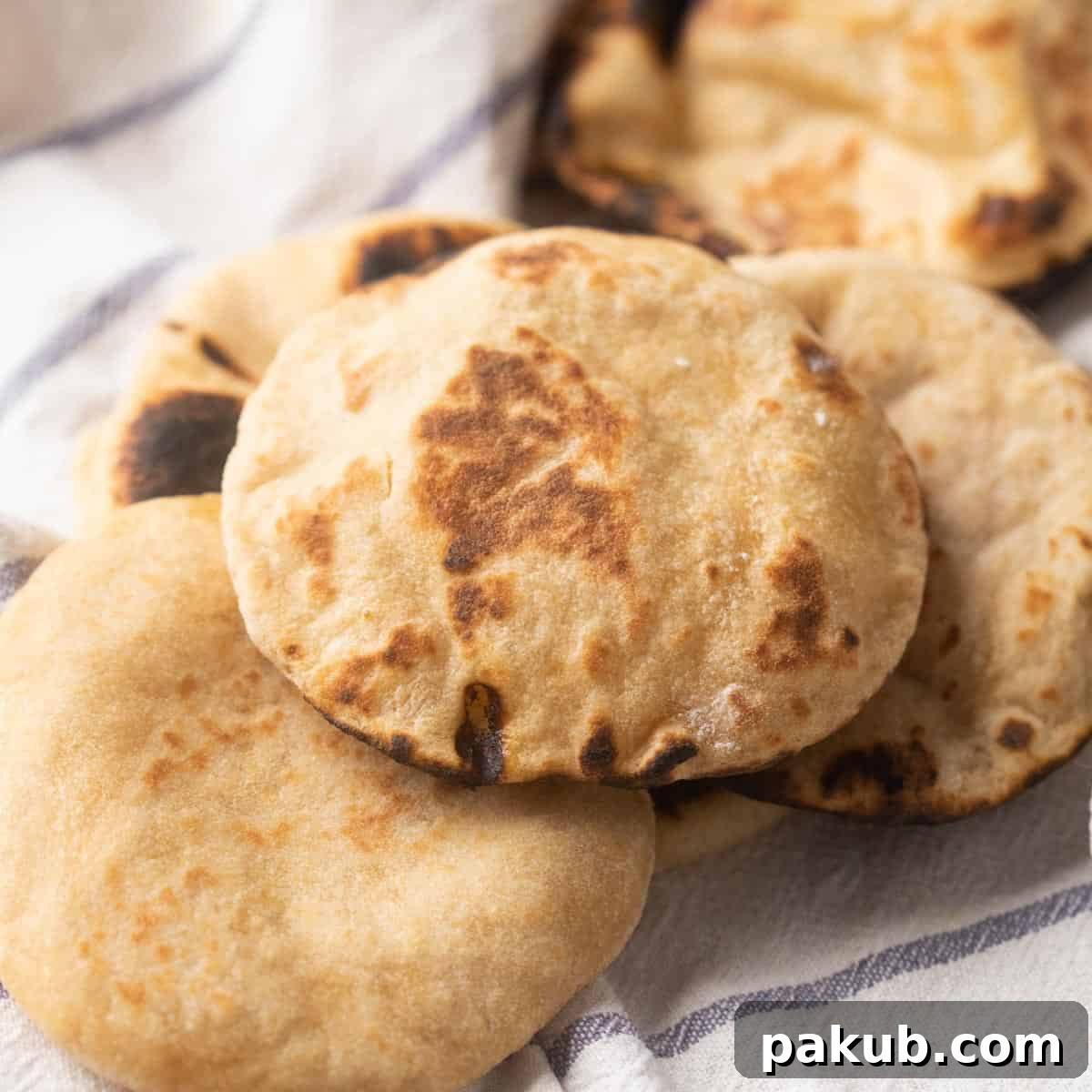
Discover the ultimate homemade delight: super fluffy and incredibly healthy whole wheat pita bread! This recipe is a true game-changer, remarkably easy, and absolutely perfect for beginners. Serve these warm, pillowy pockets with creamy homemade hummus, crispy falafel, and a fresh Mediterranean salad for a truly delicious and heart-warming meal that will transport your taste buds to the Middle East.
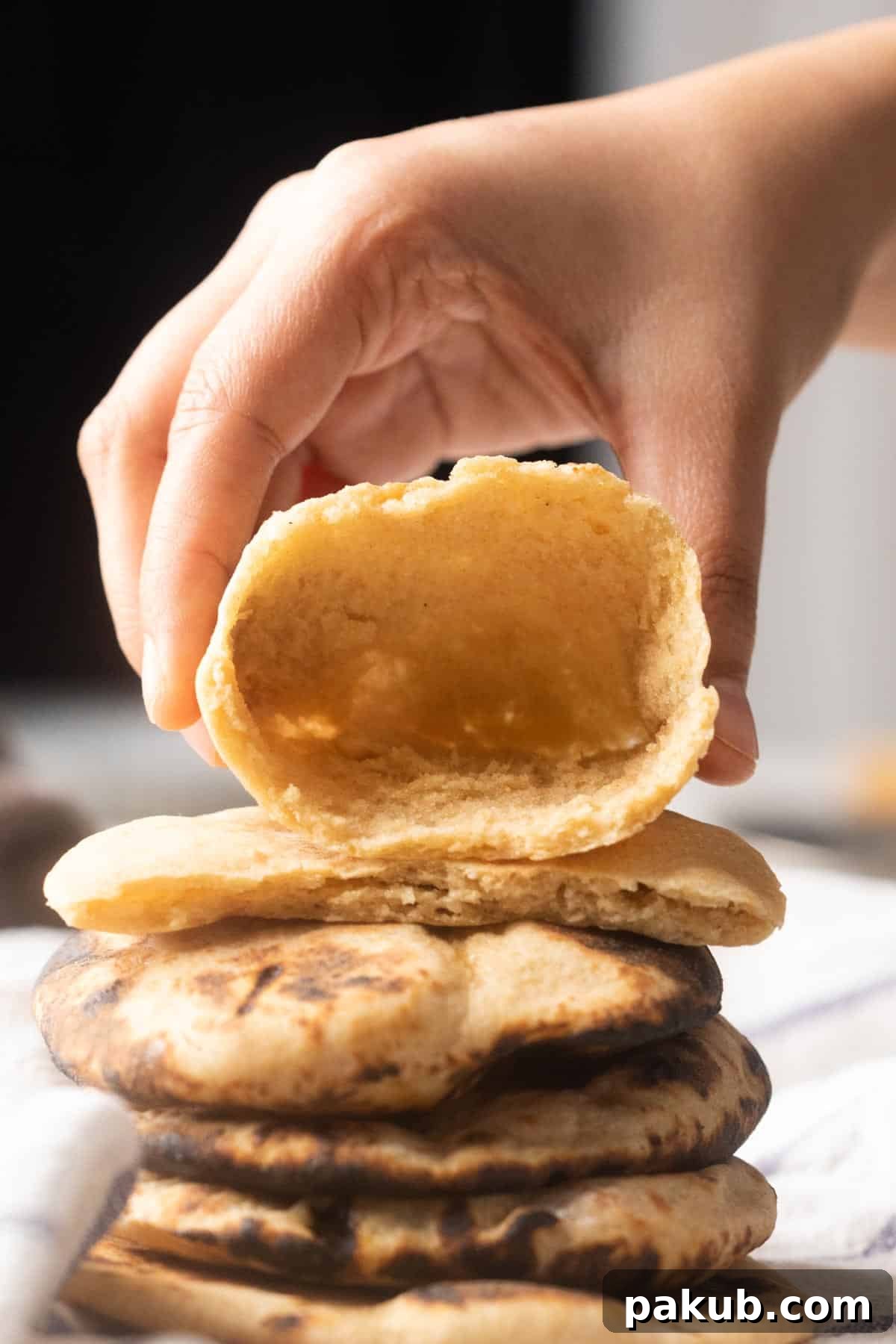
There’s an undeniable magic in the pairing of fresh hummus and warm pita bread – a culinary duo truly made in heaven. While store-bought pita breads are a convenient option, they are often crafted from refined all-purpose flour (maida), lacking the nutritional benefits and the rustic charm of a truly homemade whole wheat version. My journey began with a desire to create a healthier, equally delicious alternative to this beloved Middle Eastern flatbread, focusing on the wholesome goodness of whole wheat.
Admittedly, I harbored some skepticism about achieving that signature light and fluffy texture using 100% whole wheat flour. Would it be dense? Would it lack the characteristic pocket? However, after countless experiments, I was not just pleasantly surprised but genuinely thrilled with the results. Each batch consistently yields incredibly fluffy, soft, and utterly delicious pita breads, complete with those perfect, airy pockets that are ideal for stuffing. This recipe isn’t just a healthier swap; it’s an enhancement that brings a unique depth of flavor and satisfying texture that refined flour simply can’t match.
Whenever these glorious whole wheat pita breads emerge from the oven or off the stovetop, it’s an unspoken invitation for a delightful Middle Eastern feast. Our family gathers around a spread featuring succulent chicken shawarma, tangy labneh, creamy hummus, crispy falafel, and my vibrant chickpea salad. The fresh, warm pita bread serves as the perfect canvas for scooping, wrapping, and savoring every element of this diverse and flavorful meal. It’s more than just bread; it’s the heart of a memorable dining experience.
Why Make This Whole Wheat Pita Bread Recipe?
Diving into the world of homemade pita bread, especially a whole wheat version, offers a myriad of advantages that elevate your culinary experience and health. This recipe stands out for several compelling reasons:
- Unmatched Health Benefits: Unlike traditional pita made with refined all-purpose flour (maida), this recipe uses 100% whole wheat flour, making it significantly healthier. Whole wheat flour retains the bran and germ of the wheat kernel, providing essential fiber, vitamins (B vitamins), minerals (iron, magnesium), and antioxidants. This contributes to better digestion, sustained energy levels, and a lower glycemic index, a significant upgrade from its refined flour counterparts.
- Rich, Rustic Flavor Profile: The inclusion of whole wheat flour imparts a wonderfully nutty and rustic flavor to the bread. This subtle yet distinctive taste adds complexity and depth, complementing a wide array of Mediterranean and Middle Eastern dishes beautifully. It’s a flavor that feels authentic and wholesome, distinguishing it from bland store-bought options.
- Versatile Cooking Methods: Whether you prefer the convenience of an oven or the traditional stovetop method, this recipe adapts seamlessly. Both techniques promise fantastic results, allowing you to choose what works best for your kitchen setup and time constraints. This flexibility ensures you can enjoy freshly baked pita anytime.
- Consistently Perfect Pita Pockets: Prepare to be amazed as each pita puffs up beautifully, delivering perfectly fluffy results with characteristic pita pockets. This sought-after feature is crucial for creating delightful wraps and sandwiches, making every bite a joy. The careful balance of ingredients and precise technique ensures consistent success, even for beginners.
- Excellent for Meal Prep and Storage: This recipe is incredibly convenient for planning ahead. Cooked pita bread can be frozen for up to 2 months without compromising its taste or texture. Simply thaw and reheat for a quick, fresh-tasting side. Additionally, the dough itself can be made ahead and refrigerated for up to three days, allowing you to have freshly baked pita bread whenever the craving strikes, with minimal effort on demand.
- No Preservatives or Additives: When you bake at home, you have complete control over what goes into your food. Say goodbye to unknown preservatives, dough conditioners, and artificial flavors often found in commercial breads. Enjoy pure, wholesome ingredients you trust.
Essential Ingredients for Fluffy Whole Wheat Pita Bread
Crafting perfect pita bread at home requires just a handful of simple ingredients. Each plays a crucial role in achieving the desired flavor, texture, and rise. Here’s a closer look at what you’ll need:
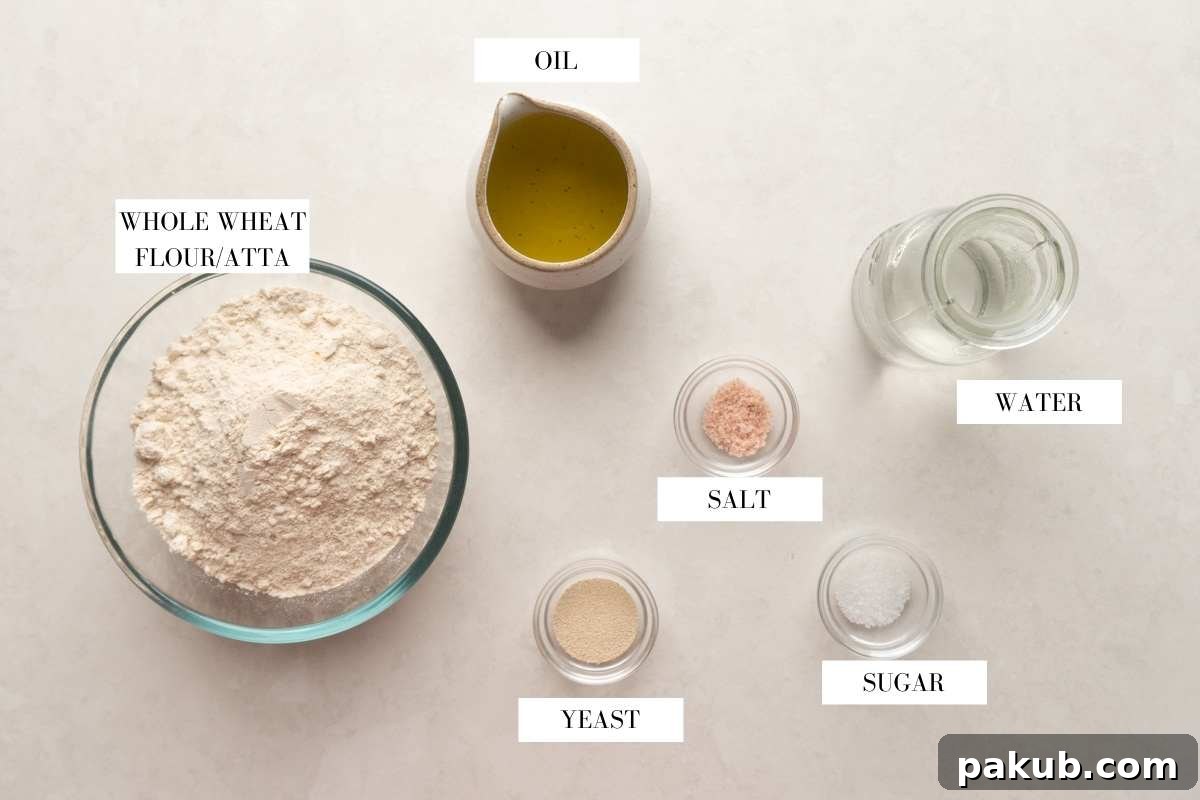
- Flour: The star of our recipe is 100% whole wheat flour. This is crucial for both the nutritional benefits and the rustic flavor profile. In many regions, particularly South Asia, this is often referred to as “atta.” Ensure you use fresh whole wheat flour for the best results, as older flour can sometimes affect yeast activity and taste.
- Oil: A good quality olive oil is recommended. It adds a subtle richness to the flavor, helps keep the dough soft and pliable, and prevents it from drying out during proofing and baking. It also contributes to a tender crumb and a slightly extended shelf life for your homemade pitas.
- Yeast: This is a very important ingredient that acts as the leavening agent, helping the dough rise and double in size, creating those signature pockets. I’ve used active dry yeast in this recipe, which requires activation (proofing) in warm water. Alternatively, you can use instant yeast, which can often be mixed directly with the dry ingredients, though a quick proof still ensures it’s active.
- Sugar: A small amount of sugar is essential to help activate the yeast. Yeast feeds on sugar, producing carbon dioxide that makes the dough rise. It also contributes to a lovely golden-brown crust. Any granulated sugar will work.
- Water: Lukewarm water is critical for activating the yeast and properly hydrating the dough. The ideal temperature is around 40-45°C (105-115°F). Water that is too hot will kill the yeast, while water that is too cold will prevent it from activating. The amount of water can vary slightly depending on the flour’s absorption, so always add gradually.
- Salt: Don’t underestimate the power of salt! It’s vital for enhancing the flavor of the bread, balancing the sweetness from the sugar, and regulating yeast activity. It also plays a role in strengthening the gluten structure, which contributes to the pita’s elasticity and ability to puff.
How to Master Homemade Whole Wheat Pita Bread
Making whole wheat pita bread might seem daunting, but it’s a straightforward process that yields incredibly satisfying results. Follow these step-by-step instructions to create your own fluffy, pocket-filled pitas.
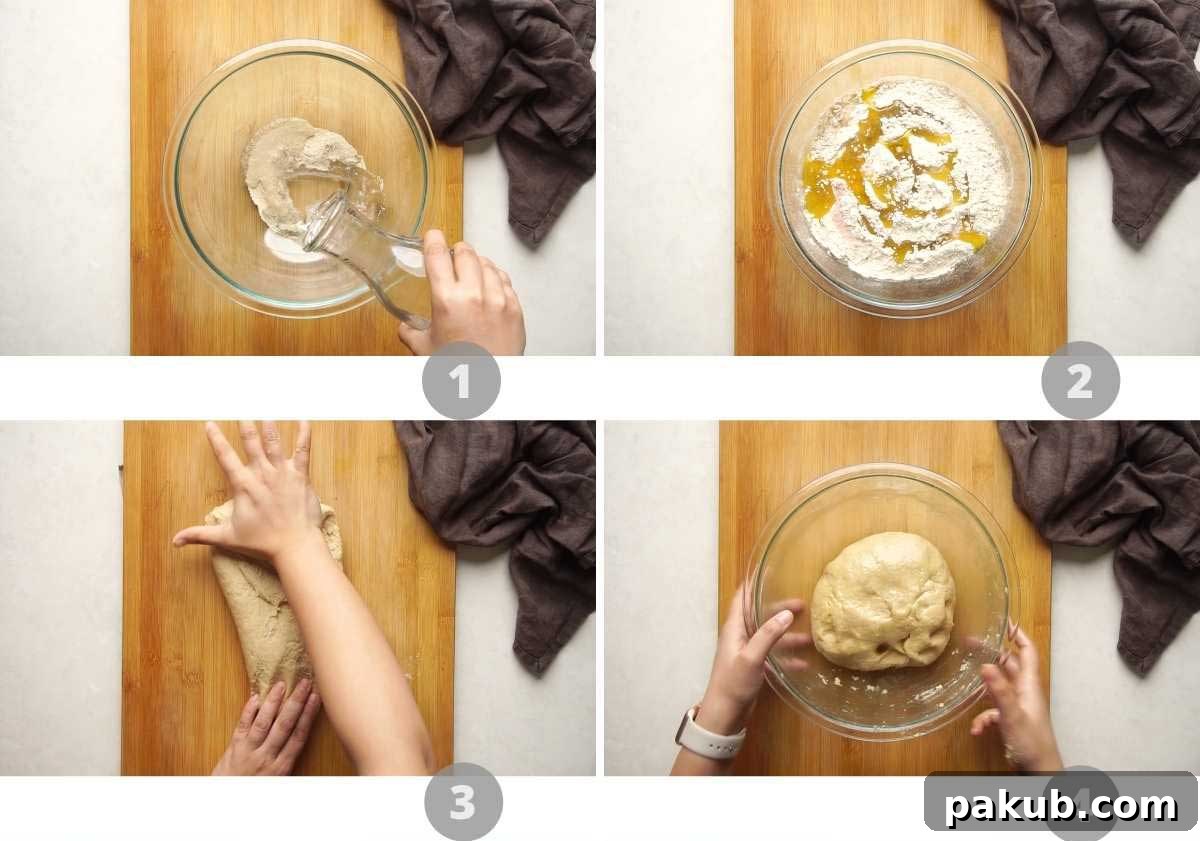
- Activate the Yeast: In a large mixing bowl, combine the warm water (aim for 40-45°C or 105-115°F – it should feel warm to the touch, not hot), sugar, and active dry yeast. Stir gently until the yeast is mostly dissolved. Allow this mixture to sit undisturbed for 5-10 minutes. During this time, the yeast consumes the sugar and releases carbon dioxide, causing the liquid to become frothy and bubbly on the surface. This “proofing” step confirms your yeast is active and alive. If your mixture doesn’t become frothy, your yeast may be dead or the water temperature was incorrect. In that case, discard it and start with new yeast and correctly tempered water, as inactive yeast will result in a flat, dense dough.
- Combine Dry and Wet Ingredients: Once the yeast has successfully proofed, add the whole wheat flour, olive oil, and salt to the bowl. Using your hands or a sturdy spoon, mix the ingredients until they just come together to form a shaggy, lumpy ball of dough. Ensure all flour is incorporated.
- Knead the Dough: Transfer the dough to a lightly floured surface. Knead vigorously for 8-10 minutes by hand. The goal is to develop the gluten, which makes the dough elastic and smooth. Continue kneading until the dough is soft, pliable, and springs back slightly when poked. Alternatively, if you have a stand mixer, attach the dough hook and knead on low speed for 5-7 minutes. The dough will be slightly sticky, which is perfectly normal for whole wheat dough; resist the urge to add too much extra flour.
- First Rise (Bulk Fermentation): Shape the kneaded dough into a round ball. Lightly coat the entire surface of the dough with a few drops of olive oil, and also grease the inside of a clean mixing bowl to prevent sticking. Place the dough ball into the greased bowl.
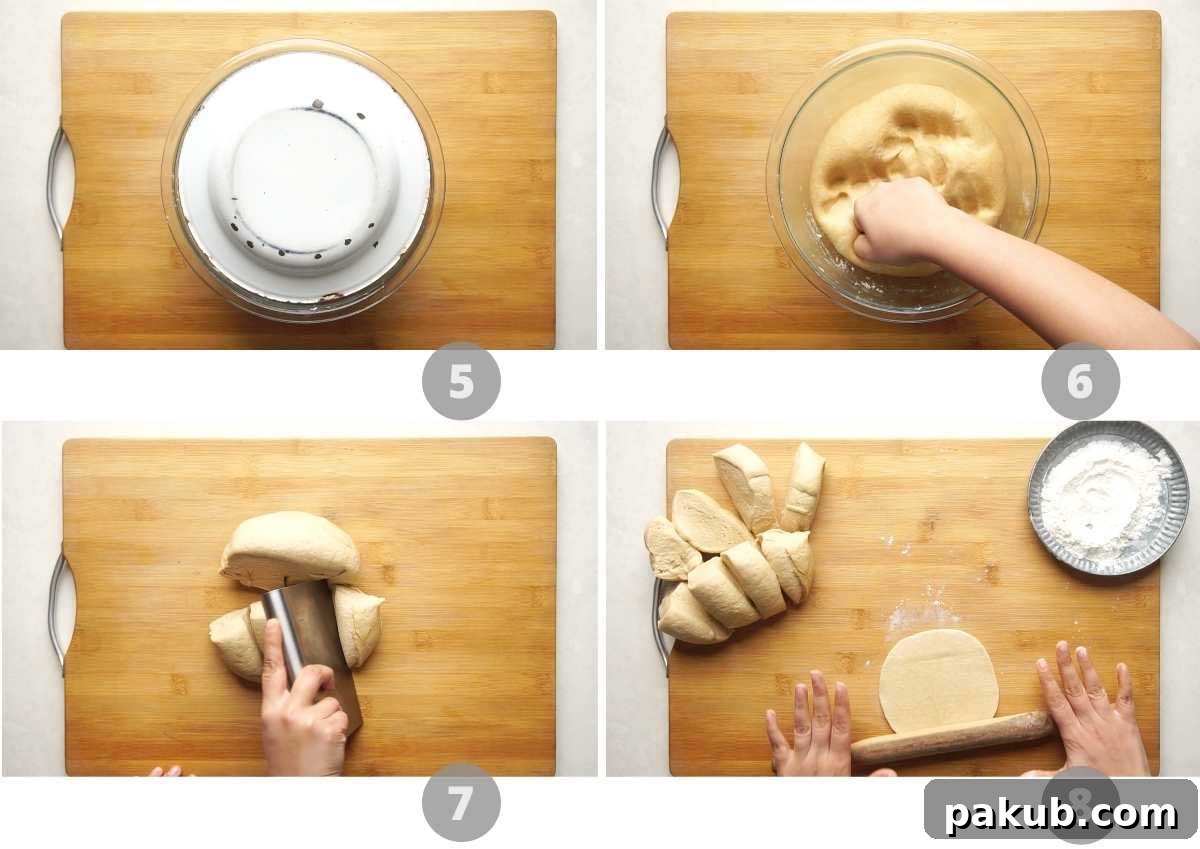
5. Proof the Dough: Cover the bowl with a clean, damp cloth or plastic wrap. Place it in a warm, draft-free spot (like a slightly warm oven, or near a sunny window). Allow the dough to rise for 1 to 2 hours, or until it has visibly doubled in size. The exact time may vary depending on the ambient temperature and humidity. Patience is key here!
6. Punch Down and Reshape: Once the dough has doubled, gently “punch down” the dough to release the accumulated air. Transfer the dough onto a lightly floured countertop. Knead it lightly for 1-2 minutes to redistribute the yeast and strengthen the gluten, then reshape it into a smooth round ball.
7. Divide the Dough: Divide the dough into 10-12 equal portions, depending on your desired pita size. For uniform results, you can weigh them. Shape each portion into a small, smooth round ball. Place these dough balls on a lightly floured surface and keep them covered with a slightly damp cloth to prevent them from drying out while you work.
8. Roll Out the Pitas: Take one dough portion, lightly flour your work surface and rolling pin, and roll it out into a flat round of approximately ¼ inch (about 0.6 cm) thickness. Ensure an even thickness to promote proper puffing. Repeat this process with all the dough balls, always keeping the rolled-out pitas covered with a damp cloth to maintain their moisture and elasticity until you’re ready to cook.
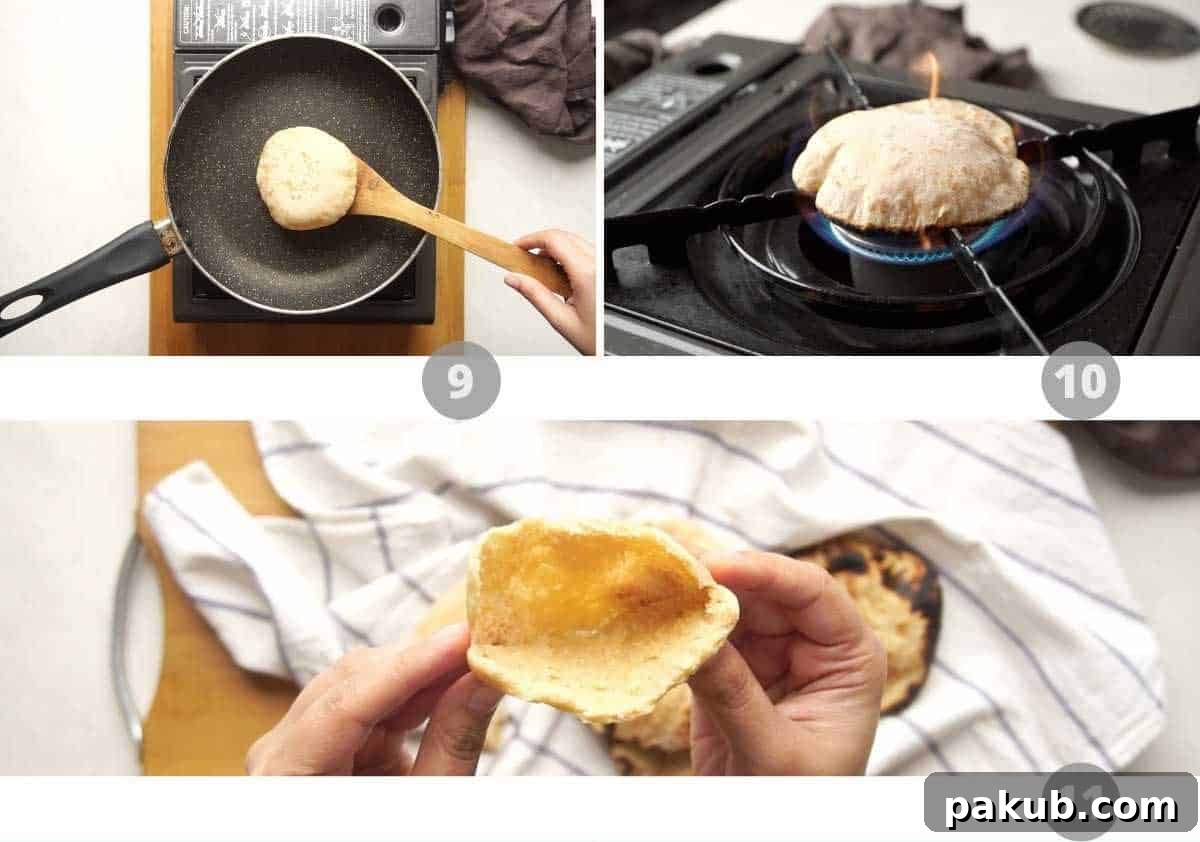
9. Prepare for Cooking: Crucially, start cooking your pitas on a very hot tawa, cast iron skillet, or frying pan. High heat is the secret to achieving that magical puff! If your cooking surface isn’t hot enough, the pita will cook too slowly, dry out, and fail to form a pocket.
10. Cook the Pita: Place one rolled-out pita onto the preheated skillet. Cook for 30-60 seconds on the first side, until small bubbles appear on the surface. Flip the pita. The second side will cook for about 1-2 minutes. As it cooks, gently press down on the edges with a spatula or a clean cloth. You’ll notice it starting to puff up like a balloon. Flip it once more and cook for another 30 seconds to ensure even browning. If you have an open flame (like a gas burner), you can briefly transfer the partially cooked pita directly over the flame with tongs for a few seconds to encourage a full puff. The direct heat helps it inflate rapidly. Transfer the beautifully puffed and lightly browned pita to a serving plate and keep covered with a cloth to keep it warm and soft. Serve hot with your favorite accompaniments like hummus and falafel!
Expert Tips for Perfect Whole Wheat Pita Bread
Achieving consistently perfect whole wheat pita bread at home is incredibly rewarding. Here are some invaluable tips to ensure your pitas are always light, fluffy, and pocket-perfect:
- Mastering Yeast Activation: Always allow your active dry yeast to proof in warm water with a pinch of sugar for at least 5-10 minutes before combining it with the flour. This is a non-negotiable step to confirm the yeast is alive and potent, which is essential for proper dough rise. You can skip this step if you are using instant yeast and plan to mix it directly with the flour, but proofing is still a good failsafe.
- Optimal Water Temperature is Key: Ensure the water used for proofing the yeast is lukewarm, ideally around 40-45°C (105-115°F). Water that is too hot will kill the yeast, rendering it inactive, while cold water will inhibit its activation, leading to a sluggish or non-existent rise. Use a kitchen thermometer if you are unsure.
- Thorough Kneading for Gluten Development: The secret to pliable, elastic dough and excellent pockets lies in proper kneading. Knead the dough for a full 8-10 minutes by hand until it’s soft, smooth, and resilient. If using a stand mixer with a dough hook, 6-7 minutes on low speed should suffice. Undern-kneaded dough will be stiff and won’t puff up well.
- Uniform Rolling for Consistent Pockets: Roll out each dough portion evenly and carefully to approximately ¼ inch thickness. Inconsistent thickness can lead to uneven cooking and prevent the pita from puffing up perfectly or forming distinct pockets. Aim for uniform rounds.
- Handle Dough with Care: After the first rise, gently punch down the dough and be careful not to overwork it. When dividing and shaping, try to handle the dough as little as possible to retain the air pockets created during proofing.
- High Heat is Non-Negotiable: Whether using a stovetop skillet or an oven, ensure your cooking surface is extremely hot before placing the pita. High heat causes rapid steam production inside the dough, which is what forces the two layers of the pita to separate and create the signature pocket.
- Preventing Dryness: Always keep the unused dough balls and rolled-out pitas covered with a damp cloth while you work. This prevents the surface from drying out, which can make them stiff and less likely to puff.
- Freezing for Future Enjoyment: If you’re freezing cooked pita bread, ensure they are completely cooled. Place them in airtight boxes or freezer-safe ziplock bags with parchment paper or wax paper between each pita to prevent them from sticking together and to guard against freezer burn.
- Refrigerating Dough for Later: To refrigerate the dough for future use, make sure it has completed its first rise and doubled in size. Then, punch it down gently, coat it lightly with oil, and place it in an airtight container in the refrigerator for up to 3 days. When ready to use, allow it to come to room temperature for about 30-60 minutes before proceeding with dividing and rolling.
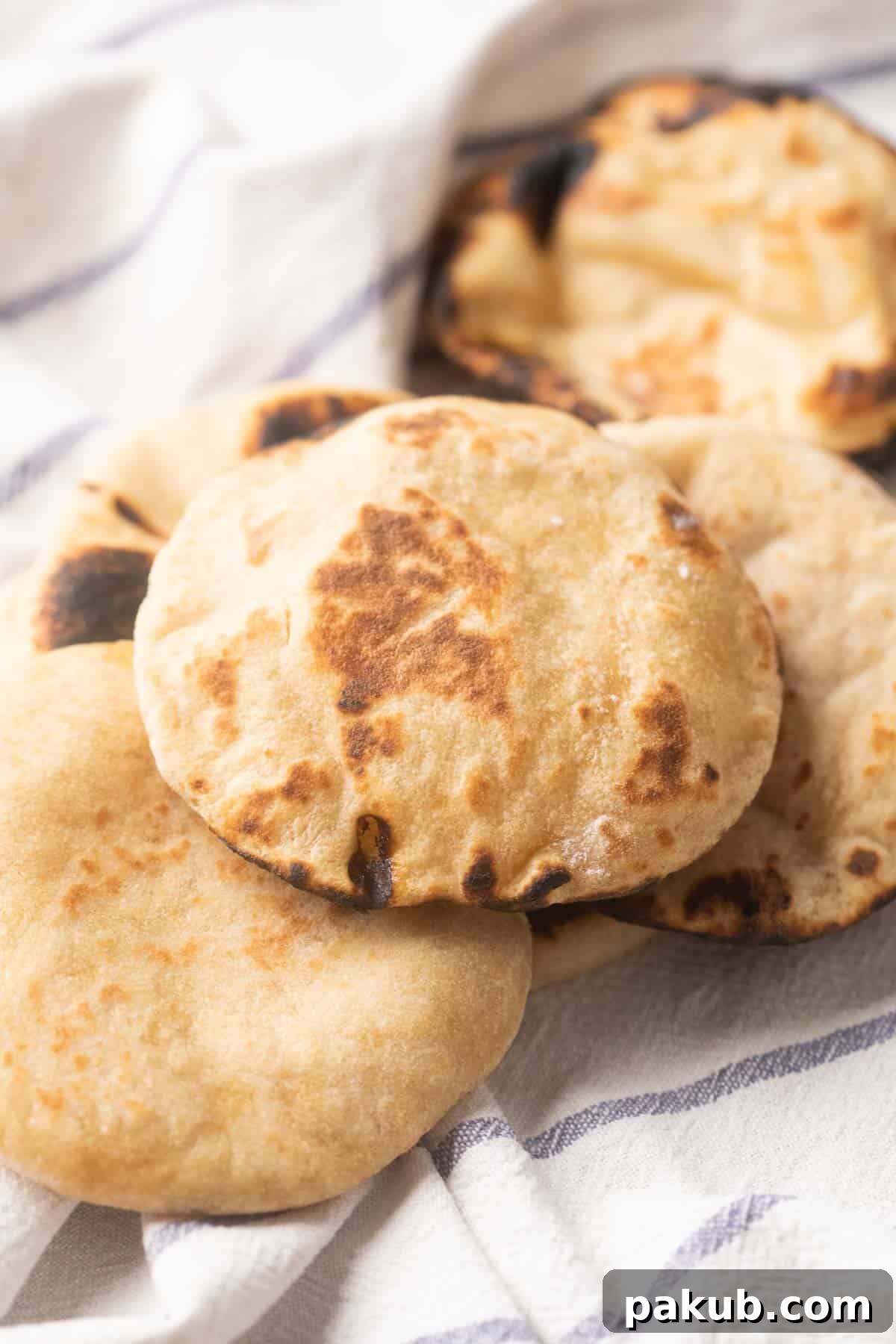
There’s an unparalleled sense of satisfaction that comes with baking your own bread at home. It’s not just about the delicious outcome; it’s about the entire process – the comforting aroma filling your kitchen, the simple joy of working with dough, and the assurance of knowing exactly what ingredients are going into your food. This homemade whole wheat pita bread is a testament to that joy.
The delight of eating freshly baked, warm bread, still soft from the heat, is truly unmatched. Imagine pairing these light and airy whole wheat pita pockets with a generous dollop of creamy hummus for a quick, wholesome 6-pm snack. Or, elevate your meal by filling those beautifully puffed pockets with savory falafels, crisp pickled veggies, and a drizzle of tahini sauce for a truly satisfying and wholesome lunch or dinner. The versatility of these pitas makes them a fantastic staple in any kitchen.
Delicious Pairings for Your Homemade Pita
Your freshly baked whole wheat pita bread deserves to be paired with equally delicious accompaniments. Here are some ideas to complete your meal:
More Recipes to Enjoy with Pita
Chicken
Herb Garlic Roast Chicken
Appetizers
Creamy Sundried Tomato Hummus (No Tahini Required)
Appetizers
Egyptian Beetroot Dip | Healthy and Easy!
Appetizers
Raw Banana Tikki | Kachhe Kele ke Kebab – Vegan and Gluten Free
Watch the Whole Wheat Pita Bread Recipe Video
LOVE THIS RECIPE? Don’t miss out on more delicious creations! Subscribe to my newsletter and be the first to receive all new recipes and culinary inspiration directly to your inbox!
Whole Wheat Pita Bread
By: Richa
Super fluffy and a whole lot healthier, this whole wheat pita bread is a game changer. This recipe is super easy and perfect for beginners too! Serve with some homemade hummus, falafel and salad for a delicious and heart-warming meal.
Prep: 15 mins
Cook: 10 mins
Total: 25 mins
Servings: 12 pitas
Ingredients
- 2 Cups Whole Wheat Flour (atta)
- 6 Tablespoons Olive Oil
- ½ Teaspoon Sugar
- ½ Tablespoon Active Dry Yeast
- ¾ – 1 Cup Warm Water (at approximately 45°C / 115°F)
- ¾ Teaspoon Salt
Instructions
- Add warm water, sugar, and yeast in a large bowl. Stir gently until dissolved. Set aside for 5-10 minutes or until the yeast becomes activated and the surface is slightly frothy.
- Add whole wheat flour, olive oil, and salt to the yeast mixture. Mix together until everything comes together into a shaggy ball. Knead by hand for 8-10 minutes, or use a stand mixer on low speed for 6-7 minutes, until the dough is soft and pliable. The dough will be slightly sticky, which is normal.
- Place the dough in a large bowl lightly coated with olive oil, ensuring the entire dough ball is covered. Cover the bowl with a warm, damp cloth and allow the dough to rest for 1-2 hours, or until it doubles in size.
- Once doubled, gently punch down the dough to release air. Divide the dough into 12 equal portions and shape them into smooth balls. Cover them with the same damp cloth and let them rest for 15 minutes.
- Roll out each dough ball into a ¼ inch (0.6 cm) thick round. Lightly dust with flour if necessary, but avoid adding too much. Keep the rolled-out pitas covered while you prepare your cooking surface.
Stovetop Cooking Instructions
- Heat a cast iron skillet or a heavy-bottomed frying pan over high heat until very hot. Place a pita bread round on the hot pan. Cook for 30-60 seconds, until small bubbles appear on the surface.
- Flip the pita. Cook for 1-2 minutes on this side, gently pressing it down with a spatula or clean cloth, especially around the edges, to encourage it to puff up.
- Flip once more and cook for another 30 seconds until lightly browned and fully puffed. For an extra dramatic puff, you can briefly transfer the pita directly over an open flame with tongs for a few seconds.
- Transfer the cooked pita onto a plate and keep it covered with a clean cloth to stay warm and soft. Serve hot along with hummus and falafel!
Oven Cooking Instructions
- Place a baking sheet or pizza stone in the oven and preheat the oven to 220°C (428°F). Ensure it is fully preheated for at least 15-20 minutes to get the stone/sheet very hot.
- Once the oven is preheated, carefully take out the hot baking tray using oven mitts. Gently place the rolled-out pitas on the hot baking sheet, being careful not to overcrowd it. Place the sheet back into the oven.
- Bake for 7-10 minutes, or until the pitas are fully puffed up and have a light golden-brown color on top.
- Serve hot.
Video
Notes
- Always allow active dry yeast to proof in warm water for at least 5-10 minutes before adding it to the flour. This is an essential step to activate the yeast and allow the dough to rise properly. You can skip this if you’re using instant yeast and prefer to mix it directly with dry ingredients, but proofing is a good practice.
- Ensure the water is lukewarm (about 40-45° C or 105-115°F). Hot water will kill the yeast, and if the water is cold, it won’t be activated, resulting in a flat dough.
- Remember to knead the dough for at least 8-10 minutes until it becomes soft and smooth. Proper kneading develops gluten, crucial for the pita’s elasticity and ability to puff. A stand mixer can reduce kneading time to 6-7 minutes.
- Roll out the dough evenly and carefully to ¼ inch thickness. This uniformity is vital to ensure that the pita bread puffs up perfectly and develops those beautiful pockets.
- If you are freezing these pita breads, ensure they are completely cooled. Place them in airtight boxes or ziplock bags with parchment paper or wax paper between each pita to prevent them from drying out or sticking to each other.
- To refrigerate the dough for later, make sure to proof it and let it double in size. Then gently punch it down, lightly oil it, and refrigerate in an airtight container for up to three days. Bring to room temperature before rolling and cooking.
- When baking pita bread in the oven, placing the rolled-out dough on a preheated hot baking sheet or pizza stone helps it puff up better and faster, mimicking the high heat of a skillet.
Nutrition (per pita)
Calories: 131 kcal, Carbohydrates: 15g, Protein: 3g, Fat: 8g, Saturated Fat: 1g, Polyunsaturated Fat: 1g, Monounsaturated Fat: 5g, Sodium: 148mg, Potassium: 74mg, Fiber: 2g, Sugar: 1g, Vitamin A: 2 IU, Vitamin C: 1mg, Calcium: 8mg, Iron: 1mg
Like this recipe? Rate and comment below!