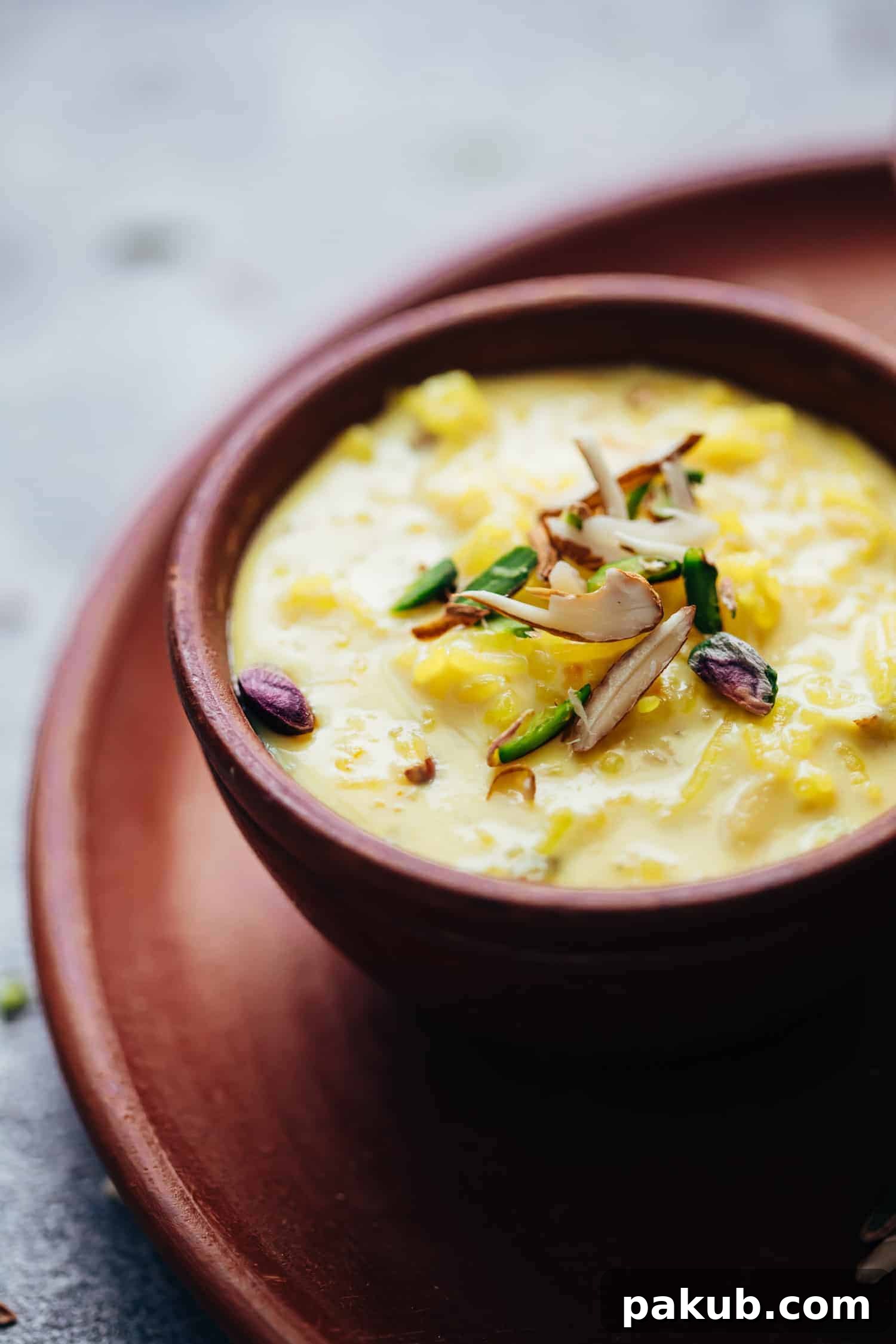
Indulge in the creamy delight of authentic Rice Kheer, also known as Chawal ki Kheer, India’s most beloved rice pudding dessert! This effortless recipe uses long-grained Basmati rice and rich condensed milk to create a treat that’s quick enough for everyday cravings yet elegant enough for any special occasion.
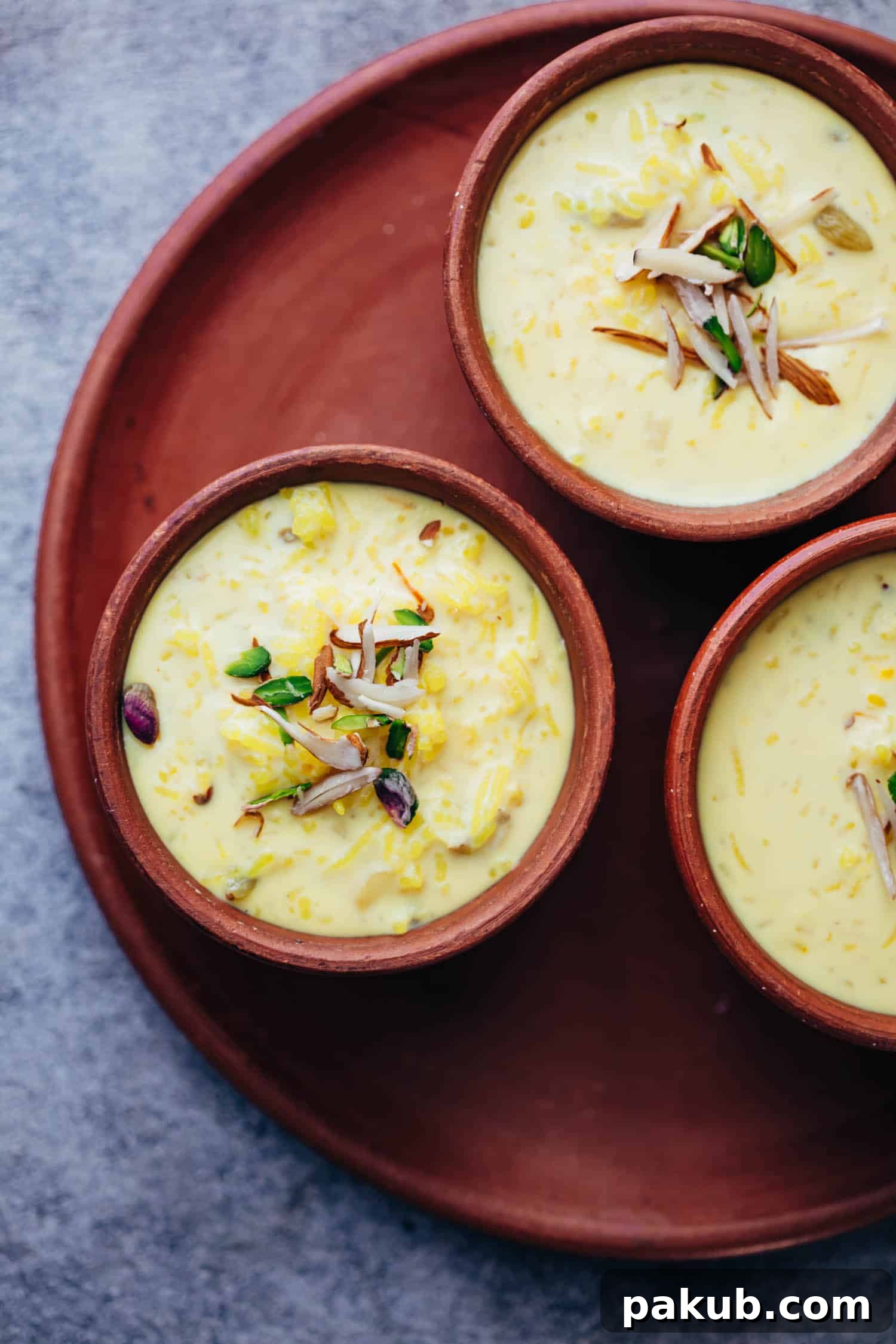
The Ultimate Creamy Rice Kheer Recipe: Indian Rice Pudding Perfected
There’s a reason Rice Kheer holds a special place in the hearts of millions across India and beyond. This quintessential Indian dessert, often referred to as Chawal ki Kheer or Indian rice pudding, is a celebration in itself. Its thick, creamy texture, subtly sweet flavor, and the delicate aroma of cardamom and saffron make it an irresistible comfort food, perfect for festivals, family gatherings, or simply a sweet ending to any meal.
My festive menus are incomplete without a generous serving of Kheer. What truly elevates this dish is its perfectly balanced milky base, where each grain of rice remains intact, offering a delightful bite rather than a mushy texture. Served warm, it envelops you in a comforting embrace, making it a must-try for anyone seeking an authentic taste of Indian sweets.
Two Delicious Paths to Chawal ki Kheer: The Condensed Milk Advantage
Chawal ki Kheer can traditionally be prepared in two distinct ways, each yielding a unique depth of flavor and texture. The first method involves patiently simmering milk for an extended period until it naturally thickens into a rich, almost rabri-like base. This traditional approach requires time, dedication, and frequent stirring to prevent the milk from scorching.
However, I enthusiastically champion the second method – crafting Kheer with condensed milk. This modern adaptation offers several compelling advantages without compromising on the authentic taste and luxurious creaminess that defines a perfect Kheer:
- Significantly Faster Preparation: Gone are the hours of relentless stirring. Condensed milk drastically reduces cooking time, allowing you to enjoy this delicious dessert more frequently.
- Unmatched Creaminess and Flavor: Condensed milk not only enriches the Kheer with incredible creaminess but also infuses it with a delightful caramel undertone, adding another layer of complexity to the flavor profile.
- Perfect Rice Texture, Every Time: With less simmering time, there’s minimal risk of overcooking the rice, ensuring that each grain retains its integrity and provides a pleasant texture, a hallmark of well-made Kheer.
- Effortless Sweetening: Condensed milk acts as both a sweetener and a thickener, simplifying the process and eliminating the need to add separate sugar.
Explore This Article: The World of Rice Kheer
- Frequently Asked Questions About Kheer
- Serving Suggestions for Kheer
- More Festive Indian Sweets to Try
Frequently Asked Questions About Rice Kheer
Traditionally, and for the best results, Kheer is made with long-grained Basmati rice. Aged Basmati is highly prized for its distinct aroma and its ability to cook perfectly without clumping, ensuring that individual grains remain beautifully intact, contributing to the Kheer’s delightful texture. However, if Basmati is unavailable, you can certainly use short-grained rice varieties. Just be mindful of the cooking time, as short-grain rice tends to soften faster and can become mushy if overcooked. The goal is a creamy base with discernible rice grains.
Absolutely! Kheer is incredibly versatile, and its concept extends to many forms of puddings across India. You can easily substitute rice with other grains or starches to create delicious variations. Popular alternatives include vermicelli (making Seviyan Kheer), broken wheat (for Dalia Kheer), tapioca pearls (known as Sabudana Kheer), or even certain lentils. In South India, similar milk-based desserts are called Payasam and often feature ingredients like vermicelli, lentils, or even coconut milk and jaggery for a delightful vegan twist. The possibilities are endless, allowing for endless customization to suit your taste and dietary preferences.
The key to perfectly textured Kheer is using the right rice and controlling the cooking process. Using long-grain Basmati rice, as recommended, helps a lot. Crucially, wash and soak the rice for about 10-15 minutes before cooking. This helps remove excess starch and ensures the grains cook evenly without breaking down too quickly. During simmering, stir frequently but gently to prevent sticking to the bottom, but avoid vigorous stirring that could break the rice grains. Keep the heat low after the initial boil, allowing the rice to cook slowly and absorb the milk without turning into a paste.
The ideal Rice Kheer should be rich, creamy, and pourable, with soft, distinct rice grains suspended within. It should not be overly thick like a solid pudding, nor too thin like flavored milk. If your Kheer appears too thick, especially after refrigeration, you can easily thin it down by adding a splash of warm milk before serving and stirring it gently until you reach your desired consistency. If it’s too thin, simmer it on low heat for a few more minutes, stirring constantly, until it reduces and thickens. Be careful not to over-thicken, as it will continue to thicken slightly as it cools.
How To Serve Your Delicious Rice Kheer
The serving temperature of Kheer is largely a matter of personal preference. Some, like me, find its comforting warmth most appealing when served lukewarm. The subtle flavors and creamy texture truly shine at this temperature. Others prefer their Kheer chilled, having rested in the refrigerator for a few hours (or even overnight) to allow the flavors to deepen and the pudding to set into a firmer, cooler delight. Experiment to discover your favorite!
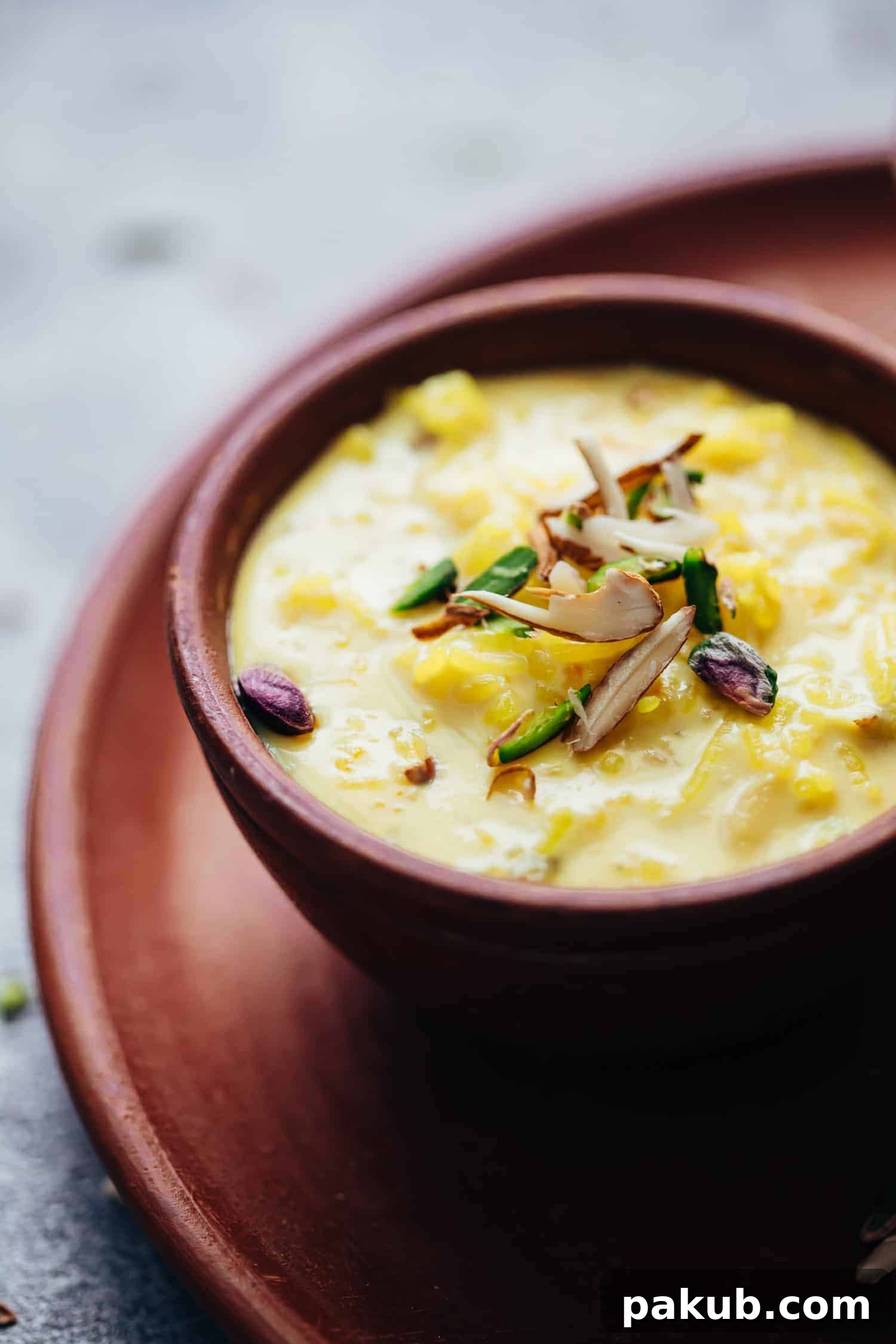
Regardless of the temperature, the secret to elevating your Kheer experience lies in the garnishes. A generous topping of finely chopped nuts – think cashews, almonds, and pistachios – adds an indispensable crunch, contrasting beautifully with the smooth pudding. These nuts not only enhance the texture but also infuse the Kheer with rich, nutty flavors.
And that gorgeous, inviting yellow hue you see? That’s the unmistakable signature of pure saffron. Do not be tempted to use artificial food coloring or skip this precious spice. Saffron, or Kesar, not only imparts a beautiful golden color but also a unique, aromatic floral note that is absolutely essential to authentic Indian Kheer. Its subtle fragrance is what truly sets Kheer apart.
Classic Rice Kheer (Chawal ki Kheer)
Richa
5 mins
55 mins
1 hr
8 Portions
Rate Recipe
Print Recipe
Ingredients
- 1 liter Full cream Milk
- 1/3 cup Basmati Rice, washed and soaked for 10 minutes
- 1/2 cup Condensed Milk, filled to the brim
- 1/2 teaspoon Cardamom Powder
- 10-12 Saffron strands (Kesar)
- 2 tablespoons Raisins
- 1/4 cup Mixed Nuts (Cashew, Almonds, Pistachios), chopped
Instructions
- Begin by soaking the saffron strands in 2 tablespoons of warm milk for at least 15 minutes. This step is crucial for the saffron to release its full color and exquisite aroma.
- In a large, heavy-bottomed pan, pour the full-cream milk. Drain the pre-soaked basmati rice thoroughly and add it to the milk. Using a heavy-bottomed pan is important to prevent the milk from burning at the bottom.
- Bring the milk and rice mixture to a rolling boil over high heat, stirring occasionally to ensure nothing sticks. Once boiling, reduce the heat to a very low simmer. Let it cook gently for approximately 45 minutes, stirring frequently (every 5-7 minutes) to prevent scorching. During this time, the milk will gradually thicken, and the rice grains will cook through, becoming tender and slightly homogenizing with the milk, creating that characteristic creamy texture.
- After 45 minutes, the Kheer should be visibly thicker and the rice tender. Now, gently rub the soaked saffron strands with your fingers – this helps to further release both their vibrant color and intense flavor into the Kheer. Add the saffron-infused milk, condensed milk, and cardamom powder to the pan. Continue to cook for another 5-8 minutes, stirring continuously, until the Kheer reaches your desired consistency and all the flavors are well combined.
- Finally, stir in the raisins and the chopped mixed nuts. Give it a good mix. Remove from heat and allow the Kheer to cool slightly before serving. For those who prefer it chilled, transfer the Kheer to a serving bowl, cover it, and refrigerate for a few hours until it’s perfectly cold and set. Garnish with additional nuts and a few saffron strands just before serving.
Chef’s Notes & Tips
- Choosing the Right Rice: While Basmati rice is highly recommended for its fragrant aroma and distinct grain separation, you can use other long-grain or even short-grain rice. The key is to monitor cooking time closely to avoid a mushy texture.
- Importance of Soaking: Soaking the rice for 10-15 minutes before cooking is crucial. It helps to release excess starch, which contributes to a creamier Kheer, and significantly reduces the overall cooking time. It also ensures the rice cooks up soft and fluffy.
- Saffron Preparation: For maximum color and flavor extraction, always crush saffron threads lightly and soak them in a small amount of warm milk for at least 15 minutes before adding to the Kheer. This bloom time is essential.
- Storage and Thickening: Rice Kheer can be stored in an airtight container in the refrigerator for 4-5 days. It’s natural for Kheer to thicken considerably as it chills, as the rice continues to absorb moisture. If it becomes too thick upon serving, simply stir in a splash of warm milk until it reaches your preferred consistency.
- Preventing Scorching: Always use a heavy-bottomed pot to prevent the milk from sticking and burning. Stir the Kheer frequently, especially during the simmering phase, to ensure even cooking and to scrape down any milk solids that cling to the sides of the pan back into the Kheer for extra richness.
Nutrition Information (per serving)
Carbohydrates: 36g,
Protein: 9g,
Fat: 10g,
Saturated Fat: 5g,
Cholesterol: 25mg,
Sodium: 107mg,
Potassium: 403mg,
Fiber: 1g,
Sugar: 23g,
Vitamin A: 338IU,
Vitamin C: 1mg,
Calcium: 266mg,
Iron: 1mg
Like this delightful Rice Kheer recipe? We would love to hear your thoughts! Please take a moment to rate and comment below with your feedback.
Explore More Festive Indian Sweet Recipes
If you enjoyed making and tasting this creamy Rice Kheer, you’ll love exploring other traditional Indian desserts that are perfect for celebrations or a sweet indulgence:
- Thin and Crispy Jalebis: These spiral-shaped, deep-fried sweets soaked in sugar syrup are an iconic Indian treat.
- Decadent Chocolate Kheer: A modern twist on the classic, perfect for chocolate lovers.
- Healthy Quinoa Apple Kheer: A wholesome and nutritious take on traditional Kheer, blending ancient grains with fruity sweetness.
- Instant Rabdi: A rich, condensed milk-based dessert that’s quick to prepare and incredibly versatile.
- Mouthwatering Coconut Barfi: A fudge-like confection made from coconut and condensed milk, often flavored with cardamom.