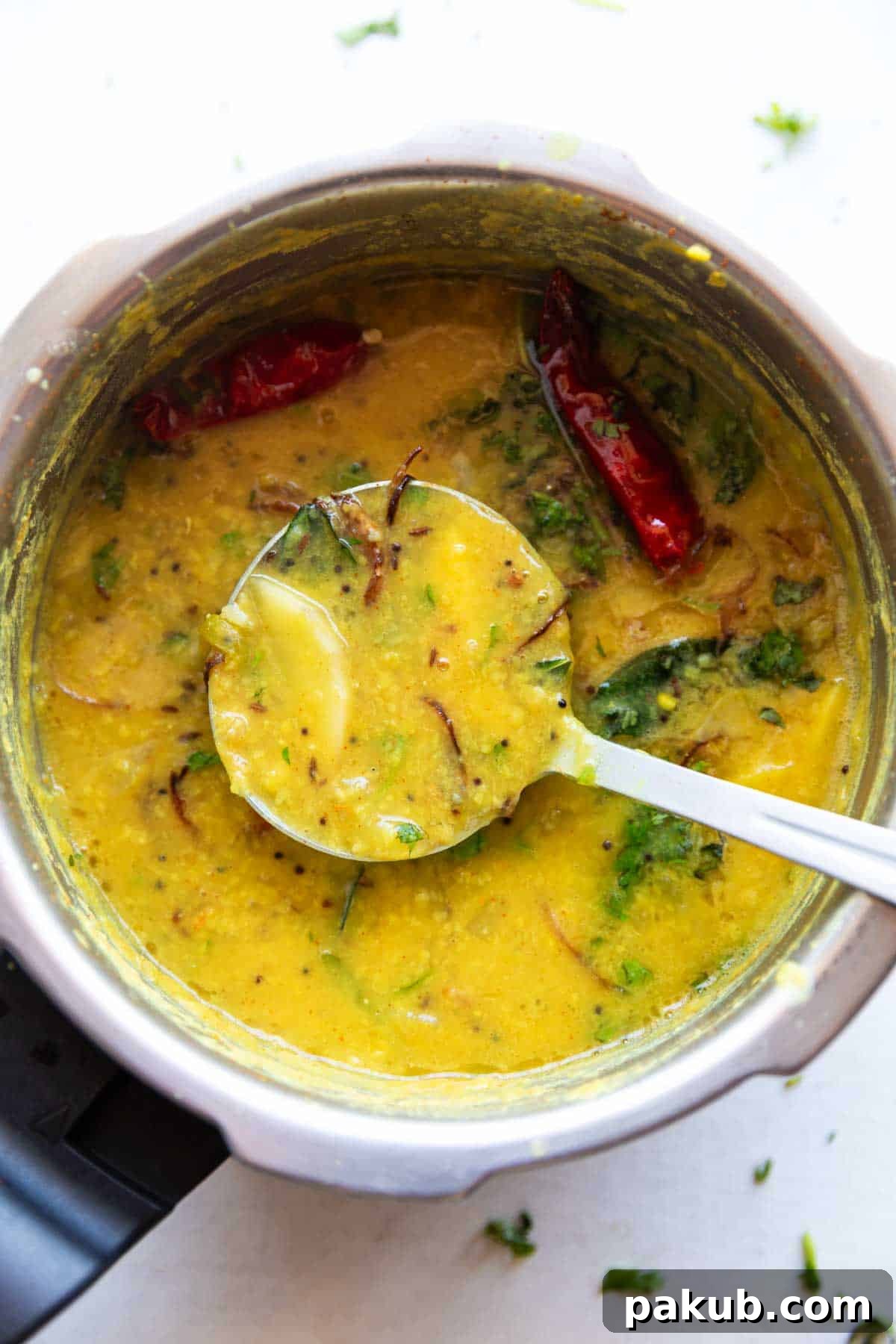
Raw Mango Dal (Mamidikaya Pappu): A Tangy & Flavorful Andhra Lentil Curry
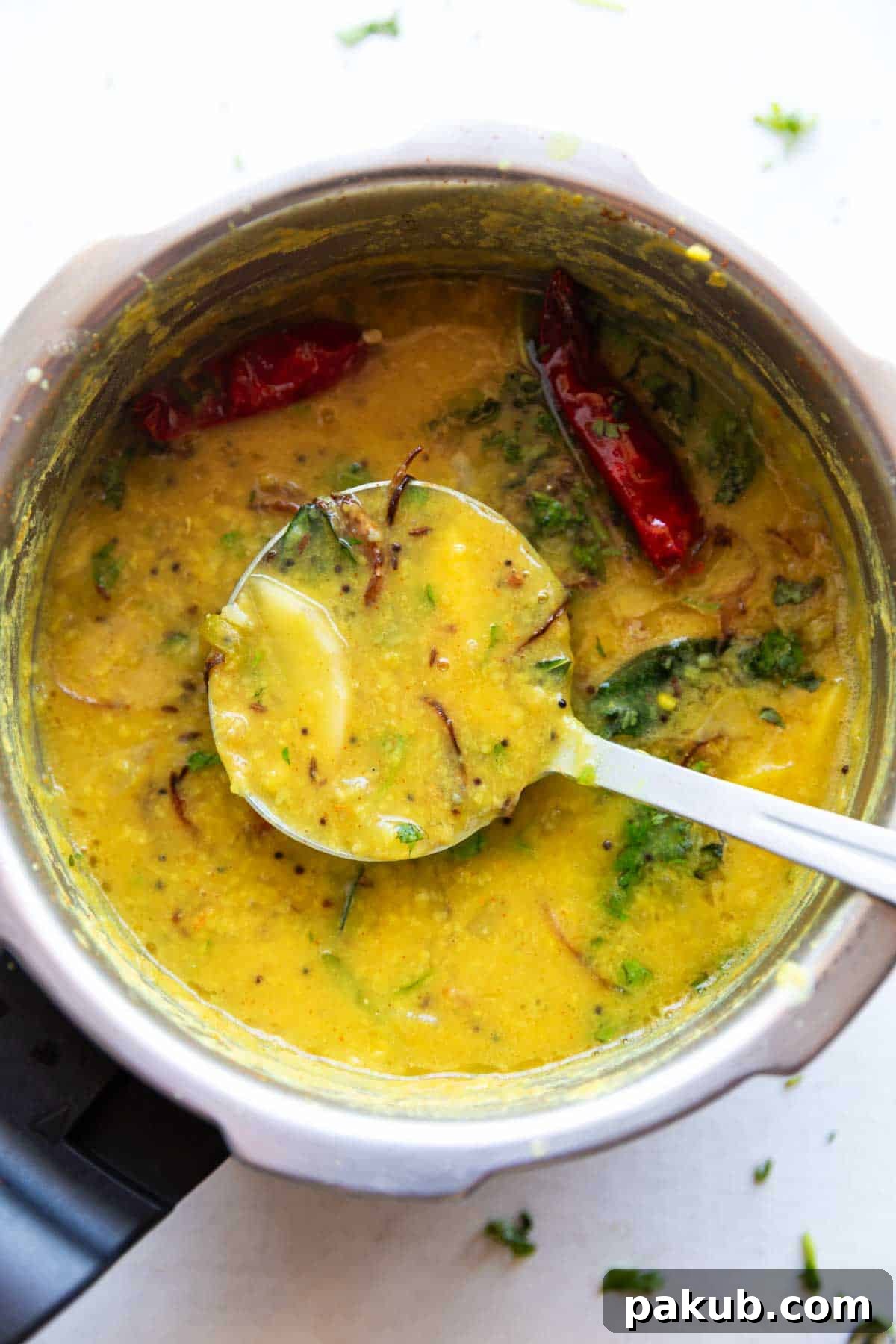
Experience the vibrant and comforting taste of Raw Mango Dal, a truly special lentil dish that perfectly balances spicy, sour, and aromatic flavors. This traditional Andhra-style Mamidikaya Pappu, made with seasonal raw mangoes and hearty toor dal, is an exquisite way to elevate your everyday meal into a memorable culinary journey.
Are you a fan of the unique tang of raw mangoes? You’ll love these other fantastic recipes:
- Raw Mango Fish Curry
- Aam Panna (Raw Mango Drink)
- Easy Raw Mango Rice
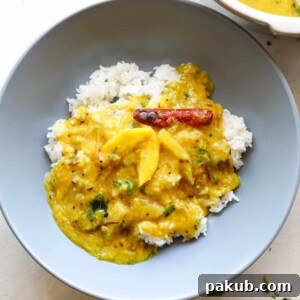
Prepare to tantalize your taste buds with Andhra-style Raw Mango Dal, affectionately known as Mamidikaya Pappu. This authentic South Indian lentil preparation is a must-try during mango season, offering a delightful twist on a staple. It skillfully combines tender raw mangoes with protein-rich toor dal, brought to life with a fragrant tempering of aromatic spices. Our unique touch includes two secret ingredients – cloves and cinnamon – which infuse the dal with an unparalleled depth and warmth, transforming it from a simple lentil dish into an extraordinary culinary experience. The result is a wonderfully creamy, deeply aromatic, mildly spicy, and distinctively sour dal that offers a refreshing departure from conventional recipes. Serve it generously over a mound of fluffy, steamed rice for a truly comforting and satisfying meal that transports you straight to the heart of Andhra cuisine.
Table of Contents
- Why You’ll Love This Raw Mango Dal
- Essential Ingredients for Mamidikaya Pappu
- Frequently Asked Questions About Raw Mango Dal
- Expert Tips For The Best Raw Mango Dal
- Step-by-Step Video Guide
- More Invigorating Summer Recipes You’ll Love
Why You’ll Love This Raw Mango Dal
This Raw Mango Dal isn’t just another lentil dish; it’s a celebration of seasonal flavors and a testament to the versatility of Indian cuisine. Here are compelling reasons why this Mamidikaya Pappu will quickly become a cherished recipe in your kitchen:
- A Refreshing Seasonal Upgrade: Ditch the routine and embrace the vibrant flavors of summer! This recipe transforms humble dal into an exciting, flavorful meal by incorporating fresh, tangy raw mangoes. It’s perfect for those days when you crave something comforting yet distinctly different and invigorating. The seasonal appeal of raw mango adds a unique zest that revitalizes the palate.
- Effortless “Dump-and-Go” Preparation: We understand the demands of a busy lifestyle, and this Raw Mango Dal recipe is designed with convenience in mind. It’s largely a “dump-and-go” kind of dish where most ingredients are added to the pressure cooker simultaneously, minimizing active cooking time and reducing kitchen fuss. This makes it an ideal weeknight dinner solution or a quick and healthy lunch option.
- Lightning-Fast Pressure Cooker Method: Say goodbye to long hours over the stove! By utilizing a pressure cooker, this delicious “Kacche Aam Ki Dal” comes together in a remarkably short amount of time. The pressure cooking method not only speeds up the cooking of the toor dal but also perfectly tenderizes the raw mangoes, ensuring a creamy, well-integrated texture and flavor without compromising on taste. This efficiency allows you to enjoy a homemade, wholesome meal even on your busiest days.
- Rich Nutritional Profile: Toor dal is packed with protein and dietary fiber, essential for a balanced diet. Combined with raw mangoes, which are rich in Vitamin C, this dal offers a healthy boost, aiding digestion and boosting immunity. It’s a nourishing meal that doesn’t compromise on flavor.
- Authentic Andhra Experience: While simple to prepare, this dal delivers an authentic taste of Andhra Pradesh. The distinct sourness of mango, combined with specific tempering spices, offers a genuine regional culinary experience that is both bold and comforting.
Essential Ingredients for Mamidikaya Pappu
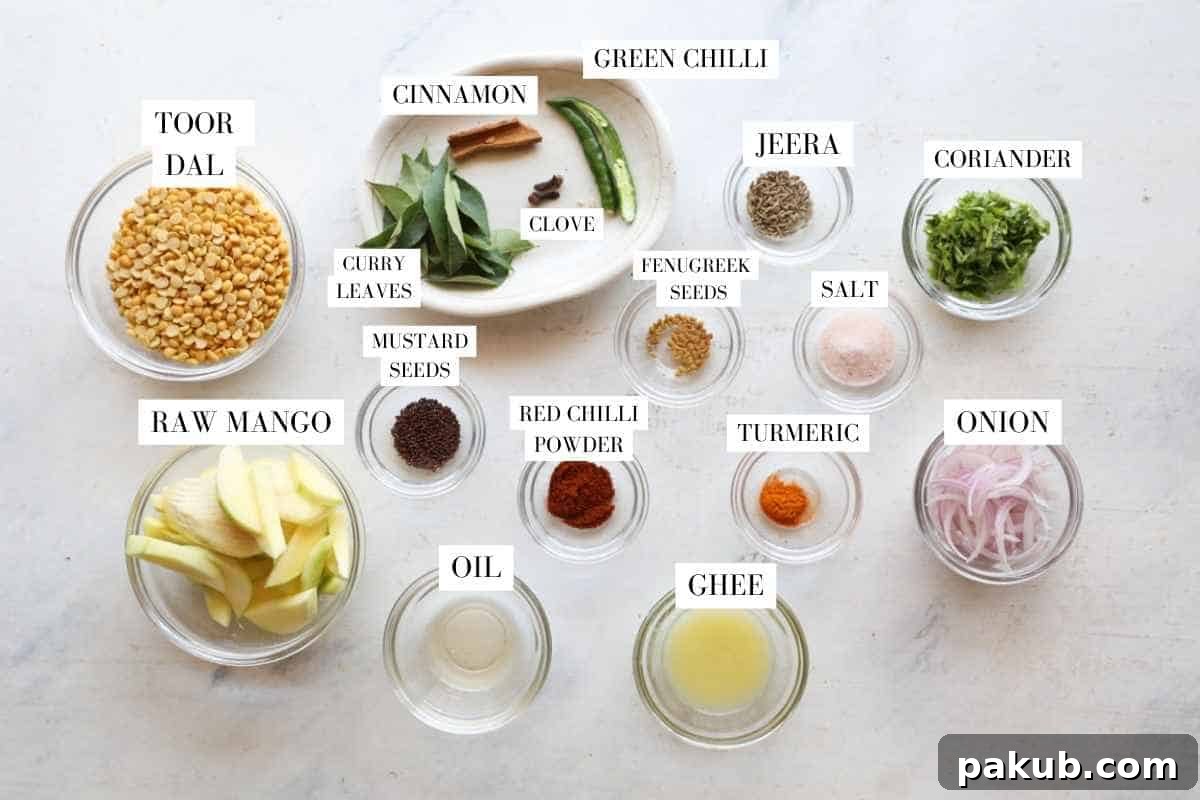
Crafting the perfect Mamidikaya Pappu begins with selecting high-quality ingredients. Each component plays a crucial role in developing the signature spicy, sour, and fragrant profile of this delightful dal. Here’s a detailed look at everything you’ll need to bring this Andhra masterpiece to life, ensuring you gather the best for an unforgettable taste experience:
Frequently Asked Questions About Raw Mango Dal
For the authentic tangy flavor of Mamidikaya Pappu, any truly sour variety of raw green mango works exceptionally well. It’s crucial to select mangoes that are firm to the touch and uniformly green on the outside, indicating they are unripe. Avoid any mangoes that feel soft or show hints of yellow, as these have likely started to ripen and will lack the essential tartness that defines this dal. Popular varieties include Totapuri (though often less sour), Kesar (unripe), or local sour varieties. When in doubt, taste a small piece before adding it to your dal to ensure it has the desired sourness.
Absolutely! Frozen raw mangoes are a fantastic and convenient substitute, especially when fresh raw mangoes are out of season. Many home cooks, myself included, make it a point to freeze sliced raw mangoes towards the end of the season. This ensures you always have a stash handy, allowing you to whip up this lovely dal whenever the craving strikes, regardless of the time of year. Simply thaw them slightly before adding them to the pressure cooker, or cook them directly from frozen with a minor adjustment to cooking time. The flavor and texture will remain wonderfully close to using fresh ones.
Storing leftover Mamidikaya Pappu is quite simple, making it excellent for meal prep. Once cooled, transfer the dal to an airtight container and store it in the refrigerator for up to 3 days. For longer storage, this dal freezes beautifully. You can freeze it in individual portions for up to 3 months. When ready to enjoy, simply thaw in the refrigerator overnight or use the defrost setting on your microwave, then gently reheat on the stovetop, adding a splash of water if needed to adjust consistency. A fresh tempering (tadka) when reheating can also revitalize its flavors!
Raw Mango Dal is incredibly versatile and pairs wonderfully with a variety of Indian staples. Traditionally, it’s served over piping hot steamed rice, allowing the dal’s rich flavors to shine. It also tastes fantastic with warm roti, chapati, or even paratha. For a complete meal, consider serving it alongside a simple vegetable stir-fry, a crisp green salad, or some crunchy papad and thinly sliced onions for added texture and bite. A dollop of ghee on top of your rice and dal enhances its richness and aroma.
Yes, Raw Mango Dal is a highly nutritious dish! Toor dal (split pigeon peas) is an excellent source of plant-based protein, dietary fiber, and essential minerals like iron, folate, and magnesium. Raw mangoes contribute a significant amount of Vitamin C, antioxidants, and dietary fiber. The spices used in the tempering, such as turmeric, cumin, and fenugreek, also offer various health benefits, including anti-inflammatory and digestive properties. With minimal oil in the tempering and no heavy creams, it’s a wholesome and balanced meal option.
Expert Tips To Make the Best Raw Mango Dal
Achieving the perfect Raw Mango Dal is an art, and these expert tips will guide you to culinary success, ensuring every spoonful is bursting with flavor and the ideal texture:
- Lentil Alternatives: While toor dal (split pigeon peas) is the traditional choice for its creamy texture and distinct flavor, don’t hesitate to experiment! You can easily substitute it with moong dal (split yellow lentils) for a lighter, quicker-cooking dal, or red masoor dal (red lentils) which offers a slightly earthier taste and cooks even faster. Remember that each lentil variety has a different cooking time and water absorption rate, so adjust accordingly to achieve the desired consistency.
- Adjusting Cooking Time for Different Lentils: If you opt for moong dal or masoor dal instead of toor dal, be mindful that they cook much faster. Moong dal may require only 1-2 whistles in a pressure cooker, while masoor dal might cook even quicker. Always refer to general cooking guidelines for your chosen lentil and adjust based on your pressure cooker’s efficiency and the desired tenderness. Overcooked dal can become too mushy.
- The Secret to Creamy Dal: Soaking! This step is optional but highly recommended for an exceptionally creamy dal and improved digestibility. Soaking the toor dal for about 20-30 minutes before pressure cooking helps to soften the lentils, resulting in a silkier texture that melts in your mouth. It also reduces overall cooking time and makes the lentils easier on your digestive system.
- To Peel or Not To Peel the Mango: Traditionally, raw mangoes are often cooked with their skin on, especially if the skin is thin and tender. However, I prefer to remove the skin before cooking to ensure a smoother consistency and to avoid any potential bitterness from thicker skins. The choice is yours; if you cook with the skin on, ensure the mangoes are thoroughly washed.
- Customizing Dal Consistency: The beauty of homemade dal lies in its adaptability. You can easily adjust the consistency of your Raw Mango Dal to your liking. If you prefer a thicker dal, use slightly less water or allow it to simmer longer after pressure cooking to reduce. For a thinner, more soup-like consistency, simply add a splash more hot water and mix well until it reaches your preferred texture.
- Onions in Tempering – A Personal Touch: While some traditional Andhra Mamidikaya Pappu recipes omit onions, I find that adding thinly sliced onions to the tempering truly elevates the overall flavor profile, adding a subtle sweetness and depth. This is a matter of personal preference, so feel free to skip it if you prefer a more classic, onion-free rendition.
- Hing (Asafoetida) Substitute: Hing, or asafoetida, is a crucial ingredient in Indian cooking, known for its pungent aroma that mellows into a garlicky, onion-like flavor. It’s especially beneficial for aiding digestion when cooking lentils. You can easily find hing at any Indian grocery store. If you don’t have it, a good substitute is a small amount of garlic powder or 2-3 cloves of freshly crushed garlic. While the taste won’t be identical, your raw mango dal will still taste incredibly delicious and aromatic.
- The Importance of Timely Tempering: The tempering (tadka) is the soul of this dal. Ensure your oil or ghee is adequately hot before adding the mustard and cumin seeds. They should splutter quickly, releasing their aromas. Adding curry leaves and dried red chilies right after will infuse the oil with their distinct flavors, which then get locked into the dal when poured over. Don’t let the spices burn!
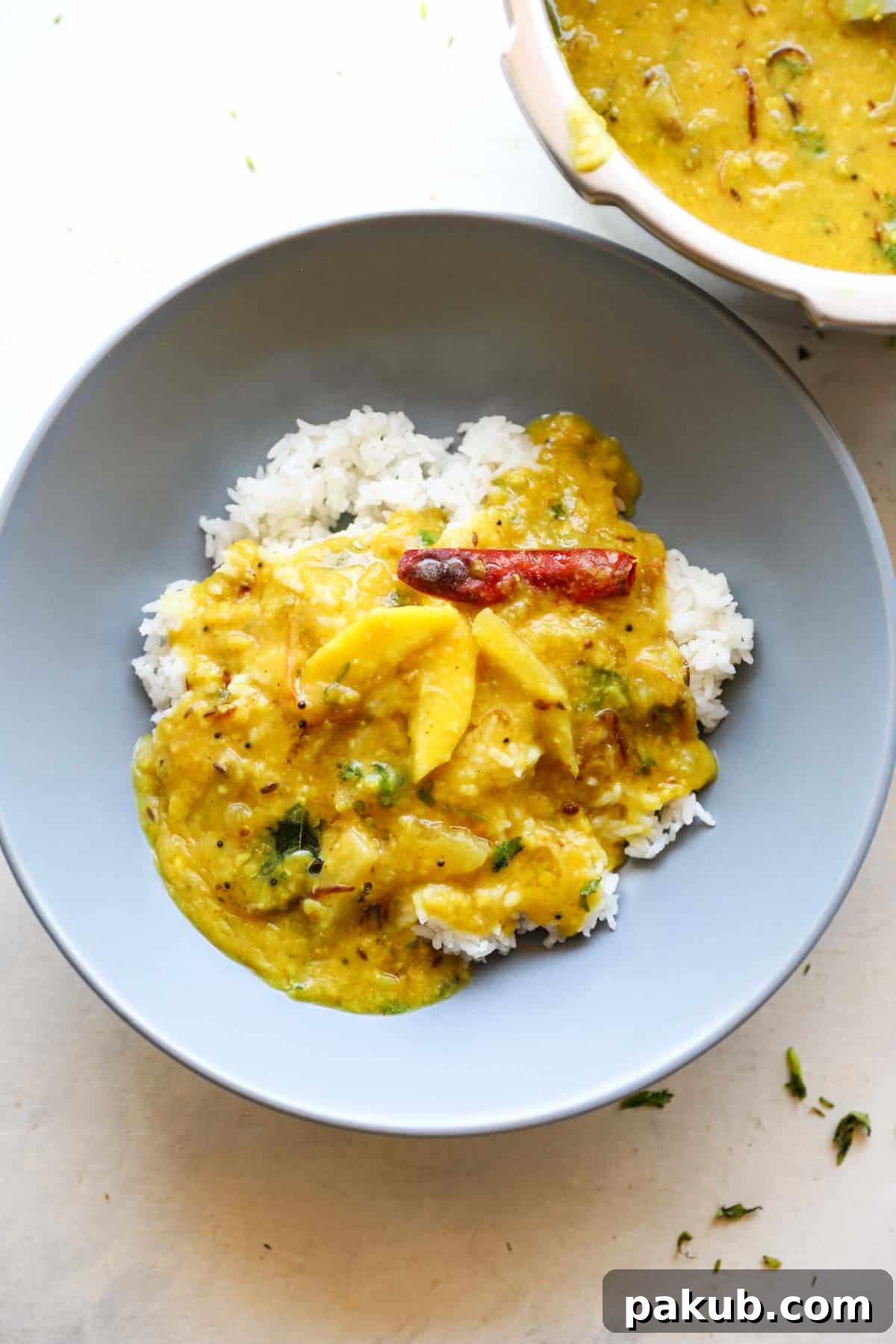
This Raw Mango Dal is a prime example of how seemingly simple ingredients can come together to create a dish that packs an incredible punch of flavor. Its tangy, spicy, and savory notes make it an absolute delight. Serve this steaming hot Mamidikaya Pappu generously poured over a bed of fluffy steamed rice, complemented by some crispy papad and a side of thinly sliced onions for a meal that is equal parts delicious, comforting, and wonderfully refreshing during the warmer months.
Watch How To Make Raw Mango Dal
Raw Mango Dal | Mamidikaya Pappu
Richa
5 mins
20 mins
10 mins
35 mins
4 portions
Rate Recipe (Scroll to comments)
Print Recipe
Ingredients
For Cooking Dal
- ½ cup toor dal, pigeon pea split
- ½ cup peeled & sliced raw mangoes
- 1 ¼ cup water
- 1 green chilli, slit
- ¼ teaspoon red chilli powder
- ⅛ teaspoon turmeric powder
- 2 cloves
- 1 inch cinnamon stick
- ¾ teaspoon salt
For Tempering/Tadka
- 2 teaspoons ghee
- 2 teaspoons cooking oil
- ¼ teaspoon mustard seeds, rai
- ¼ teaspoon cumin seeds, jeera
- ⅛ teaspoon fenugreek seeds, methi dana
- 10-15 curry leaves
- ⅛ cup sliced onions (optional)
- 2 dry red chillies whole
- 2 tablespoons chopped coriander leaves (for garnish)
Instructions
For Cooking Dal
-
Wash toor dal 2-3 times thoroughly under running water until the water runs clear. For best results and quicker cooking, soak the dal in fresh water for 30 minutes. This step, though optional, significantly reduces total cooking time and contributes to a creamier texture.
-
Into a pressure cooker, add the washed (and optionally soaked) toor dal along with 1 cup of water, green chilli, red chilli powder, turmeric powder, cloves, cinnamon stick, and ¾ teaspoon of salt. In a separate, smaller, oven-safe bowl, place the peeled & sliced raw mangoes with the remaining ¼ cup of water. Carefully place this bowl inside the pressure cooker, ensuring it sits above the dal. This prevents the mangoes from becoming overly mushy.
-
Close the pressure cooker lid and cook on medium heat for 3 to 4 whistles. The number of whistles may vary slightly depending on your cooker and the age of the dal, so adjust as necessary to ensure the dal is tender.
-
Once the cooking is complete, turn off the heat and allow the pressure to release naturally. Do not attempt to open the cooker until all pressure has fully dissipated; this usually takes about 10 minutes and allows the dal to continue cooking gently.
-
Carefully open the cooker. Remove the bowl with the cooked raw mangoes. Mash the dal well with a whisk or the back of a ladle until it reaches a smooth, creamy consistency. Gently add the cooked raw mango pieces to the mashed dal and mix sparingly to keep some mango chunks intact, providing delightful bursts of sourness.
For Tempering (Tadka):
-
In a small pan or a tempering spoon, melt ghee and cooking oil together over low heat. Once hot, add mustard seeds and cumin seeds. Allow them to splutter vigorously, indicating they are releasing their full aroma.
-
Immediately add the fenugreek seeds (methi dana) and, if using, the sliced onions. Fry the onions until they turn a beautiful golden brown. This step is crucial for developing a rich, savory base for the tempering.
-
Next, add the fresh curry leaves and whole dry red chillies. Stir-fry for about 10 seconds until the curry leaves turn crisp and fragrant, and the red chillies darken slightly. Be careful not to burn them. Turn off the heat.
-
Pour this aromatic tempering directly over the prepared dal. The sizzling sound and fragrant steam are part of the experience! Garnish generously with fresh chopped coriander leaves for a burst of color and freshness. Serve the steaming hot raw mango dal immediately with rice for a truly authentic and comforting meal.
Video Tutorial
Chef’s Notes
- If the raw mango is cooked directly with the dal in the pressure cooker, it tends to break down completely and become overly mushy. Cooking it separately ensures you still get those delightful soft and sour bites of raw mango within the creamy dal, enhancing the texture and flavor contrast.
- The precise cooking time for dal can vary depending on its age (older dal may take longer), the type of pressure cooker you use, and the quantity being cooked. Generally, 3-4 whistles on medium heat are sufficient for well-soaked toor dal.
- Allowing the pressure to release naturally is crucial. The cooking process continues even after the heat is turned off, further tenderizing the dal and mango. This resting period, typically up to 10 minutes, contributes to a perfectly cooked and flavored dal.
- Cooking Toor Dal Without a Pressure Cooker: If you don’t have a pressure cooker, you can still make this delicious dal. Increase the soaking time for the toor dal to at least 1 hour. In a thick-bottomed pot, combine the dal with water in a 1:3 ratio (1 cup dal to 3 cups water). Bring it to a boil, then reduce the heat to low, cover, and simmer until the dal is tender and cooked through. This process usually takes about 30-45 minutes. Adding ½ teaspoon of turmeric powder and a spoon of cooking oil to the water while simmering can help the dal cook faster and prevent frothing. Remember to cook the raw mangoes separately until tender before adding them to the dal.
Nutrition Facts (Per serving)
Calories: 109kcal
Carbohydrates: 13g
Protein: 4g
Fat: 5g
Saturated Fat: 2g
Polyunsaturated Fat: 1g
Monounsaturated Fat: 2g
Trans Fat: 0.01g
Cholesterol: 6mg
Sodium: 495mg
Potassium: 19mg
Fiber: 4g
Sugar: 1g
Vitamin A: 148IU
Vitamin C: 52mg
Calcium: 30mg
Iron: 1mg
Did you enjoy this recipe? We’d love to hear from you!
Leave a comment and rate the recipe below to share your experience!
More Invigorating Summer Recipes You’ll Love
As the weather warms, our appetites turn towards lighter, more refreshing dishes. Here are a few more delightful and easy-to-make recipes perfect for the summer season:
- Curd Rice: A cooling and comforting South Indian classic, perfect for hot days.
- Chilled Cucumber Soup: A refreshing and light soup that doubles as a delightful summer drink.
- Mango Kadhi: A unique and tangy yogurt-based curry infused with the sweetness of ripe mangoes.
- Apple Walnut Summer Salad: A crisp and vibrant salad combining fresh apples, crunchy walnuts, and a zesty dressing.
- Lychee Soda: A bubbly, sweet, and incredibly refreshing beverage to beat the summer heat.