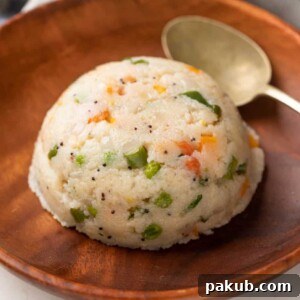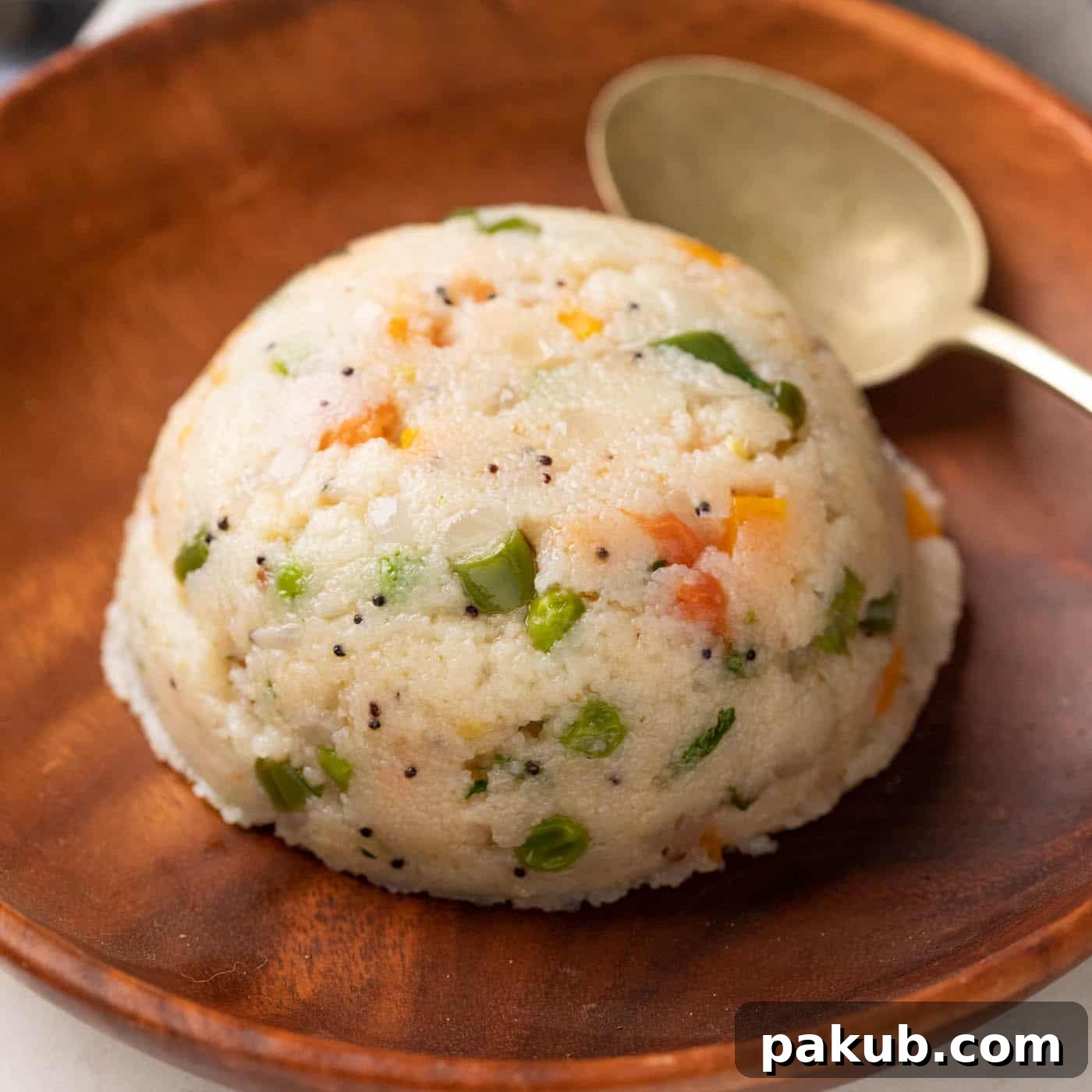
Experience the ultimate comfort food with this incredibly soft, moist, and nutrient-packed Vegetable Upma. Brimming with fresh vegetables and aromatic spices, this wholesome South Indian breakfast offers a delightful start to your day. Crafted with simple, everyday ingredients and a straightforward, fuss-free recipe, you’ll find yourself returning to this beloved dish time and again!
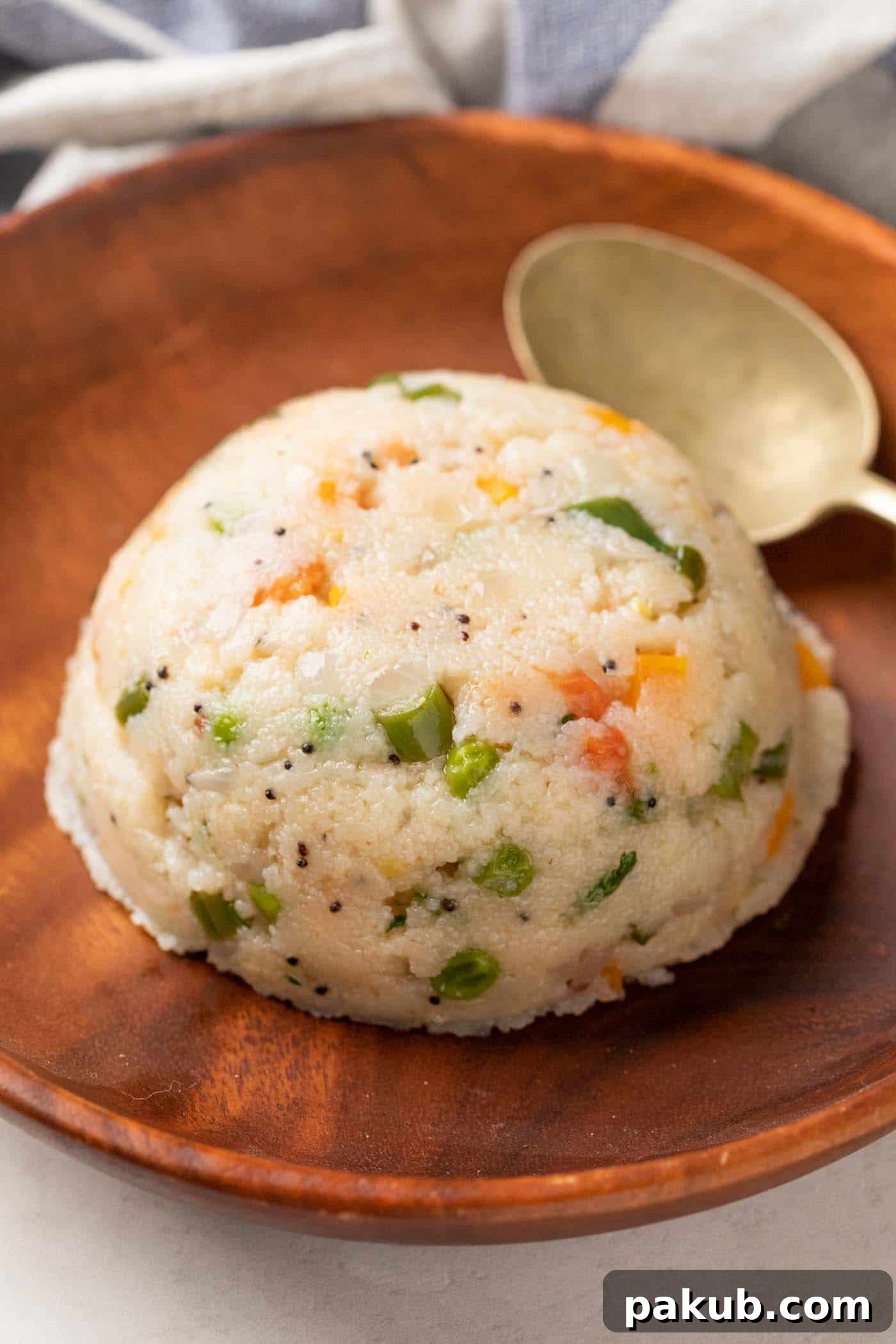
In the bustling rhythm of modern life, who doesn’t yearn for a hearty yet effortlessly prepared breakfast that fits seamlessly into busy mornings? Look no further than Vegetable Upma, a culinary cornerstone in countless Indian homes, standing proudly alongside other beloved staples like Poha and Idli Dosa. Known regionally as Suji Ka Upma or Uppittu, this traditional South Indian breakfast has captivated palates nationwide, and its popularity is truly understandable. Each spoonful delivers a warm embrace, a fluffy texture, a gentle hint of spice, and delightful surprises from crunchy vegetables and fragrant, roasted spices. It’s more than just a meal; it’s a comforting ritual that nourishes both body and soul.
Upma isn’t merely a dish; it’s a testament to simple, wholesome cooking. This particular Vegetable Upma recipe is a shining example of how everyday ingredients can transform into an extraordinary meal. It’s the perfect solution for anyone seeking a nutritious, quick, and satisfying start to their day. Whether you’re a seasoned cook or just beginning your culinary journey, this recipe promises a rewarding experience. It’s undoubtedly one of our favorite Indian breakfast recipes, and we wholeheartedly encourage you to try it out!
Jump to section: Vegetable Upma
- Why This Upma Recipe is a Must-Try
- Essential Vegetable Upma Ingredients
- Step-by-Step Guide: How to make Upma
- Frequently Asked Questions About Upma
- Expert Tips to Prevent Lumpy Upma
- Richa’s Pro Tips for Perfect Upma
- Delightful Serving Suggestions
- Creative Customisation Ideas
- Storage and Reheating Tips
- Watch Our Vegetable Upma Recipe Video
Why This Upma Recipe is a Must-Try
Beyond its delicious taste, this Vegetable Upma recipe stands out for its incredible practicality and versatility, making it an ideal choice for any home cook. Here’s why it deserves a spot in your regular meal rotation:
- Effortlessly Quick for Busy Mornings: With minimal preparation and cook time, this recipe truly comes together in under 20 minutes. It’s the perfect solution for those hectic weekday mornings when you crave a wholesome breakfast without sacrificing precious time. Imagine a nutritious, hot meal on the table before you even finish your first cup of coffee!
- Nutrient-Rich and Wholesome: The generous addition of fresh, colorful vegetables introduces an extra layer of fiber, essential vitamins, and minerals, transforming this already healthy breakfast into a powerhouse of nutrition. It’s a delicious way to sneak in those vital nutrients right at the start of your day, supporting overall well-being and sustained energy.
- Highly Customizable to Your Liking: This recipe is super customizable, allowing you to easily adapt it to your preferences or whatever ingredients you have on hand. Feel free to swap, add, or even entirely omit vegetables based on seasonality or personal taste. This flexibility ensures you can enjoy a fresh, unique Upma every time.
- Diet-Friendly and Adaptable: Our Vegetable Upma is naturally vegetarian, catering to a wide range of dietary needs. Furthermore, it can be effortlessly made vegan by simply replacing ghee with a plant-based oil or omitting it entirely at the final stage. This makes it an inclusive dish suitable for almost everyone.
- Easily Scalable for Any Occasion: Whether you’re cooking for one or preparing a family feast, this recipe is designed to be easily doubled or halved without compromising on taste or texture. This makes it incredibly convenient for meal prepping, entertaining guests, or simply enjoying a quick solo breakfast.
- Authentic South Indian Flavors: This recipe captures the true essence of traditional South Indian Upma, with perfectly roasted semolina and a delicate balance of tempering spices that create a truly authentic and unforgettable flavor profile.
Essential Vegetable Upma Ingredients
Crafting the perfect Upma begins with understanding the role of each ingredient. Here’s a closer look at what you’ll need, along with tips for optimal results:
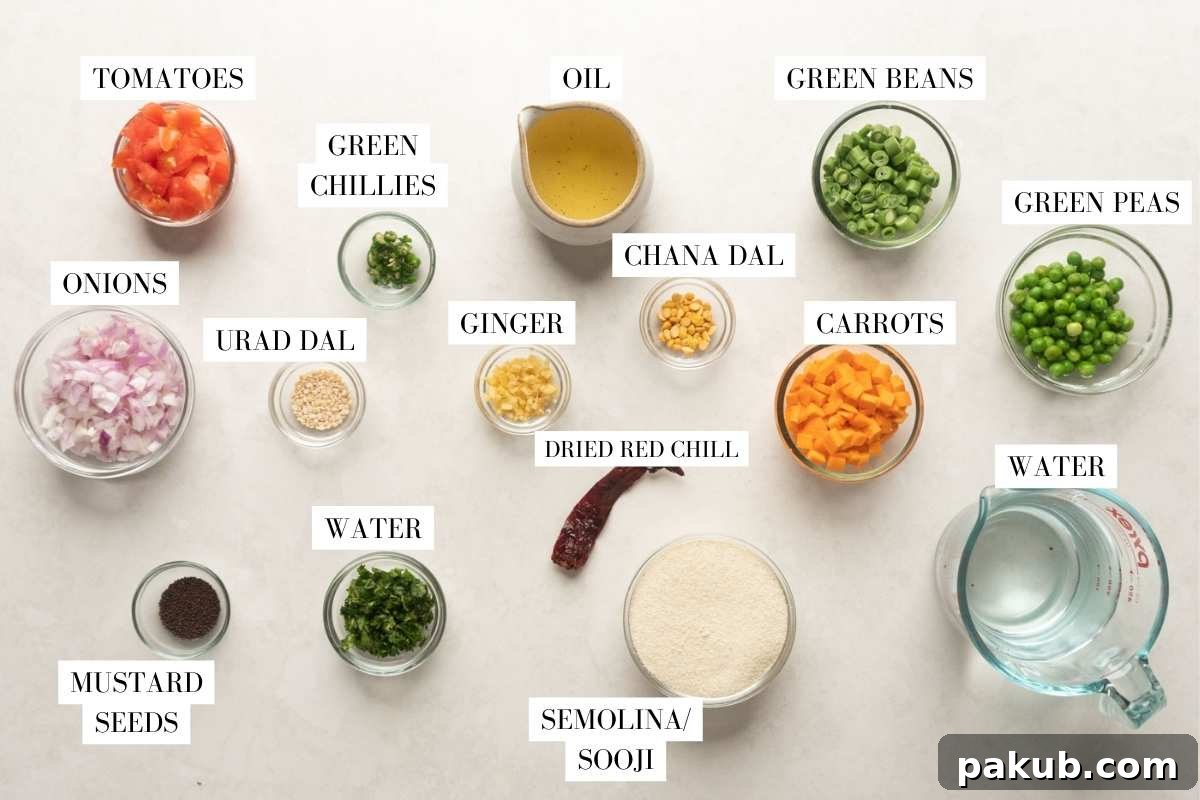
- Rava/Semolina (Suji): The star of our Upma! We highly recommend using Bombay Rava. This specific variety boasts grains that are neither too coarse nor too fine, striking the perfect balance. Its excellent moisture-absorbing properties are key to achieving that consistently soft, fluffy, and moist Upma texture that everyone loves. If Bombay Rava isn’t available, medium-grain semolina will also work well. Proper roasting of the rava is crucial, as it enhances its nutty flavor and prevents stickiness.
- Cooking Oil: Use any neutral-flavored cooking oil such as canola, sunflower, or peanut oil. The goal is to let the flavors of the spices and vegetables shine without interference from a strong oil taste.
- For Tempering (Tadka): This aromatic foundation is essential for authentic South Indian flavor.
- Mustard Seeds: These tiny seeds pop and release a pungent, warm aroma when heated.
- Urad Dal (Split Black Lentils): Adds a delightful crunch and a subtle earthy flavor. Ensure it’s lightly golden, not burnt.
- Chana Dal (Split Chickpeas): Similar to urad dal, it contributes texture and a nutty depth.
- Curry Leaves: Infuse the Upma with a characteristic fragrant, slightly bitter, and citrusy aroma. Never skip these for authentic taste!
- Ginger: Freshly grated or finely chopped ginger provides a pungent, warming kick that balances the other flavors.
- Fresh Vegetables: We’ve chosen a classic combination of onions, tomatoes, green beans, green peas, and carrots for this recipe. However, the beauty of Upma lies in its adaptability. Feel free to incorporate other favorites like bell peppers, corn, potatoes, or even spinach. Adjust quantities or eliminate any vegetable based on availability and personal preference. Just ensure they are finely chopped for even cooking.
- Dry Red Chilli: A whole or broken dry red chilli adds a gentle warmth and a rustic touch of heat. Adjust to your spice preference.
- Water: The most crucial element for texture. The precise water-to-rava ratio is vital for achieving a perfectly moist and fluffy Upma, preventing it from becoming dry or lumpy.
- Sugar: A small pinch of sugar is not for sweetness but to subtly enhance and balance the savory flavors, making the Upma more rounded and delicious.
- Ghee (Clarified Butter): While optional, a dollop of ghee stirred in at the end is highly recommended. It adds an unparalleled richness, depth of flavor, and a beautiful aroma that elevates the entire dish. For a vegan version, simply omit or use a plant-based butter.
- Salt: To season the Upma perfectly and bring out all the flavors.
- Fresh Coriander Leaves: A final garnish of chopped fresh coriander adds a burst of freshness and a vibrant touch.
Step-by-Step Guide: How to make Upma
Follow these detailed instructions to create a flawless, delicious Vegetable Upma:
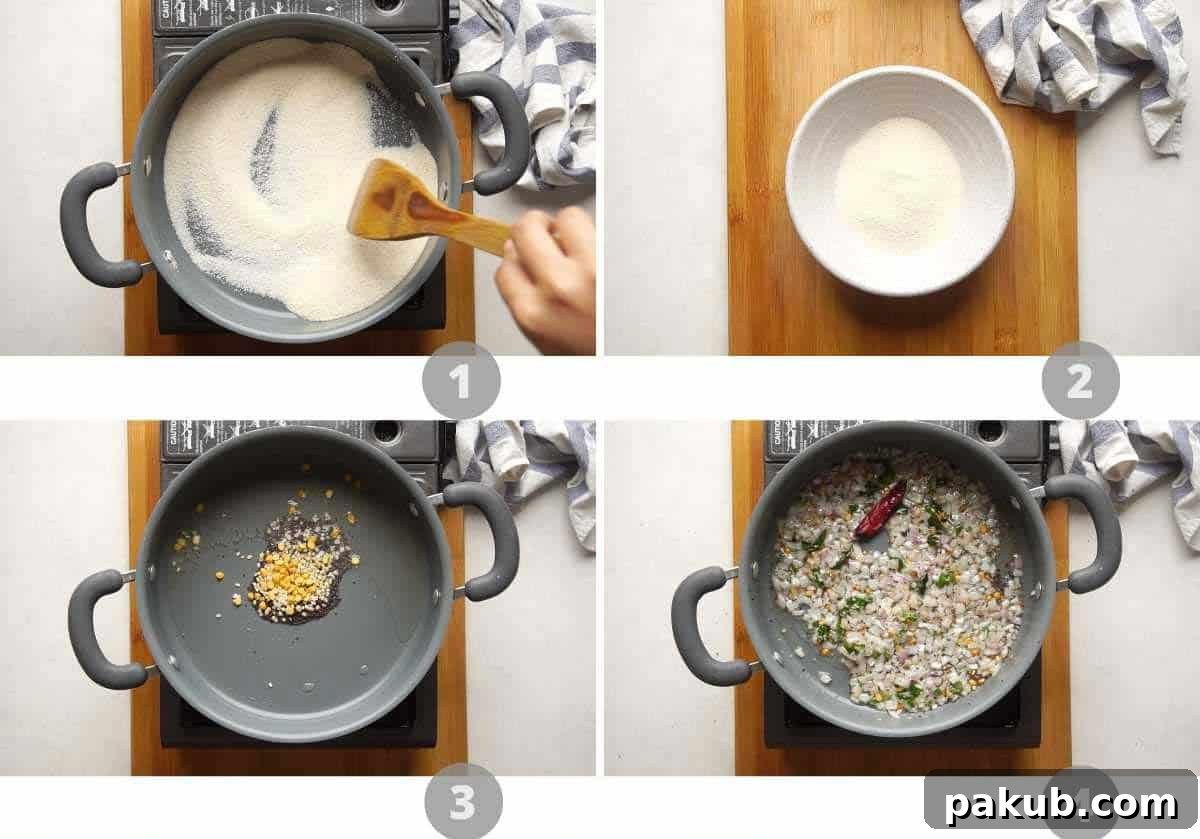
1. Roast the Semolina: Begin by heating a heavy-bottomed pan or kadai over a low to medium flame. Add the rava (semolina) and dry roast it gently. Stir continuously for 3-4 minutes until it releases a distinct nutty aroma. It’s essential that the rava does not change color, as browning it will alter the Upma’s appearance and taste. Even roasting is key for a non-sticky texture.
2. Cool the Rava: Once roasted to perfection, immediately transfer the hot rava into a separate bowl. Allow it to cool completely. This step prevents further cooking and ensures it’s ready for absorption without clumping.
3. Prepare the Tempering (Tadka): In the same pan, heat the cooking oil over medium heat. Once the oil is hot but not smoking, add the mustard seeds. Let them splutter vigorously—this indicates they are fully releasing their flavor. Immediately add the urad dal, chana dal, fresh curry leaves, and the broken dry red chilli. Sauté for about a minute, stirring constantly, until the dals turn a light golden brown and the curry leaves become fragrant. Be careful not to burn them.
4. Sauté Aromatics: Now, add the finely chopped ginger and onions to the pan. Cook them on medium heat, stirring occasionally, until the onions become soft and translucent. This step forms the aromatic base of your Upma.
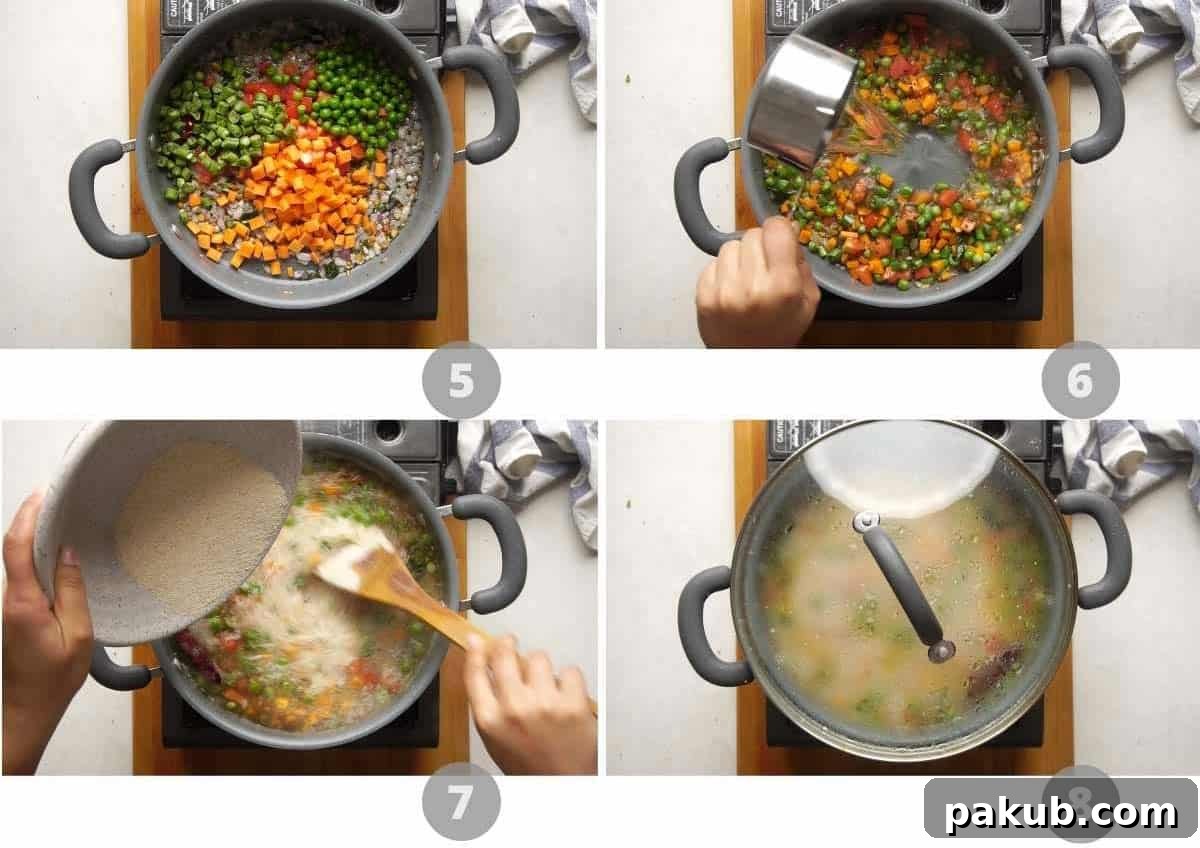
5. Add Vegetables: Incorporate all the other chopped vegetables—carrots, beans, green peas, and tomatoes—into the pan. Sauté for another 2 minutes, ensuring they are coated with the tempering and begin to soften slightly. Cutting vegetables to a uniform size ensures they cook evenly.
6. Boil the Water: Pour in the measured water (along with salt and sugar) and increase the heat to high. Bring the water to a vigorous, rolling boil. This high temperature is crucial for the rava to absorb liquid properly and cook thoroughly.
7. Incorporate Rava Slowly: As soon as the water reaches a rolling boil, reduce the flame to its lowest setting. Crucially, begin to add the roasted rava *slowly* in a steady stream with one hand, while continuously stirring the water with a whisk or spoon with the other. This technique is vital to prevent lumps from forming and ensures a smooth, even consistency.
8. Cover and Cook: Once all the rava is incorporated and the mixture is smooth, cover the pan with a lid. Allow it to cook on a very low flame for 3-4 minutes. During this time, the semolina will absorb the remaining water, steam, and “bloom” into a perfectly soft and fluffy texture. Resist the urge to lift the lid too early!
9. Finish and Serve: Finally, remove the lid, gently fluff the Upma with a fork, and stir in the optional ghee and chopped fresh coriander leaves. Serve your delectable Vegetable Upma immediately while it’s piping hot, ideally with your favorite accompaniments.
Frequently Asked Questions About Upma
Upma’s foundation is semolina, also known as rava or suji, a coarsely ground durum wheat. It’s typically prepared with a vibrant medley of fresh vegetables and a selection of basic, aromatic Indian spices. While vegetables are technically optional, we strongly recommend including them for their added texture, enhanced flavor, and significant nutritional boost, making the dish more wholesome and satisfying.
Absolutely, Upma is widely recognized as one of the healthiest and most balanced Indian breakfast options available. Semolina itself is a good source of several important vitamins and minerals, including iron and B vitamins. When combined with a generous array of fresh vegetables, the dish delivers an excellent dose of dietary fiber and a broader spectrum of essential nutrients, contributing to a truly wholesome start to your day.
Upma offers a uniquely savory and slightly nutty flavor profile. The roasted rava provides a subtle depth, while the medley of vegetables adds natural sweetness and earthiness. The tempering spices—mustard seeds, curry leaves, ginger—infuse the dish with a warm, aromatic complexity that is both comforting and invigorating. It’s a balanced taste that is neither overly spicy nor bland, making it universally appealing.
Yes, absolutely! Using pre-roasted rava (semolina) is a fantastic time-saver, especially on mornings when you’re in a rush. If you purchase pre-roasted semolina, you can skip the initial roasting step, cutting down on your prep time significantly while still achieving a delicious outcome. Just ensure it’s fresh and stored properly.
The secret to consistently soft, moist, and fluffy Upma lies in the correct water-to-rava ratio. Always aim for a ratio of approximately 3:1 (three cups of water for every one cup of rava). Additionally, ensure the water comes to a rolling boil before slowly incorporating the roasted rava while continuously stirring. These steps ensure even hydration and a perfect texture.
Bombay Rava (medium-grain semolina) is generally considered ideal for Upma due to its texture and moisture-absorbing qualities, which contribute to a soft and fluffy consistency. Fine rava can become too pasty, while coarse rava might result in a more granular, less cohesive Upma.
Yes, you can absolutely make Upma without onions or garlic. Many traditional variations and dietary preferences call for their exclusion. The tempering can still provide ample flavor with mustard seeds, curry leaves, and ginger. You might consider adding a pinch of asafoetida (hing) to compensate for the missing pungency.
Tempering, or Tadka, is a fundamental technique in Indian cooking, and it’s particularly vital for Upma. It involves heating oil or ghee and then quickly frying whole spices (like mustard seeds, urad dal, chana dal, and curry leaves) to release their essential oils and aromatic compounds. This process infuses the entire dish with a deep, complex, and characteristic flavor profile, making it truly authentic and delicious.
Expert Tips to Prevent Lumpy Upma
Lumpy Upma can be disappointing, but it’s an easily avoidable issue with a few key techniques. Understanding *why* lumps form is the first step to ensuring your Upma is always smooth and fluffy:
- Avoid Adding Rava All at Once: This is arguably the most common culprit. When a large quantity of rava is dumped into hot water simultaneously, the outer layer of the semolina grains absorbs moisture rapidly and swells, effectively creating a barrier that prevents the inner grains from hydrating. This results in hard, dry clumps. To counteract this, always slowly pour the roasted rava in a steady, thin stream into the boiling water.
- Ensure Continuous Stirring: Complementing the slow addition of rava, continuous and vigorous stirring immediately after the rava hits the water is crucial. This action evenly disperses the semolina particles, allowing each grain to be surrounded by water and absorb it uniformly, preventing any localized clumping before it can set. Use a whisk or a strong spoon for best results.
- Always Use Roasted Rava: Unroasted semolina behaves differently. If the rava isn’t roasted properly, its raw starch particles can become sticky when exposed to hot water, leading to an uneven absorption and a pasty, clumpy texture. Roasting changes the starch structure, enhancing its flavor and ensuring it absorbs water efficiently and separately.
- Master the Water-to-Rava Ratio: The ratio of water to rava is paramount. Too little water, and your Upma will inevitably turn out dry, grainy, and clumpy because there isn’t enough liquid to fully hydrate all the semolina. For a consistently soft, moist, and perfectly fluffy Upma, maintain a ratio of approximately 3 to 3.25 cups of water for every 1 cup of rava. This allows for complete absorption and steaming.
- Boil Water Vigorously: Ensure your water is at a rolling boil before adding the rava. The intense heat helps to cook the rava quickly and evenly, reducing the chances of sticking and clumping.
Richa’s Pro Tips for Perfect Upma
Achieving consistently perfect semolina Upma (rava Upma) is an art, and these insights from Richa will guide you to culinary success:
- The Dual Secrets to Success: The foundation of an outstanding Upma rests on two critical techniques: meticulous roasting of the rava and precisely getting the rava-to-water ratio correct. Master these, and you’re halfway to perfection.
- Precision in Water-to-Rava Ratio: This cannot be stressed enough. For that coveted soft, moist, and fluffy Upma texture, consistently adhere to a 3:1 (or 3.25:1 for extra moistness) water-to-rava ratio. This means, for every single cup of rava, you will need to add 3 to 3.25 cups of water. Deviating from this ratio is the most common reason for dry or soggy Upma.
- The Art of Roasting Rava: Take your time to roast the rava evenly on low to medium heat. The goal is to develop a beautiful nutty aroma without allowing the rava to change its color. Constant stirring is essential to prevent burning and ensure every grain is lightly toasted, which enhances flavor and improves texture.
- Adding Rava to Hot Water with Agility: When it’s time to introduce the roasted rava to the hot water, be swift and steady. Pour the rava gradually while continuously stirring the water. This vital technique prevents the formation of lumps, ensuring your Upma achieves that desirable smooth and creamy consistency. A whisk can be particularly helpful here.
- Uniform Vegetable Size: For even and quick cooking, it’s crucial to cut all your vegetables to a similar, small size. This ensures they soften perfectly at the same rate, integrating seamlessly into the Upma without any hard, uncooked pieces.
- Correcting Lumps: Should you find lumps beginning to form during the cooking process, act quickly! Immediately and gently mash them with the back of a spoon while continuing to stir. This helps break them up before they fully set, rescuing your Upma.
- Don’t Rush the Steam: After adding the rava and covering the pan, resist the temptation to lift the lid too soon. The steaming phase on low heat is crucial for the rava to fully absorb water and “bloom.” This ensures maximum fluffiness and a perfectly cooked texture.
- A Touch of Acidity (Optional): Some prefer a hint of tanginess. A squeeze of fresh lemon juice or lime juice at the very end can brighten the flavors of your Upma beautifully, adding another dimension.
Delightful Serving Suggestions
Upma is wonderfully versatile and pairs beautifully with a variety of accompaniments. Elevate your Upma experience with these serving ideas:
- Classic Indian Breakfast Combo: Savor your warm Upma with a steaming cup of freshly brewed Chai or a rich, aromatic filter coffee. This classic combination creates the most comforting and traditional Indian breakfast experience.
- Chutney Pairings: For a burst of flavor, pair your Upma with a vibrant Coconut Chutney or a zesty Tomato Chutney. The fresh, tangy notes of the chutneys perfectly complement the savory Upma.
- Cooling Curd: A dollop of plain curd (yogurt) served alongside provides a refreshing, cooling contrast to the warm and savory Upma, adding a creamy texture and probiotic benefits.
- Spicy Pickle Zest: For those who love an extra kick, enjoy your Upma with a spicy mango pickle or any other Indian pickle. The intense, tangy, and spicy flavors offer an exciting burst that wakes up the palate.
- Garnish for Freshness: A final sprinkling of fresh coriander leaves, a few roasted cashews, or a drizzle of lemon juice can add visual appeal and enhance the overall taste.
Creative Customisation Ideas
The beauty of Upma lies in its flexibility. Don’t hesitate to experiment and make it your own with these creative customization ideas:
- Add a Nutty Crunch: Stir in a handful of roasted peanuts and cashews during the final stages of cooking or as a garnish. This adds a wonderful textural contrast and a rich, nutty flavor that many find irresistible.
- Spice it Up Differently: Explore new flavor profiles by stirring in a pinch of freshly grated coconut for a hint of sweetness and tropical aroma. Alternatively, sprinkle a little garam masala or even a touch of sambar powder (South Indian spice blend) for a more complex and regional taste.
- Boost Protein: For an added protein boost, you can gently fold in cooked and crumbled paneer (Indian cottage cheese), or even scrambled tofu for a vegan option, just before serving.
- Green Goodness: Incorporate finely chopped greens like spinach or fenugreek leaves (methi) during the vegetable sautéing stage for an extra dose of nutrients and a distinct earthy flavor.
- Tangy Twist: A dash of lime juice or a small piece of tamarind pulp (soaked and strained) can be added to the water while boiling for a tangy Upma.
Storage and Reheating Tips
While Vegetable Upma is undeniably at its best when enjoyed fresh, leftovers can be stored and reheated for a convenient meal:
Store any leftover Vegetable Upma in an airtight container in the refrigerator for up to 1-2 days. To reheat, gently warm it in a microwave or on the stovetop over low heat. It’s common for Upma to dry out slightly in the fridge, so we recommend adding a splash of water or a tiny bit of ghee during reheating. Stir gently to help it regain its moist, fluffy texture. Avoid overcooking during reheating to maintain its desirable consistency.
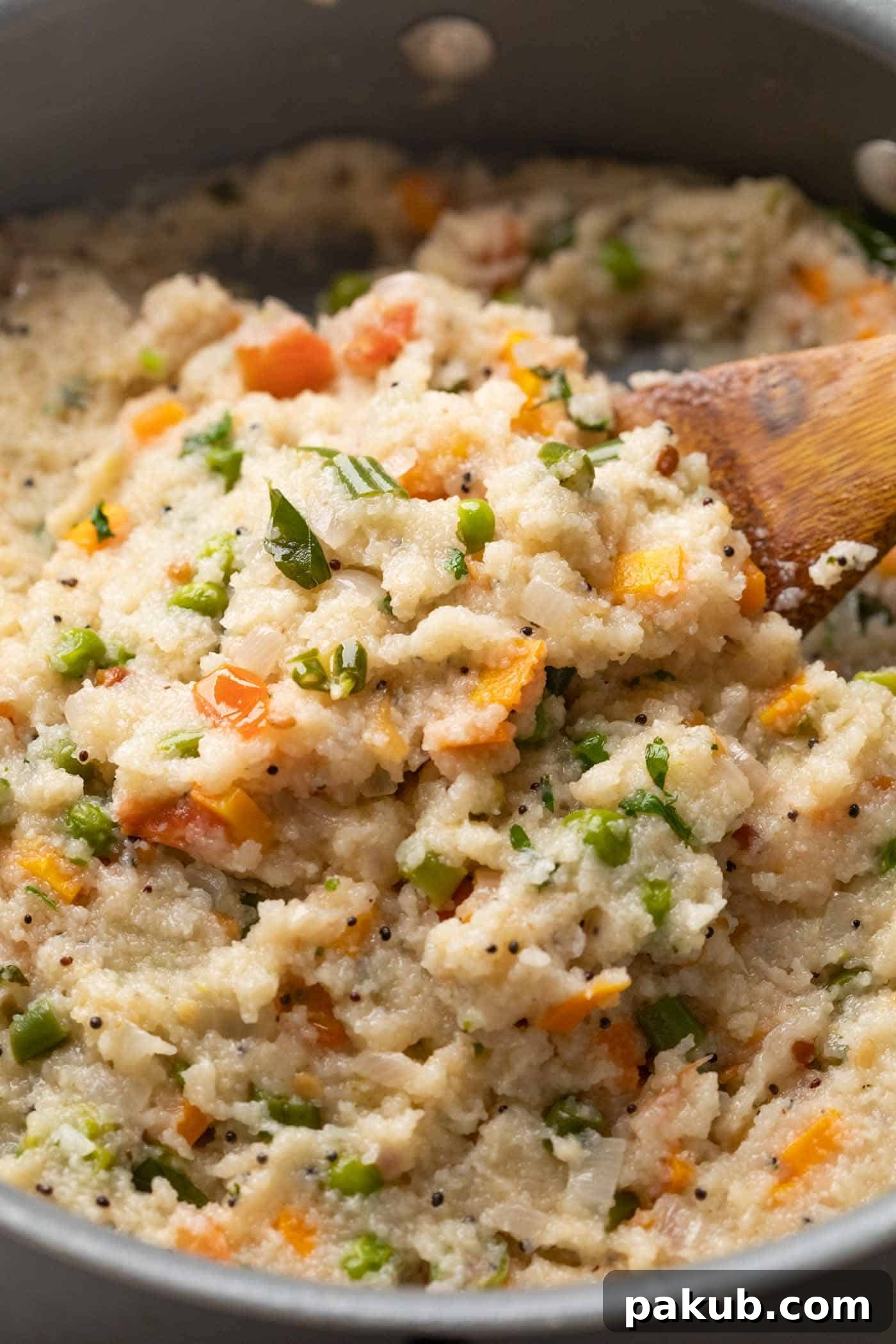
If you’re seeking another quick, easy, and undeniably delicious breakfast option that prioritizes both health and flavor, then this Vegetable Rava Upma recipe is an absolute must-try! Imagine pairing its comforting warmth with a steaming cup of rich filter coffee – a truly blissful way to start your day. Don’t miss out on this wholesome and satisfying South Indian classic.
We’d love to see your culinary creations! If you make this delightful Upma, don’t hesitate to share your masterpiece. Tag us on Instagram @my_foodstory with your beautiful bowl of goodness. Your Upma journey starts here!
Watch Our Vegetable Upma Recipe Video